Monthly Archives: June 2026

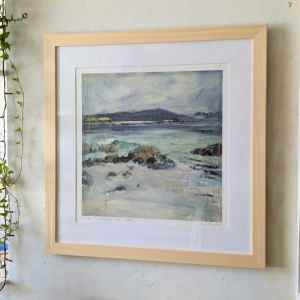
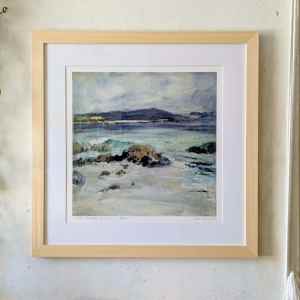
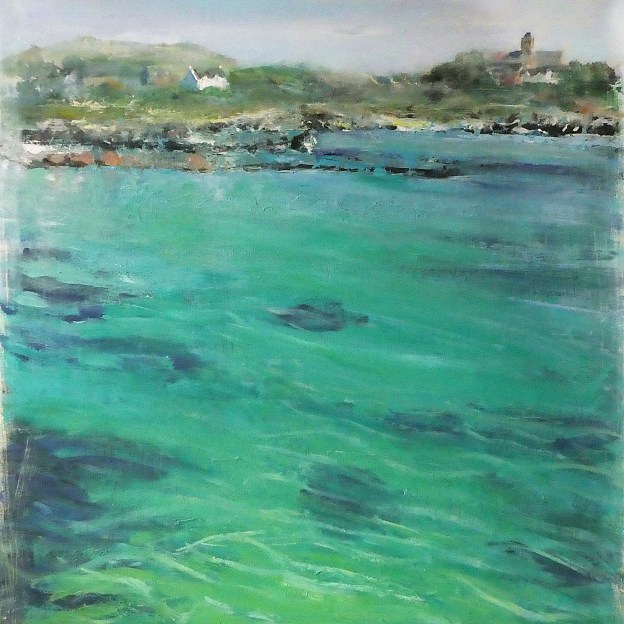
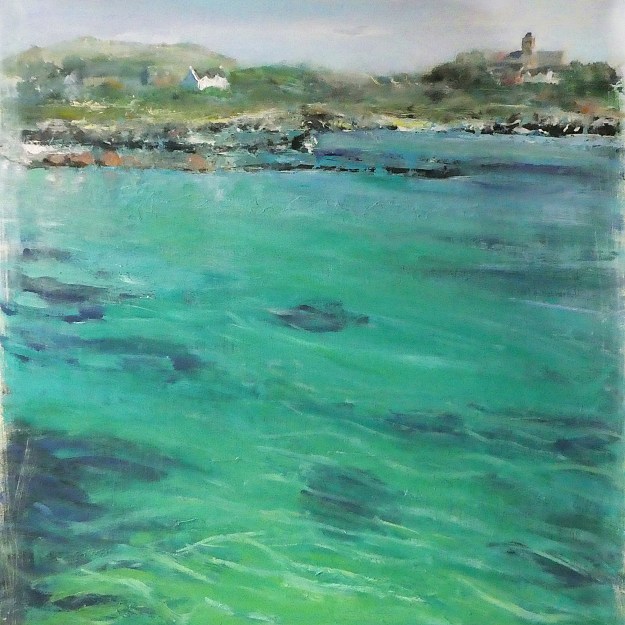
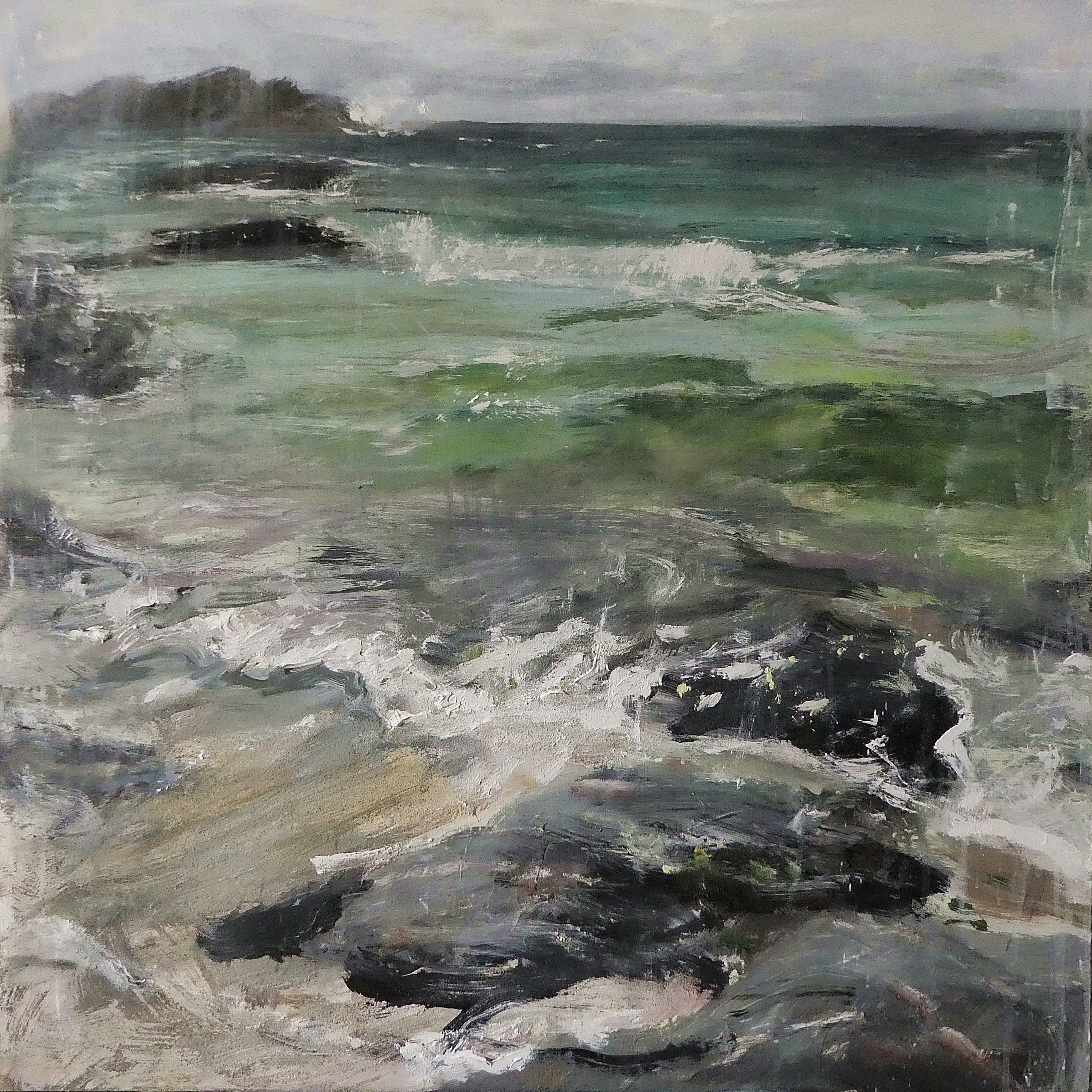
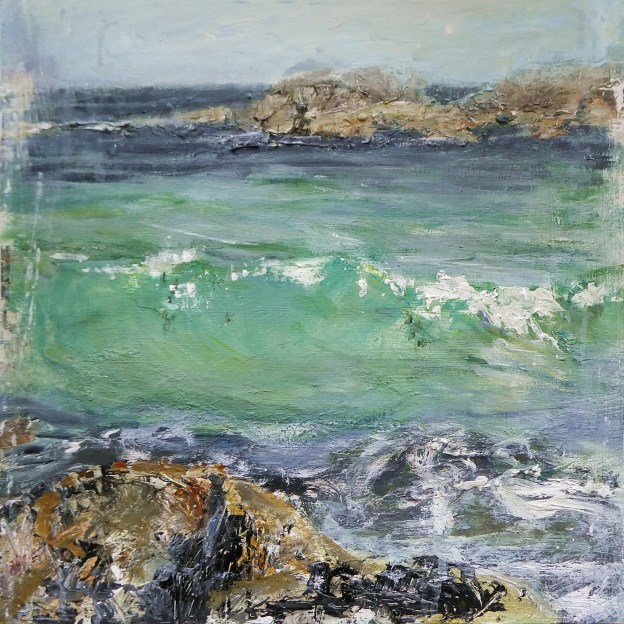
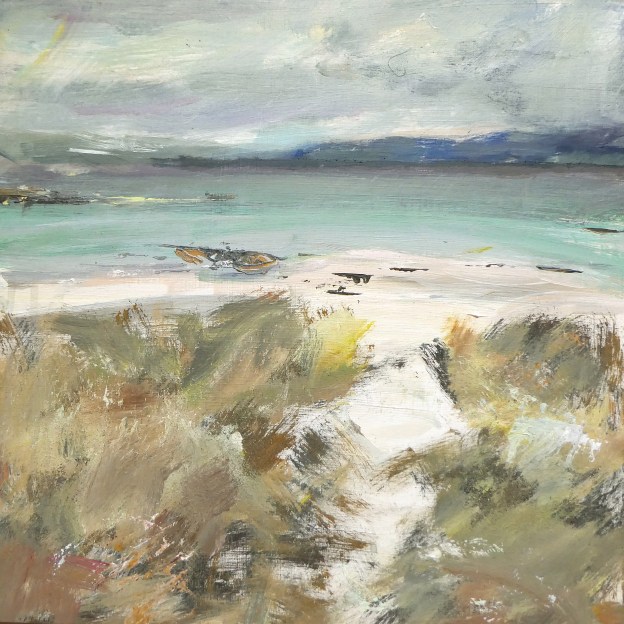
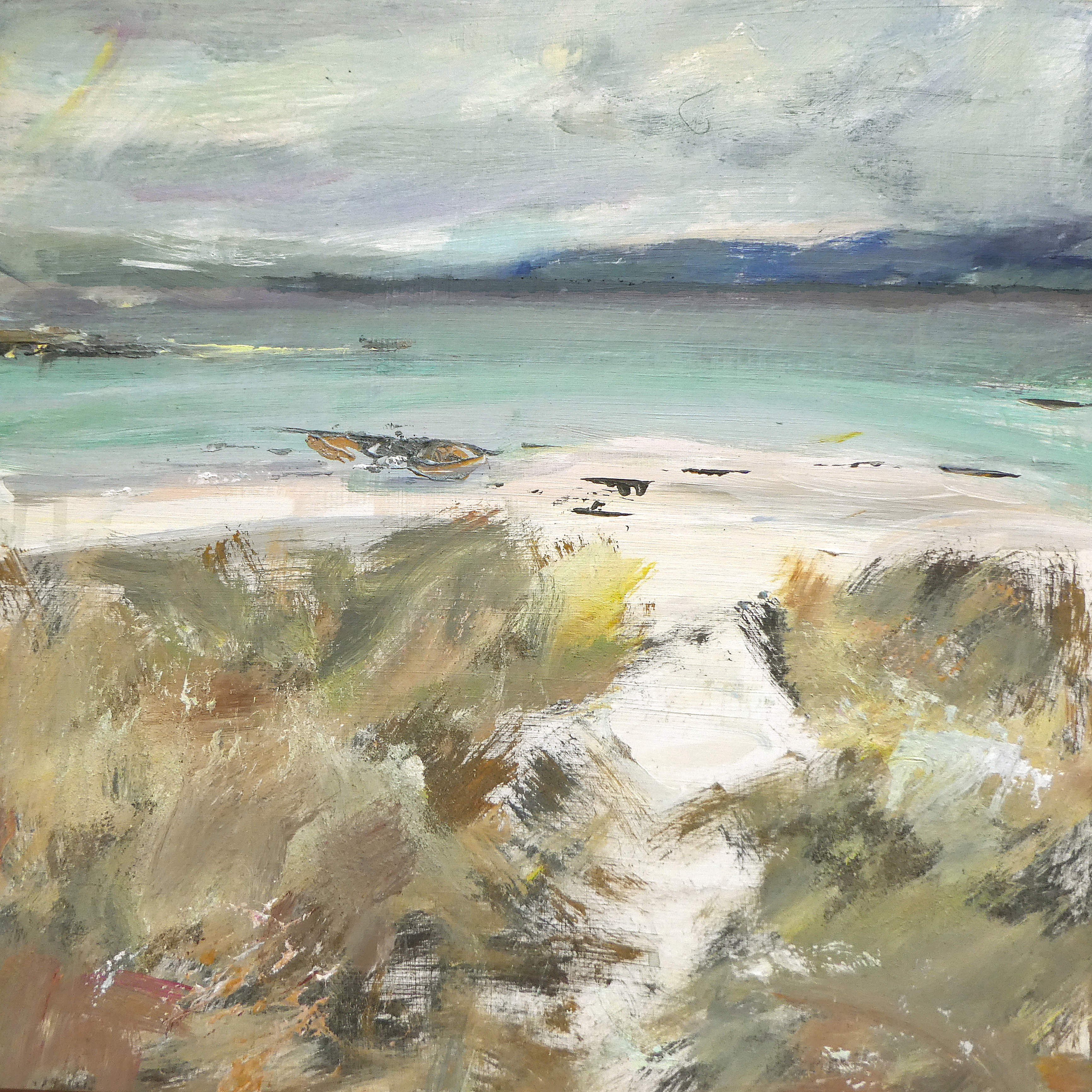
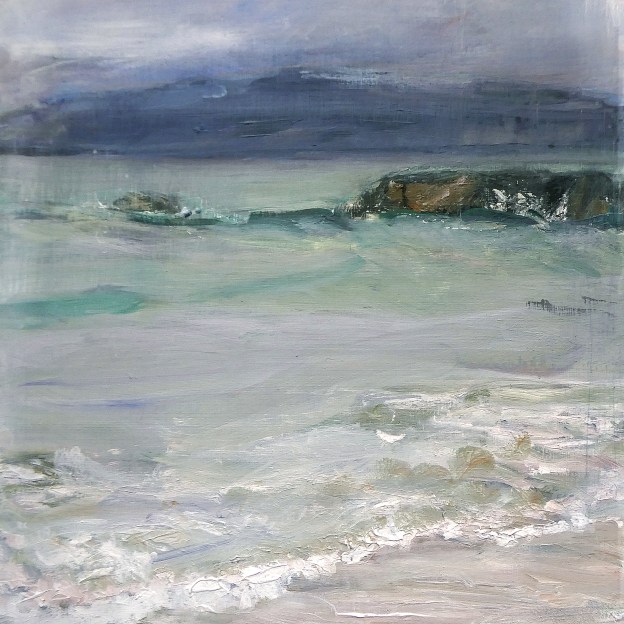
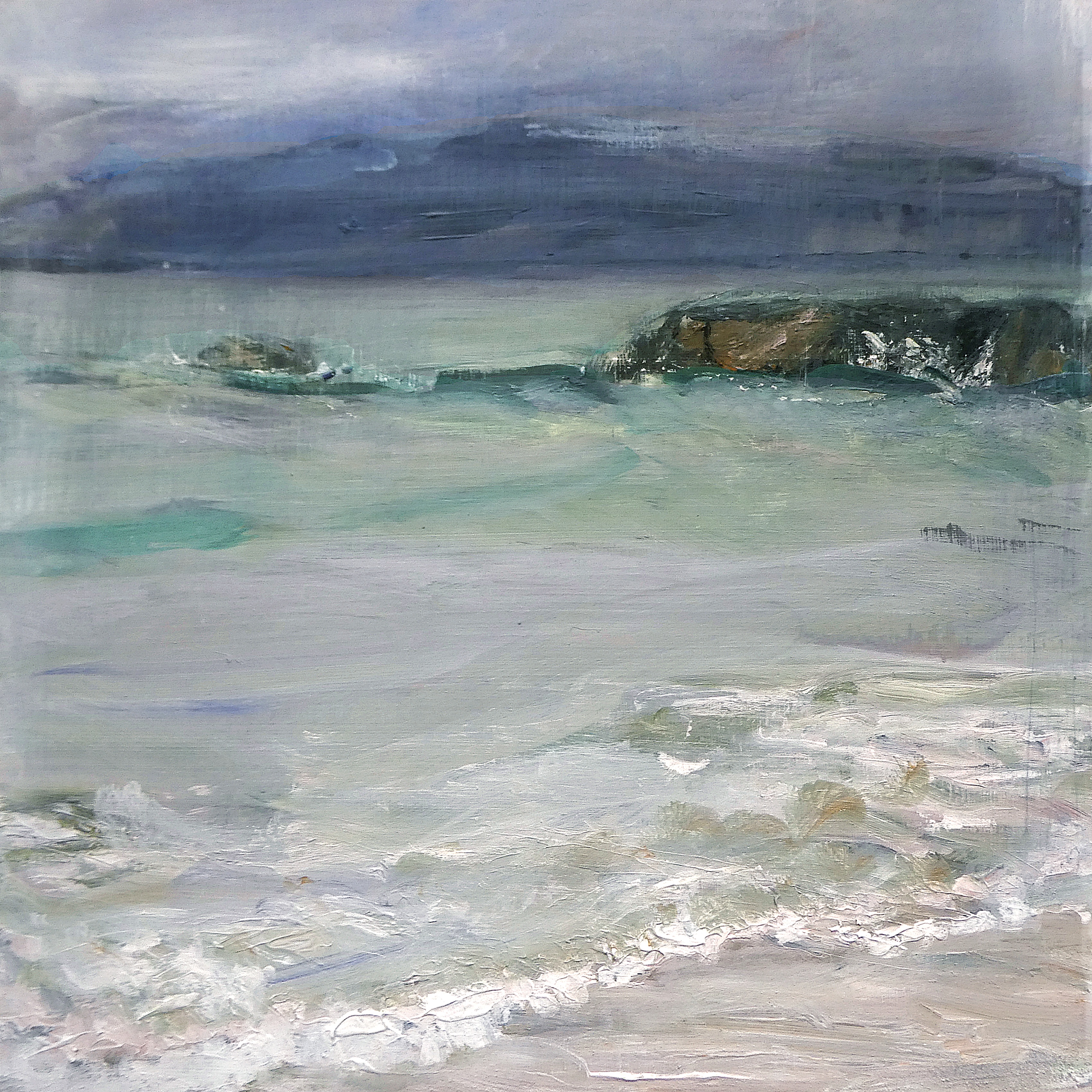
St Ronan's Bay. Iona. Mixed media on 30 x 30 inch wood. Rose Strang 2026

St Ronan’s Bay. Iona

Above: St Ronan’s Bay, Iona. Mixed media on 30 by 30 inch wood. Rose Strang 2026.

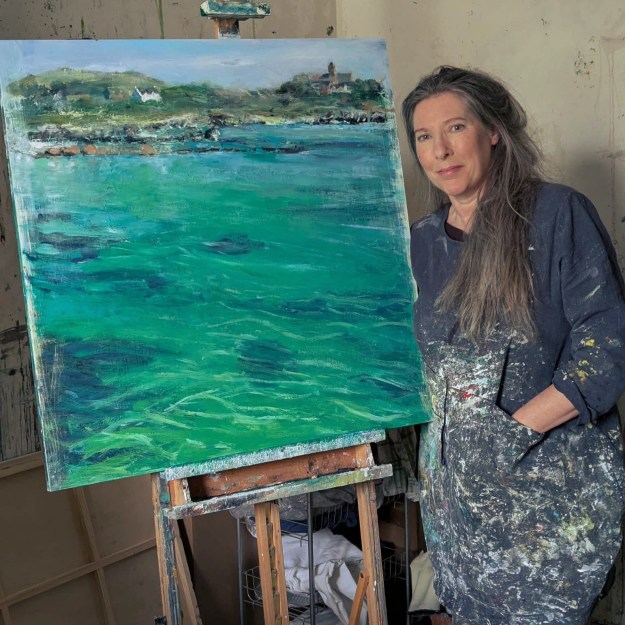
This is the bigger version of St Ronan’s Bay, and this one is for the Graystone Gallery in Edinburgh, possibly Edinburgh’s most popular contemporary art gallery. The owner, Lesley Briggs has an MA in the History of Art and worked with London’s prestigious Whitechapel Gallery

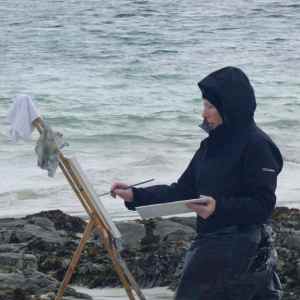
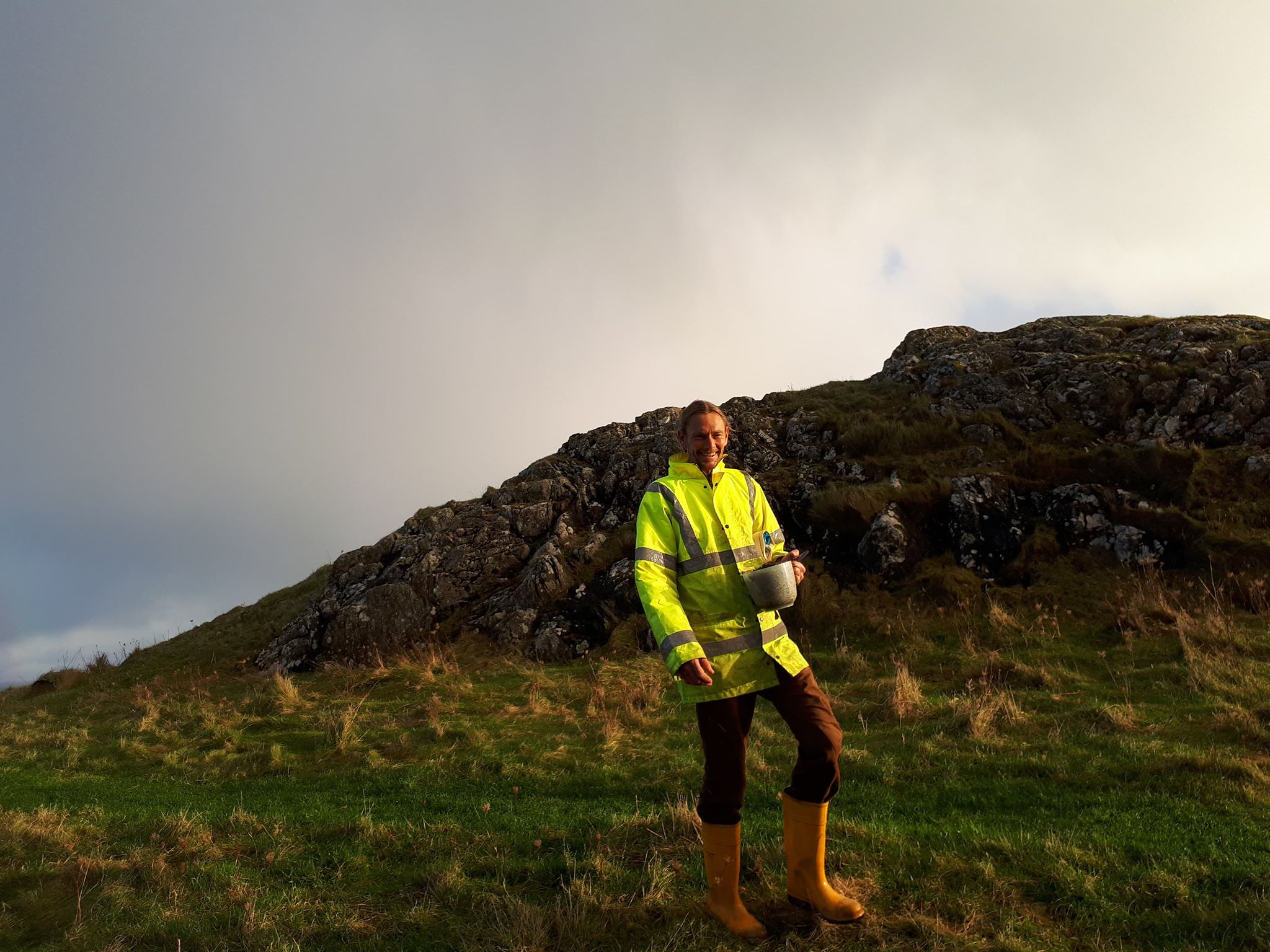
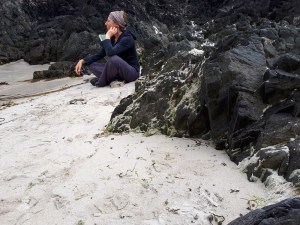
Here’s a zoom-able version and a photo of me with it to show scale…

I remember how excited I was to take a trip to the Whitechapel Gallery when we were art students. Lucian Freud’s work was showing and I was mesmerised by the way he painted the pink skin of a dog’s stomach in one of the paintings, at a typically odd setting and angle. Afterwards we all went to Jimmy’s Greek Taverna in Soho and I ate the loveliest lamb casserole ever. Happy days.

None of that has anything to do with my painting of course. I really fought to make this one translucent and vibrantly green. Layer after layer, building it up, then taking it into the shower to wash it off when I didn’t like it. All worth it to capture that wonderful sea-green of Iona.

If you like the look of this then contact The Graystone Gallery soon. Their summer exhibition launches in July, and people reserve paintings in advance.

More painting in a few days …


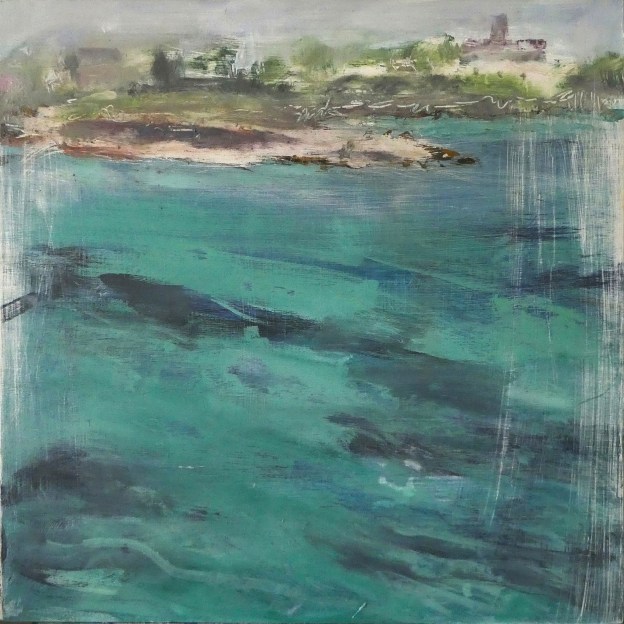
St Ronan’s Bay from the Sound of Iona

Above: St Ronan’s Bay from the Sound of Iona. Mixed media on 16×16″ wood. Rose Strang 2026

Today’s painting sits better with the Resipole series than the first painting I created in this series 

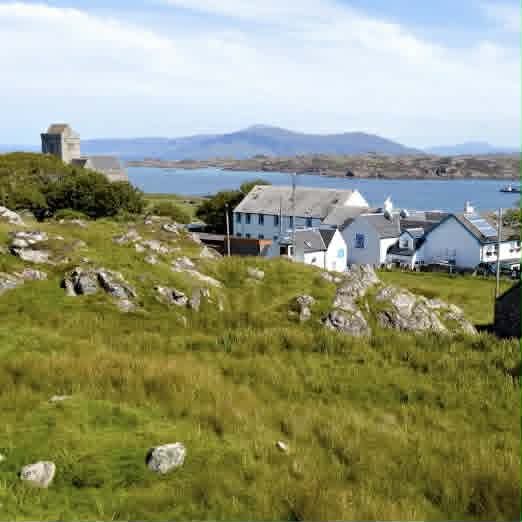
This is the view from Iona Pier, or from the ferry as you approach or depart. I was thinking of calling it Baile Mor (Baile Mor being ‘main village’ in Gaelic) but St Ronan’s Bay from the Sound of Iona is somehow more poetic. I hear the chime of Iona abbey bells in that title.

The clickable image, and details ;;;

I’ve often wondered how far back Iona’s inhabitants can be traced. I wonder if there was a significant village here when Calum Cille arrived. If so, are there traces of those original people on the island?

A quick online search tells me there are traces of iron age settlements and forts. Particularly on Dun Buirgh (Hill of the Fort, or Castle of the Rock) on the west side of the island, and I think I read there were iron age remnants outside the village of Iona. Going much further back there are traces of bronze age farming, about 1000bc, I think.

Iron age is not so long ago. In fact, just a few hundred years before Calum Cille arrived on the island. I’ve explored so many aspects of Iona but it’s difficult to find facts about how and why Calum Cille (or Columba)  came to live here.

Bede describes a transfer of ownership from the Pictish King Breuide to Calum Cille, but the Gaelic traditions talks of a the island being gifted to Calum Cille from the kingdom of Dal Riata. The question is, why would either of them give him land? We don’t know. Obviously I don’t know, but neither do historians or archaeologists have definitive evidence.

And somehow, when I hear the tales of Adomnán (a descendant of Calum Cille’s religious order on Iona who lived in the 7th century and wrote extensively about the life and times of Callum Cille) I hear a certain amount of spin. Maybe because the place names on Iona are all Gaelic. I mean, there wasn’t a Pictish written language, but the names they gave places live on phonetically, especially in the east of Scotland – anything beginning with ‘Pit’, Pitlochry and so on. But then I discovered that Argyll was mostly isolated at first from the east of Scotland, and that some early form of Scottish Gaelic was mostly spoken in the Hebrides.

That’s quite reassuring to know. Many of those Gaelic place names on Iona have probably been there long before Calum Cille arrived.

These aren’t the things that inspire me to paint, but they’re interesting in retrospect. The 6th century on Iona was a time of real upheaval across the islands of Britain, as the Kingdom of Dál Riata, spanning both Antrim in Ireland and Argyll in Scotland, with its royal seat at Dunadd in Kilmartin, grew increasingly influential and powerful.

You could call it a kind of culture war: a time when ideology and religious conviction went hand in hand with military might, reshaping an indigenous culture. As far as we know, the Picts were the indigenous people of what’s now Scotland, alongside other Brythonic-speaking peoples who once lived the length of Britain. The theory now is that their descendants survive mostly in the west of the British Isles, most evidently in Wales.

More paintings coming up, for the Graystone Gallery in Edinburgh …
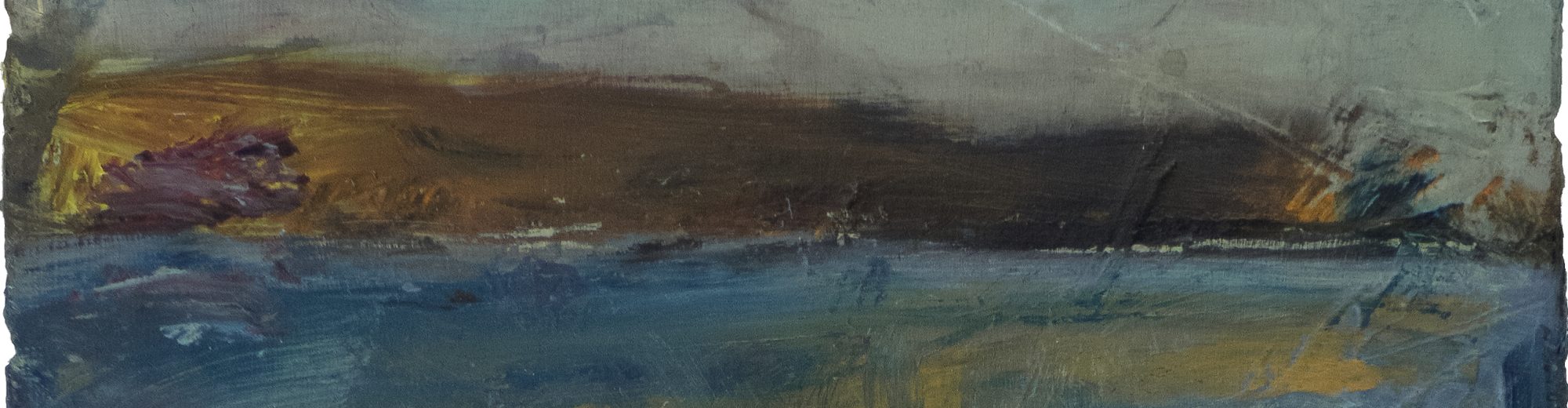


Eilean Calbha from Iona. Mixed media on 16×16″ wood panel. Rose Strang 2026

Eilean Calbha from Iona

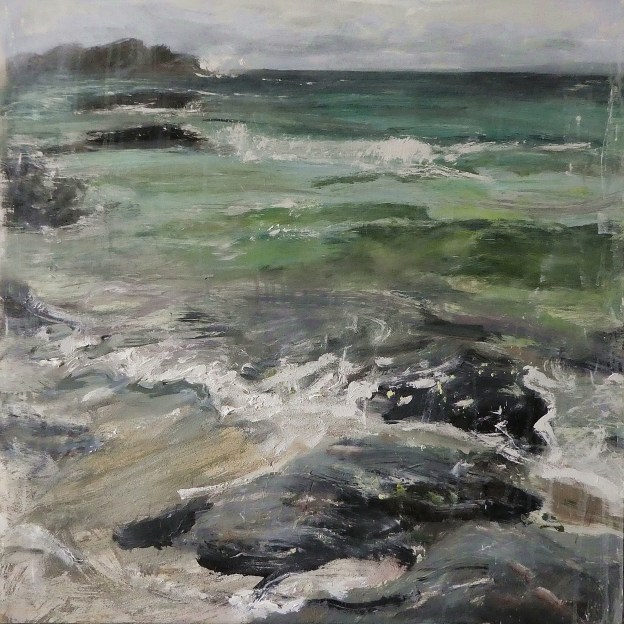
Above: Eilean Calbha from Iona. Mixed media on 30×30″ wood panel. Rose Strang 2026

It’s said that Hebridean sailors and fishermen refused to go to sea without a green stone in their pocket. They believed the sea would never drown someone carrying a piece.

On Iona there are two types of green stone. There’s the famous serpentine, a translucent, waxy crystal that runs in streaks through Ionian marble. The marble is softer and so the teardrop shaped serpentine left behind was sometimes called ‘Columba’s/Calum Cille’s tears’ and it was worn as a talisman by sailors.

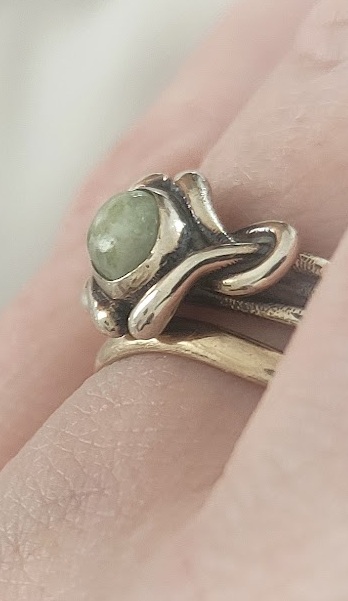
Happily, given I’m not much of a swimmer, my engagement ring, made for me by Adam and taken from a piece of marble I collected on Iona when I was about 19, is made from marble seamed with serpentine.

But that green stone is very different from the greenish grey rock in the foreground of my painting, which is Lewisian Gneiss.

It’s named so for the Gneiss found on Lewis, which forms the incredibly elegant stones of Callanish.

We’re looking at the oldest rocks in Britain, among the oldest rocks in the world, formed between 1.7 to 3.0 billion years ago. That pre-dates complex multi-cellular life, so no fossils.

My painting doesn’t have serpentine crystal or marble in it, but that wave is almost exactly the colour. In the distance is Eilean Calbha, forming a barrier against the deep, wild Atlantic.

Eilean Calbha from Iona. Mixed media on 30x30" wood panel. Rose Strang 2026

Eilean Calbha from Iona. Mixed media on 30×30″ wood panel. Rose Strang 2026

Details …


I’ll be creating more paintings of Iona for other galleries this month, but today’s painting brings us to the end of this particular series of Ionian paintings for the Resipole exhibition: Facing West, which launches this July.

If you’re interested in this series, you can contact the gallery who will be happy to answer any questionsResipole Gallery

Many thanks for reading about this series. I’ll be painting more in the next few weeks, so there will be more here soon.

In the meantime, dear readers, here’s an old Celtic blessing, derived and adapted from the Carmina Gadelica, and often recited on Iona …

Deep peace of the running wave to you
Deep peace of the flowing air to you
Deep peace of the quiet Earth to you
Deep peace of the shining stars to you.


On the Shore of the Seat. Iona.

Above: Tràigh an t-Suidhe (Shore of the Seat) Iona. Mixed media on 16×16″ wood. Rose Strang 2026

There’s something so compelling about wave watching. It’s as though each successive wave corresponds to your own heartbeat. To me there’s nothing more meditative. So it’s fitting that Tràigh an t-Suidhe (pronounced tray an too-yeh) means Shore of the Seat; a place where Calum Cille was reputed to have sat quite often, seeking peace from the busier parts of the island. It’s at the northernmost point of Iona.

I’m not sure if he’d have been sitting on the low sandy bank that’s slightly raised and sits under the higher grass bank above (sheltering anyone from winds in the south), or if the seat refers to Carraig Feannig, the rock of the hoodies (a type of crow) in the middle of the bay.

Wherever he looked out, I imagine he felt the same awe we feel watching the incessant, impossibly green waves. Impossibly green thanks to the white sand of the Hebrides, the machair water as I’ve heard it described.

There were two ways to be a martyr in the pursuit of following Jesus and Christianity according to the Desert Fathers, whose influence stretched from around 300AD to Calum Cille’s day (around 530AD): red martyrdom and green martyrdom.

One meant death sacrifice, to be killed; a bloody sacrifice. The other was to live somewhere deserted, green, remote, away from the usual creature comforts, in other words the remote green spaces of the Hebrides. These places were seen as equivalent to the desert in which Jesus was tested. Nowadays we immediately think of sandy expanses, but desert means deserted in ancient Latin terms.

All very grim. I suspect Callum Cille deeply valued those times he spent gazing in wonder at the waves. I remember how I visualised the waves of Iona in my younger years when I felt troubled, or sitting on the dentist’s chair, as I was today, having a wisdom tooth extracted. I imagined myself in the hull of a wooden rowing boat being rocked gently in the calmer east coast sea of Iona.

Kenneth Steven, a writer and poet who has written extensively about Iona and the Hebrides in the last few decades expresses the wonder of waves beautifully:

I went naked into the water, ran deep into a green
Through which I was translucent. I rejoiced
In something I could not name; I celebrated a wonder
Too huge to hold. I trailed home, slow and golden,
Dried by the sunlight.

(Excerpt. Island, by Kenneth Steven)

Blessings of the Iona waves to Marc, who died in 2022. He worked as a volunteer at Iona Hostel, and used to bathe on Tràigh an t-Suidhe everyday, whatever the weather, at dawn. He’d collect seaweed to roast in the oven, and we ate it by the tonne! Rest in peace, Marc.

Here’s my photo of him from the hostel window, coming back from Tràigh an t-Suidhe in the morning.

Marc, Iona, 2018. Rose Strang

Marc, Iona, November 2018. Rose Strang

'Tràigh Bàn nam Manach (white beach of the monks)’. Mixed media on 16x16" wood. Rose Strang 2026

White beach of the monks

Above: Tràigh Bàn nam Manach (white beach of the monks). Mixed media on 16×16″ wood. Rose Strang 2026

You know this view very well if you’ve walked the beaches of Iona. And what a lovely, poetic name the beach has: Tràigh Bàn nam Manach (pronounced trree baan nam manach). Trill the the ‘r’ like you’re lightly breathing out the word ‘tree’ fast and that gives you that silent but still there ‘gh’ in ‘traigh’). Now read it out with the emphasis in bold above, and you get the poetic rhythm of it.

All the more surprising, then, that this particular beach is named for the monks who died there in one of many Viking massacres that took place around Britain between the 8th to late 10th centuries.

This massacre of fifteen monks and an Abbot took place in AD 986. It’s difficult for us, or the average person at least, to imagine the mindset of either Vikings, or the monks of Iona at that time. 986 seems so long ago to us, and to them too, Calum Cille’s time would have been several centuries ago.

But that mindset endured. Their way of thinking was not so much self-sacrificial. It was more that their vows to protect all that was sacred came before their life itself.They wouldn’t run when attacked.

So if Vikings (whose belief was that fearlessly, skilfully fighting and killing for what you wanted was the pinnacle of human endeavour) decided they liked the look of your land or anything else, they’d just take it. ‘Immovable object meets irresistible force’ you could say.

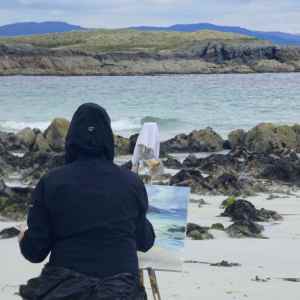
It’s not what you feel, walking along that beach. In fact, back in 2018 I was painting within the very rocks on which the monks were killed, and I didn’t ‘pick up’ on anything dark there at all.

Those monks were reconciled to their death in ways we find humbling and strange today. Like ancient Japanese poets of Haiku, they attended to the here and now, the Zen of everyday life.

Years ago I bought a collection of Irish verse from ancient to modern times and my favourites were those anonymous, very early, Haiku-like monastic verses, take this one for example:

How lovely it is today!

The sunlight breaks and flickers

on the margin of my book

And immediately I’m transported to Iona in the 8th century, where a monk sits at his lectern. Or perhaps outside amongst the marram grass, as he illuminates a manuscript on a lovely day in spring, his hands warmed at last, finding beauty in the way light falls on the margins of his parchment. Feeling gratitude for simple things in the here and now.

'Tràigh Bàn nam Manach (white beach of the monks)’. Mixed media on 16x16" wood. Rose Strang 2026

‘Tràigh Bàn nam Manach (white beach of the monks)’. Mixed media on 16×16″ wood. Rose Strang 2026


'Caol Ì (Sound of Iona)'. Mixed media on 16x16" wood. Rose Strang 2026

Caol Ì (The Sound of Iona)

Above: Caol Ì (The Sound of Iona). Mixed media on 16×16″ wood. Rose Strang 2026.

I’ve always found the name of the narrow channel of water between Iona and Mull poetic: The Sound of Iona, or in Scottish Gaelic, Caol Ì. Pronounced ‘Cuhl’ like the ‘u’ in ‘numb’. If you want to get fussy, the ‘L’ is pulled or rolled back in the throat, almost like a Spanish ‘L’. In original Gaelic, it means ‘narrow’ or ‘slender’. and  Ì simply means ‘Iona’, which is the original name of Iona, and is pronounced ‘Eee’.

It would have been called ‘Ì Chaluim Chille‘, meaning ‘The Island of the church of Calum Cille from the time Calum Cille arrived on the island but apparently it was always called  ‘Ì’. 

Hmm, that just means ‘island’ so they must have distinguished it in some way, in the name. Who knows?

Calum Cille was a powerful figure in the history of the Celtic Christian early church, which I’ve written about elsewhere. He was an exiled Irish prince and a well-trained warrior. However, it’s well-documented historically that he led a group of monks according to Christian principles, which you’d imagine would include peaceable ways.

Which brings us back to my painting, which attempts to capture the particular peace of gentle Hebridean rain, standing on Traigh Ban nam Manach (the white shore of the monks) looking towards Mull across the Sound.

In recent years, the Iona Community (an ecumenical Christian group on the island, who run religious programmes through Iona Abbey) have incorporated Celtic pagan forms of worship with Christian, which means a slant towards God in landscape and nature. This is a real Scottish tradition of the Hebrides, since there were not always churches in remote islands, so finding religious meaning in the clouds, the land and light or dark was just what people did.

Here’s a well-known prayer from Iona:

‘Silence.

Be still

and aware of God’s presence

within and all around.’

Here’s the painting again. Wishing you a peaceful week …

'Caol Ì (Sound of Iona)'. Mixed media on 16x16" wood. Rose Strang 2026

‘Caol Ì (Sound of Iona)’. Mixed media on 16×16″ wood. Rose Strang 2026