Tag Archives: scotland

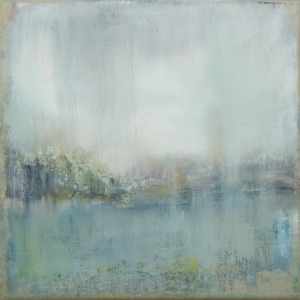
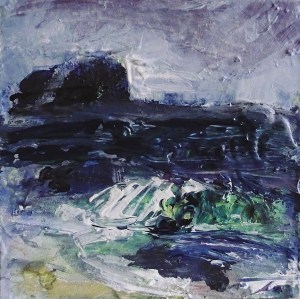
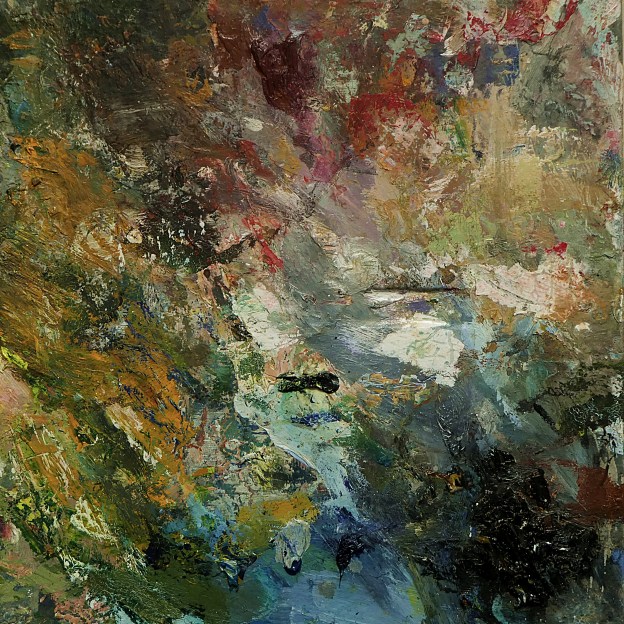
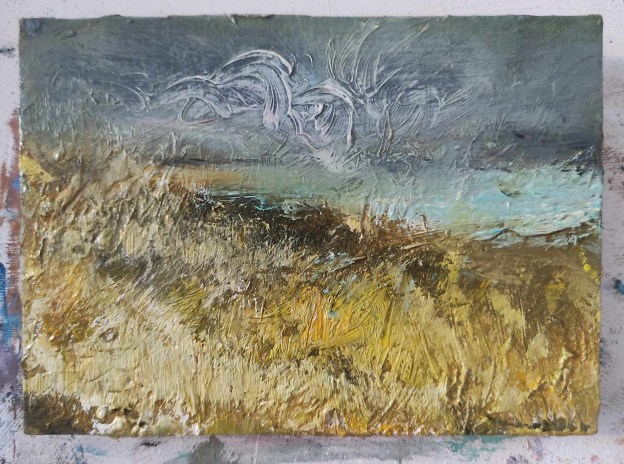
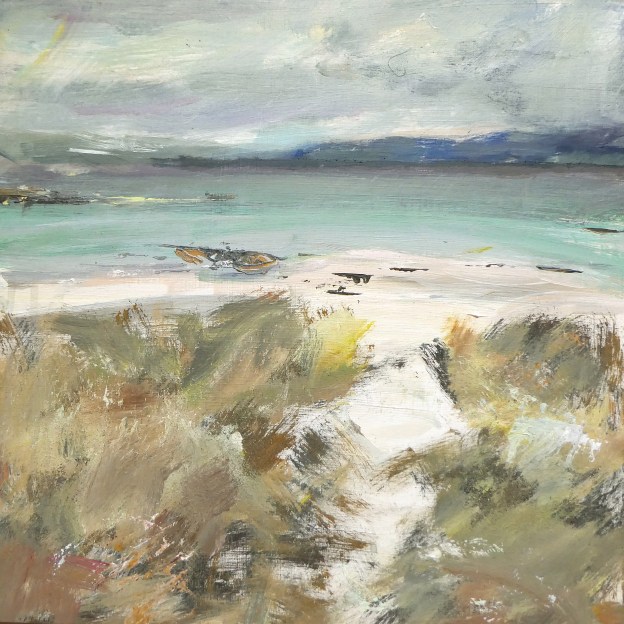
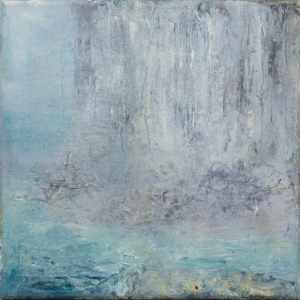
'Tràigh Bàn nam Manach (white beach of the monks)’. Mixed media on 16x16" wood. Rose Strang 2026

White beach of the monks

Above: Tràigh Bàn nam Manach (white beach of the monks). Mixed media on 16×16″ wood. Rose Strang 2026

You know this view very well if you’ve walked the beaches of Iona. And what a lovely, poetic name the beach has: Tràigh Bàn nam Manach (pronounced trree baan nam manach). Trill the the ‘r’ like you’re lightly breathing out the word ‘tree’ fast and that gives you that silent but still there ‘gh’ in ‘traigh’). Now read it out with the emphasis in bold above, and you get the poetic rhythm of it.

All the more surprising, then, that this particular beach is named for the monks who died there in one of many Viking massacres that took place around Britain between the 8th to late 10th centuries.

This massacre of fifteen monks and an Abbot took place in AD 986. It’s difficult for us, or the average person at least, to imagine the mindset of either Vikings, or the monks of Iona at that time. 986 seems so long ago to us, and to them too, Calum Cille’s time would have been several centuries ago.

But that mindset endured. Their way of thinking was not so much self-sacrificial. It was more that their vows to protect all that was sacred came before their life itself.They wouldn’t run when attacked.

So if Vikings (whose belief was that fearlessly, skilfully fighting and killing for what you wanted was the pinnacle of human endeavour) decided they liked the look of your land or anything else, they’d just take it. ‘Immovable object meets irresistible force’ you could say.

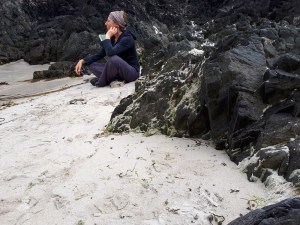
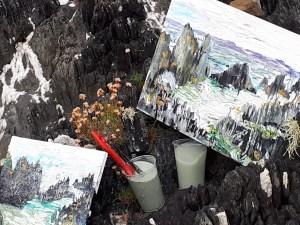
It’s not what you feel, walking along that beach. In fact, back in 2018 I was painting within the very rocks on which the monks were killed, and I didn’t ‘pick up’ on anything dark there at all.
Those monks were reconciled to their death in ways we find humbling and strange today. Like ancient Japanese poets of Haiku, they attended to the here and now, the Zen of everyday life.

Years ago I bought a collection of Irish verse from ancient to modern times and my favourites were those anonymous, very early, Haiku-like monastic verses, take this one for example:

How lovely it is today!

The sunlight breaks and flickers

on the margin of my book

And immediately I’m transported to Iona in the 8th century, where a monk sits at his lectern. Or perhaps outside amongst the marram grass, as he illuminates a manuscript on a lovely day in spring, his hands warmed at last, finding beauty in the way light falls on the margins of his parchment. Feeling gratitude for simple things in the here and now.
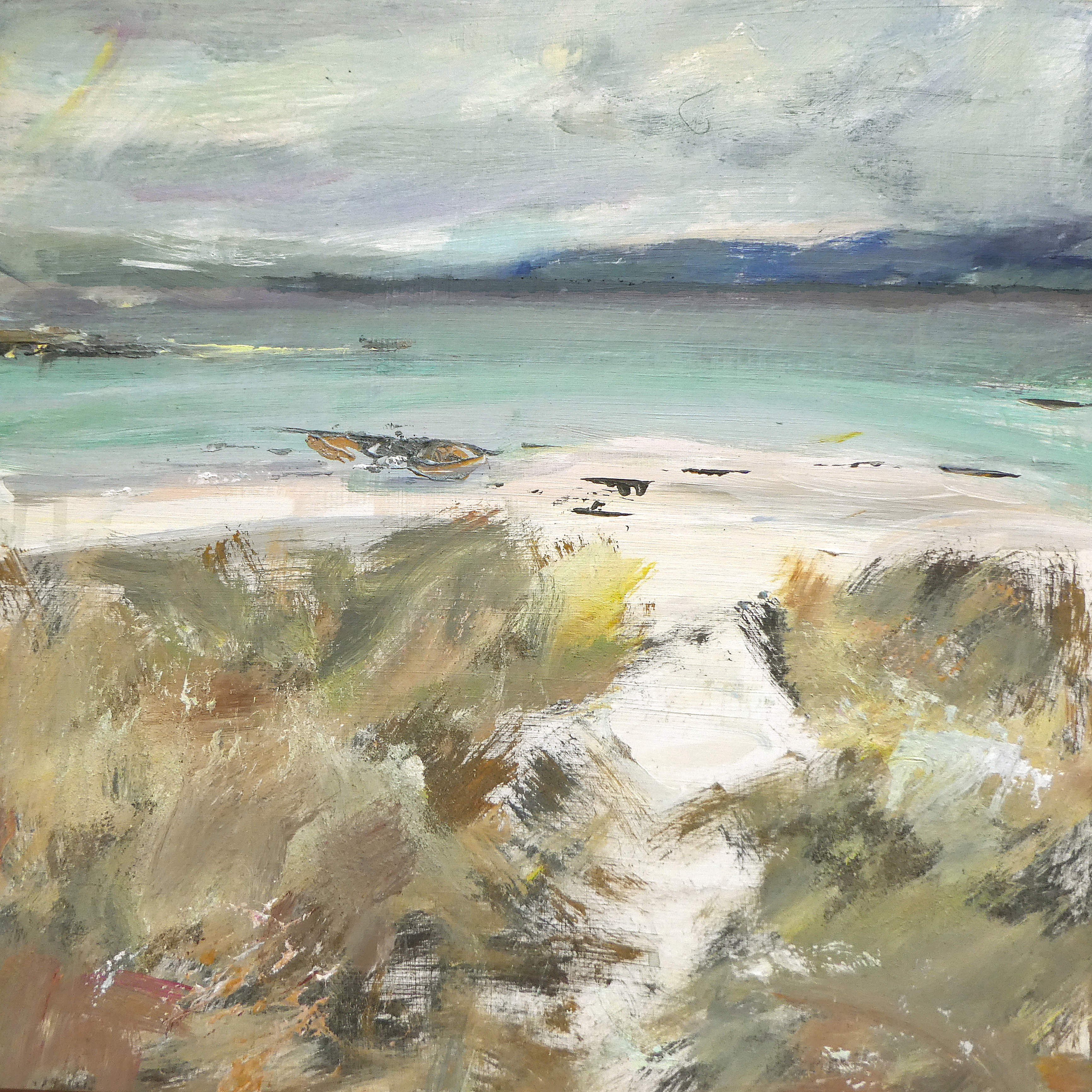
'Tràigh Bàn nam Manach (white beach of the monks)’. Mixed media on 16x16" wood. Rose Strang 2026

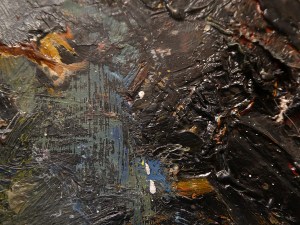
‘Tràigh Bàn nam Manach (white beach of the monks)’. Mixed media on 16×16″ wood. Rose Strang 2026
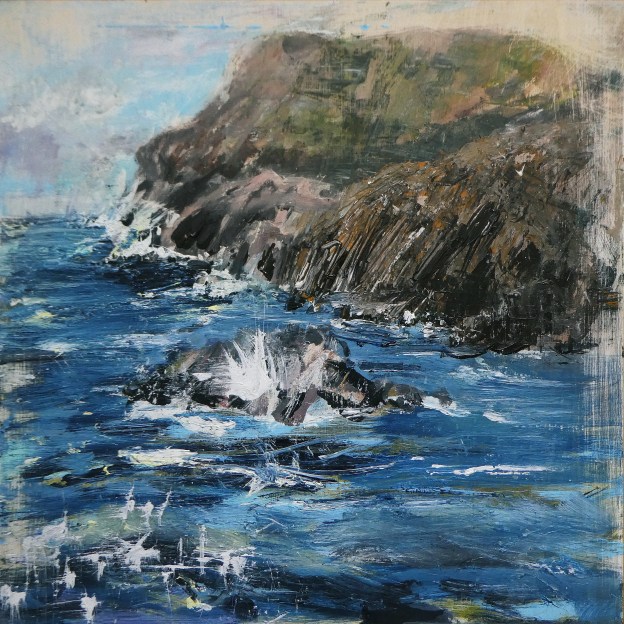


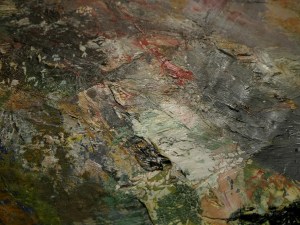
'Port Grulainn, Iona'. Mixed media on 16x16" wood. Rose Strang 2026

Ì Mo Chridhe

Above. Port Grulainn. Iona. Mixed media on 16×16″ wood. Rose Strang 2026
It never fails. Every time I walk on to the ferry and watch the island approach, it feels like I’m entering a different realm, somewhere magical and sacred.

I’m not alone in that, probably thousands of people visit Iona each year, seeking something meaningful in this island with its deep spiritual history. Maybe the effect is intensified by each successive visit.

It’s not always sweetness and light there, but that’s the nature of real relationships isn’t it? Whatever you have going on, you bring with you to Iona, or Iona presents a challenge, and then nearly always, something shifts into place.

I always feel a rush of excitement anyway. I suppose everyone feels something of that when approaching an island. All the stories you read as a kid too; Stevenson’s Treasure Island,  Enid Blyton’s The Secret Island (yes, she had some dodgy views, but her description of kids going off to an island, unbeknownst to adults, totally captured childhood adventure!)

There’s the Orcadian island ancestry that goes deep into the past on my dad’s maternal and paternal sides. But then, that’s probably the ancestry of half of Scotland! I lived there for a year when I was about 19 and never felt the affinity for Orkney that I do for Iona.

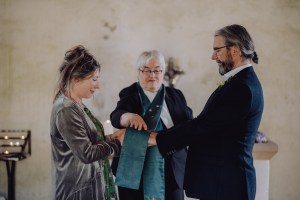
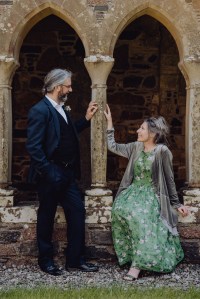
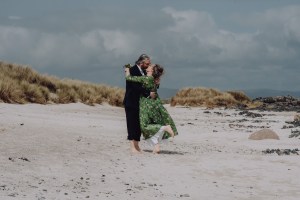
I’ve always imagined I’ll have my ashes scattered there one day. If there’s anyone around when I’m gone to make that happen. I never imagined I’d get married there, but I did! In my mid-fifties, in St Odhrain’s Chapel.

It was perfect. And it felt earned in a way, because there were many times I’d come to Iona alone, to paint, or to attempt escape from life’s struggles and disappointments. I remember the winter there 2018, when I went to Iona as part of an artist’s residency on the north end of the island and felt quite overwhelmed by the intensity of it all, the people staying there and my own history.

Since our wedding in 2023 though, the island seems to welcome us with open arms. We’ve made new friends, most recently with a documentary-maker and his artist partner. It turned out he’d made some of my favourite documentaries of all time! Extreme Pilgrim, for example, or Going Tribal and Around the World in 80 Faiths, to name a few.

I met them in the kitchen on our last day there last year, and when they said they planned to get married on Iona, I felt very touched. We chatted away animatedly, they came over to meet Adam, and I felt we’d made real friends in those minutes before we rushed off to the ferry.

After that we met up a few times, and then, of course, it turned out their visit to Iona this year overlapped with ours. Happy days.

I’m supposed to be blogging about painting here though. After we’d settled in to the campsite, caught up with our friends, celebrated our anniversary, and Adam’s birthday! it was time to start painting.

I usually head towards the north of the island, where the sea is always enchantingly green, but this time we decided to wander around to the west beaches as the sea looked amazing that day. We could see the waves from our tent on Cnoc Oran, but I think it was probably the romantic story of the marriage proposal of our new Iona friends that led us there too.

I’m actually slightly scared, if also entranced, by the sea. It really focusses the mind to be almost standing in the surf as you paint …

More tomorrow…

ascribed to SAINT COLUMBA

 An I Mo Chridhe

 An I mo chridhe, I mo ghràidh
 An àite guth manaich bidh geum bà;
 Ach mun tig an saoghal gu crìch
 Bithidh I mar a bha.

 In Iona of my heart, Iona of my love,
 Instead of monks’ voices shall be lowing of cattle,
 But ere the World come to an end
 Iona shall be as it was.
                         Traditional translation

Maspie Waterfall

Above – Maspie Waterfall. Acrylic on 17 by 16 inch wood panel.

A semi-abstract painting of layered acrylic depicting Maspie waterfall in Autumn.

Maspie Burn winds its way from the Lomond Hills in Fife down to the beautiful little town of Falkland. It’s a quiet place, best known for Falkland Palace – a favourite dwelling place of Mary Queen of Scots. There have been settlements here going back into the mists of time, or pre-history to precise. If you keep walking up to the source of Maspie Burn, you’ll eventually encounter earthworks named Maiden Castle, which show the remains of an ancient fort.

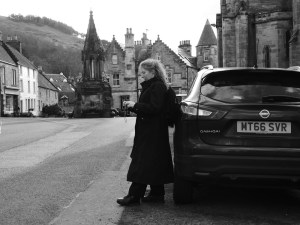
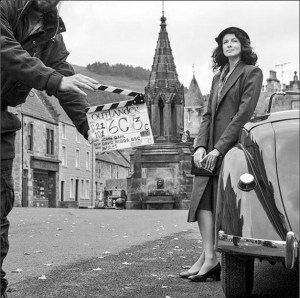
Falkland recently became better known as ‘Inverness’ in the tv series Outlander – it’s very much cuter than Inverness mind you, inverness having become a small but busy city. Photo below, me posing in Falkland, ala ‘Claire’, looking quite a bit sturdier and shorter than the model-esque Caitriona Balfe!)

I left the painting fairly abstract as it captures the energy of Autumn without going too pretty. The wood was actually part of a series of old cupboards from a flat owned by some friends of ours. Knowing I usually paint on wood, they asked if I’d like use it for painting. Yes indeed! I like re-using stuff.

Some photos of Falkland and a photo from our walk this weekend at Maspie Waterfall, you can walk behind it!

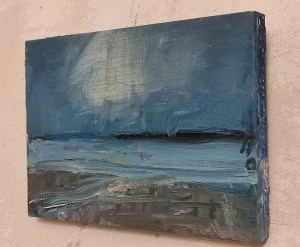
Oil sketches …

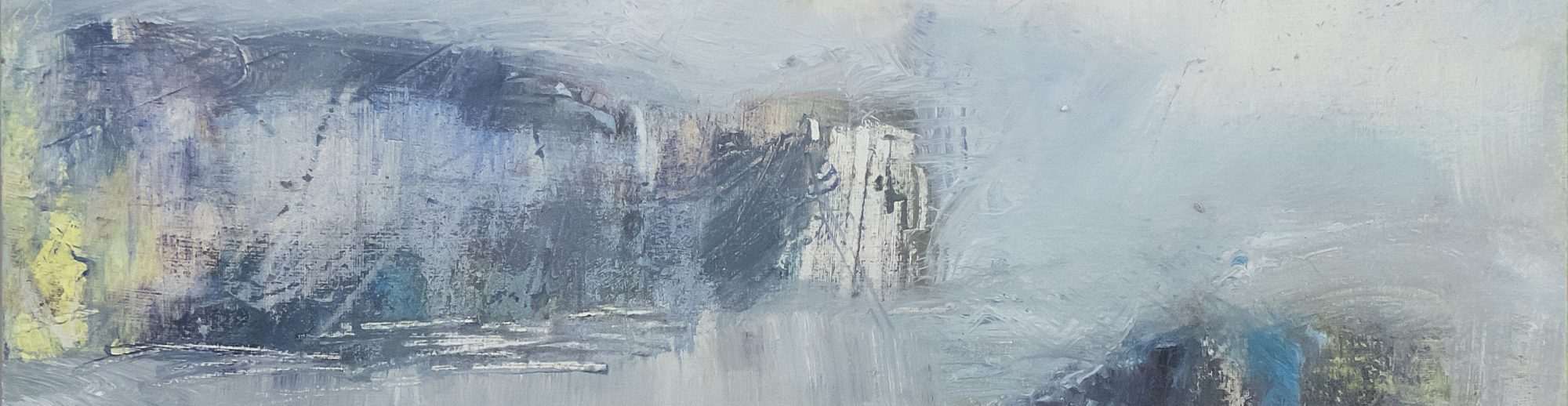
Above: Aberlefdi. Winter I. Oil on 8×5.5″ wood. Rose Strang 2024

These are some oil sketches I’ve been working on as part of a general series this year which explores the history and landscape of Aberlady in the south of Scotland.

Part of the series is a deeper look at the the history of a Carmelite monastery near Aberlady, but the paintings also reflect my love of a landscape that’s deeply familar to me.

I think there’s something dreamlike about Aberlady. It might be the sheer sense of space in sky, sand and sea, but I think it’s also something I find in particular on the east coast of Scotland. Looking out to the north sea towards Norway and Denmark, there’s something haunting about the fact that about 8000 years ago we’d have been looking at Doggerland, before the series of great landslides called the Storegga Slides occurred, creating the north sea. It looks and feels very different to the soft light of the west coast of Scotland.

Whenever I look at paths or horizons in this landscape, I also think of journeys, and the fact that not so long ago in the days when Aberlady was called Aberlefdi (hence the title of this series of small landscapes) it was an important stop on the pilgrim route between the Isle of Iona and Lindisfarne, or Holy Isle as it’s also known. That was in around 700AD when one of St Columba’s followers called St Aiden was tasked with setting up a new monastery on Lindisfarne.

When you camp over night near Aberlady you experience all the moods of the seasons; the burnished gold of marram grass and sand in winter, the soft green of the sea and grass in June when the larks and rabbits are at their busiest, or the thunder, lightning and rainstorms on humid late summer nights.