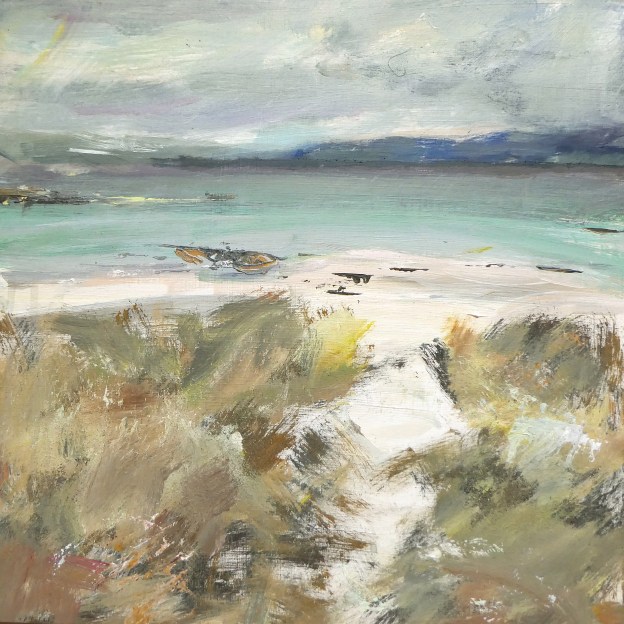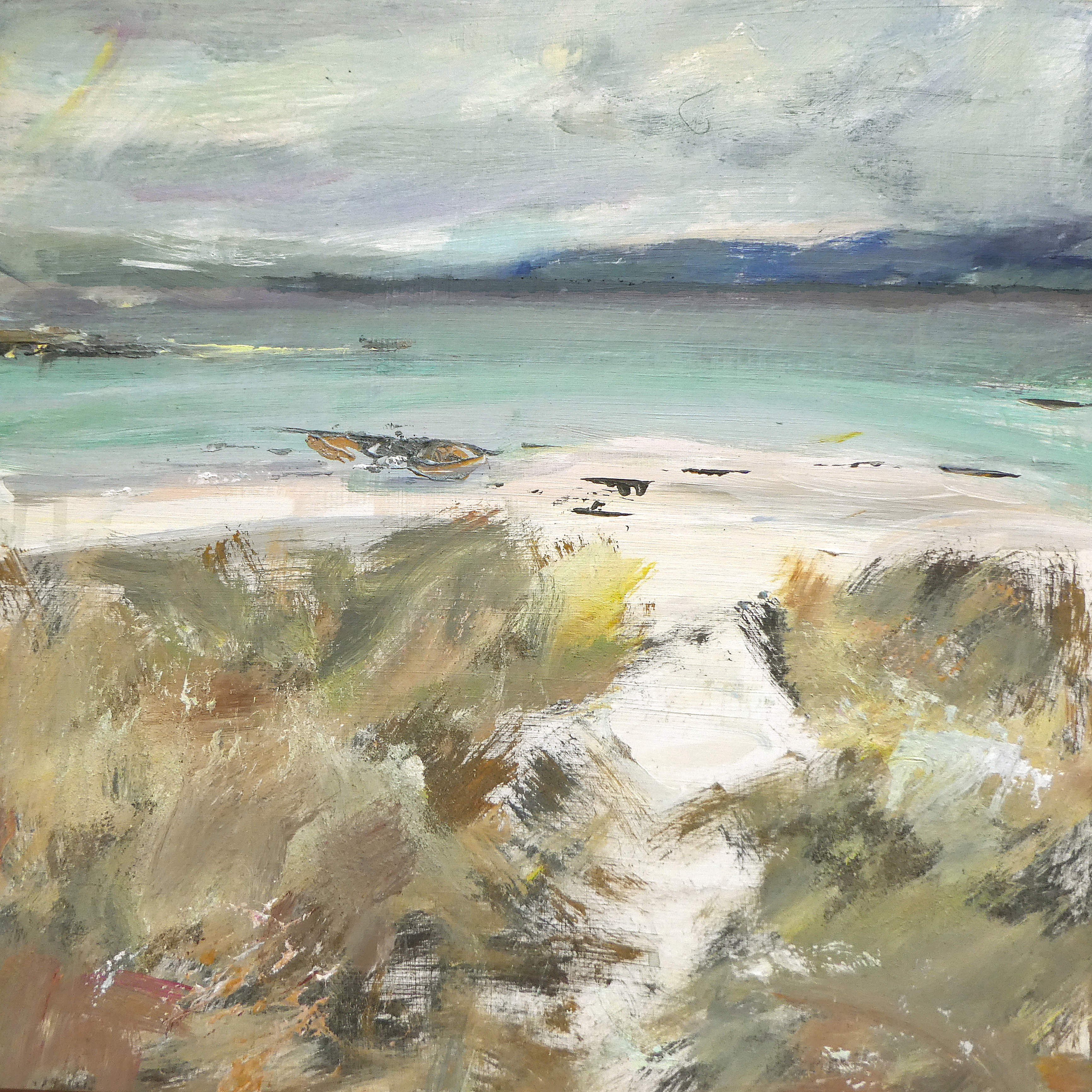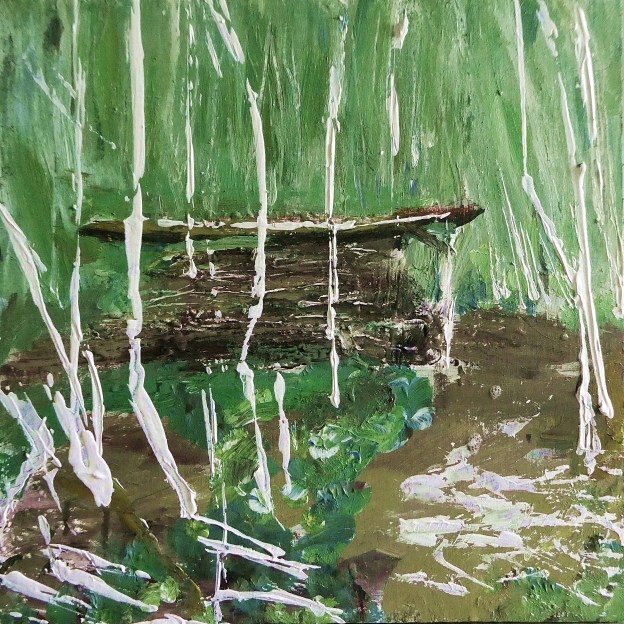
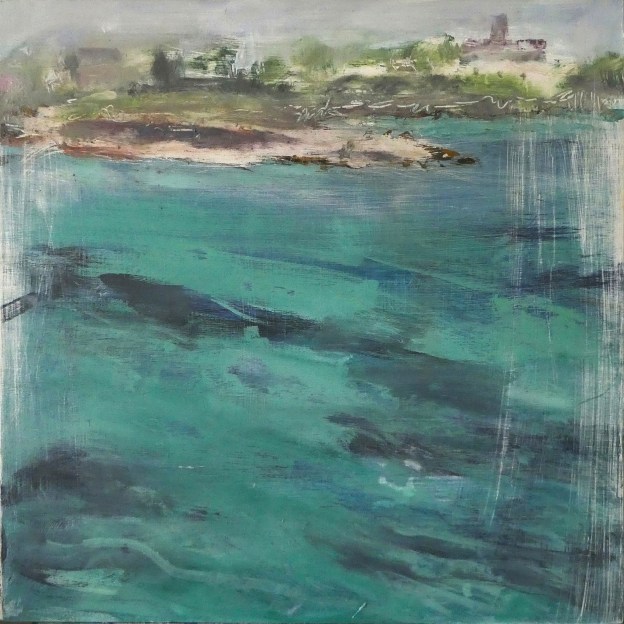
Above: St Ronan’s Bay from the Sound of Iona. Mixed media on 16×16″ wood. Rose Strang 2026
Today’s painting sits better with the Resipole series than the first painting I created in this series
This is the view from Iona Pier, or from the ferry as you approach or depart. I was thinking of calling it Baile Mor (Baile Mor being ‘main village’ in Gaelic) but St Ronan’s Bay from the Sound of Iona is somehow more poetic. I hear the chime of Iona abbey bells in that title.
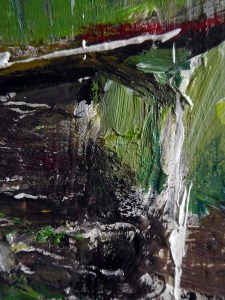
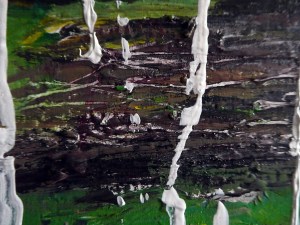
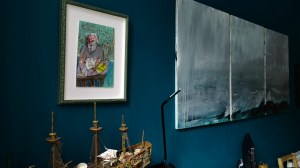
The clickable image, and details ;;;


I’ve often wondered how far back Iona’s inhabitants can be traced. I wonder if there was a significant village here when Calum Cille arrived. If so, are there traces of those original people on the island?
A quick online search tells me there are traces of iron age settlements and forts. Particularly on Dun Buirgh (Hill of the Fort, or Castle of the Rock) on the west side of the island, and I think I read there were iron age remnants outside the village of Iona. Going much further back there are traces of bronze age farming, about 1000bc, I think.
Iron age is not so long ago. In fact, just a few hundred years before Calum Cille arrived on the island. I’ve explored so many aspects of Iona but it’s difficult to find facts about how and why Calum Cille (or Columba) came to live here.
Bede describes a transfer of ownership from the Pictish King Breuide to Calum Cille, but the Gaelic traditions talks of a the island being gifted to Calum Cille from the kingdom of Dal Riata. The question is, why would either of them give him land? We don’t know. Obviously I don’t know, but neither do historians or archaeologists have definitive evidence.
And somehow, when I hear the tales of Adomnán (a descendant of Calum Cille’s religious order on Iona who lived in the 7th century and wrote extensively about the life and times of Callum Cille) I hear a certain amount of spin. Maybe because the place names on Iona are all Gaelic. I mean, there wasn’t a Pictish written language, but the names they gave places live on phonetically, especially in the east of Scotland – anything beginning with ‘Pit’, Pitlochry and so on. But then I discovered that Argyll was mostly isolated at first from the east of Scotland, and that some early form of Scottish Gaelic was mostly spoken in the Hebrides.
That’s quite reassuring to know. Many of those Gaelic place names on Iona have probably been there long before Calum Cille arrived.
These aren’t the things that inspire me to paint, but they’re interesting in retrospect. The 6th century on Iona was a time of real upheaval across the islands of Britain, as the Kingdom of Dál Riata, spanning both Antrim in Ireland and Argyll in Scotland, with its royal seat at Dunadd in Kilmartin, grew increasingly influential and powerful.
You could call it a kind of culture war: a time when ideology and religious conviction went hand in hand with military might, reshaping an indigenous culture. As far as we know, the Picts were the indigenous people of what’s now Scotland, alongside other Brythonic-speaking peoples who once lived the length of Britain. The theory now is that their descendants survive mostly in the west of the British Isles, most evidently in Wales.
More paintings coming up, for the Graystone Gallery in Edinburgh …