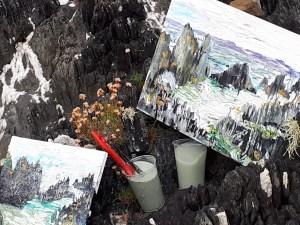
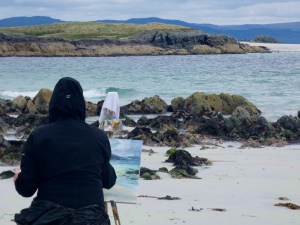
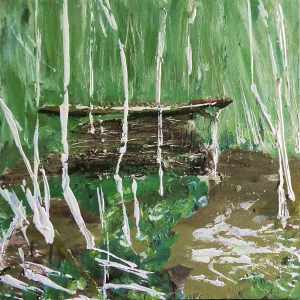
Below, a little speeded up video of me painting glasses yesterday!
Category Archives: Uncategorized
Toasting glasses
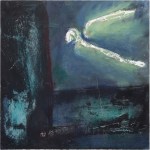
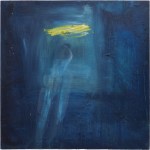
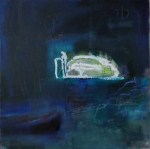
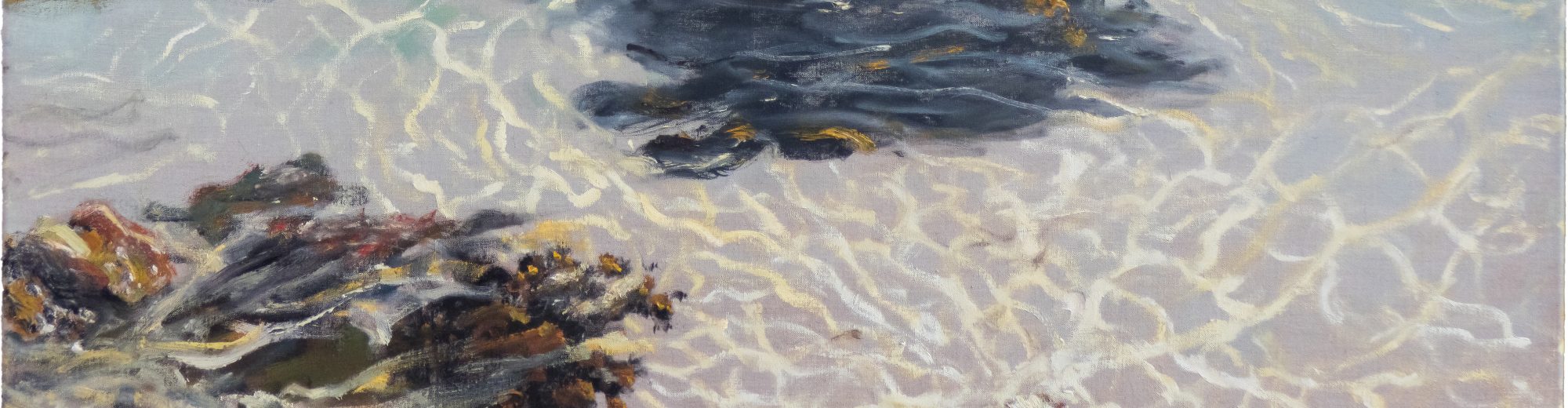
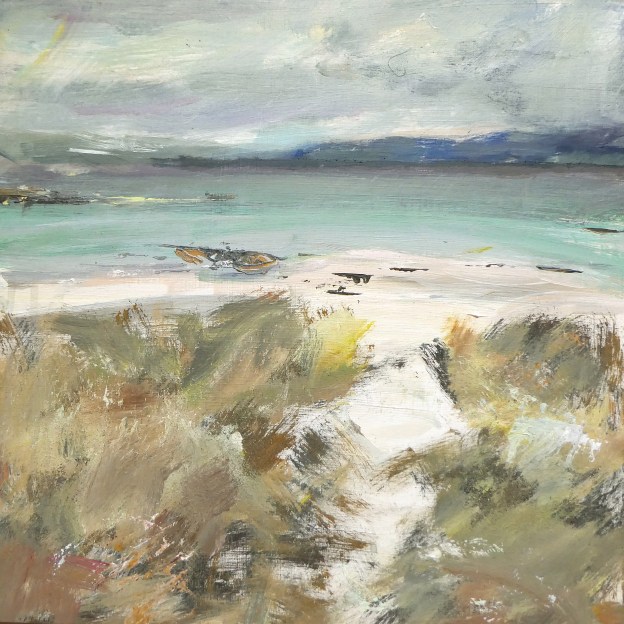
18th Century Toasting Glasses. Oil on 12 x 9″ wood panel. Rose Strang 2026
More work today on glass painting. These are a gift for someone’s upcoming wedding.
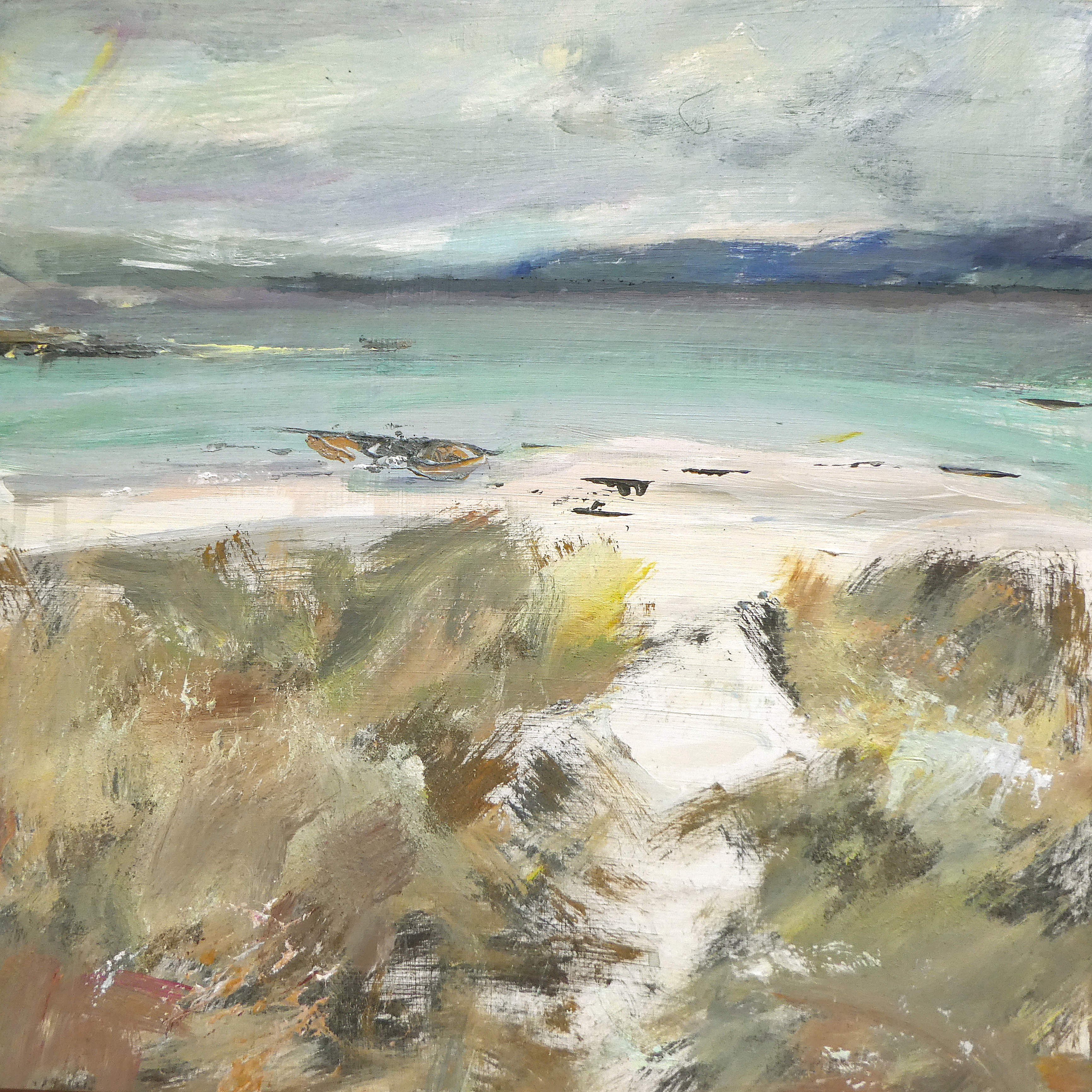
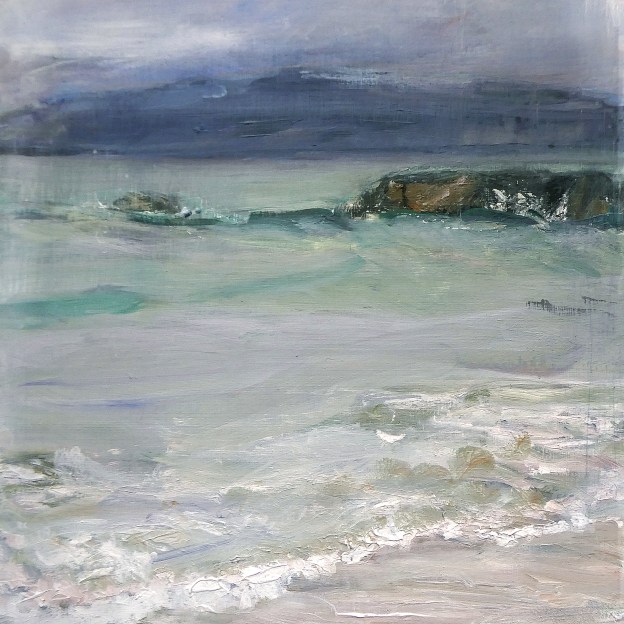
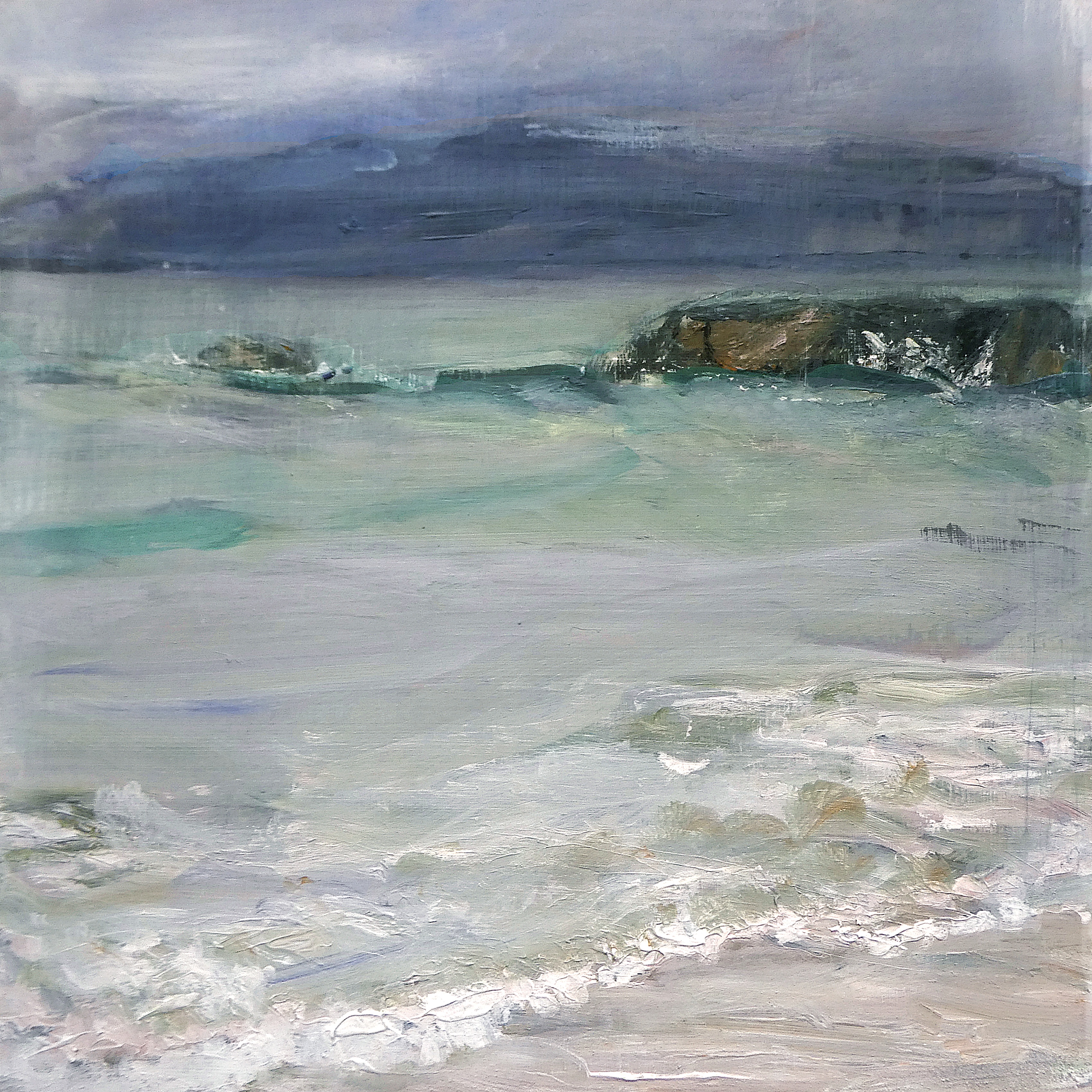
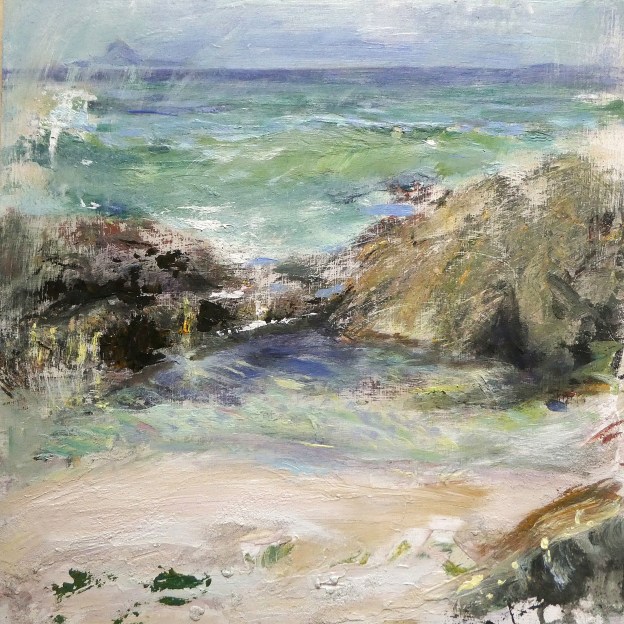
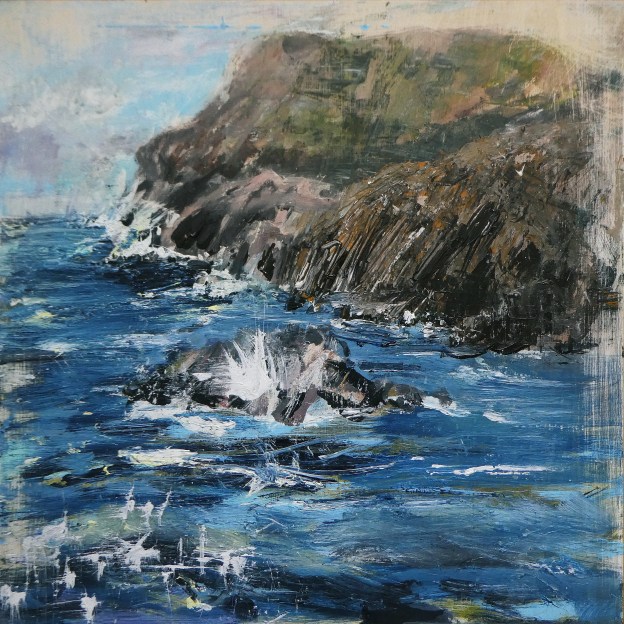
Until the end of April this year I’ll be painting still lifes, but after that I’ll be fully immersed in landscape painting from May to July, in preparation for group exhibitions at The Resipole Gallery and The Limetree Gallery.
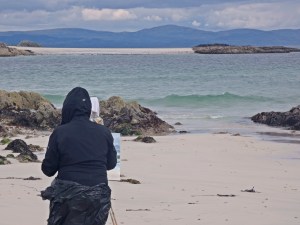
I’ll be staying on the Isle of Iona for two weeks so I can really get into the feel of it there. I’m so looking forward to it as it’s been a while since I took time to really focus on one landscape.
More paintings coming soon …
January Still Lifes
Above: 18th Century Toasting Glass with Scrap of Linen. Oil on 12×9″ wood panel. Rose Strang 2025
Below: Nuit de Noël (Caron/Baccarat). Oil on 12×9″ wood panel. Rose Strang 2026 and 18th Century Toasting Glass with Scrap of Linen. Oil on 12×9″ wood panel. Rose Strang 2025
- Nuit de Noël (Caron/Baccarat). Oil on 12×9″ wood panel. Rose Strang 2026
- 18th Century Toasting Glass with Scrap of Linen. Oil on 12×9″ wood panel. Rose Strang 2025
Two still lifes for the Limetree Gallery‘s upcoming show; Anew which launches 20th February
“The devil is in the detail” to quote Mies Van Der Rohe!
Still lifes might seem an unusual subject for an artist mostly known for painting landscape, but to me it’s the same exploration; what the subject tells me, the presence, energy and the way light falls on form and texture.
When I paint these objects I become steeped in their story; every tiniest twist of their making, so they become alive for me. “Is a river alive?” asks the author Robert MacFarlane in his latest book. It’s a question that would have struck the 14th century mind as odd, because they believed everything was alive.
With daylight hours being shorter, I want to focus in on a smaller scale. Large canvases are suited to the long hours and energy of spring and summer. That smal panel of twelve by nine inches of wood becomes a universe; a toasting glass made from lead crystal in the 1740s, a piece of scrap linen and the way both of these objects disappear against the neutral-toned plaster wall in my studio, the tones barely differing.
Highlights on glass and the way light catches the edges of frayed cloth offer clues to what’s there, though it’s not immediately obvious on first encounter.

I like the humble, undeclarative amost monastic feel of it. It looks to me as though this glass lay forgotten, maybe on an old pantry shelf (how else does a fragile 18th century glass survive?) I placed it next to a strip of linen; a cut-off from canvas-making in the summer of last year.
The linen doesn’t detract from the subtlety of the glass, the neutral colour hues and the low-key, ordinary setting. The shelf is a weathered, found plank attached to my studio wall by Adam a couple of years ago.
The other painting: Nuit de Noël (Caron/Baccarat) is in deliberate contrast. The subject announces itself assertively, the glamorous black glass, designed by the house of Caron and made by high-end glass-makers Baccarat, placed on a leather vanity case on which a gold necklace with amethyst stone is draped.
The Baccarat glass bottle announces its art nouveau elegance immediately, but I suspect only the makers of this bottle, and those who obsessed over its design, can truly appreciate the beauty of its angles and the story it tells.

I can’t really capture them in paint in a sense, because the viewer knows it’s a painting, they don’t know if I’ve subtly tweaked those angles. In fact I’ve just tried to meticulously copy them and in the process become lost in admiration, and frustration at not being able to reproduce them perfectly!
The designer of this exquisite bottle was Félicie Vanpouille, the artistic director of perfume house Caron, also the lover and muse of Caron’s owner Ernest Daltroff, a highly talented perfumer. Ernest had the perfumer’s equivalent of perfect pitch; the ability to remember thousands of individual scents in order to compose a perfume (an absolutely neccessary skill to become a talented ‘nose’).
Daltroff created a perfume to evoke Félicie’s favourite time of year, Christmas eve, hence the title Nuit de Noel. I know from descriptions that the perfume is darker than might be expected, more sombre, with a dark Mousse de Saxe (Saxon Moss) base and heart, lightened with sweet floral accords.
It was meant rather to evoke a more introspective Midnight Mass mood than the festive oranges and cloves aesthetic we might expect from a winter perfume.
(I will in fact be sampling it soon as I’ve just ordered 1.5 ml from a reputable vintage perfume sample company. For those interested in my life as a perfume sampler and writer of stories inspired by perfume, have a look at my new Substack page here – Rose Strang. Substack )
Most poigantly, this little bottle captures a perfect moment in time; two sparklingly talented people met, fell in love, worked together and became inseperable as lovers, mutual muses and business partners.
It’s impossible to extract Caron myth and legend from fact when it comes to the finer details of their relationship, but what I do know is that Ernest Daltroff and Félicie Wanpouille created Nuit de Noel (perfume and bottle) at the height of their love affair, though really it was much more than an affair, they were together perhaps twenty years.
It was no doubt described as ‘an affair’ at the time because relationships outside of marriage were believed to be sinful and usually caused a great scandal. Nonetheless, Félicie signed herself Madame Daltroff in all busines correspondence.
It’s suggested she wished to marry Ernest, but he refused, or vice versa. What’s known for sure is that, while he’d been born into wealth and privilege, she had been born into poverty. She had nothing but talent and wit. When they first met she’d already established herself as a designer in Paris. It’s a classic 1920s tale really from the depression era; women were becoming somewhat more emancipated, yet, if they married their money was no longer theirs. Not a great prospect for a woman who had experienced the instability and hunger of terrible poverty.
Around the time that Nuit de Noel was created, Ernest and Félicie signed a 50/50 ownership ‘Tontine’ agreement. This meant that if one outlived the other, the survivor would inherit the wealth and ownership of Caron, but just four years later, Félicie married another man and had moved out of the flat she shared with Ernest.
In some accounts, he’s described as devastated by this change. It leads me to speculate on whether they’d had a falling out. Had he refused to marry? Or had she refused, knowing that to marry would mean handing over the stability and everything she’d worked so hard for?
Interestingly, her husband appears to have been seventeen years younger than her. And when Ernest finally married, years later, at the age of 65, his new wife, Madeleine, was also twenty years younger.
When Ernest and Félicie were together, they’d often visit the Bellagio (in the beautiful area of Lake Como, Italy). I find it telling that decades later, just a year before his death, Ernest Daltroff visited one last time before leaving for the US. As a Russian with Jewish origins he was in danger from the Nazi occupation of France. He moved to the US with his new wife Madeleine and died just a year later in 1941.

Félicie Vanpouille kept Caron alive during the Nazi occupation since she wasn’t under threat from the Nazi regime, or not in the same sense as Ernest Daltroff.
Their last perfume before embarking on their separate marriages, was Bellodgia, inspired by thier love of Bellagia on Lake Como..
It’s a poignant story and it’s redolent of so many I read about this era of beautiful creativity set against the backdrop of brutal war. This was in fact the ‘Golden Age’ of perfumery. These bottles and perfumes are truly works of art. I see Félicie’s exquisite sense of design in every angle of that bottle. In a couple of weeks, when my perfume sample arrives, I’ll understand a little more of Ernest Daltroff’s talent as a perfumer too.
It’s also worth mentioning the process that created such a beautiful object.
For this particular Baccarat ‘onyx’ black glass, components were melted together at an astonishing 1450-1500°C (this temperature takes a month to prepare). Once the glass is removed from heat it rapidly cools to 500°C, and the master glassblower has only a few minutes to shape it before it hardens. This particular bottle though, was blown in a mold, to the specifications of Félicie Vanpouille’s design.
Lastly, a note on composition; I placed the bottle on top of my own Noel present; a vintage leather vanity case from my husband Adam. The 18th century glasses are a present from my niece and her partner. Beautiful Christmas presents, among others from all the family, my much-loved in-laws, and friends too that make me feel very grateful indeed for the relationships in my life, (not least my mum’s love of perfume that inspired me to love perfume – hound-like noses run in our family!) and for the peace we live in which means we can enjoy them.
Wishing everyone a wonderful, peaceful Happy New Year!
Winter Still Lifes
Above: Red Perfume Bottle with Silver Cap. Oil on 12 by 9 inch wood panel. Rose Strang 2025
- (On easel) Red Perfume Bottle with Silver Cap. Oil on 12 by 9 inch wood panel. Rose Strang 2025
- Red Perfume Bottle with Silver Cap. Oil on 12 by 9 inch wood panel. Rose Strang 2025
- (Detail) Red Perfume Bottle with Silver Cap. Oil on 12 by 9 inch wood panel. Rose Strang 2025
This is the first of three winter still lifes I’m painting for the Graystone Gallery in Edinburgh. They’ll be available to buy from around the 10th December, so contact the Graystone Gallery with any queries, they’re super helpful!
If you follow this blog then you might recognise the subject as this is not the first time I’ve painted this beautiful little bottle. The last time was in 2020 for the Limetree Gallery, Bristol. It belongs to my mum and I find it a magical little object. It always made me think of Lucy’s little cystal bottle which held healing elixir (The Lion the Witch and the Wardrobe).
Others have said the painting makes them think of Alice in Wonderland (the “Drink Me” scene). I love painting these jewel-like still lifes in winter. Landscape painting is easier in the warmer months as the colours are so subtle. Winter light is hard to paint in, so up-close, monochrome or strong-coloured subjects work well
I think my painting has improved since I last painted this subject, you can be the judge of that though! Here they are, side by side …
The Cairngorms and Braemar
(Above – driving through Glen Shee to Braemar. Photo Rose Strang. All photos below by Rose Strang and Adam Brewster)
The more I visit the Cairngorms the more I understand how they pull at the heart. In Nan Shepherd’s words from her poem – Summit of Corrie Etchachan:
” …No vision of the blue world, far, unattainable,
But this grey plateau, rock-strewn, vast, silent …”
The Braemar Literary Festival was abuzz with ideas and conviviality – it was truly special to be there, but what remains with me is the changing mood and light of the mountains and the sense that just beyond the warmth and safety of Braemar is this arctic beauty, clear water, epic forests and everchanging skies. I really want to go back there and paint!
I was surprised by viewer reactions to my paintings (The Living Mountain series, completed in 2021). It was emotional and I had some really lovely conversations with people who feel passionately about the Cairngorms, for which I’m very grateful.
- Copyright Fife Arms Hotel
I attended the festival with my partner Adam, and we were blown away by the generosity we experienced from Art Farm (the people who manage art and cultural events at the Fife Arms Hotel on behalf of Hauser and Wirth). Also by the people who run the Highland Pavilion, who provided us with fresh coffee, scones and friendly chats the two days we were there.
We didn’t expect Art Farm to invite us to their yearly literary dinner at the Fife Arms, along with some well-known authors and poets including David Nicholls (One Day), Alexander McCall Smith (44 Scotland Street) and Scotland’s Makar (Poet Laureate) Peter MacKay.
The Fife Arms instagram page has some great photos of the weekend on this link –
David Nicholls was amused when I told him he’d traumatised me with his gripping, emotional book One Day. We chatted about the effects on society of lockdown, touched on in his new book You Are Here, which I’m already enjoying – it has the characteristic loveable, flawed characters Nicholls is known for.
I was sitting next to Peter Mackay for dinner, and had a fascinating chat about Scottish Gaelic, the structure of ancient clan society and Scottish politics. Turns out we’d both drawn a parallel between the underground mycorrhizal networks that connect trees (explored by scientist Suzanne Simmard) and non hierarchical clan society. That was a bit of a niche ‘high five’ moment! Here’s my rambling post on the subject from 2019 – Planets, Narnia, Clans, Trees)
Alexander McCall Smith was as convivial as you’d imagine, telling me an amusing tale about a painting he’d acquired from the Scottish Gallery which turned out to be by a Dutch master!
The entire weekend was a rich and autumnal experience that Adam and I won’t forget, so a warm thank-you to all at Art Farm, The Duke of Rothesay Highland Games Pavilion and staff at The Fife Arms Hotel (unmatched for lush comfort, warmth and style!)

I’ll end with a poem (it was written first in Gaelic then translated by MacKay) by Peter MacKay, which, although it’s about the sea, not the Cairngorms, somehow speaks to me of their pull …
A Week from Rathlin
Translator: Pàdraig MacAoidh Peter Mackay
On the way home from Rathlin
it was the small boat – a motor- boat with a cabin and open seats out the back.
‘You’ll get soaked out there’, the skipper said,
and he was right – the first waves
broke over the prow and drenched us in a oner, saltwater
overwhelming, exhilarating us
and though we peeled the sea off
with our clothes, the salt from Sruth
na Maoile had marked our skin like moles
and the wave the wave is still flowing through us
Seachdainn an dèidh Reachrainn
Pàdraig MacAoidh
Peter Mackay
Air an t-slighe air ais à Reachrainn b’eambàtabeagabh’ann, eathar-motair le caban
agus suidhichean-deireadh fhosgailte.
‘Bidh sibh bog fluich a-muigh a shin’ thuirt fear a’ bhàta, agus bha e ceart – bhris na tuinn thar an toisich,
gar drùidheadh sa spot agus sàl
gar slugadh ’s gar n-aoibhneachadh
’s ged a rùisg sinn am muir le ur n-aodach dh’fhan sàlainn Sruth na Maoile
nar craiceann mar mhiann,
’s tha an tonn an tonn fhathast a’ sruthadh tromhainn
Braemar Literary Festival September
I’m excited to be part of the Braemar Literary Festival this year. Not as an author, more as an artist in thrall to an author; namely Nan Shepherd and her much acclaimed book about the Scottish Cairngorms: The Living Mountain.
My paintings from the Living Mountain Series will be showing in the Highland Pavilion, Braemar on the 27th and 28th September and I’ll be there for ‘meet the artist’ from 12 noon to 1:30pm.
If you follow this blog you’ll maybe remember the exciting commission I was given by the Folio Society, London, in 2021. The Folio were re-publishing their own edition of The Living Mountain, and sought an artist to illustrate the book. I felt honoured and surprised – this being one of my favourite books of all time! (the Folio edition is now completely sold out – it’s possible to buy a copy online from booksellers but it’s now into the £100s. How I wish I’d held on to more of the copies they gave me. I have just one left)
The Braemar Literary Festival was founded by world-famous art collectors Hauser and Wirth, who own the Fife Arms Hotel in Braemar. The’ve turned the hotel into a quite extraordinary experience, the place is festonned with stunning original works of art including a Picasso and an enormous Bruegel in the dining room. The atmosphere is high-end but not uppity, the style in keeping with its Victorian heritage, they even have a framed letter by Queen Victoria tucked away in an alcove somewhere.
Guest speakers to the festival will include Monica Ali, Alexander McCall Smith, David Nichol (known most recently for the televised version of his heart-rending novel; One Day), Giles Coren and many more interesting authors, journalists and presenters (link Here)
Hope to see you there! Here’s the info again …
My paintings from the Living Mountain Series will be showing in the Highland Pavilion, Braemar on the 27th and 28th September and I’ll be there for a ‘meet the artist’ hour from 12 noon to 1:30pm.
” …waves lapping, light dancing.”
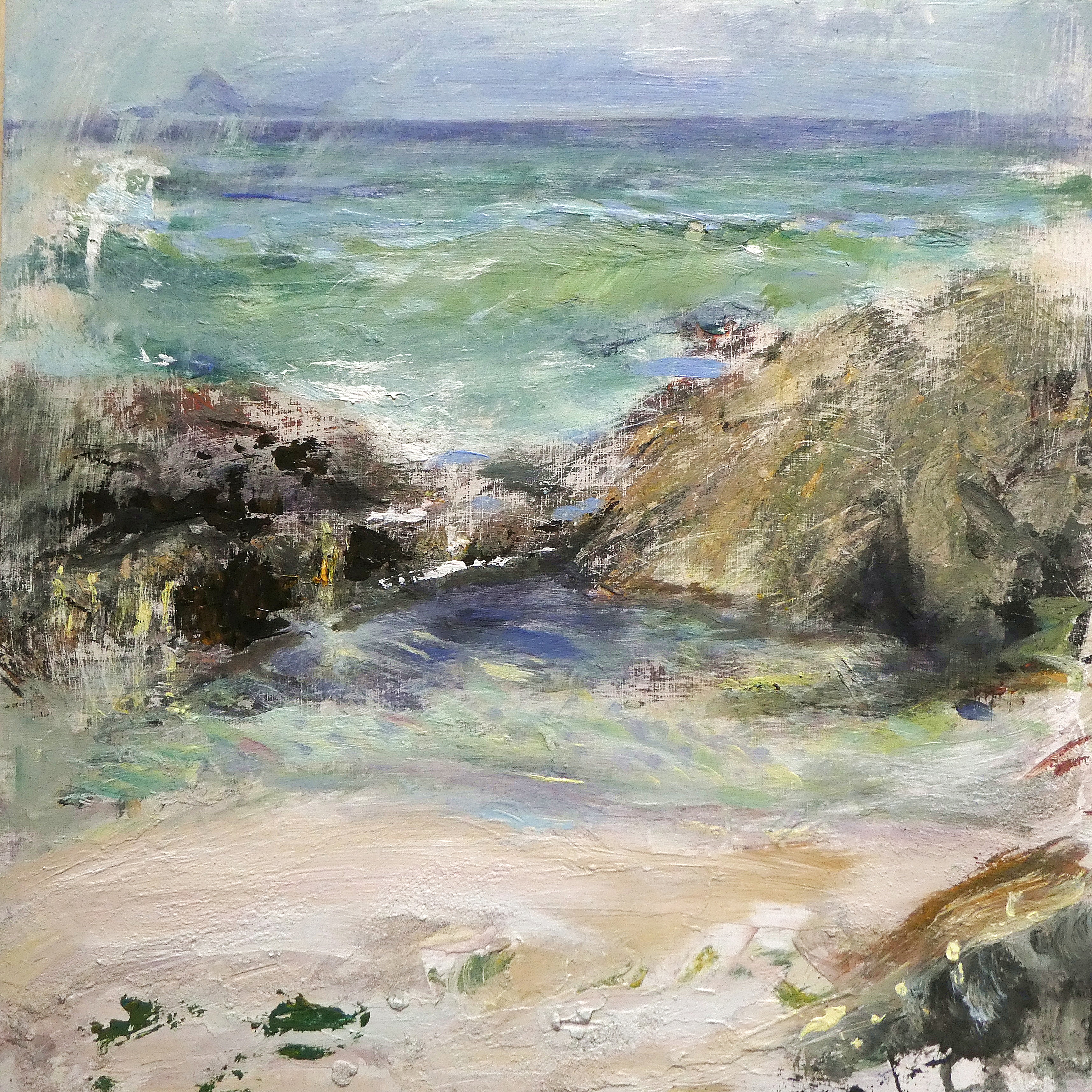
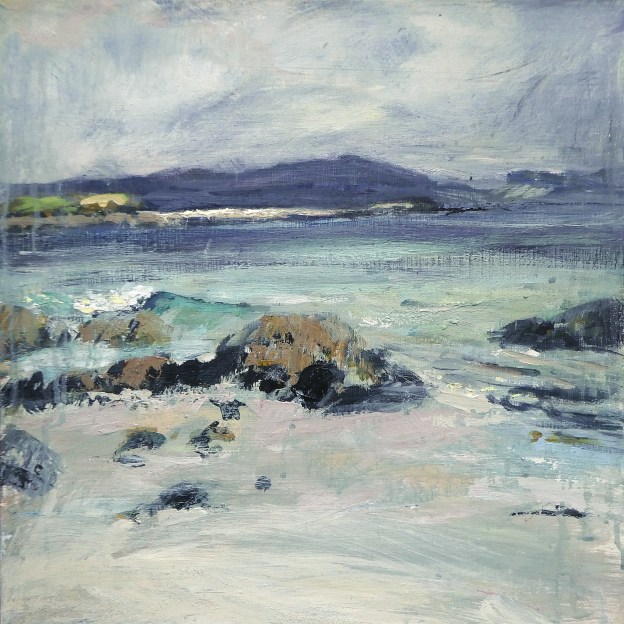
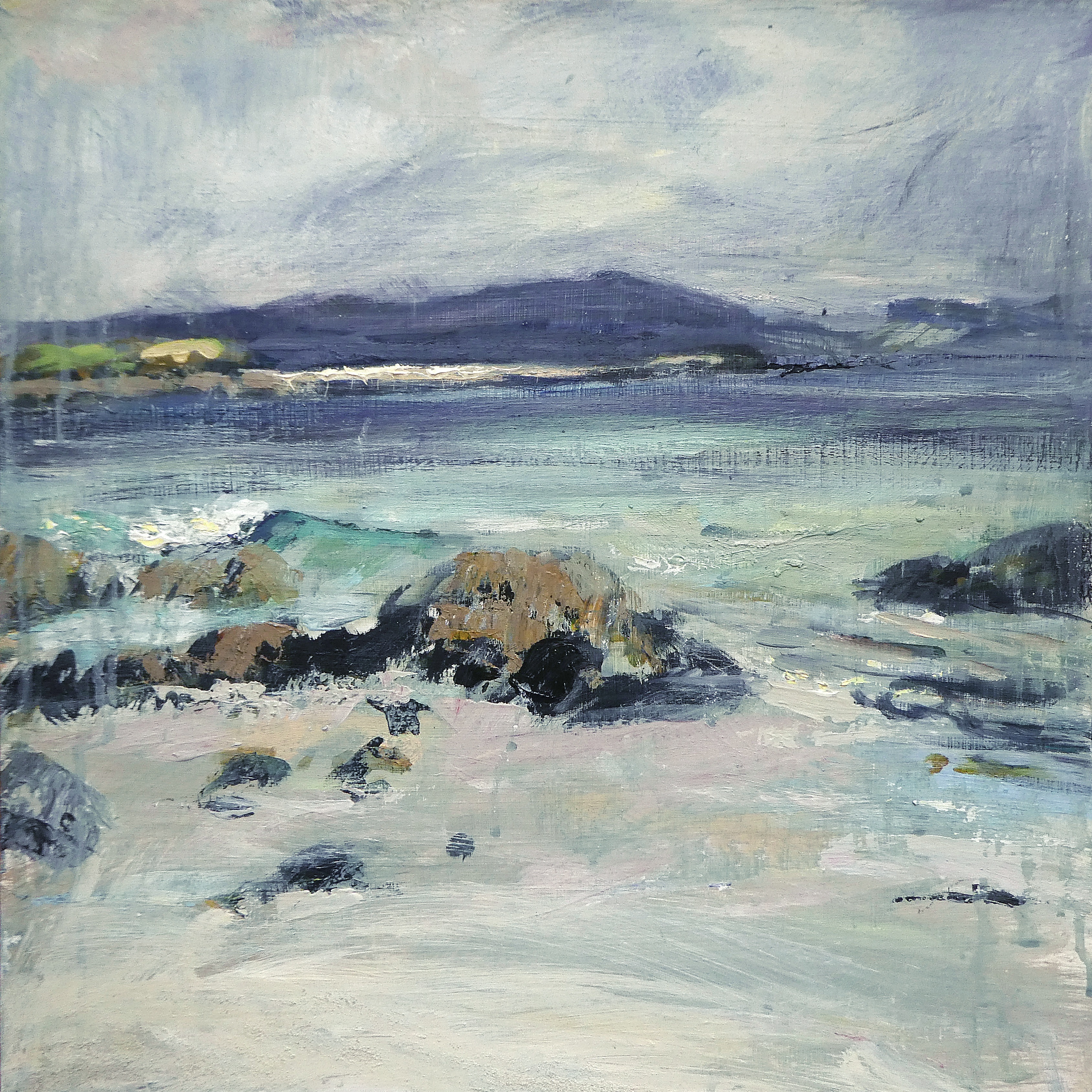
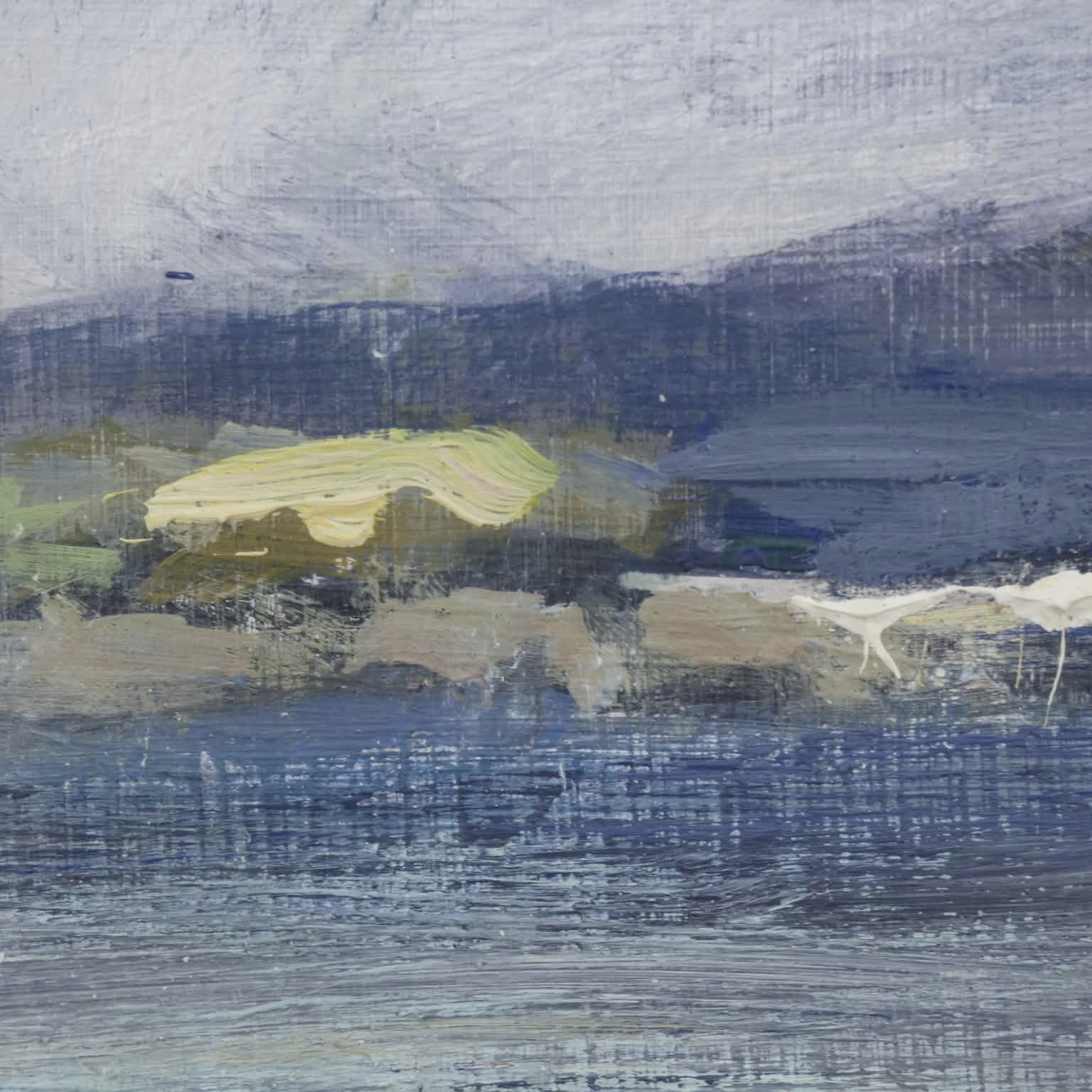
Above: North Beach Iona, May . Oil on 30×20″ linen canvas. Rose Strang 2025
“Rose Strang observes North Beach, Iona (May) with atmospheric close-up clarity. The circle of black rocks, pale sand and turquoise shallows, lead to the misty mountains beyond with a loose, impressionistic style. Textured brushstrokes contrast the weathered ruggedness and calm serenity of the isolated beach on this Spring day. The palette is cool and luminous dominated by icy blues – waves lapping, light dancing. Strang’s poetic, painterly voice speaks not just of the physical landscape but of its ever-changing natural elements with quiet contemplation.”
A really lovely review by Art Mag art critic Vivien Devlin today of the Graystone Gallery’s Edinburgh Festival Exhibition. Poetic, descriptive writing by a genuine art lover. Thank you Vivien! –
Edinburgh Festival Exhibition, 2025, ‘A Convergence of Vision’ by 30 artists @ Graystone Gallery
Exhibition Saturday 19th July
Coming up in just 9 days, The Edinburgh Festival Exhibition at The Graystone Gallery, Edinburgh!
Saturday 19th June, 2 to 4pm, Graystone Gallery
Here’s a litle vid showing the inspiration of Iona and clips of the painting process …
Storm Island
Above. Storm Island. Oil on 50×50″ linen canvas. Rose Strang 2025.
Part of a series in progress for the Graystone Gallery‘s Edinburgh Festival exhibition launching to the public Saturday 19th July 2025 from 1 to 3pm
The photo below includes me to show scale …
- ‘Storm Island’. Oil on 50×50″ linen canvas. Rose Strang 2025
The painting’s called Storm Island because it shows a somewhat abstracted view from the north beach of Iona to Eilean Annraidh, which means (you guessed it!) Island of Storm in Gaelic.
It doesn’t look remotely stormy from the shore, it generally looks somewhat tranquil, even mystical in the way that islands do until you’re on them. A sense of untouched purity with its white sand and luminous tuquoise water.
I can never capture in traditonal or realist paintings that feeling of mystery. Abstracting this painting a little, and painting from a place where I’m thinking of colour, shape and texture rather than what’s actually there, maybe gives more of a sense of that feeling.
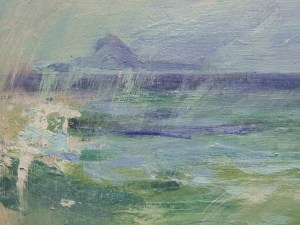
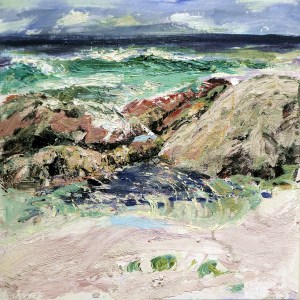
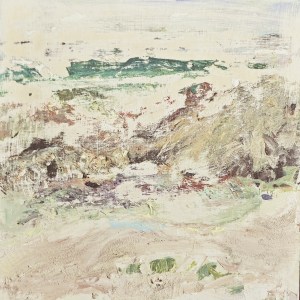
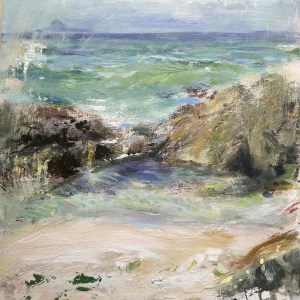
The foreground suggests a rockpool. The rock pools on the north beach of Iona are incredible sometimes, you feel you’ve stumbled upon some sort of dragon’s lair, with this lime green water among the jagged jet black rocks.
I have one more of these semi abstract works to finish this week, then the series for the Graystone Gallery is complete. The exhibition launches with a preview on Saturday 19th July from 1 to 3pm. Hope to see you there!
Iona Sea, new exhibitions
Above: Iona Abbey from North Beach. Oil on 30×20″ linen canvas. Rose Strang 2025
Today’s painting, above, is one of two landscapes for the upcoming Graystone Gallery exhibition in Edinburgh which launches on Saturday 19th July this year from 1 to 3pm
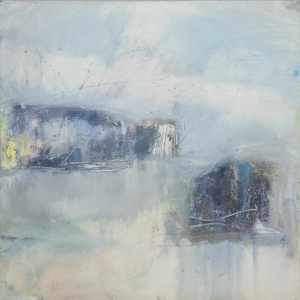
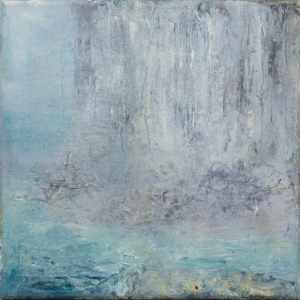
I’m taking these two landscapes as a starting point for two much larger abstract works for the Graystone, about which I’m very excited as I really awant to play with colour, mood and texture, not just views of Iona, lovely as those are to paint!
Just looking at my palette at the end of today is an inspiration!
More next week …