Tag Archives: pishwanton

Fairhill and Goblin Ha’

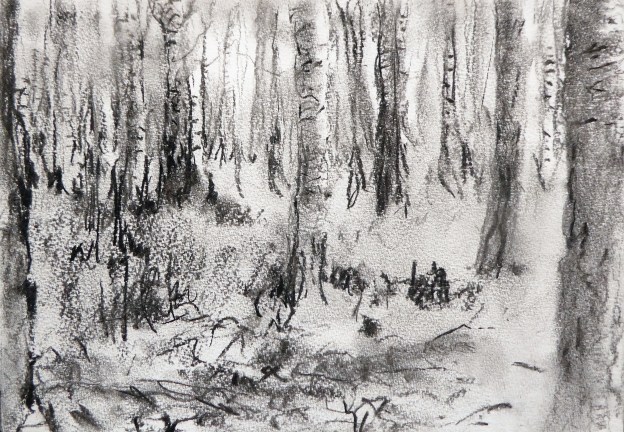
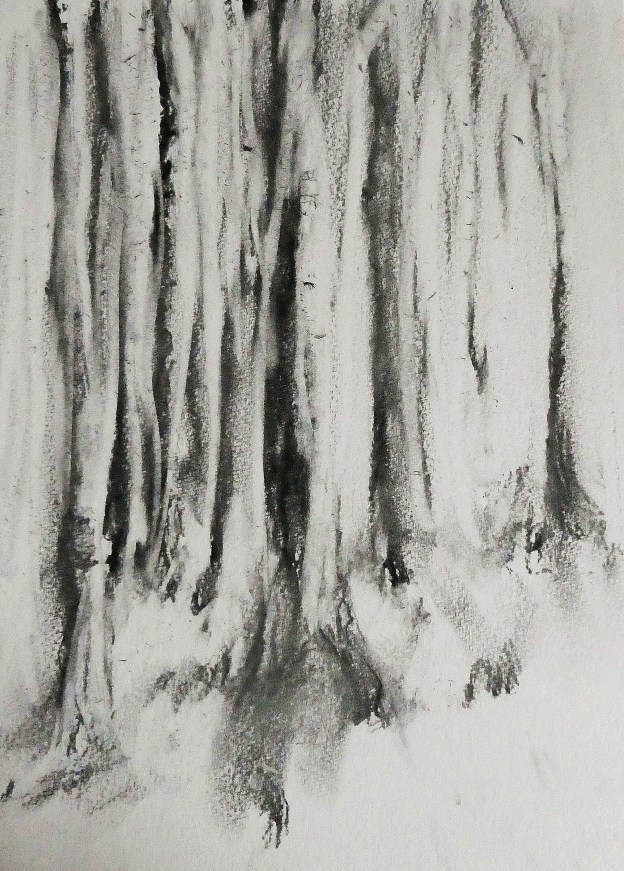
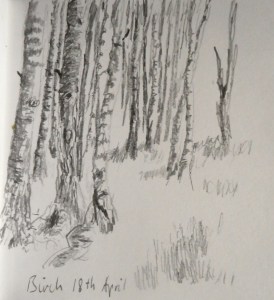
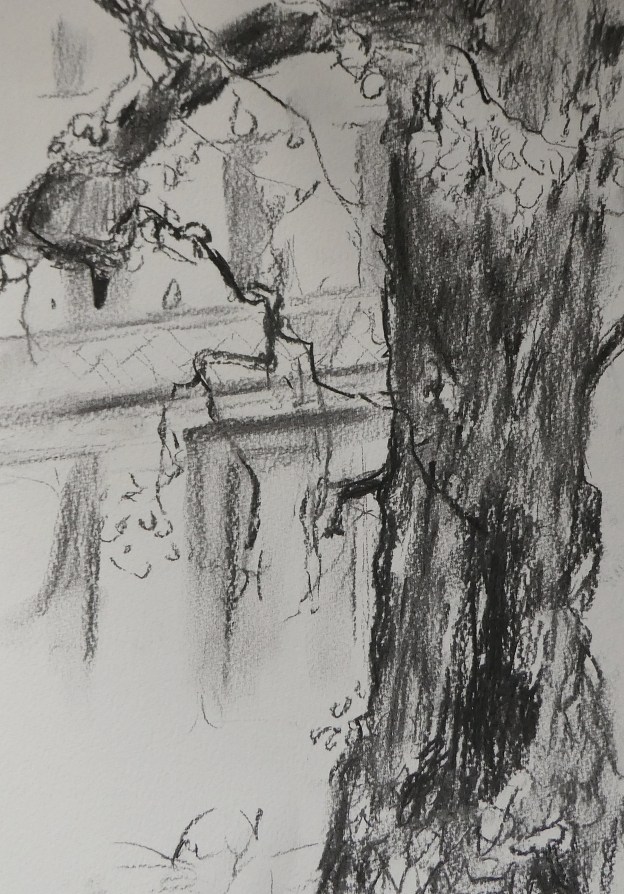
Above: Birch Trees. Fairhill. 18th April. Charcoal on A4 paper. Rose Strang 2026

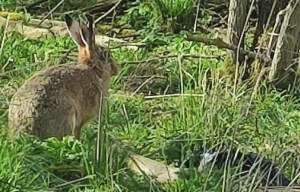
The same hare that greeted us at Fairhill appeared on cue as we arrived, bounding through the birches.

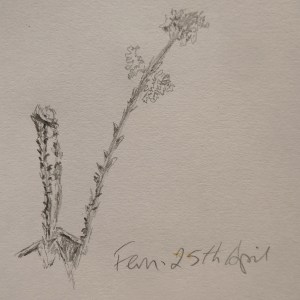
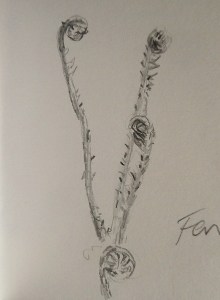
Given that I was there to let nature speak to me, rather than impose my big artist’s ego onto the scene, I decided to follow it! It veered off just before the willow shelter, I looked down and saw a tightly curled fern amidst the swaying slender birches and though ‘this’ll do’.

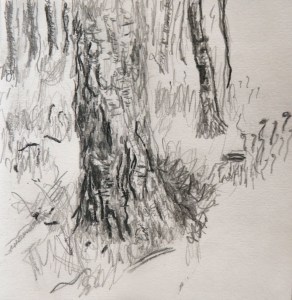
This is my first litle foray into a Goethean approach to observation. At the first stage – you just draw exactly what you see.  A bit like going back to art college. I enjoyed it though. There’s no harm in slowing down to simply observe.

It struck me how both the fern and the birches grow up in spurts, with each burst of energy marked by a band, or leaf. The fern looked so tightly coiled, almost hairy-looking with its fronds, slightly unsettling. These bands showing growth are most marked in bamboo, which reminded me of Crouching Tiger, Hidden Dragon. The way the bamboos swayed so mysteriously, just like the sun-dappled birches that swayed above my head as I drew. And again there was that strange sensation I had last time, the noise of the trees almost sounding like speech. Maybe there was a birch forest here hundreds of years ago, when it was called Fairy Hill, and this sussuration (which to the human ear, seeking patterns, sounds almost like voices) led to the name of the place.

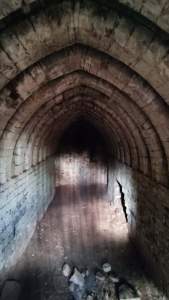
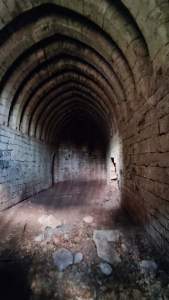
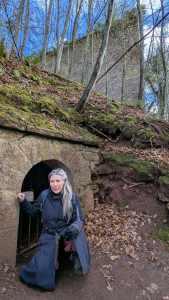
Adam painted a watercolour, then, our legs stiffened up by kneeling on the damp moss (we’re getting too old for all this kneeling and will bring fold-out stools next time!) we decided to head off in search of Goblin Ha’ in the valley of Yester. As we drove off, the large hare ran alongside to see us off!

We searched for Goblin Ha’ last Sunday in the pouring rain and mud. And when I say mud, I mean that there were serious levels and amounts of it. This weekend the sun was out thankfully, but the mud was still in full force.


I’d been begining to wonder if this ha’ (meaning ‘hall’) was even real. Last week as we returned to the car drenched and puggled, I was speculating on whether it might just be an elaborate hoax by the people who own the Yester estate. Maybe they film us struggling through the mud for entertainment, and the images of the hall I’d see online were ai.

Well …

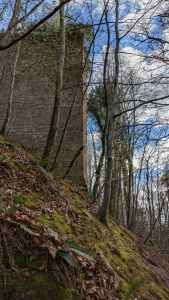
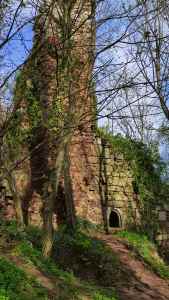
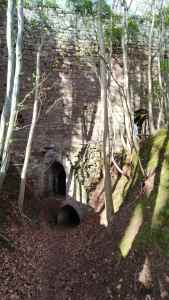
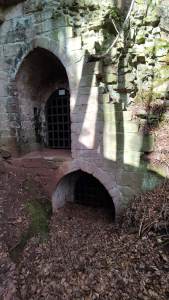
We found it!

More on Fairhill and its mysterious surrounds in a couple of weeks.

Forest of Fairhill 5

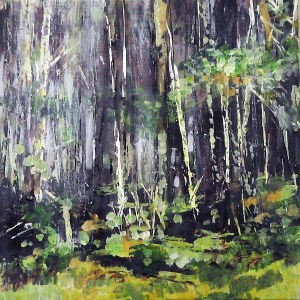
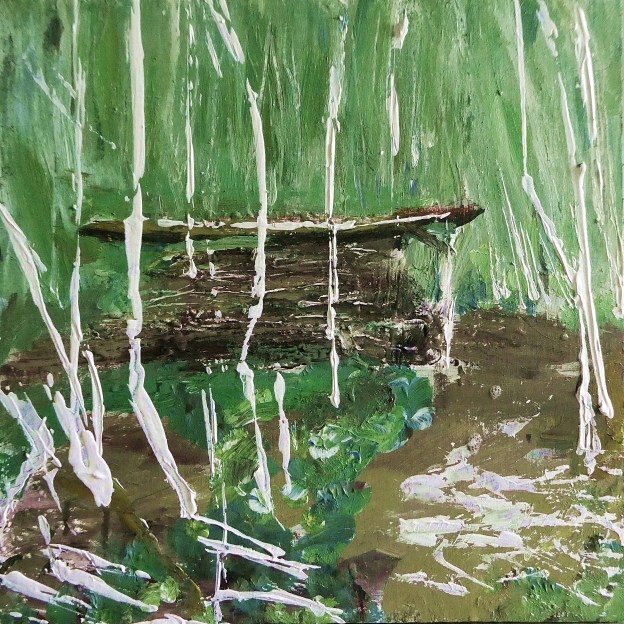
Above: Through Trees. Fairhill. Mixed media on 20×30″ wood pane. Rose Strang 2026.

Adam and I visited the forest of Pishwanton/Fairhill this weekend for the first time in a few years. I’ve been there many times over a decade or so.

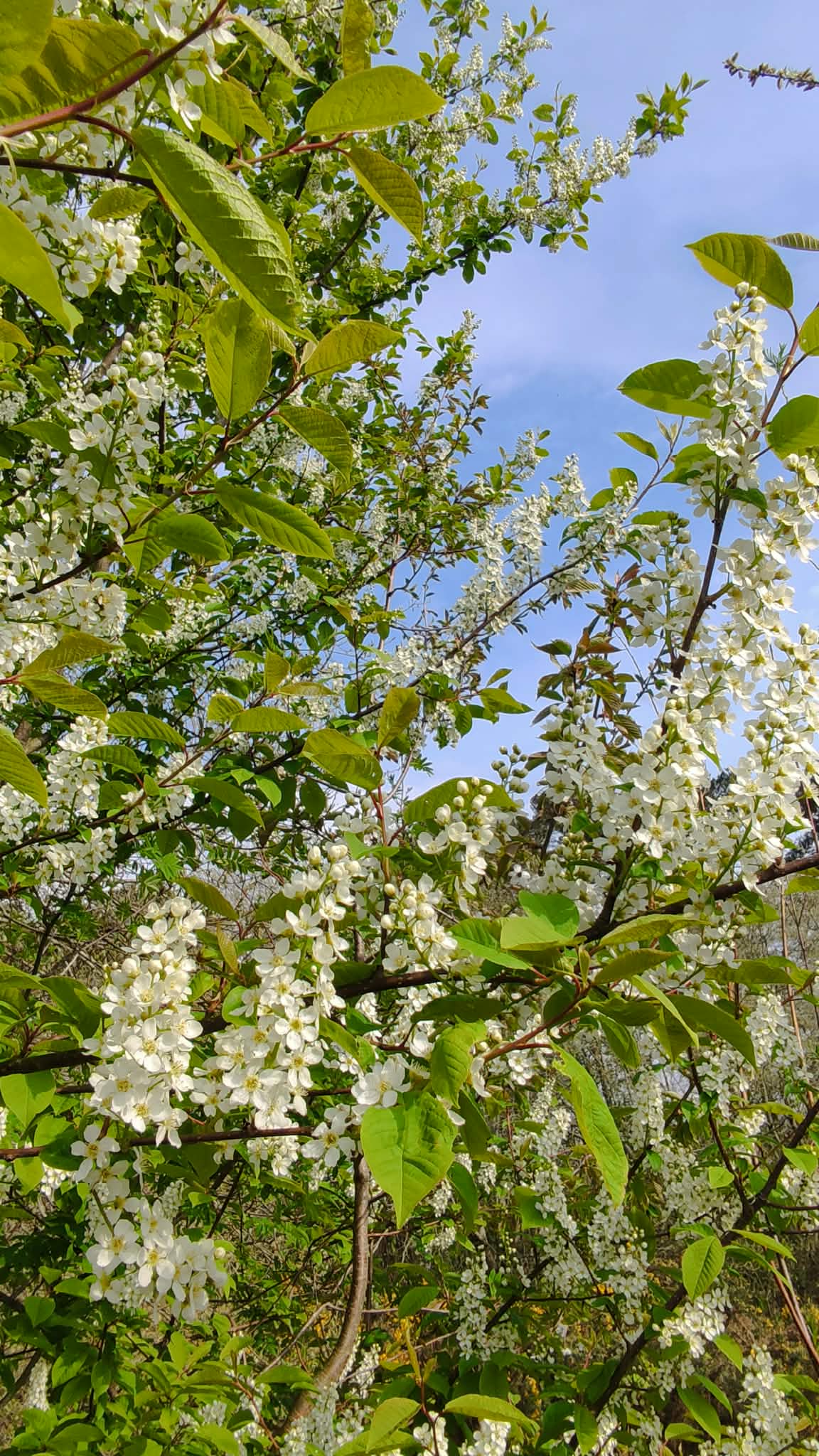
It was a truly beautiful day, silvery spring light on the birch trees and amidst the trees, buildings made of mostly natural, unchanged materials. The architecture working in harmony with the landscape.

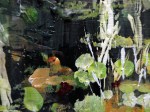
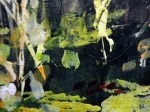
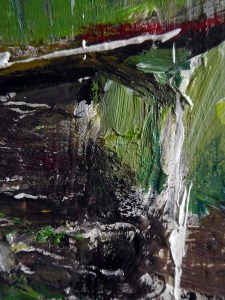
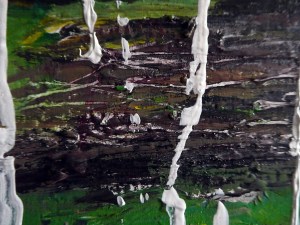
Some details of my painting ..


It does feel special there, and it inspires you to find out who’s behind such a place.

I discovered that Dr Mary Colquhoun was the founder of  Pishwanton and the Life Science Centre back in the 1990s. She studied biology through a Goethean lens, and was a pioneer of Goethean science in the UK.

More recently the Life Science Centre merged with The Ruskin Mill Centre for Research and is now part of the Ruskin Mill Trust group – working with principles grounded in Goethean Science and inspiration from John Ruskin, William Morris and Rudolf Steiner.

Steiner was inspired by Goethe, but is often described as a ‘pseudo-scientist’ (which I always find amusing – surely all the interesting folk are described as pseudoscientists!) I’m an artist – an observer and describer – not qualified to conclude anything scientific. It seems, though, that though Steiner went a little off-piste with Goethe’s original thesis, his ideas are still interesting to explore. His beliefs are part personal faith, and part inspired by Goethean ideas of observation. Contemplating plants, for example, over time.

It was interesting visiting Pishwanton this weekend for the first time in a few years. I’d remembered it as peaceful, but it’s better described as restorative, bringing peace through a sense of harmony, rather than the idea of actual quiet, since one of Scotland’s best known rookeries is there among the Scots Pines at the entrance, raucously guarding the way by announcing our arrival! We saw a large hare bounding off in surprise.

At first, you encounter the more workaday elements of the place as you wander further in, past the Scots Pines. There’s a very Shire-like, turf-covered workshop/ meeting building, vegetable plots, composting and woodwork areas nearby.

All the doors were shut, since it was a Sunday, though they’d kindly left the loos open, and little shelters for cats, or strays. I noticed how fresh and lovely the loos were (organic building material and absence of chemical nasties!)

As you wander over the hill though, you start to sense why this place was originally named Fairy Hill. It’s now called Fairhill (which may or may not be a classic case of Reformation re-naming, since the Reformation viewed anything to do with Pagan, country or folk reverence for nature as the work of the devil!)

Whether the name change was deliberate or simply practical, that attentiveness to the land persists here, or rather has had new life breathed into it by the Life Science Centre. (Fairhil had become a dumping ground before the Life Science Centre took it over).

We humans turn anything into pattern; knots in wood become faces, a piece of toast looks like someone famous. That phenomenon includes sounds – wind in trees can sound like voices. The forest at Fairhill sounds and feels so alive it’s easy to imagine the Goethean idea of Urpflanze – the original, primal form of plants, or their archetype.

Steiner later interpreted this as the spirit of the plant (dryad-like consciousness) but Goethe was careful to avoid the realms of the supernatural because, although he had an artist’s imagination, he also  considered his observations as scientific. It’s true to say, though, that Goethe saw the phenomenon of Urpflanze as unexplainable – a primal force.

It’s a place of ambiguity, a way of thinking that feels comfortable to the creative mind, full of possibility, stimulating to the imagination. It’s also perhaps more honest in a way, since science shows us aspects of how things are made, how our world operates to some extent, but often  it’s the principles or experiences that science can’t explain that are the more meaningful, or important to us, ultimately.

Goethe felt that this unexplainable life-force was only perceivable through long, patient observation. His way of exploring and observing led him to understand that boundaries, between fields of science and art, for example, limited our understanding.

All of which chimes with threads I’ve been following as an artist throughout my life. Explorations which started at art college with studies of Kant, Novalis and German Romanticism, through to more recent explorations of the medieval philosophers’ way of viewing, or contemplating the world.

I’ll explore more of that next week, but in the meantime, if you’re interested in medieval philosophy you can read a piece I wrote as part of the Traces project here.
Forest of Fairhill 3

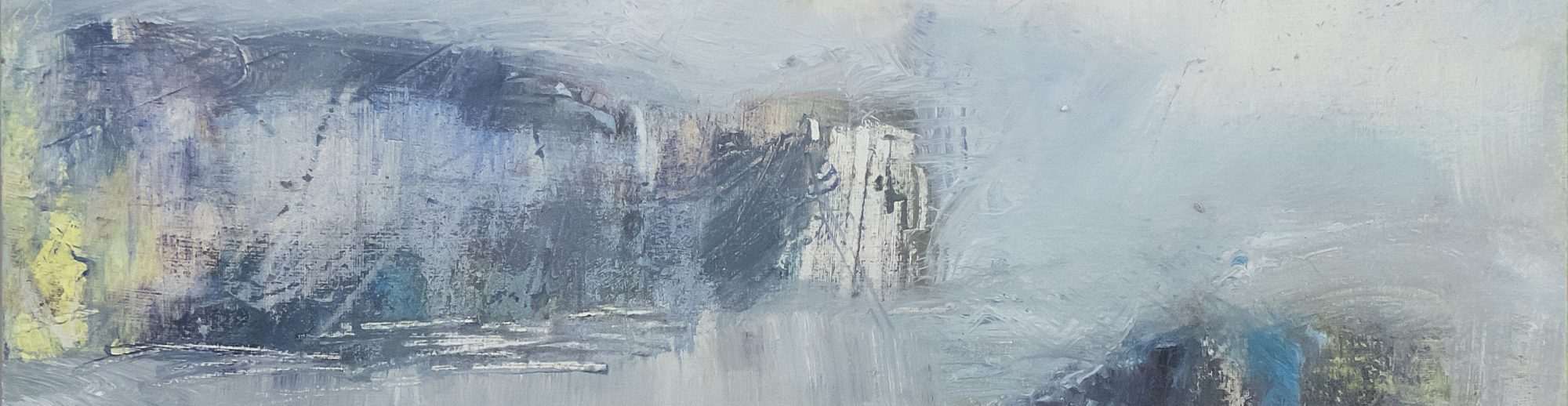
Above: ‘Birch Forest’. Fairhill. Mixed media on 14×14″ wood. Rose Strang 2026.

Today’s painting of birch trees in the forest of Pishwanton/Fairhill in East Lothian follows on from the last two posts depicting birch forests emerging from winter. I love trees, and it’s so inspiring to learn about this place, which in cared for by the Life Science Centre in Scotland.

I’m delving into the philosophy behind the Life Science Centre, and it really resonates with the way I approach painting, especially the nature of observation.

I have some projects to get on with right now, but I’ll explore more of that in the next blog.

Forest of Fairhill 2

Above: Today’s painting of birch trees in the forest of Pishwanton/Fairhill in East Lothian.

In the previous post I introduced the first painting in this series, explaining the odd name of the forest. The more I find out about this place, the more fascinating it becomes. For example, as well as the nearby ‘witch knowe’ – a witches hill, I discovered that the area now called Pishwanton (after the nearby river) is called Fairhill.

Quite pedestrian-sounding, a bit new-build estate maybe, but in fact it’s a new version of the original ‘Fairy Hill’. It seems the area was originally a place set aside for the ‘good people’, fairies in other words. Then in recent years it was used as a tipping site for rubbish and waste, until the Life Science Trust bought the land and returned it to original health.

I discovered all of this through the Life Science Centre’s website

It makes me want to deepen my understanding of their philosophy, which really feels like an antidote to all the destruction we’re witnessing in the world. I hope to get to know the area more. What began as an instinctive response – to paint the first signs of spring in these young birch forests, is growing into a genuine interest. Who knows where it will take me this year!
 

Forest of Fairhill

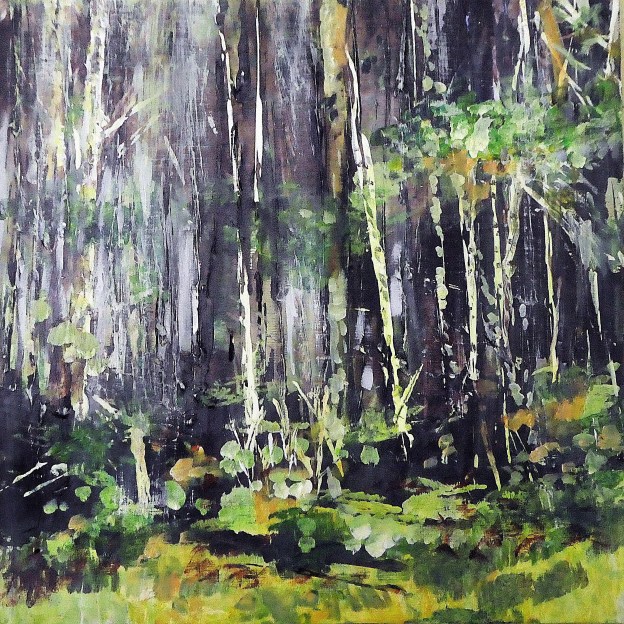
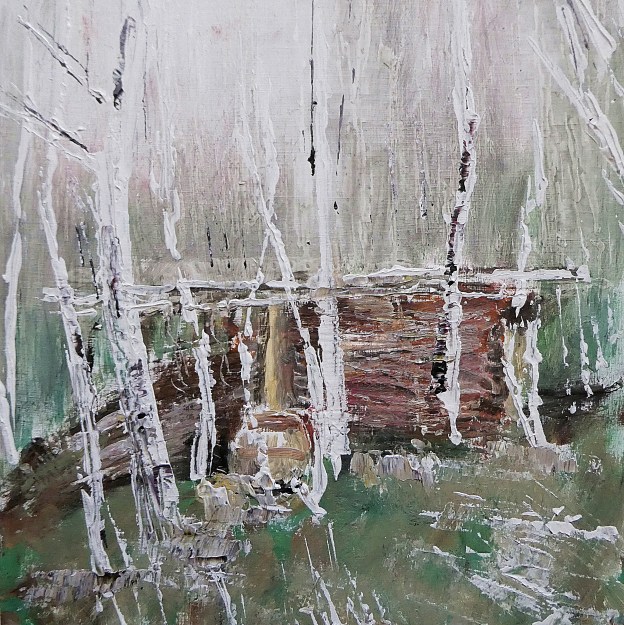
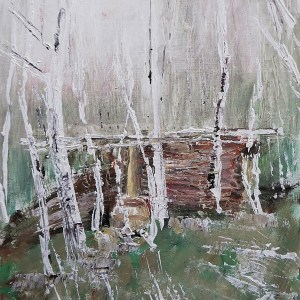
Above. Birch Trees and Willow Shelter. Mixed media on 14×14″ wood. Rose Strang 2026.
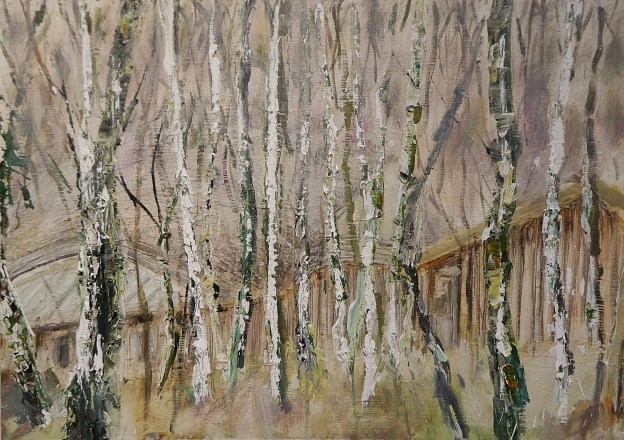
This painting is inspired by the birch forests of Pishwanton at Fairhill, which is situated next to a gushing stream and a hill where witches used to gather. In old Scots ‘pish’ means a fast flowing stream and ‘wanton’ means abundant. So there you are, that explains the strange place name!

Pishwanton is owned by the Life Science Trust and everything there is created, grown or built according to Steiner principles about harmony and conservation. Just being there feels more gentle, not in a precious sort of way – just the way that nothing jars, visually or to the nose.

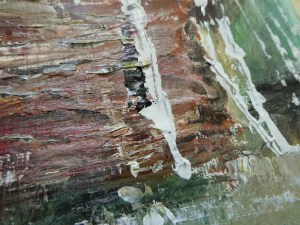
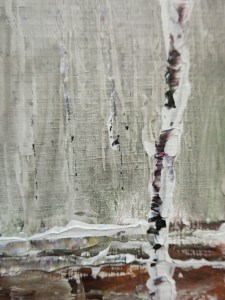
I’ve visited a lot over the years, and now I’m creating a little series of paintings inspired by the arrival of spring in Pishwanton. I feel we could all do with the harmony of Pishwanton just now. Here are a couple of details from the painting ..

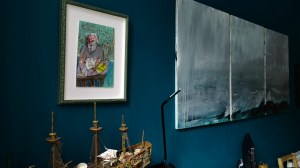
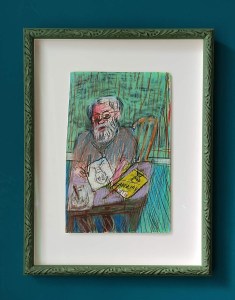
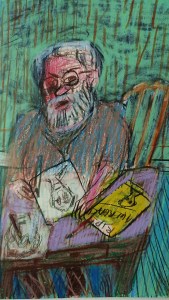
Tonight I’m off to see an exhibition in Edinburgh of drawings by Matthew Collings, he did a wonderful series of documentaries in the 1990s about art. He creates paintings with his wife Emma Briggs, and he also draws, very prolifically. I bought one of his sketches a couple of years ago. It’s a self portrait of Matthew Collings drawing a sketch of the artist Frank Auerbach after Auerbach died.  Although Collings says the drawings are instinctive, to me it speaks of mortality. I don’t know if it was intentional, but in the sketch Collings looks semi transparent, as if if disappearing from existence. I find it both moving and uplifting, and I love the colours. I took quite a while choosing the frame with Jamie from Edinburgh’s Detail Framing and I think it looks wonderful floating above the shipwreck n my bookcase, along from a sea triptych I painted a year or so ago.

The subject matter Collings chooses is simply what he experiences each day; memories or current situations and experiences. For the past year of so the best part of his drawings have been about the war on Gaza, tso he work is often harrowing, capturing the brutality visited upon innocent civilians by our world leaders. I’ll post more about the exhibition tomorrow.