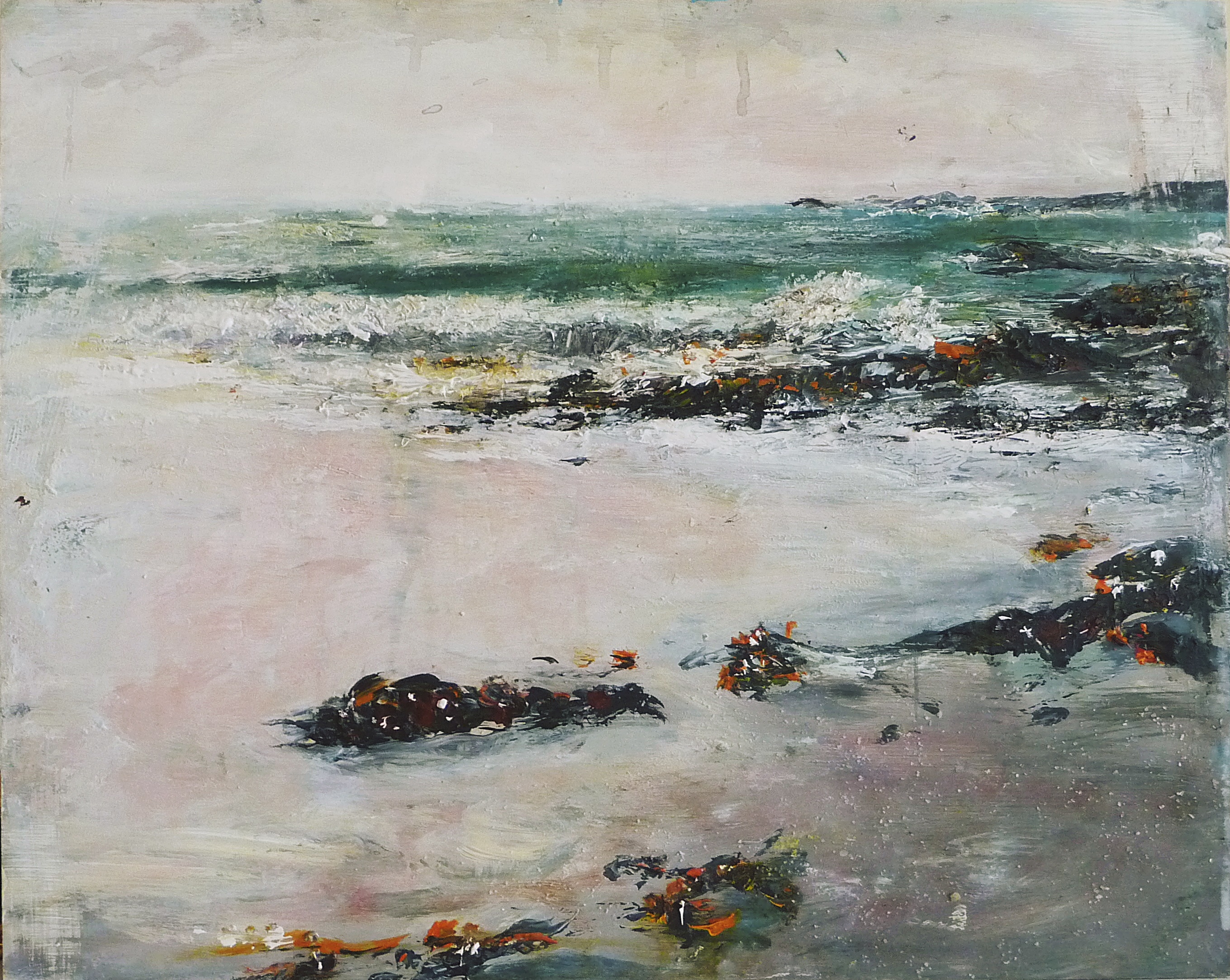
‘Sanna Bay. Seaweed’. Mixed media on 20×16″ wood board. Rose Strang 2019
Today’s painting of Sanna Bay in Ardnamurchan.


‘Sanna Bay. Seaweed’. Mixed media on 20×16″ wood board. Rose Strang 2019
Today’s painting of Sanna Bay in Ardnamurchan.
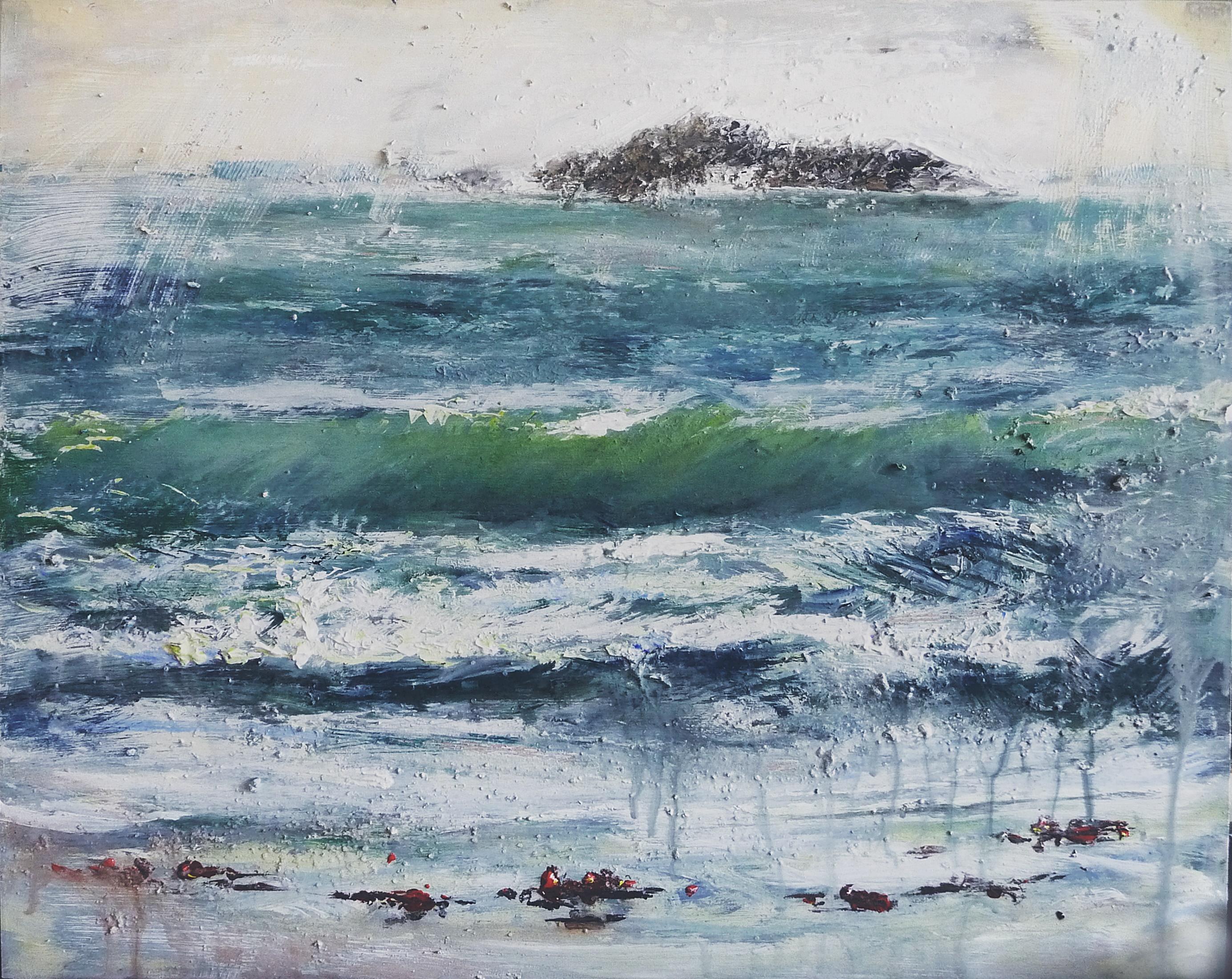
‘Sanna Bay Sea’. Mixed media on 20×16″ wood board. Rose Strang 2019

‘Sanna Bay, Rocks, Waves’. Mixed media on 20×16″ wood board. Rose Strang 2019
Today’s paintings of Ardnamurchan – looking out west from Sanna Bay.
These are for the Resipole Gallery exhibition which opens 17th May this year.
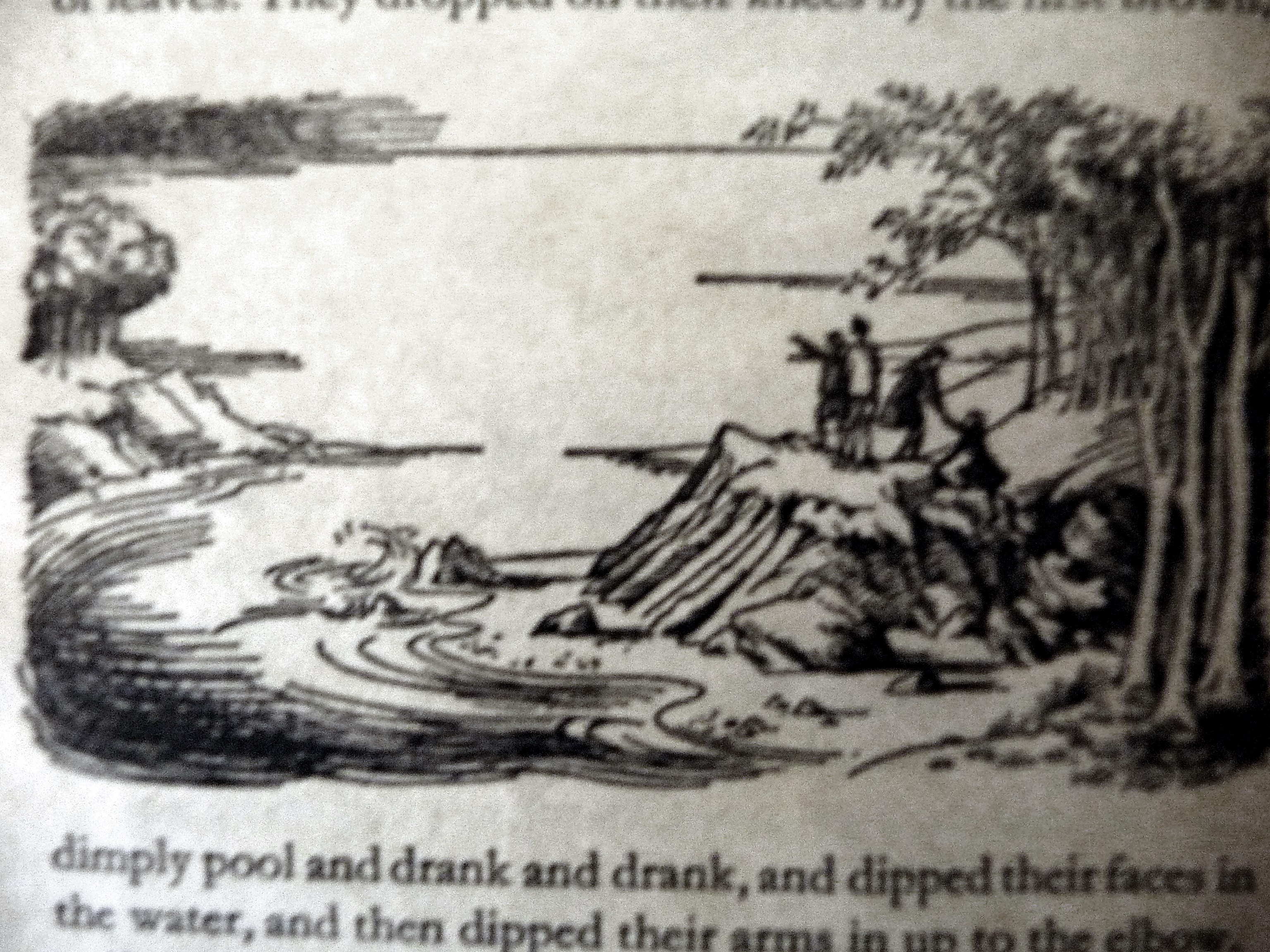
Above, one of my favourite sketches from Prince Caspian by the illustrator of the Narnia Chronicles, Pauline Baynes.
I haven’t yet painted my response to the planet Mars, this is because while up north in Ardnamurchan, the trees just didn’t show enough obvious signs of early spring and as I’m heading up there on the 17th May for an exhibition opening, I’ll be able to make sketches and photos of a more spring-like time.
(You can view my other paintings of Ardnamurchan Here )
Apologies if you’re just tuning in to this blog after a while and don’t know what this is about – this is a continuation of the Planets Series I’m creating this year, which takes inspiration from the planets as understood in Medieval cosmology, and the seven books of Narnia which were each inspired by the seven planets, as described by Michael Ward, author of ‘Planet Narnia’.
I’ve painted two of the series so far – ‘Saturn’ and ‘Jupiter’, viewable on this link with info on the series inspiration https://rosestrangartworks.com/2019/02/22/planets-series-open-studio-day/
I chose Castle Tioram on the Ardnamurchan peninsula on the west coast of Scotland as the linking back-drop for all the paintings. It’s always seemed Narnia-esque to me, on its sandy peninsula fringed by wild trees, it reminds me of the Castle Cair Paravel, particularly in its ruinous state as described in Prince Caspian ..
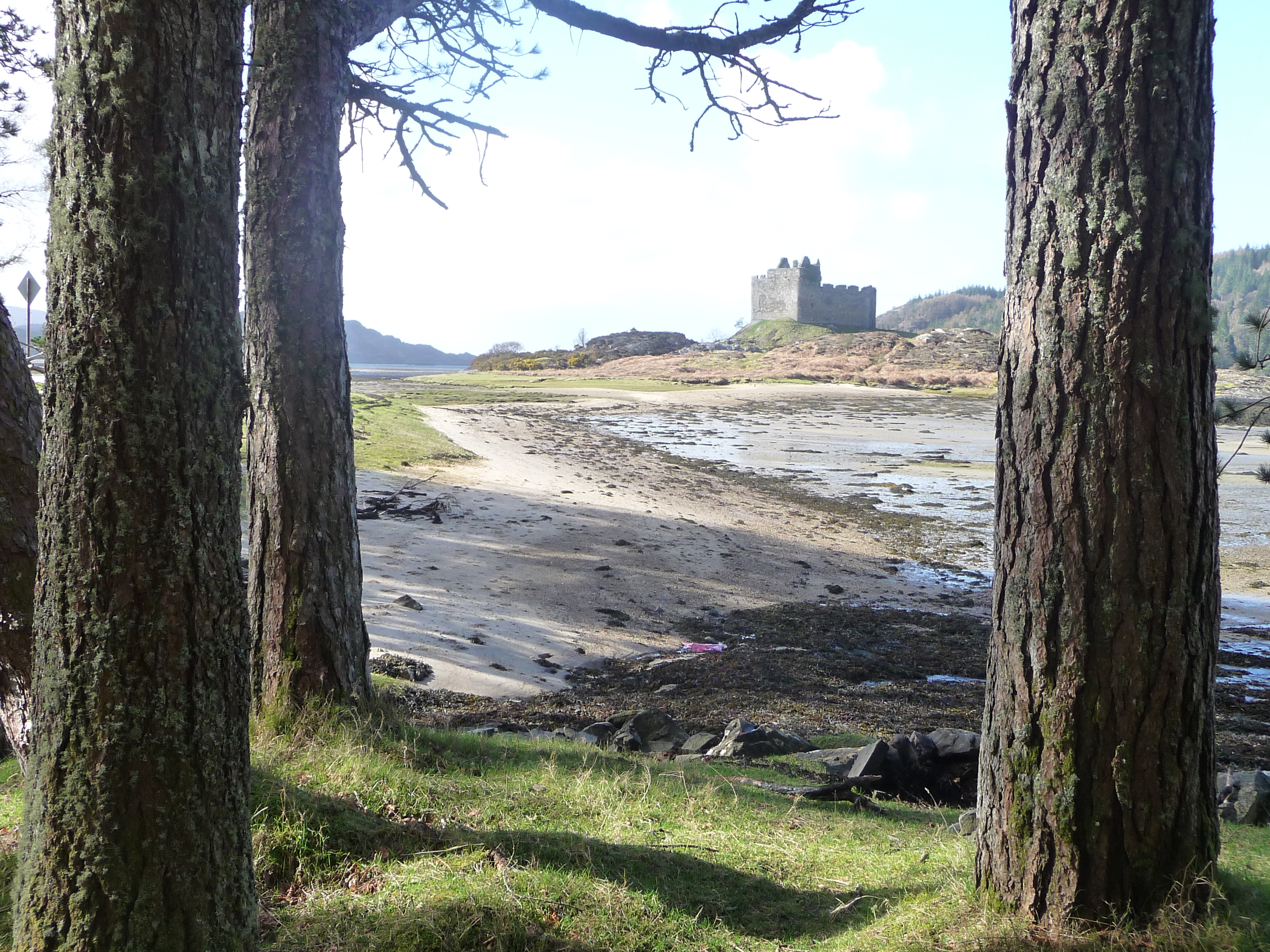
Castle Tioram. (photo, Rose Strang March 2019)
As explained by Michael Ward in Planet Narnia, the early association of Mars was growth and trees, since Mars is related to March, therefore spring. In this capacity it’s known as Mars Silvanus – though the more common association with Mars is war.
I’ve also been reading books about Medieval philosophy (mostly Agrippa’s Three Books Of Occult Philosophy) and it seems that the influence of Mars is about a certain energy – a vitality or vital force, which I suppose relates to growth and spring therefore presumably fecundity, fertility and sexuality as well as new growth of crops and plants in spring. I’m wondering if the pagan image of the Green Man is related (I haven’t explored that so I’m not sure).
It’s the idea of an unleashed unguided energy perhaps, and I’m now thinking of Stravinsky’s ‘Rites of Spring’, which captures the essence of that energy brilliantly. It’s an exciting piece of music, the sinuous sound at the start is very evocative of growing trees, and sensuality, but it has a sort of unsettling violence too as it develops – and that brings us back to the war-like aggressive themes of Mars.
I’ve gone off on a tangent though, and as explained by Michael Ward in Planet Narnia, for C.S. Lewis the influence of Mars could manifest good or bad action, depending on the character of the recipient of that energy. Mars was understood as a ‘malefic’ planet, but in Prince Caspian we see its energy working both ways through the varying characters. In the end though Aslan, and the trees, decide the outcome.
C.S. Lewis understood the Mars influence as the essence of courage or fortitude – an iron will (iron is the metal associated with Mars) the ability to keep going despite pain and suffering, also courage in the face of death and destruction. People can use that energy for good or ill, as the characters do in Prince Caspian.

Prince Cspian speeding through the trees (illustration Pauline Baynes)
The four children arrive in Narnia very suddenly, by magic, whisked from a train platform on their way to school. They find themselves amidst wild trees, and making their way through they emerge on to a beach, and gradually make the discovery that they’re back in Narnia, but that thousands of years have passed and the Castle of Cair Paravel lies in ruins.
It’s spine-tingling stuff, one of my favourite passages from the Narnia Chronicles. Lewis’s writing is so evocative and atmospheric, as always. The discovery of an aged golden chess piece – a knight – with one remaining in-laid eye made of ruby is found in the grass amidst the ruins of Cair Paravel. A beautiful and poetic equivalent or image of a knight’s gauntlet being thrown down in challenge.
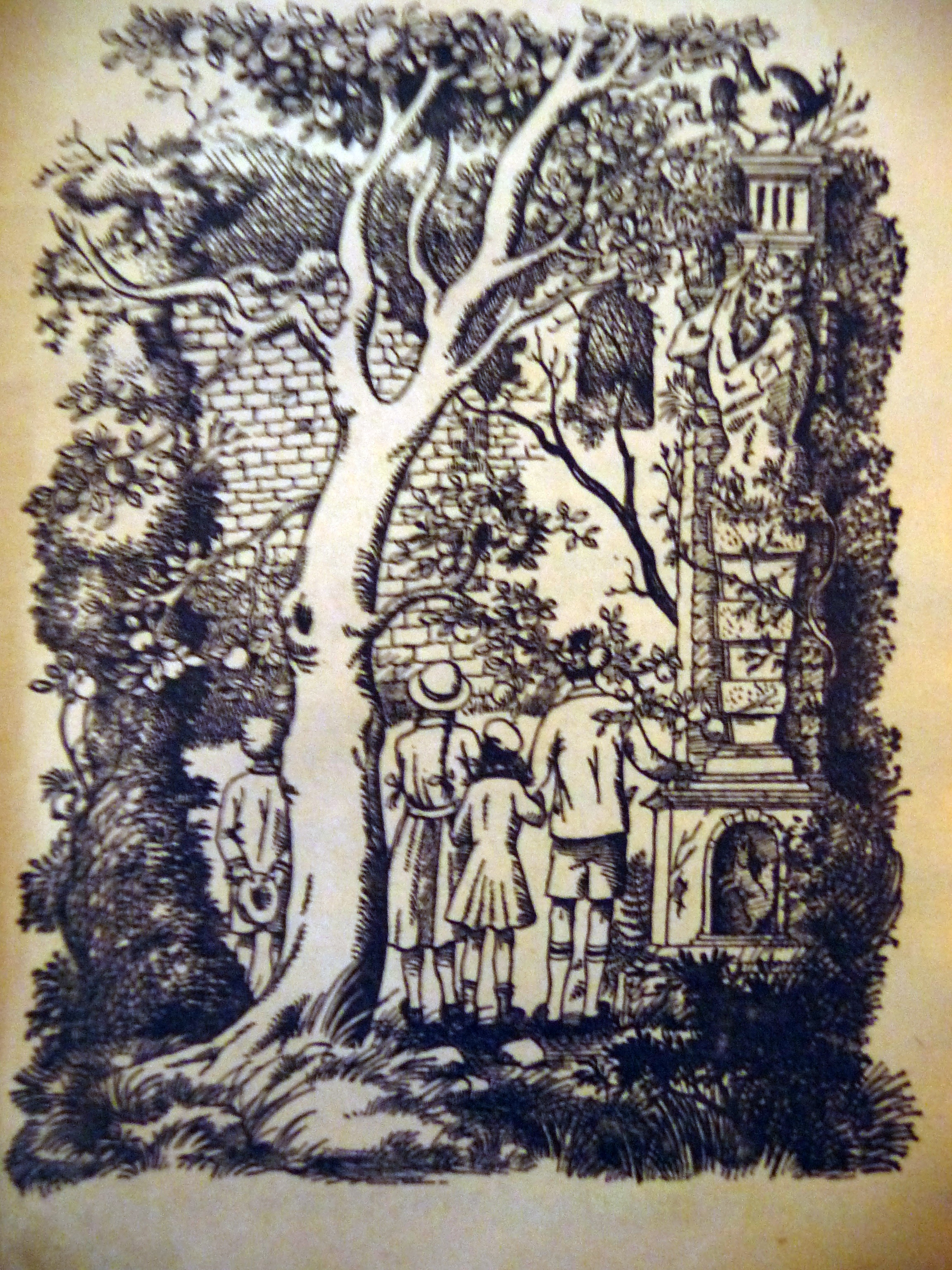
They take on the challenge, realising that Narnia must be re-claimed from the cruel Telamarine usurper, Miraz, and the story unfolds gradually towards the full-blown battle near the end.
As they travel back through the wild trees towards the battle-site, they become lost, then after making camp, Lucy wakes during the night believing she hears Aslan’s voice. As she walks through the trees towards the voice, she senses that the trees are almost coming to life again, they stir and seem to dance, then fall still.
Later, she does encounter Aslan, who insists that she must wake the others and make them follow though they can’t see him as yet. She expresses her fear that the others won’t believe her or follow (she’s the youngest and tends to be dismissed when it comes to leadership and decisions).
Aslan breathes courage into her, and she resolves to convince the others. It’s an obvious depiction of faith, and whether or not you’re religious, it’s a modest, yet affective description of someone discovering faith and resolution against the odds.
And on it goes, through the rest of the characters, each resolving to take on increasingly painful challenges, up to the point of battle and death, resulting in victory in the end with the appearance of an entire forest of wakened trees sweeping towards the enemy..
Throughout all of this, there’s much pagan imagery or references to ancient mythologies – Bacchus, Sirenius, Dryads and so on. One of my favourite descriptions is of Aslan, Lucy, Susan, Bacchus and various dryads and naiads helping to free schoolchildren from punishment, or from tedious lessons. Lewis’s humour and compassion (not to mention remembrance of his own deeply unpleasant experience of school) is given full leash here!
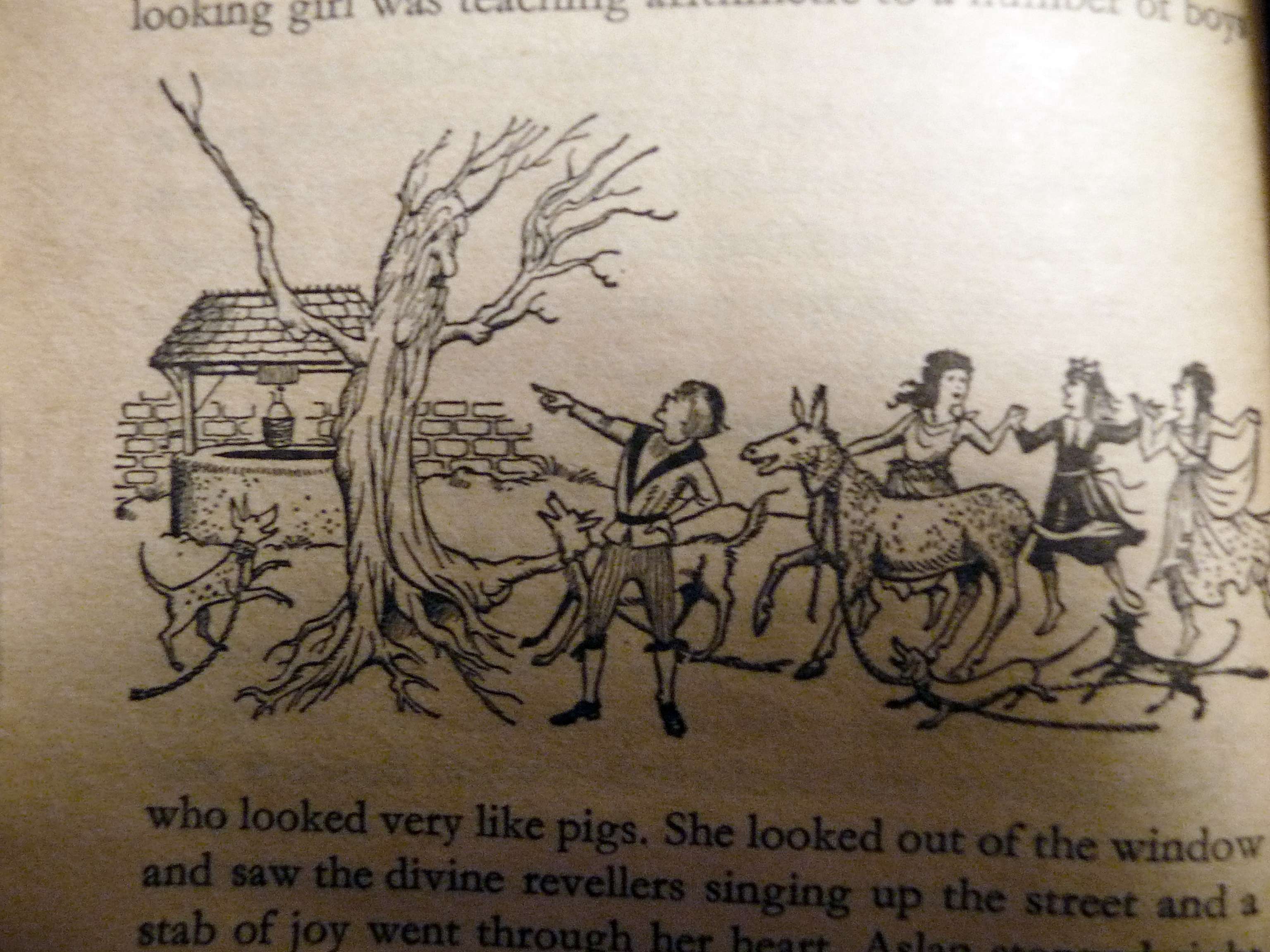
If you too loathed school, it was an immensely satisfying read as a child I remember. What would I have given to have a bunch of cavorting mythological characters show up and interrupt me being belted, via a dryad causing the headmaster to turn into a tree!
Though Prince Caspian is a book about war and suffering, Lewis doesn’t forget to remind us there’s a better way to be, and how poetic, to halt violence through spring trees – the idea of a benevolent influence of mars.
There are a few critics of Ward’s thesis that the Narnia Chronicles are each related to the planets as understood in Medieval cosmology, and those critiques have been welcomed by Ward, since they enrich debate. No-one would argue with Lewis’s obvious fascination and understanding of Medieval cosmology and literature – all of his creative writing, including the Planets Trilogy, and many poems explored this theme.
I’m not qualified in any academic sense to refute the idea of planets corresponding to the Narniad, I simply know the books extremely well, and so it’s easy for me to immediately conjure up the imagery and ideas that related to the planets as understood in Medieval thought. I’m convinced though, because it seems so self-evident once pointed out. Reading something about Medieval cosmology or understanding the basics at least, is a requirement too, and it was becoming interested in this subject that led to me reading Planet Narnia.
So to me the ‘Saturnine’ atmosphere and blackness of The Last Battle, for example, is obvious now – the utter ending, the oppressive feel, deathly law and order, death on its way, and let’s not forget that the four characters are dead, in earthly terms, when they leave Narnia. These are all clearly Saturnine subjects and themes. Not to mention that it’s the 7th book, 7 is the number of the completion of the cycle of time, and Saturn is known as Father Time (who reaches across the sky in the Last Battle and extinguishes the sun).
Beyond 7 is 8 – the number of eternity, which is where the characters end up at the end (I’ve just learned about these numbers this moment, having seen a video Michael Ward posted about the symbology of the North Rose window in Notre Dame Cathedral).
More than ideas though, it’s the incredible atmosphere Lewis creates that I’m responding to as an artist since I’m very interested in evoking atmosphere through my paintings (the sense of what’s experienced as opposed to a postcard view)
As I explore these subjects though, I’m also brought face-to-face with the religious themes in Lewis’s work, and the fact that the bulk of academic support for his work comes from religious organisations or people.
This is challenging at times for me, I’m ever wary of organisations and institutions so religious institutions are no exception. (I do not mean to cause offense by these statements – this is about my subjective response).
The fact is, that the reason C. S. Lewis’s work and literary output has survived is due to the incredible efforts, sheer depth and breadth of study, not to mention love of Lewis’s work and the man himself, by people such as Walter Hooper and Michael Ward.
This isn’t to suggest at all that anyone’s insisting you have to be religious to appreciate C.S. Lewis! (In fact you can find some alarming Youtube videos out there with fundamentalist Christians ranting that Lewis is an evil pagan!) It’s more that in reading about the religious appreciation of Lewis by people who are dedicated (in sane, open-minded and compassionate ways that is) to their religion, I can feel slightly at odds. There’s much about it I don’t ‘get’, the Old Testament and so on. Religious dedication takes a multitude of paths of course, as myriad as the characteristics and varying beliefs of people and their interpretations of religious scripture. I don’t mean to naively or dismissively lump religion into one entity!
So I continue to be very vague about my spiritual response to the Narnia Chronicles, not because I don’t feel that aspect powerfully, but because maybe it feels easier not to define it, and perhaps I’m scared of that response being damaged or diluted in some sense. My response to landscape has been coloured and influenced by the Narniad throughout my entire life, from early childhood. At the age of nine I remember encountering a verdant marshy, mossy area between a small group of silver birch trees – it was a slightly misty morning, with the sun casting a white glow through light cloud. I took my shoes and socks off and felt the grass growing beneath my feet and wondered if I might be transported to the wood between the worlds!
Later at the age of twenty I went to the Isle of Iona because I felt the urge to explore my own spirituality. I did discover and experience something, in how I experienced nature there, but there are few people I’d discuss that experience with. If there’s one person I’d have relished the opportunity to do so it would of course be C.S. Lewis!
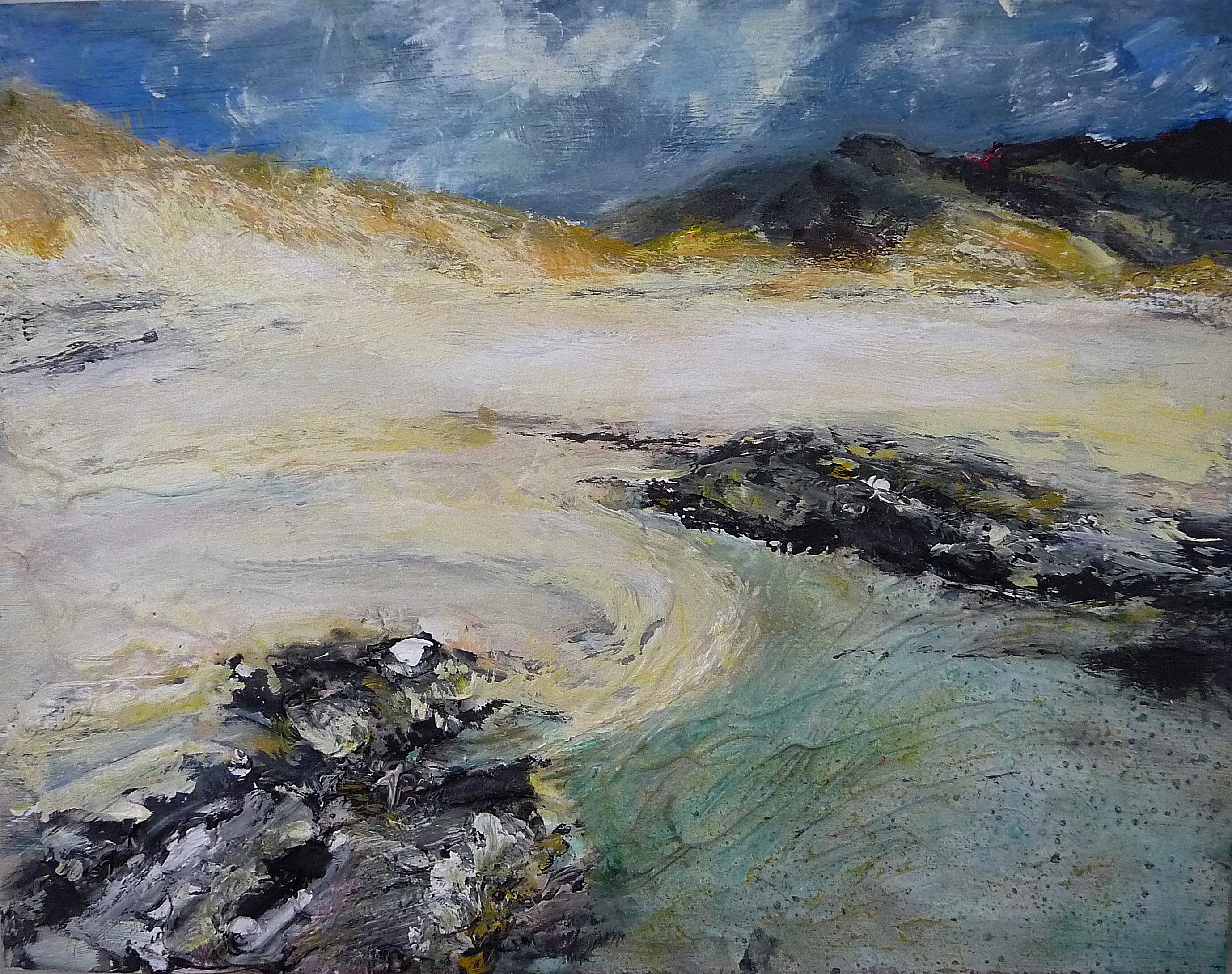
‘Sanna Bay (sea shallows)’. Mixed media on 14×11″ wood panel. Rose Strang 2019

‘Sanna Bay (teal water)’. Mixed media on 14×11″ wood panel. Rose Strang 2019
Today’s paintings of the wonderful Sanna Bay in Ardnamurchan. I’m quite happy with the water effect in Sanna Bay (shallow water) which doesn’t really show up in a photo – a bit of underlying texture and colour then a shallow glaze of turquoise with varnish. The painting directly above ‘painted itself’ as they say – always a good thing as it feels like I’m getting into the flow of this series of Ardnamurchan.
The exhibition of these paintings will be at the Resipole Gallery – a three person exhibition which launches on the 17th May. I’m going to take a trip up there for the opening, also for more painting.
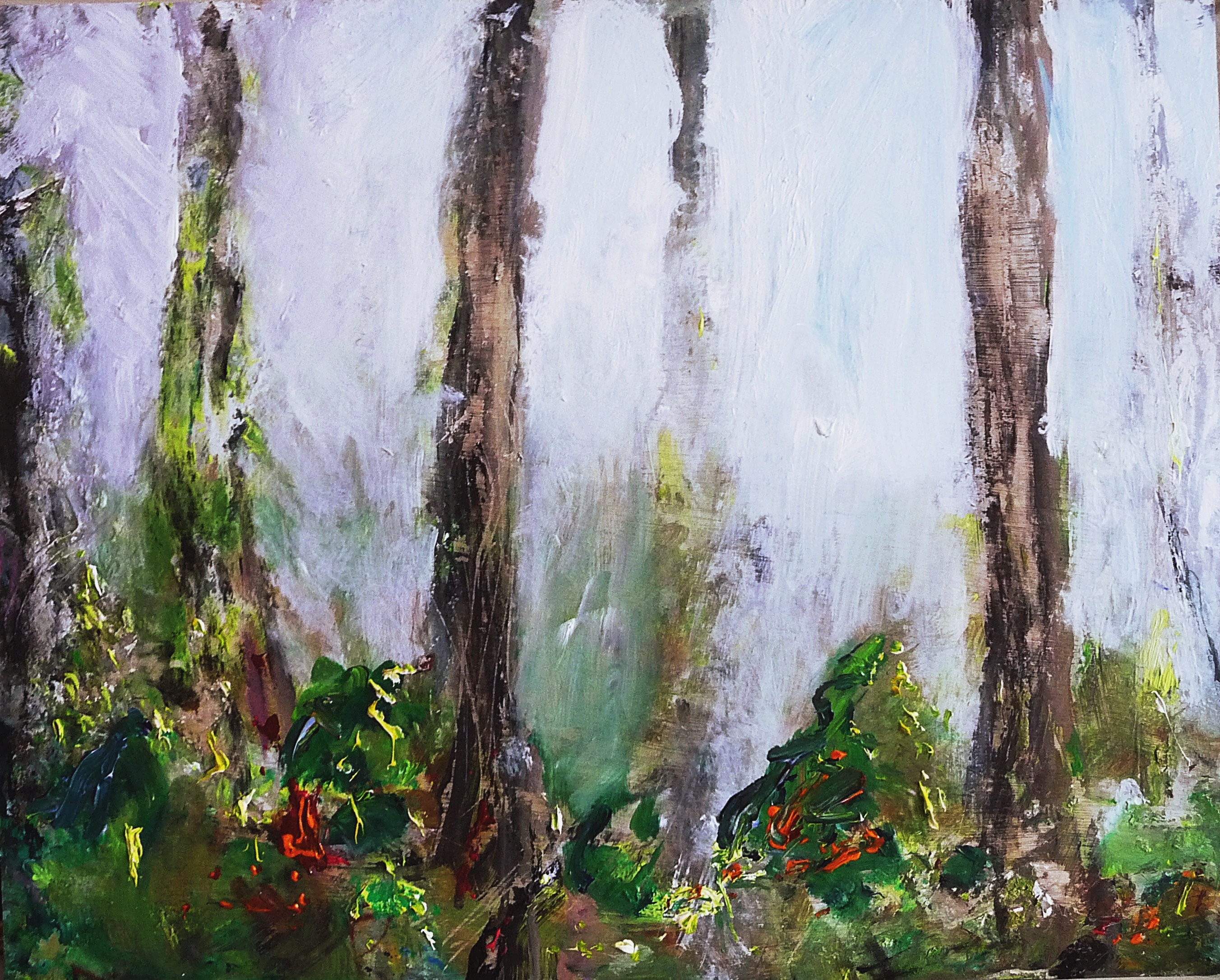
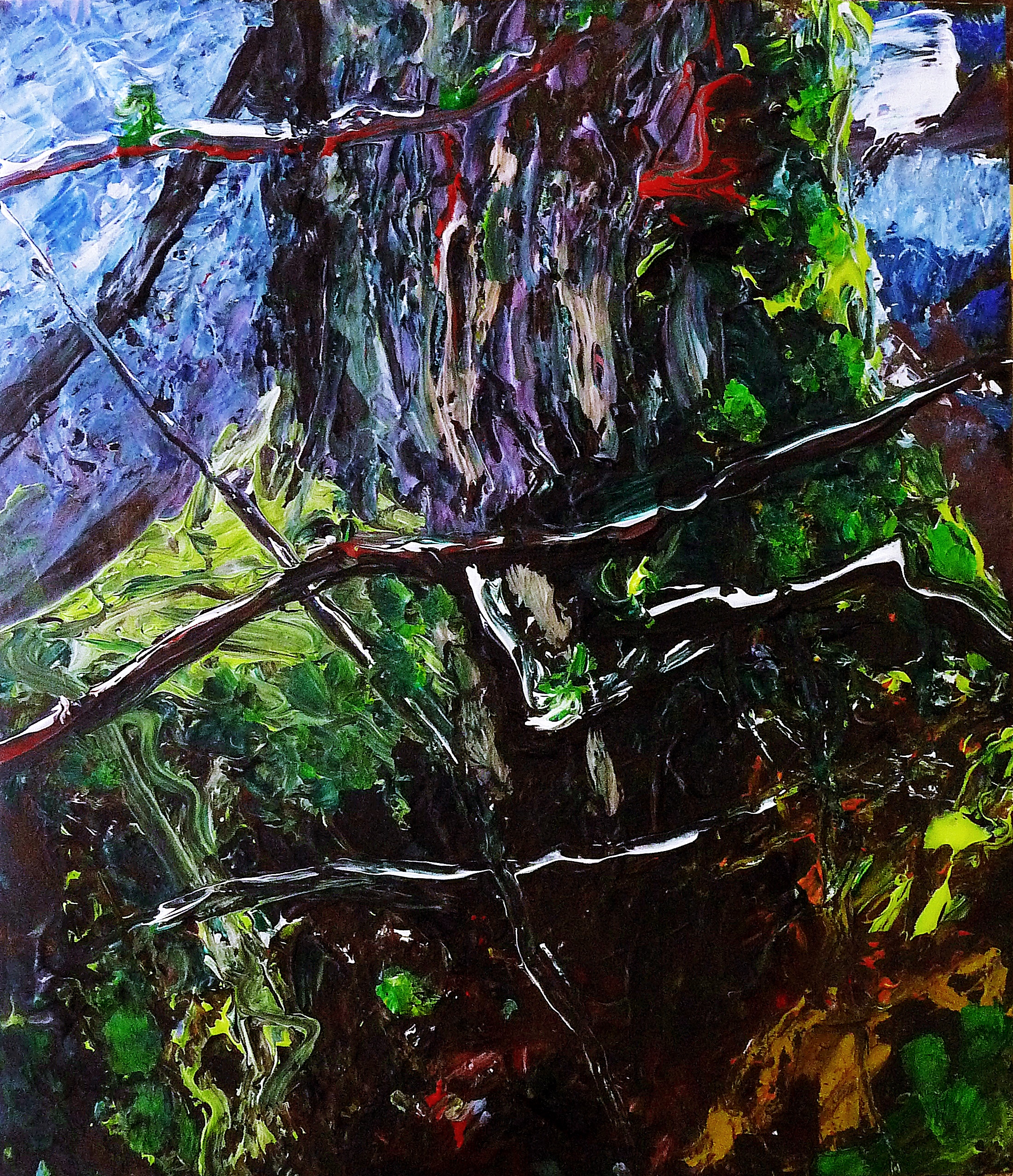 Today’s attempt to paint trees of Ariundle forest in Ardnamurchan …
It’s tricky to get the luminous colour, damp atmosphere and odd mossy shapes without straying into a sort of Hobbit-shire territory – all too easy to make it look picturesque without getting the feel of being there. The particularly lurid one started as a paint palette – there was a nice build up of impasto paint, so I played around with that.
Being in Ariundle forest felt extremely lush and alive – the sense of a complicated ancient eco-system – Ariundle is the remnant of ancient oak wood that once stretched all the way along the Atlantic coast.
Last week I went along to Highland River, an exhibition featuring the work of journalist and presenter Andrew Marr. It was curated by Richard Demarco (co-curated by Fernanda Zei) at Summerhall in Edinburgh and included a really enjoyable conversation between Richard and Andrew Marr. They talked about the art of failing while painting. Judging by the empathic laughs from the audience there were plenty of artists there!
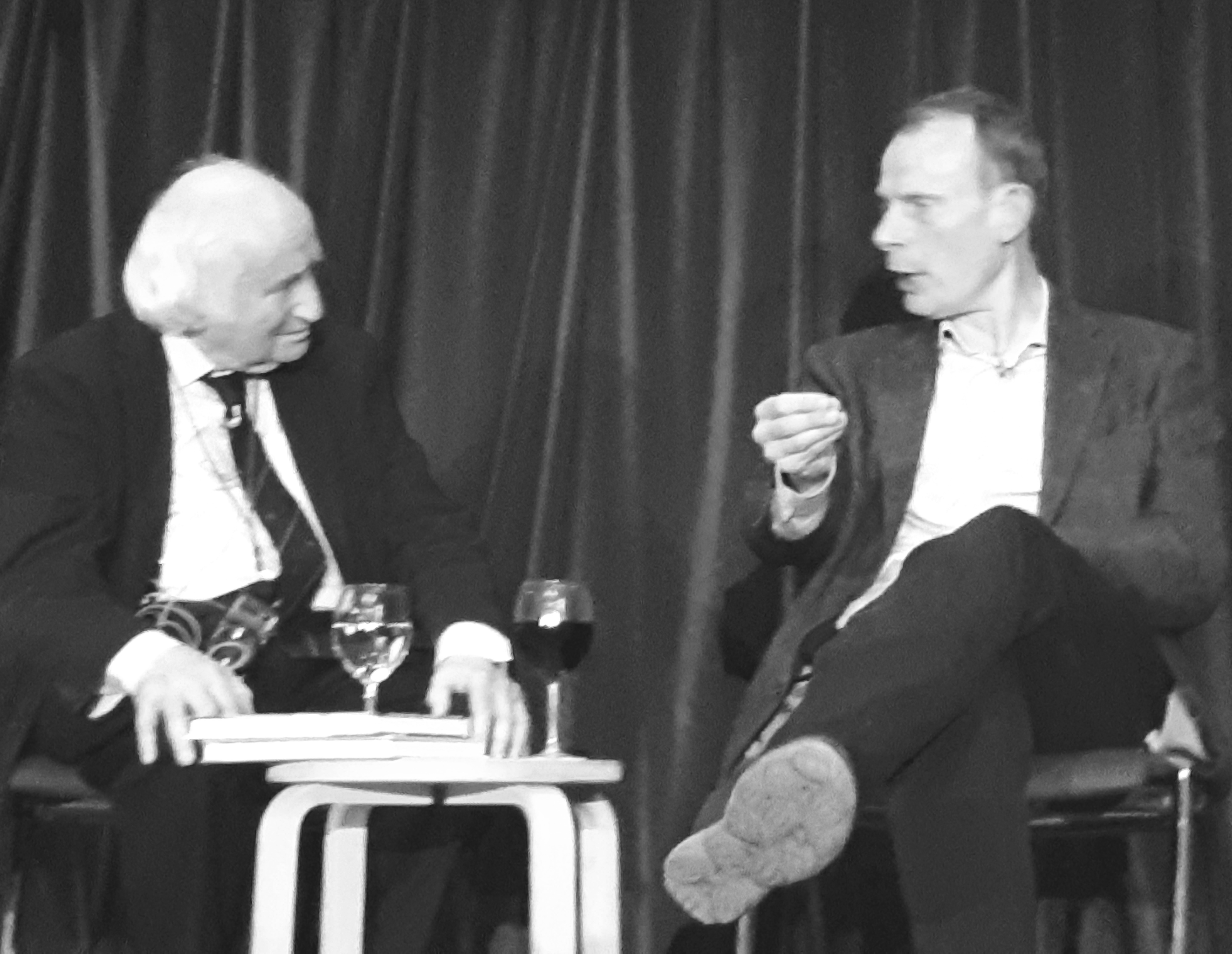
As Marr described – you make a mark and realise it’s a mistake, so you remedy that and keep making marks until it feels right (‘then you ruin it’, I muttered to myself) ‘Then you ruin it’ Marr echoed.
I bought his book on painting, much of which I agreed with (his views on Auerbach, Kurt Schwitters and others) some aspects not – for example his take on Beuys, it’s all subjective of course – but I thought Beuys had an incredible talent with deceptively simple, expressive line and colour. It’s a challenging book in some ways since he’s engaged with working with paint to explore complex ideas. Though not a conceptual artist, his approach is intellectual. Occasionally I attempt a deeper or more conceptual approach to painting and the results are often a complete mess. It is less challenging to simply attempt to capture the texture of tree bark in simple paint strokes or lines, but I find that valid in my world. Every so often something clicks into place and stronger ideas emerge.
Enough waffle though, this week I’ll write more on the Medieval planets theme – early spring; represented by Mars.
Highland River continues until 27th April – info here Highland River
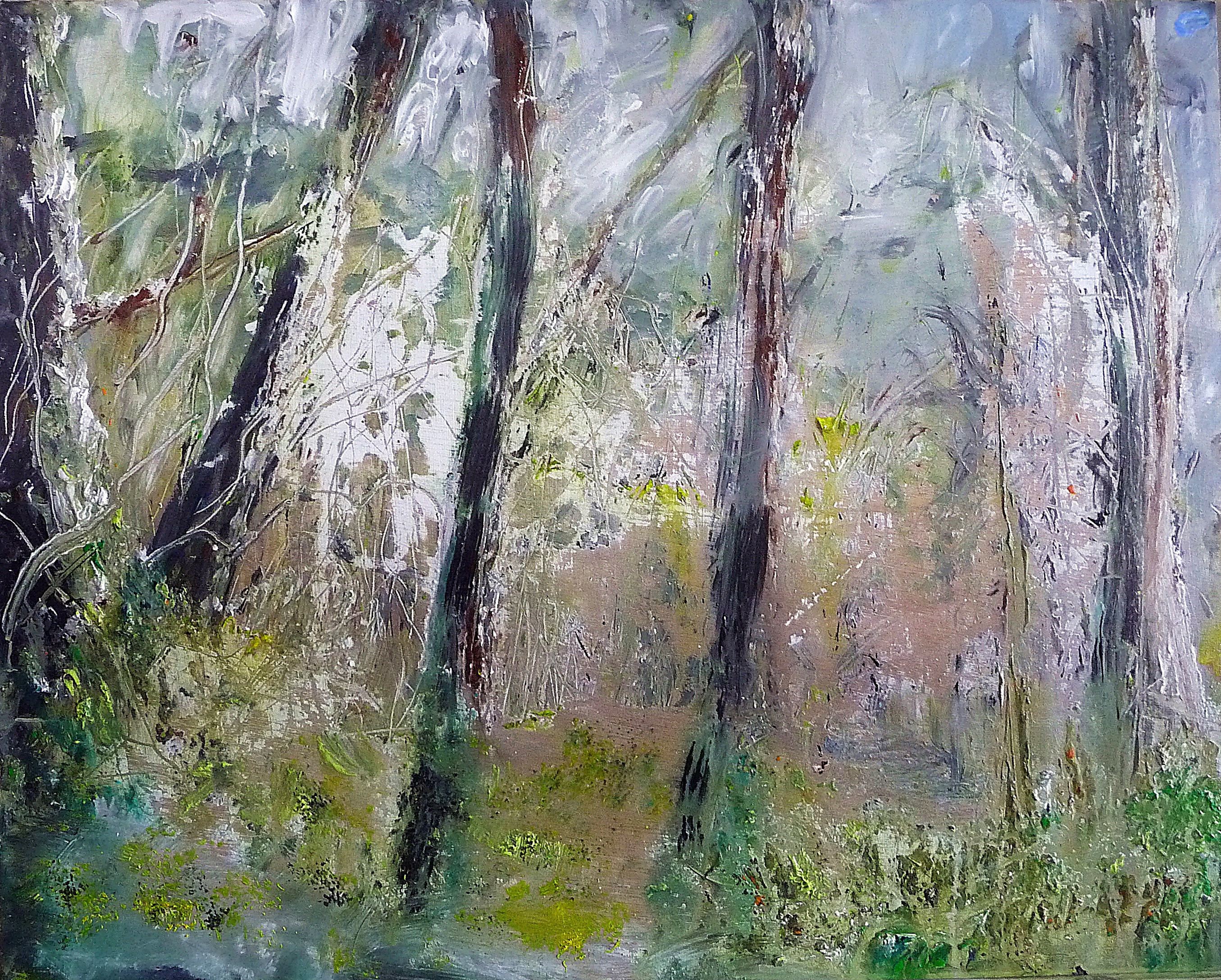 Today’s work on Ariundle Wood in Sunart on the west coast of Scotland. Once it’s dry I’ll be adding some foreground detail – spring twiglets and leaf buds.
All four of the first paintings (below) of Ardnamurchan are now in the Morningside Gallery, Edinburgh.

‘Sanna Bay, dusk’. Mixed media on 14×11″ wood panel. Rose Strang, 2019
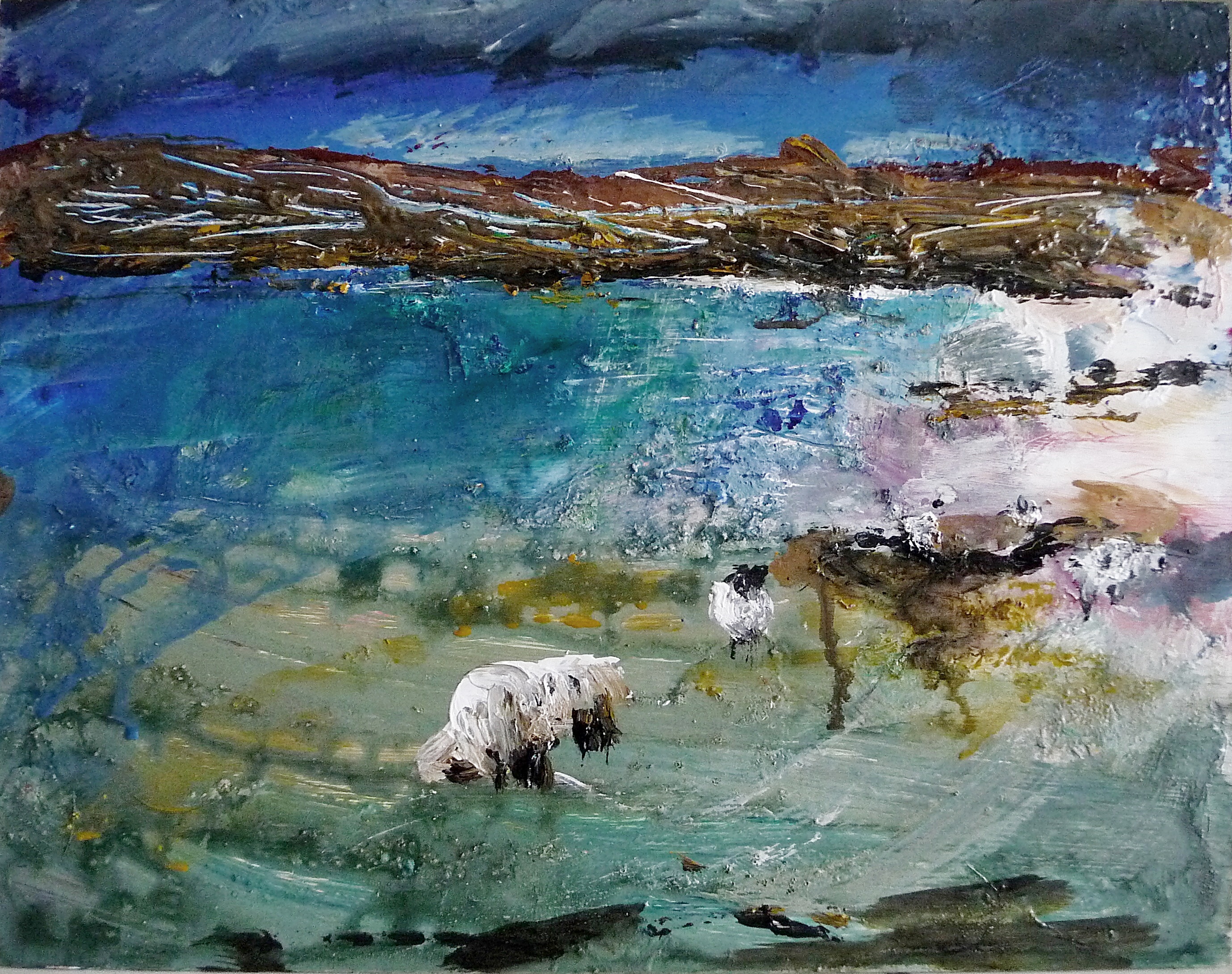
‘Ardnamurchan, Sheep’. Mixed media on 14×11″ wood panel. Rose Strang, 2019
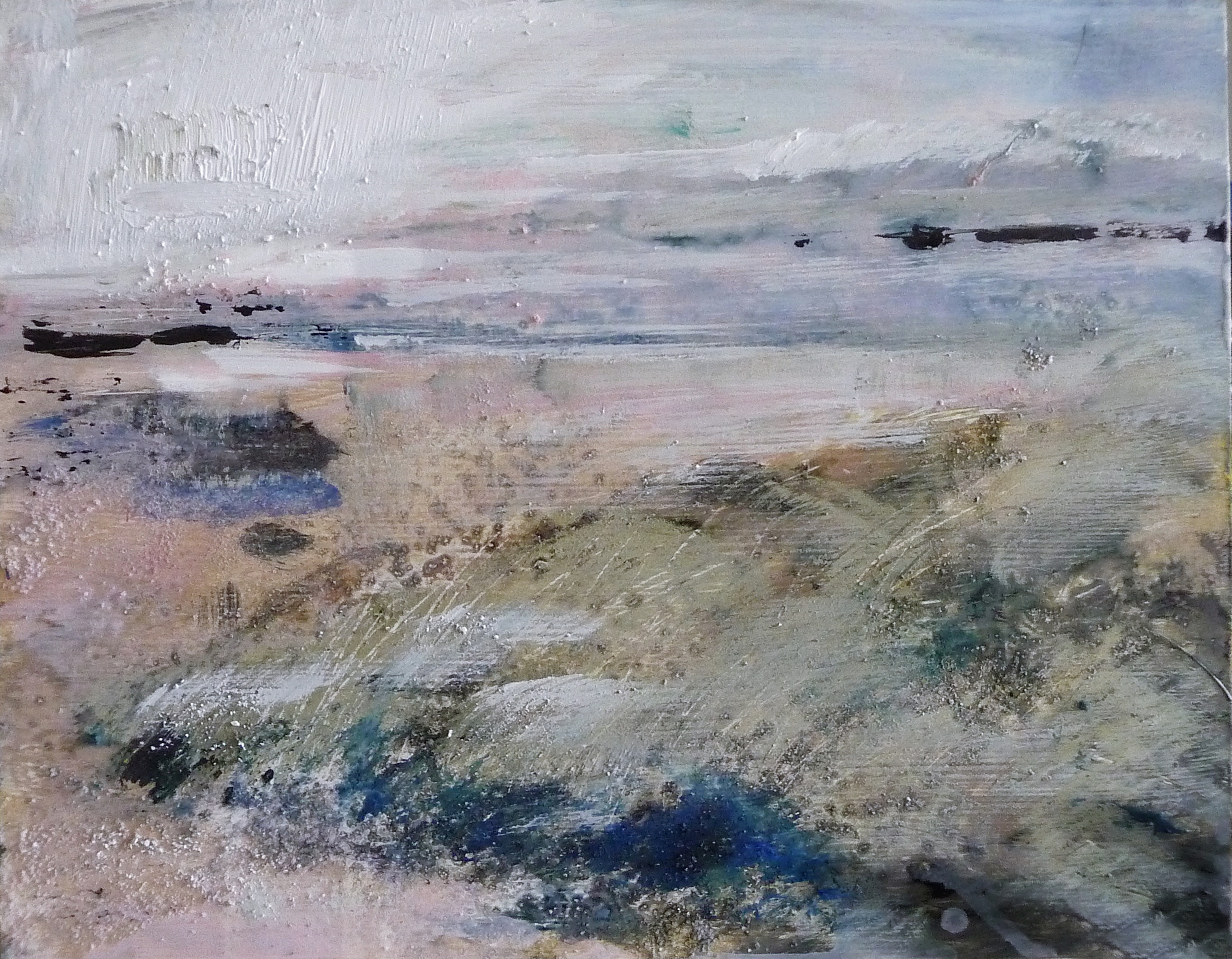
‘Sanna Bay,afternoon’. Mixed media on 14×11″ wood panel. Rose Strang, 2019
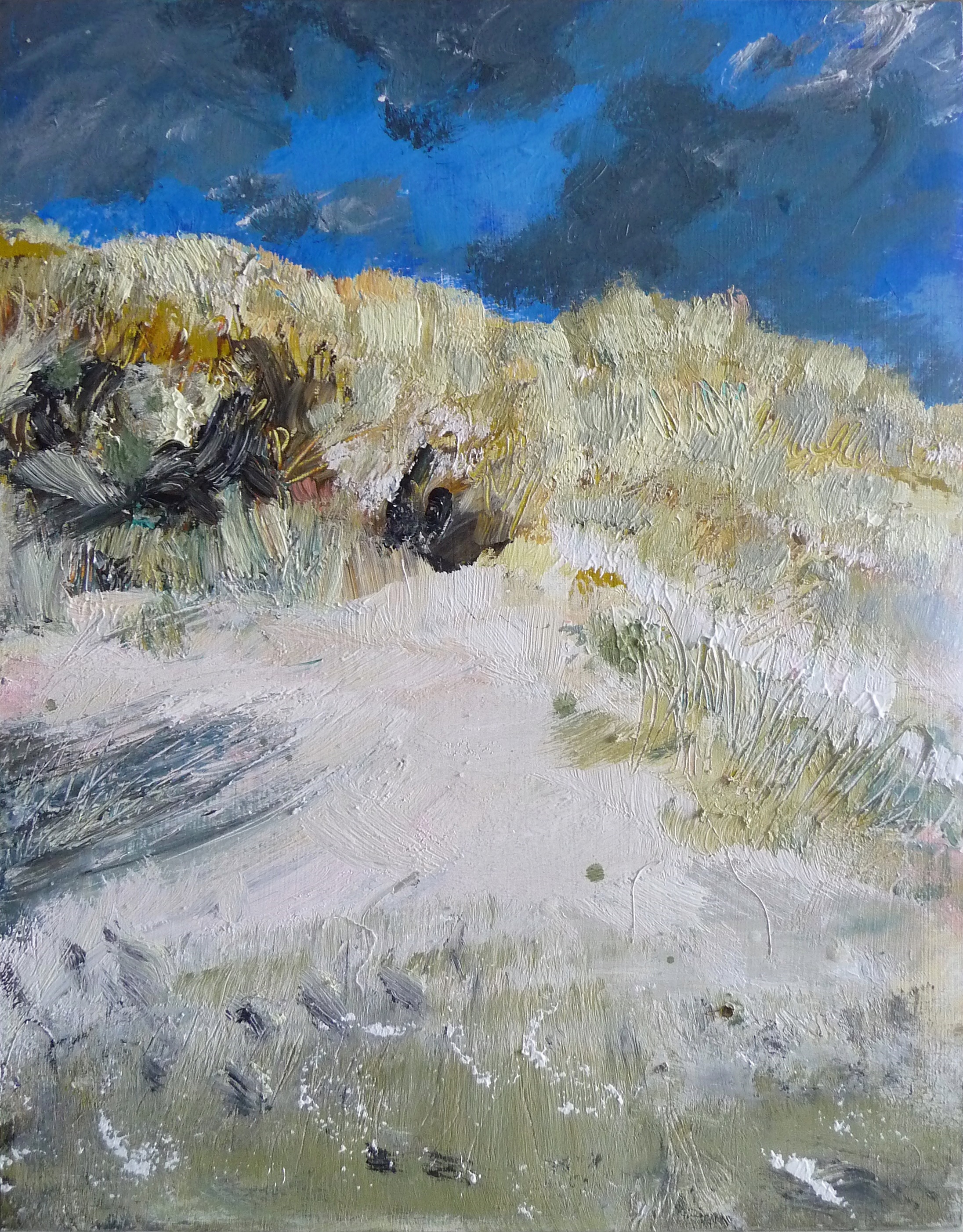
‘Sanna Bay, sand dune’. Mixed media on 14×11″ wood panel. Rose Strang, 2019
Also my new series of Ardnamurchan and Sunart will be part of an up-coming three-person exhibition at the Resipole Gallery on the west coast of Scotland, which is run by artist Andrew Sinclair (who converted a former agricultural byre into the gallery over two years).
I took some photos when I was there in September last year ..
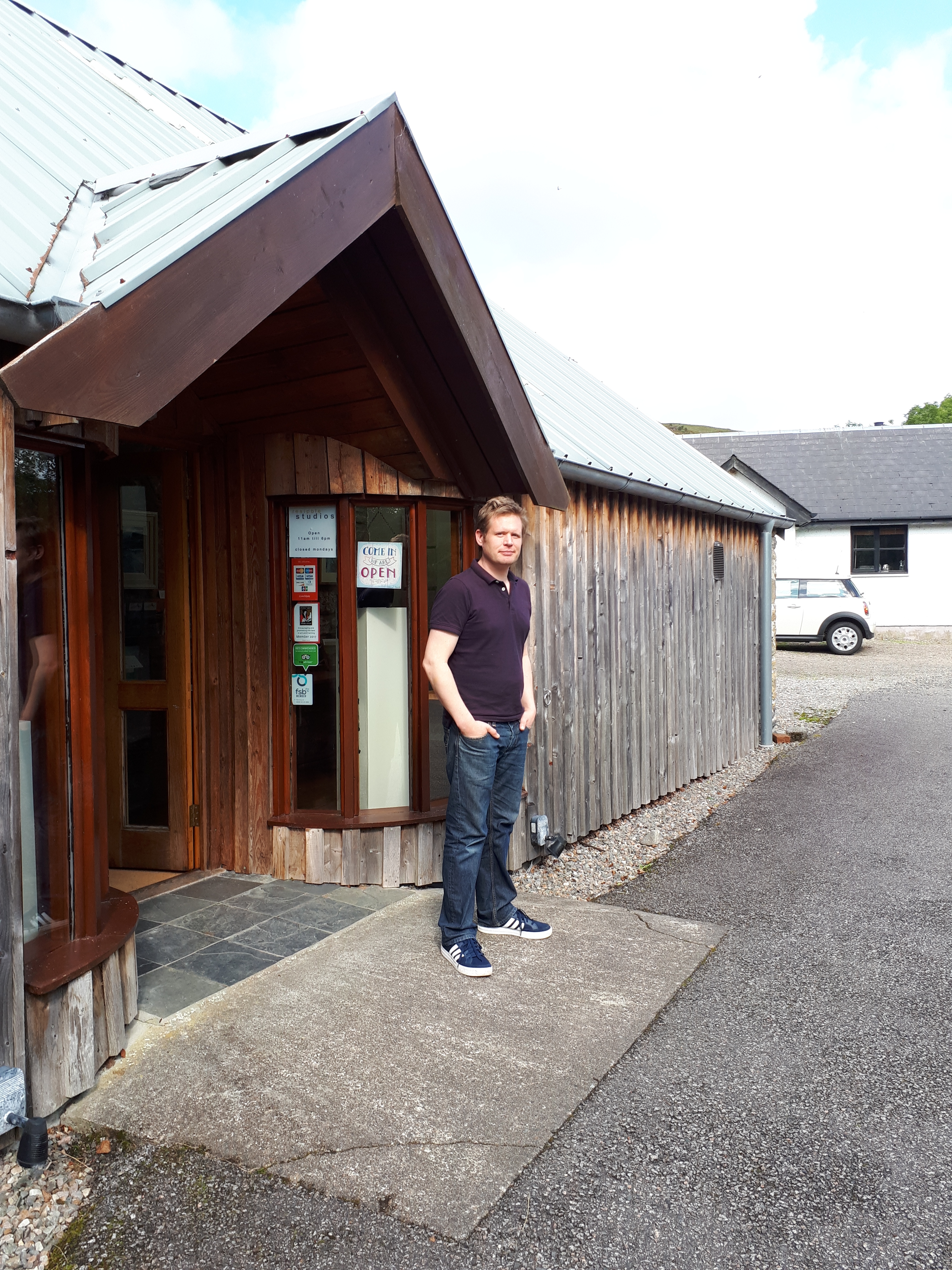
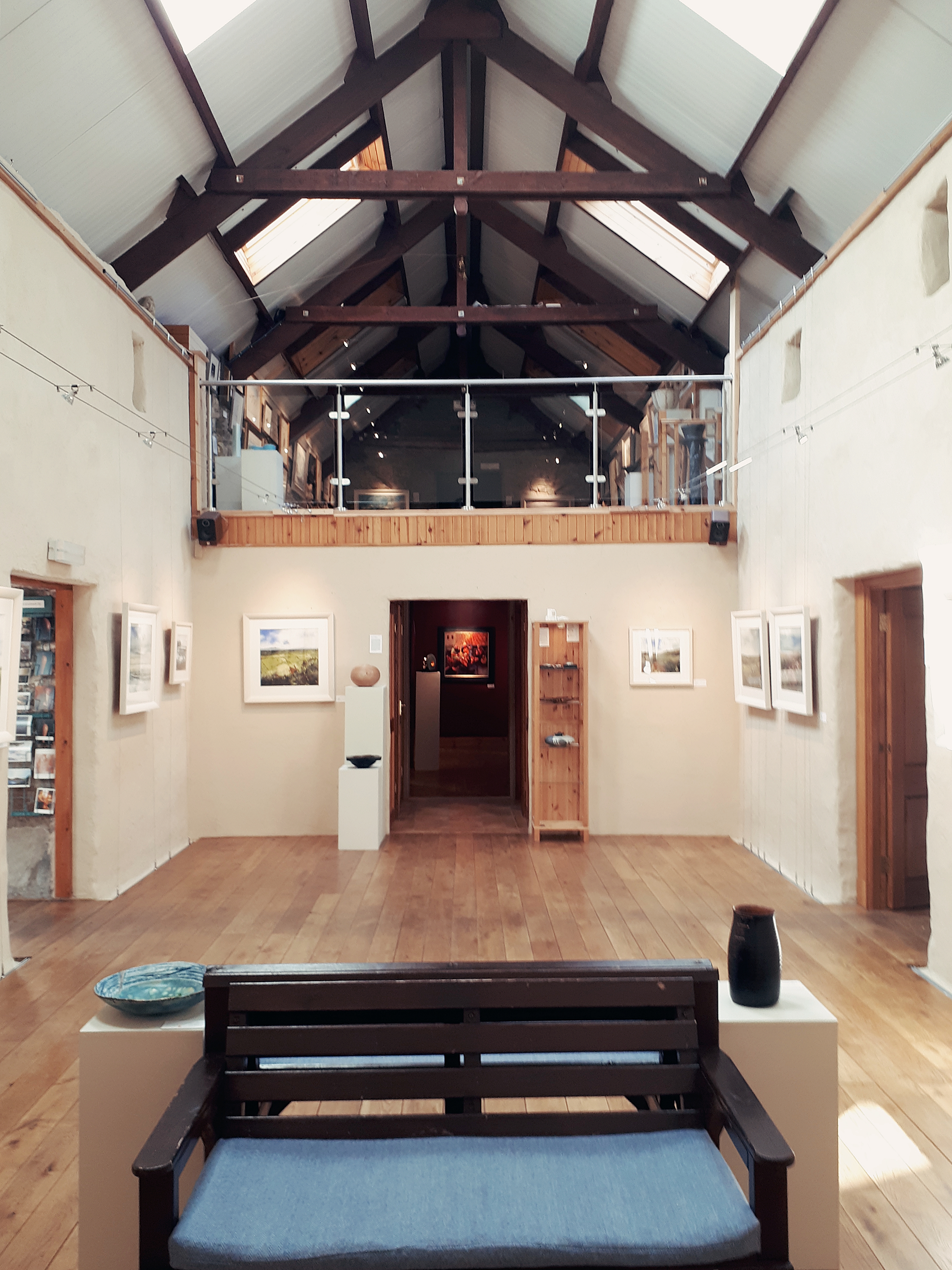
And this year in March – some really nice work in the main gallery by Jane Rushton Breathing Spaces ..
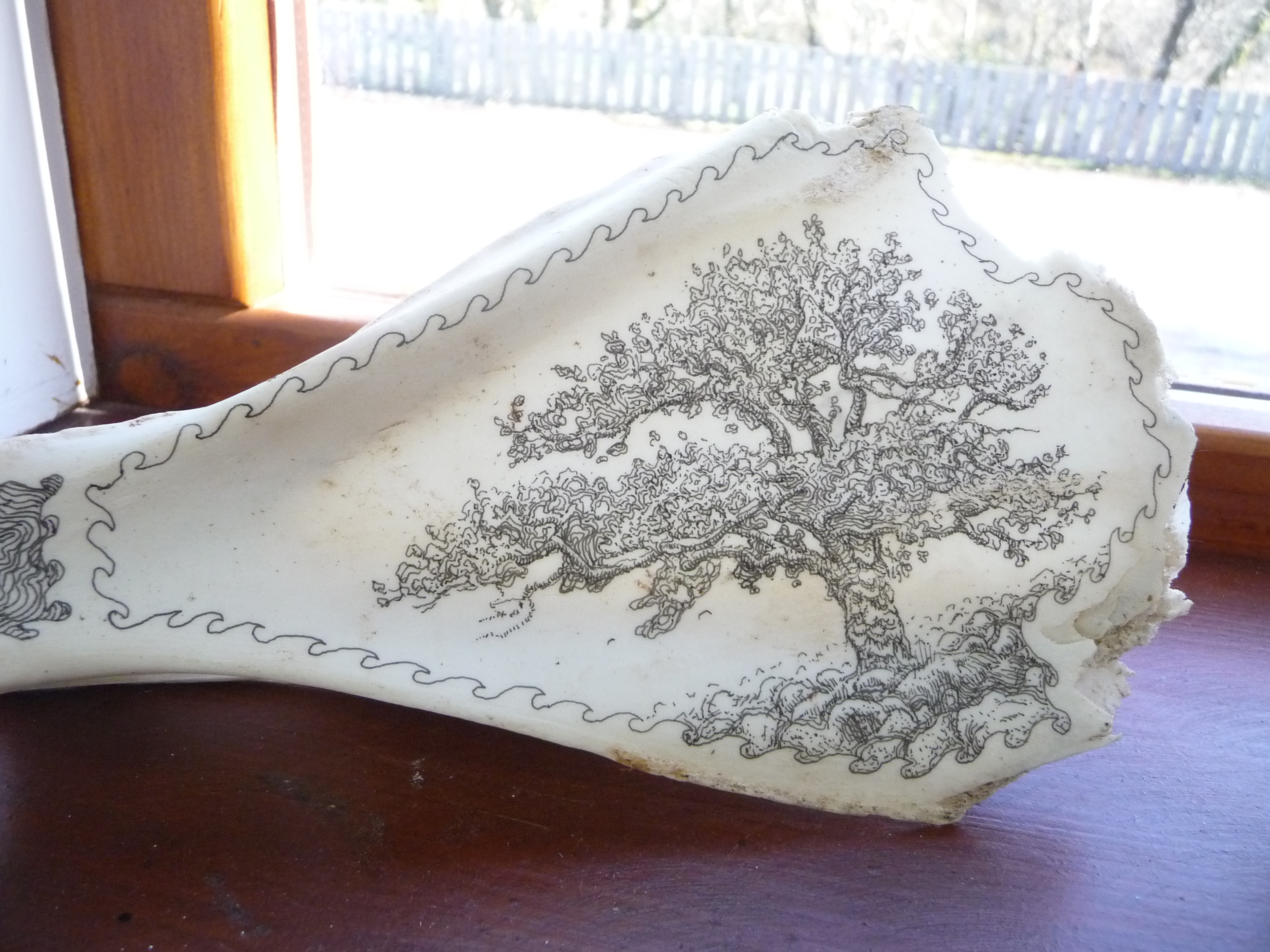
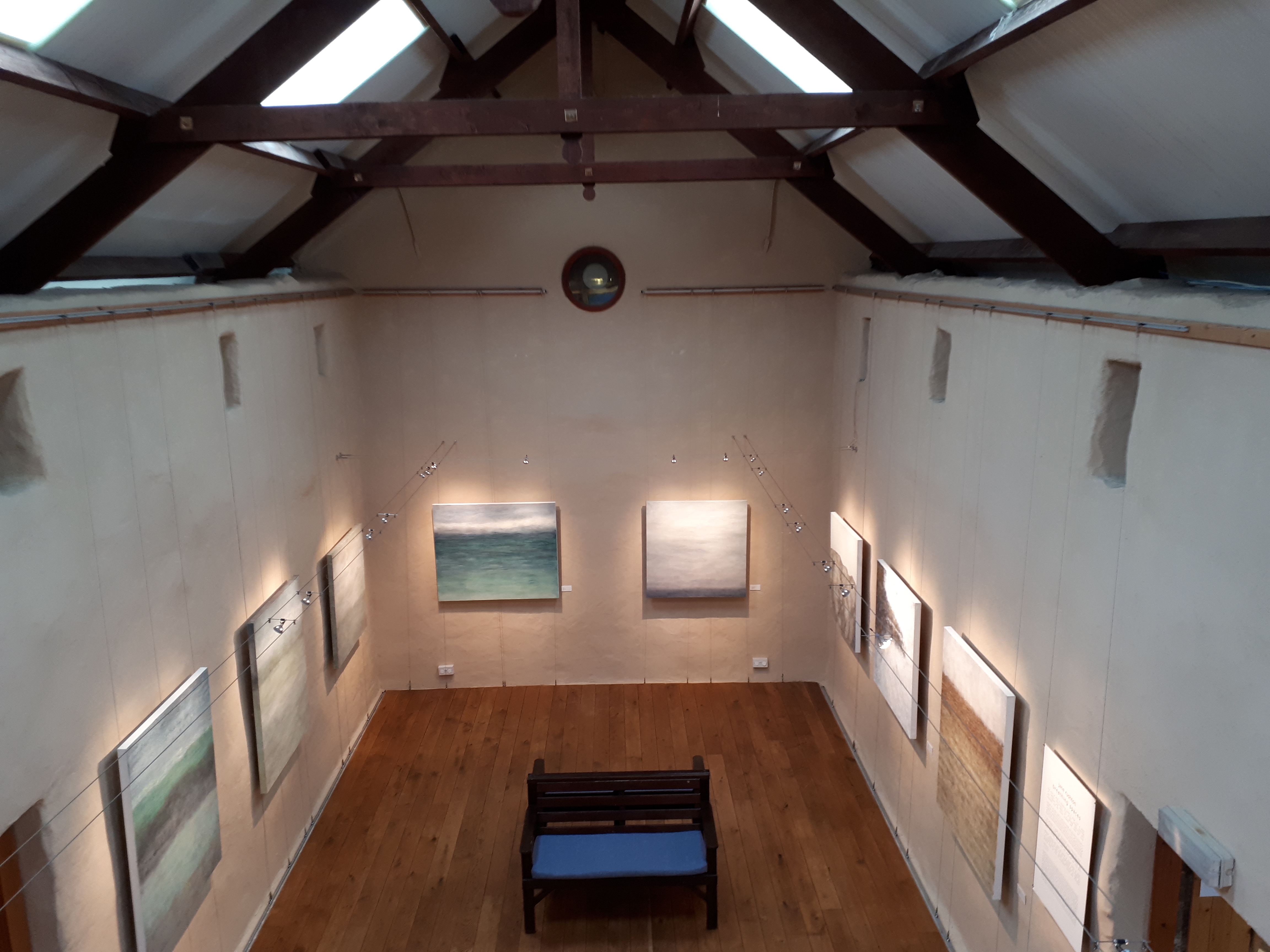
I’ll post exact details of the exhibition soon, and send a link to the paintings once they’re added to the Resipole’s website. In the meantime, you can have a browse on this link – Resipole
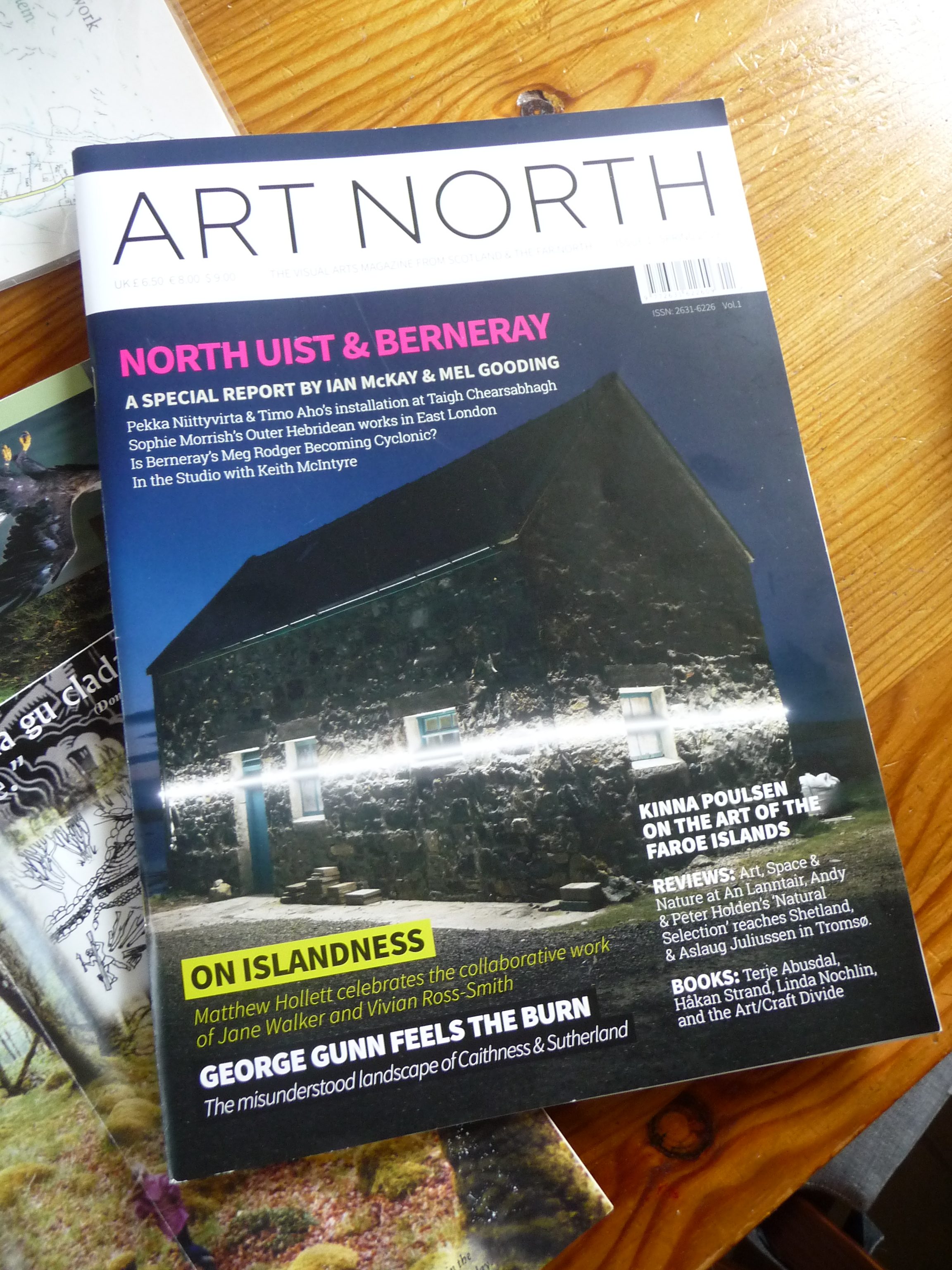
The gallery shows the work of some of Scotland’s most talented artists featured in the recent spring publication of the excellent Art North – a new arts magazine focusing on Scottish contemporary arts. Link here – Art North
‘Sanna Bay, sand dune’. Mixed media on 14×11″ wood panel. Rose Strang, 2019
Above, one of my paintings in progress (more below).
It’s been non-stop creativity since I got back from Ardnamurchan!
Here’s a holiday video I made, called Road Sketches, it was fun to get back into video-making with something informal, and I think it has a nice mood ..
The rest of the paintings in progress so far …
‘Sanna Bay,afternoon’. Mixed media on 14×11″ wood panel. Rose Strang, 2019
‘Sanna Bay, dusk’. Mixed media on 14×11″ wood panel. Rose Strang, 2019
‘Ardnamurchan, Sheep’. Mixed media on 14×11″ wood panel. Rose Strang, 2019
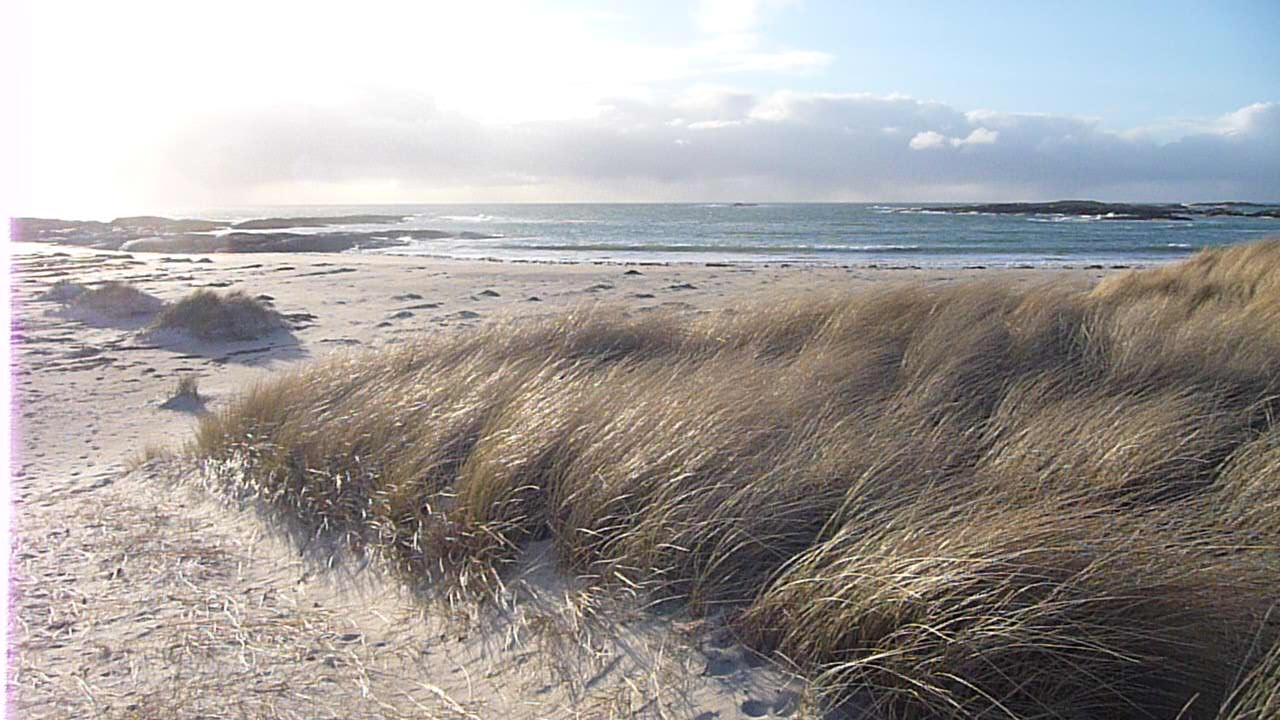
Sanna Bay, Ardnamurchan. Rose Strang 2019
Words and photos can’t do justice to the beauty of Ardnamurchan and Sunart. What an utterly inspiring experience it was.
Hopefully my upcoming paintings will capture something of how it feels to stand on the beach of Sanna. The light there makes you feel you’ve entered a different dimension, or as though you’re seeing beyond normal perceptions – everything opens up, including your self.
Which sounds as though I was on some sort of druggy trip, and it is a sort of high, but it’s more hyper-reality, almost raw in a way. It was an emotional experience, which is often how it feels when you’re in these places. It’s strange to return to Edinburgh – nice to be back home and what’s familiar, but it feels several steps removed from Sanna and Ariundel forest, so I must keep it alive in my mind and imagination for the paintings I’ll be working on, because nice as these photos are they don’t get what it’s like to be there.
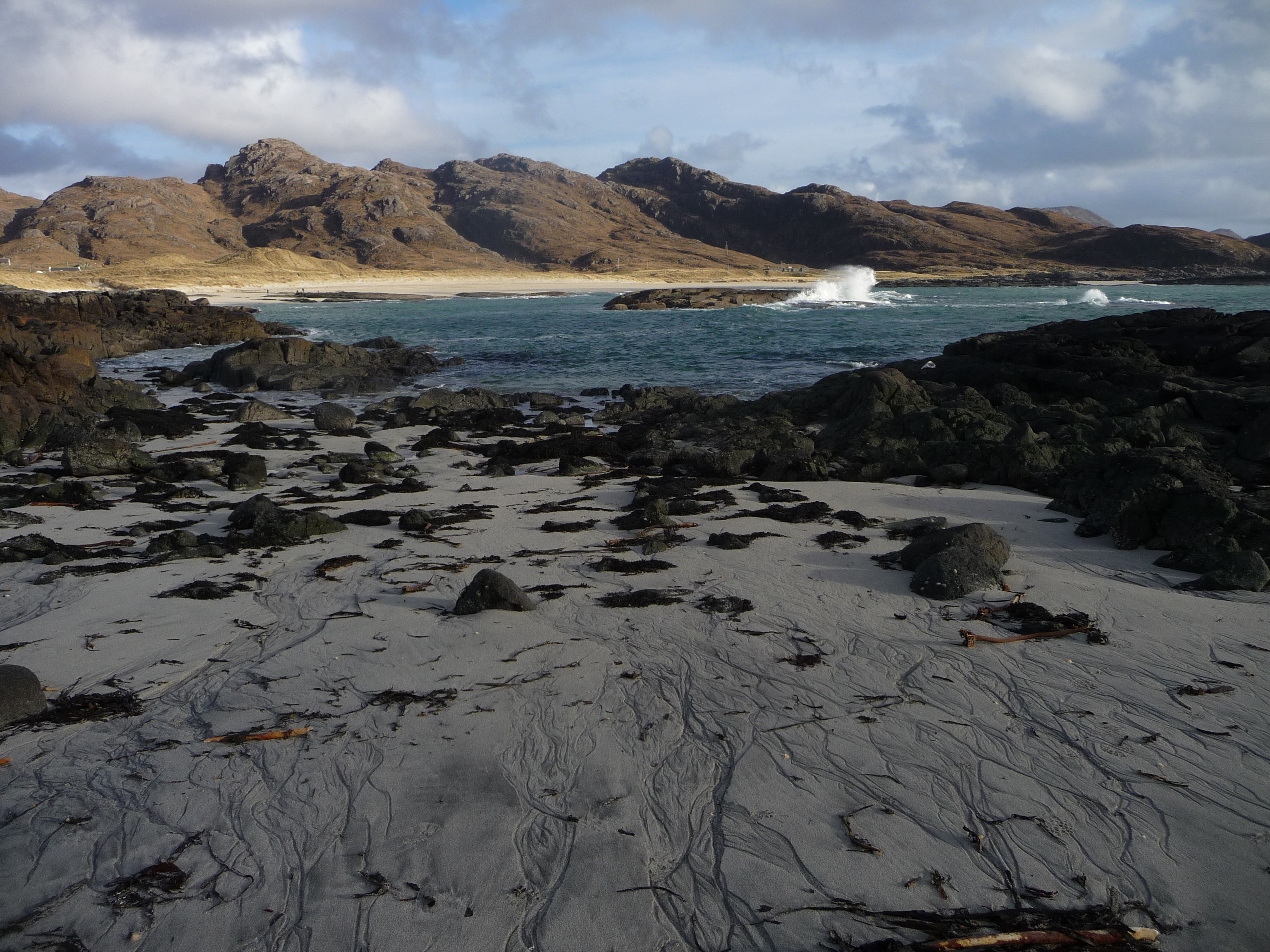
Sanna Bay, Ardnamurchan. Rose Strang 2019
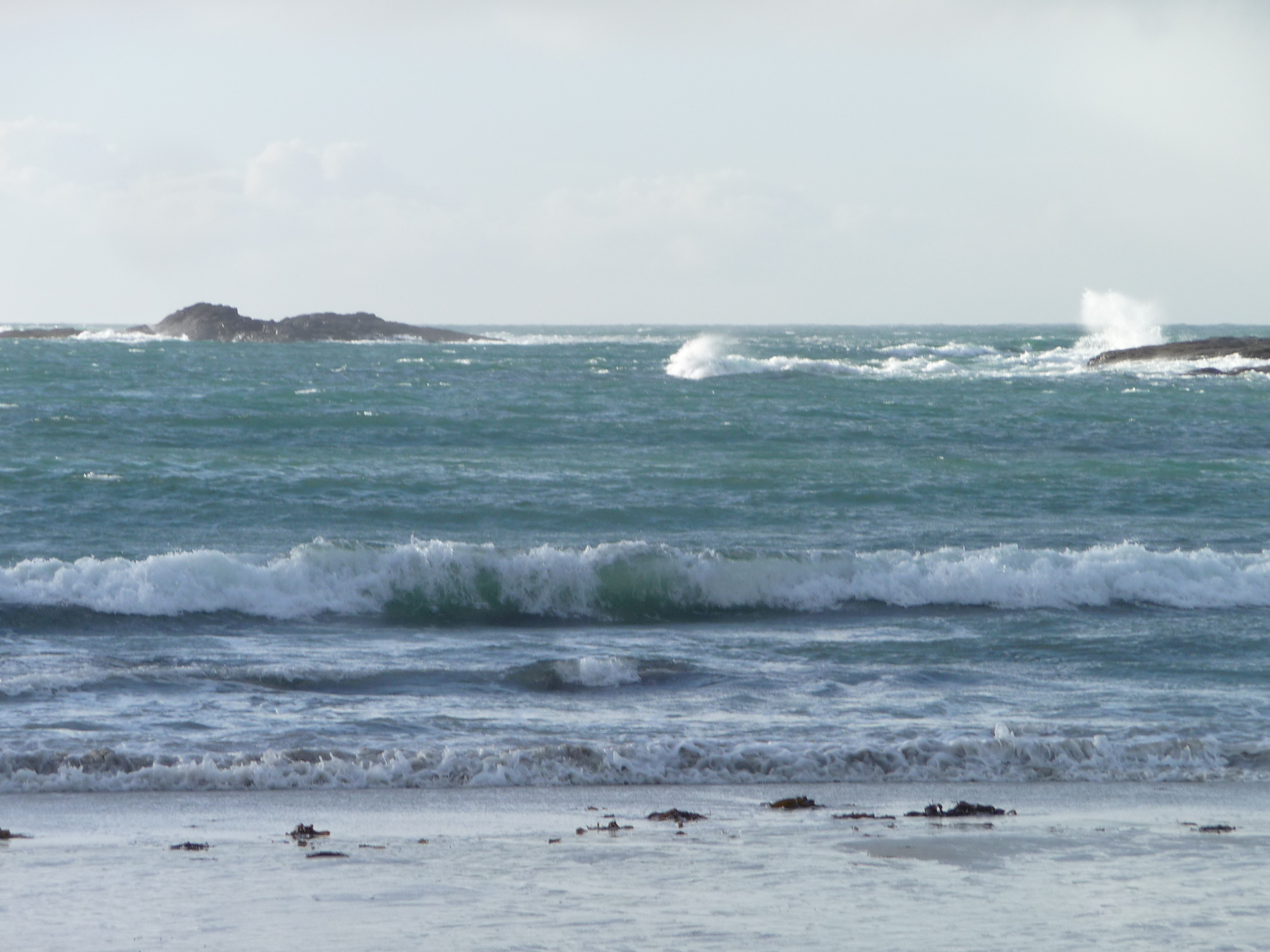
Sanna Bay, Ardnamurchan. Rose Strang 2019
Sanna Bay, Ardnamurchan. Rose Strang 2019
I took hundreds of photos, made various sketches and I’ll create a couple of edited videos as well as paintings I think. Also my friend Donald (who was an excellent companion throughout the trip), will hopefully be recording a guitar response to the videos once they’re made. Donald felt similarly moved by the experience; as he described it –
‘the ocean, that was the most cosmic for me, looking beyond the sky, then inside the forest, walking the leaf-strewn path, then the wild and windy moors and glens from a speeding metal box’.
Absolutely. Something I’ve always really loved about these journeys is the contrast between the road-trip/car-time – chatting and playing music, the sound of the engine and the feel of impetus – then when you leave that small human-made world of your ‘speeding metal box’ and stand still on a beach of epic proportions looking out to the Atlantic – the almost shock of silence and space.
Also, Sanna is I think the most beautiful beach of the west coast and islands of Scotland I’ve seen. It felt sad to leave and I found myself walking backwards for several minutes as we headed back to the car. It was getting towards evening and it’s a long drive across the wildest parts of the Ardnamurchan peninsula on single-track roads …
We also stopped that day at Castle Tioram, which has to be one of the world’s most beautiful settings for a castle. This is my third visit there, and each time I learn more about the area, the centuries of history and its golden age before Culloden and the Highland clearances. (I wrote about this in a previous post, link Here).
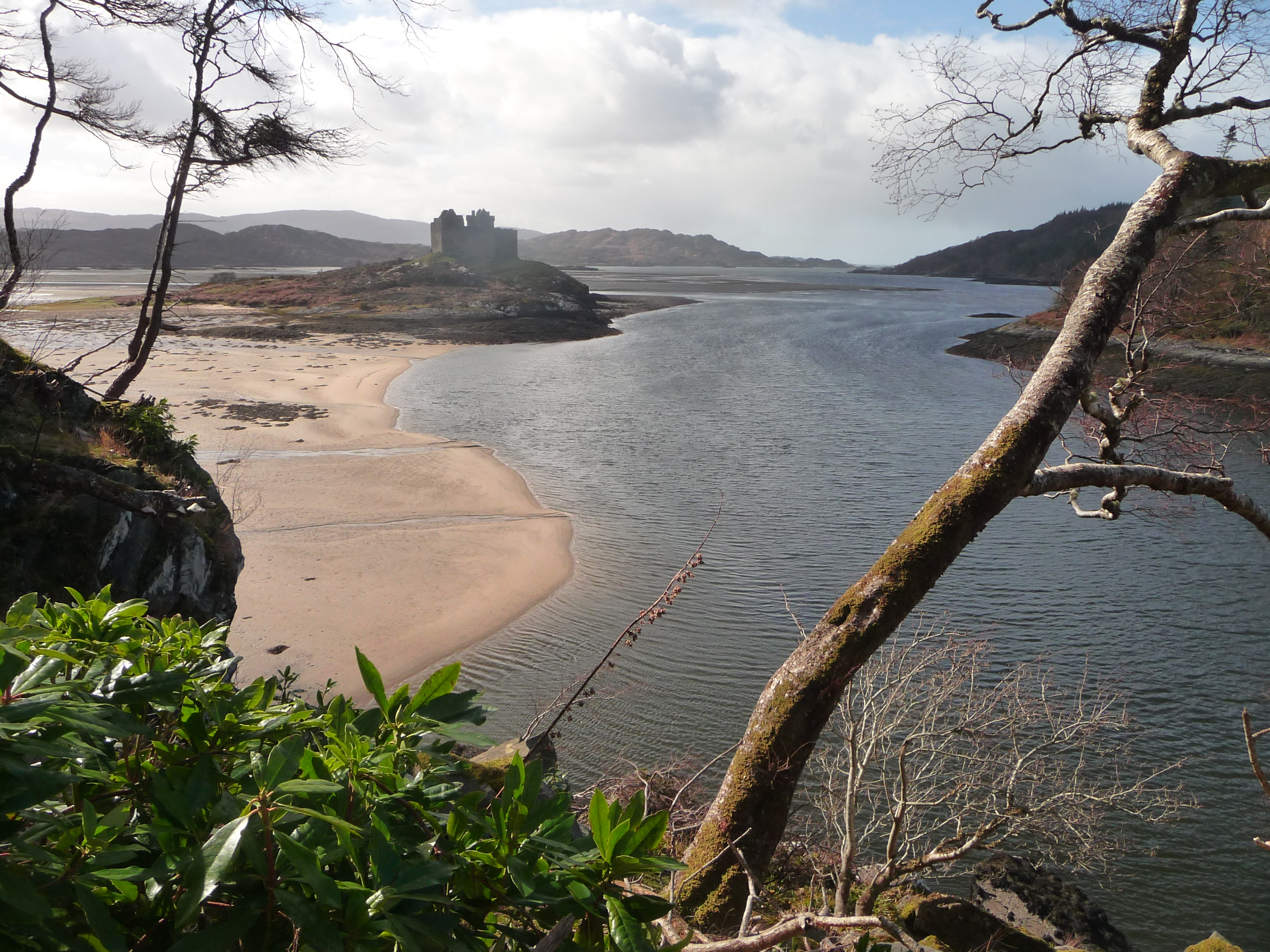
Castle Tioram, Sunart. Rose Strang 2019
Castle Tioram, Sunart. Rose Strang 2019
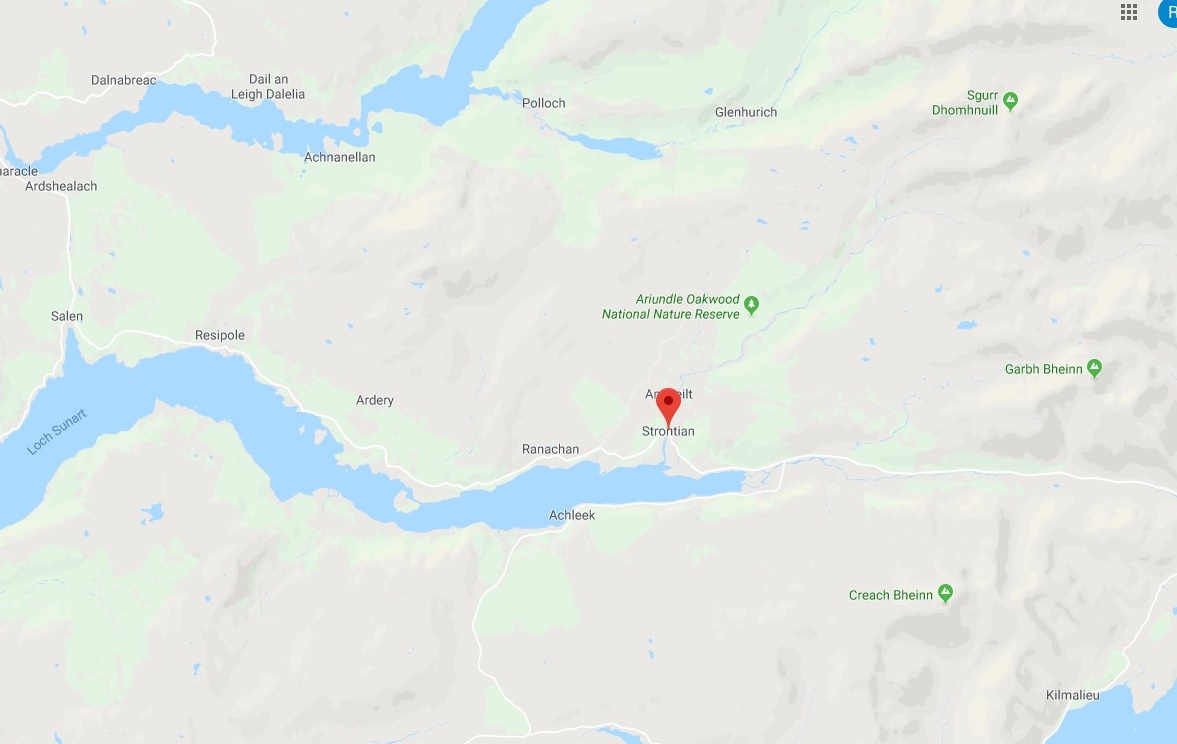
In that blog post I also talked about Ariundle oakwood in Sunart (which is before you head out west on the proper peninsula of Ardnamurchan). Suaineart ghorm an daraich – Green Sunart of the Oaks.
We visited Ariundle the next day and it was such a contrasting experience to the epic feel of Sanna. Such a gentle feeling amidst all those multi-hued mossy hillocks, flowing streams and lichen-covered oaks. (I made sure to pick up a pile of oak twigs for my niece, who wants to frame a couple of oak-leaves she was given at the hobbit-land place she visited in New Zealand!).
Ariundle – it is quite a Tolkien-esque sounding name don’t you think? It means shieling (or ‘settlement’) in the fair meadow. It’s heartening to see how much conservation work is going on there to preserve it – Ariundle is a remnant of the ancient oakwoods that once stretched from Portugal to Norway along the Atlantic coast – hence why it’s described as Atlantic oakwood.
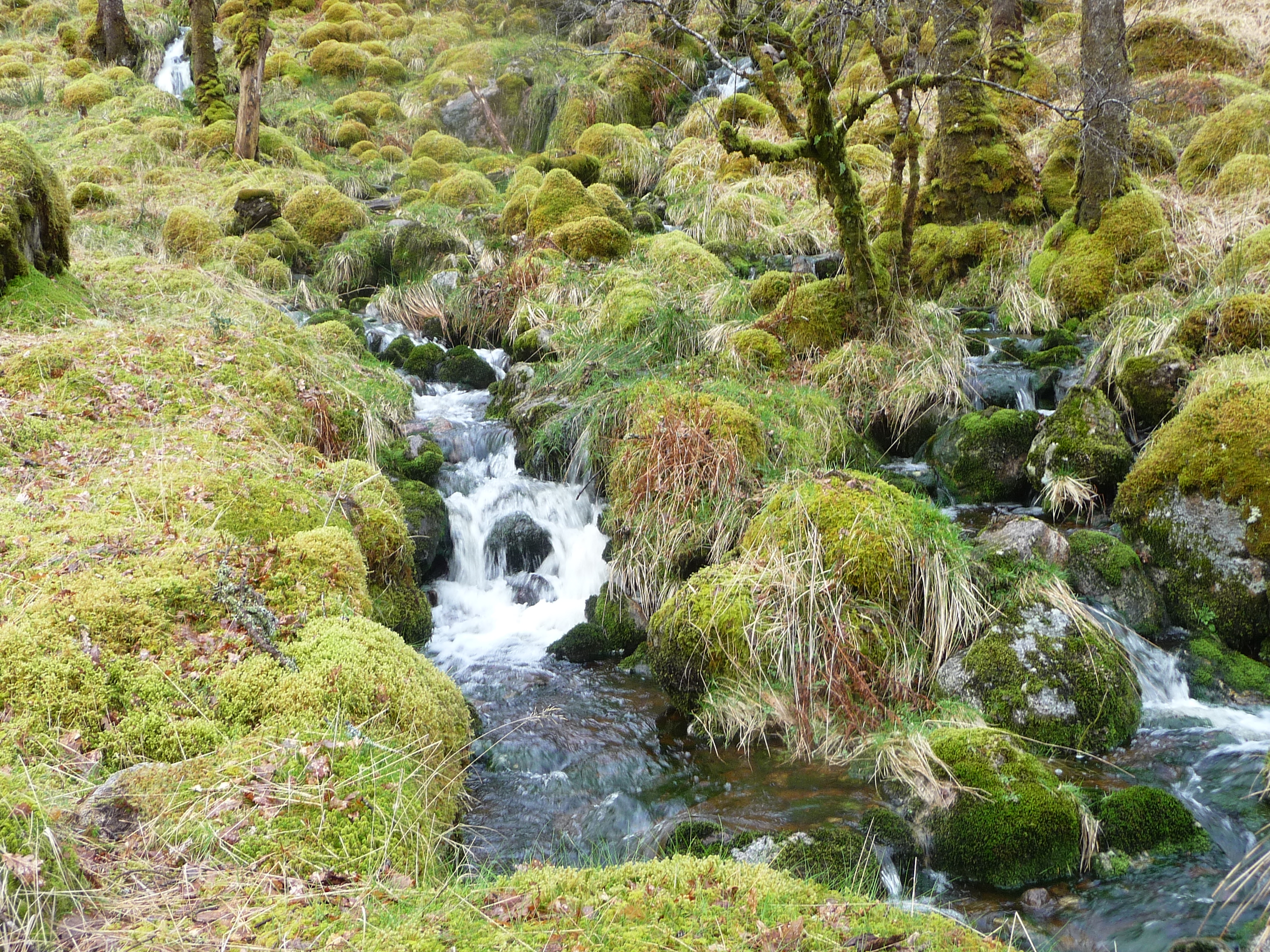
Ariundle Oakwood, Sunart. Rose Strang 2019
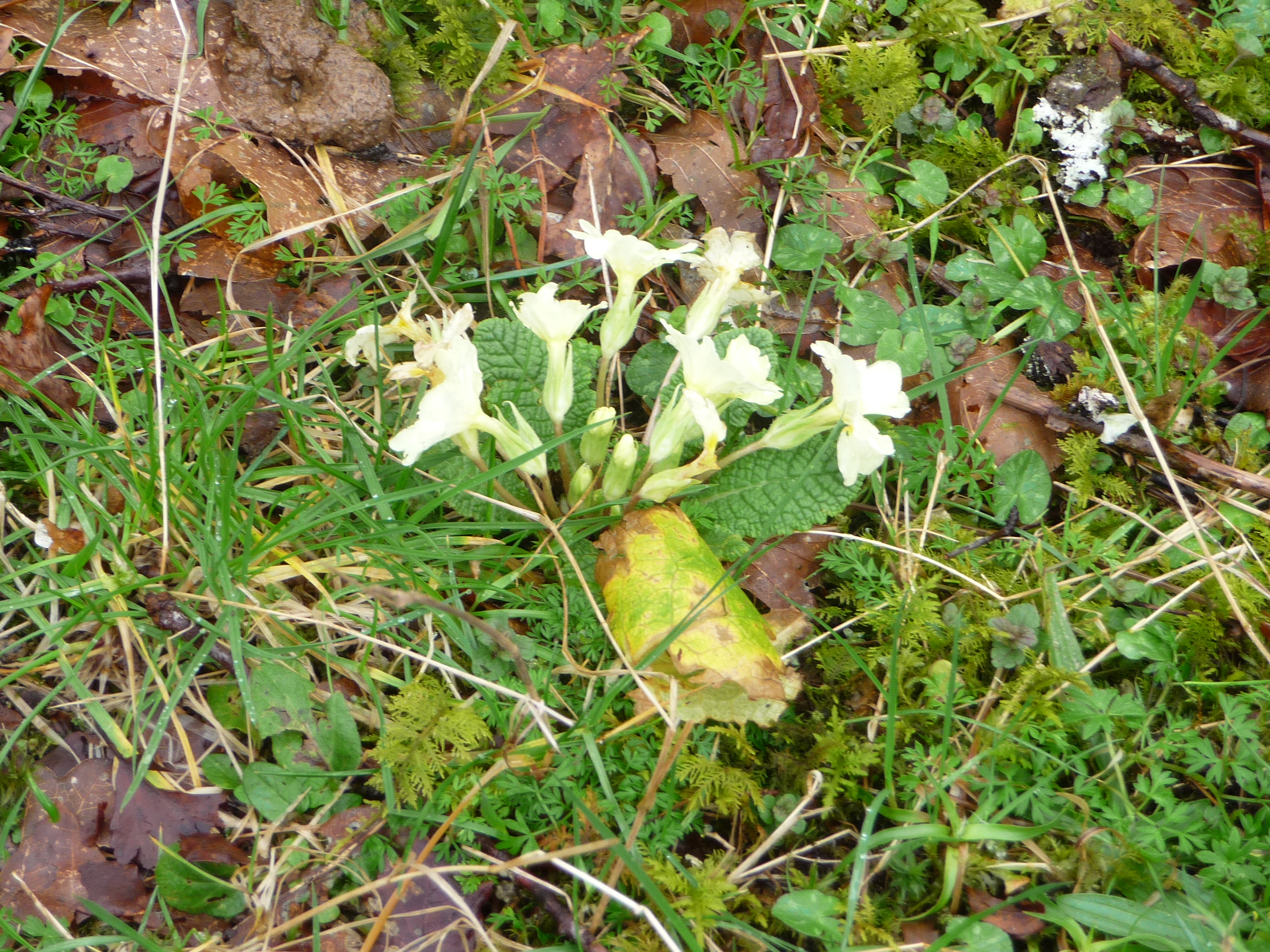
Ariundle Oakwood, Sunart. Rose Strang 2019
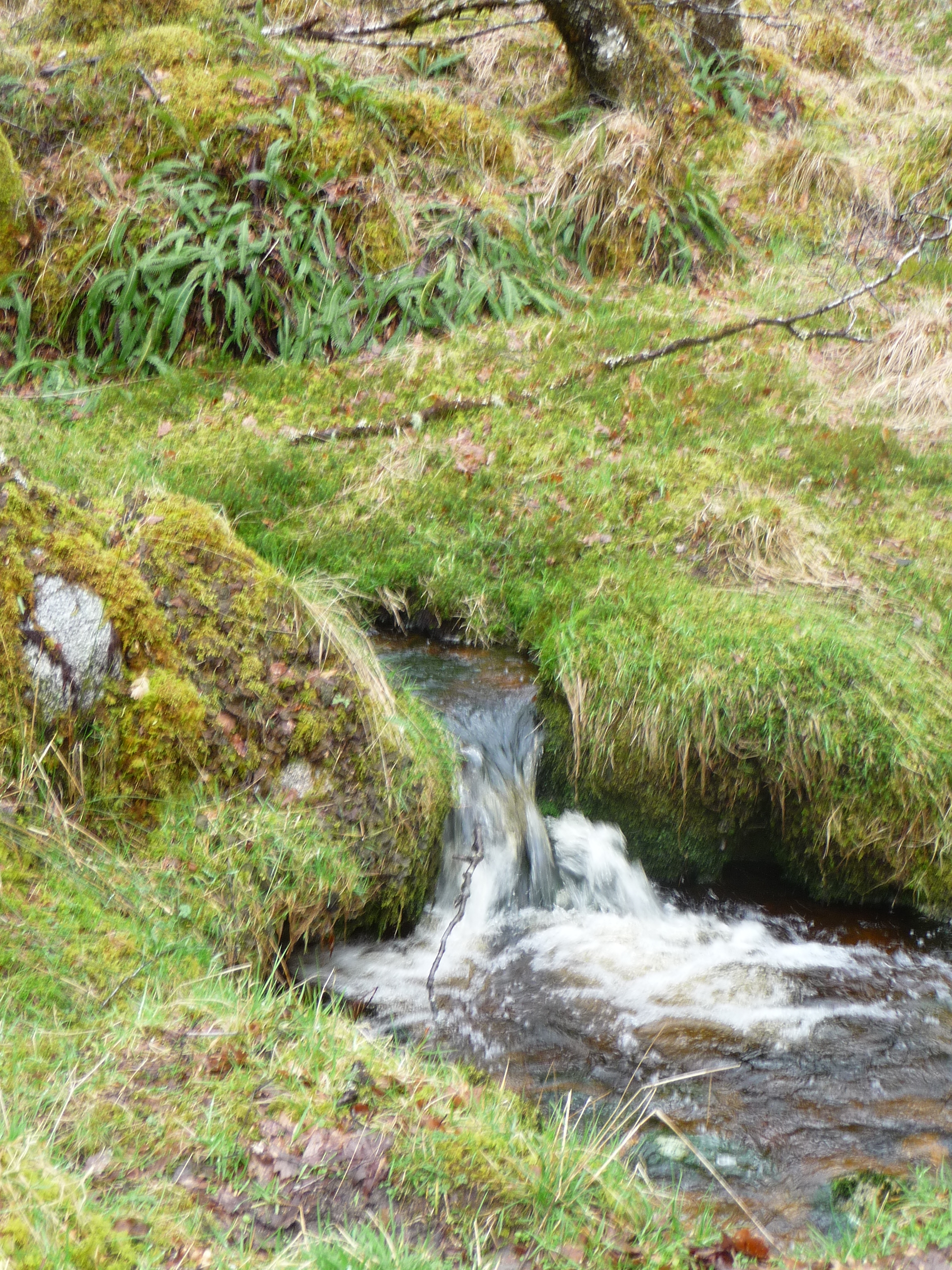
Ariundle Oakwood, Sunart. Rose Strang 2019
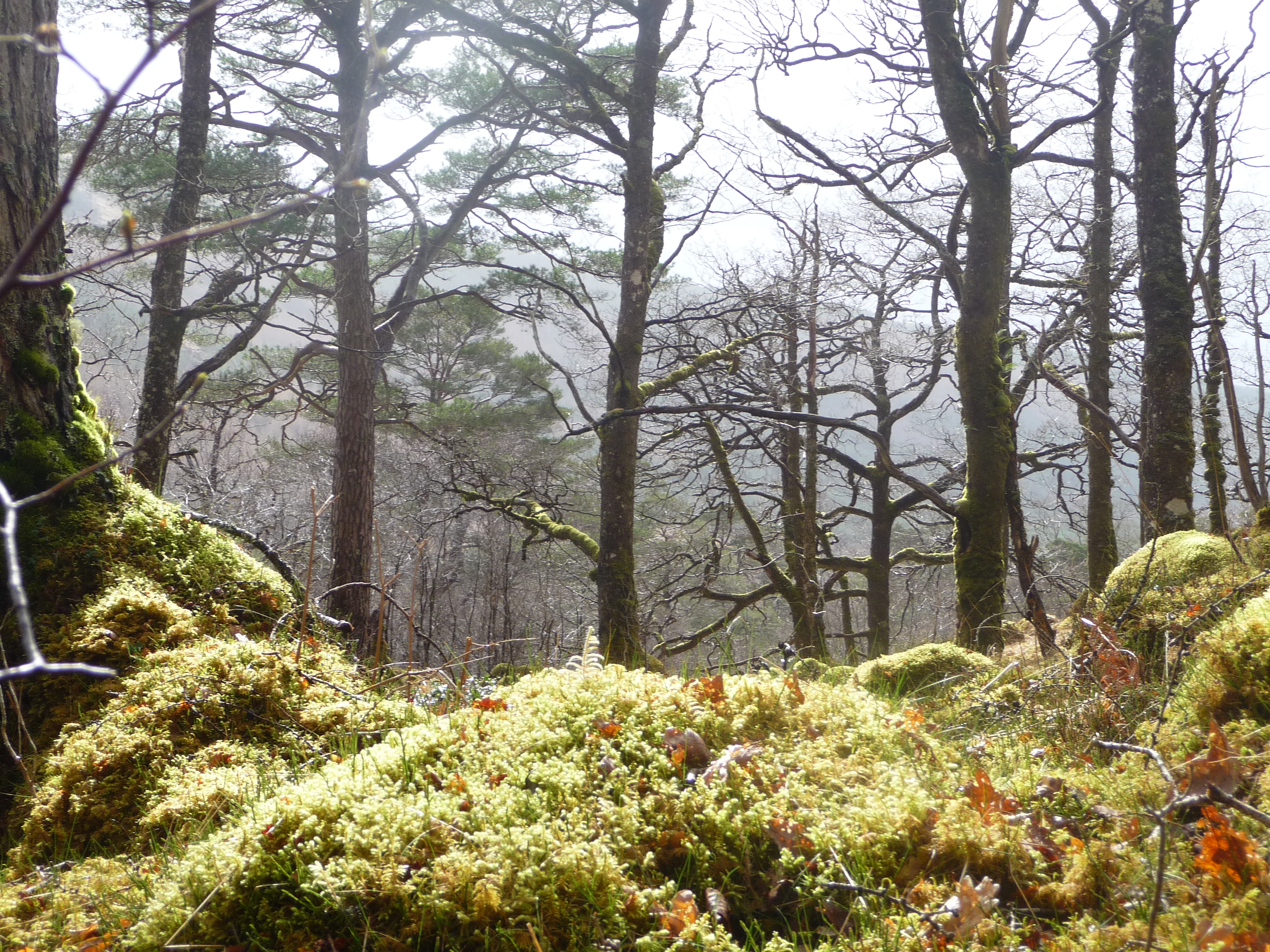
Ariundle Oakwood, Sunart. Rose Strang 2019
I discovered a new hobby on the return to Edinburgh – sketching the surrounding landscape from the car, it makes you quickly focus on the obvious points, shapes and lines – here they are (scenes from Corran ferry, Glencoe, Rannoch Moor and Balquhidder) …
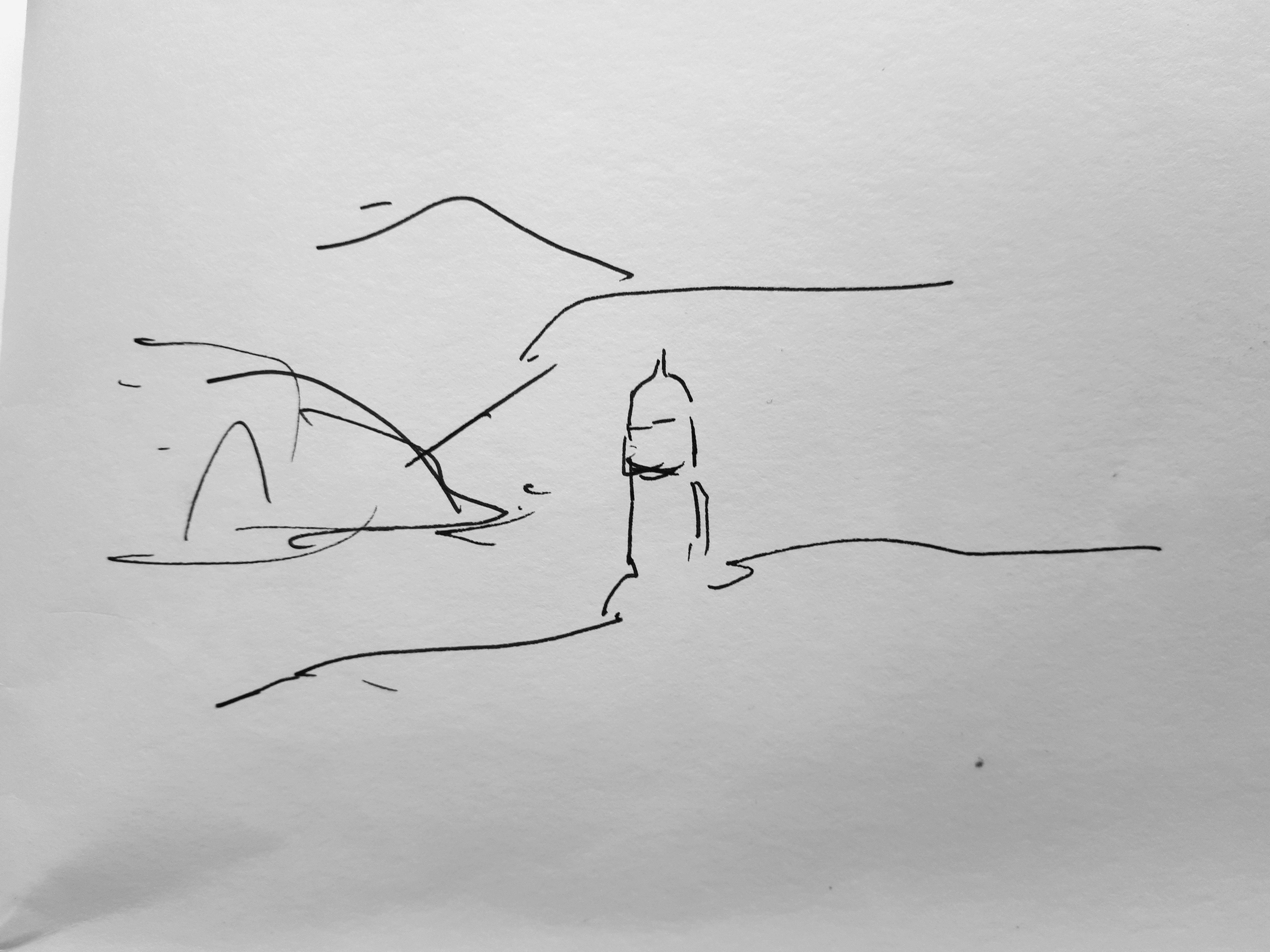
Road sketches. Rose Strang 2019
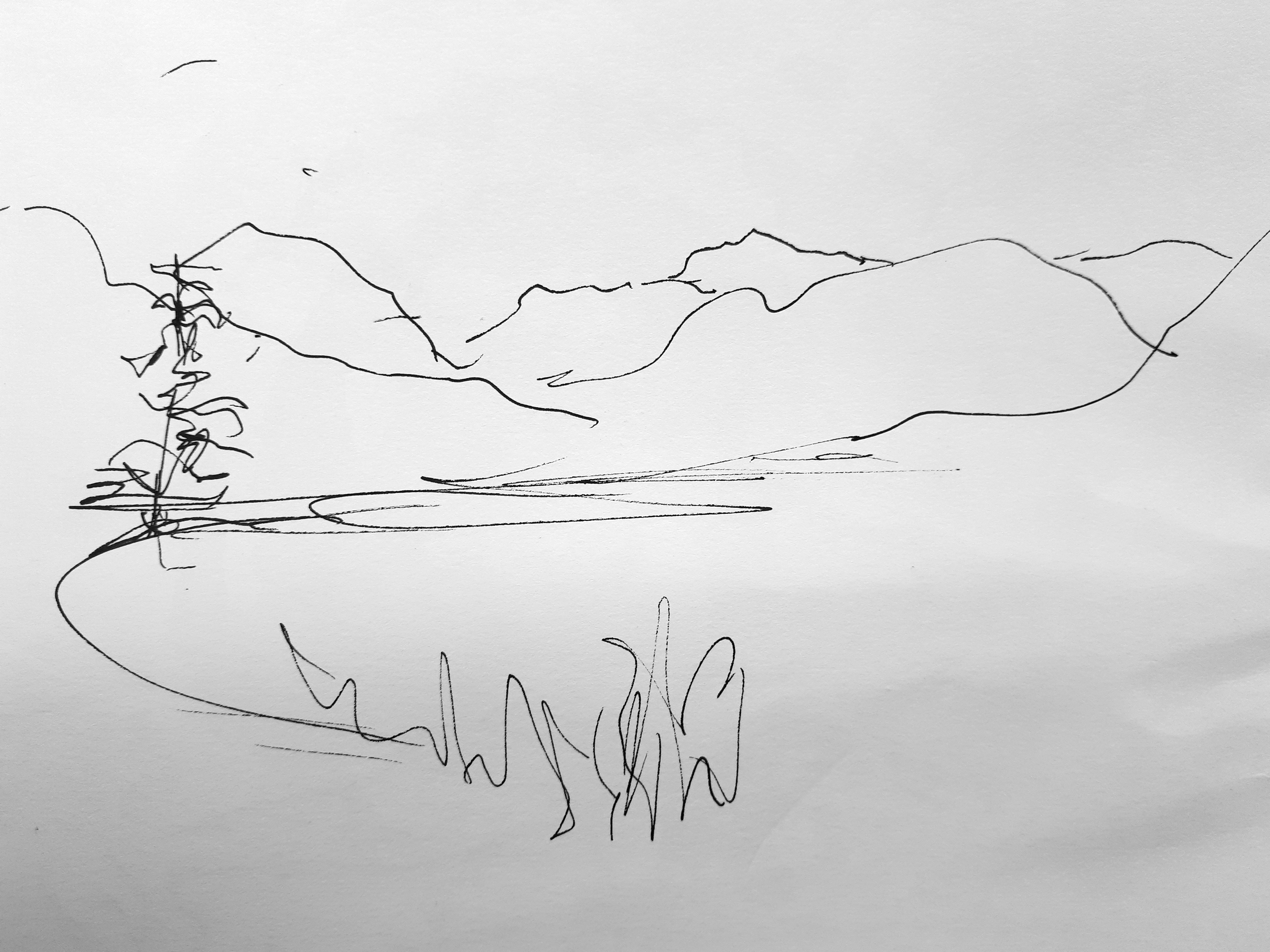
Road sketches. Rose Strang 2019
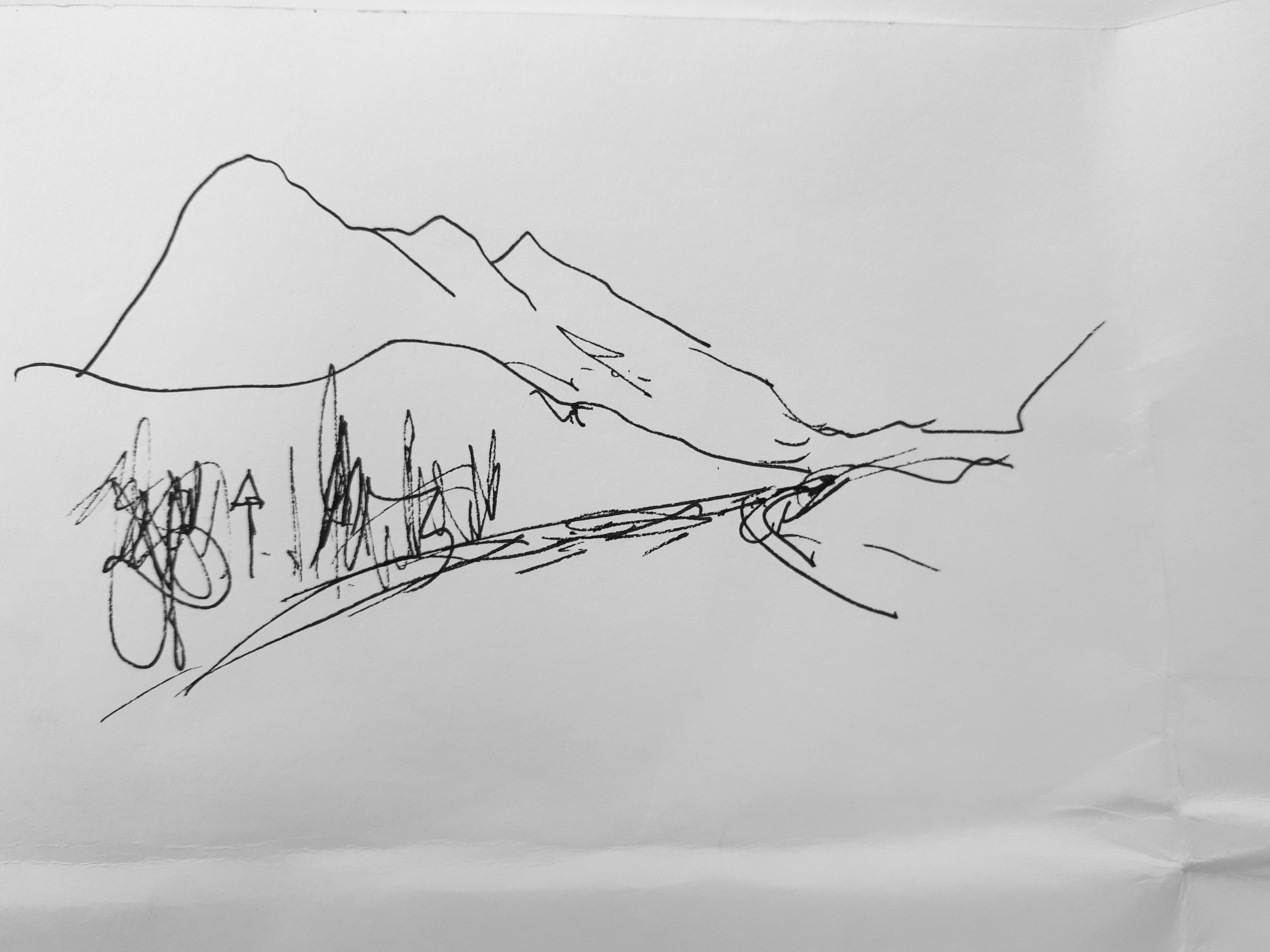
Road sketches. Rose Strang 2019
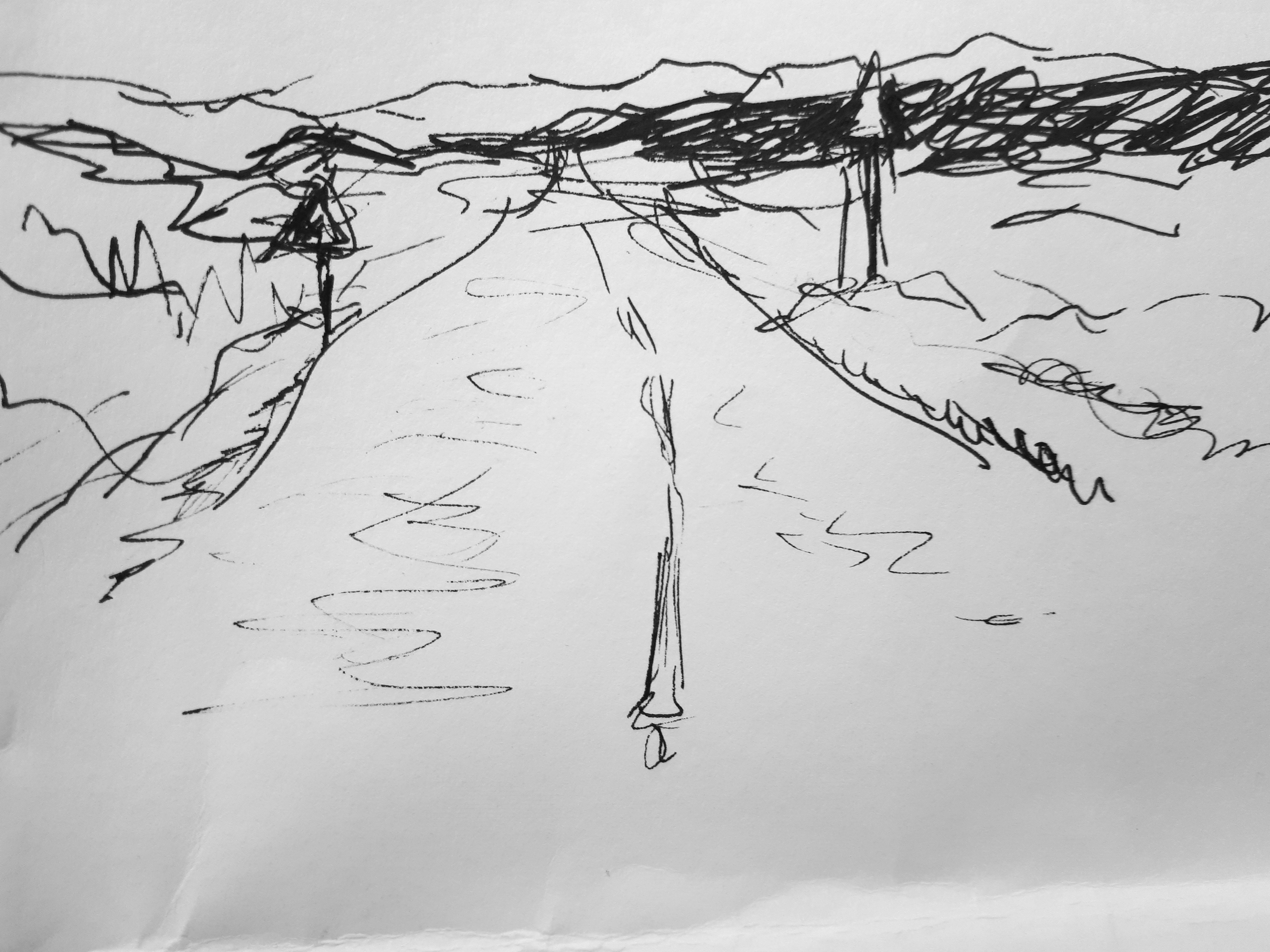
Road sketches. Rose Strang 2019
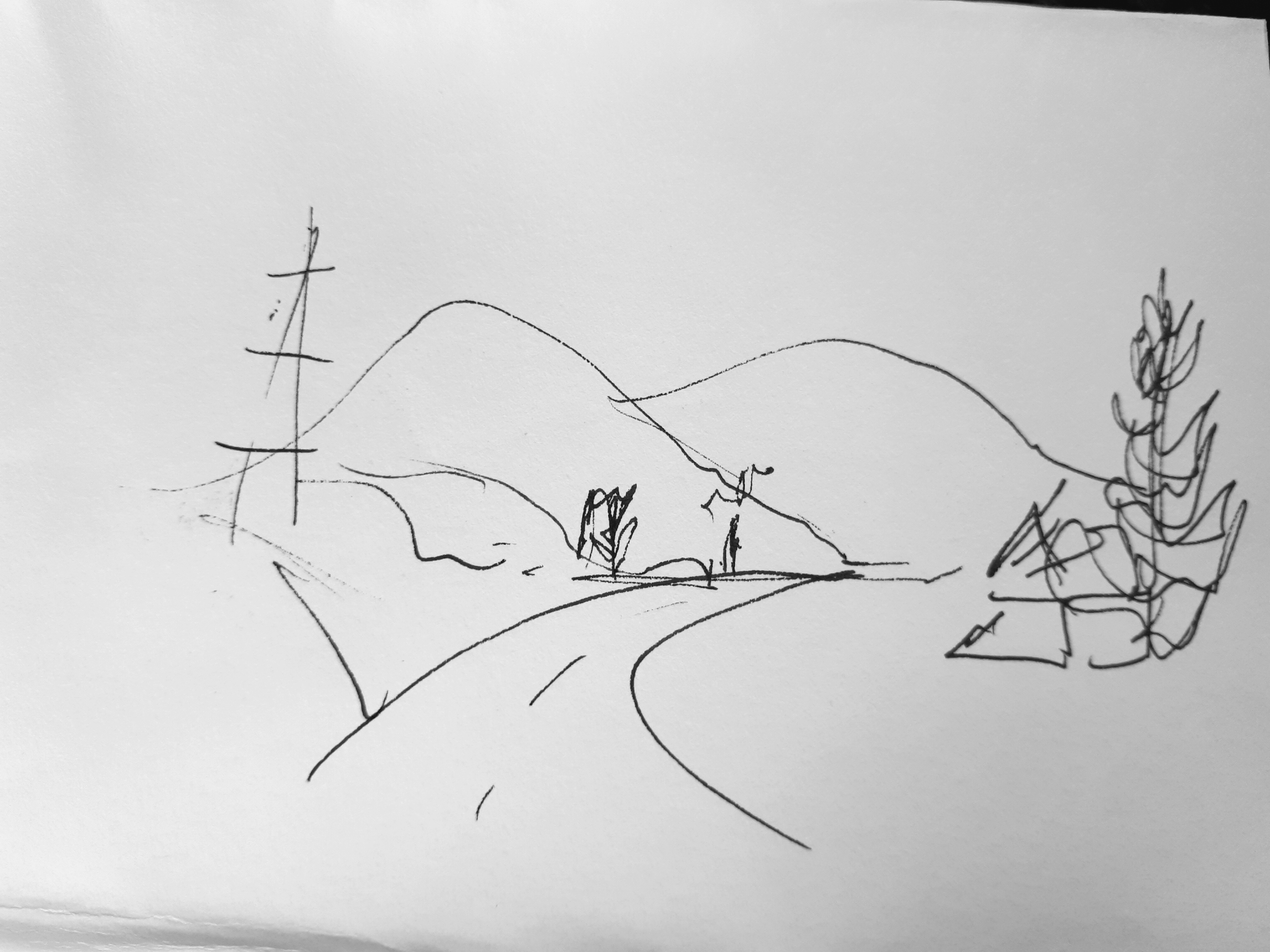
Road sketches. Rose Strang 2019
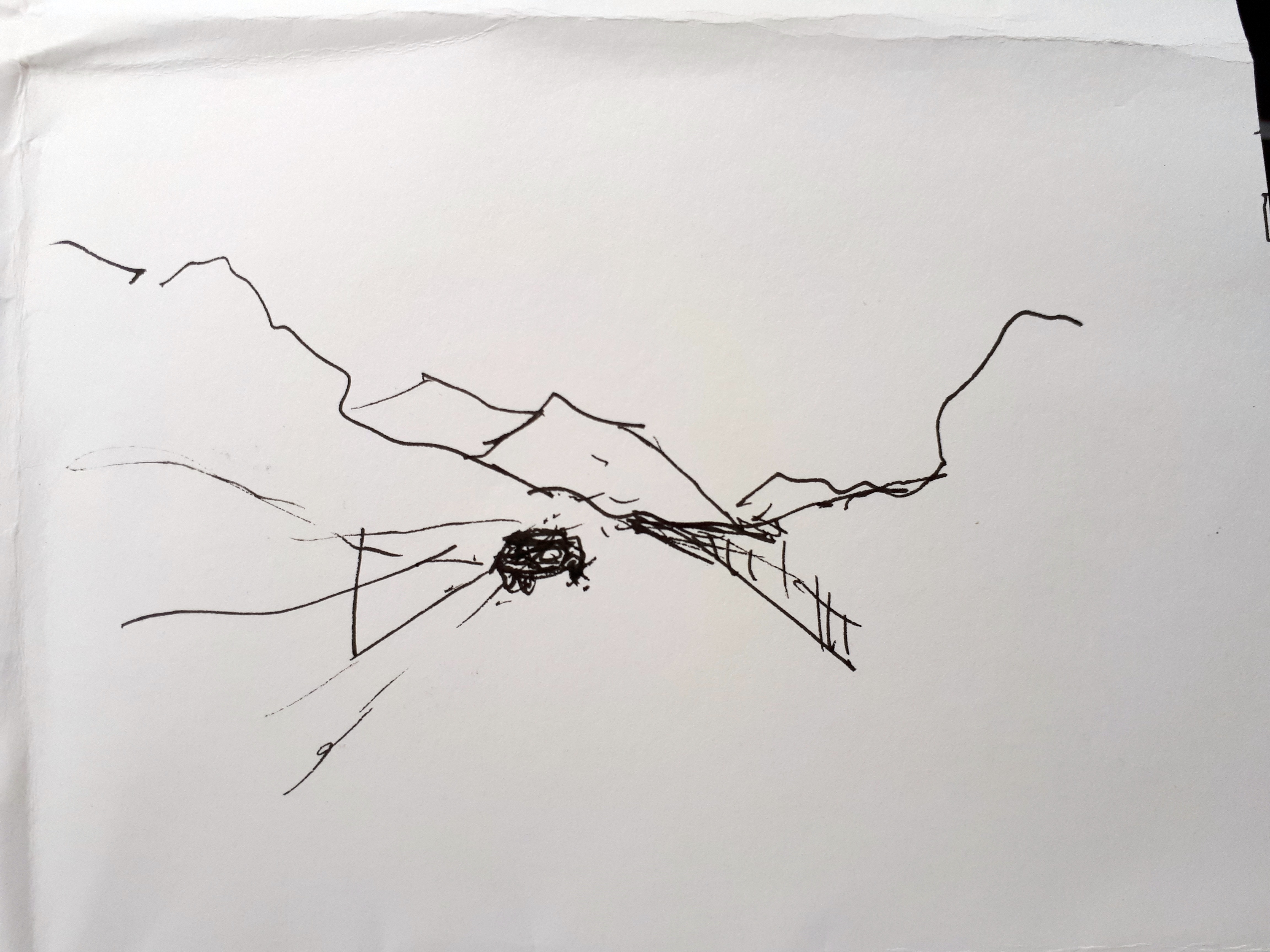
Road sketches. Rose Strang 2019
I always like to visit Balquhidder before returning to Edinburgh, as it’s the last part of the Highlands before the relative flatness of Lothian – it eases the shock of re-entering the city I suppose!
You head off the motorway after Edinchip on a little bypass, then you see the Mhor84 cafe, which serves excellent coffee and nice cakes, but if there’s time it’s nice to drive under the bridge and towards the village of Balquhidder then along the beautiful shores of Loch Voil. It’s always fairly quiet as the road ends after a few miles at the end of the loch – after that it would be a lo-o-ng and arduous walk over the mountains west to the coast again, if you wanted to keep going.
After a mile or so along the loch, you get to Monachyle Mhor Hotel, where you can stop for a drink by the open fire if it’s cold, or if it’s warm sit outside admiring oak trees, shimmering loch and mountain valleys. The hotel interior is lovely (if a bit ‘Farrow and Ball’ – you know – tasteful chalky paint finishes in deep colours or neutrals!) also they have an impressive art collection – it’s kind of perfect, as hotels go, I’ve yet to find out how much it costs to actually stay there.
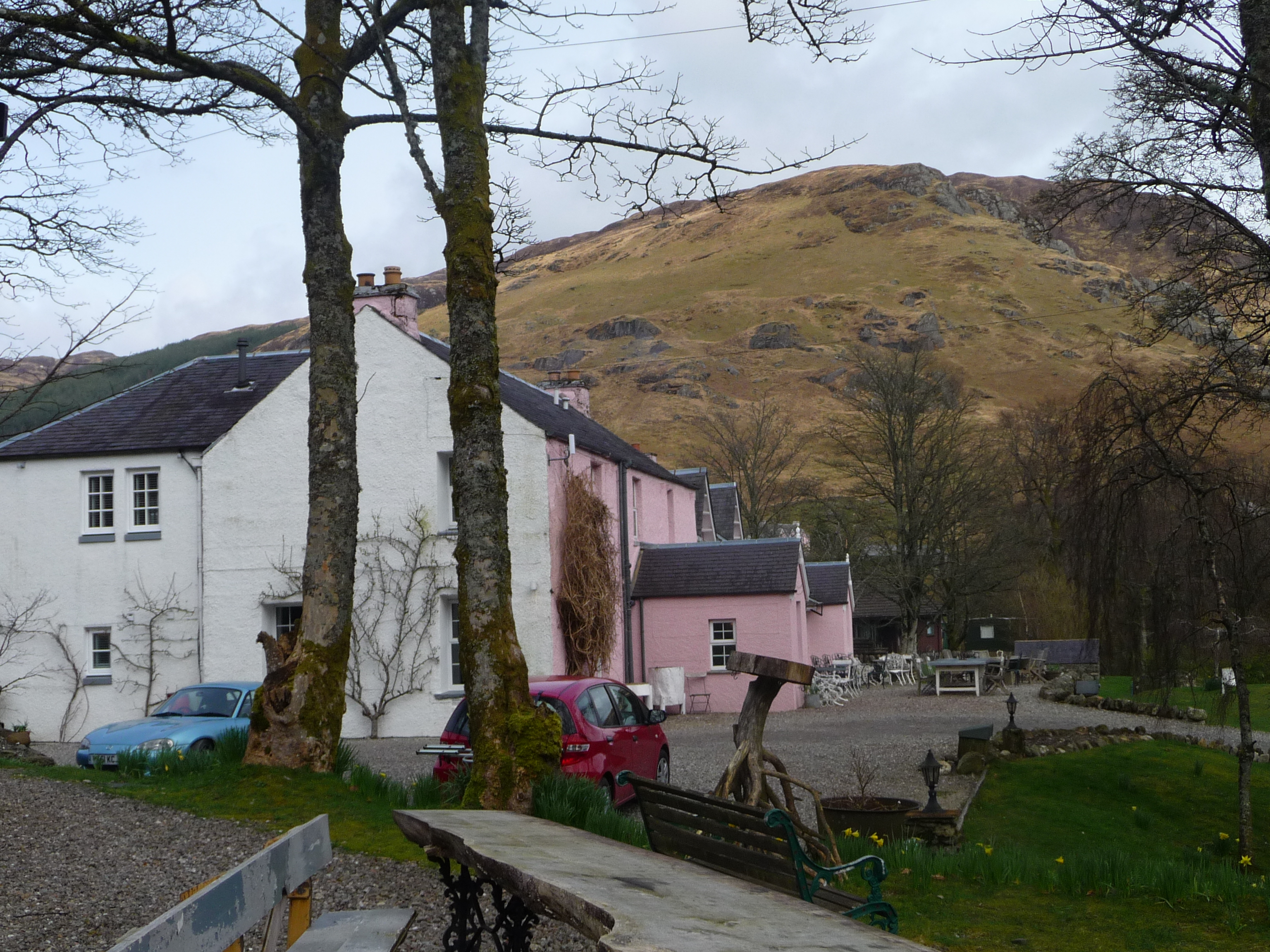
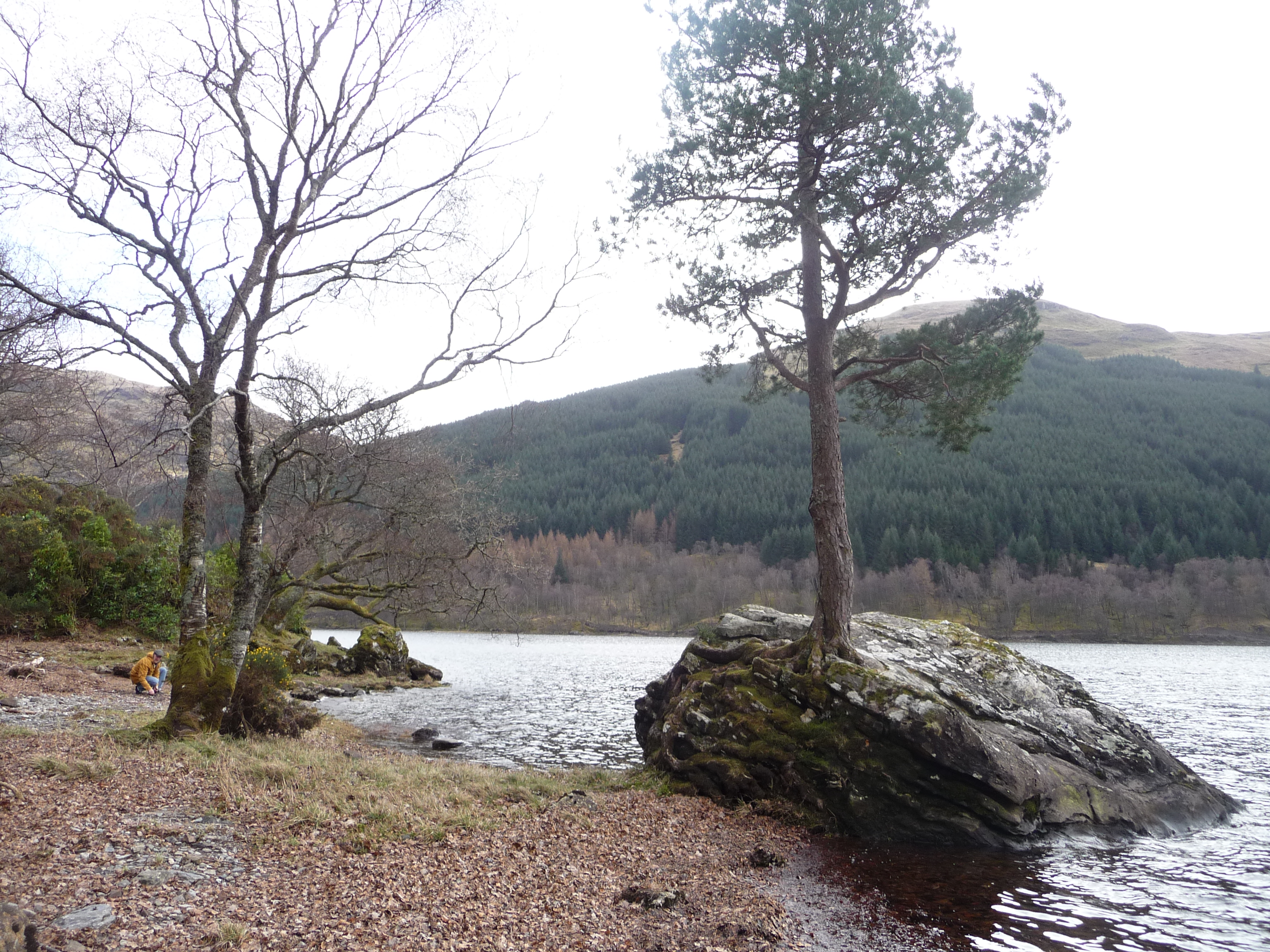
Today I’ve been gessoe-ing up my wood panels. I’ll make a little road-trip video, then it’ll be on with the paintings, and a fuller video with paintings and music, wish me luck! In a few days I’ll post the first video, and also some info about an upcoming three-person exhibition at the Resipole Gallery in Sunart, which I’m looking forward to. I’m not forgetting that these paintings are part of my planets series. March is related to Mars – war, heroism and sacrifice, also early spring – Mars Silvanus – new leaves – and the corresponding Narnian book, Prince Caspian. More on that too in later posts …
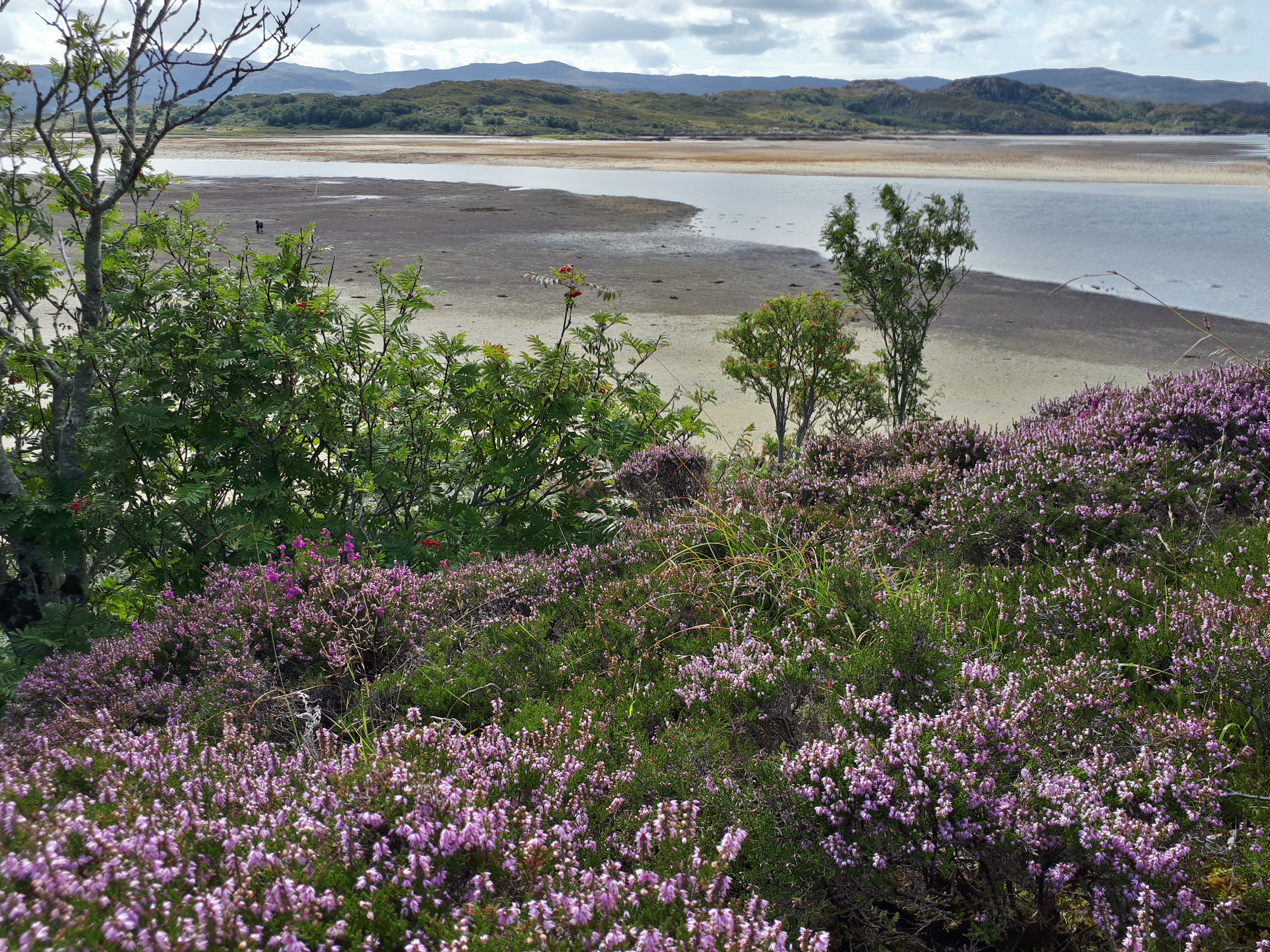
Ardnamurchan, Ardtoe. (photo Rose Strang)
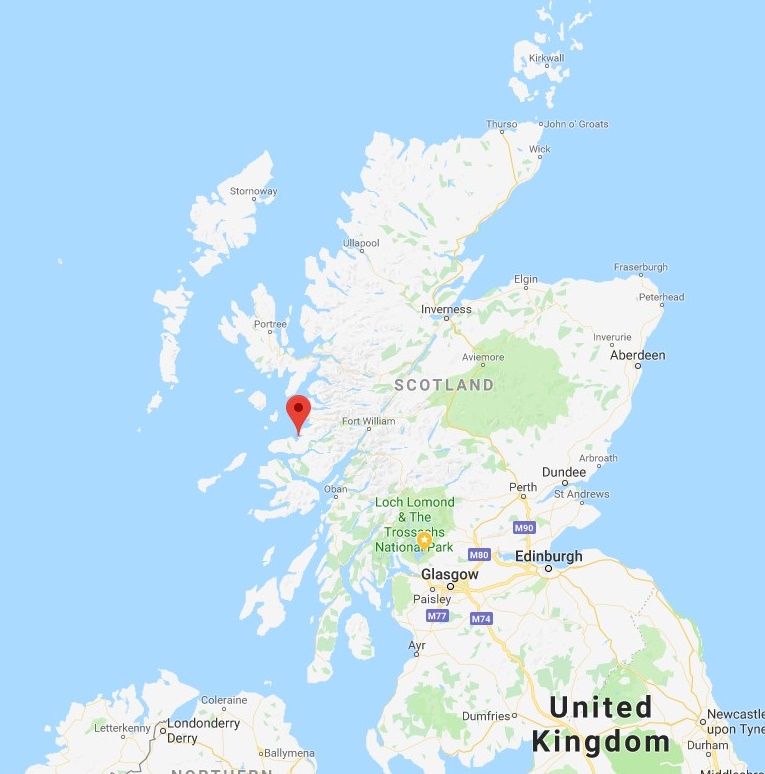
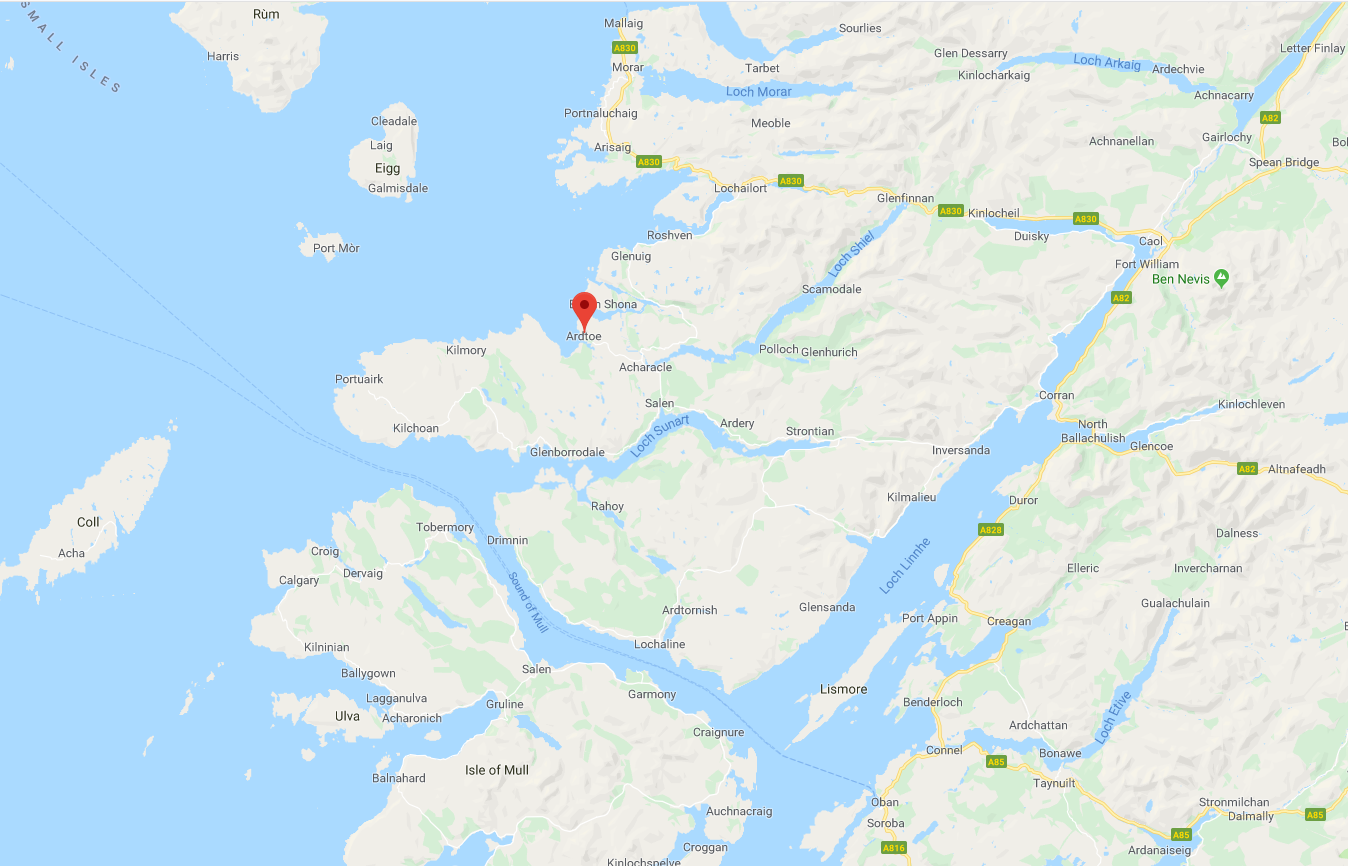
On the 22nd March I’m off to Ardnamurchan again on the west coast of Scotland. I’ll be painting Ariundle Oakwood and the coast of Ardtoe, including Castle Tioram.
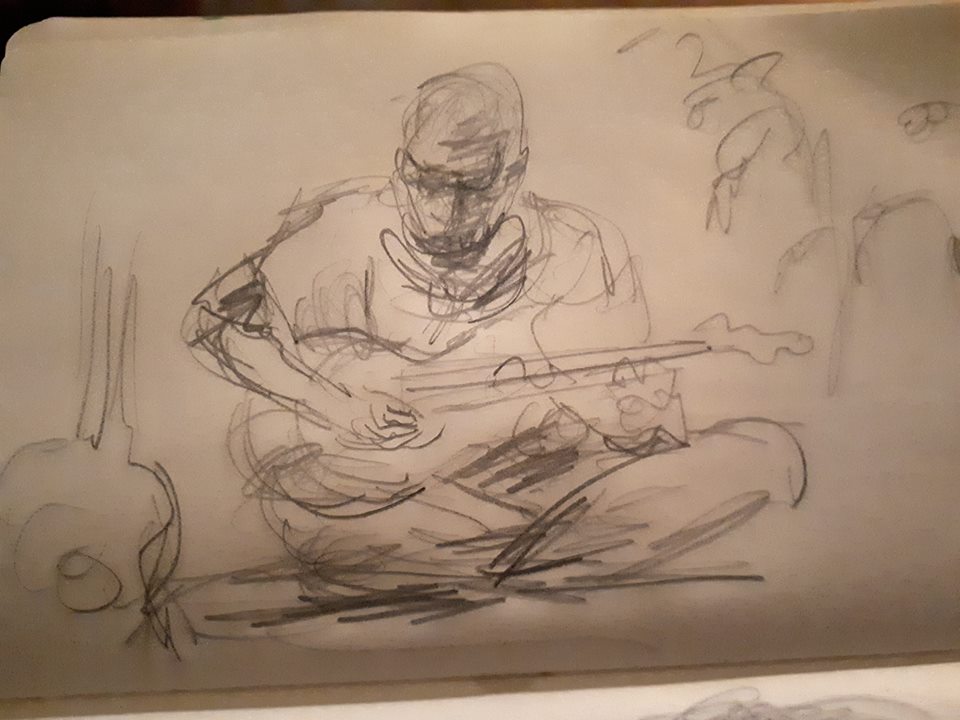
I’m traveling there with my friend Donald, who’s a talented guitarist, and I’m hoping I can also capture some nice video footage of the landscape with accompanying guitar sounds! Here’s my recent sketch of Donald playing ..
And a vid of Donald and Charlotte playing at the Open studio eve in December last year ..
I’ll be dropping in to the Resipole Gallery again, it’s a lovely space, and I’m happy to be showing some larger works there (of Ardnamurchan) for their new exhibition from 17th May this year (I’ll also be showing paintings from Ardnamurchan at the Morningside Gallery, Edinburgh from this April)
The trip will continue exploration of the Planets series, this time the planet Mars, which in Medieval times was associated with war but also early spring and trees – hence the trip to Ariundle oakwood. I’ve never actually visited the wood before and look forward to it. It’s a remnant of the ancient oakwoods which once stretched all the way along the Atlantic coastline from Portugal to Norway.
Some photos of Ariundle, and Ardtoe (these are stock photos, I’ll have many of my own photos after the trip) …

Ariundle
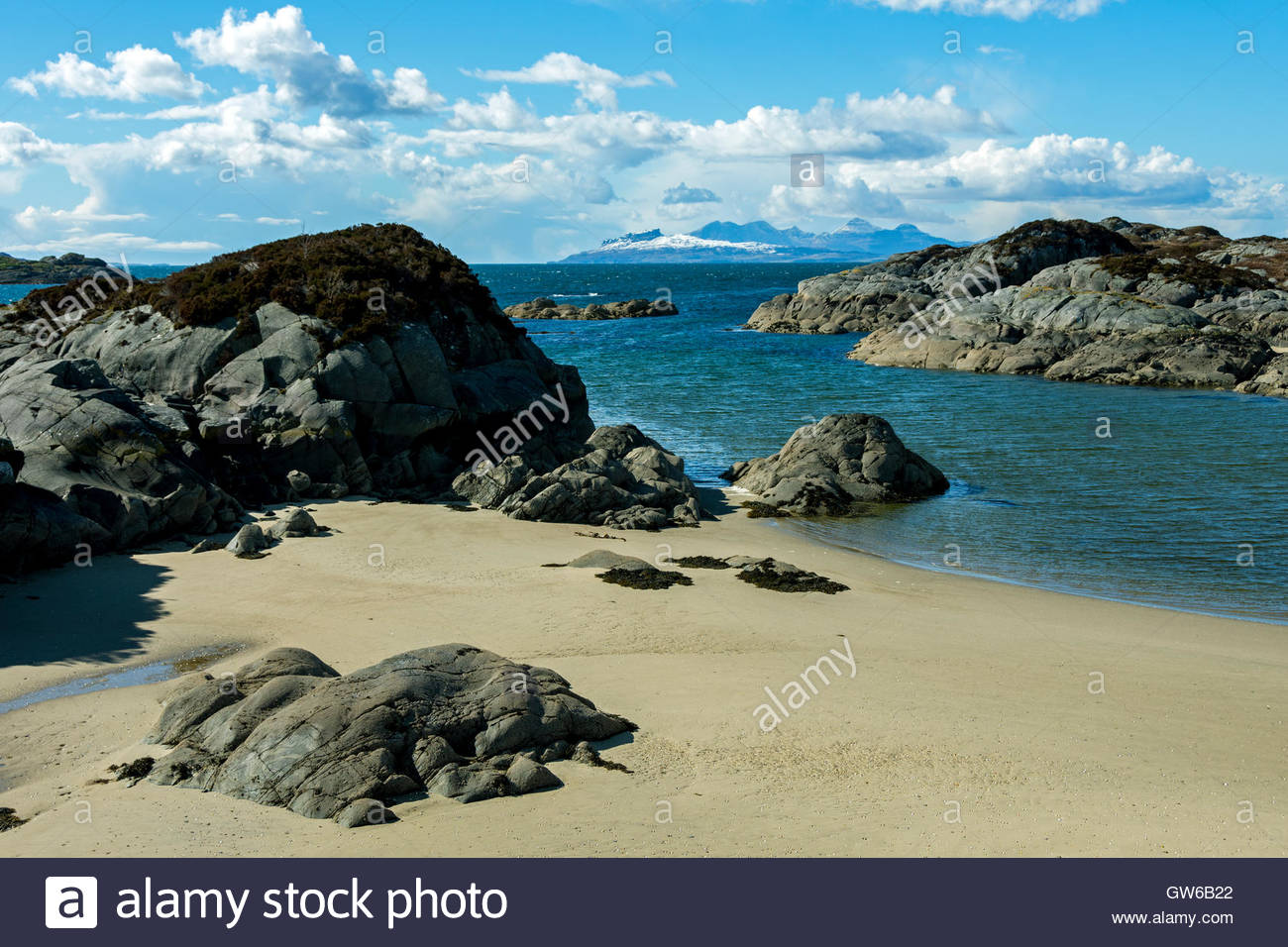
Ardtoe
And some maps showing where we’ll be ..
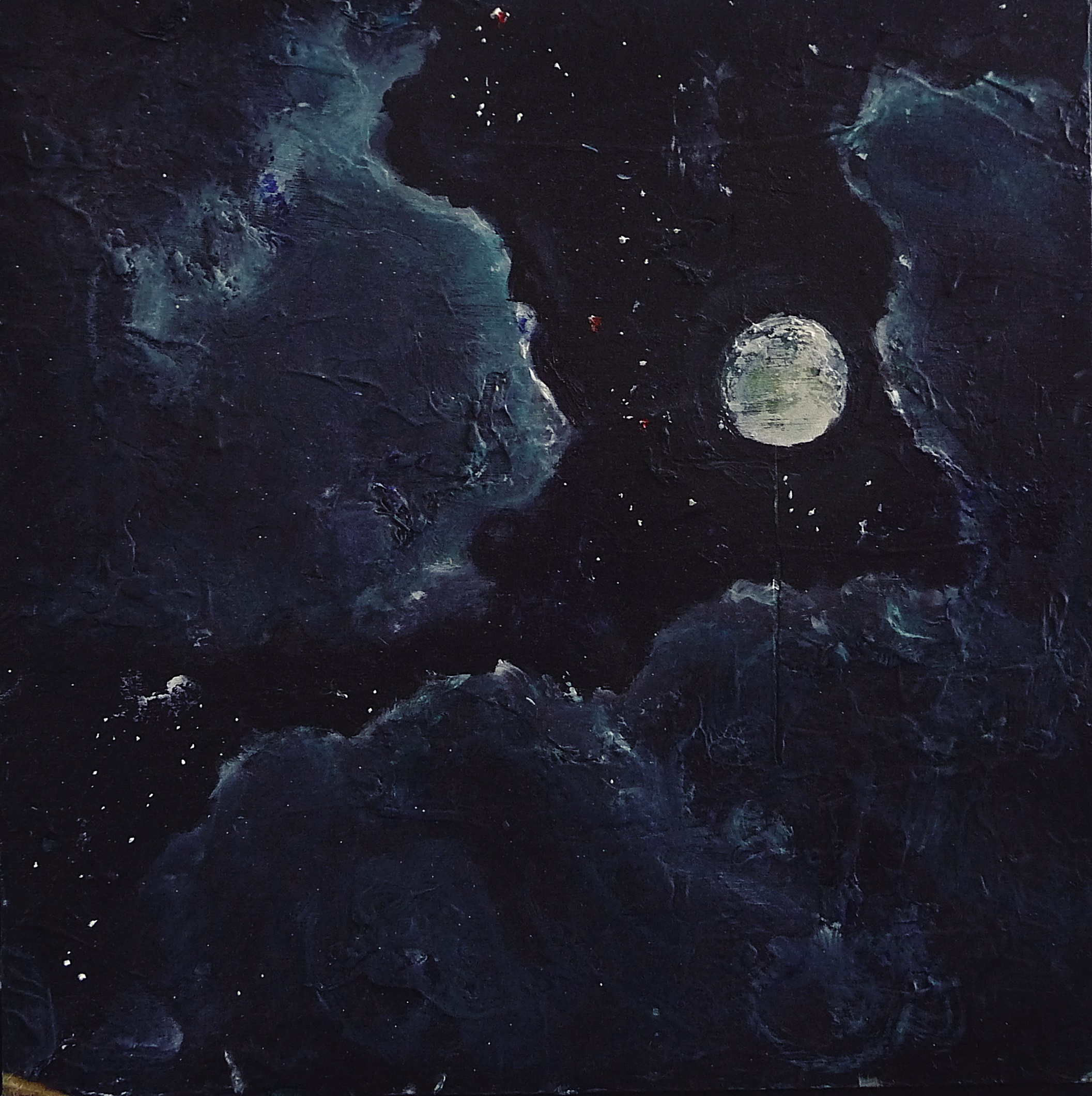
‘Moonscape’. Oil on 10×10″ wood panel. Rose Strang 2019. (unframed) £195

‘Jupiter (sketch)’. Mixed media on 10×7″ wood panel. Rose Strang 2019. £85
Above, two studies for the larger works (Jupiter and Saturn).
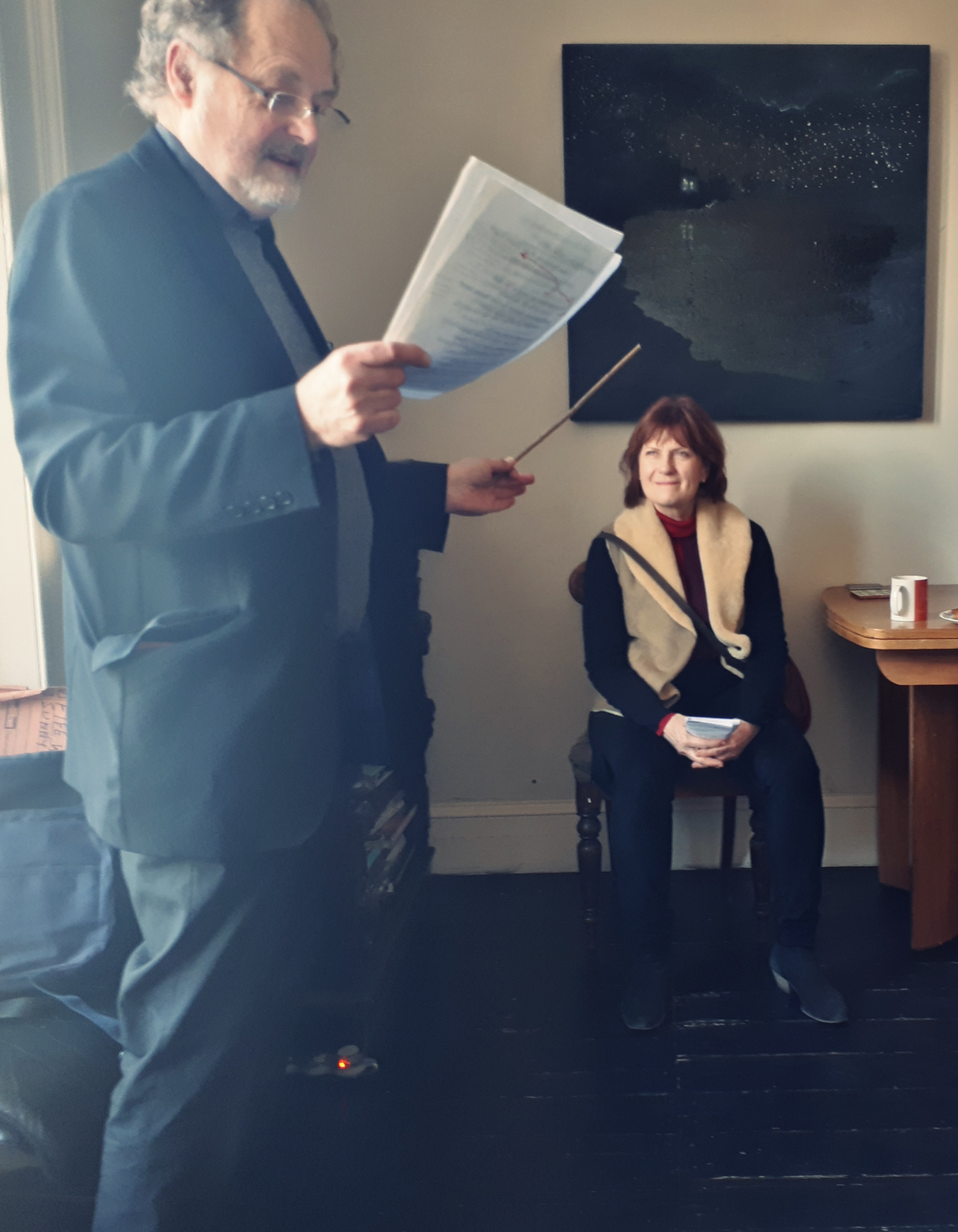
Thanks to all who dropped by for the Open Day today. It was most convivial and we enjoyed poet Tom Hubbard’s reading of a comic poem (on the planets theme), translated from Czech into Scots, about a classroom of young frogs being taught astronomy (badly)!
The two studies for the larger paintings (above) are for sale, so email me if you’re interested in those at rose.strang@gmail.com.
Tomorrow I’ll be continuing with my private portrait commission, and will post some images of that as it progresses …
 Rose Strang Artworks