Tag Archives: scottish landscape art

Seascapes

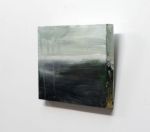
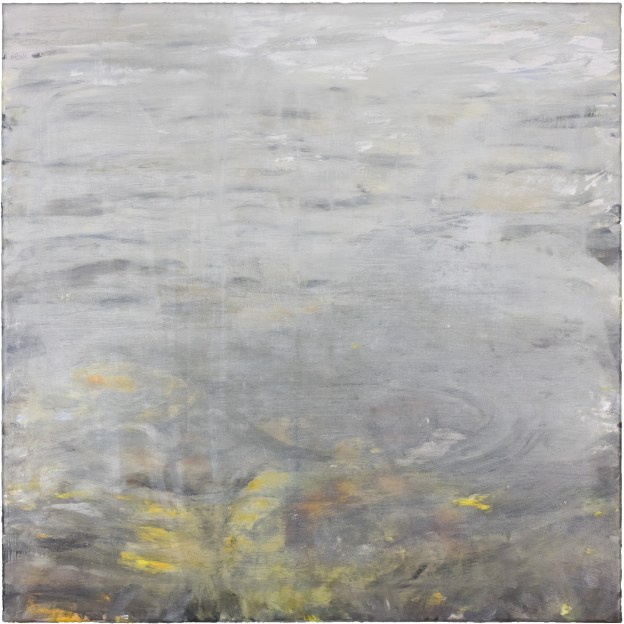
Above: Sea Triptych. Oil on three 33×22 inch wood panels.

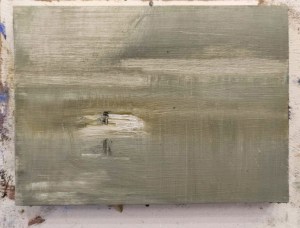
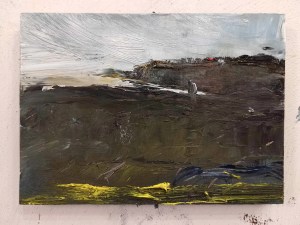
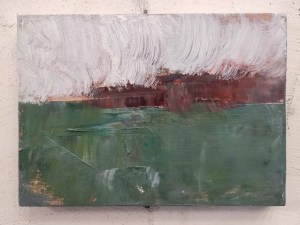
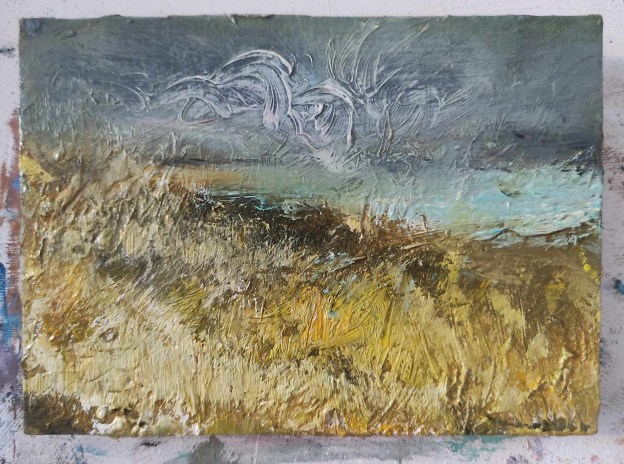
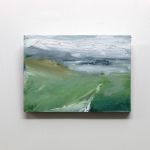
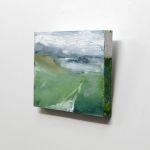
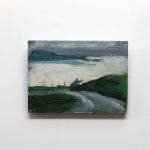
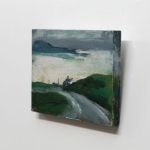
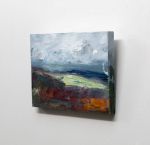
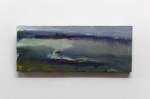
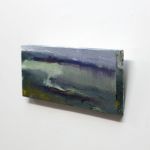
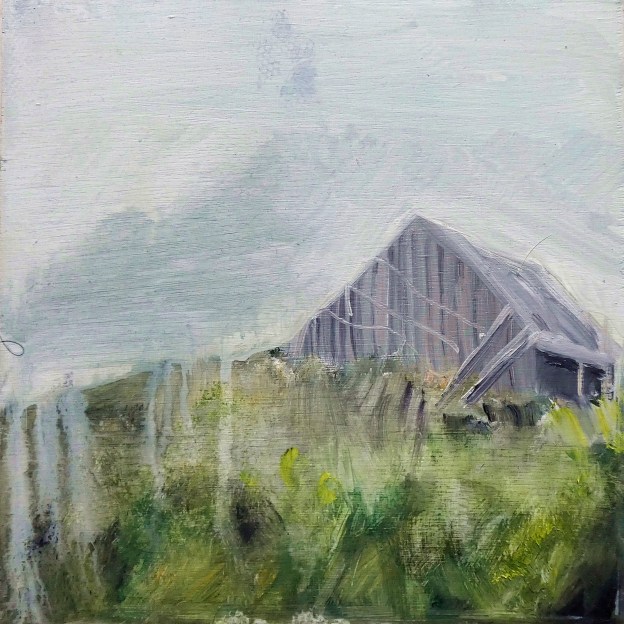
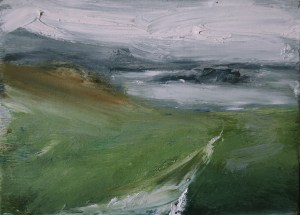
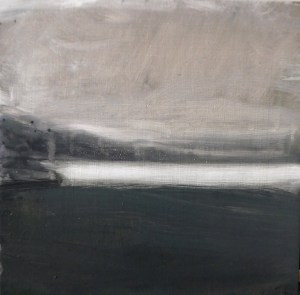
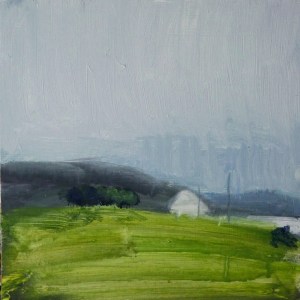
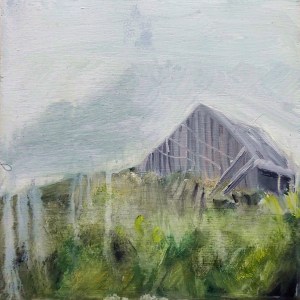
Below, some smaller works in this new seascapes series –

This series is part-inspired by the Aberlady landscape – which has been a focus this year in most of my paintings.

This style of painting feels very natural and comes easily to me, but I’m still working on expression of the Luffness woods and Carmelite Friary (in Aberlady theme). Sometimes there are too many ideas and it’s better to simply paint instinctively for a while until something more unified swims into focus.

The upshot is that I’ll return to that theme after a brief hiatus into my ‘default mode’ of moody seascapes!

More details soon …

Maspie Waterfall

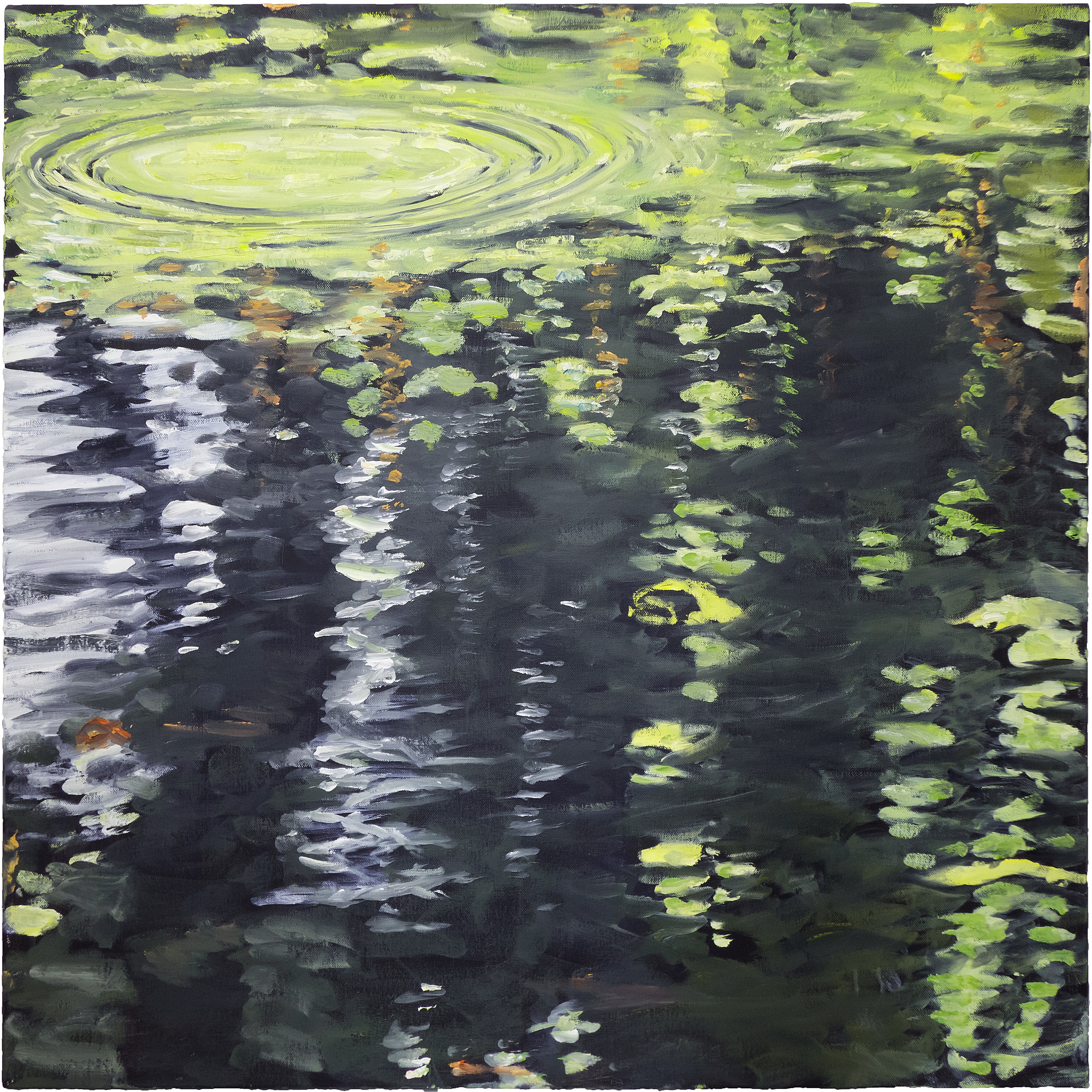
Above – Maspie Waterfall. Acrylic on 17 by 16 inch wood panel.

A semi-abstract painting of layered acrylic depicting Maspie waterfall in Autumn.

Maspie Burn winds its way from the Lomond Hills in Fife down to the beautiful little town of Falkland. It’s a quiet place, best known for Falkland Palace – a favourite dwelling place of Mary Queen of Scots. There have been settlements here going back into the mists of time, or pre-history to precise. If you keep walking up to the source of Maspie Burn, you’ll eventually encounter earthworks named Maiden Castle, which show the remains of an ancient fort.

Falkland recently became better known as ‘Inverness’ in the tv series Outlander – it’s very much cuter than Inverness mind you, inverness having become a small but busy city. Photo below, me posing in Falkland, ala ‘Claire’, looking quite a bit sturdier and shorter than the model-esque Caitriona Balfe!)

I left the painting fairly abstract as it captures the energy of Autumn without going too pretty. The wood was actually part of a series of old cupboards from a flat owned by some friends of ours. Knowing I usually paint on wood, they asked if I’d like use it for painting. Yes indeed! I like re-using stuff.

Some photos of Falkland and a photo from our walk this weekend at Maspie Waterfall, you can walk behind it!

Autumn Exhibition

Above – Aberlady Shorelines III. Oil on 8×5.5 inch wood in oak frame. Rose Strang 2024

I’m delighted to be exhibiting these small oil sketches, framed in oak, at The Limetree Gallery this October. If you’re interested in the paintings, or would like to reserve one, please contact the gallery for details.

The Limetree Autumn Exhibition launches on the 24th October at Limetree Gallery, Bristol

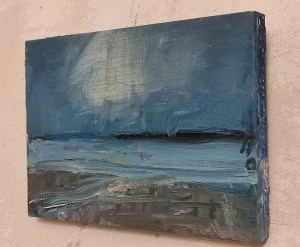
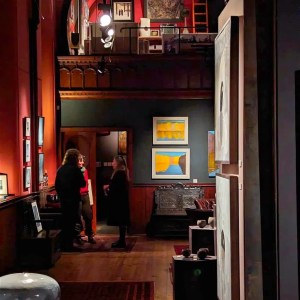
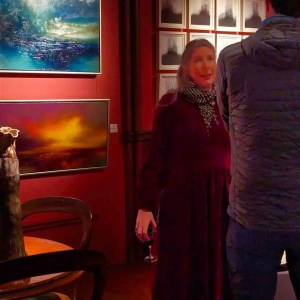
Here are a few photos I took with my mobile today, showing these lovely oak frames, then below those – at the end of this post – are more detailed photos of all the paintings available for the Autumn Exibition at the Limetree Gallery, with titles and sizes.

These paintings represent the start of my Aberlady-inspired series this year. They were quick oil sketches designed to capture the atmospheric solitude and moody colours of the east coast in winter, such a contrast to my later paintings of Aberlady in June this year! More on that tomorrow…

In the meantime, here are all the paintings, below, which will be on exhibition at The Limetree Gallery, Bristol. As mentioned,please contact the gallery if you’d like to reserve any of these paintings before they go on exhibition 24th October this year…

Forest of Luffness, painting progress 2

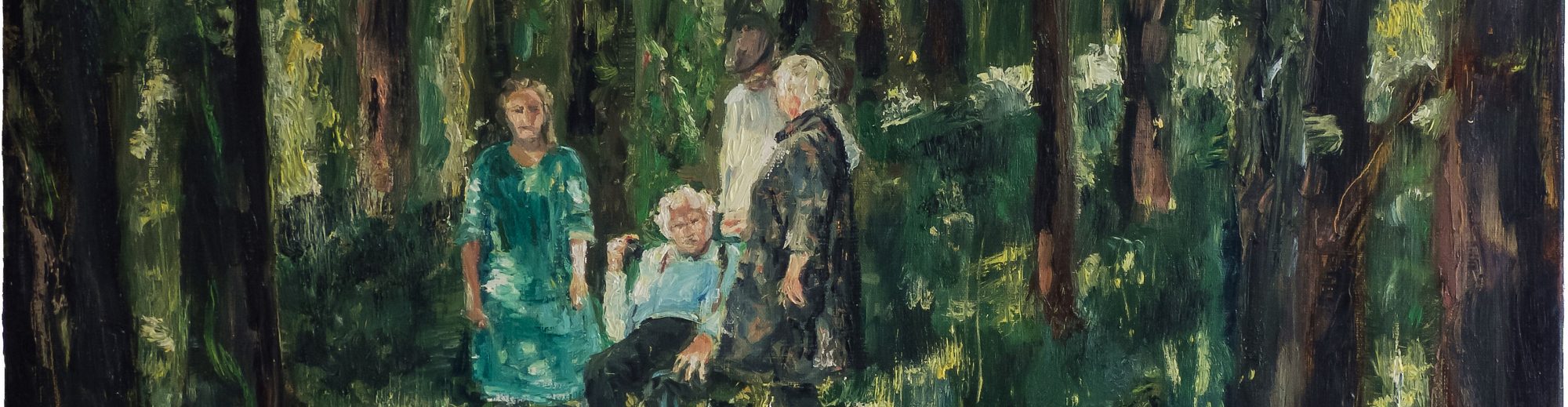
Above Forest of Luffness 3. Oil on 33×23″ wood. Rose Strang 2024.

A few changes to the painting since my last post (both versions below) . .

P1080592

P1080615

Although the character on the left is based on me I wanted to make it more anonymous. The exagerrated outline brings something stronger to the painting and rubbed out areas bring more mystery I hope.

I think the broken archway also becomes more mysterious, with the faint blue sky enhancing the idea of a passageway.

The video I mentioned in my last blog will explore the background of this series, but more than that I think it will reveal what’s interesting about the creative process in general. A painting doesn’t just involve the artist in their studio, but rather many experiences, involving many people. It’s not simply created to make money, or it shouldn’t be at least!

I think it was just a matter of time before I brought people into my landscapes. I’ve always loved figuratve drawing, especially line and expression of line and movement.

Before I studied for a degree in art (back in 1994) I completed the usual art and design course for those interested in becoming artists – a foundation national certificate in art and design at Edinburgh’s Telford College. Luckily while there I was taught life drawing (drawing of the human figure) by one of Edinburgh’s well known artists and teachers, Bill Gillon.

I’ve got to say he was a much better art teacher than those I encountered while studing my degree in art in later years! Every Monday we all spent seven hours intensively painting a nude model. I came to love the human body in all its manifestations ; young and old, large and small, willowy or weighty – all were fascinating to draw.

Mostly it was a process of frustration – my figures looked insubstantial, weightless, out of proportion – but over time – with Bill Gillon’s tuition and encouragement and in fits and starts, I began to make some headway.

I remember when I got a crit’ at the end of the year (always a very difficult thing for a budding artist!) and I glowed with happiness when he described a couple of my life paintings as ‘real crackers!’. He wasn’t so positive about some of my other work – namely a painting of a tedious vase of flowers – ‘Why? What’s it saying?’ he demanded, quite rightly!

Back in 2016 when I was creating my portrait of Richard Demarco, Richard asked me who’d taught me drawing, I replied ‘Bill Gillon’, since I really didn’t get a tuition in drawing and painting at art college. It turned out that Bill had been one of Richard’s pupils when Richard was an art teacher!

I was sad to hear that Bill had taken ill and passed away in 2014, but it was good to see there’s now a Facebook page set up in his honour where artists can upload work inspired by Bill, or talk about their memories. I might add a link to this post.

Painting Process 1 – Charcoal sketch

This is the first in a new series of 3-minute videos following the creation of a new painting. Hope you enjoy it!

A beautiful place …

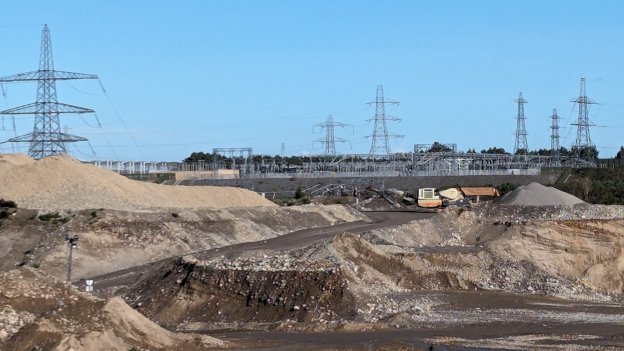
Above: Beauly substation.

What you see above is a view of the gravel quarry and SSEN (Scottish and Southern Electricity Networks) electricity substation near Beauly, Inverness-shire.

Beauly means ‘a beautiful place’ and despite these developments by SSEN, much of it still is. We were walking there again last weekend as part of a visit to the Kilmorack Gallery (showing the excellent exhibition Borrowed Land until 2nd March)

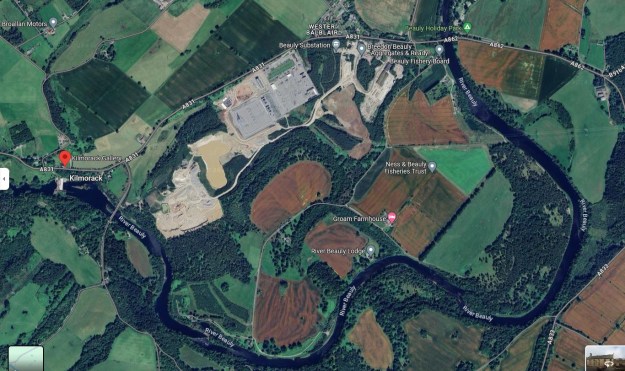
For perspective, here’s an old map of the area contrasted with a current view …

It’s pretty disheartening isn’t it? Imagine if you lived here though, and your favourite walk, through landscape like this (my photos of Beauly taken last weekend and last November) …

Was replaced with this …

The site includes numerous important archeological remains and the developments have obviously caused utter devastation to local wildlife.

SSEN (Scottish and Southern Electric Network) plan to extend their transmission line, create more wind farms and, the site at Beauly is to be extended from 60 acres to 860 acres, which is just huge.

Even worse, this is intended for areas across the Scottish Highlands …

Beauly-Power-Lines-map.jpg_49966326-1tm1z5xtl-542x564

Some might consider this the inevitable price of progress, but it’s not progress, and nor is it needed – which becomes very evident when you look into current and future energy requirements for Scotland and the UK. As usual, quite simply it’s a money-making excercise for global companies, supported and encouraged by our own government.

I’ll include more information about SSEN’s proposals ongoing, but I’m new to this and  you’ll be better informed about these developments and possible ways to help by joining this facebook page…

Communities Before Power Companies

It’s run by people who live in these areas who’ve been resisting such developments for years. If/when you join, invite all your contacts and remember that this affects us all -you might not be able to attend local meetings, but you can sign petitions, write to MP’s and share information.

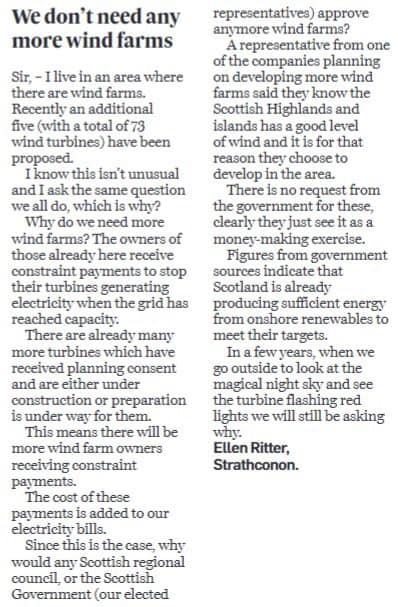
Lastly, here are two excellent letters/articles published by the Press and Journal (by two admins for Communities Before Power Companies) Elaine Ritter and Denise Davis …


More oil sketches …

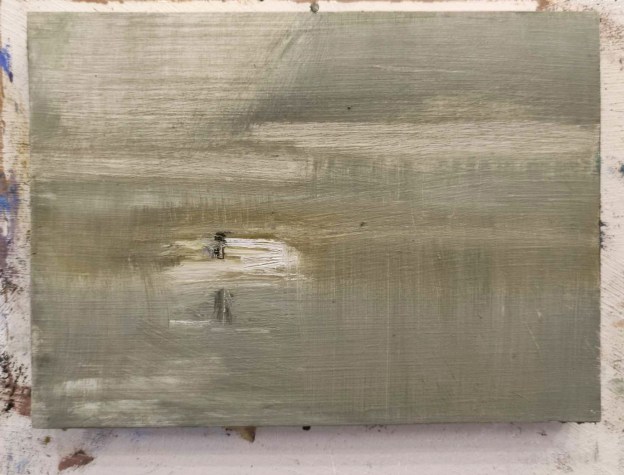
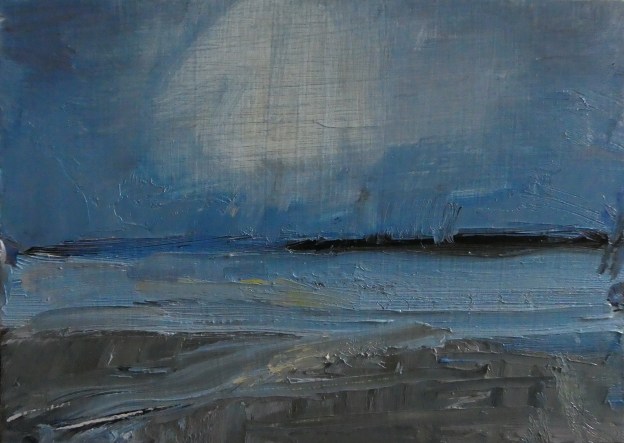
Above: Shorelines, Aberlady. I. Oil on 8×5.5″ wood. Rose Strang 2024

More oil sketches in progress today inspired by the shorelines and moods of Aberlady…

For my experimental paintings and ideas I’ve been working at this size for some time and it really works for me in terms of loose brushwork. It would be a bit of a nightmare to work at a larger size with this more experimental messy approach – that would be a lot of oil paint going to waste when it doesn’t work (which is often!) and a lot of physical energy and time expended.

It’s been a while since I posted a video of my working process. I’m very forgetful of such things but people seem to enjoy them, so one of those coming up soon.

I’m also still working on my Carmelite monastery and Crusader’s tomb series (see older posts) which are very different in feel to these smaller landscape paintings. I love the freedom of my smaller landscape paintings, but I think I have something more to say as an artist so I’ll be persevering with that series over the coming weeks. It’s important to get out of my comfort zone and dig a bit deeper …

Oil sketches …

Above: Aberlefdi. Winter I. Oil on 8×5.5″ wood. Rose Strang 2024

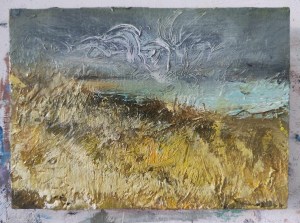
These are some oil sketches I’ve been working on as part of a general series this year which explores the history and landscape of Aberlady in the south of Scotland.

Part of the series is a deeper look at the the history of a Carmelite monastery near Aberlady, but the paintings also reflect my love of a landscape that’s deeply familar to me.

I think there’s something dreamlike about Aberlady. It might be the sheer sense of space in sky, sand and sea, but I think it’s also something I find in particular on the east coast of Scotland. Looking out to the north sea towards Norway and Denmark, there’s something haunting about the fact that about 8000 years ago we’d have been looking at Doggerland, before the series of great landslides called the Storegga Slides occurred, creating the north sea. It looks and feels very different to the soft light of the west coast of Scotland.

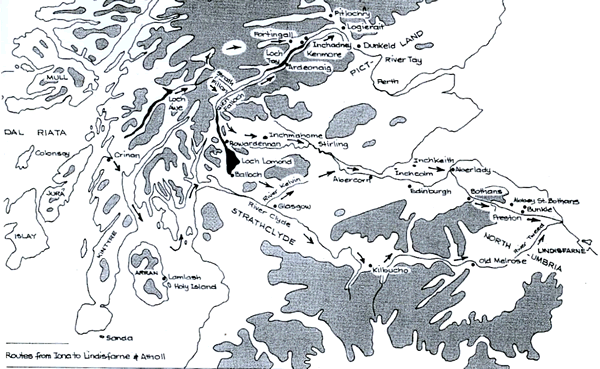
Whenever I look at paths or horizons in this landscape, I also think of journeys, and the fact that not so long ago in the days when Aberlady was called Aberlefdi (hence the title of this series of small landscapes) it was an important stop on the pilgrim route between the Isle of Iona and Lindisfarne, or Holy Isle as it’s also known. That was in around 700AD when one of St Columba’s followers called St Aiden was tasked with setting up a new monastery on Lindisfarne.

When you camp over night near Aberlady you experience all the moods of the seasons; the burnished gold of marram grass and sand in winter, the soft green of the sea and grass in June when the larks and rabbits are at their busiest, or the thunder, lightning and rainstorms on humid late summer nights.

Start to the year …

Above Aberlady Sketches 1. Oil on 5×7″ wood. Rose Strang 2024

A start to the year and a new project with this small, twilit painting of Aberlady.

It’s a project a long time in waiting. I was beginning to explore ideas back in early 2020 when the obvious event struck, causing a small panic about income, but then three painting commissions came at me from out of the blue and I’ve been busy ever since it seems.

The Village of Aberlady is not a place you’d describe as mysterious or dramatic, unless you knew it well. The first impression is of a very pretty, conventional village, perfect for the rich retirees. A train used to stop here but the railway was dismantled in the 1970’s. There are one or two shops, a couple of inns and a takeaway.

So why am I so obsessed with painting a series about my response to this place? Well, I’ll be painting and writing about ‘why’ for the rest of 2024!

The most obvious appeal, beyond the village itself, is of course the nature reserve that stretches across a mile or two of grassland and dunes to an expanse of glittering sand reaching far out to sea at low tide. It’s one of the very few places I’ll swim in Scotland. In August when the sea has become less cold and has flowed back in across the warm sand, bathing here in shallow water is almost bath-like. Plus there’s hardly anyone around since, compared to the amount of people at North Berwick further south along the coast, relatively few will walk the two miles to the sea. There are of course hundreds and thousands of birds, and deer, rabbits galore and any amount of other species I don’t know about.

The appeal for most people visiting Aberlady these days is peace in nature. One thing that fascinates me though is the way places change in importance over several hundred years, depending on their function. Think of St Andrews in Fife, it was the ecclesiastical centre of Scotland hunreds of years ago. Now it’s known as the home of Scotland’s oldest university, and for its golf course. (also made more famous by the royal romance I suppose. I was attending post graduate art studies there at the same time as Will and Kate but never bumped into them, not quite moving in the same circles!) Or think of York, known now for its olde worlde timber-framed buildings and awe-inspiring York Minster – when in the past it was the centre of power in England.

Going farther back in time, Aberlady was a place that had to defend itself from violent attack, and going even further back to  the 7th century it was the last stop for pilgrims on their way from Iona to Lindisfarne.

iona3

Beneath its pleasant exterior I find Aberlady to be a place of deep mystery and drama. It’s something you can’t see, but rather it’s something you feel after years of immersing yourself in its landscape and history.

Hence why I’ll be working towards a series of paintings this year to explore my fascination with Aberlefdi, as it was originally named – a mixture of Pictish aber meaning river mouth and Lef, the name of a Viking warrior whose remains are interred beneath Luffness House in Aberlady Bay. That’s just one little detail in the whole story though.

More to follow in the coming weeks as the light improves and I can really get into painting this series …

One of my Aberlady paintings from 2020:

Winter Exhibition at the Resipole

Above: Coigach 1. Oil on 5×7″ wood. Rose Strang 2023

Six little paintings on wood from my ‘Coigach series’ are showing as part of the Resipole Gallery’s Winter Show. Beautifully presented as always by the gallery curators alongside some wonderful paintings and ceramics – all reflecting the textures and atmosphere of Scotland’s west coast. Here are the six paintings in the show …

The exhibition runs from December until 29th February 2024. You can view the exhibition Here, or better still travel up there to experience Ardnamurchan – one of the few places where you can still walk among Atlantic oaks at the edge of white beaches with turquoise sea lapping the shore.