Category Archives: Uncategorized

Borders Country Day 4

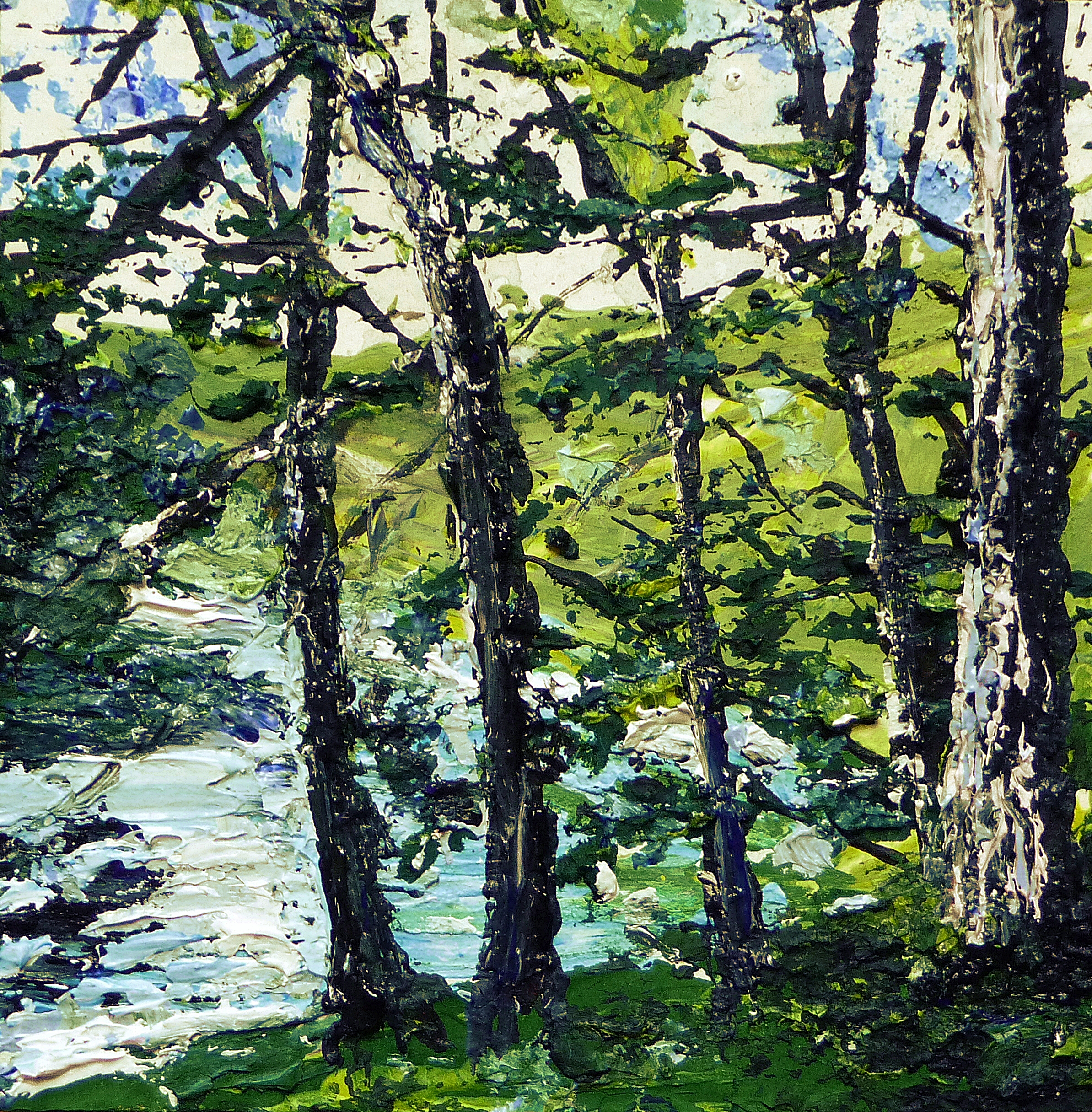
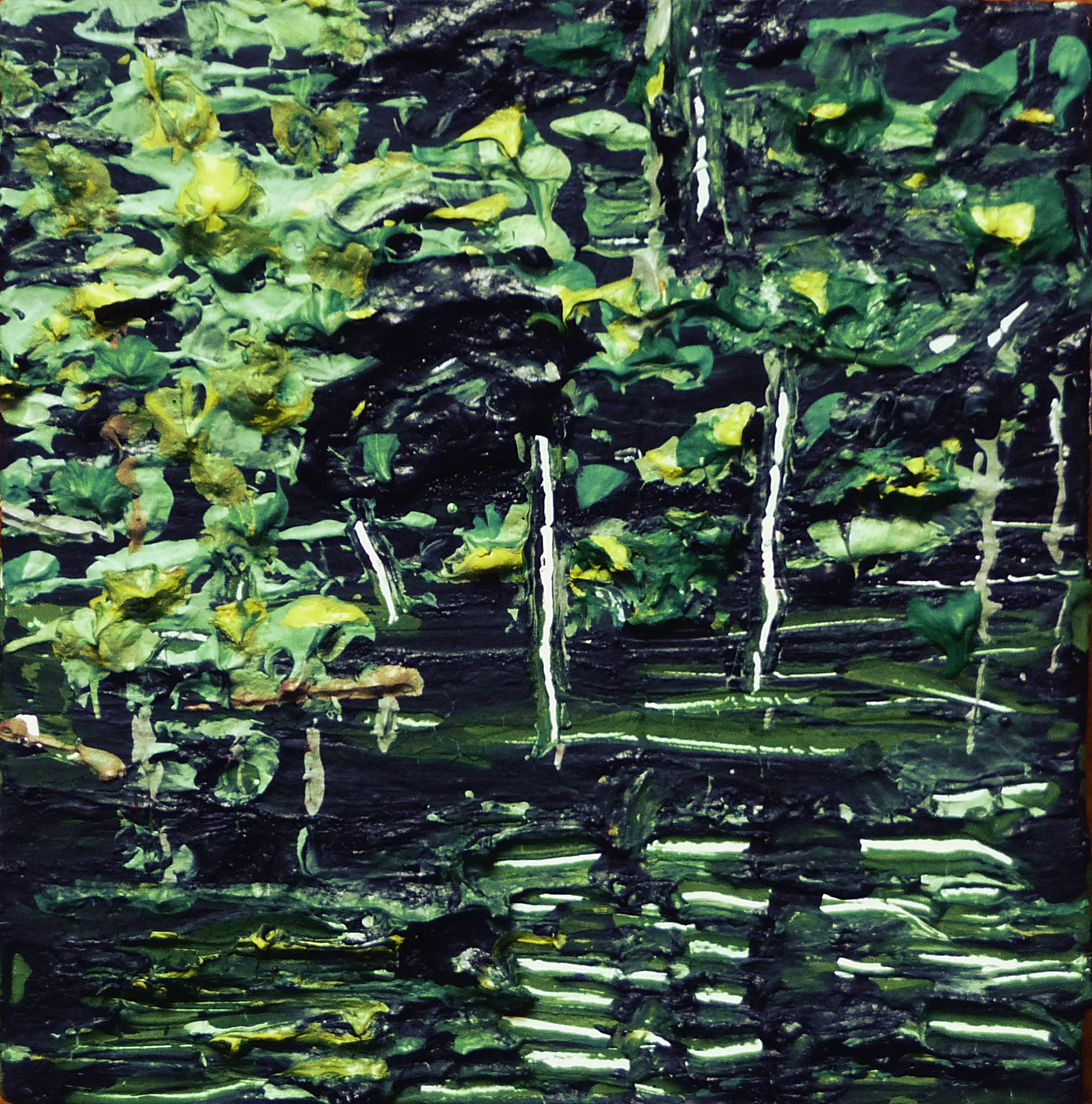
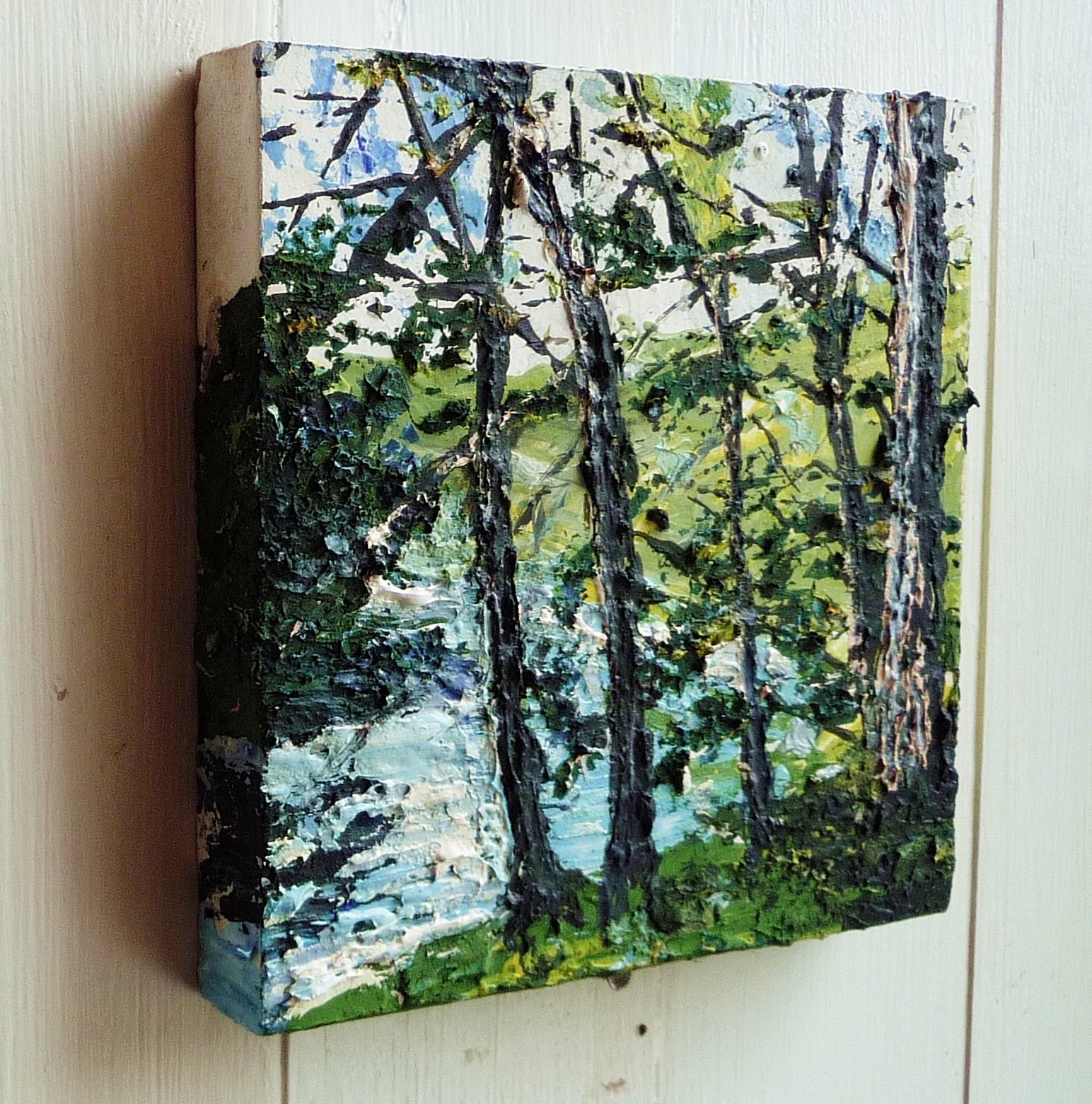
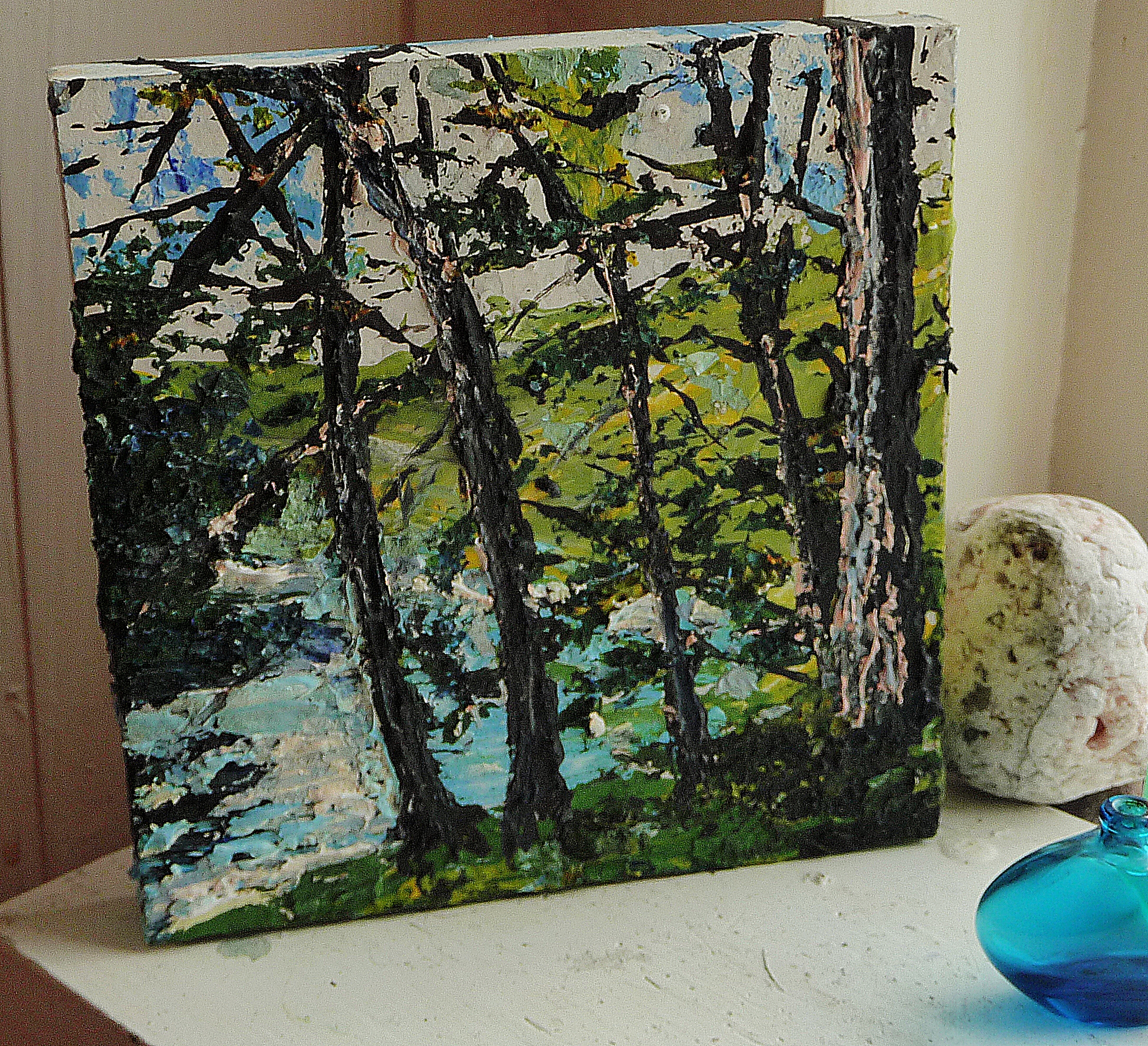
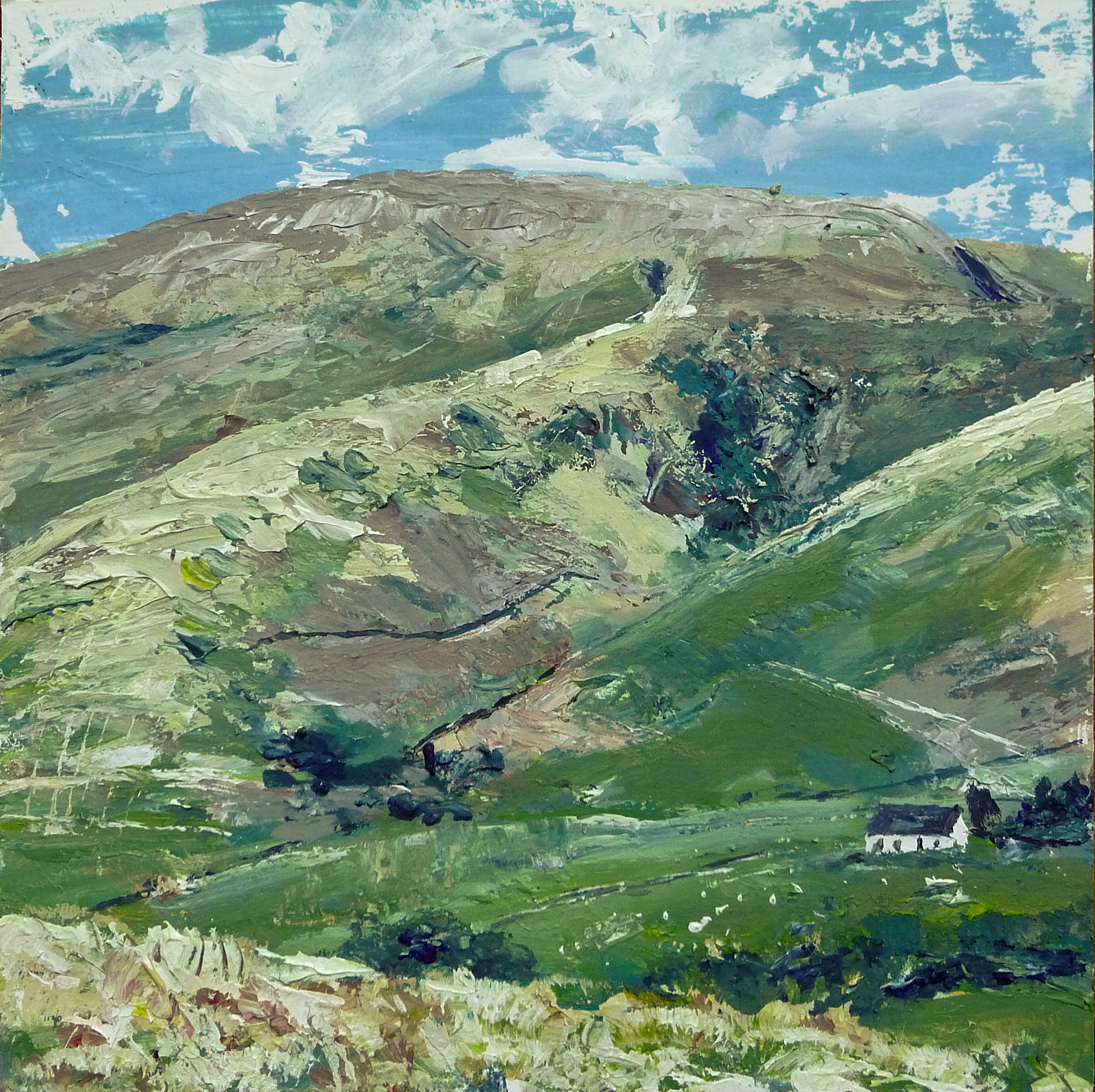
'Moffat Hills', Acrylic on 10x10" wood panel

‘Moffat Hills’, Acrylic on 10×10″ wood panel
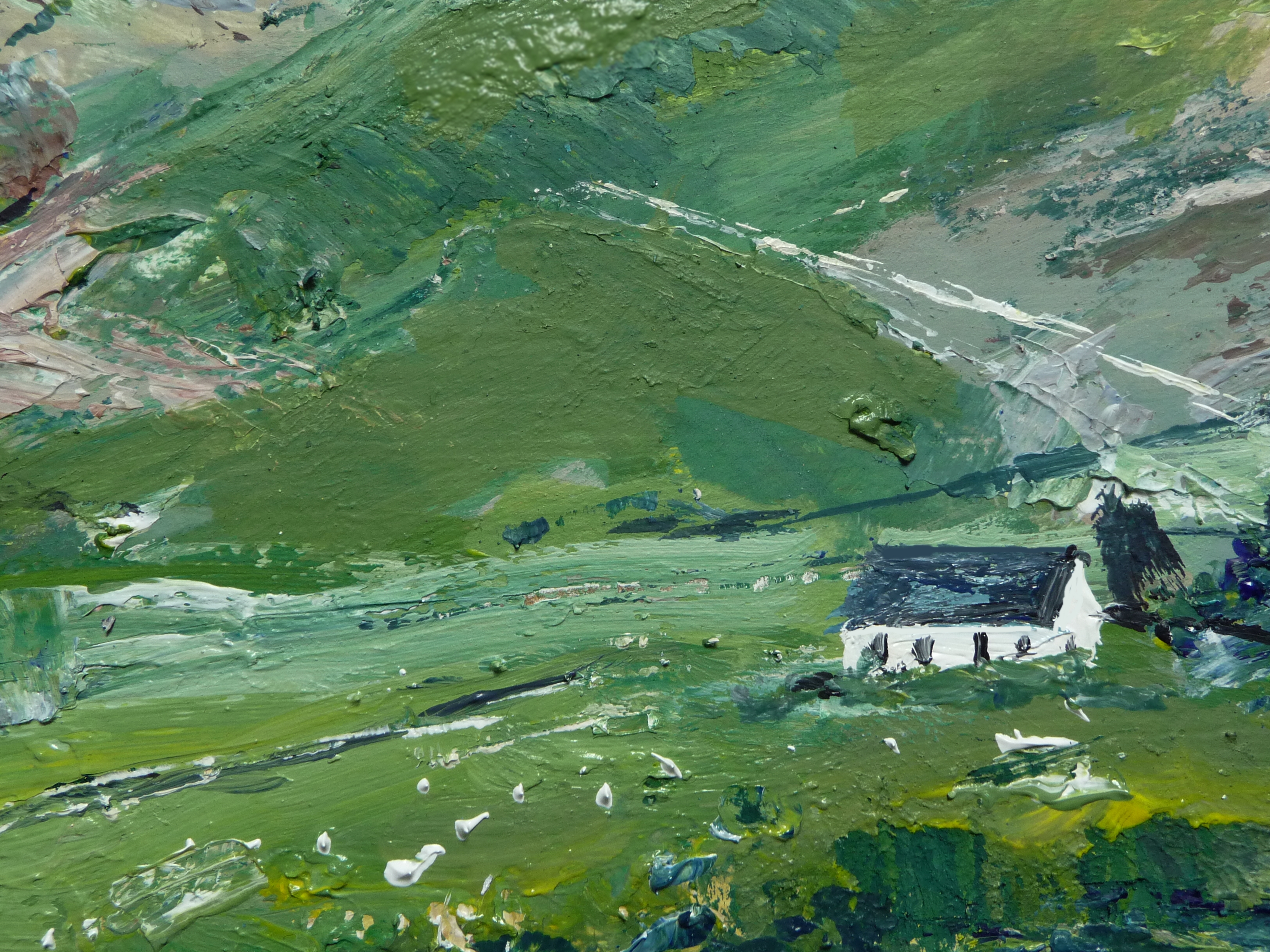
Detail

Detail

Today’s painting – the Moffat hills just past the small town of Moffat, in the valley of Annandale near Dumfriesshire. (This is a larger painting at 10×10 inches)


Here’s the first sketch developed later in the studio…
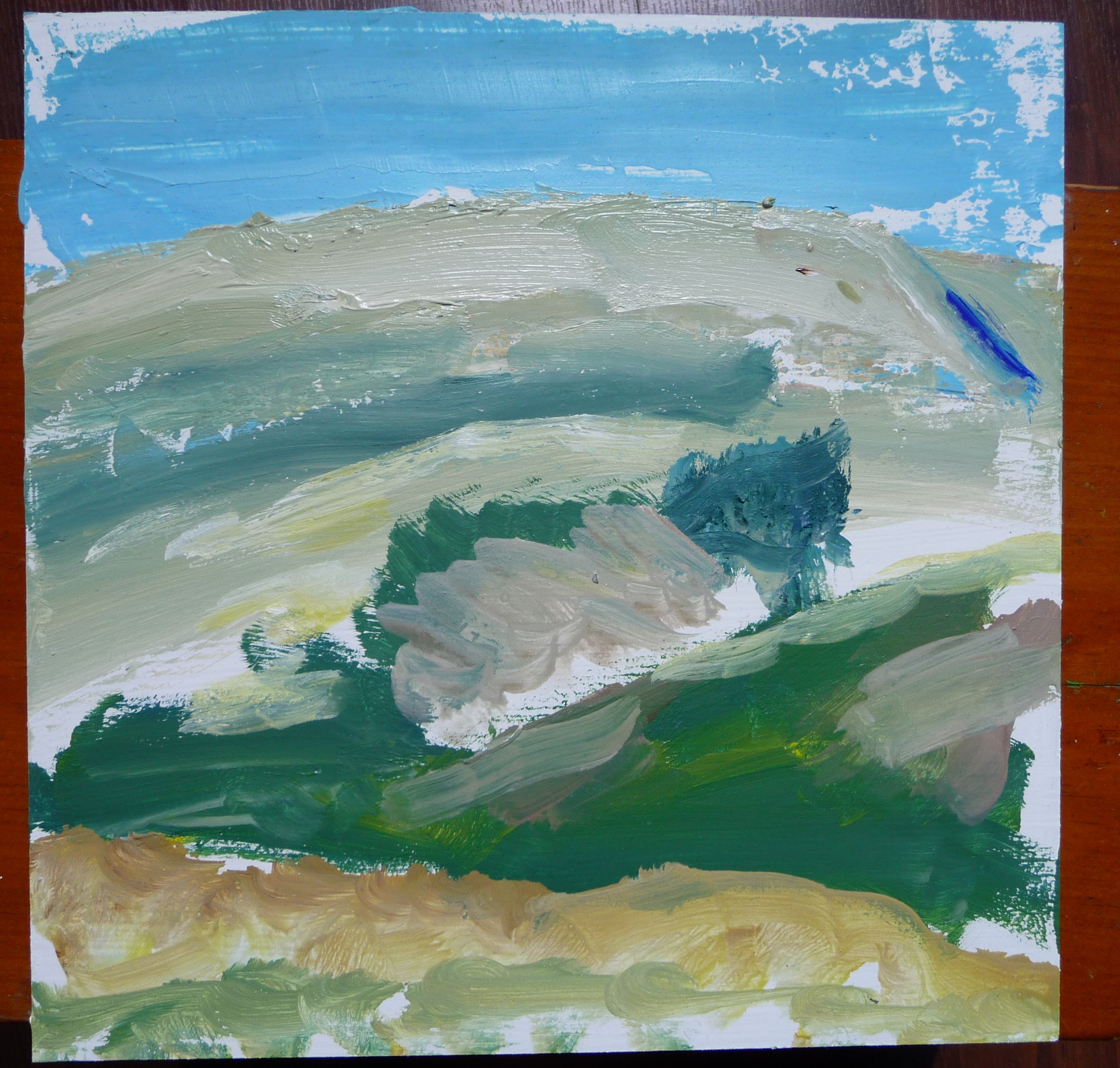
P1230331


The character of Borders hills is not disimilar to the Yorkshire Dales in some areas, but on a smaller scale. I love the rolling shapes, dappled light and subtle gradations of colour of these hills and as I become more familiar with painting the Borders I’d like the brushwork to become looser – more expressive of the landscape’s rythms.
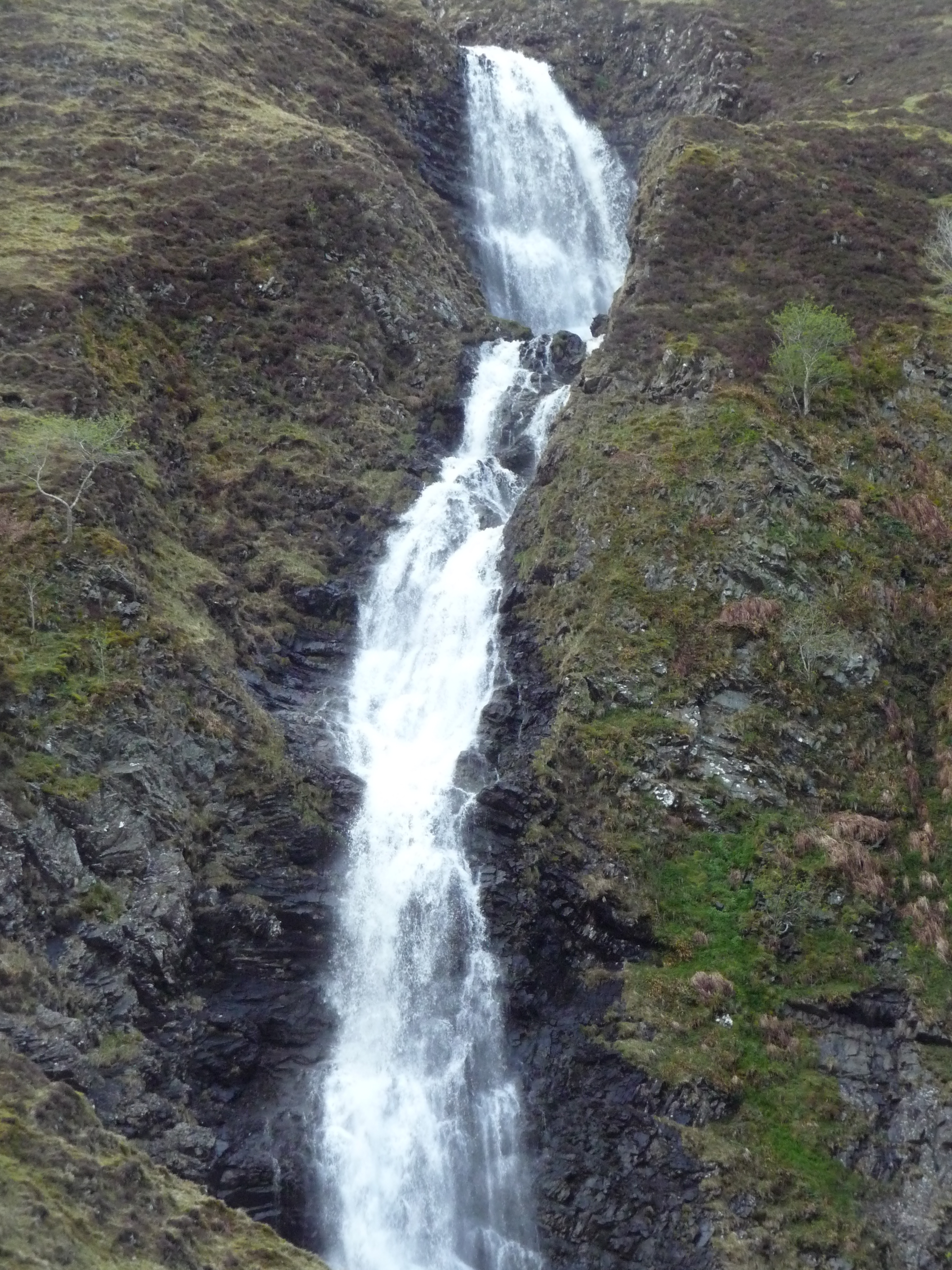
Grey Mare's Tail

Grey Mare’s Tail

This is near the source of the River Tweed. As you drive up into the hills the landscape becomes wilder, more stark, leaving behind the lush, tree-filled river valleys. This is also where you’ll find the Grey Mare’s Tail and the Devil’s Beeftub – thus named because it was where the Borders Reivers would hide their stolen cattle after one of their moonlit raids!
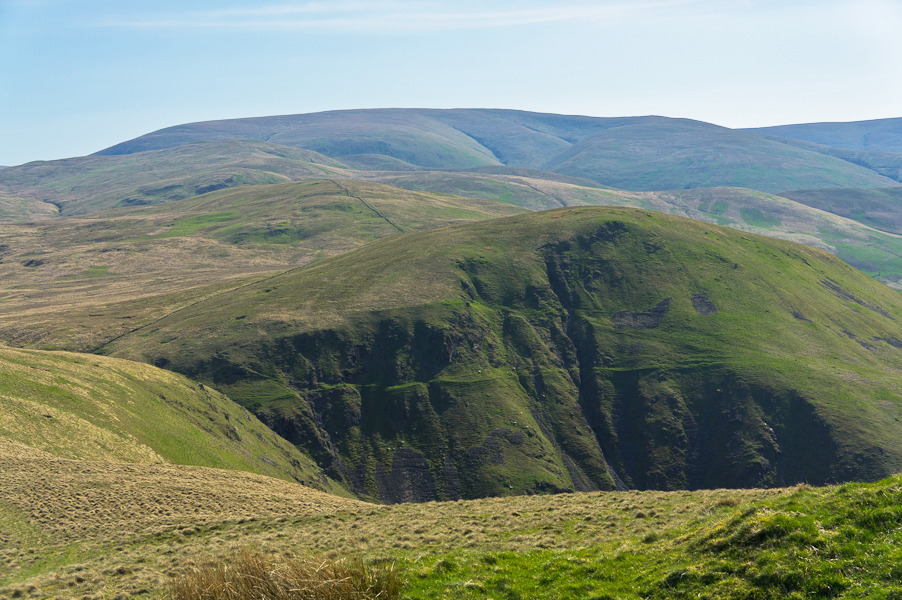
Devil's Beeftub (image from www.walkhighlands.co.uk

Devil’s Beeftub (image from http://www.walkhighlands.co.uk

I’ve mentioned a little of the Reivers history in a previous post – particularly how grim it was. This was all captured in the Borders Ballads of the time.
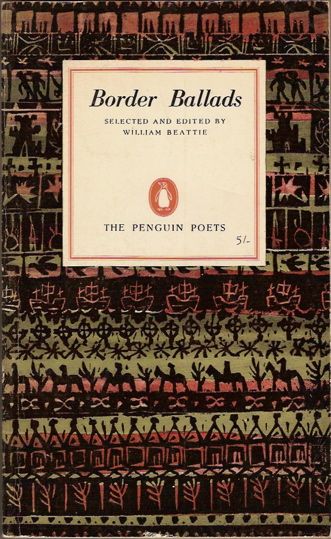


39662d0054ea2f3fc6e72daf869ed936At the moment I’m exploring a wealth of poetry and song inspired by the Borders, from past to present, and I hope to make these part of the theme of exhibitions later in the year.

I’ll leave you with a contemporary poem which I discovered a few days ago (on the excellent Scottish Poetry Library website), by Valerie Gillies. It’s beautifully evocative, both of the Borders landscape and its history. She mentions many places, among them Talla; a natural loch developed now into a resevoir, also along this stretch of countryside..

Stream Rhythm by Valerie Gillies..

The Powskein, the knife-slash,
then Cor Water, the long marsh,
Badlieu, all mossy-grey,
a wet spot through the day,
Smid Hope, the blacksmith’s yards,
Glencraigie, rock-hard,
Fingland, with white gravel,
shining on bright pebbles,
and Hawkshaw, if it could talk,
the haunt of the hunting hawk.
Fruid water, the running one,
swift flow in shallow current,
Glenbreck, in speckled folds,
Glenwhappen, the whaup calls.
Menzion, at the standing stones,
Talla, the waterfall foams
Gameshope, a winter month,
back of the wind, a shivery one,
Glencotho where the cuckoo’s heard,
Glenrusco whose skin is fair,
bark from wood, the stripping-bare,
Kirk Burn of the grouse hen,
the hare’s stone at Hearthstane,
Glenheurie has the yew wood.
The wolfhunt land is a Polmood
where Kings came to hold assize,
every kind of fruit tree thrives.
Kingledores, the champion’s gateway,
Holms’ meadows, islands of greenery.
Hopecarton, old fort in the midden,
Drumelzier, Medlar’s dun is hidden.
The Scrape burn, the gash in the hill,
a rough scart, see it you will,
the little Louran, a chatterbox burn,
the loud voice, the shouting one.
Manor’s stony settlements rise,
Posso the pleasance, earthly paradise,
Hundleshope and Waddenhope,
a man’s name in hollow court.

Time passing, blooms in places,
people there tell differences
on the ground by a tributary,
name a feature, give stability.
It’s for a man who’s not yet born,
it’s a place for a future dawn.
Borders Country – Day 2

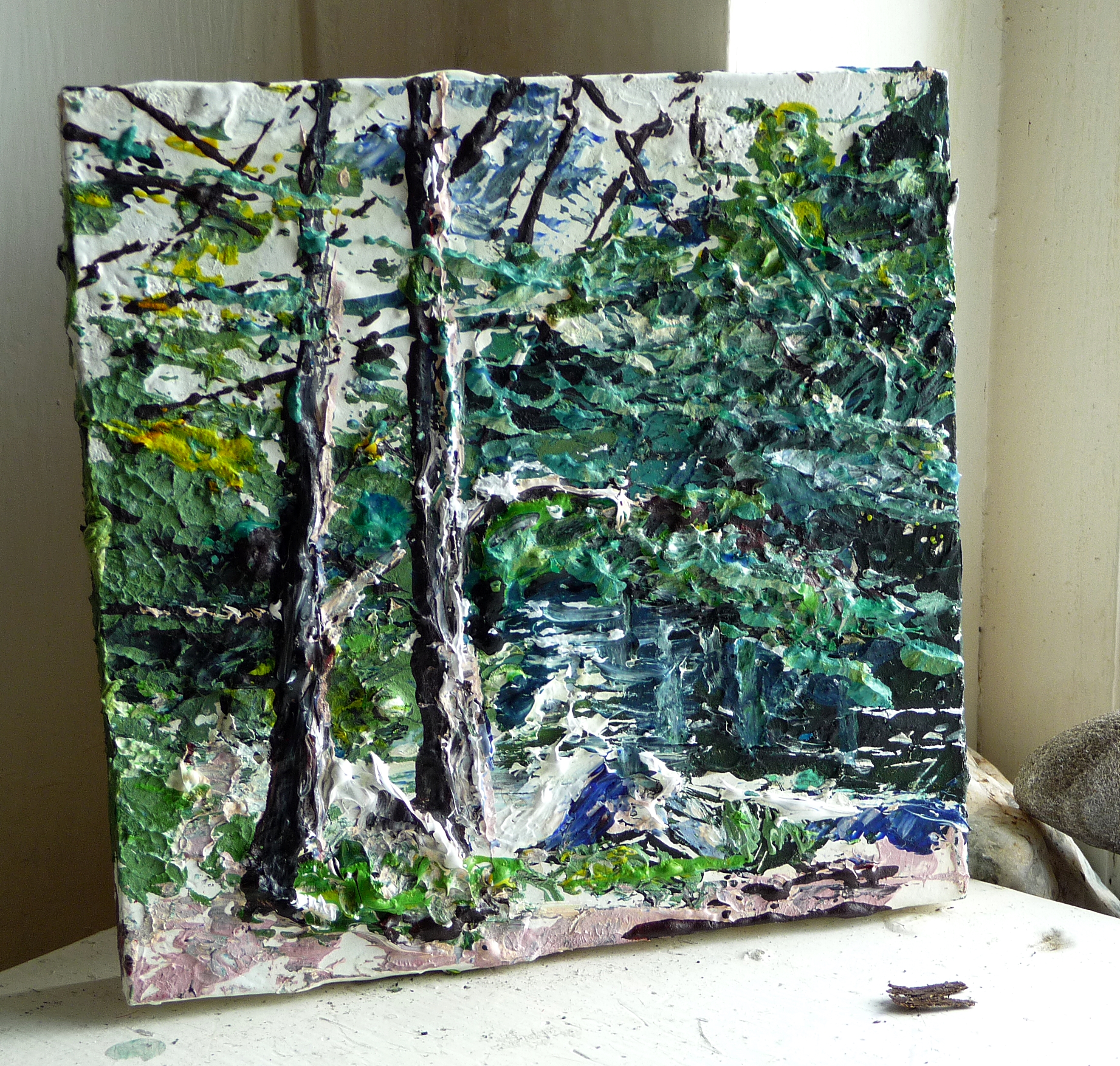
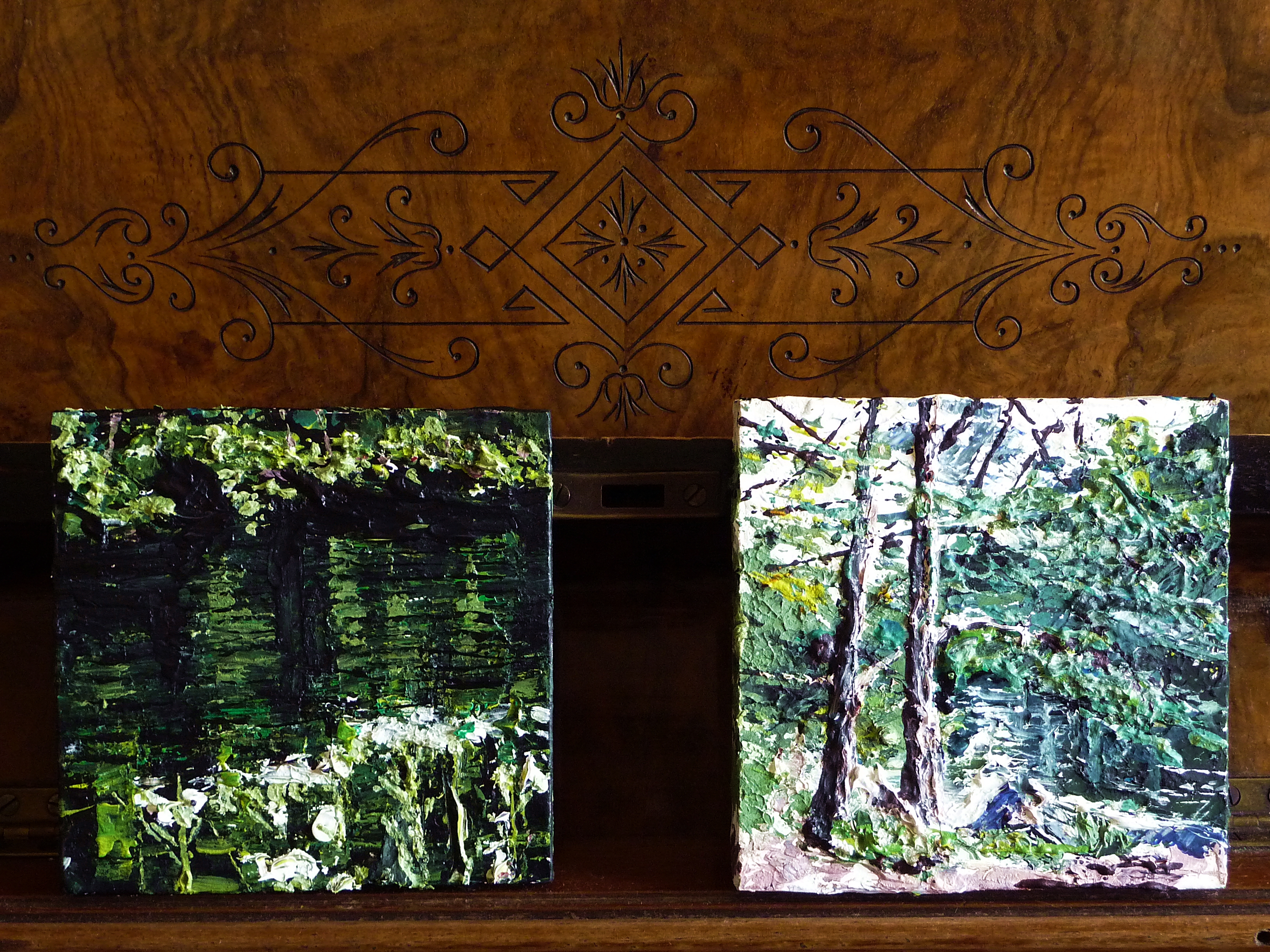
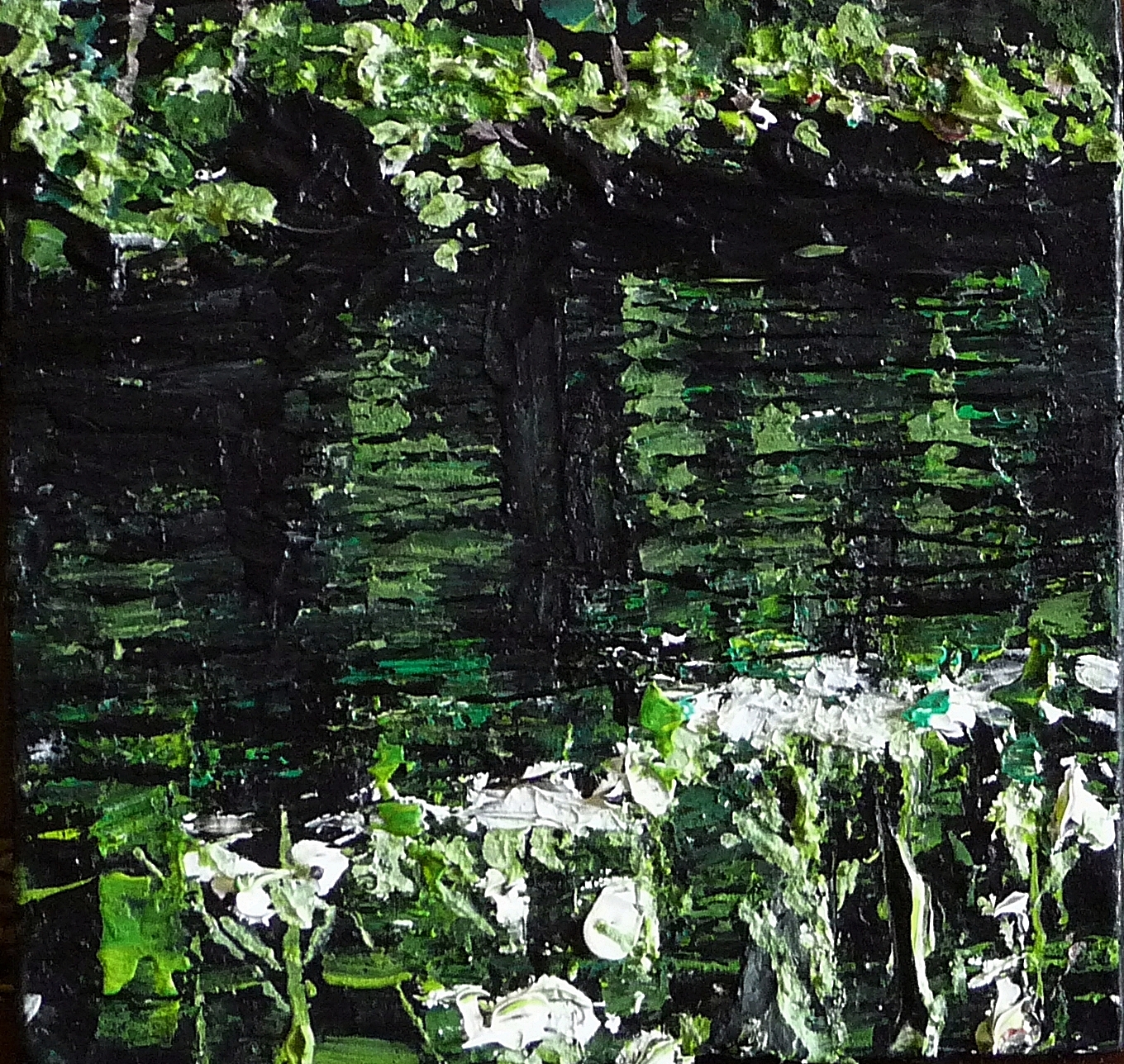
‘Tweed River near Peebles 2′. Acrylic on 5×5″ wood

‘Tweed River near Peebles 2′. Acrylic on 5×5″ wood

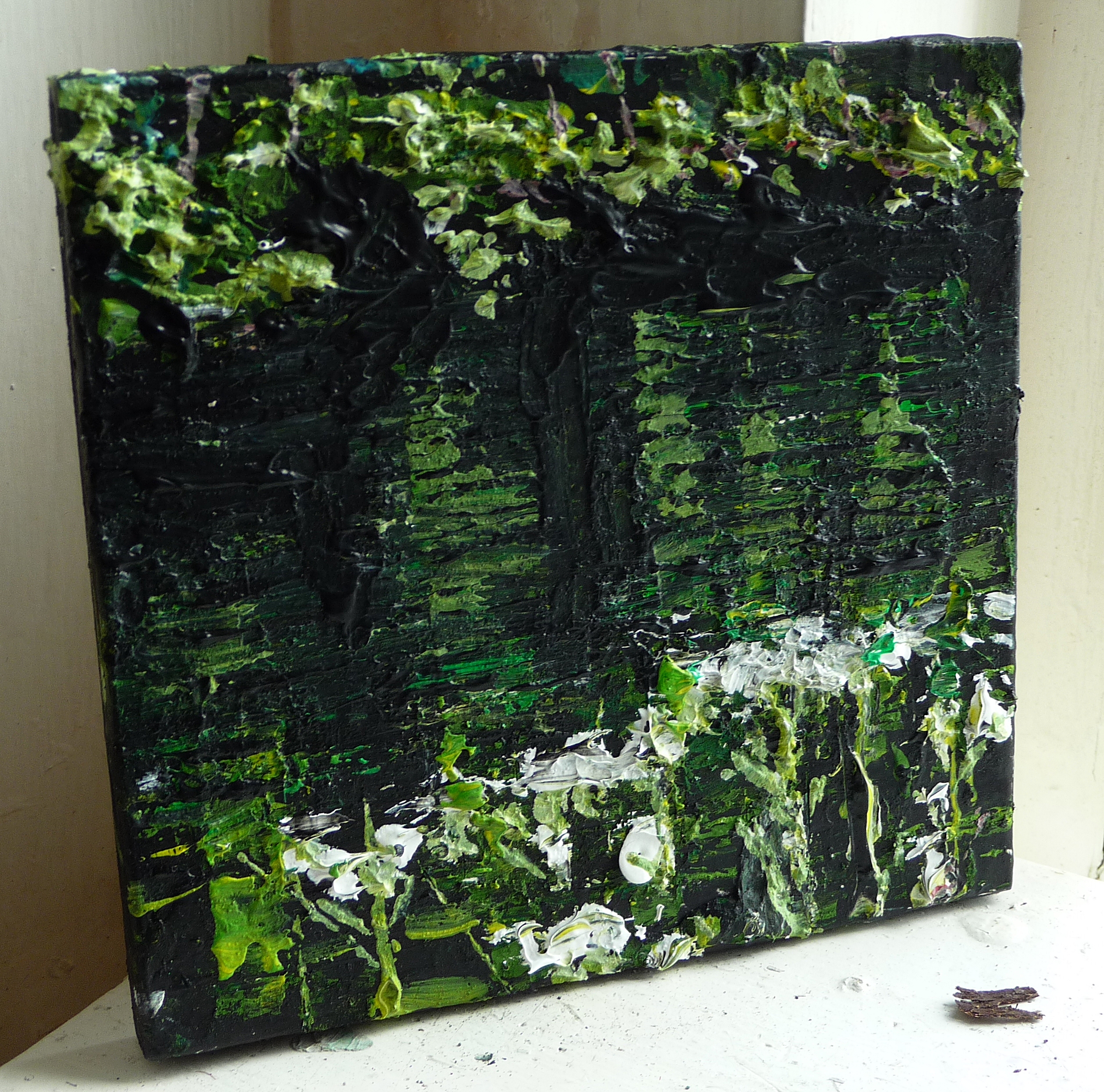
‘Water Reflections (River Tweed) 2’. Acrylic on 5×5″ wood

‘Water Reflections (River Tweed) 2’. Acrylic on 5×5″ wood

Today’s paintings – two studies of the River Tweed.

As mentioned in last Sunday’s post this year I’ll be painting the Borders landscapes of Scotland and England.

There’s no particular topical reason for this (Scottish independence for example) – I just decided to paint the Borders because it’s such a familiar landscape and I’ve been visiting the area since I was a girl.

In summer we usually spend quite a lot of time at the River Tweed – building fires, canoeing, or just sitting around enjoying a picnic.

Borders countryside is quite gentle compared to the Scottish Highlands, or even the Yorkshire Dales farther south, but there’s definitely a distinct Borders look and feel; characteristic rolling hills, the patchwork of farmland, tree plantations, un-tended areas of wilderness that are variously verdant and lush, or stark and bleak.

There are numerous lochs, reservoirs, castles, Peel towers and rivers. Dry-stone dykes, sheep – loads of them, and horses (an excuse for me to paint horses, which I love to do!) And of course there are the west and east coastlines in Dumfries and at Berwick.

It’s very varied, which is why I’m looking forward to painting this series so much. As always, I’ll blog about the places I paint since that’s all part of the fun. People, the arts, places to visit and so on. Also, the Borders country has a very dramatic history – due partly to wars between Scotland and England.
Engraving, showing Borders Reivers raid on Gilnockie Tower

Engraving, showing Borders Reivers raid on Gilnockie Tower

‘Reiving’ (raiding cattle and other resources across the borders) became a way of life for many in the Borders.

In the first place this was through necessity – as a side effect of war and its devastating impact on the land, but then even in peace time Border Reivers chose to live this way, and they didn’t take kindly to being monitored  by the authorities of the time!

I’ve been doing quite a bit of research and in tomorrow’s blog, I’ll explore more about the Border Reivers. You’ve maybe read or heard of Sir Walter Scott’s famous stories about the Borders, and though factual in terms of names and some events, these were highly romanticised.

Statue of Borders Reiver, Galashiels

Statue of Borders Reiver, Galashiels

In fact, the more I read about Border Reivers history (Charles MacDonald Fraser’s ‘Steel Bonnets’ among other books) the more it sounds like a cross between cowboys, guerilla warfare and the Mafiosi (but more anarchic!)

Nowadays the Borders are as calm and safe as it gets – sleepy villages with antiques shops and small art galleries, sheep farmers, baroque hotels. You’d never guess its dark and difficult history, the only clues to the past in the landscape are the occasional Peel Towers (defensive look-out towers) dotted around the countryside, and of course there’s a wealth of literature and history to be explored in the numerous books on the subject, also castles, abbeys, ancient houses and museums

So how did this area change so radically after the Union of the Crowns in 1707? I suspect that this may reveal yet more grim history. It’s not all gloom though – there are Borders Ballads and poems, not to mention the beautiful landscape of which I have many happy memories, and there’s another reason I want to explore Borders history; one of the most notorious Borders Clans or families were the Kerrs, and as my Grandmother was a Kerr, I definitely have ancestors from the Borders!

So this year’s blog will be a combo of painting forays and ‘Who do you think you are’ minus the celebrity angle!

Today’s paintings again, from different angles, showing texture/size etc. (All paintings at 5×5 inches are available to buy at £57 each, or £100 for two)

P1220144 P1220151 P1220139


Borders Country

P1210135

‘River Tweed near Peebles 1’. Acrylic on 5×5″ wood

'River Tweed near Peebles 2'. Acrylic on 5x5" wood

‘Water Reflections (River Tweed)’. Acrylic on 5×5″ wood

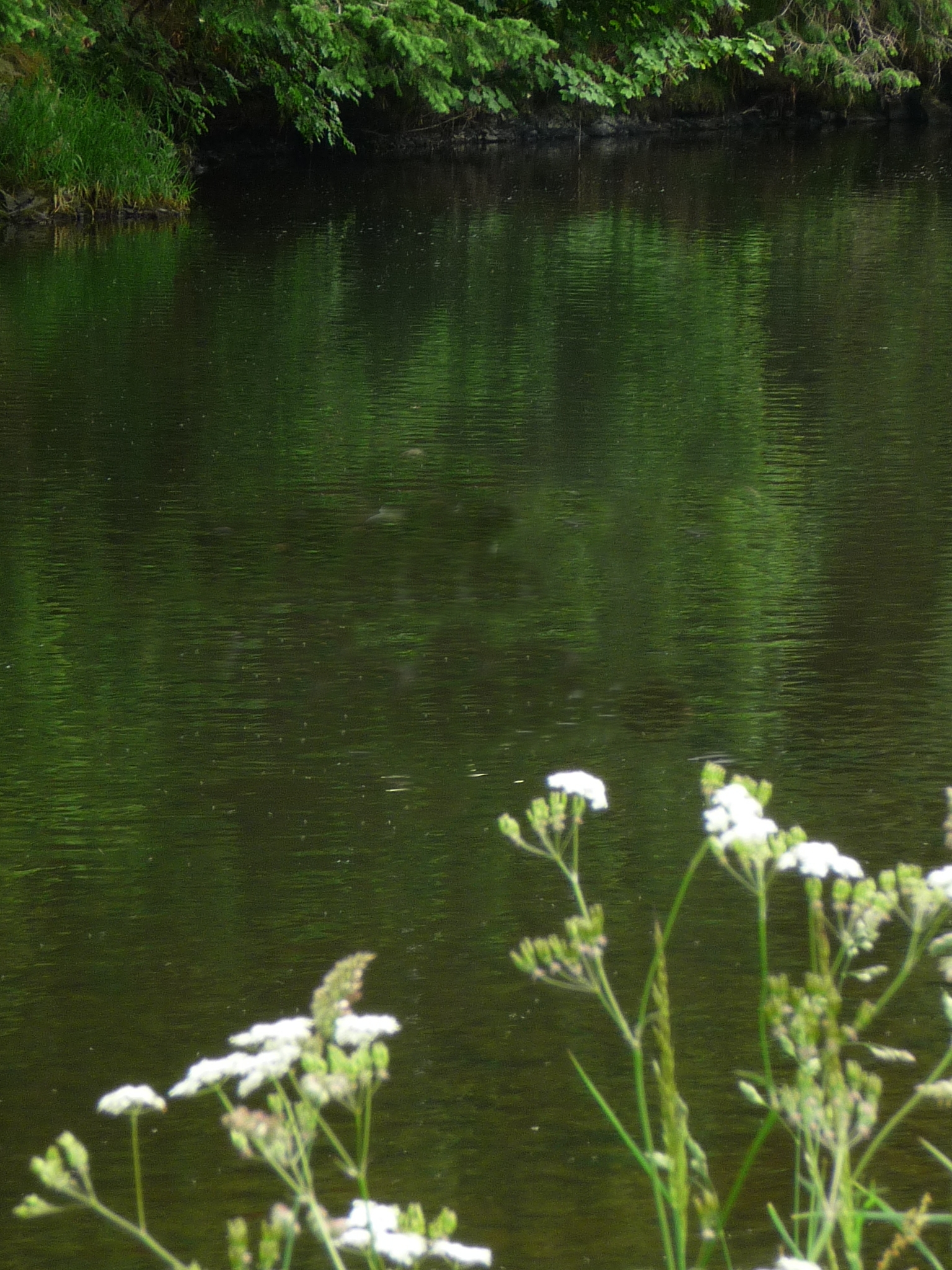
The two small paintings above and right show views of the River Tweed in the Borders of Scotland, a favourite family picnic spot for as long as I can remember.

These are the very first in a new series for my 2015 project which explores the dramatic landscapes of Borders country, from Dumfries in the West to Berwick in the East.

Each month I’ll be painting  landscape and exploring the history and culture of each area, then blogging the new paintings and experiences here.


The project will take me on a journey from the West coast of Scotland then through the densely forested river valleys and hills near the ancient towns of Jedburgh, Melrose and Kelso, following the course of the River Tweed then on to the East-coast seascape, ending at Lindisfarne (Holy Island) in the English Borders.

P1210074

Flaubert Gallery, St Stephen’s St, Stockbridge, Edinburgh

The paintings (on wood and canvas) will range from small to large with every size in between, and they’ll be available to buy here online, and as part of exhibitions throughout the year.  

Exhibitions for 2015 in Edinburgh include the Whitespace Gallery, Howe Street  in July, and the Flaubert Gallery in early Autumn

For the Flaubert I’ll be showing a series of twenty five 4×4 ft paintings (exclusive to the gallery) on wood panels, capturing the beautiful Borders landscape from coast to coast.

If you’re interested in buying the smaller works throughout the year, such as those below, email me at rose.strang@gmail.com and I’ll post the painting to you within the week. 5×5 inch paintings are £57 each (or two for £100). They’re ready to hang, or can be propped on a shelf.

P1210162 P1210165

Flaubert Gallery

P1210074

Flaubert Gallery in Stockbridge, Edinburgh

It’s been a lovely spring day in Edinburgh today (despite slightly Siberian winds), not least because after a month of flu I’m finally on the mend!

Also I dropped in to have a look at my three Eigg paintings now on exhibition at the Flaubert Gallery in Stockbridge, then after an enjoyable chat with gallery owner Derek Gilchrist, we agreed I should do a solo show this Autumn. P1210079

It’s great to be on board with this excellent gallery and I’m really inspired about the new series of paintings I have in mind for the solo show.

The series will feature the dramatic landscapes of Borders country, from the Solway in the West to Berwick in the East. The paintings will take the viewer from the coastline near Dumfries, through the lushly forested valleys and hills near the ancient towns of Jedburgh, Melrose and Kelso, following the course of the River Tweed, then on to the wild East-coast seascapes with a visit to Lindisfarne (Holy Island) in the English Borders.

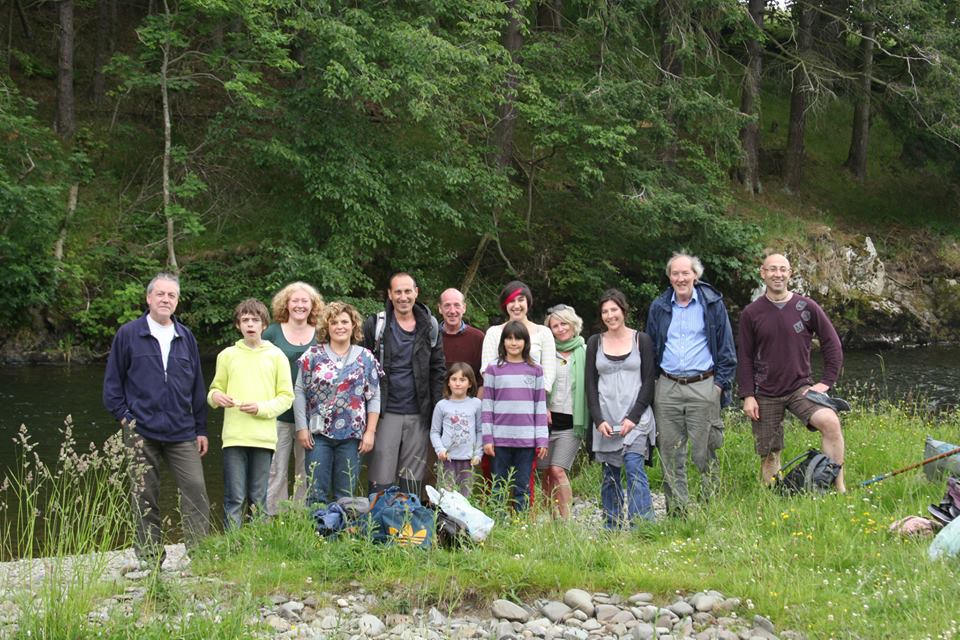
I really love the Scottish Borders, we (family an10298943_250319341839429_8318336951627099163_nd friends) often drive around the Borders at the weekend, and one of our favourite picnic spots (photo on right!) that we visit most summers is on the River Tweed near Peebles.

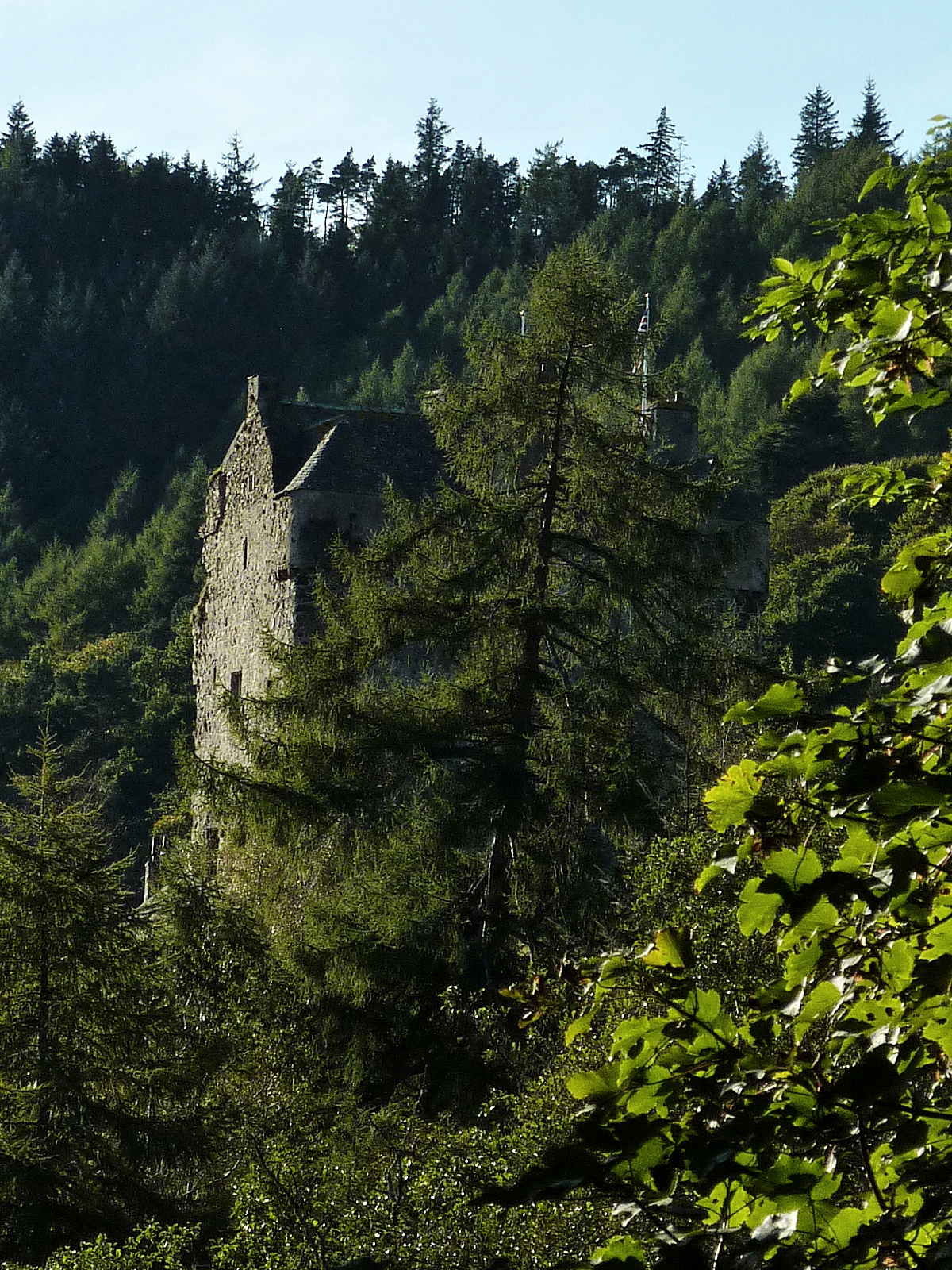
P1020475The photos to left and below show Neidpath Castle and the River Tweed and they echo the mood I’d like to capture for this series; the lush, inland country of the Borders which makes me think of verdant medieval tapestries! Also the wild seascapes to West and East. P1290475

I’m looking forward to painting this series which will include a lot of variety, and I’m also looking forward to showing at the Flaubert Gallery this year.


If you’re in Edinburgh I hope you’ll drop in to see all the excellent paintings on exhibition at the Flaubert just now (and if you’ve time, a coffee and chat with gallery owner Derek!). The Flaubert Gallery is in St Stephen’s Street, Stockbridge right next door to the Antiquary Bar (and all the cafes and interesting boutiques that make Stockbridge ideal for weekend meanderings!)

P1210078


Summerhall TV – video

This is a video (below) put together by Sylvia Ferradal, Filmmaker and Editor from Summerhall TV, who came along on the opening night of Eigg Island, at the Scottish Storytelling Centre, to capture footage/interviews. (Summerhall TV is based at Summerhall Arts complex, Edinburgh and is dedicated to capturing what’s happening creatively across Scotland)

‘Eigg Island’ launch event and performances

Jennifer L Williams perfoming 'West', 'North' and 'East'

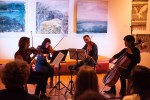
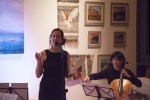
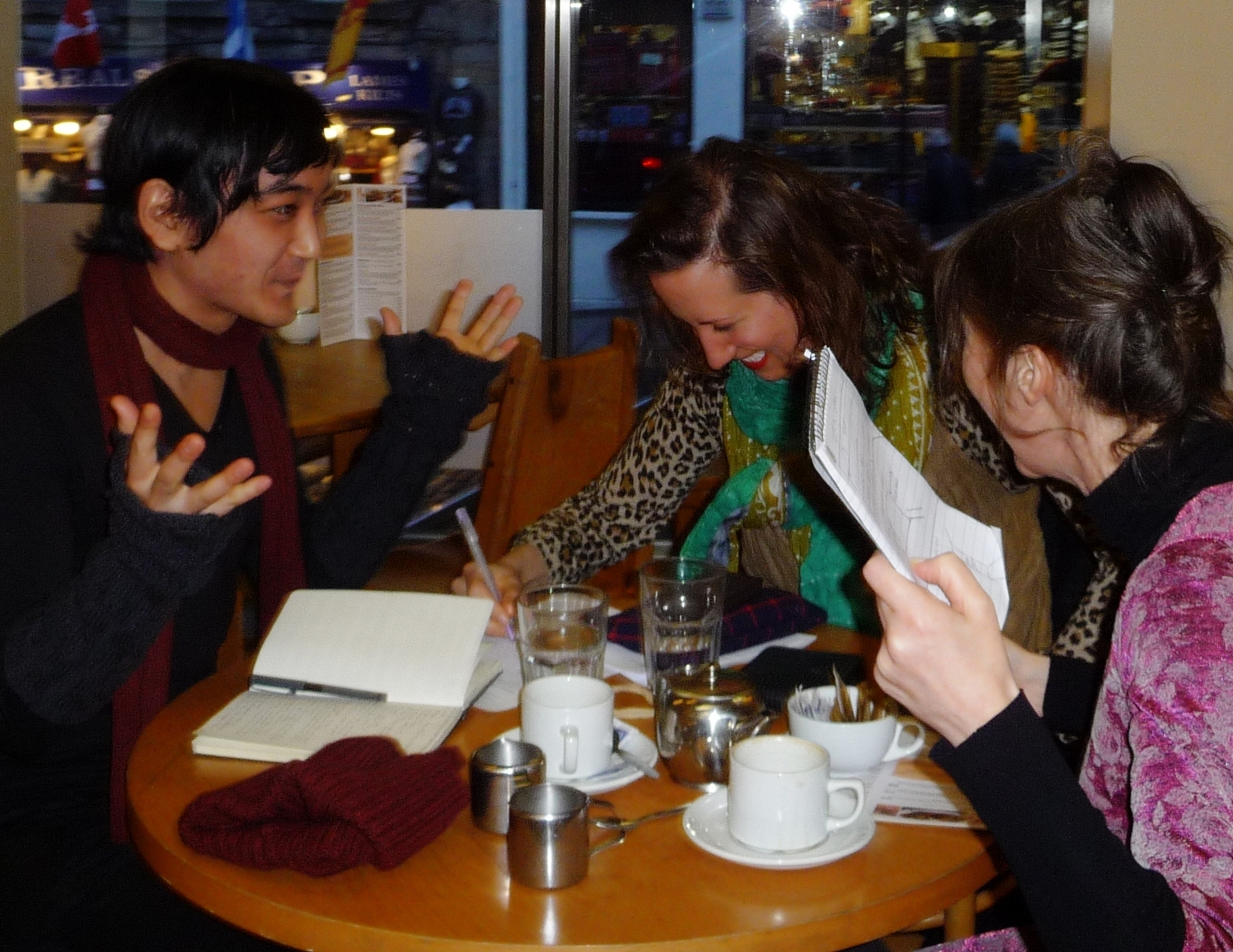
Jennifer L Williams and Atzi Muramatsu performing ‘West’, ‘North’ and ‘East’ (Photography Eleni Laparidou)

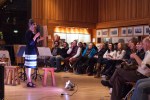
The exhibition of Eigg Island launched at the Scottish Storytelling Centre on Thursday evening last week. It was a great success, with 60 or more people attending and much positive feedback about the performances and artworks. You can view all the artworks Here.

I was as always very moved by the poetry and music performances of JL Williams and Atzi Muramatsu. Atzi Muramatsu also performed his piece for string quartet, Gaia Metempsychosis which took its inspiration from the fossil filled cliffs at the North end of Eigg.

These works were created as part of our on-going collaboration inspired by Eigg Island, and the 6 minute video (below) brings together paintings, music and poetry created for the project

Photos of the launch (below), were taken by Photographer Eleni Laparidou  (EL Photography)

This is a link to the video of the Eigg Island launch event courtesy of Summerhall TV, an arts channel dedicated to promoting the arts in Scotland.

Thanks again, to everyone who took part in the launch event!


Three days to go!

P1150054

On the west coast of Eigg last year

I’d be lying if I said I wasn’t a bit nervous about the upcoming exhibition launch and performances on Thursday!

I hope there will be a good audience, that everything’s just right for Atzi and Jennifer’s performances, but mostly I hope that people feel inspired, and feel some of the magic that I have while working with Atzi and Jennifer in the past year.


We’ve had a few collaborations over the past year, but Thursday represents the culmination of the Eigg project. We’ve all worked hard on this one, and it’s going to be truly special.

Yesterday I also received three very moving poems that Jennifer L Williams has written in response to the paintings and themes, which she’ll read aloud at the launch. I’ve attended many of Jennifer’s readings, so I know this is something that she has an outstanding talent for; expressing mood, atmosphere and meaning beautifully.

This video from last year is a reading of ‘Stormy Sky’ which Jennifer wrote  in response to my painting ‘Stormy Sky, Lindisfarne’

As mentioned in the previous blog, I’m also very happy indeed that Atzi Muramatsu will be performing ‘Gaea Metempsychosis’ (  inspired by his experience of the cliffs at the north end of the Isle of Eigg) with string quartet at the launch.

Atzi’s talent as a musician extends in many different directions; as part of the band he leads – Lypsync for a Lullaby – also as a cellist in traditional orchestra concerts and as a composer of contemporary music. I remember listening to one of his shorter compositions ‘5 Seconds Left’ a year ago, and thinking that I’d love to collaborate with him on art projects.

Last year I overlaid ‘5 Seconds Left’ onto a slowed down video I took of ferry waves on my first trip to Eigg in April last year, I love the mesmerising, gradually deepening thrum, echoing the movement of deep sea, and the inter-layering of voice (all Atzi’s voice as far as I know!)

As Atzi and Jennifer rehearse, and I get together the final details for the exhibition, I just want to say again what a pleasure and an inspiration it is to work with such talented and great people!

If you’re coming to the exhibition on Thursday (details Here) I look forward to saying hello!

Lastly, here’s a video which features my paintings from last year’s Eigg exhibition, Jennifer’s poetry, and Atzi’s improvised music piece to ‘Moonlight on Eigg’

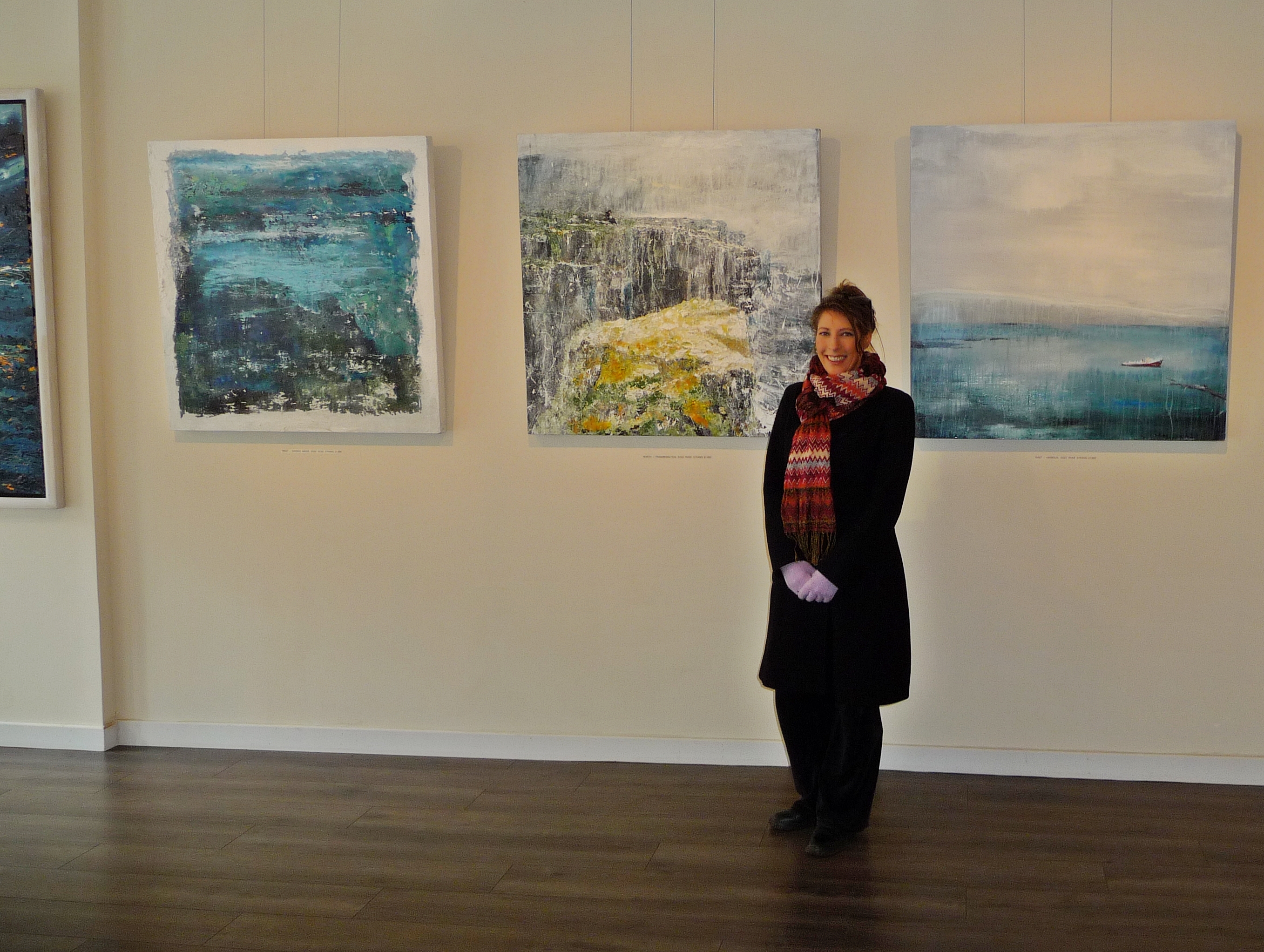
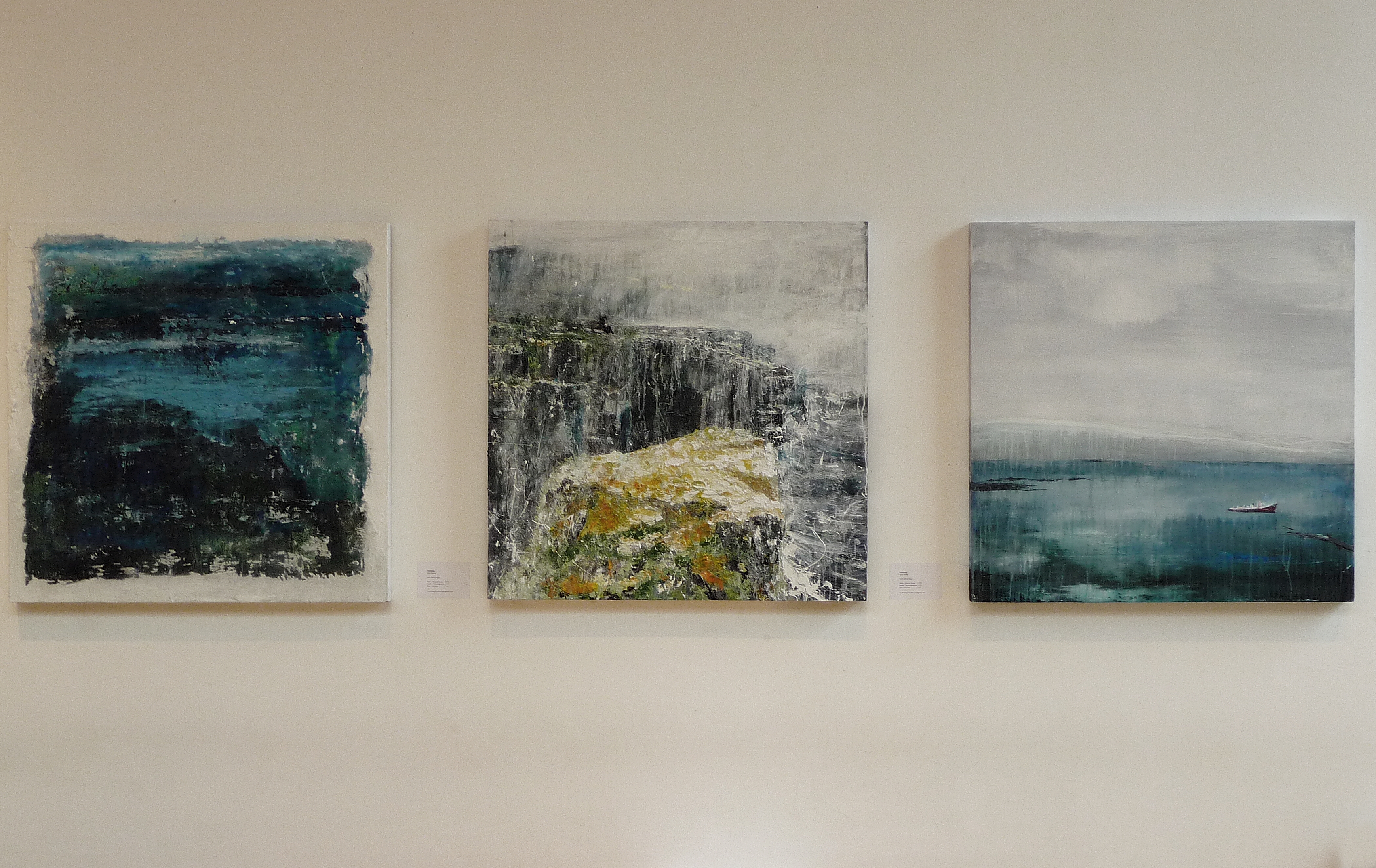
‘Eigg Island’ Trilogy

Rose Strang 'West', 'North' and 'East'

Rose Strang ‘West’, ‘North’ and ‘East’. Mixed media on 40×40″ wood panels

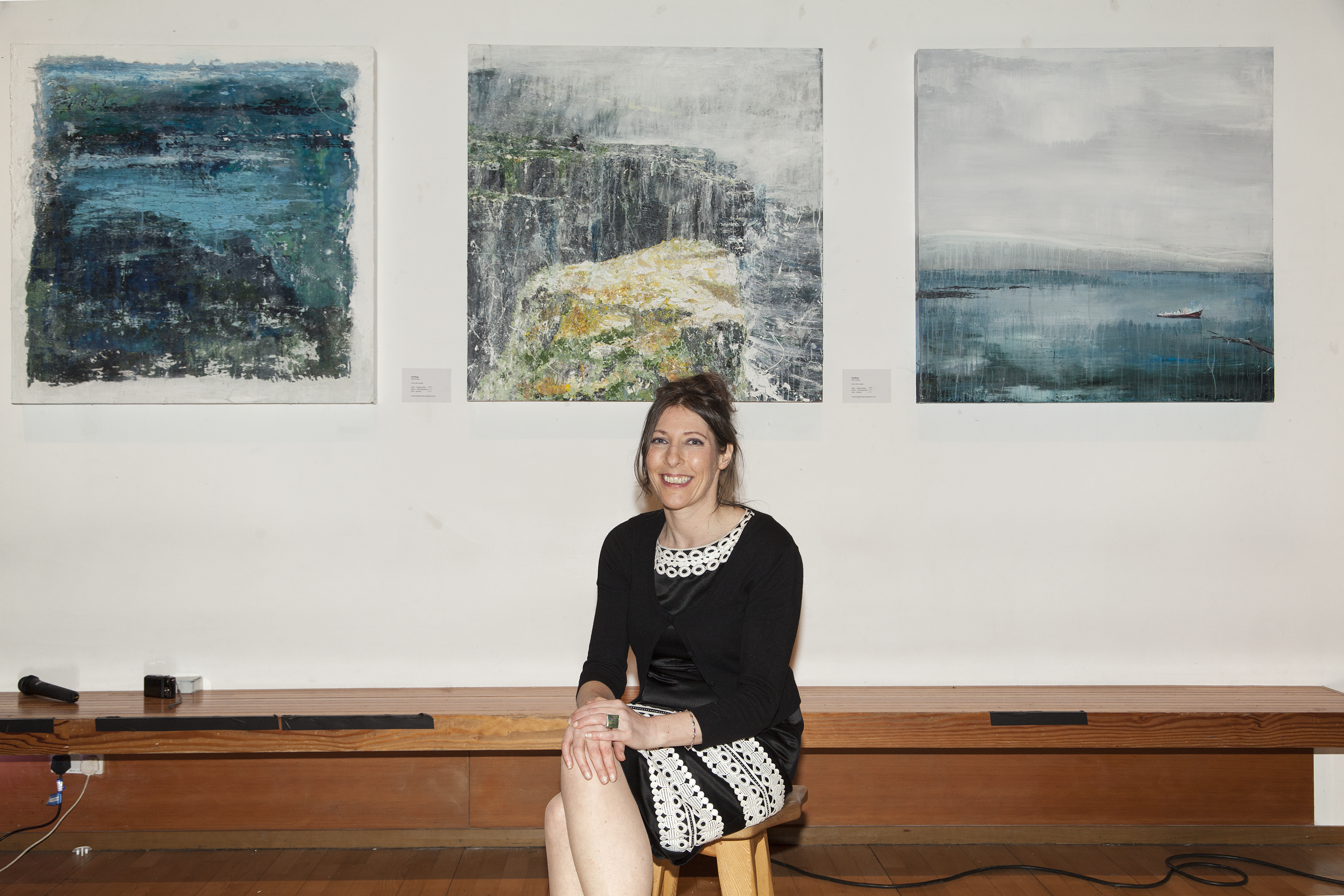
Rose Strang and artworks.(Photography Eleni Laparidou)

Rose Strang and artworks.(Photography Eleni Laparidou)

The trilogy of ‘West’, ‘North’ and ‘East’ were painted over two months as the culmination of a year-long project in response to the Isle of Eigg in the Scottish Hebrides, which included collaborations between myself, composer/cellist Atzi Muramatsu and poet JL Williams


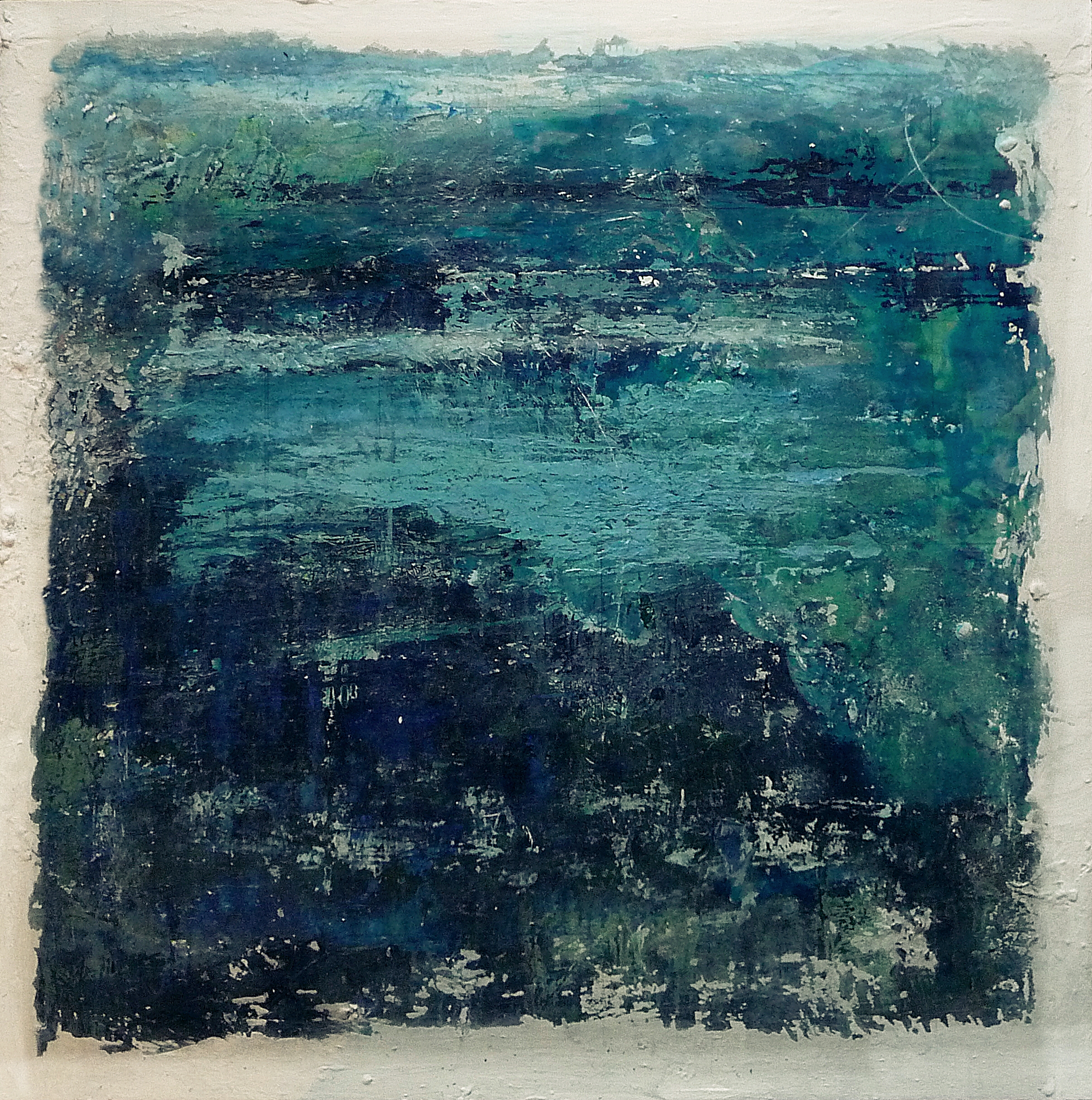
West – Singing Sands

'West - Singing Sands'. Mixed media on 40x40" redwood panel

‘West – Singing Sands’. Mixed media on 40×40″ redwood panel

West – Singing Sands. Mixed media on 40×40″ wood panel
‘West’ is about imagining an island;  what we project onto an island
in our imagination before arriving. The painting could be viewed as an old map, or a faded
painting of a view across the sea. We bring our own and others’ history to a new place.
‘Singing Sands’ refers to the name of the bay on the west coast of the island,
whose sands are said to ‘sing’ when dry (which intrigued me before I first visited Eigg!).

This painting was a very gradual process of building up then scraping back layers of paint, crackle glaze and varnish.

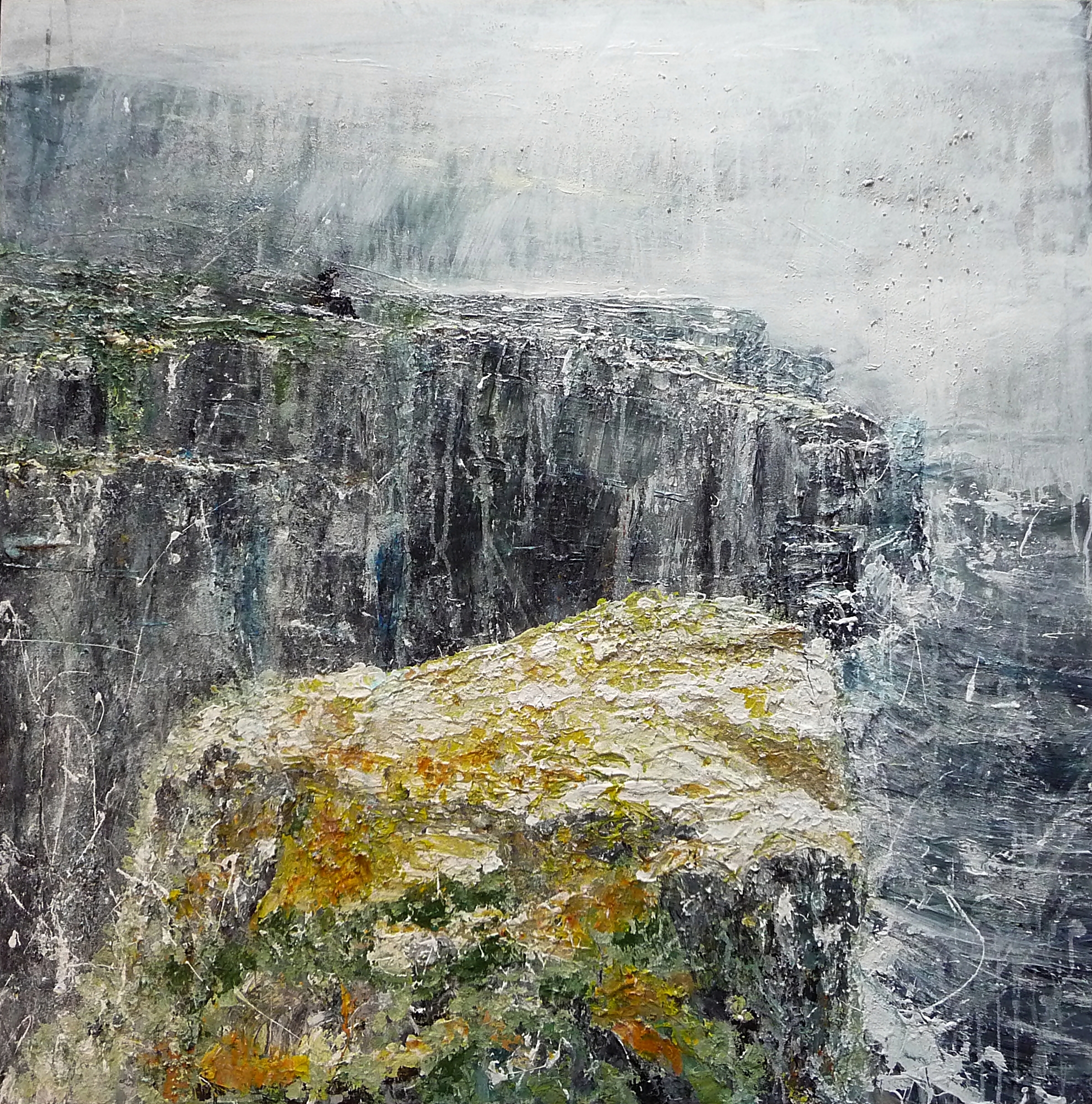
North – Transmigration

'North - Transmigration'. Mixed media on 40x40" redwood panel

‘North – Transmigration’. Mixed media on 40×40″ redwood panel

North – Transmigration. Mixed media on 40×40″ wood panel
‘North’ is about the reality of nature on a Hebridean island, the toughness,
grittiness of weather and atmosphere – also fear of nature and how
it can feel impersonal. We observe it and wonder if we’re really a
part of it, though of course we are.

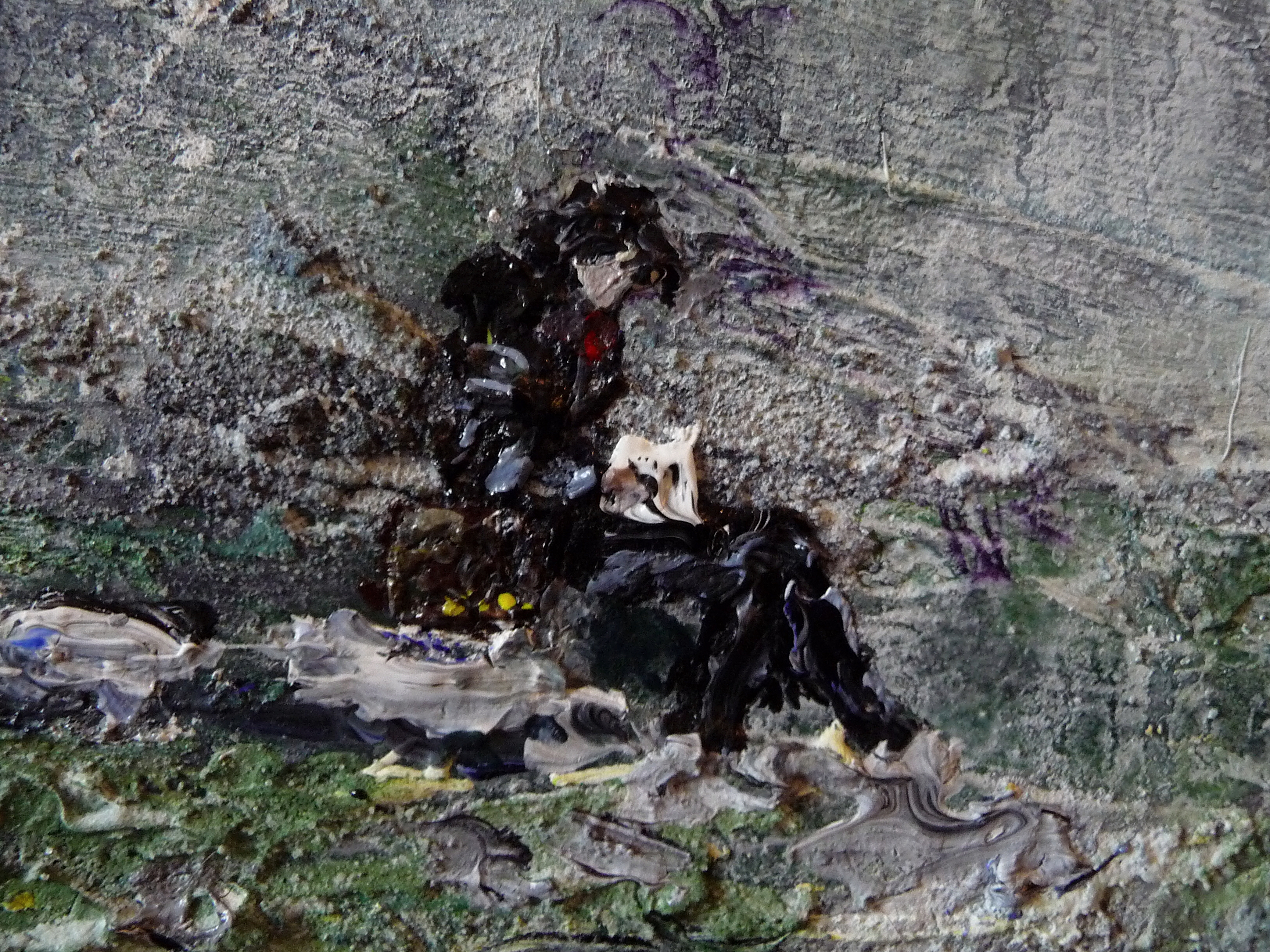
North (detail)

North (detail)

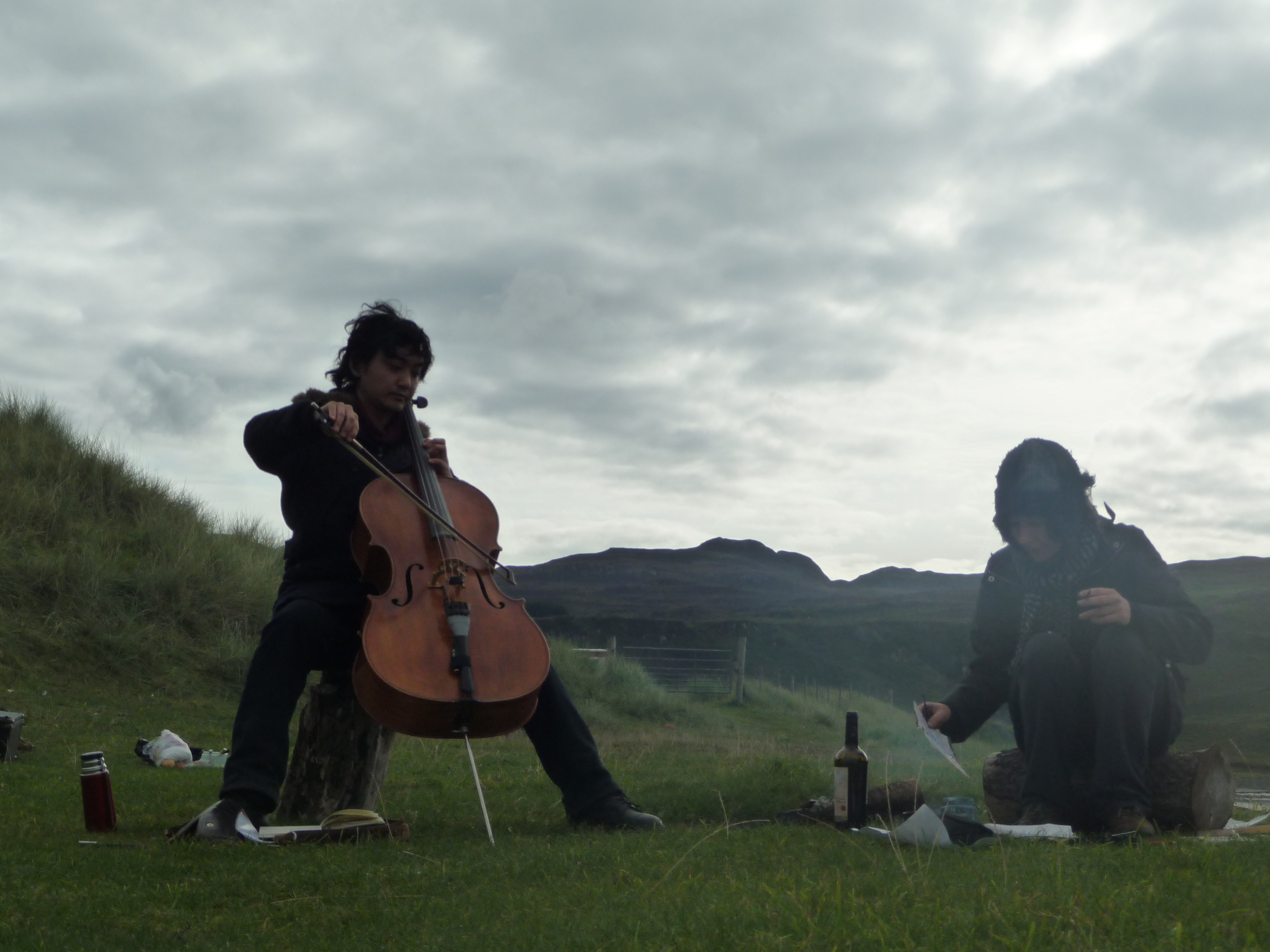
The small figure on top of the cliff is Atzi Muramatsu, a composer/cellist who I collaborated with on the project.
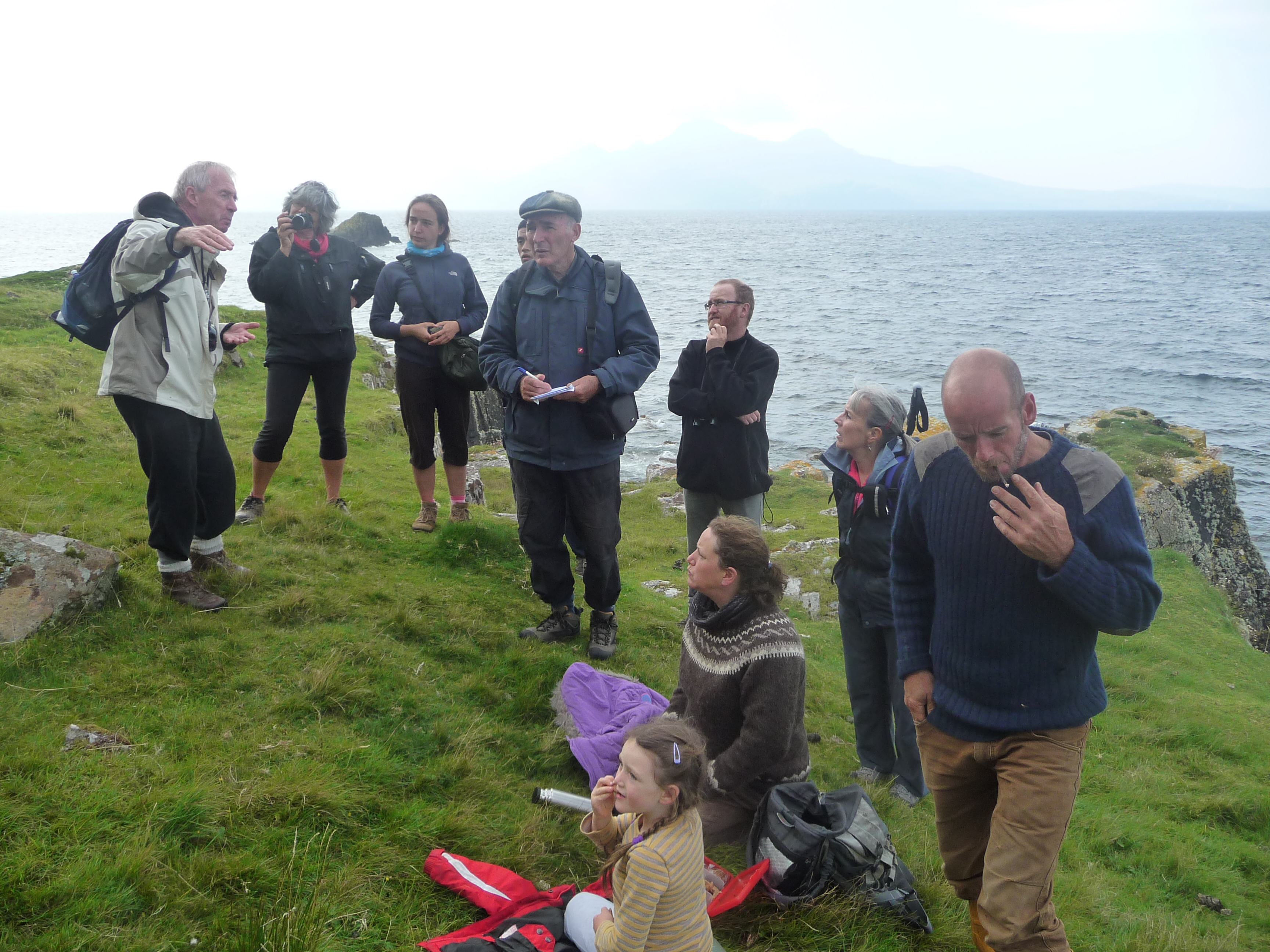
Sitting on these cliffs on the north end of the island (as part of a geology tour we joined) he began to compose a piece for string quartet called ‘Gaea Metemphsychosis’.

Metempsychosis is about transmigration of the soul and ‘Gaea’ of course means earth.
His piece was about fossils in these cliffs, formed 47 million years ago, slipping into the sea, also being there in a moment of time and the fact that we too eventually become part of the landscape again.

This is a very free-style painting, the basic composition was over-laid with washes and splashes of salt, glaze and paint to build atmosphere, before finally adding the figure.

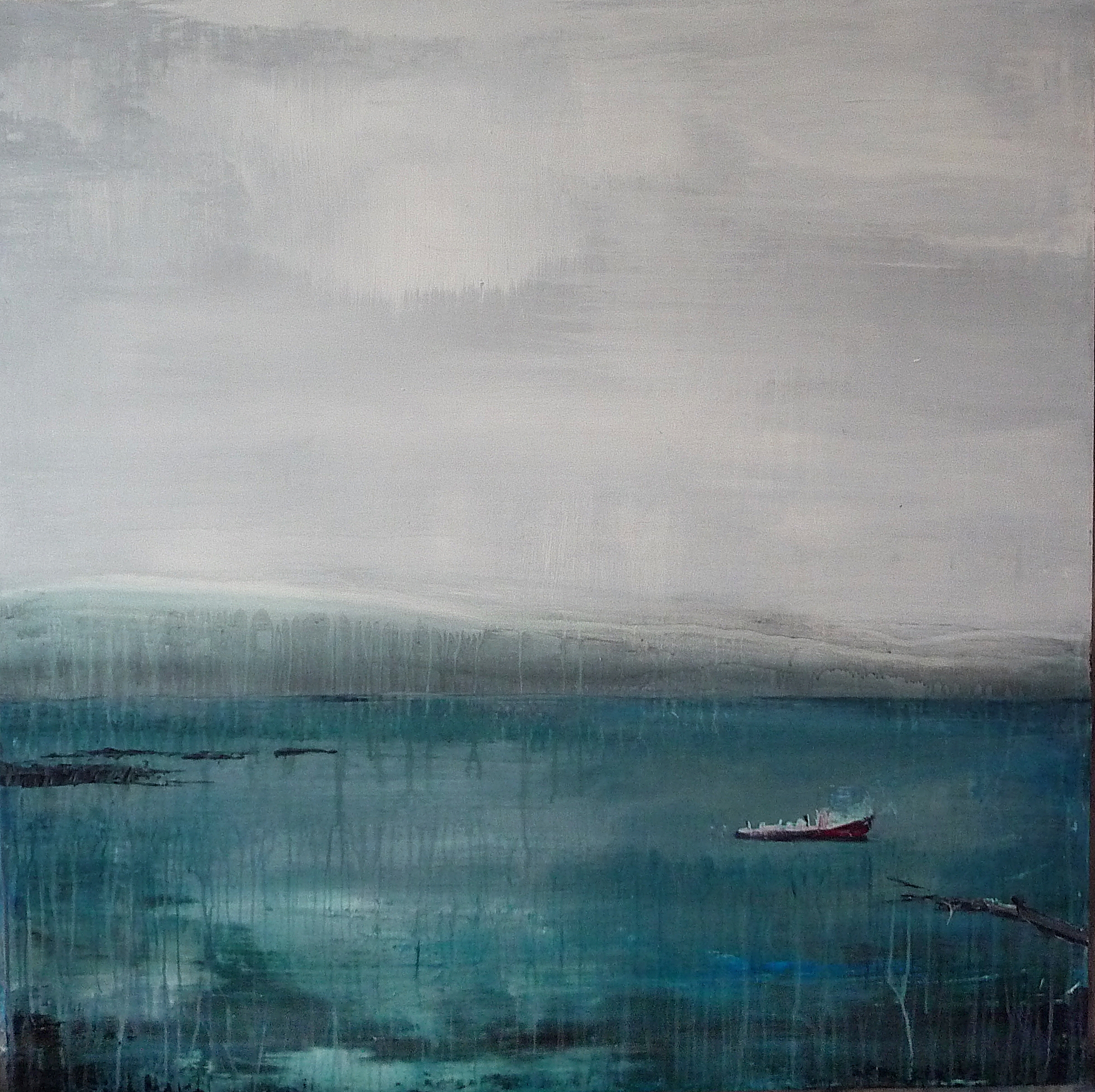
East – Harbour

'East - Harbour'. Mixed media on 40x40" redwood panel

‘East – Harbour’. Mixed media on 40×40″ redwood panel

East – Harbour. Mixed media on 40×40″ wood panel
‘East’ is a view of the harbour bay from the island, looking out to
sea. There is the sense of a haven, which has a lot to
do with people met there, but also the fact of physically having being on
most parts of the island. You find your place, then leaving to
return to the mainland brings mixed feelings. Islands can seem an oasis from
a troubled world, which is no doubt why religious or spiritual centres are often
founded on islands.

East (detail)

East (detail)

The painting process was in itself very peaceful; simple layering of colours and glazes, allowing drips to form, then adding the small boat.


After the exhibition launch I’ll be sure to post videos/photos of JL Williams and Atzi Muramatsu’s performances, which I’m really looking forward to seeing next Thursday!

North; transmigration

'North'. Mixed media on 40x40" redwood panel

‘North’. Mixed media on 40×40″ redwood panel

Happy days. I love it when work and ideas merge together into new forms.

The above painting is North, second in the series of three paintings for the upcoming Eigg Island exhibition. It was inspired by  a day in September on the last visit to Eigg, on the geology trail with geologist Prof’ John Hudson, who showed us fragments of bone from a Pliosaurus (estimated to have lived about 147 million years ago).

We sat underneath the fossil-filled cliffs on the north end of the island and ate lunch whileP1140952 Atzi Muramatsu began (unbeknownst to me!) to write a music piece which became ‘Gaea Metempsychosis’; a piece for string quartet, which will be performed at the exhibition launch.

It occurred to me after a day of painting the final touches of North that it would make perfect sense to add Atzi (the musician I’m collaborating with alongside poet JL Willams for the exhibition) on the cliff. Once painted I gave him a quick call to make sure he didn’t feel a bit ‘Dorian Gray’ or superstitious about it, but he thought it was a great idea as long as it worked for the painting!

P1200137‘Metempsychosis’ is a Greek word meaning transmigration of the soul – or its reincarnation after death, ‘Gaea’ meaning of course – the earth. So the inspiration of fossils, and of being on the island in a particular moment in time, yet feeling the sense of our own infinity – and that, like fossils, we become part of the landscape once more, was the inspiration behind Atzi’s music.

North’s place in the trilogy of paintings, is to represent the idea of the reality of being on a Hebridean island, after imagining what that experience will be like, because to me there’s always a time when you feel not a part of the landscape, you’re not sure of your place in this wildness of sea and cliffs, although of course we are a part of it.

I have a piece of marble that I collected from the Isle of Iona (the beautiful small island off the coast of Mull on the west coast of Scotland). It represents the idea of ‘Gaea Metempsychosis’ exactly to me. Iona was the first place where, in my early twenties I felt a powerful connection to nature – I felt my place in the cycle of everything.

The piece of marble in the photo to the right is formed  by the minerals of  tiny sea creatures P1200138from millions of years ago, their remains crushed by the weight of  rocks and ocean over time into dense, heavy white marble. You can see seams of serpentine – a silicate formed by algae and water that ran into cracks and faults of the marble.

It’s so beautiful, and it’s from a very rare seam of marble on the south side of the island that’s pretty difficult to find for newcomers. Islanders mined it about 100 years ago to form the alter in Iona Abbey, but to me it’s is best experienced on those south cliffs of Iona, looking out over a wild blue sea.

It’s quite difficult to express how rewarding collaboration is; when ideas connect – also the way that nature inspires and makes meaning of our lives. I felt very similarly about the recent Lindisfarne collaboration with poet JL Williams – view video here – When you write to the light..

Ideas gathering pace..

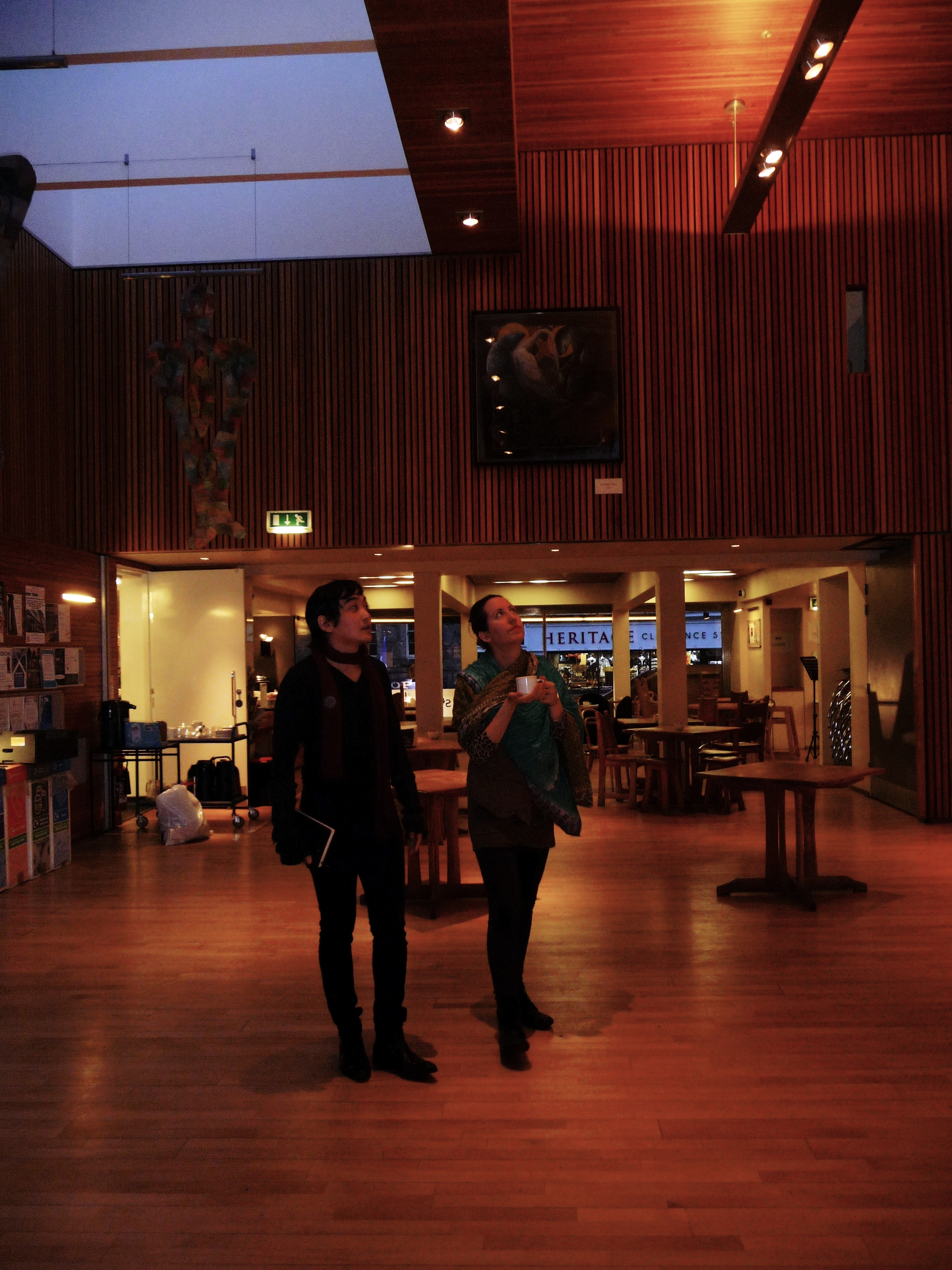
P1190480I enjoyed a most inspiring meet-up today with JL Williams and Atzi Muramatsu at the Scottish Storyrtelling Centre.

Jen and Atzi are planning a performance and music collaboration, to be performed against the backdrop of paintings. Also part of Atzi’s string quartet, inspired by the fossil-filled cliffs of Eigg, will be performed, which will relate to the painting I’m working on at the moment called ‘North’.

This interplay between music, poetry and painting is what I find rewarding about collaborating – it offers an atmospheric, layered experience, drawing out imaginative or emotional associations between each of the works. And, as always, it’s a pleasure to work with Jen and Atzi.

The first painting P1190481should be finished by Wednesday next week, which I’ll post here. On the whole, all aspects are going really well – I’m now beginning to really look forward to the 26th March!

Don’t forget you can book tickets here – https://www.facebook.com/events/368794979959904/?ref_dashboard_filter=upcomingOr you can pay at the door on the evening.

P1190479P1190483