Tag Archives: rose strang art

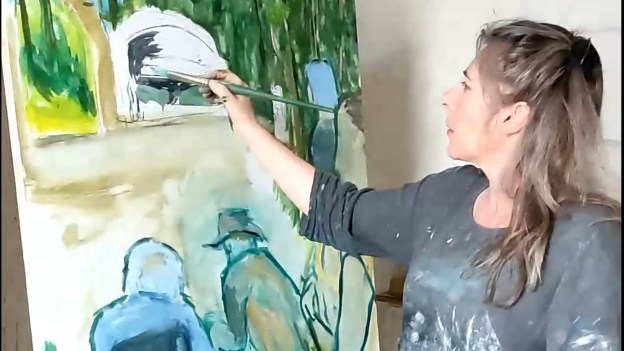
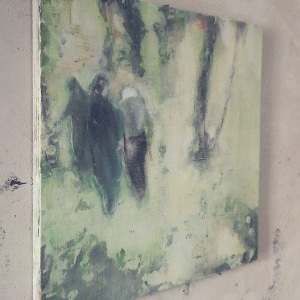
Forest of Luffness, painting progress 2

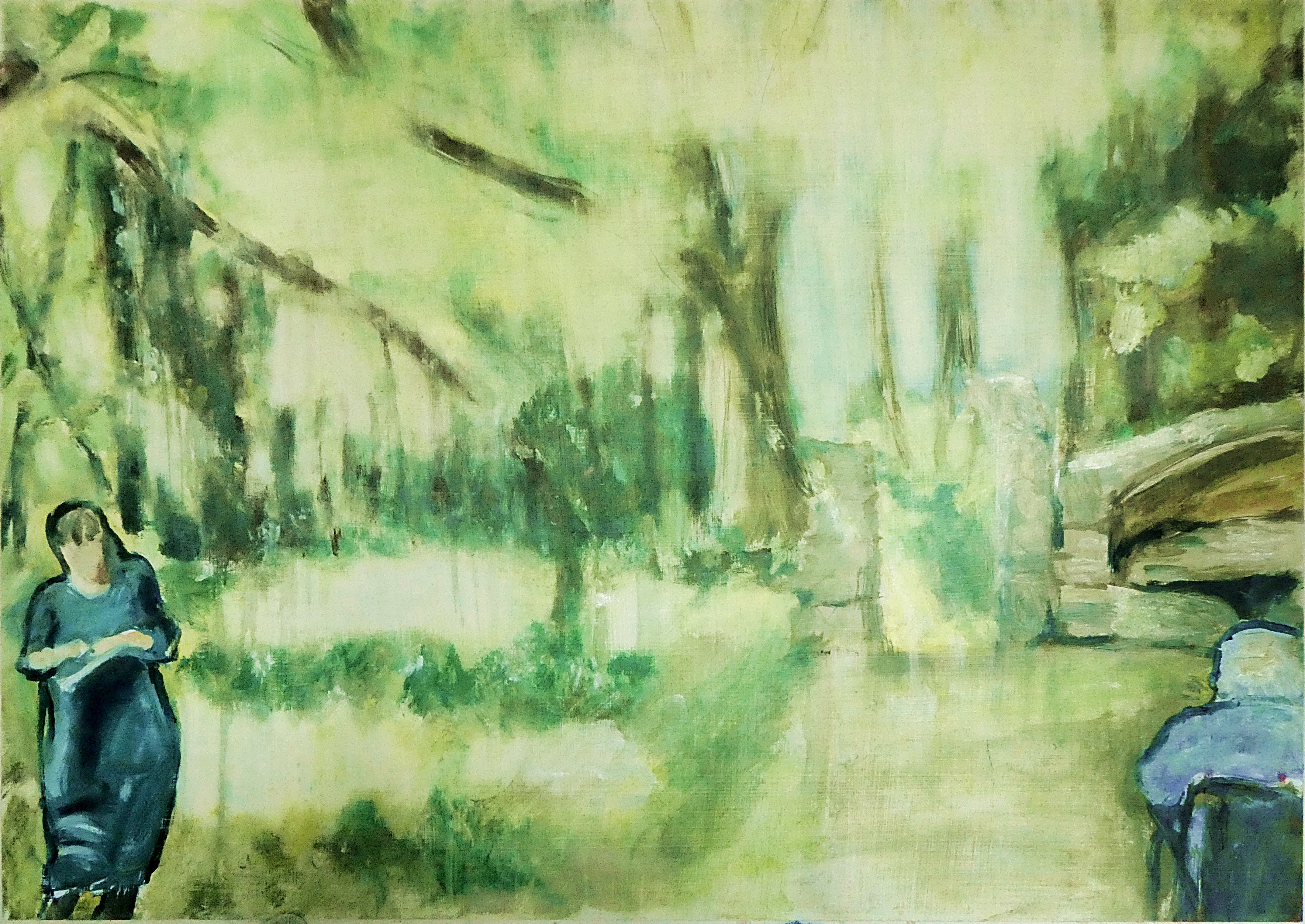
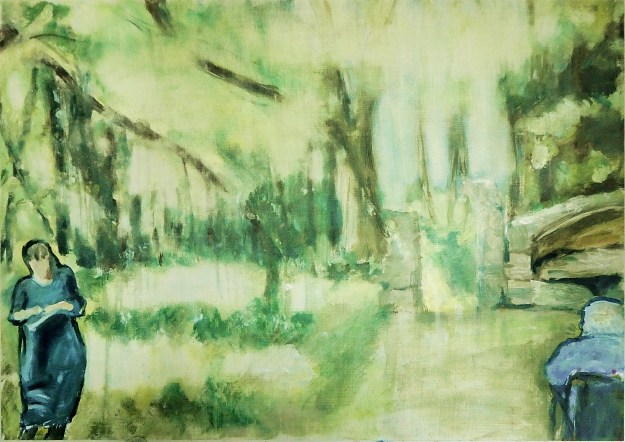
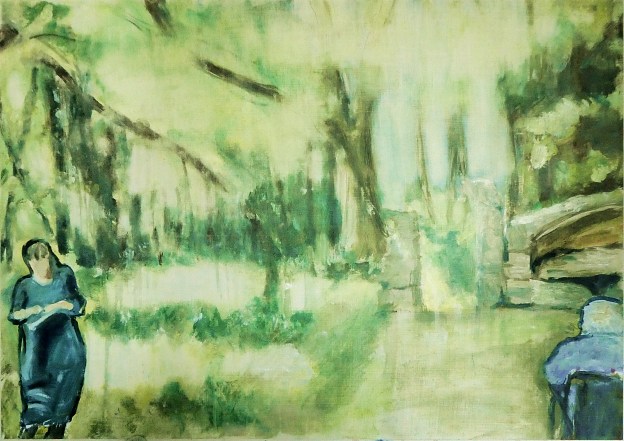
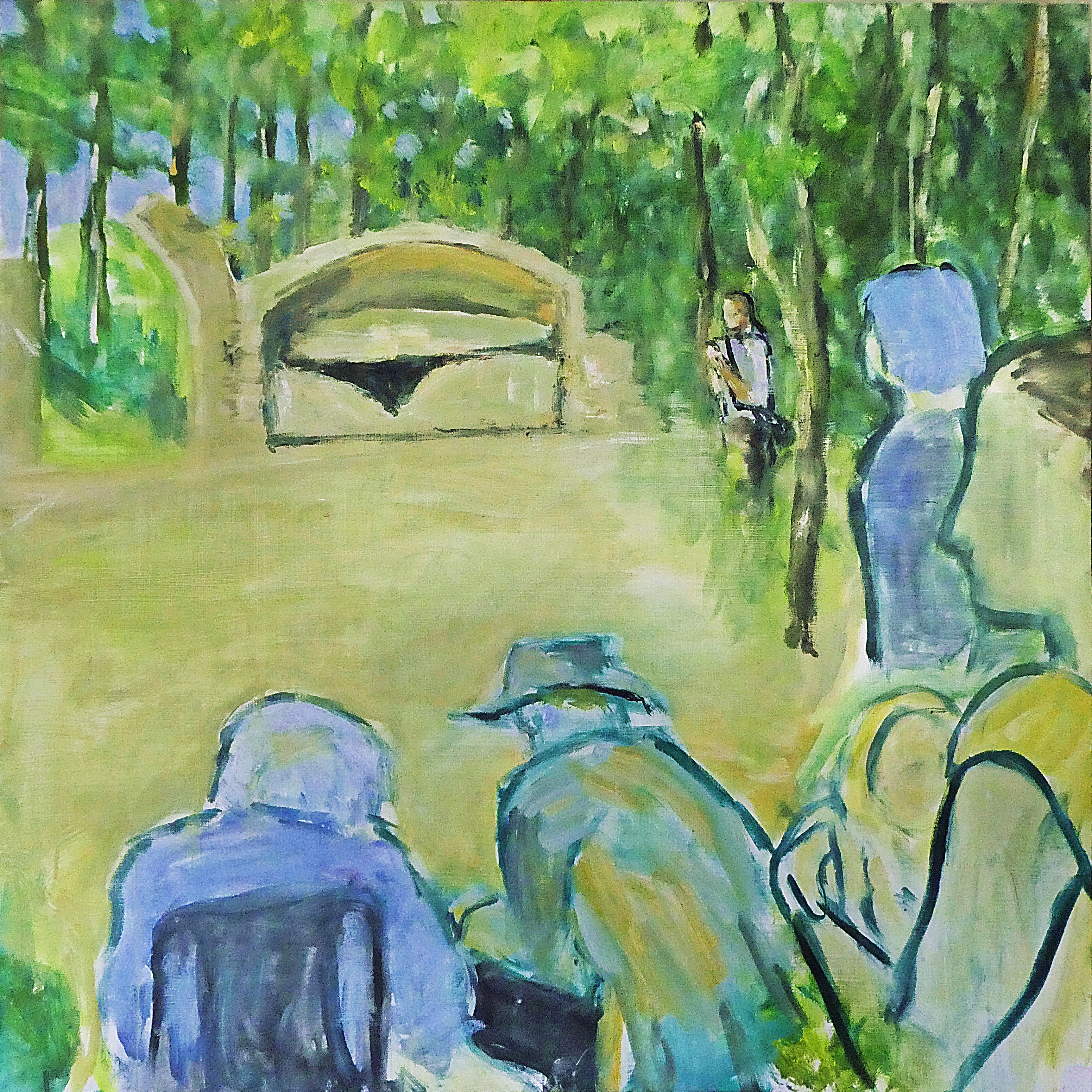
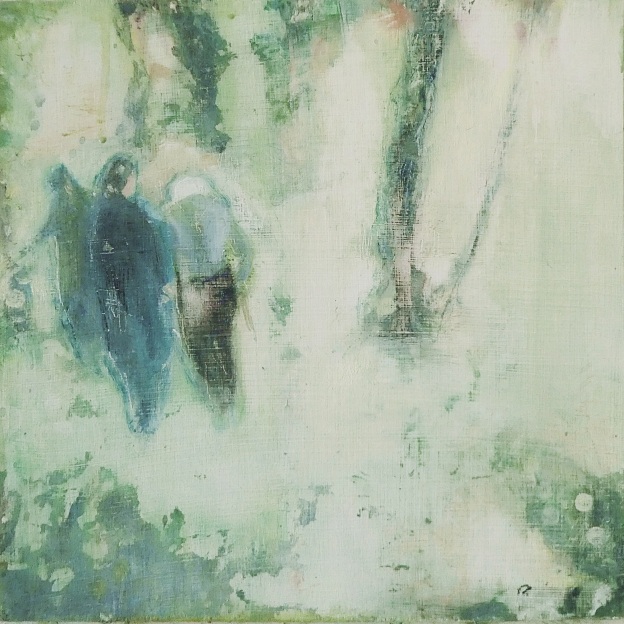
Above Forest of Luffness 3. Oil on 33×23″ wood. Rose Strang 2024.

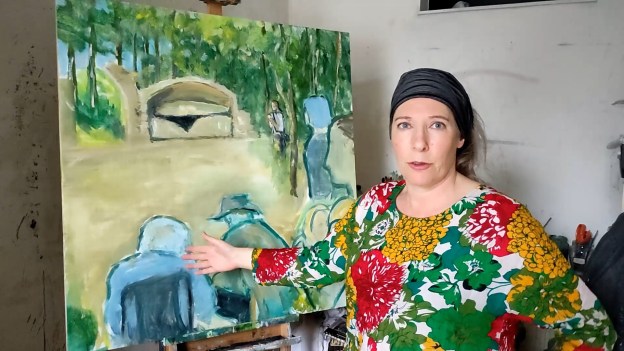
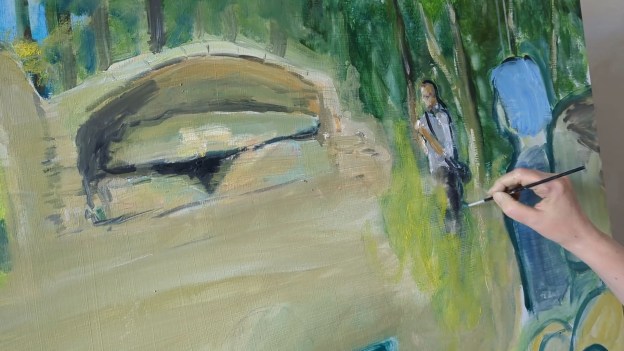
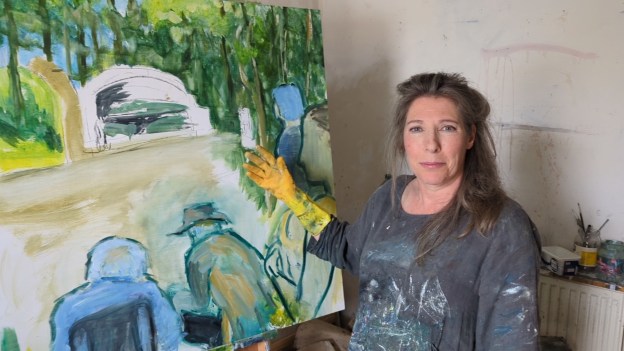
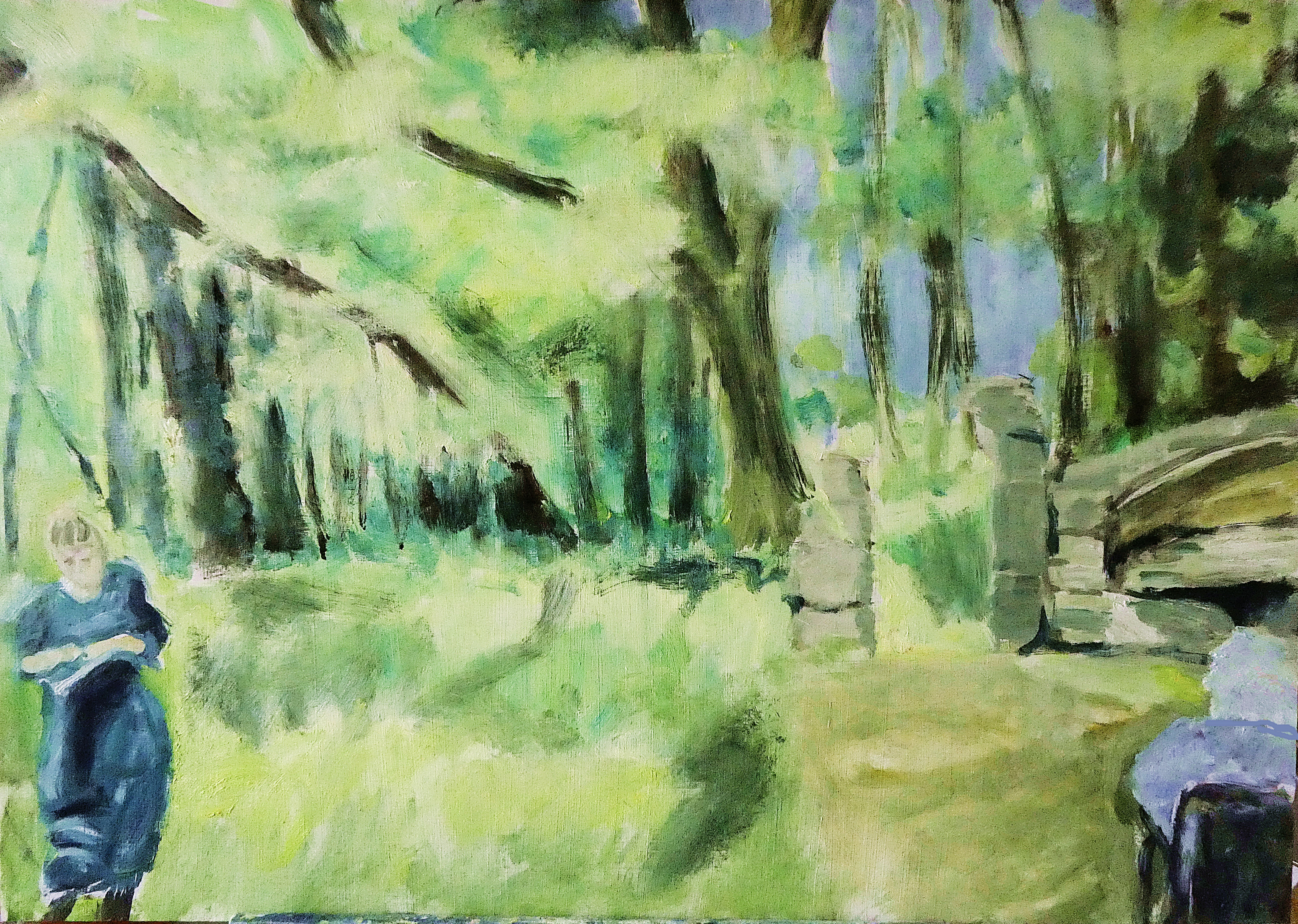
A few changes to the painting since my last post (both versions below) . .
P1080592

P1080615

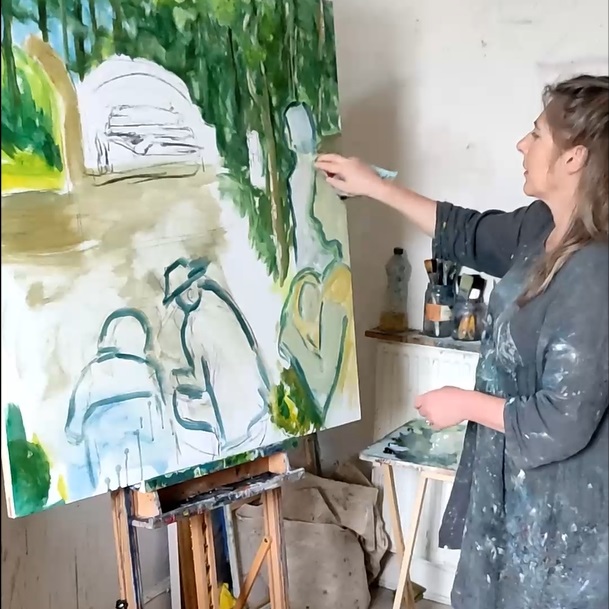
Although the character on the left is based on me I wanted to make it more anonymous. The exagerrated outline brings something stronger to the painting and rubbed out areas bring more mystery I hope.

I think the broken archway also becomes more mysterious, with the faint blue sky enhancing the idea of a passageway.

The video I mentioned in my last blog will explore the background of this series, but more than that I think it will reveal what’s interesting about the creative process in general. A painting doesn’t just involve the artist in their studio, but rather many experiences, involving many people. It’s not simply created to make money, or it shouldn’t be at least!

I think it was just a matter of time before I brought people into my landscapes. I’ve always loved figuratve drawing, especially line and expression of line and movement.

Before I studied for a degree in art (back in 1994) I completed the usual art and design course for those interested in becoming artists – a foundation national certificate in art and design at Edinburgh’s Telford College. Luckily while there I was taught life drawing (drawing of the human figure) by one of Edinburgh’s well known artists and teachers, Bill Gillon.

I’ve got to say he was a much better art teacher than those I encountered while studing my degree in art in later years! Every Monday we all spent seven hours intensively painting a nude model. I came to love the human body in all its manifestations ; young and old, large and small, willowy or weighty – all were fascinating to draw.

Mostly it was a process of frustration – my figures looked insubstantial, weightless, out of proportion – but over time – with Bill Gillon’s tuition and encouragement and in fits and starts, I began to make some headway.

I remember when I got a crit’ at the end of the year (always a very difficult thing for a budding artist!) and I glowed with happiness when he described a couple of my life paintings as ‘real crackers!’. He wasn’t so positive about some of my other work – namely a painting of a tedious vase of flowers – ‘Why? What’s it saying?’ he demanded, quite rightly!

Back in 2016 when I was creating my portrait of Richard Demarco, Richard asked me who’d taught me drawing, I replied ‘Bill Gillon’, since I really didn’t get a tuition in drawing and painting at art college. It turned out that Bill had been one of Richard’s pupils when Richard was an art teacher!

I was sad to hear that Bill had taken ill and passed away in 2014, but it was good to see there’s now a Facebook page set up in his honour where artists can upload work inspired by Bill, or talk about their memories. I might add a link to this post.
Forest of Luffness, painting progress 1

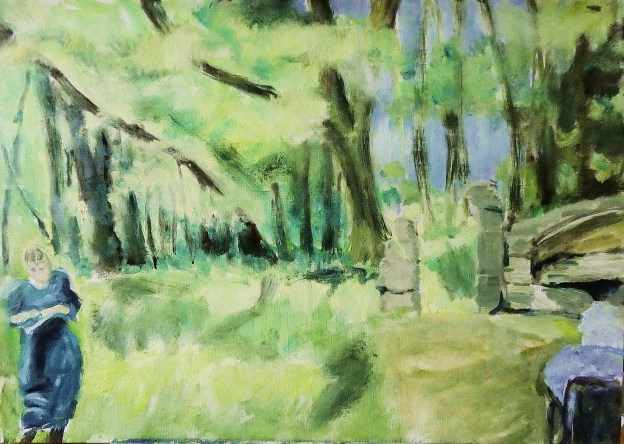
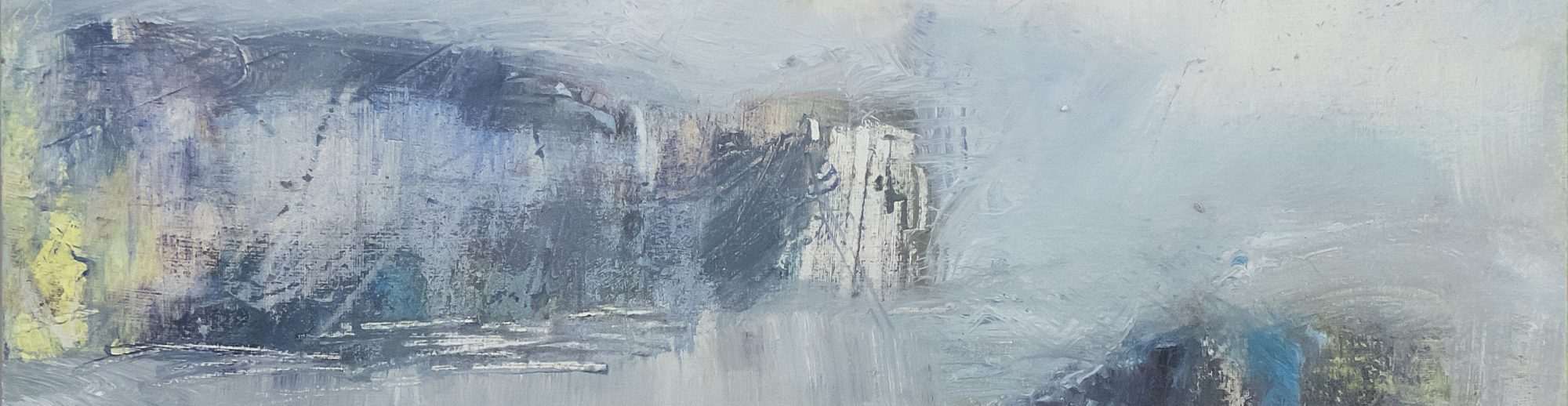
Above – another painting in progress – from my new series inspired by the history of a Carmelite friary in Aberlady.

It needs a bit more work to express the same mysterious narrative I amied for in the last painting (below). The painting above feels too distanced somehow – a bit too pictorial if that makes sense!

P1080584

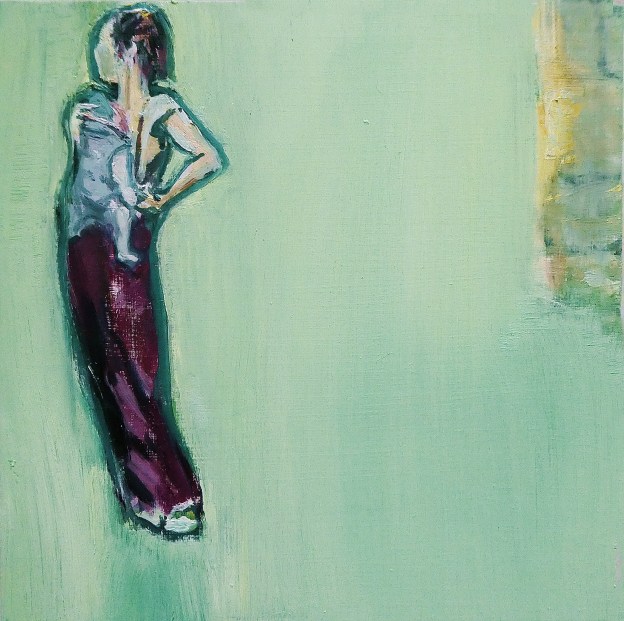
‘Forest of Luffness 2’. Oil on 40×40″ wood panel. Rose Strang 2024

I’m calling this particular series ‘Forest of Luffness’ not just because I like all those ‘F’ sounds! But also because this particular series is all about the magic of that forest in May and June, whereas the paintings from earlier this year, in winter, were far darker in tone and subject matter, which I find is always the case with my paintings seasonally.

Hopefully I’ll find time to paint and post on this blog tomorrow, if not it’ll likely be Wednesday. I’m also going to post some updates on an upcoming documentary aout this series, which is being created by videographer/filmmaker Manuel Pennuto, it’s pretty exciting – more on that next week!

Painting process – finished painting

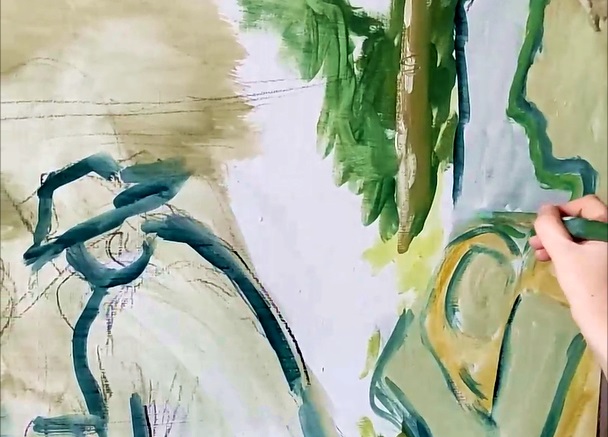
Here’s the seventh video showing the process of a painting (which I’m calling ‘The Path’ for now) from my new series inspired by the remains of a Carmelite friary in the mysterious forest of Luffness.

I’m talking here about what my intentions were in making the painting – facing our mortality, protecting life and experiencing the wonder of life. I might just call this painting ‘The first of June in the forest of Luffness’ but I’ll have a think!

These videos are also posted on my instagram which is findable under ‘Rose Strang art’

Painting process 6 – nearly finished!

Here’s the sixth video showing the process of a painting (which I’m calling ‘The Path’ for now) from my new series inspired by the remains of a Carmelite friary in the mysterious forest of Luffness.

I’m talking about a couple of dilemmas here that came up – mostly how to make decisions that keep the panting loose without overworking it.

These videos are also posted on my instagram which is findable under ‘Rose Strang art’

Painting process 5 – ‘The Path’

Here’s the fifth video showing the process of a painting (which I’m calling ‘The Path’ for now) from my new series inspired by the remains of a Carmelite friary in the mysterious forest of Luffness.

I’ve added a Bach variation piano piece to enhance your viewing pleasure. Tomorrow I’ll post the next stage.

These videos are also posted on my instagram which is findable under ‘Rose Strang art’

Painting process 4

Here’s the latest video showing the process of a painting from my new series inspired by the remains of a Carmelite friary in the mysterious forest of Luffness.

In this video I talk about the ideas and themes behind the painting, then tomorrow I’ll post the final stages of the painting (speeded up for the impatient among you!)

These videos are also posted on my instagram which is findable under ‘Rose Strang art’

Painting process 3

Below, the third video in a series showing the making of a new painting. This is part of my new series inspired by the remains of a Carmelite friary in the mysterious forest of Luffness.

I speeded the video up towards the end as you can see! I’ll post another one tomorrow, it’s ready to go but better to post one at a time …

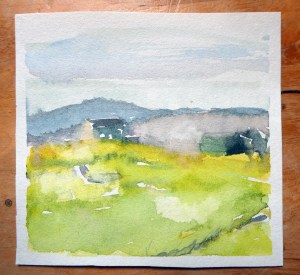
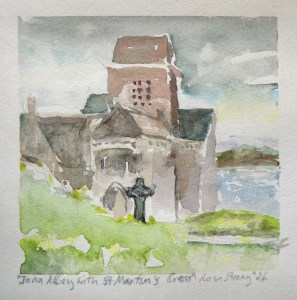
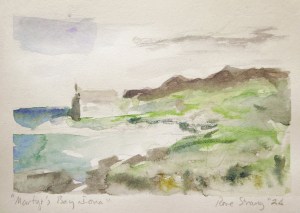
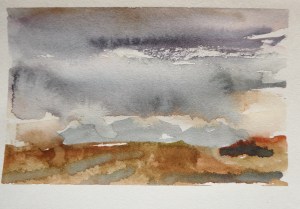
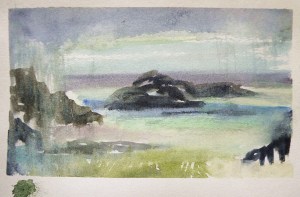
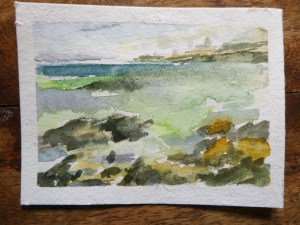
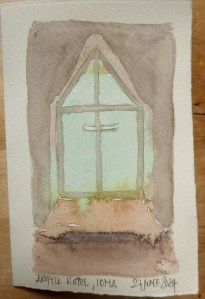
Progress is slow as I was on holiday the past week on the wonderful Isle of Iona, celebrating our first wedding anniversary! They say the first one should be celebrated with paper, so, appropriately enough here are some of my watercolours on paper!….

This is my favourite though, a little gift by Adam, it captures that Iona sea-green so beautifully. It seems simple at first but I find it icon-like, meditative and transporting …

Painting process 2: Blocking in colour

Below – the second in my new series following the painting process. This painting is from a news series started this year which takes inspiration from the remains of a Carmelite friary in the mysterious forest of Luffness.

(This series is also on Instagram, for which the series was first itended, hence the upright video format! You can find me on instagram by searching for Rose Strang)

‘The Path’

The painting above The Path. Water mixable oil on 14 by 14 inch wood, depicts a meaningful walk (with Richard Demarco and Terry Ann Newman) towards the 12th century Friary ruins at Luffness recently.

More on that in this post – Dappled things

Some painting details …

.

“Dappled things …”

Photograph above – Walking through Luffness woods towards the Carmelite monastery at Aberlady on Saturday with Richard Demarco.

The wonderfully atmospheric stills below are a little taster from an upcoming documentary (by video-maker Manuel Pennuto) about a series and project I’m working on this year.

Taking inspiration from the landscape and history of Aberlady on the east coast of Scotland, the series explores  the 7th century pilgrims’ route from Iona to Lindisfarne, and the remains of a 12th century effigy discovered in the ruins of a Carmelite friary.

I was very moved and honoured to have Prof’ Richard Demarco (Director of the Demarco Gallery) and Terry Ann Newman (Deputy Director) join me on a recent visit to the Carmelite friary in Aberlady.

Sometimes described as an arts impressario and ‘champion of the avant garde’, Richard Demarco prefers to be thought of as an artist and teacher. He’s known in the art world of Scotland (and wider Europe) for his creative response to post-war Europe, and for his belief that creative dialogue between war-torn countries can heal the collective traumatised psyche. His approach remains as relevant today as ever, and I cannot imagine anyone better suited to accompany us on our visit to the friary this weekend.

Richard is now 93, so it was  no easy task for him to navigate the 300 yards or more of rough forest floor of the friary grounds. Yet, it is difficult to describe the joy of our day as we walked the path together in the company of family, friends and fellow creative people (very much in the spirit of the road to Meikle Seggie)

Read on if you’d like to know more about our adventure, Richard Demarco and the Road to Meikle Seggie...

Twenty three years ago, when I worked as assistant archivist/curator for the Demarco European Art Foundation, I asked Richard Demarco how someone might define the Road to Meikle Seggie. ‘You can’t define it!’, he exclaimed.

This is true, but in the first instance at least The Road to Meikle Seggie describes a road sign that Richard and friends discovered as part of his Edinburgh Arts Journeys many years ago. Pointing up a track, the sign read: Meikle Seggie and after following this sign for some time it gradually became apparent that Meikle Seggie (probably the name of a farm) probably didn’t exist!

On this journey though, Richard and his friends (a gathering of artists and creative thinkers) experienced a heightened awareness of everything that they encountered. In the act of observing, we can be aware and as sensitive to our surroundings as a new-born child, or we can be closed to the wonder and meaning of all we encounter. The former is a challenge, the latter perhaps the result in part of mind-numbing bureacracy, the echo chamber of media and news, or any number of difficulties we face in life.

When Richard Demarco began Edinburgh Arts journeys in the 1970’s he described it as similar to “opening a door beyond which lay the reality of my dreams of a world beyond the confines of the 20th century”. For Richard, this world promised:

“.. a landscape I would wish to define with pen and ink and watercolour. Each bend and corner would be like another door opening up gradually more and more aspects of the landscape I had known in my childhood when every door and every road was an invitation to a mysterious space, forever desireable and forever new. It was the sacred threshold through which I had to pass which would reveal the space in which I would seek freedom from all linear concepts of time”. (1).

So it was fitting that on our trip to the Carmeite friary and effigy this weekend, we were accompanied by my niece Emma Mases Strang, her partner Manuel Pennuto and their adorable seven-week old baby (to whom I’m a great aunt!); Atlas. As Richard remarked – “that little boy has within him now all you need to understand the wonder of life”.

Also joining us were Robert and Pamela de Mey, respectively a psychiatrist/arts curator and a doctor. Both friends of the Demarco Trust and art collectors with a deep interest in all that inspires creativity (Robert de Mey’s recent book about Scottish artist Rae –  Ronald Rae: An Inner Life – can be found Here)

Robert’s follow up email summed up our experience perfectly. I hope he doesn’t mind me sharing it here:

What a wonderful and spiritual journey we had yesterday, and thanks are due to everyone for making it happen. The ensnarement of our endlessly complicated system for living (symbolised by the blocked A1); replaced by peace, a shared discourse, generous love, and the pilgrims’ path to the tomb. The effigy of David de Lindsay seemed both peaceful and vulnerable, in its posture and rotated form, and through being slowly absorbed by the physical elements. We look forward to more ‘journeys of enlightenment.

Thanks to all who made it such a special day, especially my husband Adam Brewster. It has added immeasurably to my creative response to Aberlady. Thanks also to Hilary Wilkies for allowing us access through her garden to visit the friary, it’s much appreciated!

  1. The Road to Meikle Seggie. Richard Demarco. (Luath Press 1978. Republished 2015)

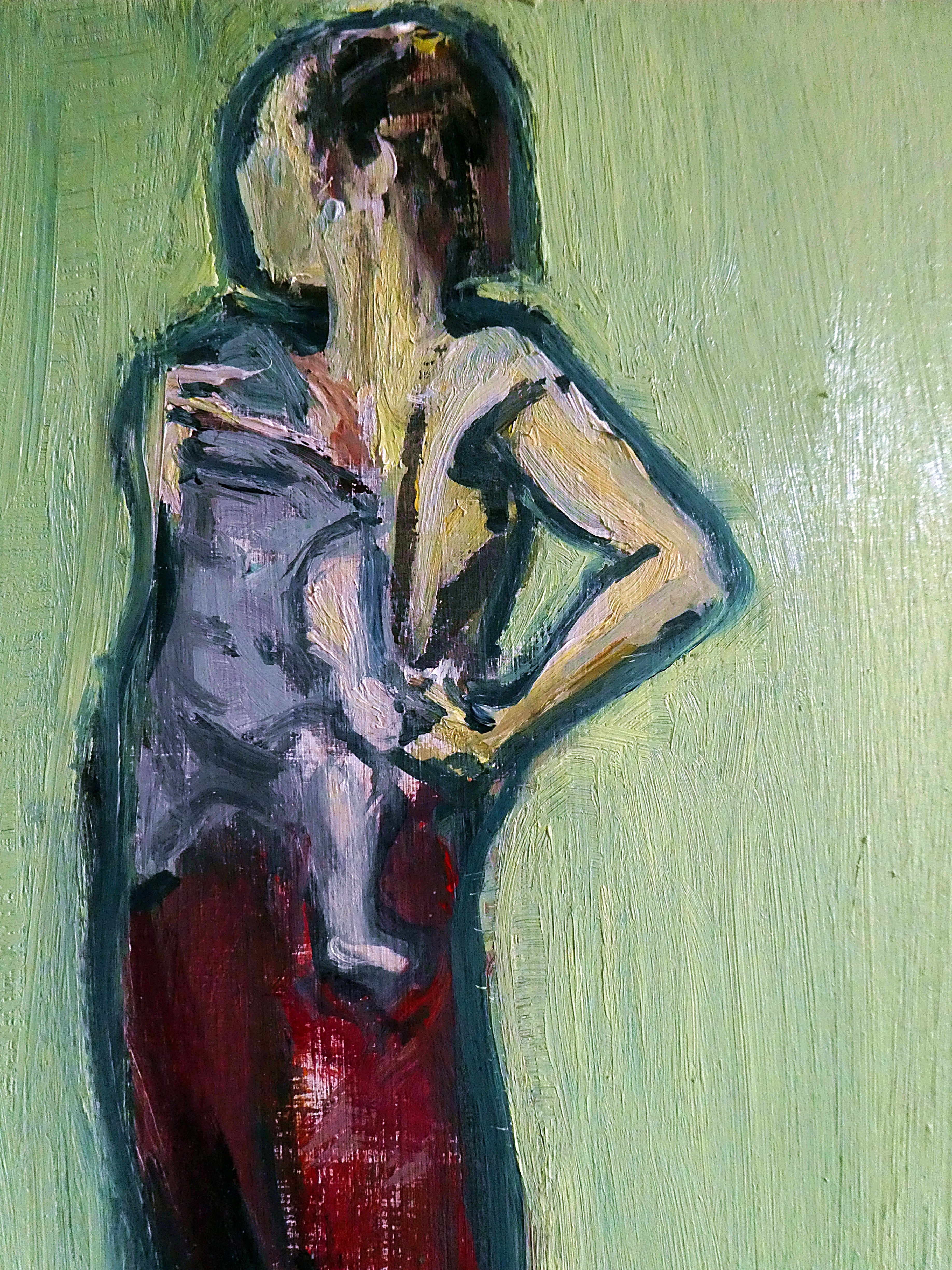
Lastly, a couple of painting sketches of the day inspired by Richard’s exclamation to Terry as we navigated the woods – “Dappled things!” …