Tag Archives: rose strang art

50 Paintings of Eigg Series No. 20

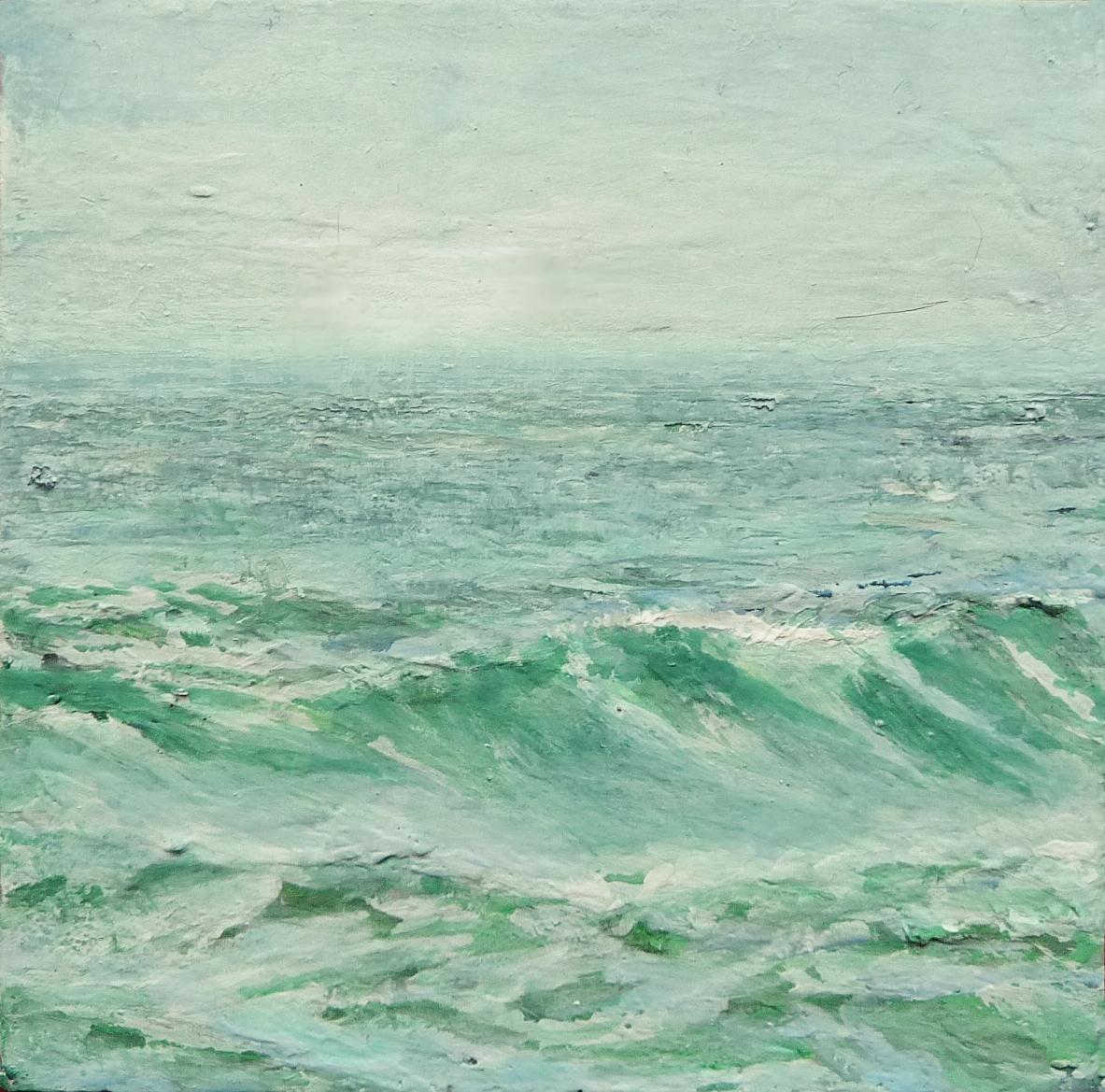
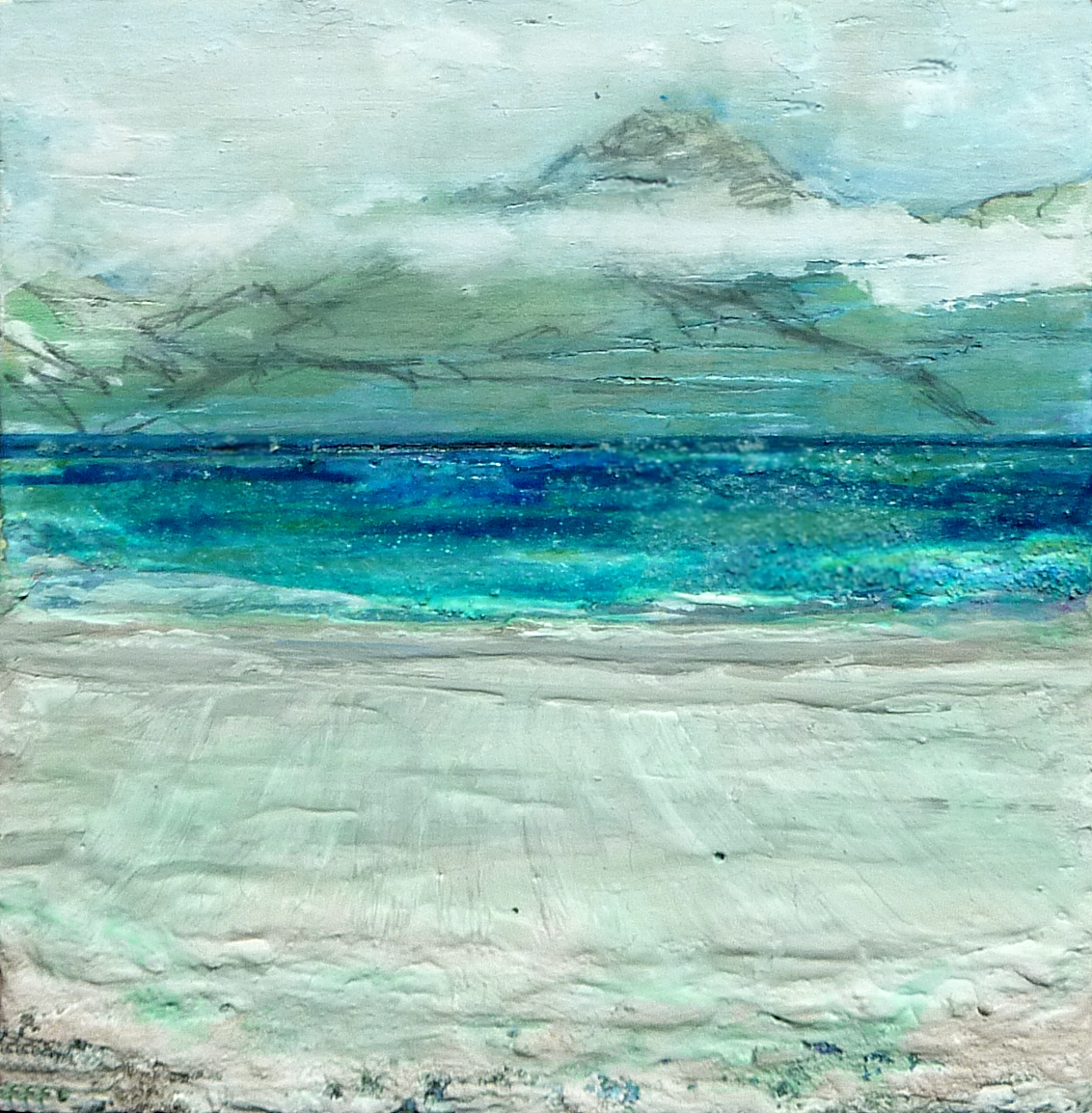
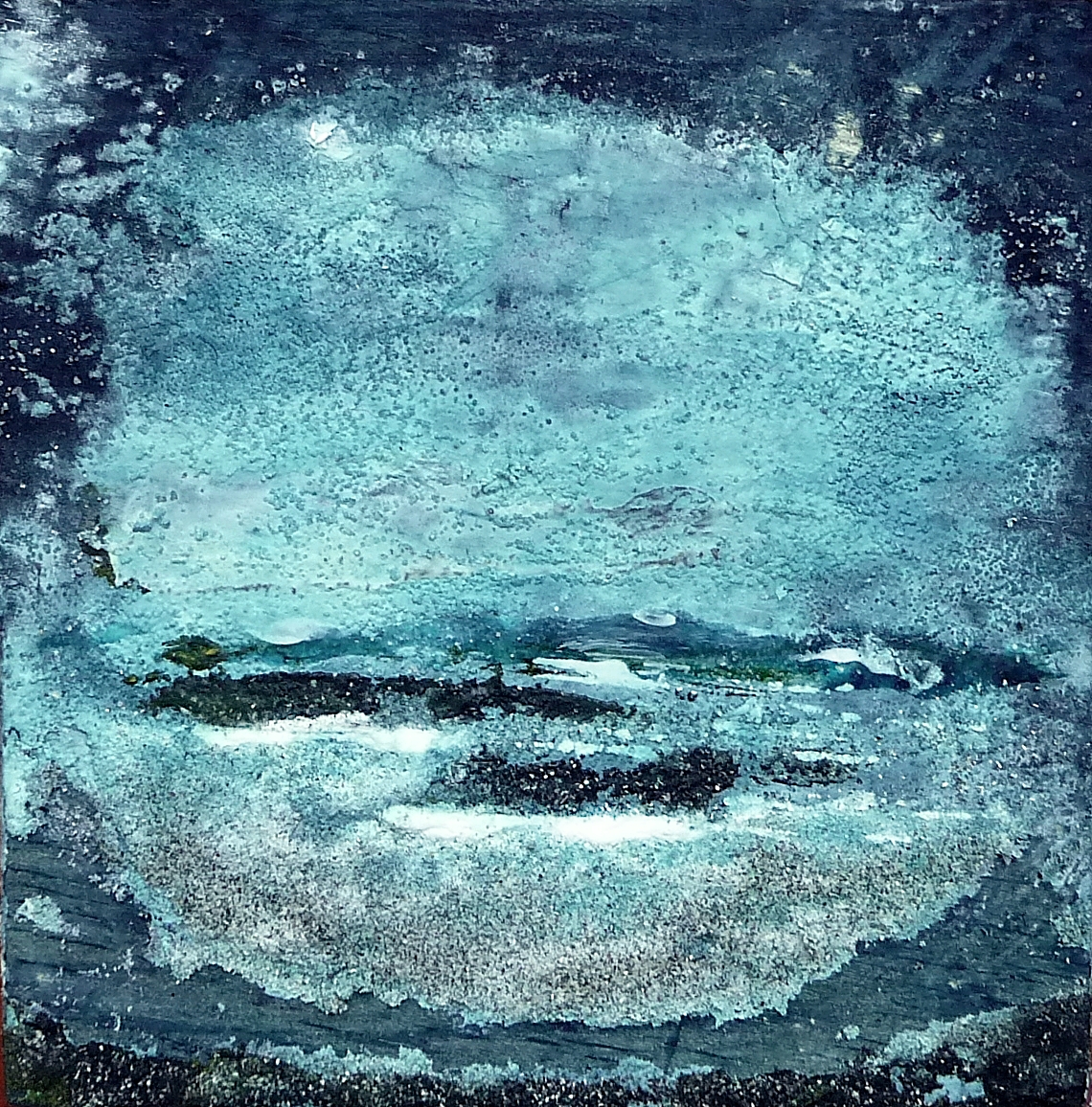
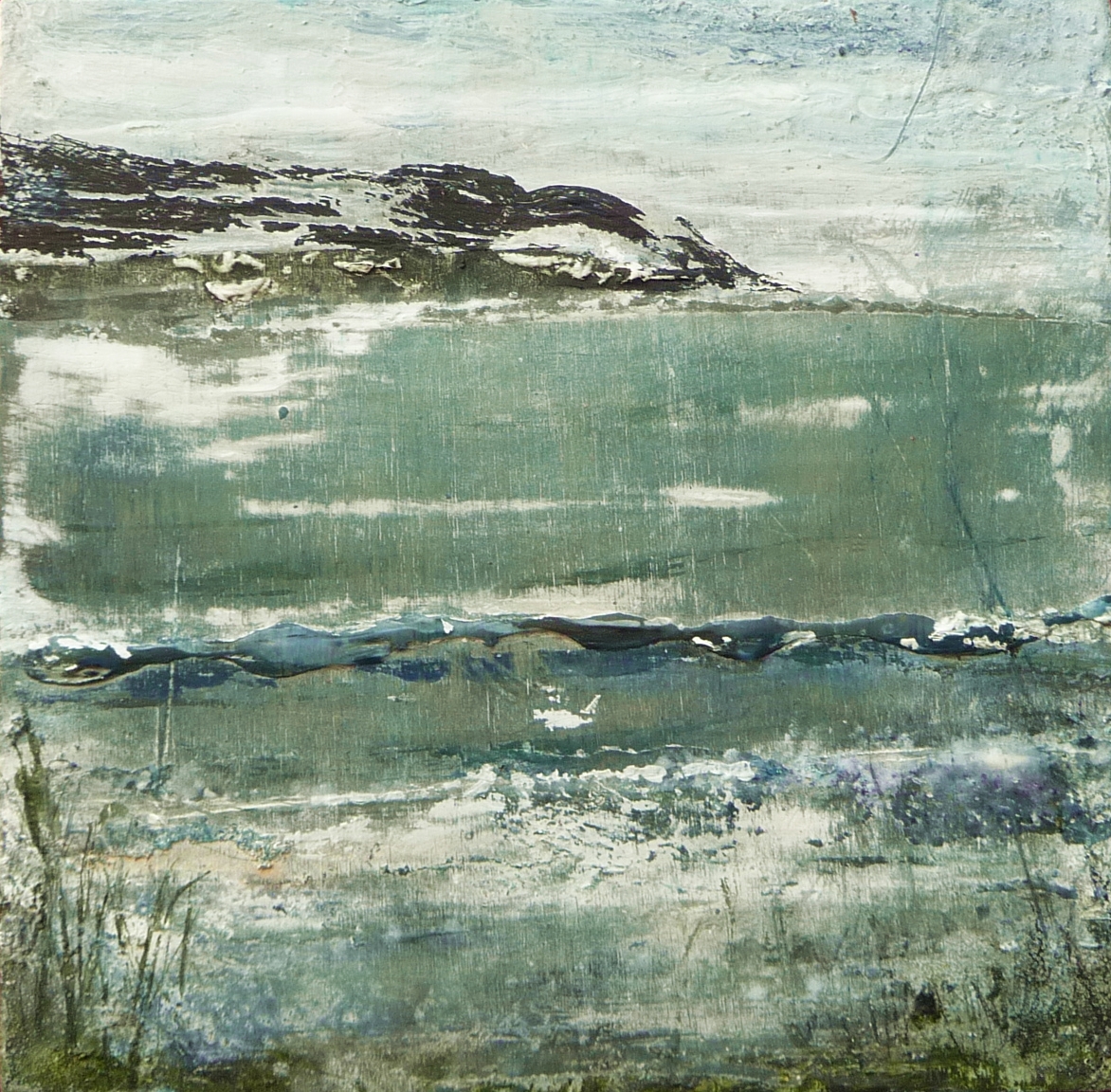
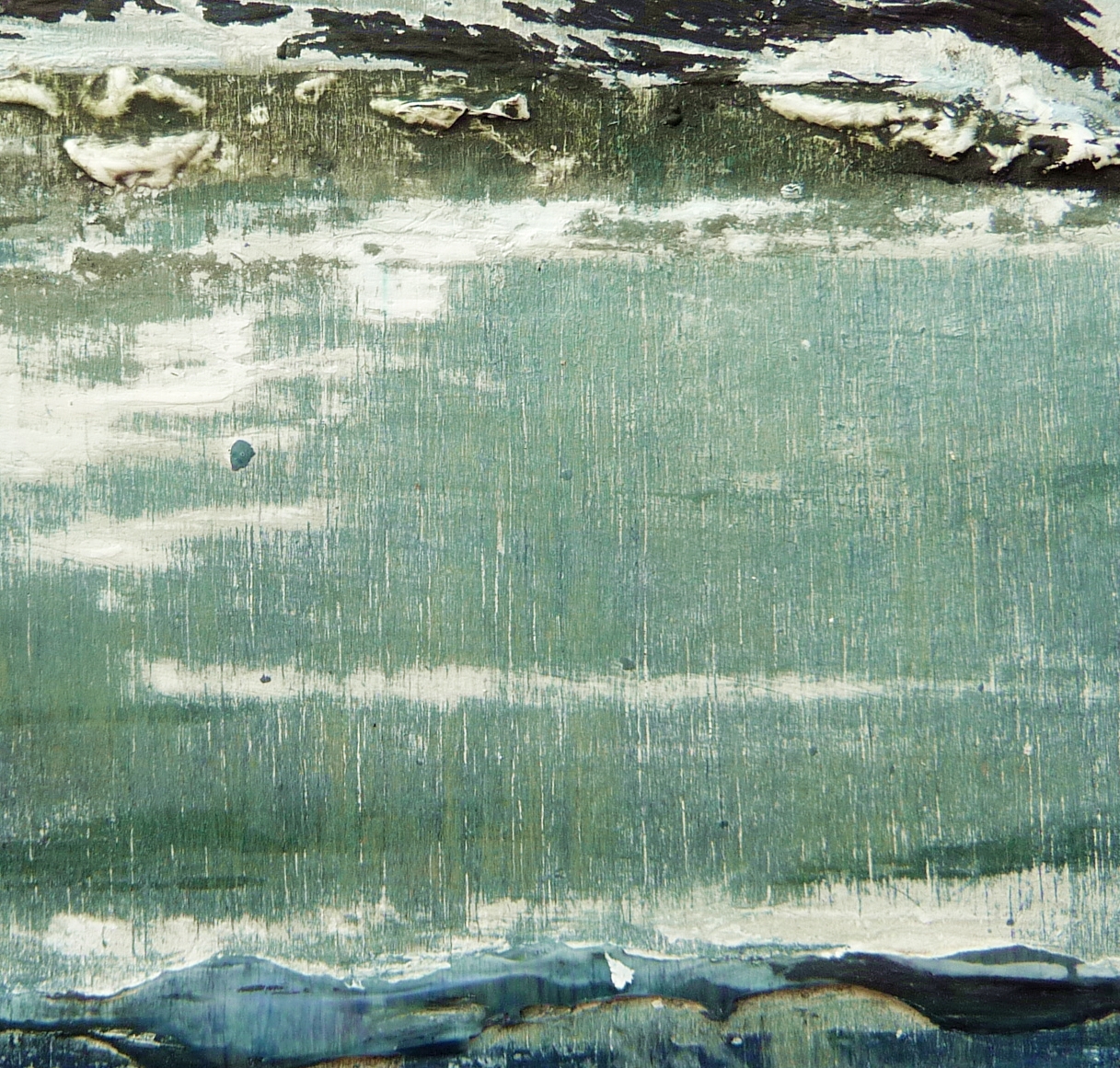
Eigg Series No. 20. Acrylic on 5x5" wood

Eigg Series No. 20. Acrylic on 5×5″ wood

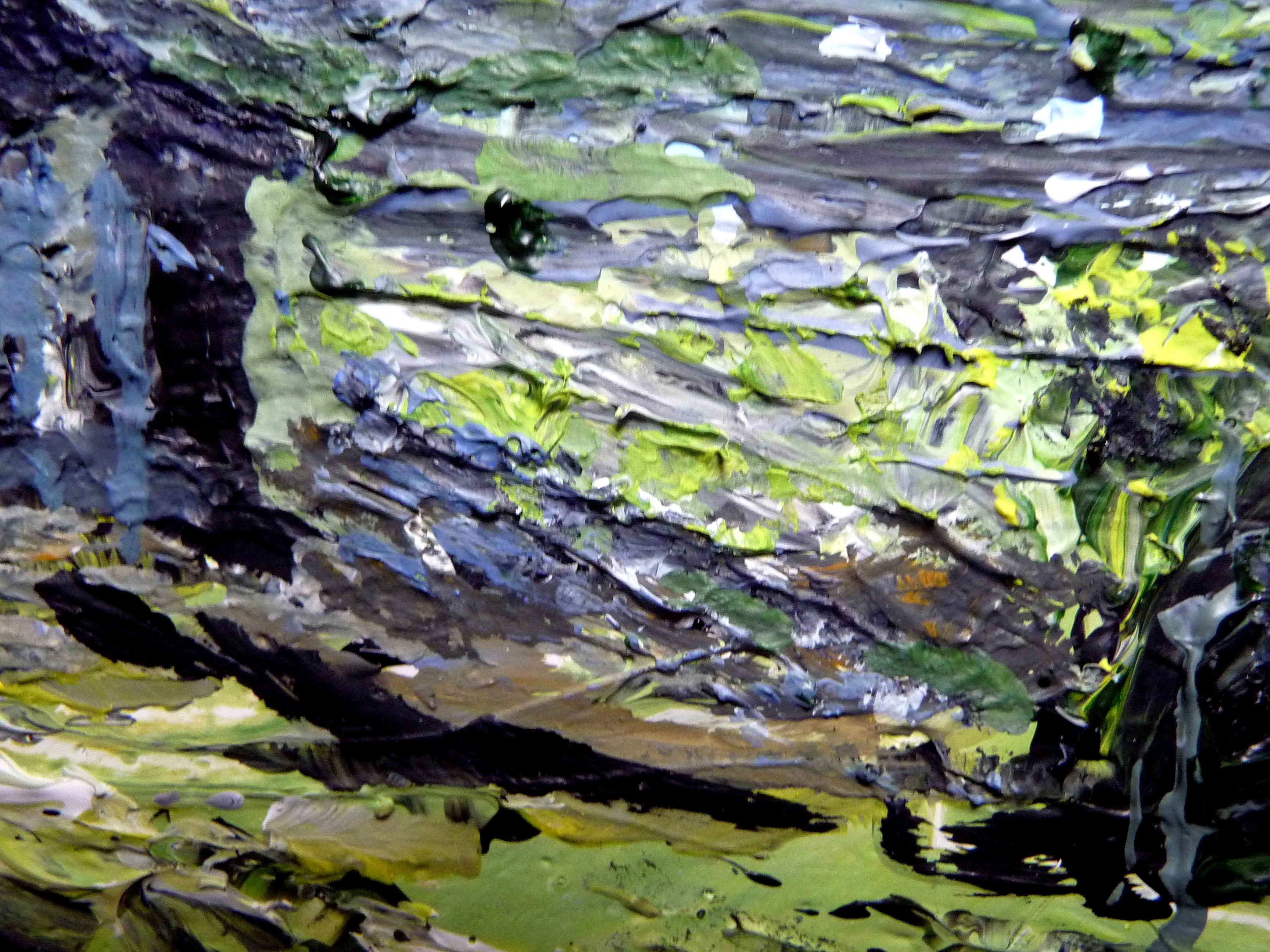
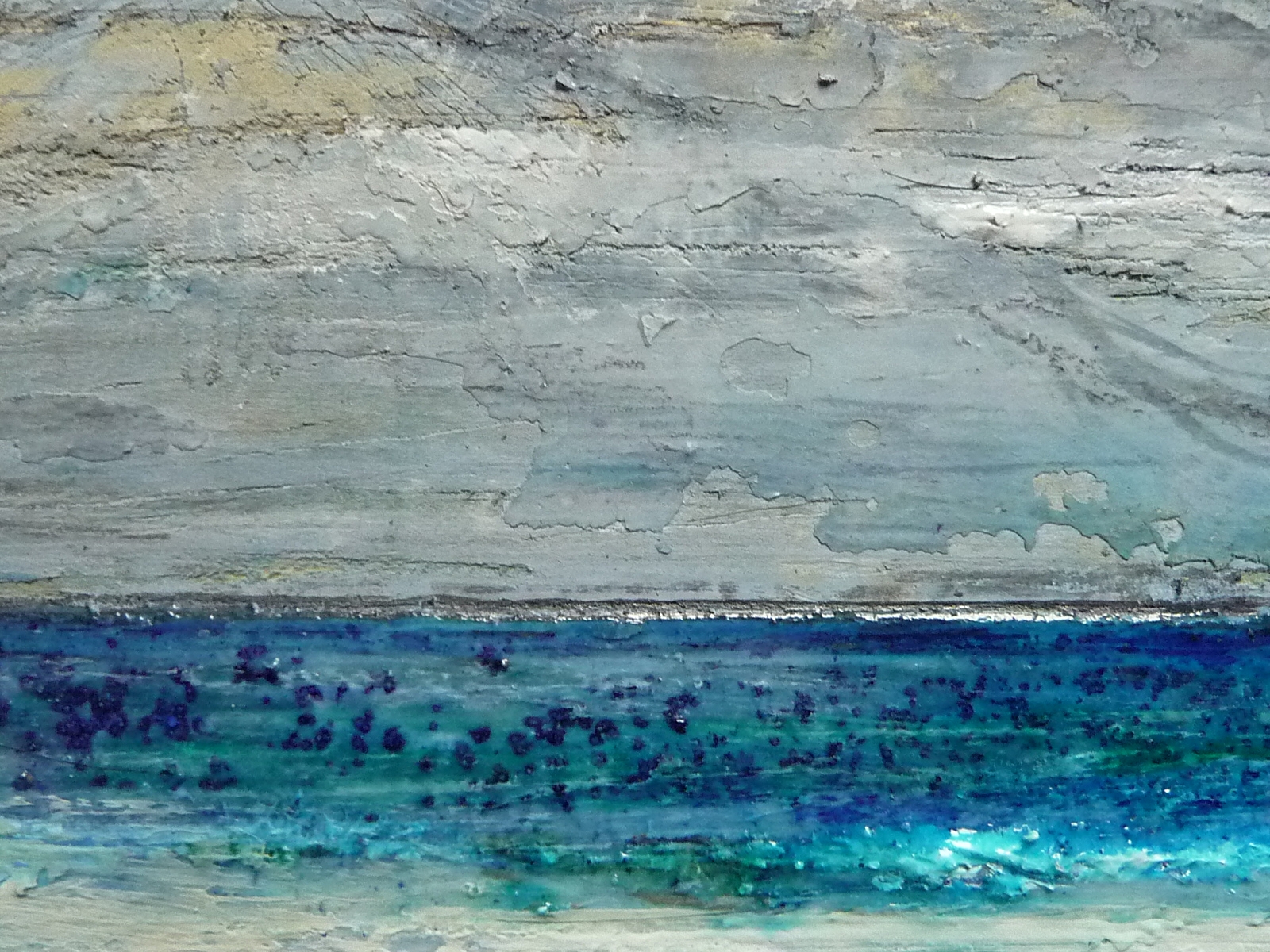
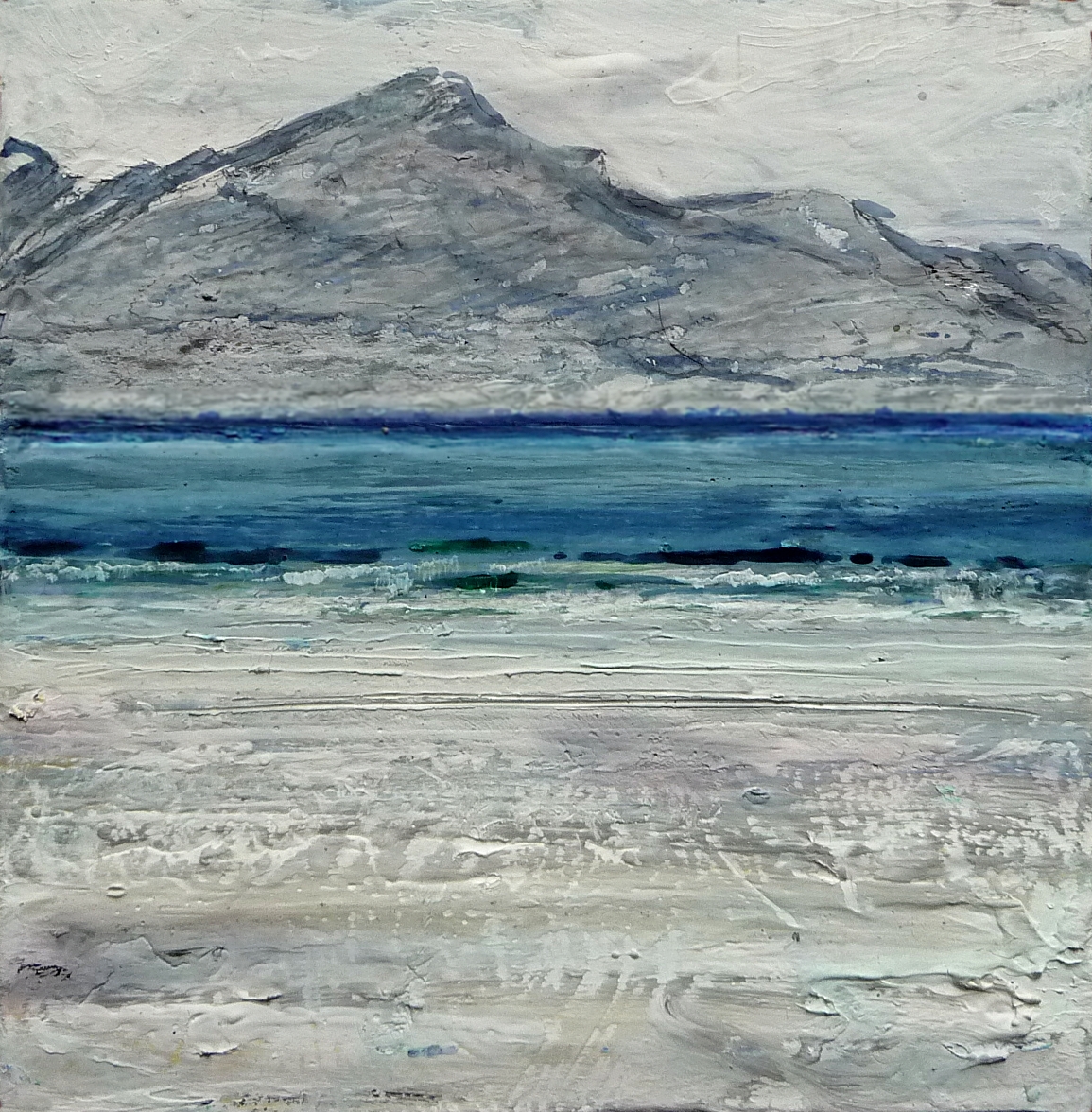
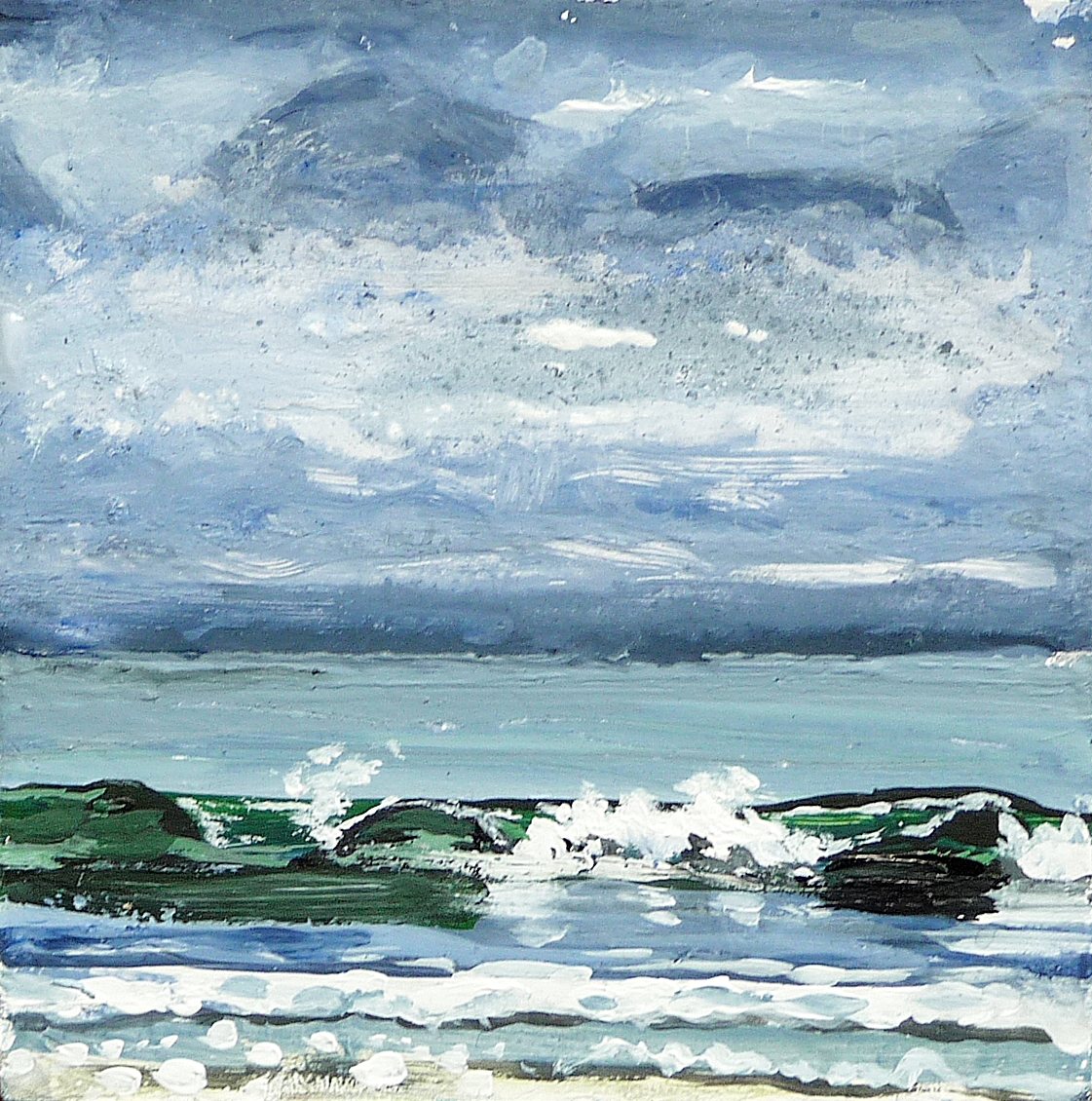
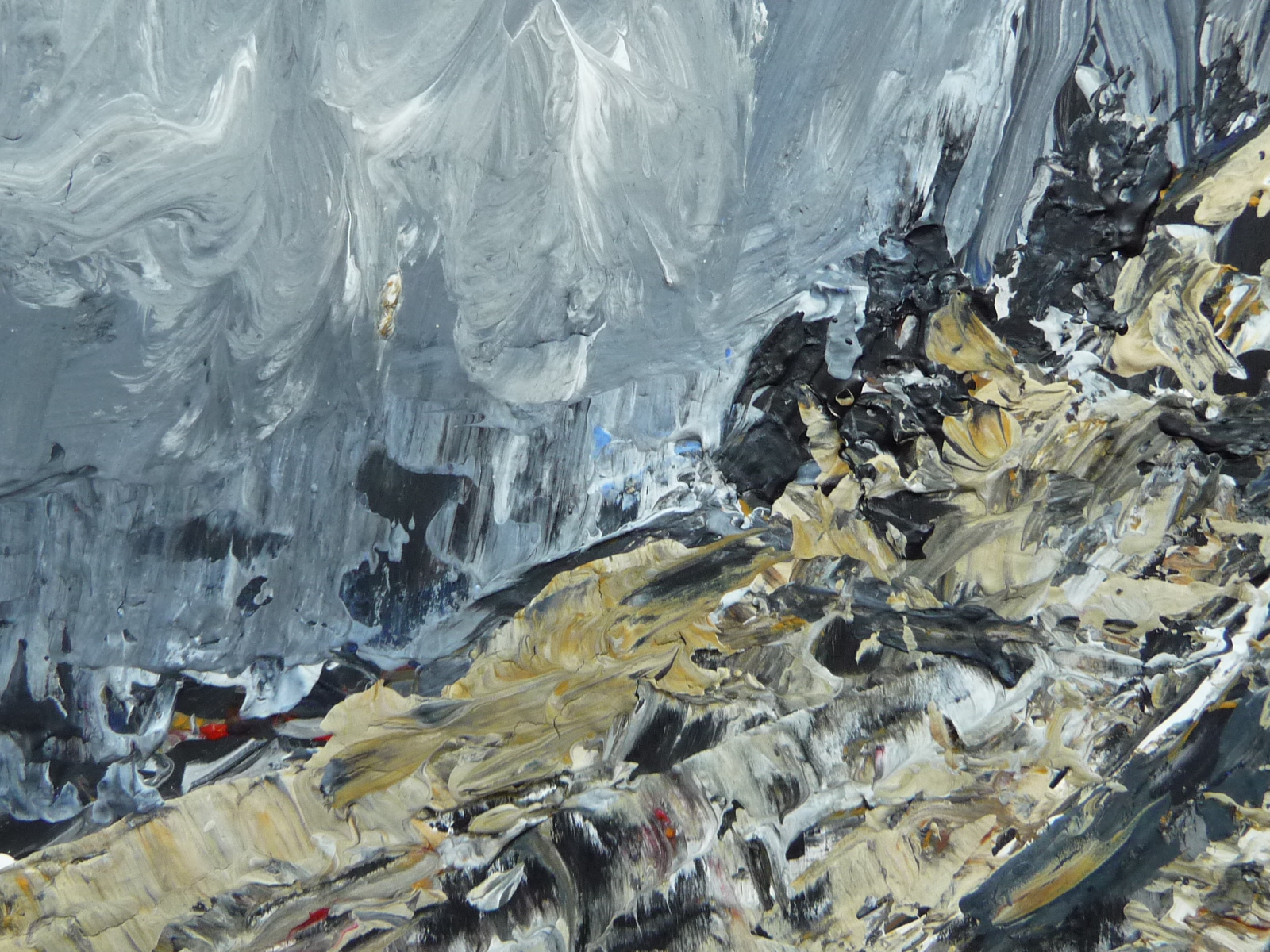
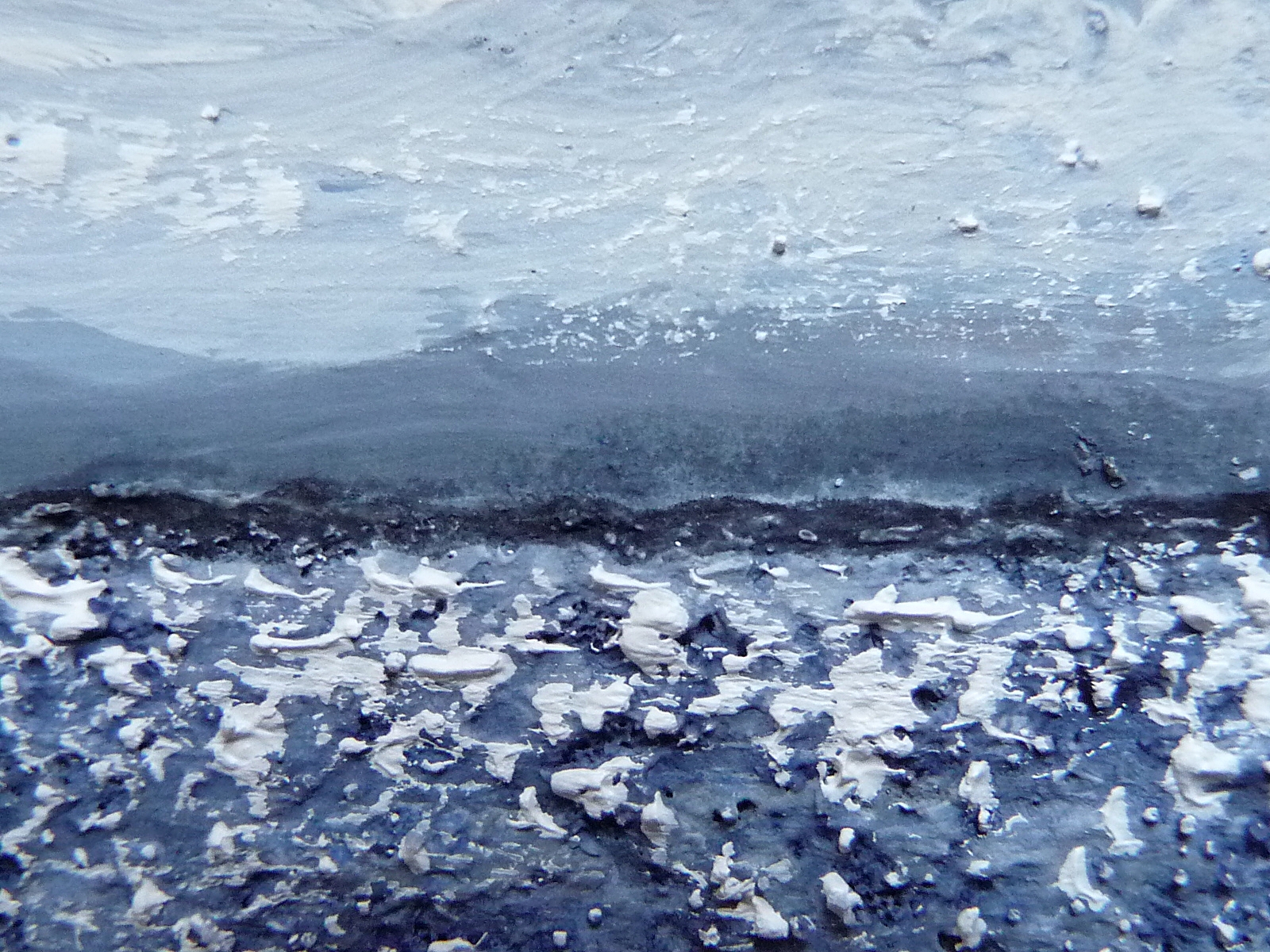
detailA peaceful wave in the rain on Singing Sands Bay. The rain was very light so there was a lovely soft glow over everything. I usually use gesso for a semi opaque rainy haze.

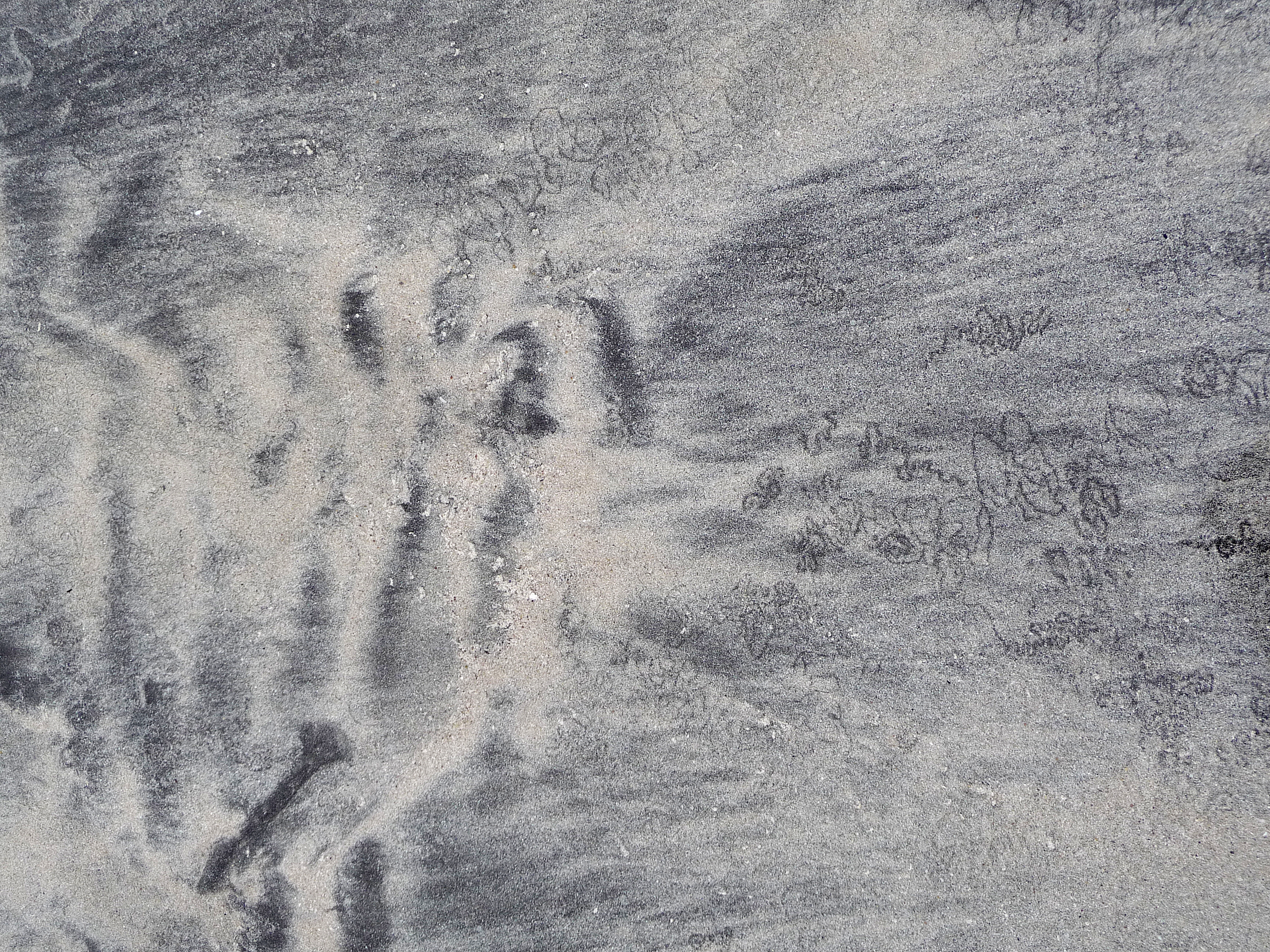
So far I’ve painted scenes of Eigg but as yet no details of the flora and fauna of the island, so at sometime in the next week or so I’ll introduce you to my good friend, and traveling companion to Eigg, Donald Ferguson, who took some beautiful photographs of stones, rocks and sand.

Donald also adopted a rock from the Singing Sands Bay which is now attached to a steel cable and swings gently above a large window in his house. I’m sure he can be persuaded to post a video of it, with the view of Edinburgh’s Arthur’s Seat in the background!

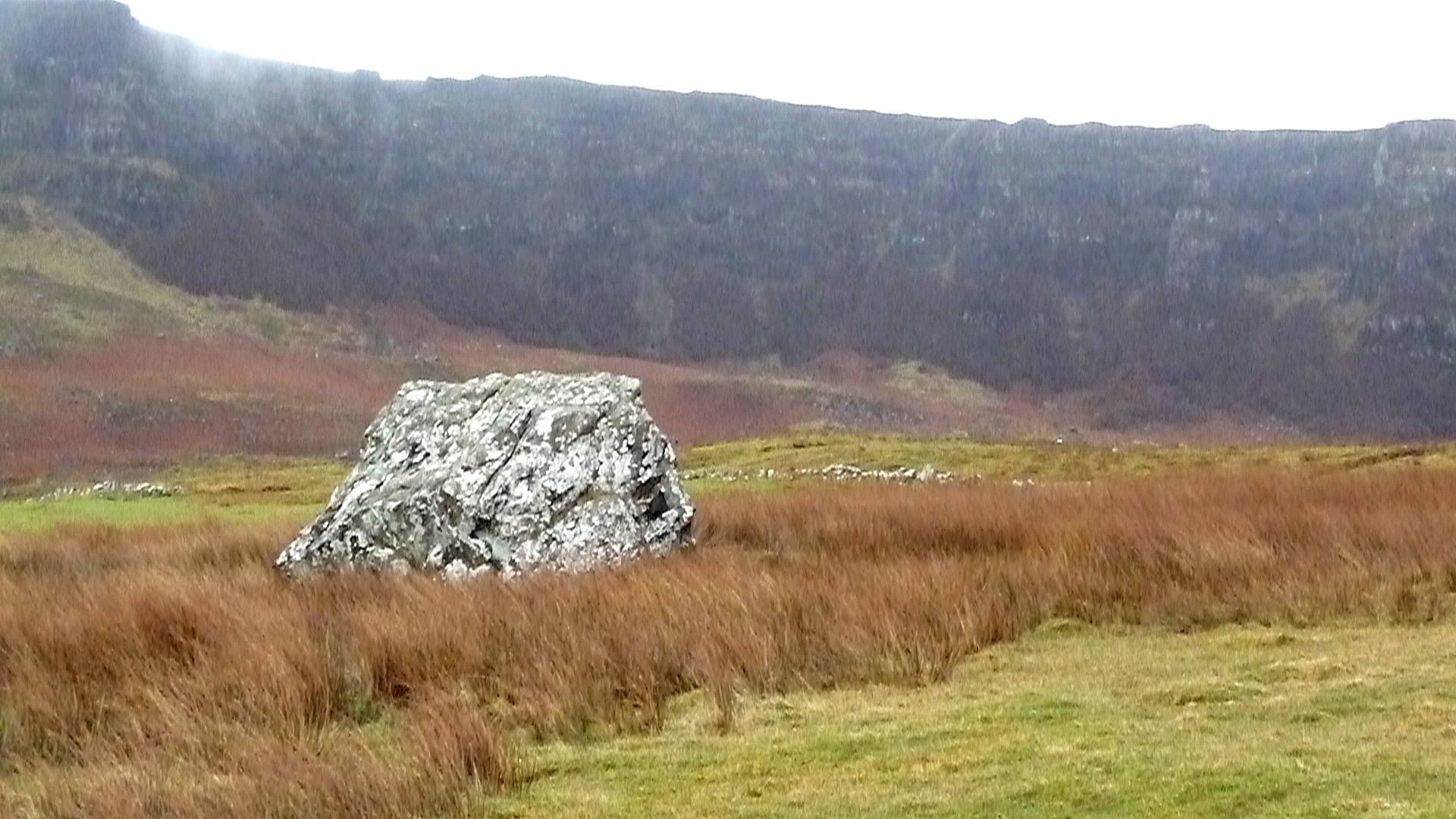
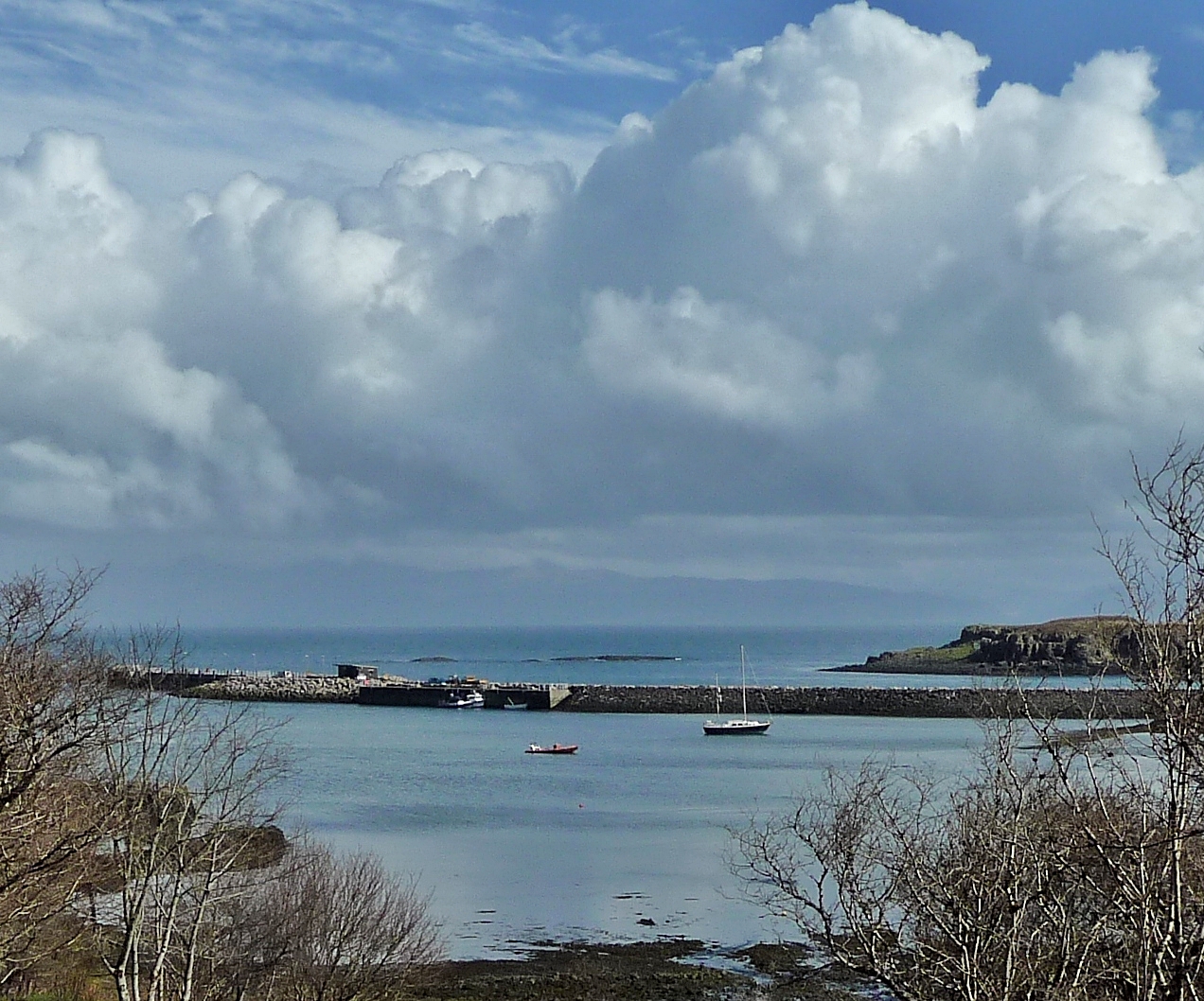
In the meantime here’s an incidental in front of the cliffs of Cleadale, left behind by a glacier millions of years ago..

P1090474


50 Paintings of Eigg Series No. 19

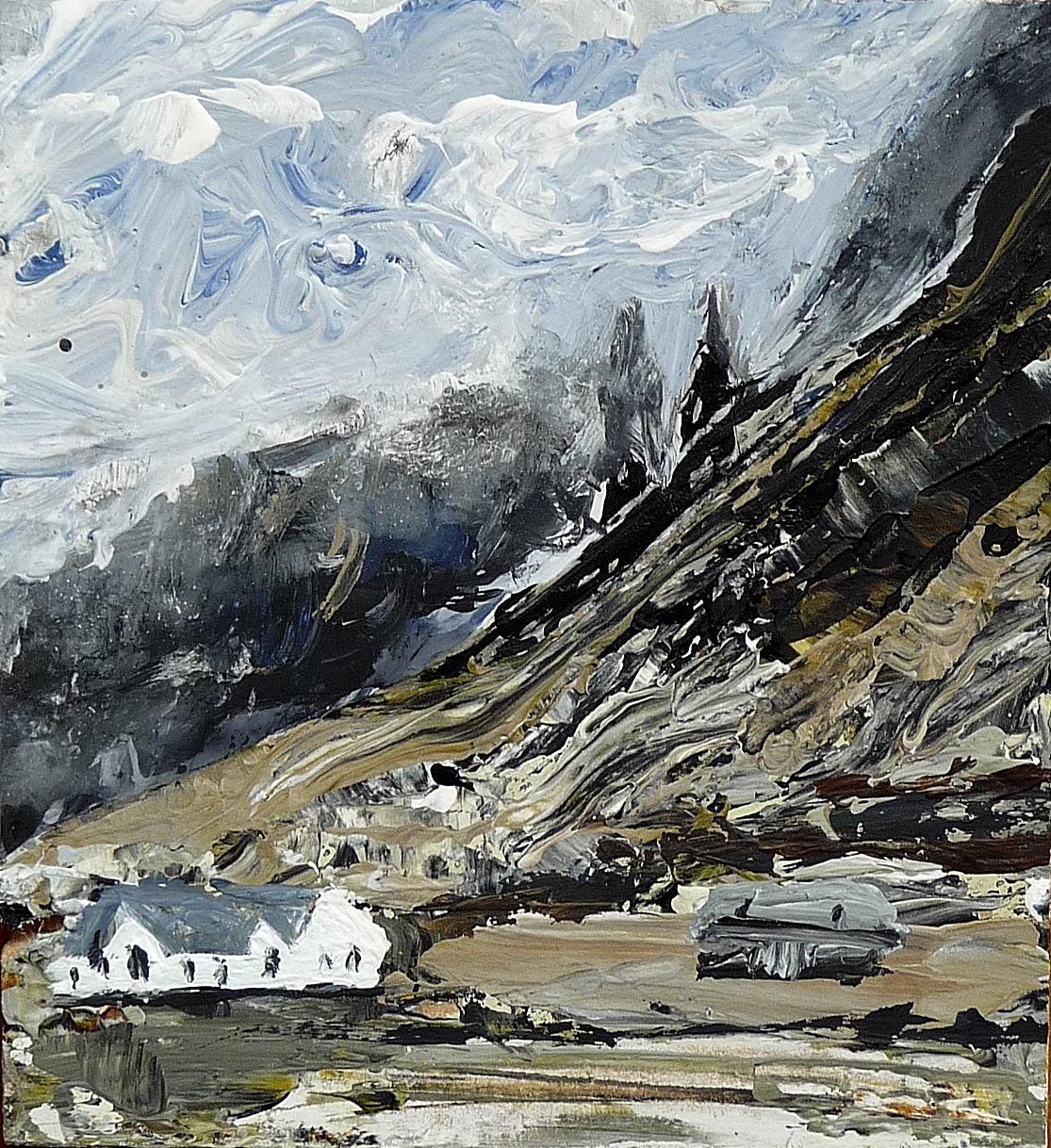
Eigg Series No. 19. Acrylic and ink on 5x5" wood

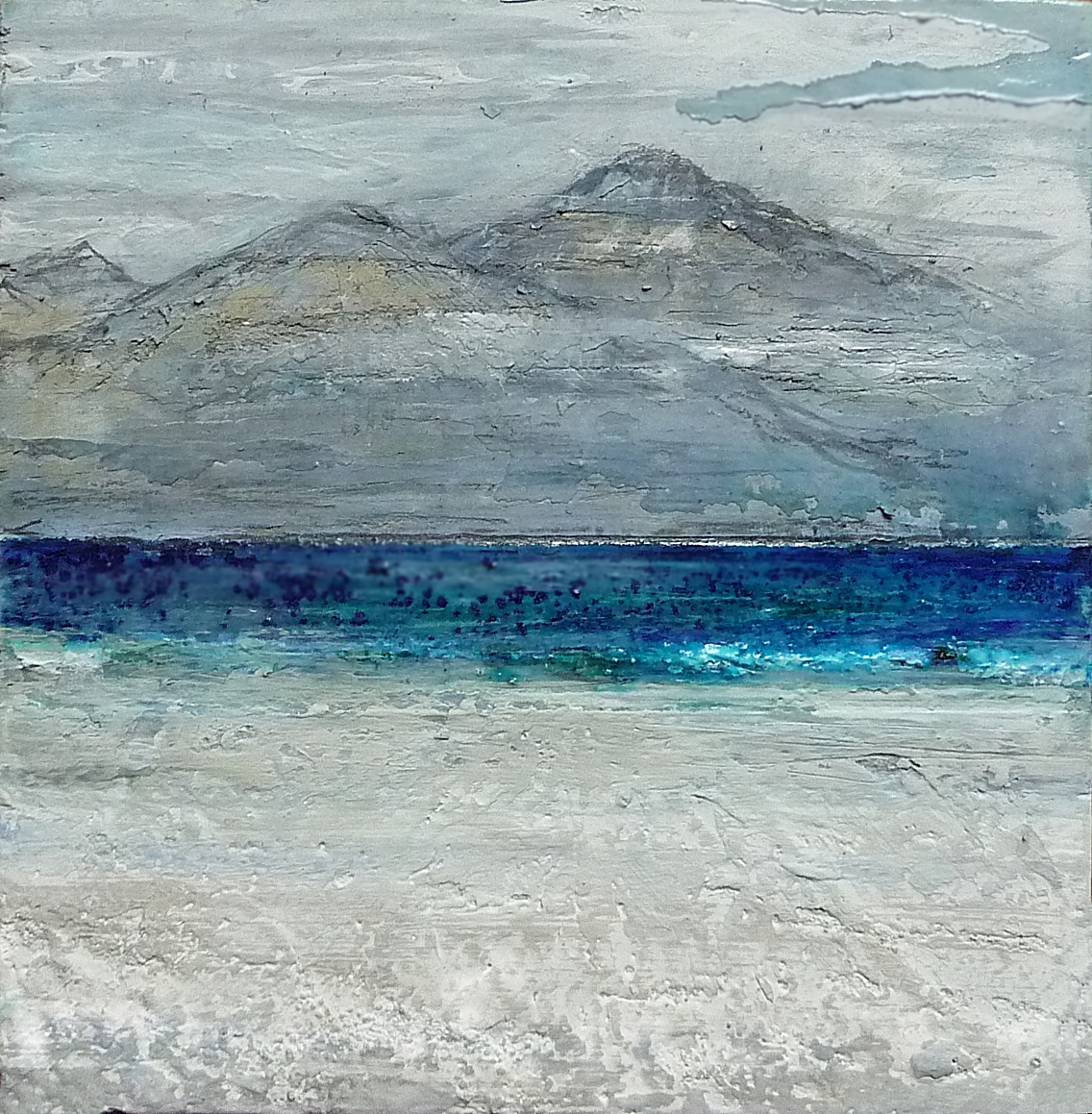
Eigg Series No. 19. Acrylic and ink on 5×5″ wood

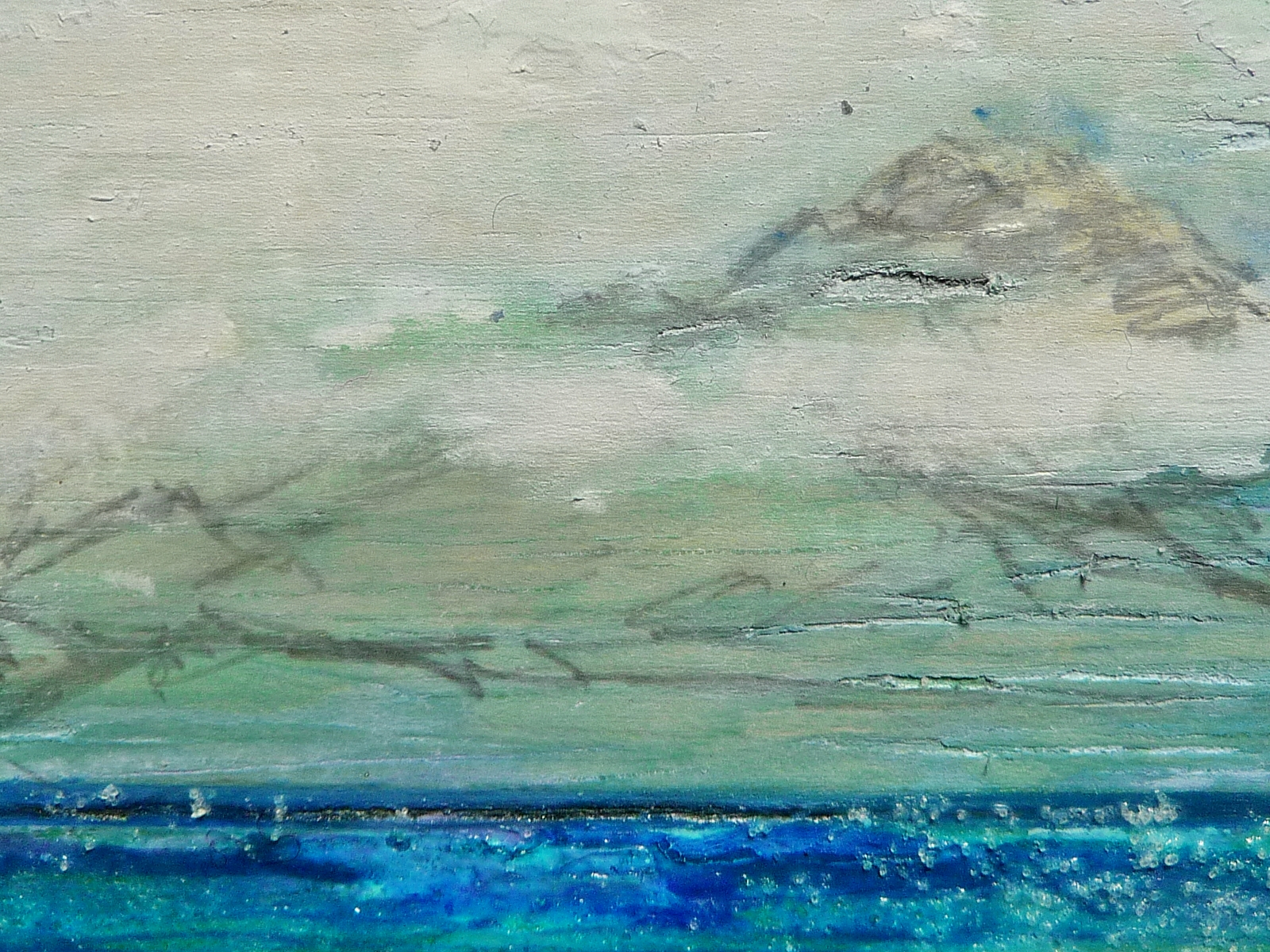
P1100792Today’s painting, another view of the mountains of Rum from Laig Bay.

It’s a busy time at the moment but in a few days I’ll be posting more about Eigg. It’s had a troubled history; Viking invasions and Norse occupation, then the increasing greed of landowners which forced many people to emigrate, followed by Highland Clearances.

Poor Eigg, but It’s a story repeated across Scotland of course, and it’s only in recent decades that the Highlands and West Coast of Scotland have seen an improvement in land management. As mentioned in my post on Day 18, Eigg has developed even further, with the community buy out and the renewable energy system supplying the island 24 hours a day.

One of the best documentary series I’ve watched about Scotland’s landscape and history was by Dr Iain Stewart (described by the Scottish Herald as ‘the James Bond of geology’…). Normally he’s in teaching-schools-mode and can be somewhat wearisomely enthusiastic, but he’s very amusing in this series and it’s quite magical..

(Part 1 of 5 documentaries – all 5 can be found on You Tube)..


50 Paintings of Eigg Series No. 18

Eigg Series No. 18. Acrylic and ink on 5x5" wood

Eigg Series No. 18. Acrylic and ink on 5×5″ wood

P1100768Laig Bay and the mountains of Rum in ink, acrylic and varnish.

Mountains always look so other worldly when viewed from across the sea – like a mystical land. But I have visited Rum, back in the mists of time – as a teenager. Even as a somewhat grumpy 13 year old I appreciated the beauty of the island, but had my first experience of the mid-July Highland midge. Dealing with them requires spray repellants with an intense synthetic lemon/oven-cleaner aroma, or a midge head net/bed-net. Or failing that, calm acceptance that this mass hoard of miniature vampires has its rightful place in the ecosystem.

The key is to avoid inland water areas, especially bogs or marshland, seek breezy coastal areas or higher ground and avoid exposure at dusk when they’re most active!


50 Paintings of Eigg Series No. 17

Eigg Series. No 17. Acrylic on 5x5" wood

Eigg Series. No 17. Acrylic on 5×5″ wood (Not for sale)

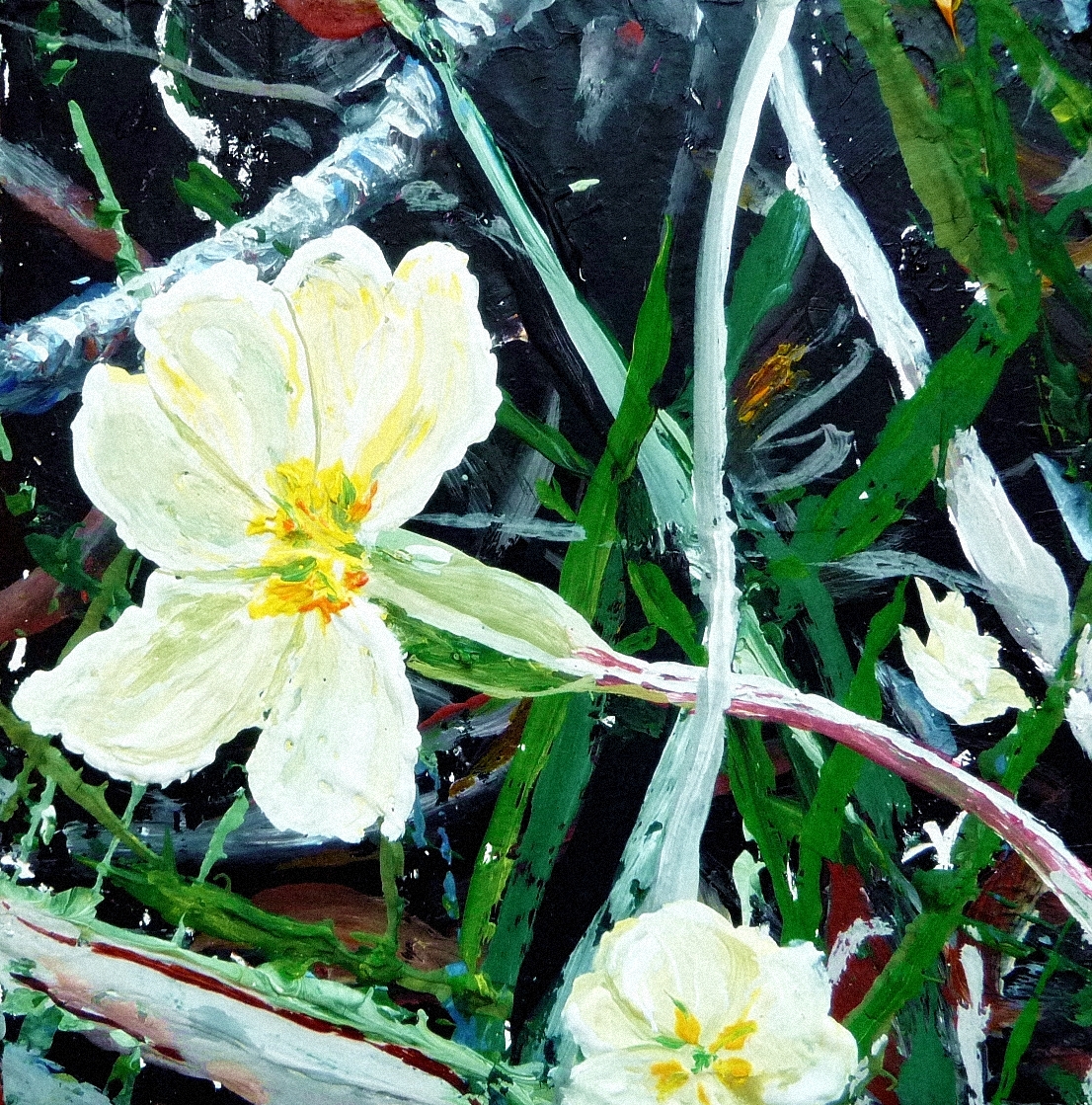
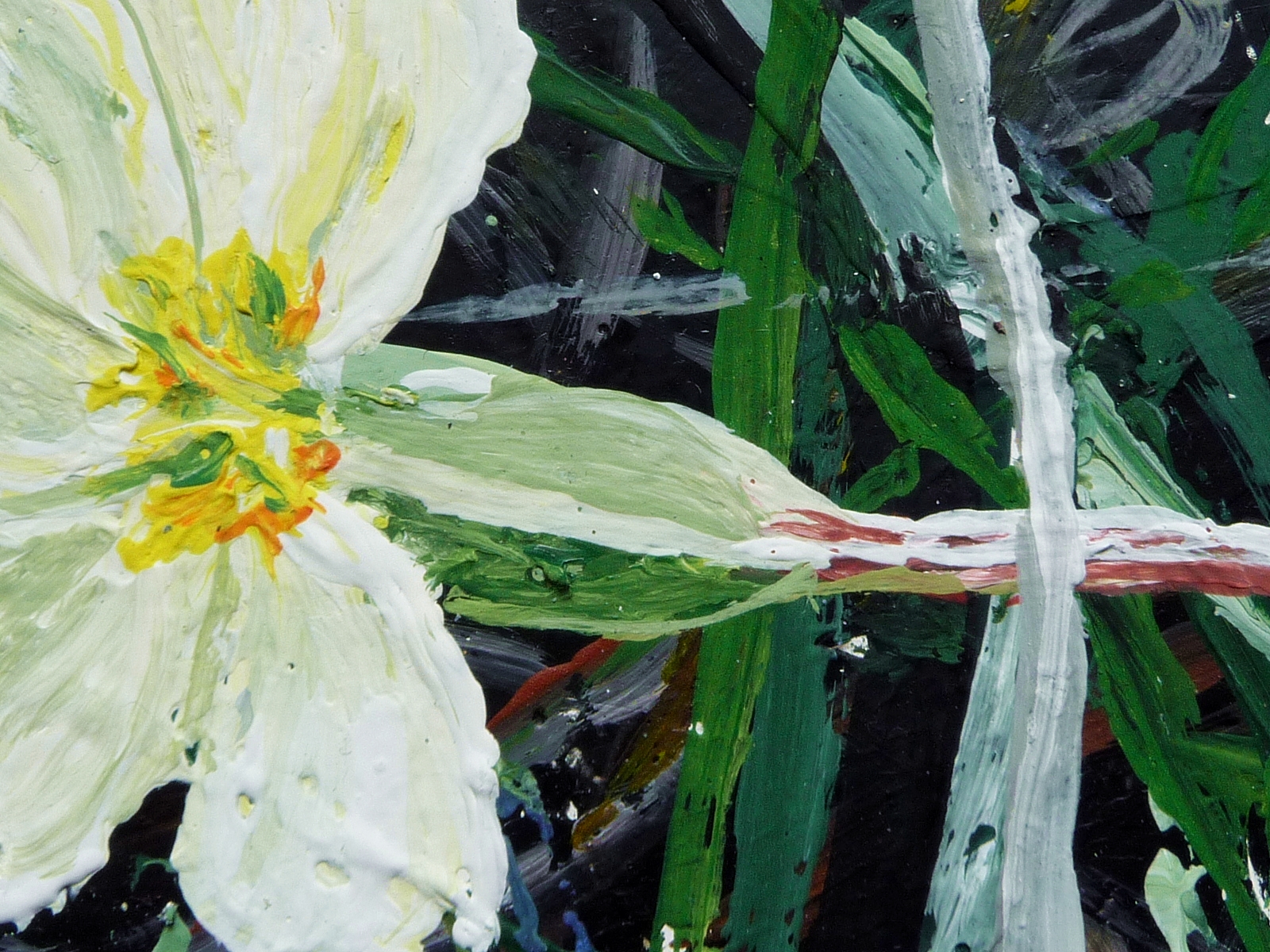
Today’s painting – one of Eigg’s many primroses…P1100748
These cheerful spring wild-flowers are in abundance on the island and seem an appropriate choice for today’s subject; the 1996 community buy out of Eigg, which earned world-wide renown in the late 90s as an example of positive and successful land reform

Every year the Eigg community celebrates the buy-out with an anniversary Ceilidh, it means a lot to islanders, and it’s an inspiring story. So I decided to get in touch with Maggie Fyffe, Administrator of the Eigg Heritage Trust, to find out more …
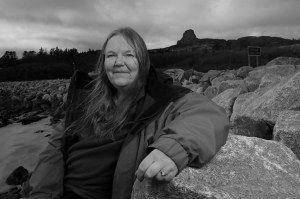
Maggie Fyffe

Photograph © Keith Brame

Rose: Hi Maggie, When I arrived on Eigg this year, it was only when I chatted with Lucy Conway that I realised we were staying in your bothy and you were just across the road! But after a few days on the island you realise what a close-knit, friendly community it is.

I recently read your article which described the difficult conditions Eigg dwellers found themselves in before the community buy out in 1996, and looking at the island now, it’s difficult to believe (considering it was 1996 not the 18th century!) just how difficult life had become for islanders.

So firstly, some would say that living on a remote island could be a challenging lifestyle. How did you first come to the island, and what made you want to move to Eigg?

Maggie: We were living on the east coast but had always wanted to live on the west coast. We were involved with a craft workshop near Portsoy – Keith Schellenberg visited & expressed his interest in setting up something similar on Eigg – he offered us a job & the rest is history! (that was 1976)

Rose: Can you tell me what you do now on Eigg?

Maggie: I’m employed by Isle of Eigg Heritage Trust as administration secretary. This involves doing accounts & paperwork for IEHT and its 3 subsidiary companies, Eigg Trading, Eigg Construction & Eigg Electric. I’m also voluntary treasurer for Eigg Residents Association & Eigg Community Hall.

R: Can you tell me a little more about that time back then, how was it for islanders and what were the issues they faced?

M: Most of the indigenous islanders lived on crofts so had security but anyone working for the estate lived in a tied cottage & felt insecure

R: What was it that made islanders distrust or become frustrated with landowners over the years, can you give a few examples of their approach to caring for the island?

M: It’s hard to explain – but mostly because of the unwillingness to grant leases on houses & businesses. One catalyst was (Landowner) Keith Schellenberg trying to evict the Carr family (who had five children) and the Scottish Wildlife Trust warden, John Chester – the community was in agreement that we couldn’t let that happen.

This was followed by Maruma (the second landowner) purchasing the island; after the initial reaction of “cautiously optimistic” it soon became apparent that he didn’t have the money to make the improvements he’d suggested

R: What would you say was the turning point from hoping landowners might live up to promises, to deciding to go it alone as a community?

M: Although it had been talked about – the turning point came when the original Eigg Trust (a group of 4 people connected to Eigg with an interest in land reform) brought their ideas for a buy out for the community’s consideration. A vote of all residents was held with the result of a big majority in favour of supporting this.

R: What was the response to that decision, from landowners, other trusts and the media in general?

M: We had some negative press but in the main, we received a lot of support from the media

R: I’ve read that the the island was valued at 2 million. How did you build support for your bid to buy the island as a community, and how was money raised?

M: We received somewhere in the region of 10,000 donations from members of the general public (only £17K was received from public bodies) including one donation of £1m!

R: Can you tell me a bit about the bidding process, the outcome and how you and the islanders felt after the result?

M: In November 96, our initial bid of £1.2m (based on an independent valuation & all the money we had raised) was rejected as it didn’t reach the £2m asking price. We carried on fundraising & by the following March, we decided to submit a further bid of £1.5m – this was what Maruma had paid for the island & we were unwilling to exceed this amount on principle.

It was at this point that we discovered that Maruma had defaulted on a loan & his creditors had taken over the sale. After a nerve-racking week, they eventually accepted our offer on 4th April 97 and islanders were jubilant!

R: Would you say there’s a definite difference in Eigg since the buy out?

M: It’s the difference between night & day. To name but a few…all trust properties now have long term tenants (with long term leases) and 3 farms also have appropriate leases. 7 houses have been renovated. We have built An Laimhrig which houses a shop, tearoom, craft shop all of which are leased to residents to run as their own business. We have initiated an ongoing forestry project with all the work being done by local folk.

We have installed an award winning renewable energy system which with 24 hour power has improved life no end. And the population has increased from 63 in 1997 to 96 in 2014 with a lot of our young folk moving back to live.

R: Lastly, would you say the experience changed you as a person? If so in what ways?

M: I used to be a craft worker & would never have guessed that I would end up being an admin secretary ~ a job that can be quite taxing at times but incredibly rewarding ~ every day is different. You’ll maybe need to ask someone else about how I’ve changed but I’m incredibly proud of what the community here has achieved…

R: Thank you Maggie for sharing the inspiring story of Eigg’s community buy out. And (though I’m over a decade late in saying this!); congratulations to the islanders on all they’ve achieved for the island and its inhabitants.

In the next few weeks I’ll post more information about the island moving to renewable, environmentally friendly energy..

And lastly – for further reading about Eigg and the Hebrides, a book by Alastair McIntosh ‘Soil and Soul – People Versus Corporate Power‘ is available Here
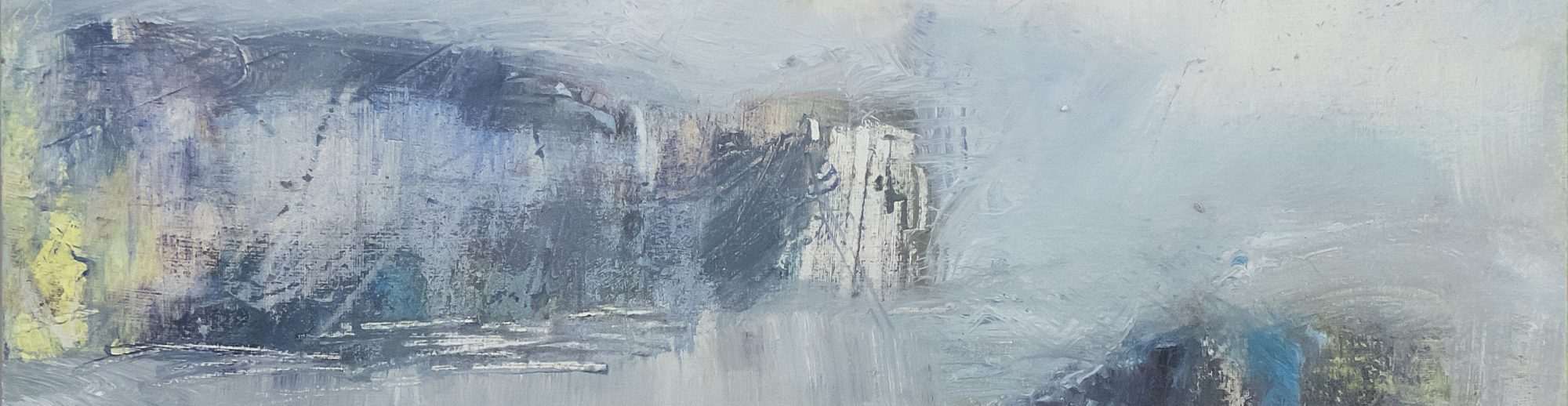
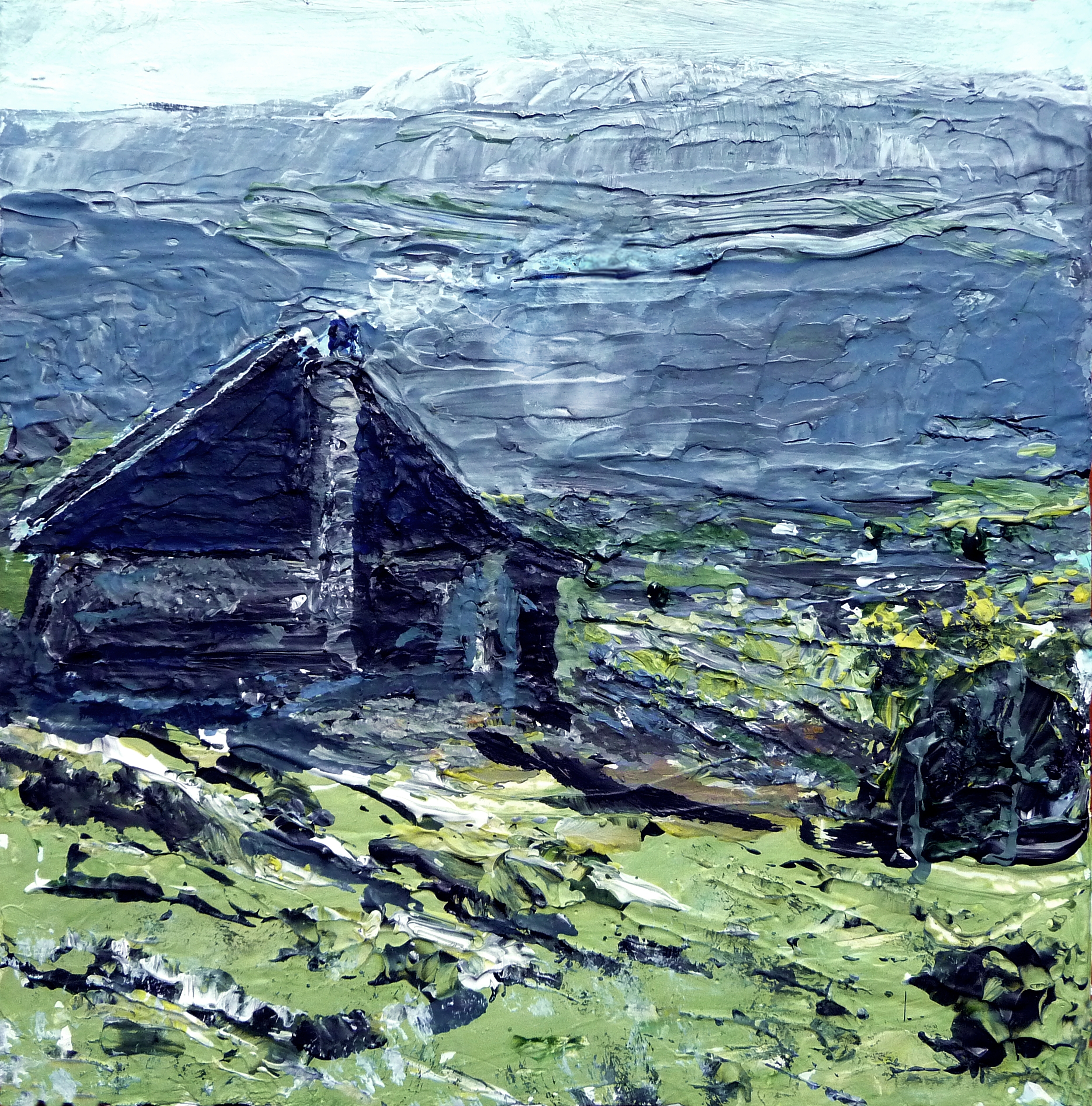
16 paintings of Eigg (34 to go!)

Hello everyone and thank you for viewing the Eigg series which I’m painting from the 10th April to the 29th May

Also, sincere thanks to the people who have bought some of the paintings (this will help fund the next stage of the Eigg project throughout the year) I hope you enjoy the paintings!

Below is a round-up of all available paintings so far. These are all 5×5 inches, £45 each (including postage), and have a small hook attached to the back. (If you would like a fine art print of these at double the size (10×10 inch giclee print) these are £38 including postage).

Feel free to email me with any queries at rose.strang@gmail.com

Many thanks for your interest, and to Eigg Box and The Small Isles for the facebook shares and likes!

Available paintings:

(to find out more about the paintings, simply click on ‘Home’ and scroll down the previous blog posts)

Ink and acrylic on 5x5" wood

Eigg Series. No. 16. Acrylic and ink on 5×5″ wood

Eigg Series. No 14. Acrylic on 5x5" wood

Eigg Series. No 14. Acrylic on 5×5″ wood

Eigg Series. No. 13. Ink, gesso and varnish on 5x5" wood

Eigg Series. No. 13. Ink, gesso and varnish on 5×5″ wood

Eigg Series. No. 8. Ink, sand and acrylic on 5x5" wood

Eigg Series. No. 8. Ink, sand and acrylic on 5×5″ wood

Eigg Series. No 8. Acrylic, ink, salt and sand on 5x5" wood

Eigg Series. No 8. Acrylic, ink, salt and sand on 5×5″ wood

Eigg Series. No 6. Acrylic on 5x5" wood

Eigg Series. No 6. Acrylic on 5×5″ wood


Eigg Series No 4. Acrylic on 5x4 inch wood

Eigg Series No 4. Acrylic on 5×4 inch wood


The following paintings have sold:

Eigg Series. No 15. Acrylic and ink on 5x5" wood

Eigg Series. No 15. Acrylic and ink on 5×5″ wood (Reserved)

Eigg Series. No. 12. Acrylic on 5x5 " wood

Eigg Series. No. 12. Acrylic on 5×5 ” wood (Sold)

Eigg Series. No. 10. Acrylic, ink and salt on 5x5" wood

Eigg Series. No. 10. Acrylic, ink and salt on 5×5″ wood (Sold)

Eigg Series No 9. Acrylic and ink on 5x5" wood

Eigg Series No 9. Acrylic and ink on 5×5″ wood (Sold)

Eigg Series. No 5. Acrylic on 5x5 inch wood

Eigg Series. No 5. Acrylic on 5×5 inch wood (Sold)

Eigg Series. No 3. Acrylic, ink and salt on 5x5 inch wood

Eigg Series. No 3. Acrylic, ink and salt on 5×5 inch wood (Sold)

Eigg Series No. 2. Acrylic, ink and varnish on 5x5 inch wood

Eigg Series No. 2. Acrylic, ink and varnish on 5×5 inch wood (Sold)

Eigg Series. No 1. Acrylic and ink on 5x5 inch wood

Eigg Series. No 1. Acrylic and ink on 5×5 inch wood (Sold)


50 Paintings of Eigg Series. No. 12

P1100601P1100604

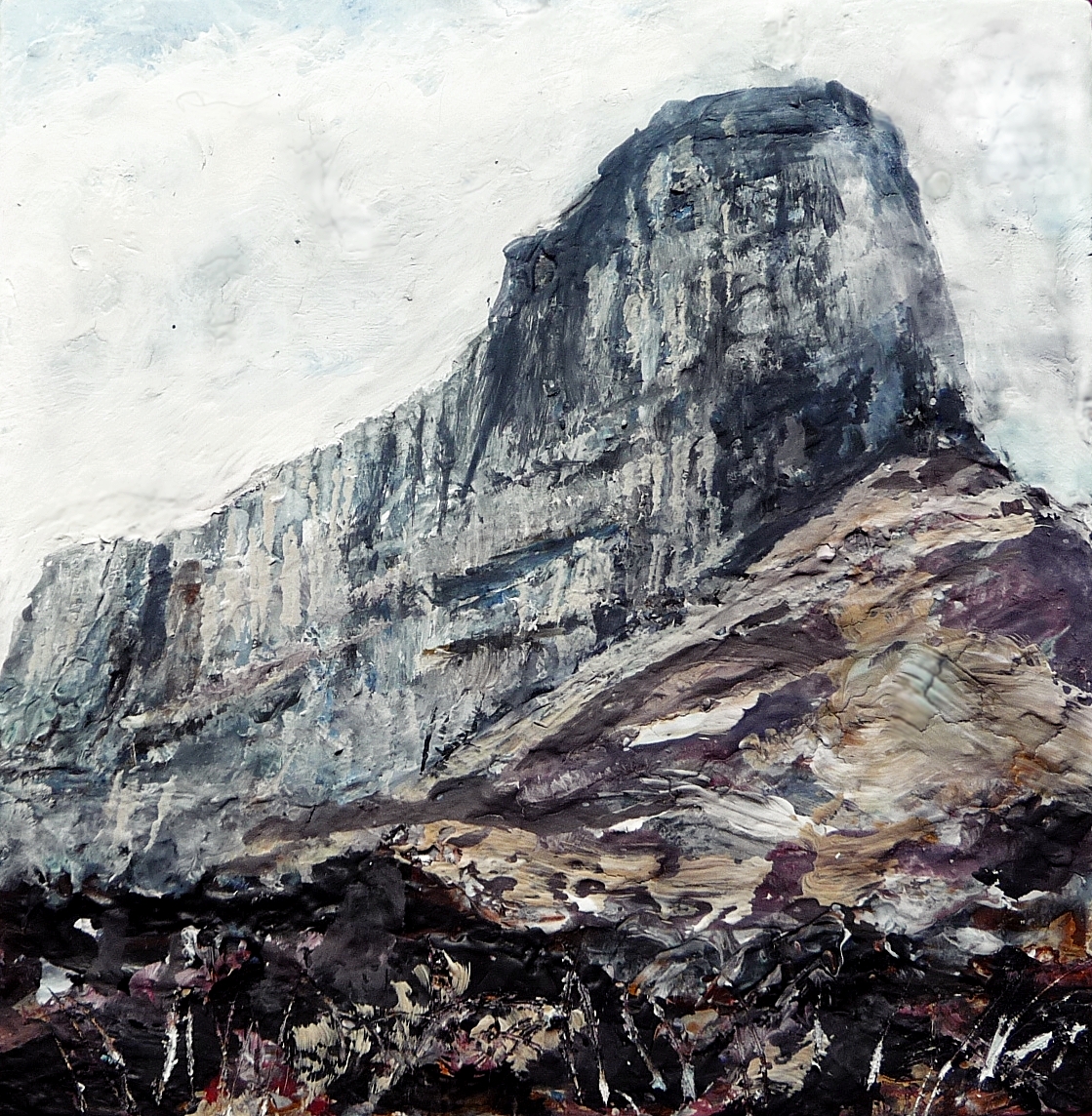
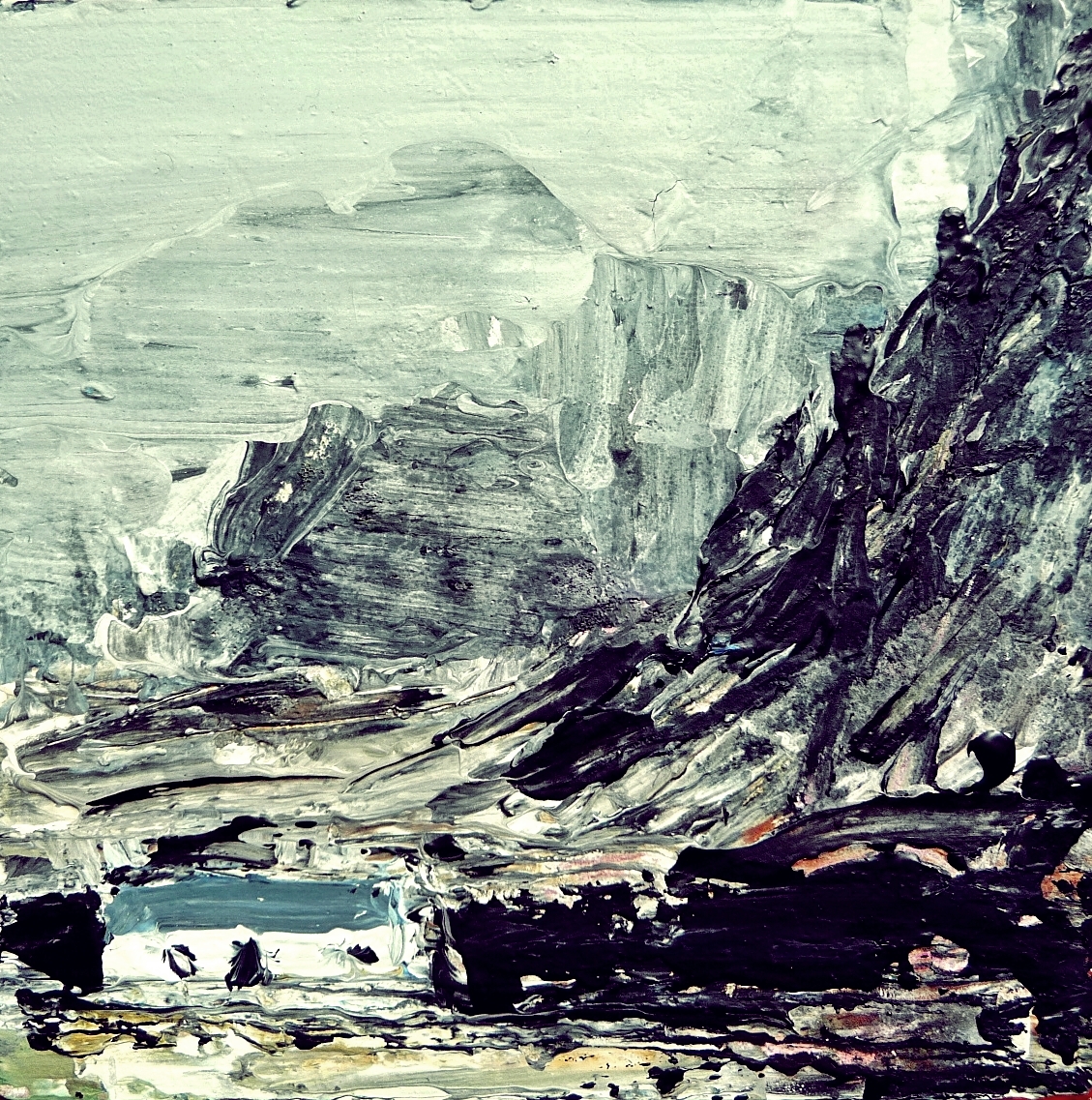
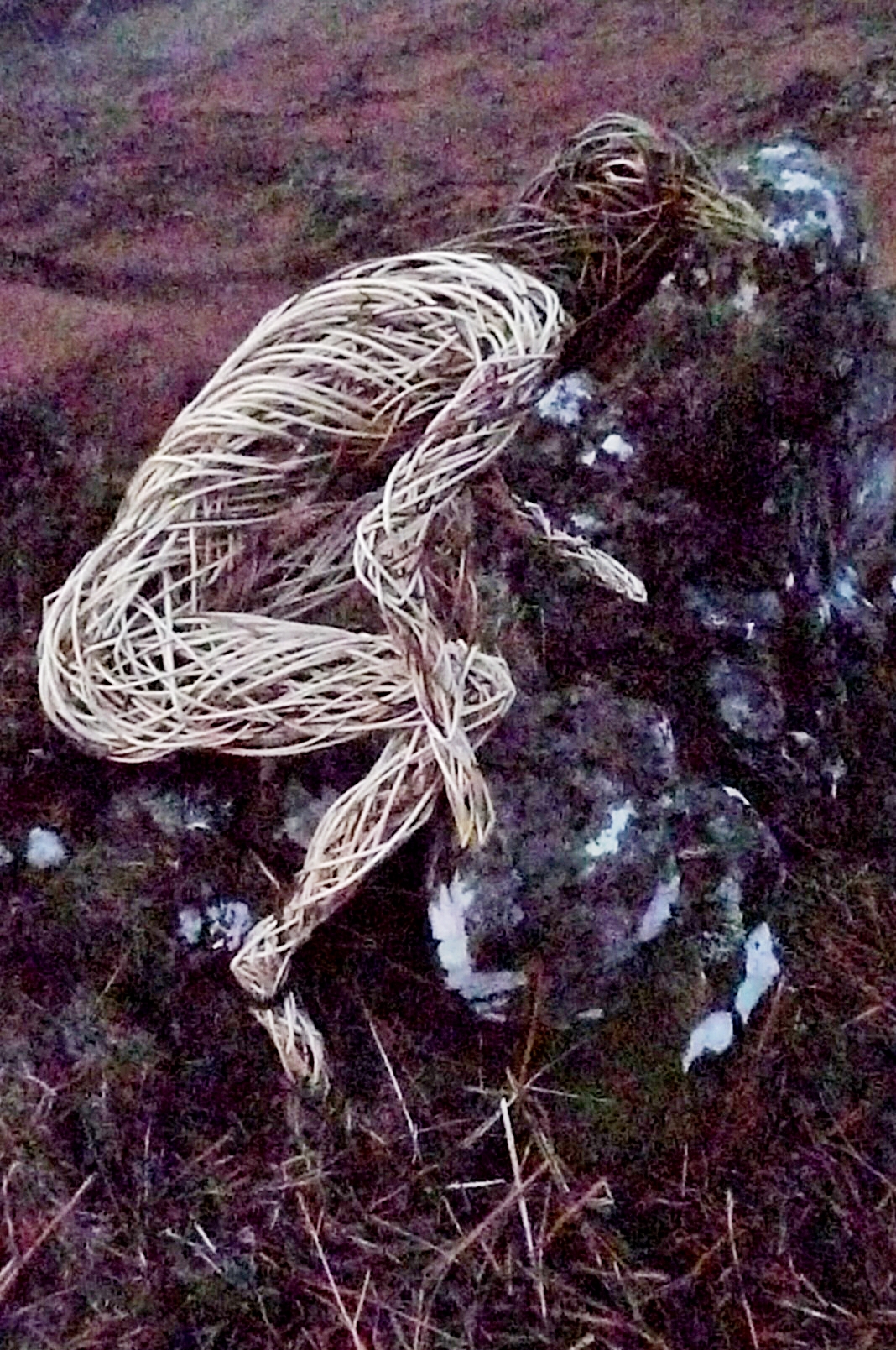
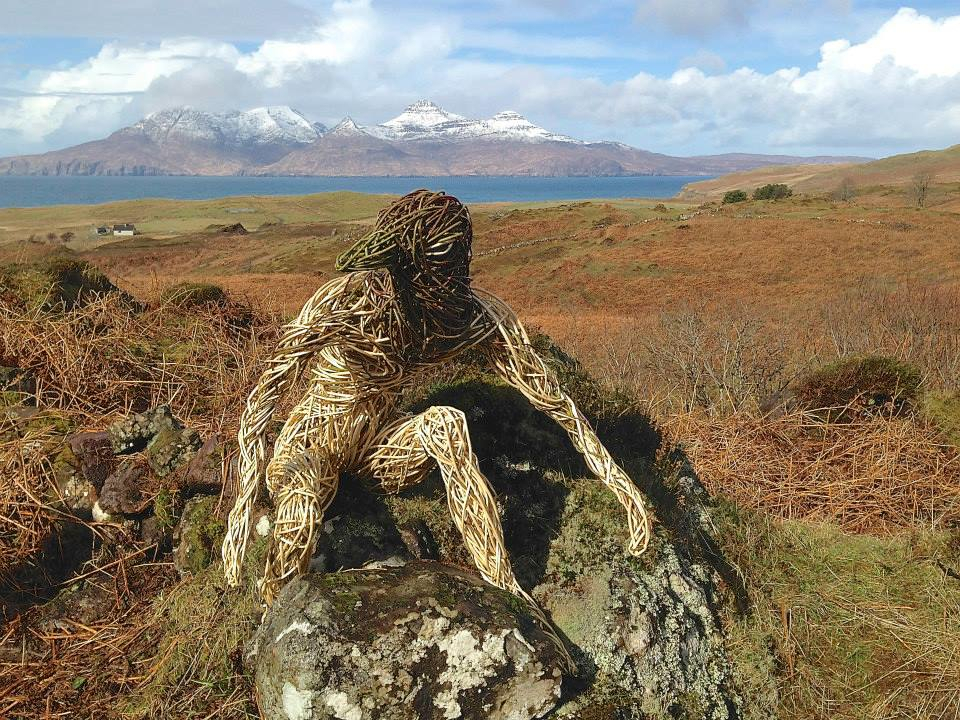
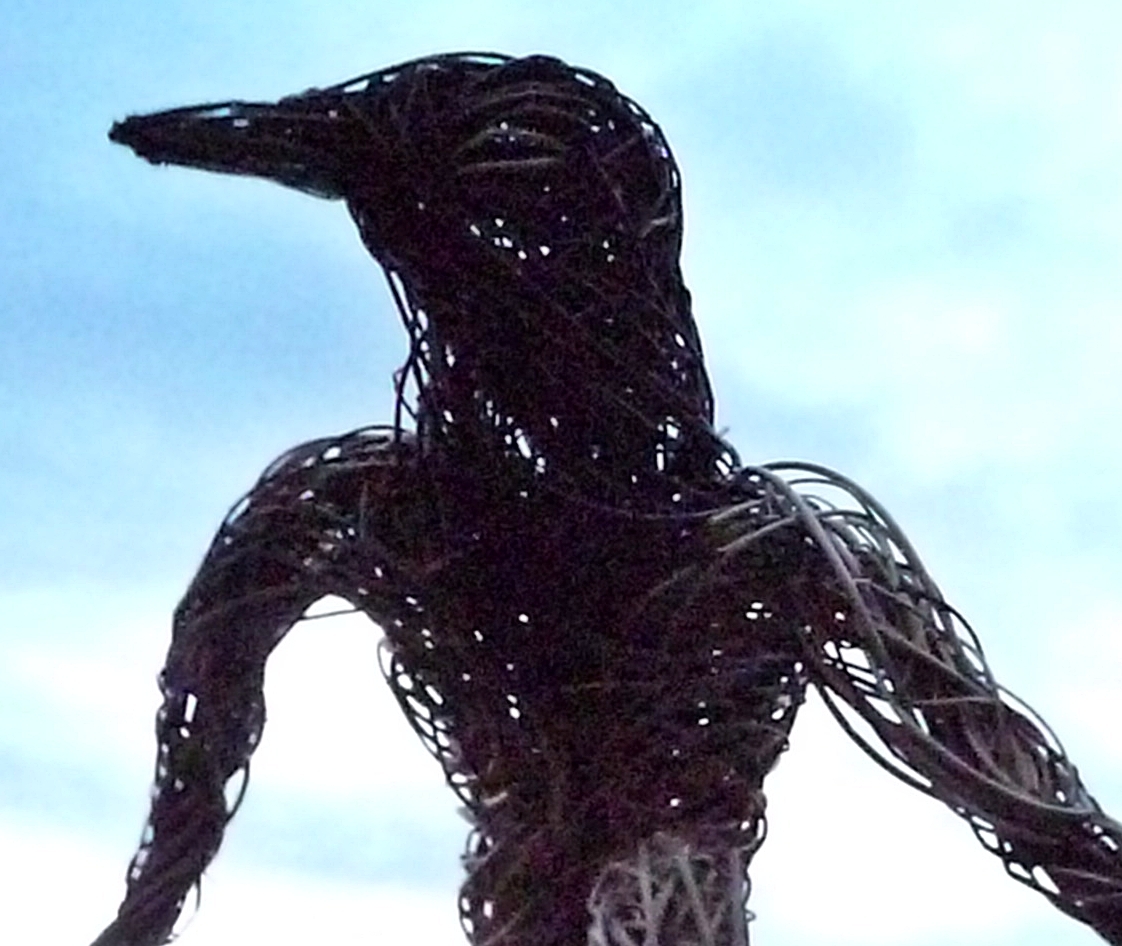
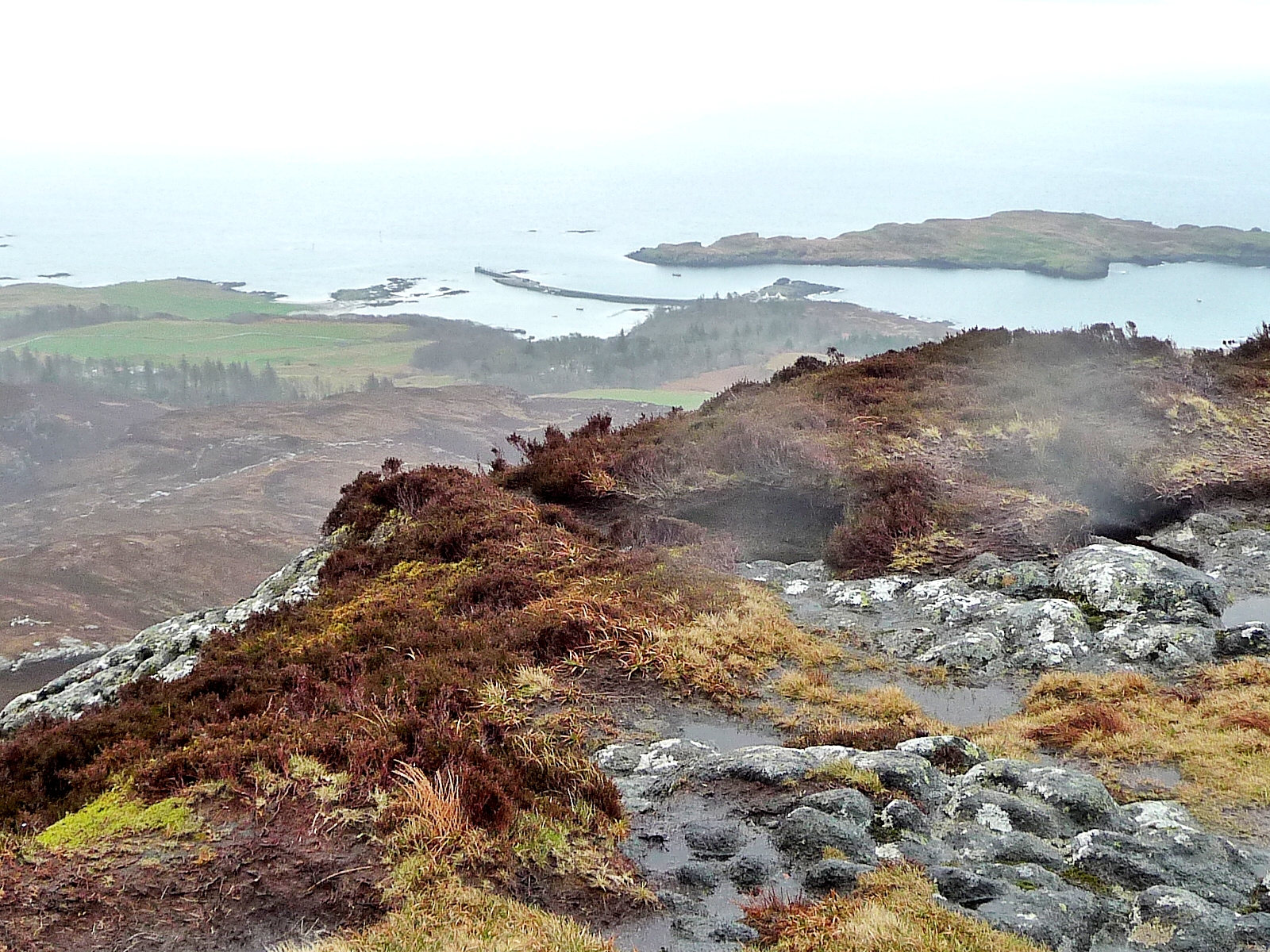
Today’s painting is a misty bird’s-eye view of Sgorr an Fharaidh (the cliffs at Cleadale); the setting for an atmospheric sculpture of Sweeney (or Suibhne in Gaelic) by artist Trevor Leat, which I discovered on a twilit evening amongst the rocks at the foot of the cliffs.


P1090957


I was curious to know more about the stories and myths behind the character of Sweeney; described as a mad-man or bird-man, or denounced as mad then cursed and ostracised for his beliefs. I got in touch with Trevor, a former resident of Eigg, who now lives and works in Dumfriesshire, to ask about the background and inspiration to the sculpture…


Rose: Trevor, can you firstly tell me a little about your background as an artist and what you do?

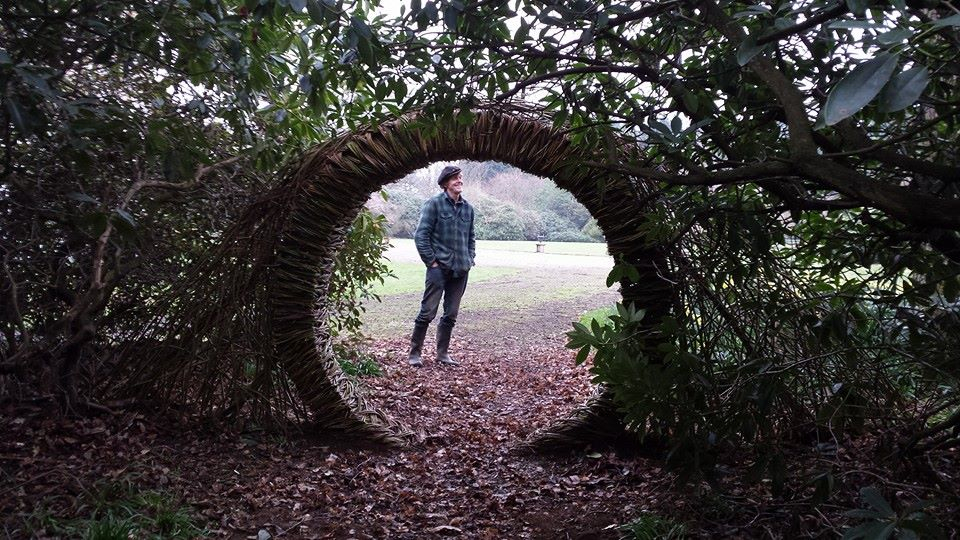
Trevor: Well I trained as basketmaker years ago. Then began working on outdoor performance projects and theatre companies making large scale sculptures…often involving fire. This has continued to develop and my work now tends to be of more figurative creatures for private and public places

moongate n Trevor

R: What’s the background to the Sweeney project and can you tell me how you became involved?

T: I lived on Eigg for 10 years so when the Bothy Project started up there I was invited to an artist in residence.


R: So who was Sweeney and what are the myths and stories about him?

T: Sweeney was an Irish king around 6/7thC who fell out with a Christian monk who was trying to convert his subjects. As a result a curse was placed on him and for seven years he wandered naked in Ireland and Britain, roosting in trees and becoming birdlike. It’s suggested that he came to Eigg at some point. He eventually died a sad death, perhaps stabbed by a jealous sword or antler . He chanted an epic poem during his madness which survives and has been translated and interpreted.

sweeney on his throne

R: What does Sweeney represent to you, do you feel there’s a universal message in the myth or story?

T: I liked the image of the half bird, half man Sweeney. He was holding on to his pagan beliefs and this comes through in the tale of his wandering and the encounters he made on this journey.

R: What made you decide on the area at the foot of the cliffs in Cleadale?

T: Originally I planned to place him roosting in a tree but there aren’t many suitable on Eddie and Lucy’s croft. I climbed the hill at the back of the bothy to survey the possibilities and meanwhile sat the sculpture on the rocks there. He fitted perfectly on the stone there and it became his throne…fitting for a king!

R: Can you tell me a little about the process of making him?

T: Well, first I read up on the poem and got a feel for his tale. I made some sketches of him perching. There was a blackbird singing outside the bothy in the mornings and I decided a birds head would work for the sculpture. I welded up a simple steel rod armature and over this wove layers of peeled willow to give it form and movement . I had brought the willow with me and soaked it in the nearby burn to make it pliable. For the head I used some rough green willow to add a striking contrast to the naked white willow torso. Finally I sprayed the willow with linseed oil to give some protection from the Atlantic storms.

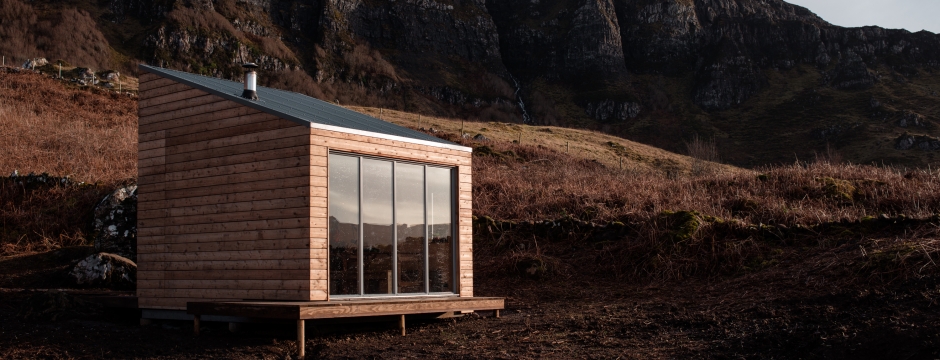
Sweeney's bothy, Eigg

Sweeney’s bothy, Eigg

R: What response do you hope viewers have when encountering Sweeney?

T: Well one of surprise and curiosity I hope. The setting is spectacular with the cliffs in front of you and the peaks of Rum behind. I hope they will hear some bird song too.
R: How was your artist’s residency on Eigg, and how did it feel to be back?

T: It was a great couple of weeks for me on Eigg. I had come over early for an island wedding, so much socialising during the first week. Then the bothy became a retreat for me, a haven. The weather was wild at times, gentle on others and Sweeney grew. It is such an amazing place to visit and for me a great opportunity to re-visit and reconnect with the place that I left 24 years ago

R: Can you tell me about any upcoming projects and where can we can see more of your work?
T: I have several sculpture commissions for this summer. I will be making a ‘warhorse’ at Inverewe Garden, Poolewe, in June and on the Wickerman for the music festival in Kirkudbrightshire. I have sculptures at Falkland Palace, Scone Palace, Calagary Sculpture Trail on Mull, Craig Tara in Ayrshire.

You can find out more about Trevor’s work Here.

Below, an excerpt from Sweeney’s poem (as translated by James G. O’Keeffe  -The whole of Buile Suibhne can be read Here)..

I am Suibhne, noble leader, P1090966
cold and joyless is my abode,
though I be to-night on wild peaks,
O woman who pluckest my watercress.

My mead is my cold water,
my kine are my cresses,
my friends are my trees,
though I am without mantle or smock.

From Buile Suibhne (The Frenzy of Suibhne

Seamus Heaney also translated the poem and unfortunately I can’t find a translation online but there are references to it Here

More about Sweeney’s Bothy on Eigg Here


50 Paintings of Eigg Series. No. 10

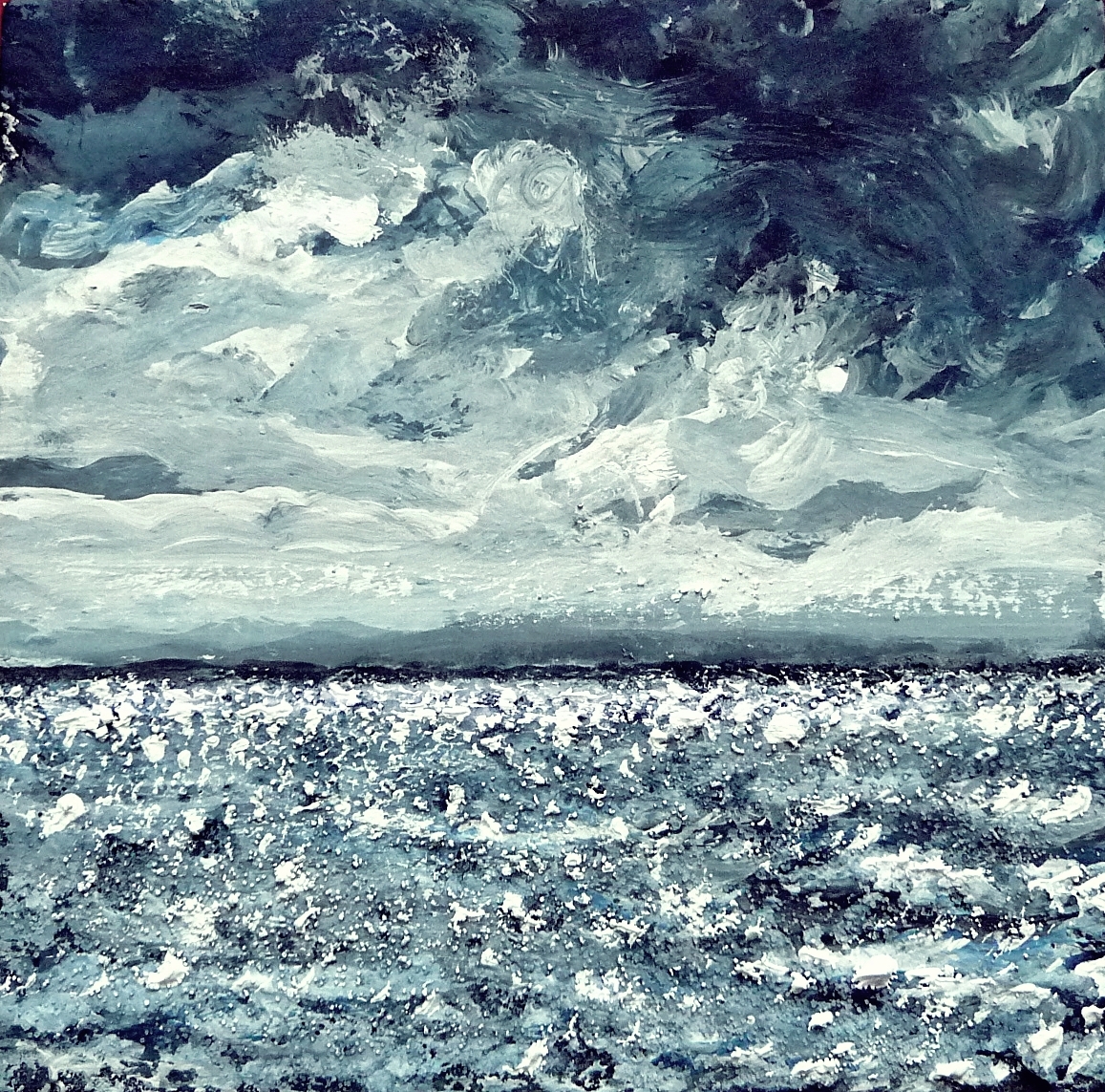
Eigg Series. No. 10. Acrylic, ink and salt on 5x5" wood

Eigg Series. No. 10. Acrylic, ink and salt on 5×5″ wood

P1100481

Today’s painting is a view south from Galmisdale on the west coast of Eigg. This silver/white sparkling light with misty horizon is quite unique to the west coast I think. It’s maybe partly due to the combination of northern white light  combined with high humidity, whatever the reasons I always find it magical.

I’ve still not quite captured it, but then again, I can’t think of any artist who has. Even the Scottish Colourists (Peploe, Cadell Fergusson and so on) don’t seem to have explored this effect. If it’s too literal an interpretation it loses magic. I hope to capture it in a simple, more abstract way before long.

When I was on holiday on the west coast as a girl I remember thinking it looked like scattered diamonds. I tried to re-create the effect with the tiny broken pieces of glass I’d found from a  shattered car window! I was never very competitive and loathed board games, so when we’d play with the 70s board game ‘Buccaneer’ I’d gaze with fascination at the little pieces of pretend rubies and diamonds rather than learn the rules of the game, and it was the same with Monopoly, I loved to play with the little houses, dogs and bars of gold, and to this day I’m clueless as to the rules of the game.

Painting sometimes re-creates that feeling of childhood fascination with the seemingly mundane or everyday. It’s a good excuse anyway, to while away my days playing with paint.

A view of changing weather from the top of the Sgurr..

P1090715


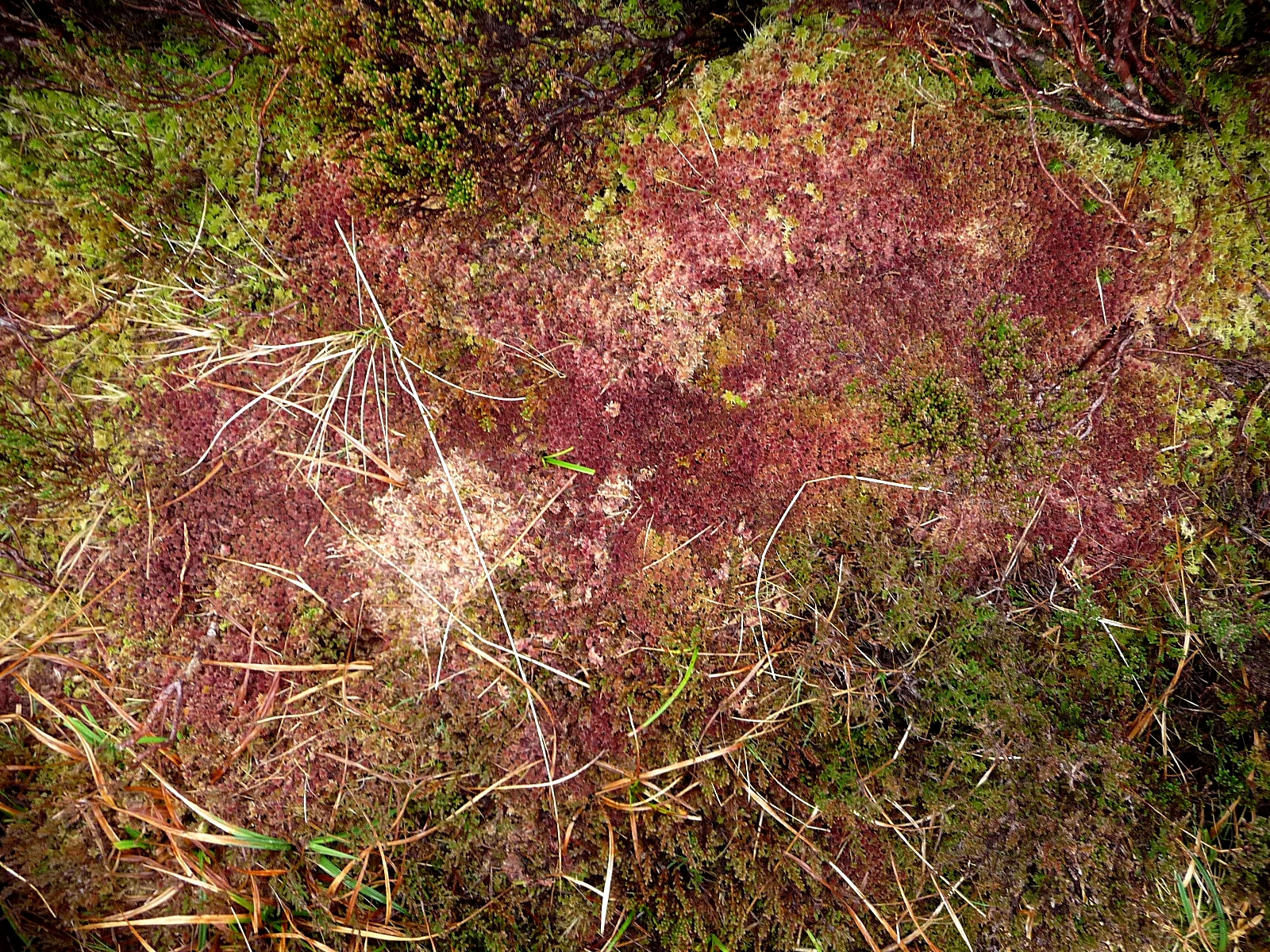
Sphagnum Moss

P1090701


50 Paintings of Eigg Series. No. 9

Eigg Series No 9. Acrylic and ink on 5x5" wood

Eigg Series No 9. Acrylic and ink on 5×5″ wood

P1100438

Today’s painting is a moody depiction of Laig Bay looking towards the south.

In the past, the remote islands of the West coast attracted many Christian missionaries from Ireland, the most well-known being St Columba who settled on Iona in the 7th Century. On Eigg you can still see the remains of a chapel in Kildonan Bay, founded by St Donnán from Ireland.

I’ve always been fascinated by this era of ancient Christianity and first began to explore this time in history when I was 20 and visited Iona off the West Coast of Mull. While there I could see  and experience for myself what was meant by the expression ‘a thin veil between heaven and earth’. In those times it was common for practicing monks or nuns to embrace solitude or silence (a practice that continues to this day) and, although I’m not a part of any practicing religion, I know I’m not alone in finding these remote islands conducive to contemplation.

St Donnán’s life came to a violent end when he was killed alongside 52 monks on Easter Sunday, which was most likely to have been Norsemen since this was a common occurrence in those times.

Nowadays, Eigg has two churches, in the East and West of the island, as well as the peaceful yoga retreat at Glebe Barn in the middle of the island overlooking Kildonan Bay (you can read about Glebe Barn Yoga retreat Here)

I’m thinking of the news about Abdullah Deghayes today, and also of some friends of mine who’ve been involved indirectly in the Syrian conflict. My heart goes out to people who are unable to live in peace because of circumstances beyond their control, and I wish everyone a peaceful and loving Easter weekend

Looking East to the mainland from Kildonan Bay..

P1090780


The view from The Sgurr of Eigg down to Kildonan Bay and the pier at Galmisdale..

P1090724

50 Paintings of Eigg Series. No. 8

Eigg Series. No. 8. Ink, sand and acrylic on 5x5" wood

Eigg Series. No. 8. Ink, sand and acrylic on 5×5″ wood

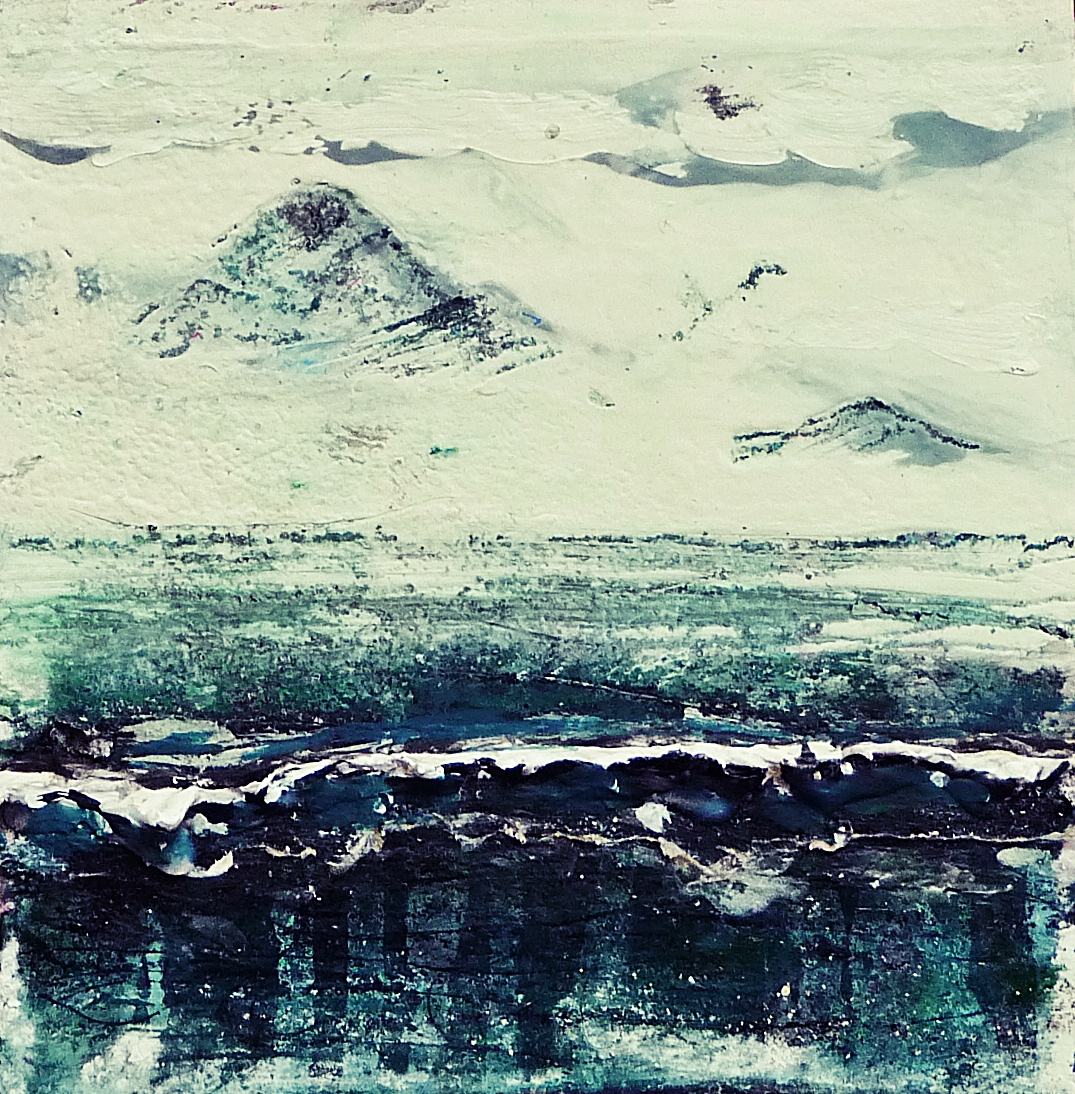
P1100408Today’s painting – Laig Bay looking across to the mountains of Rum, in ink stained wood over-layered with  washes of black, blue and green ink, and a final layer of varnish, the foreground sand is a mix of varnish and Laig Bay sand.


In this stretch of water lies the Skerryvore-Camasunary Fault, the cause of all the volcanic eruptions around 60 million years ago. Most of Eigg consists of layers of lava flows from the volcano. The mountains of Rum are the worn down remains of the original volcano.

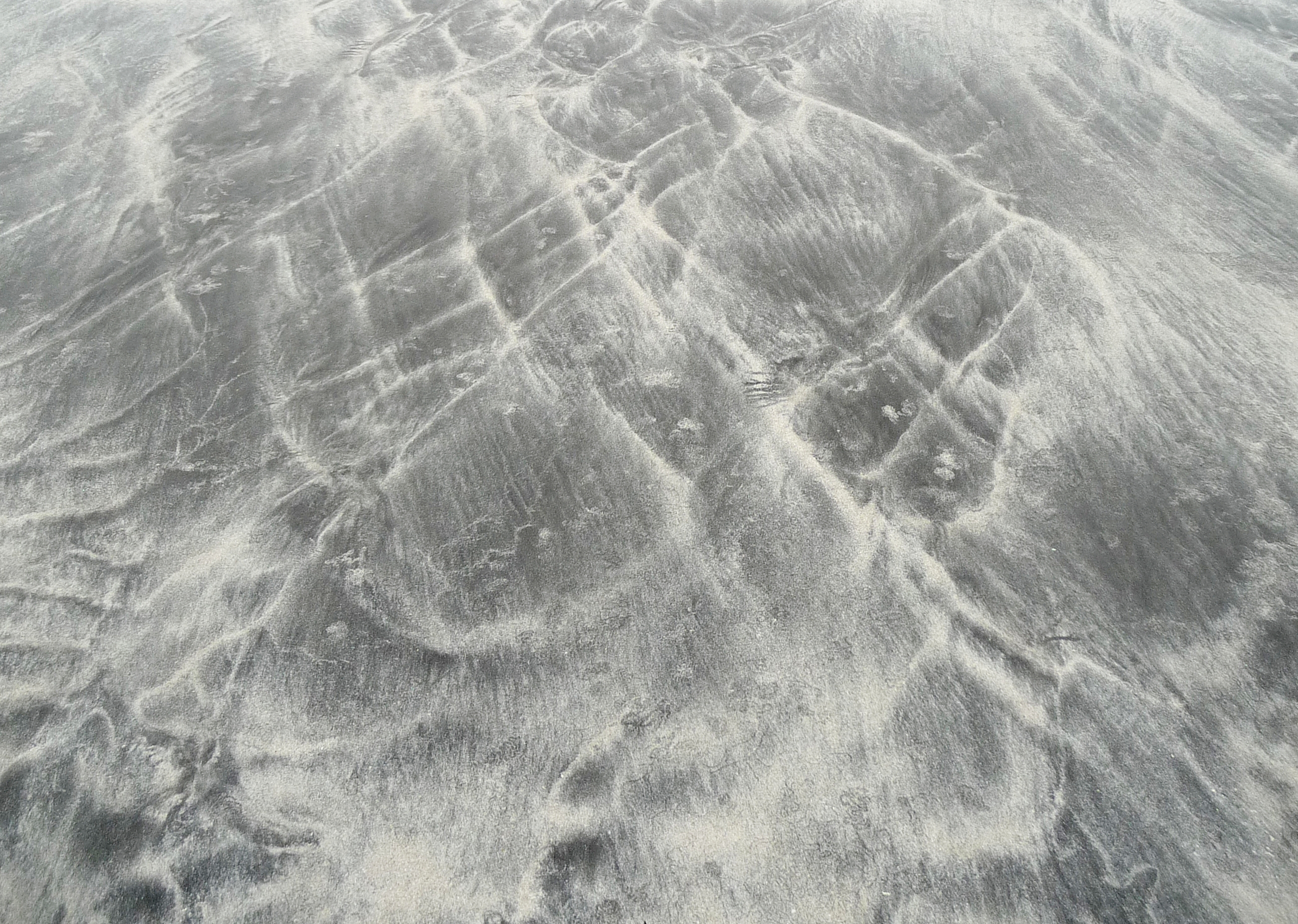
The Laig Bay sands are a mix of sand and quartz which create ever changing patterns…

P1090235 P1090233


50 Paintings of Eigg Series No. 6

Eigg Series. No 6. Acrylic on 5x5" wood

Eigg Series. No 6. Acrylic on 5×5″ wood

P1100353

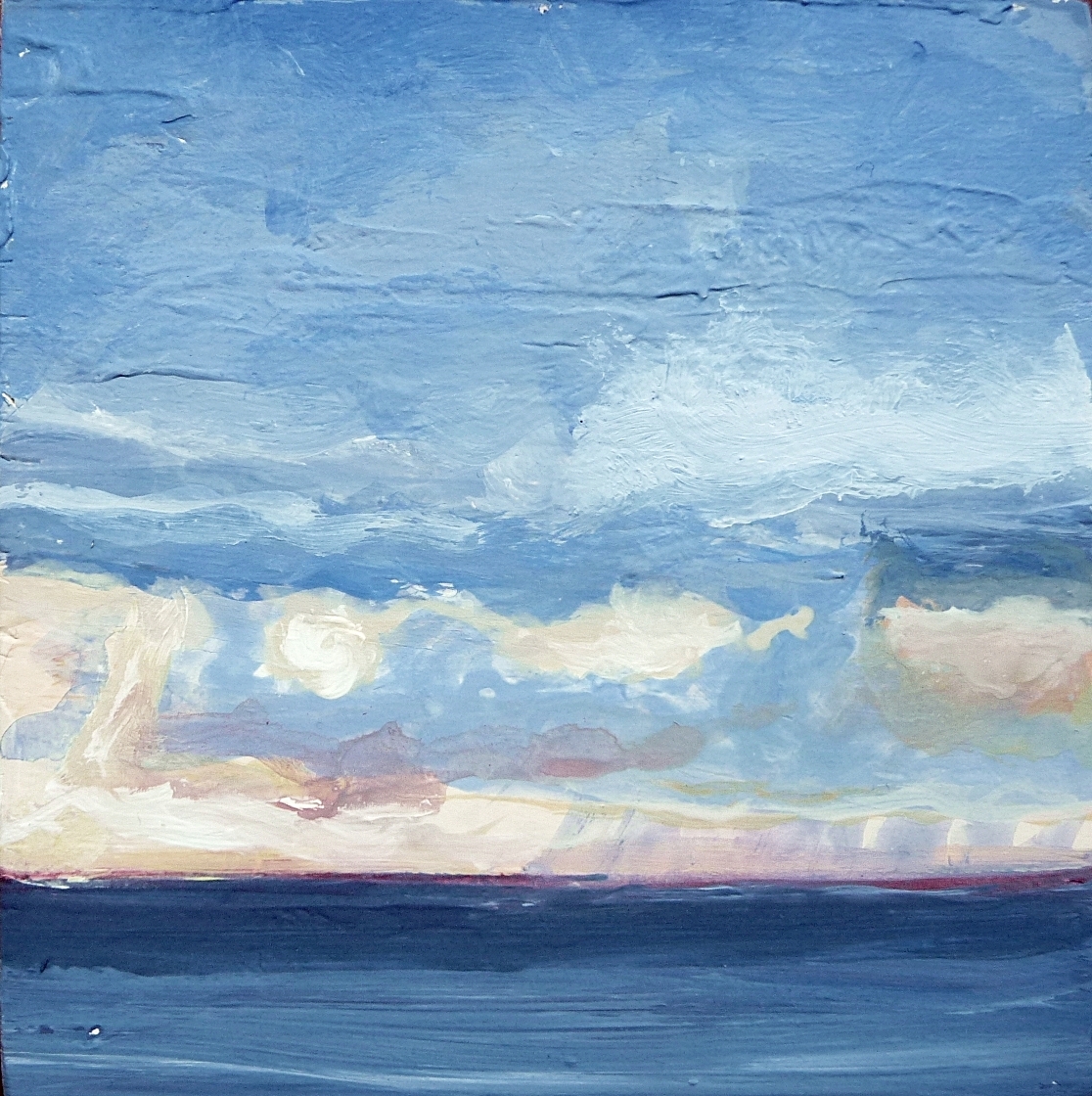
A Schueler-inspired early evening sky. Or to be accurate, the sunset looked very Schueler to me, if not my painting!

Jon Schueler was born in 1916 in Wisconsin, and was around at the time of the later school of American abstract expressionism, (though he never felt particularly part of that movement). He moved to Mallaig (the ferry town on the mainland near Eigg) in 1957 and set up his studio there for a year. He returned many times to Mallaig – his longest stay five years.

I dropped into the Heritage Centre in Mallaig, which shows a few of his works (nearly all his works were on large scale canvas) but feel it’s a shame more isn’t made of the fact that his life’s work centred around Mallaig. I wanted to buy a Schueler post-card, but no luck, they didn’t stock any. More reason to develop galleries and art centres in this beautiful area of the world

Schueler painted the stretch of sea and sky between Mallaig and Skye called The Sound of Sleat

Here’s a small selection of his paintings. Beautiful work, and an inspiration…

“When I speak of nature, I speak of the sky, because the sky has become all of nature to me. But it is most particularly the brooding, storm-ridden sky over the Sound of Sleat in which I find the living image of past dreams, dreams which had emerged from memory and the swirl of paint. Here I can see the drama of nature charged and compressed. Lands form, seas disappear, worlds fragment, colors merge or give birth to burning shapes, mountain snows show emerald green. Or, for a long moment, life stops still when the gales pause and the sky clears after long days of careening sound and horizontal rain or snow.”

Mood Cries for Sleep

Sea Light Dreaming

Sea Light Dreaming

Light and Black Shadow

Light and Black Shadow


The Sound of Sleat, June Night XIII

The Sound of Sleat, June Night XIII


Sleet Winter Blues III

Sleet Winter Blues III


Jon Schuler

Jon Schuler

Jon Schueler; 1916 – 1992