A very nice exhibition review of Moonscapes: Isle of Harris by writer Vivien Devlin in the Edinburgh Guide. Click here to read review – Review
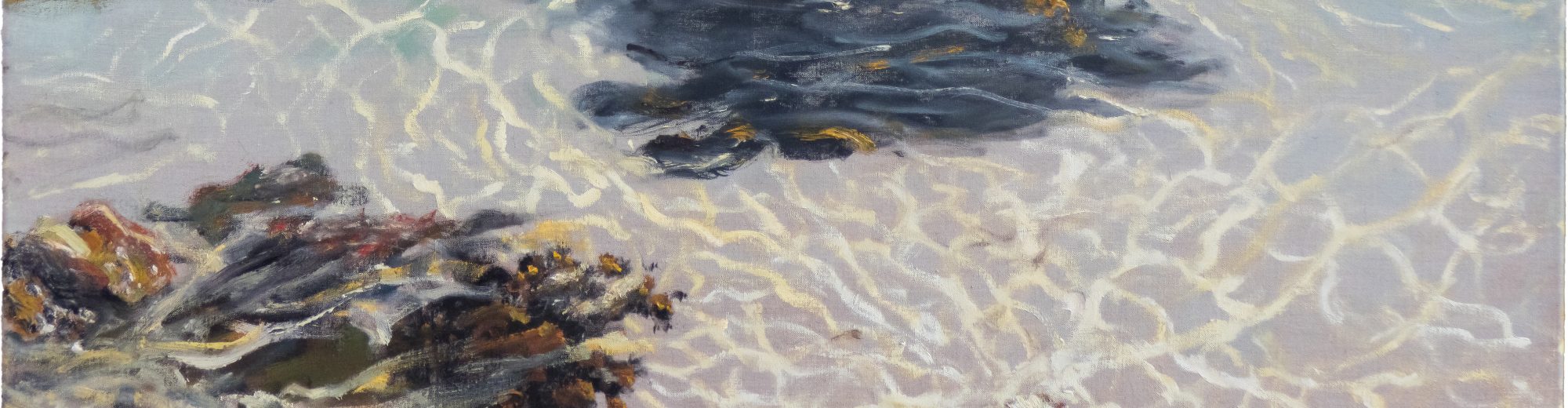
A very nice exhibition review of Moonscapes: Isle of Harris by writer Vivien Devlin in the Edinburgh Guide. Click here to read review – Review
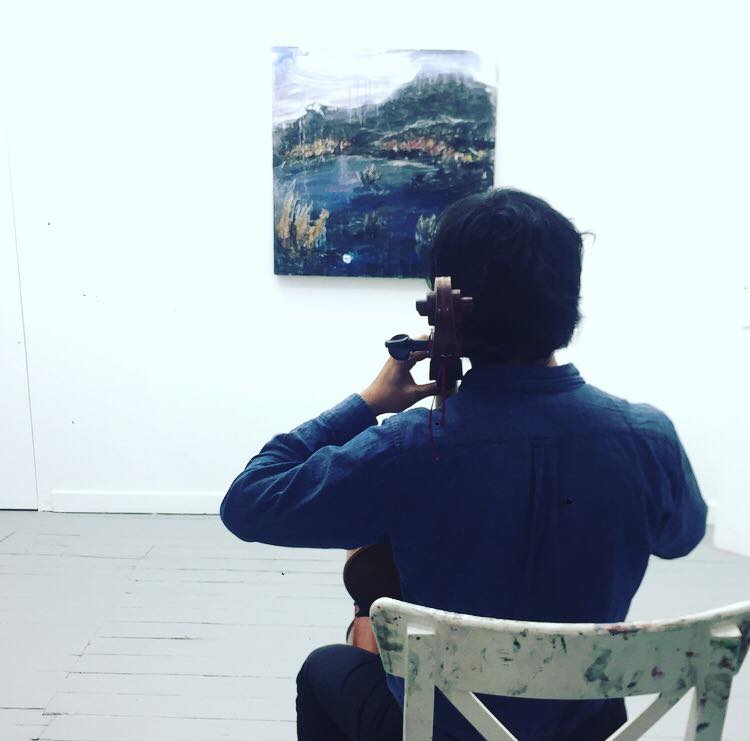
Photo: Sarah Bader
I spent most of yesterday evening creating a video montage of the Harris paintings and Atzi Muramatsu playing cello at the exhibition preview. (video below)
I think it captures a little bit of what’s so beautiful about our collaboration, and what people in the gallery respond to with such enthusiasm and emotion.
Gallery previews are quite hectic events, there’s a lot of stimulus, and if you’re the artist who’s also organised it, well, to be honest my heart is usually hammering – not anxiety as such, more excitement (you spend two or three months painting then your paintings are presented publically in a way that gives you a whole new perspective on how they work as a series, and you’re bombarded suddenly with friendly enthusiastic people talking about them, it’s quite a high!)
I find that Atzi’s performance gives me, and everyone else, a chance to slow down and contemplate, to remember why all these paintings are here in the first place. It’s an appreciation of being alive, it’s pretty much the meaning of life if you’re an artist in any form.
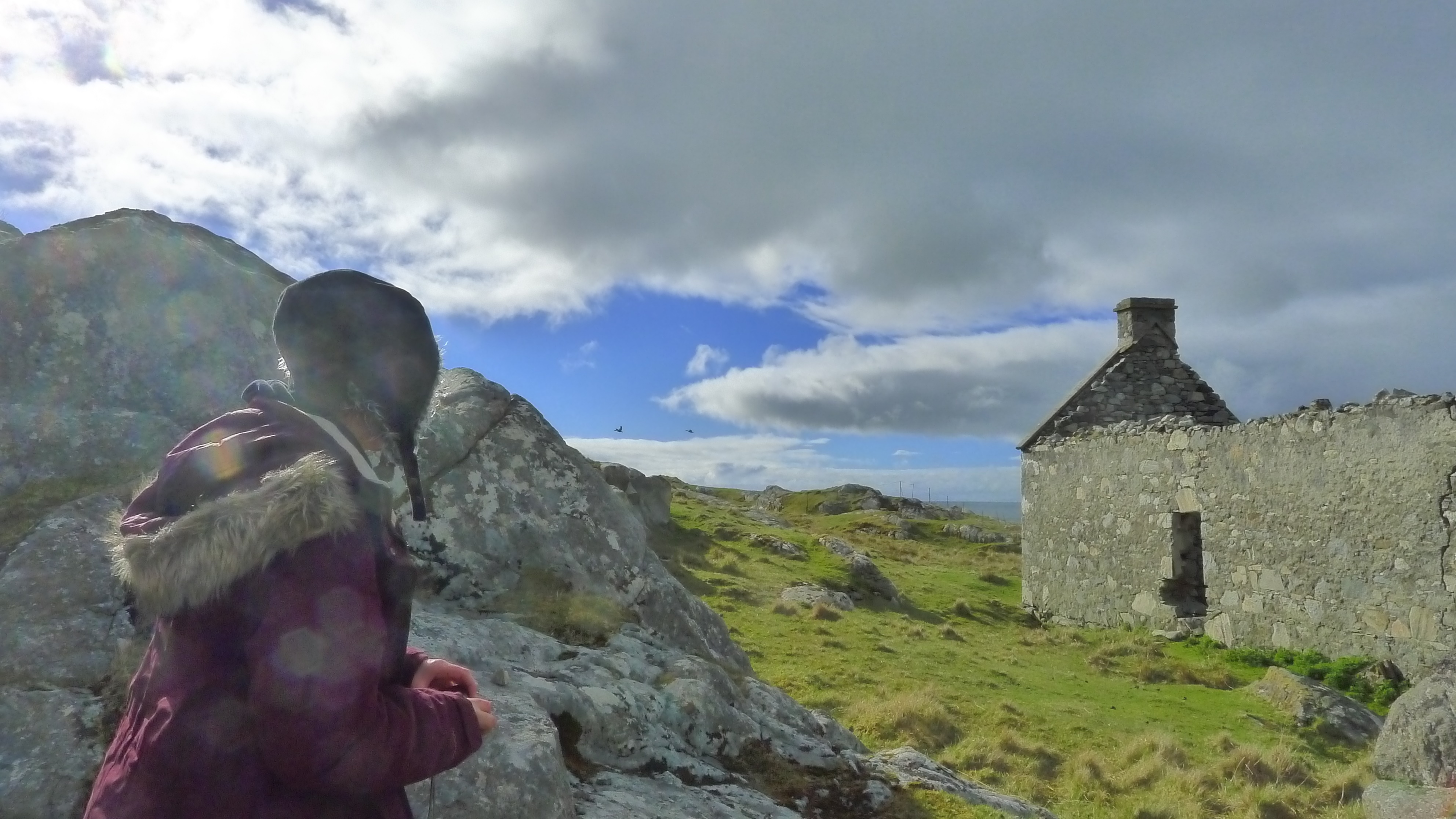
Exploring Harris. Photo by Donald Ferguson
Each time we collaborate I’m reminded anew of what’s so rewarding about the process: while I’m in the place I’m painting, and throughout the painting process, I’m constantly researching – reading, talking to people from the place, exploring everything about the landscape that makes it unique and compelling. Atzi’s response feeds that experience back and extends it, even if we haven’t discussed all the inspiration behind the paintings. I’ve learned to simply trust that he’ll ‘get’ it.
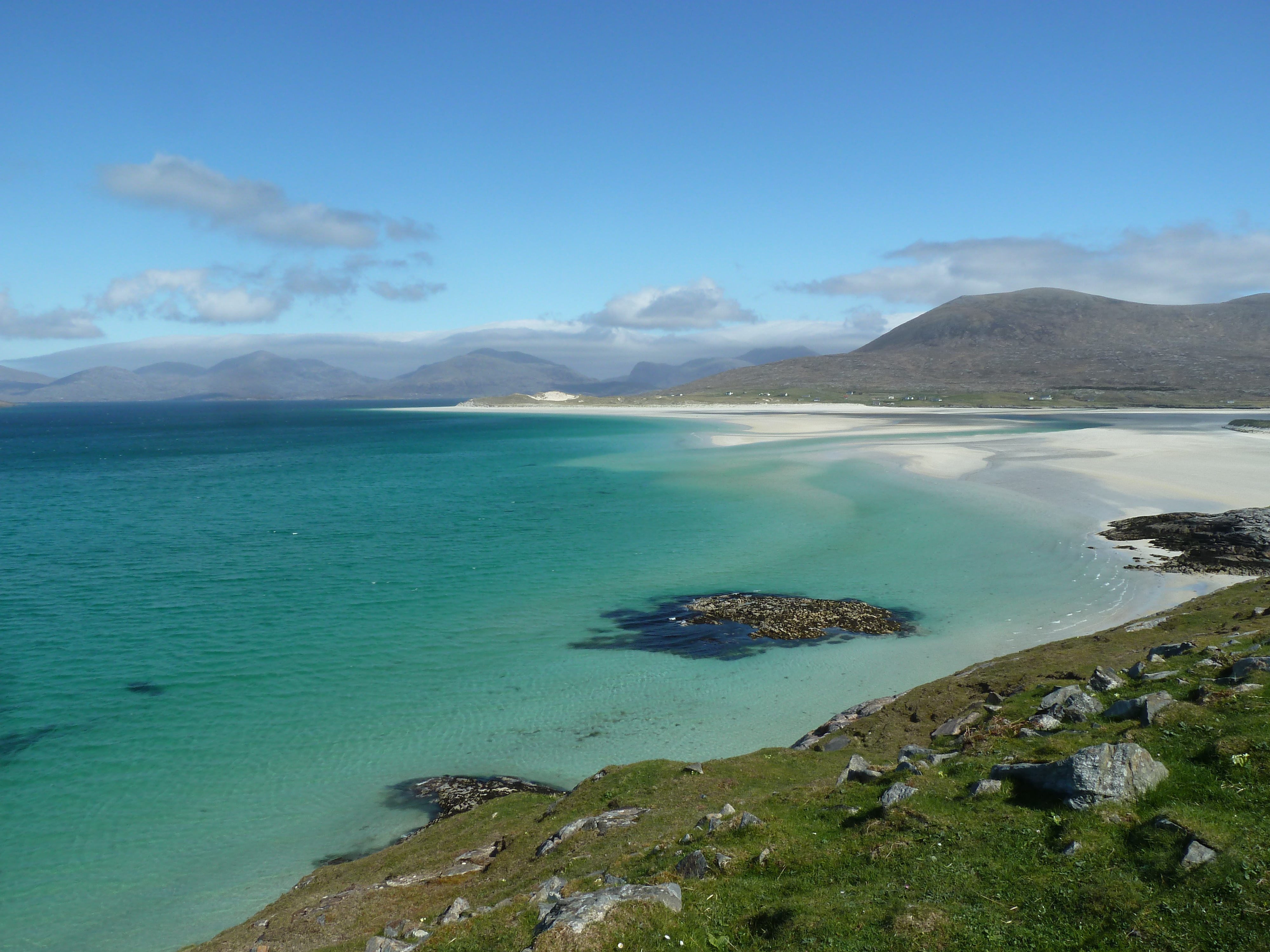 Everyone travelling to the Isle of Harris tells you that you must visit the turquoise seas and white sands of Luskentyre on the west coast, and so you must, it’s beautiful, almost incredible visually! But I was also reading about the islands – (I recommend Bill Lawson’s Harris in History and Legend) the origins of people, the possible meanings behind the stones of Callanish on Lewis (particularly the significance of the moon in its formation), the music, poetry and of course the tough lives of the islanders who lived there over thousands of years through constant challenge and change.
You find it in the place names; echoes of Viking culture – Gaelic and Norse combined, you see it in the ruined houses, abandoned crofts or fishing piers, or the long, black seams of peat (the sole source of fuel in past times) cut into rain and wind-lashed hilltops. Ordinary people here certainly suffered at the hands of land owners’ whims – the ever changing, or failed, industries, the Clearances of course and not least the hard rocky ground and wild winter weather that made farming this land so arduous. They’re still here though, the Scottish Gaelic language survives, as does the humour, the story-telling, art, music and poetry.
Much of all this is there in my paintings if you’re looking for it. Atzi Muramatsu’s cello playing brings it back to life for me. When I heard these three music pieces in the gallery I was transported back to Harris, re-experiencing the darkness and light I discovered there.
Music lovers will hear a bit of everything, from playful Scottish reels to the darkly Baroque, then avant garde dissonance, but also wonderful expression and interpretation absolutely unique to Atzi.
And remember, all of this is improvised response!
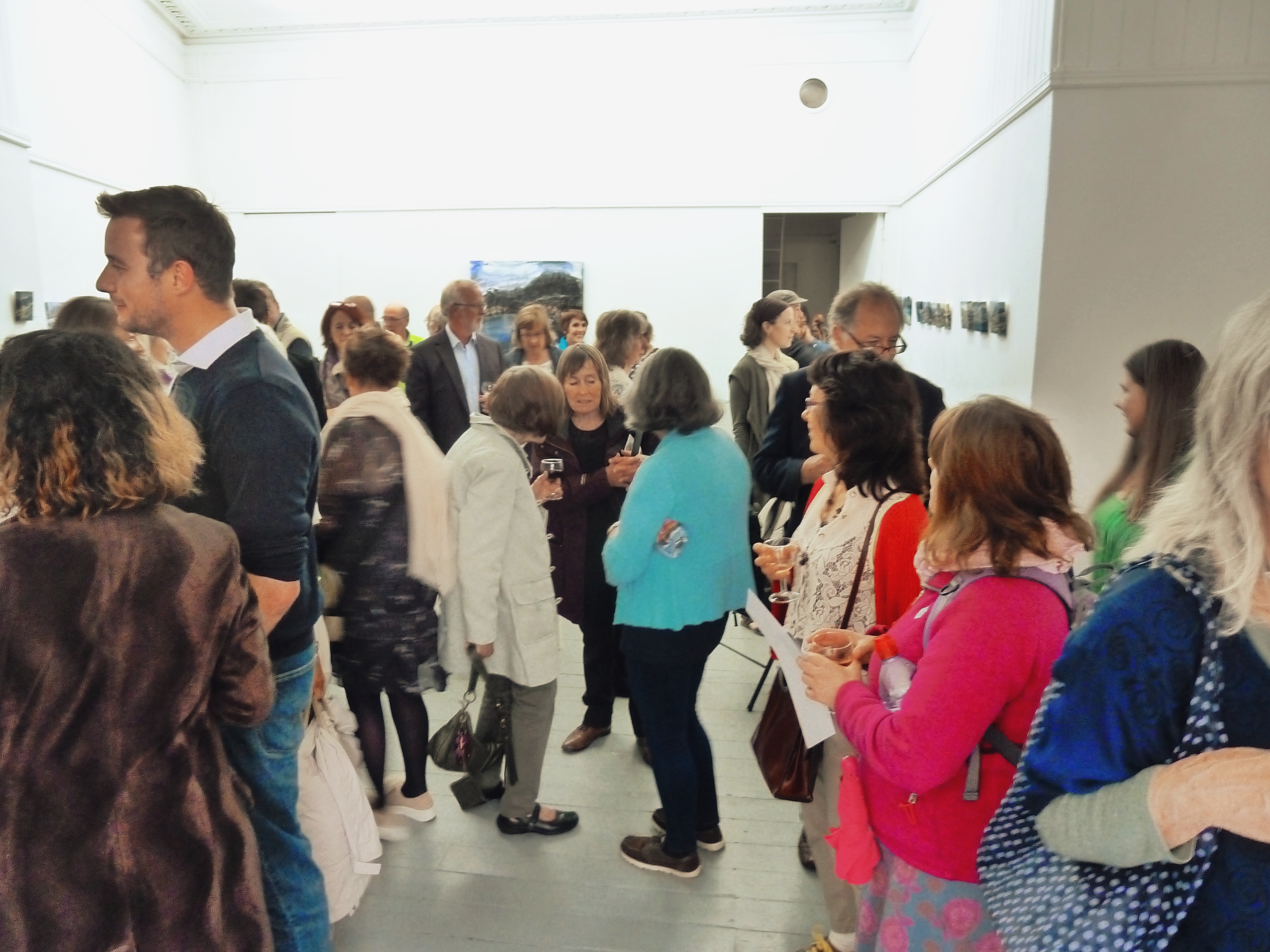
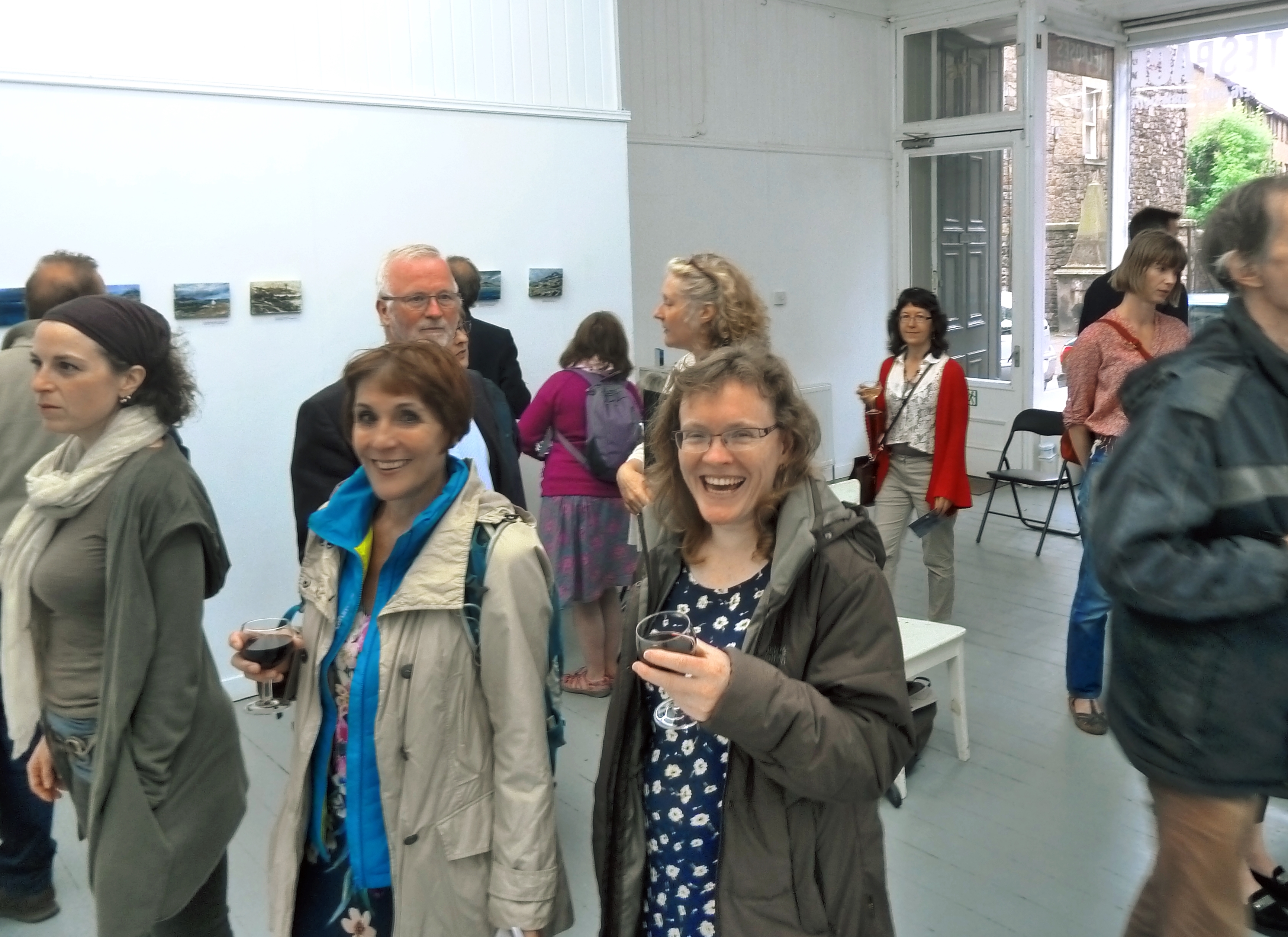
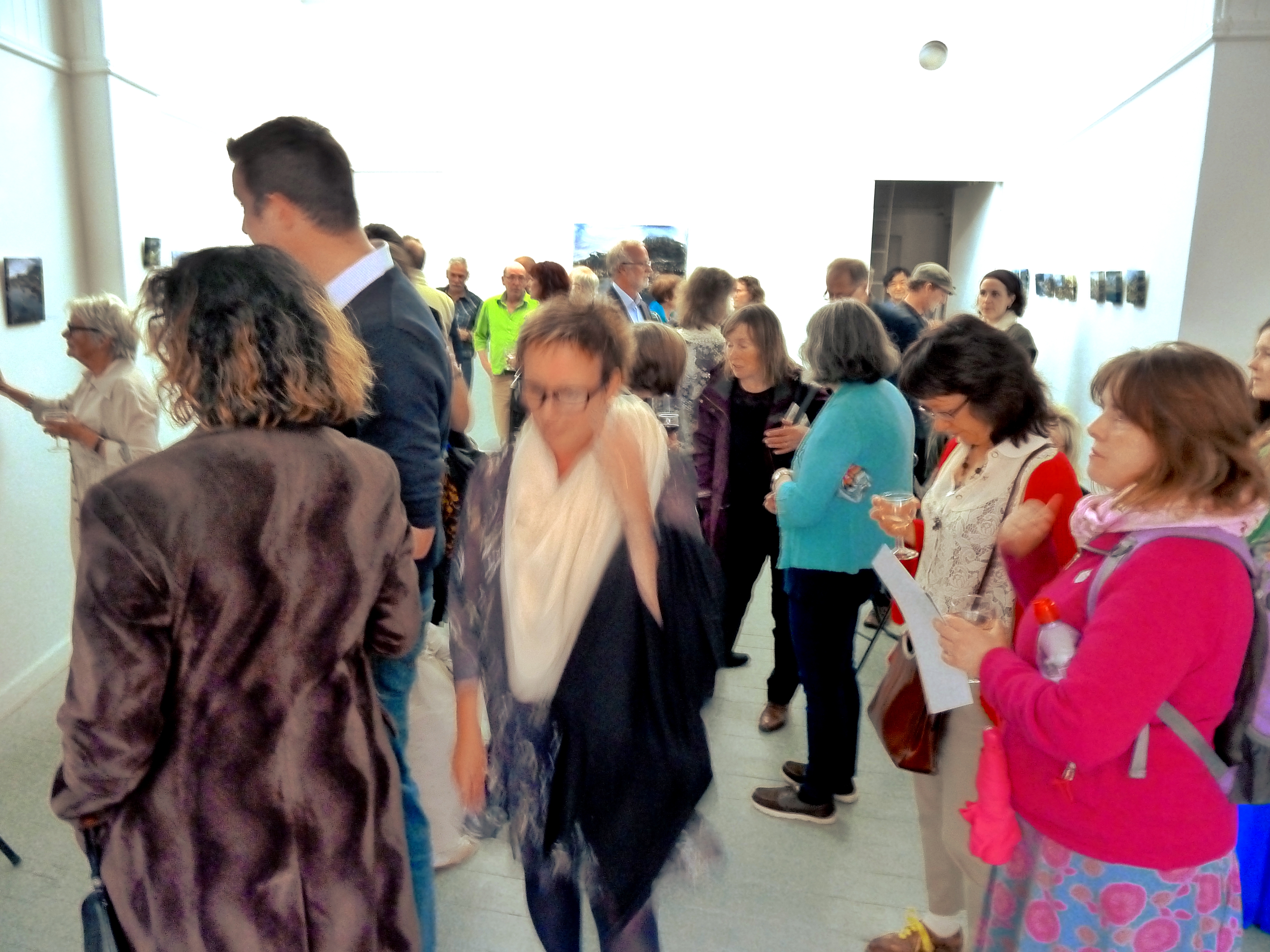 Last night’s launch of Moonscapes: Isle of Harris was a great sucess and most enjoyable. There was a good mix of people, familiar faces and new – many interesting conversations.
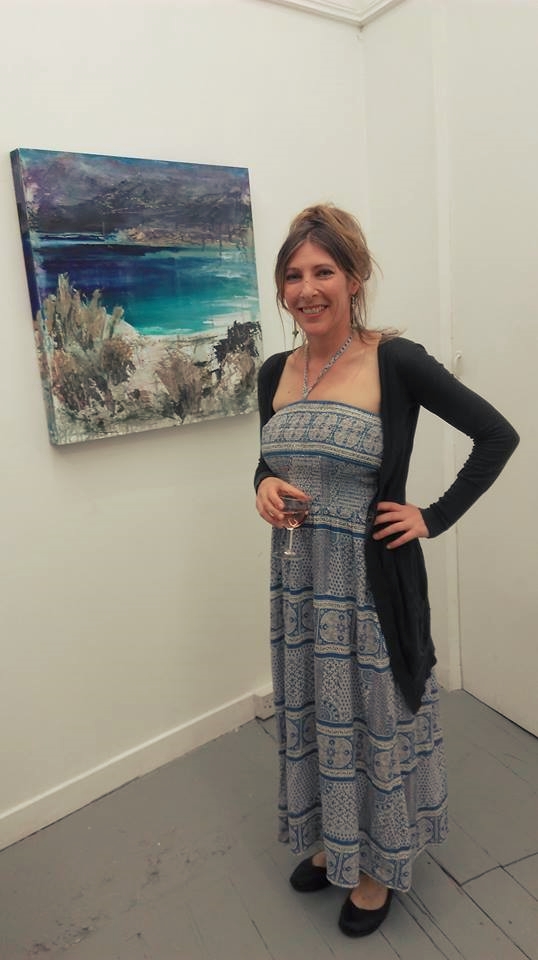
Rose Strang, photo Maria Doherty
Atzi Muramatsu’s performance was magical as always. I will be posting the videos here soon. His response to Harris Moon 4 was suitably sombre and dramatic; it’s quite a dark, stormy and mysterious piece, but my favourite was probably the piece he played in response to a series of smaller works, it was evocative of being on Harris, driving along the winding coast roads watching the landscape unfold in shimmering light.
Atzi Muramatsu, photo Sarah Bader
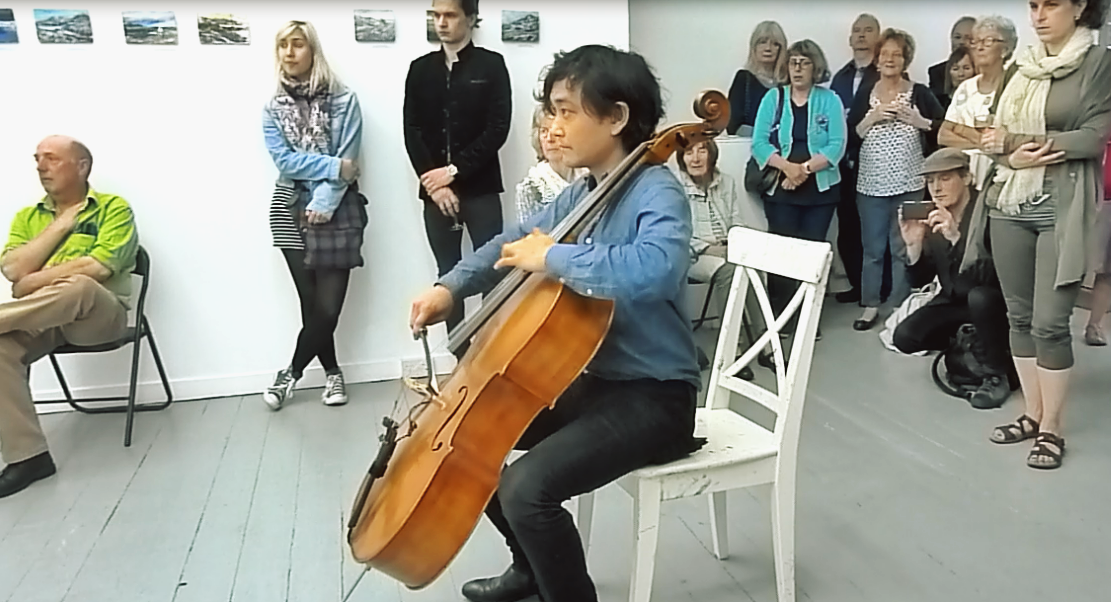

The Edinburgh organisor of Pecha Kucha, Gordon Duffy, enjoyed the combination of music and paintings and has invited us to present our work at the next Pecha Kucha on the 27th of July, which will be a pleasure (all info on the ‘Pecha Kucha’ link above). I’ll post more about that in a few days.
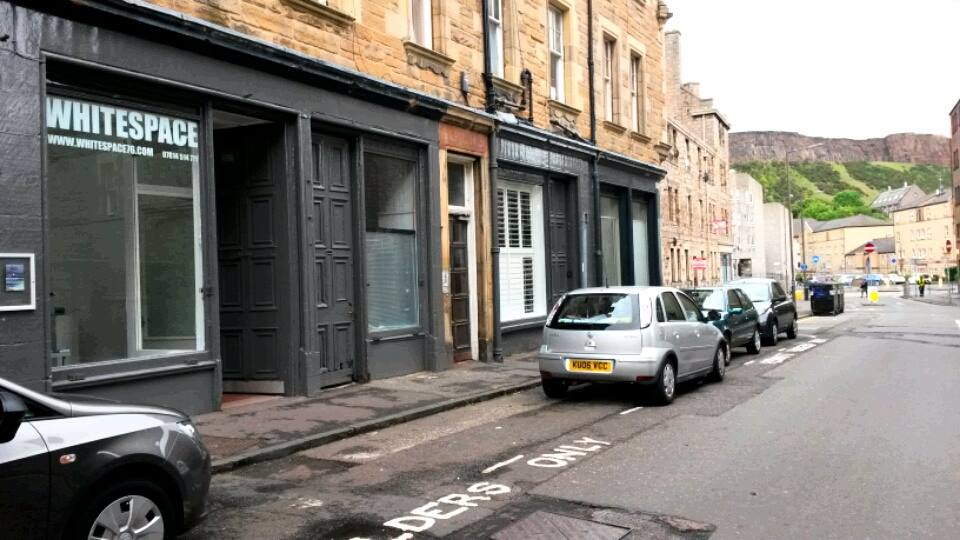
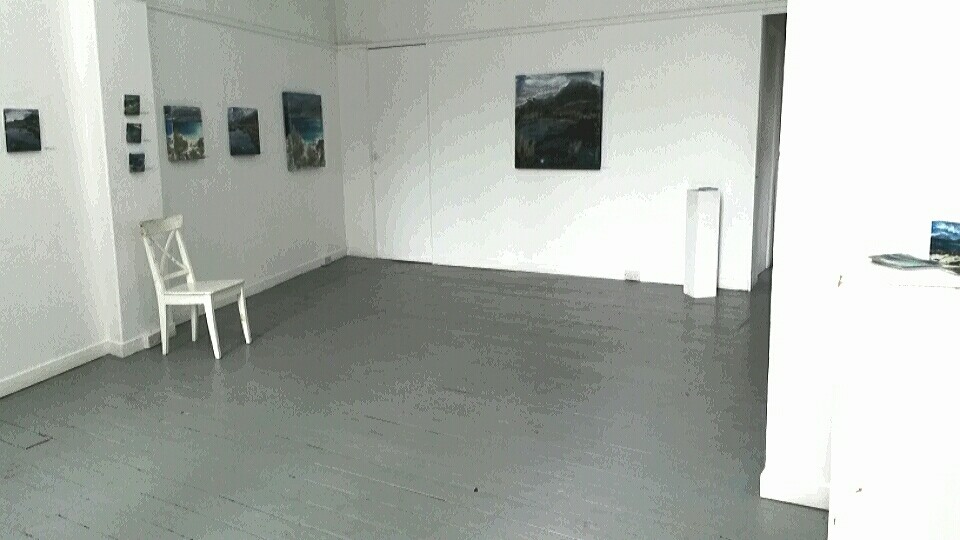
I’ll be in the Whitespace gallery every day from 12 noon to 6:30pm until Thursday, so if you are in Edinburgh drop in for coffee and a chat! (map and directions etc Here)
Many thanks to Catherine Strang for hosting and sales, to Donald Ferguson for helping with set up (and for his excellent company on the trip to Harris earlier this year) and to Atzi for another excellent performance – this is our fifth year of collaboration and friendship and as Atzi said last night ‘it gets better and better’. Also thanks to Leigh Chorlton (artist and manager of Whitespace) for his friendly support, it’s a lovely space and a delight to show there!

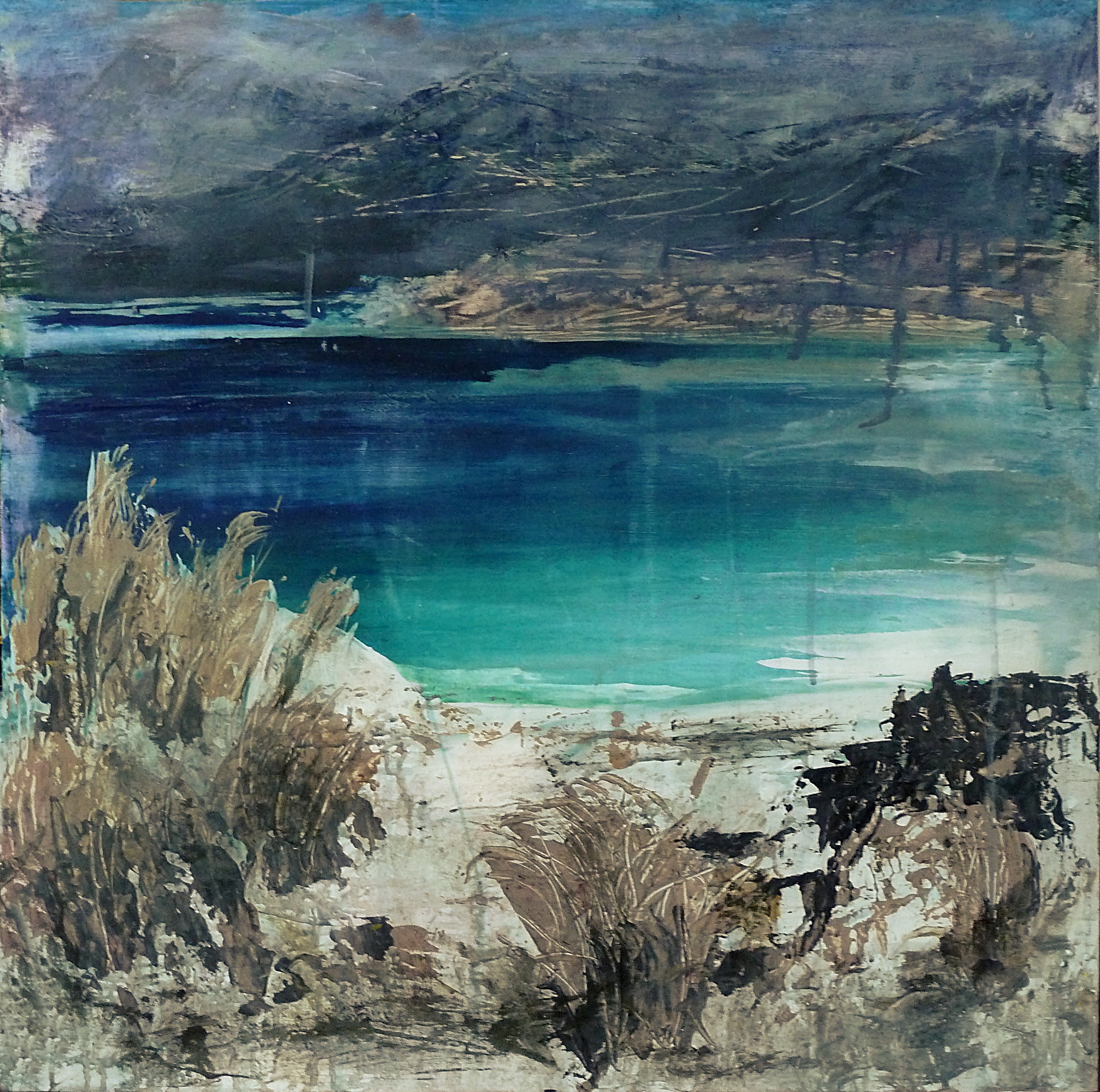
‘Traigh Luskentir, Harris. 4’. Mixed media on 30×30″ wood panel.
Finishing touches today on the largest version of Traigh Luskentir, Harris, which concludes my paintings for the upcoming exhibition – Moonscapes: Isle of Harris
All paintings in the series can be viewed from the top of the gallery page – Here. One painting has already sold – you can buy a painting now if you like, it will be marked ‘sold’ at exhibition then when the show ends on 20th July I will post it to your address (any queries to rose.strang@gmail.com)
This is always the busiest time of year, and with a ten-day session of house decorating in addition to painting I’m pretty exhausted! All I have to do now is have all paintings professionally scanned (for limited editon prints), frame the aquatint Leaving Harris, hang the paintings on Friday and order wine/glasses for the preview.
As always, I’ll make a live recording of Atzi Muramatsu’s cello performance to post here along with photos of the paintings in the gallery and the launch night.
Hope to see you on Friday 14th, 7pm (all info on Moonscapes link above)…
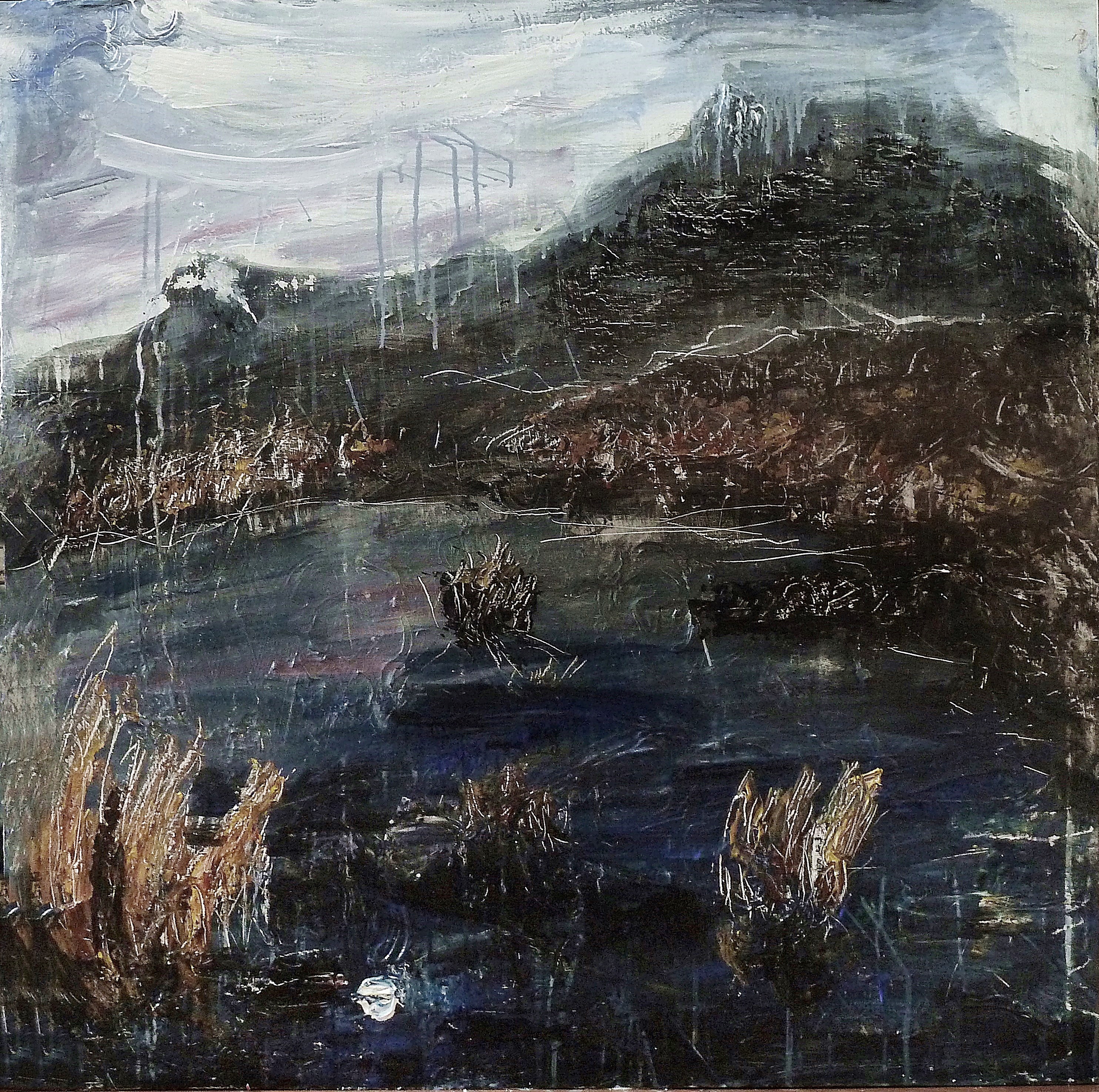
‘Harris Moon 3’. Mixed media on 36×36″ wood
Today’s painting – the largest version of Harris Moon at 36×36 inches (3 by 3 feet) on wood.
Exactly one week now to exhibition! All details here Moonscapes: Isle of Harris
I took photos of some of the stages of painting…
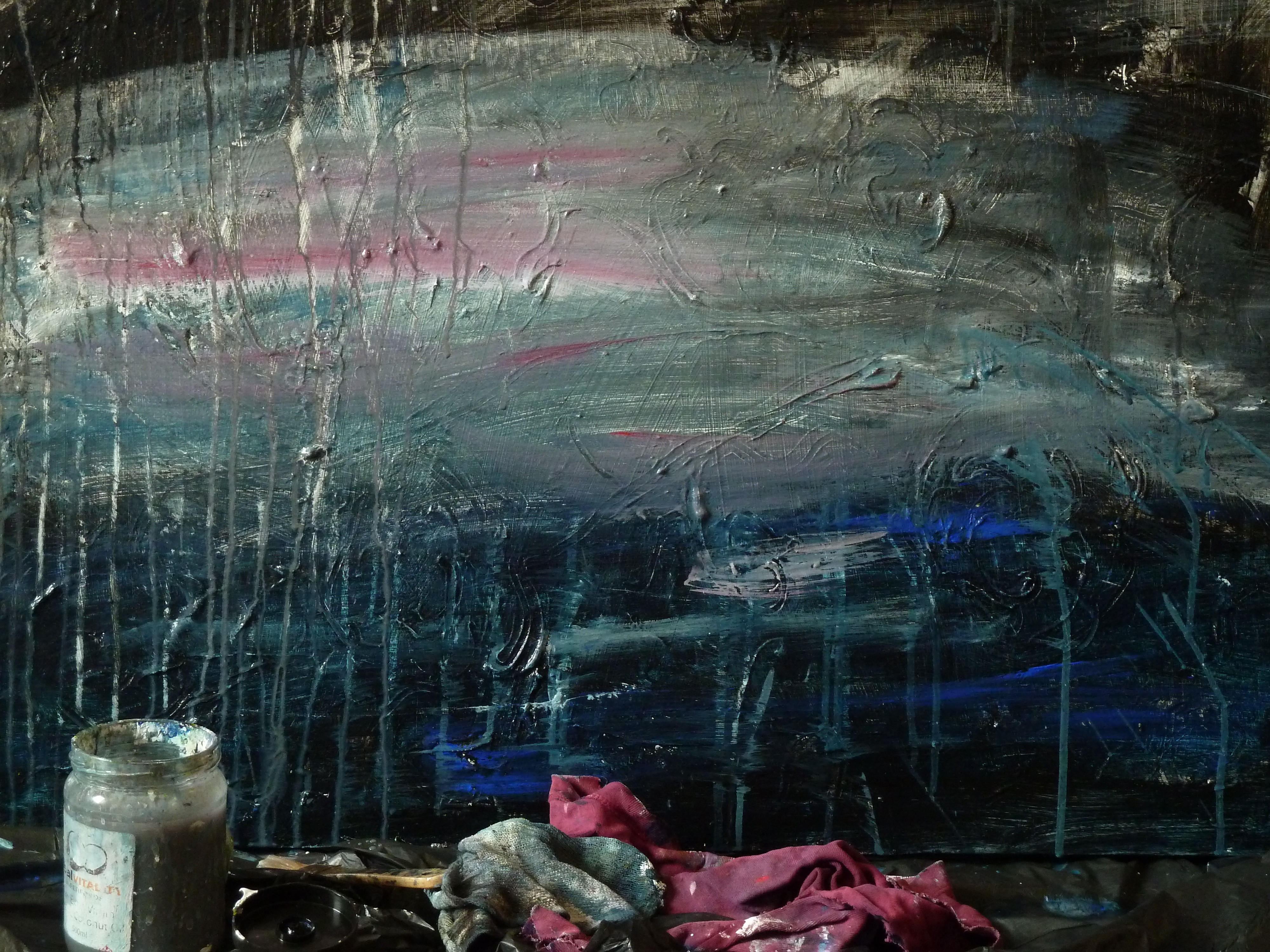

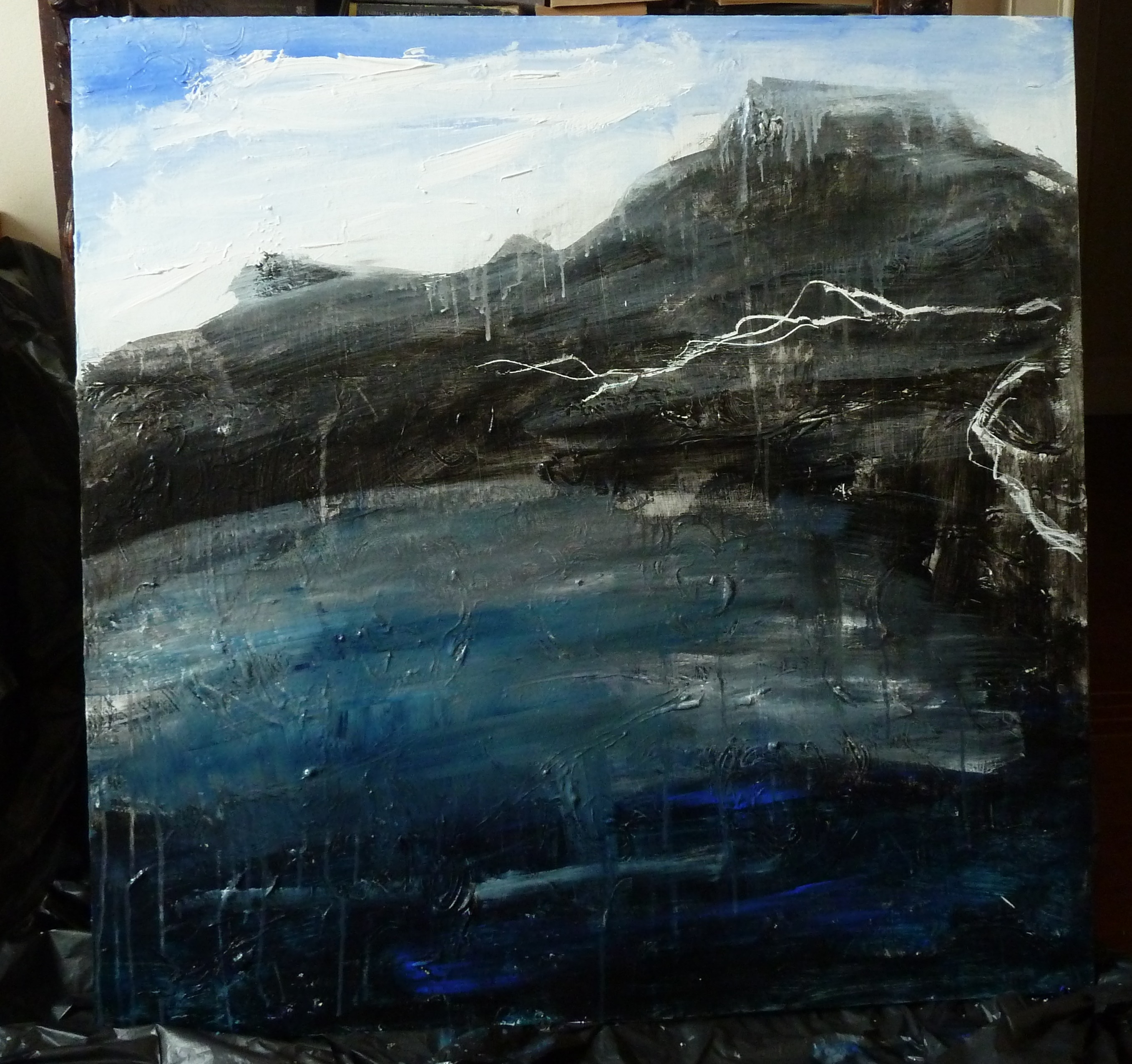
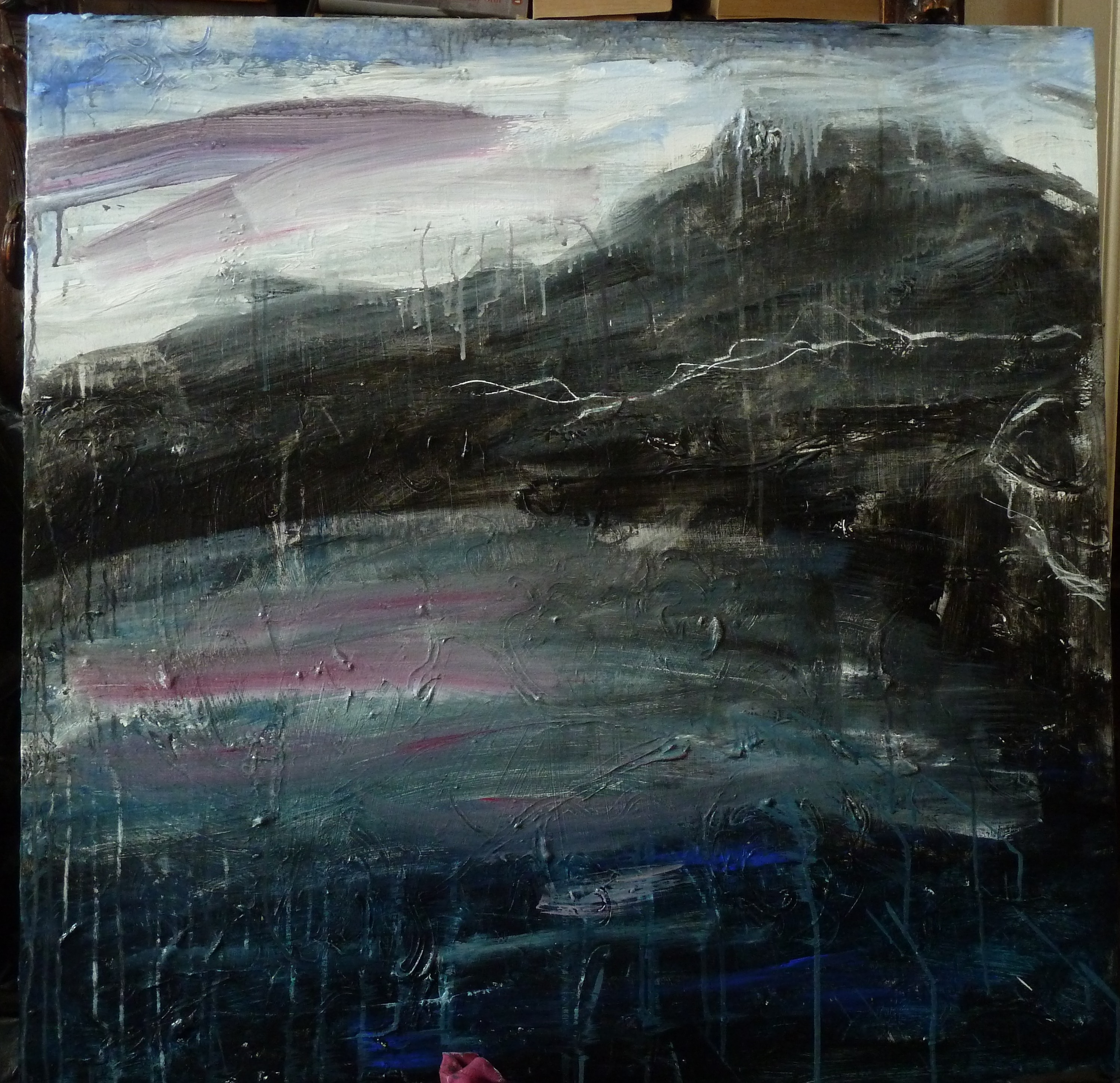


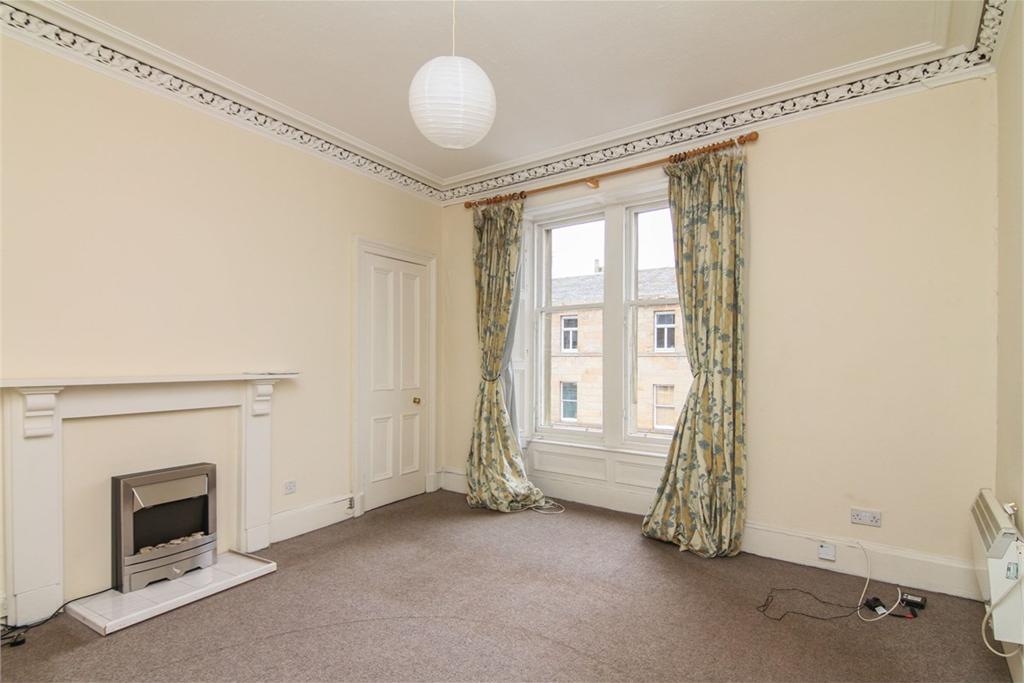
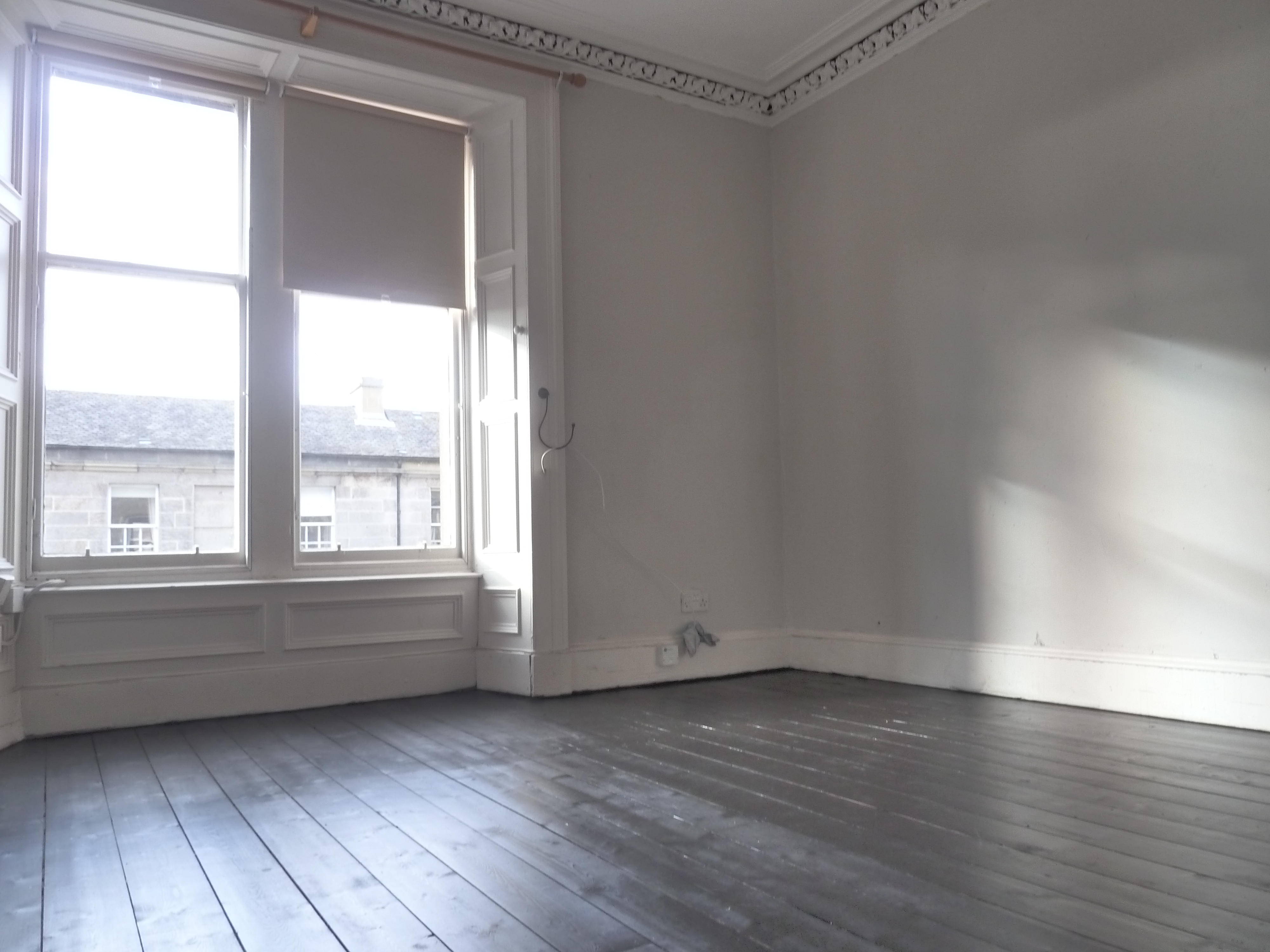
 In between painting for the July exhibition (link – Moonscape: Isle of Harris ) I’ve been decorating my new flat. What’s most exciting for me is that it can be used as a open studio space from time-to-time (I’ll probably paint and show a series of snowscapes this December).
The flat (in a traditional Victorian Edinburgh tenement) had previously been a flat for rent, so it was magnolia and beige-ified throughout, and has about six phone lines thanks to tenants getting new phone services installed each time they move in!
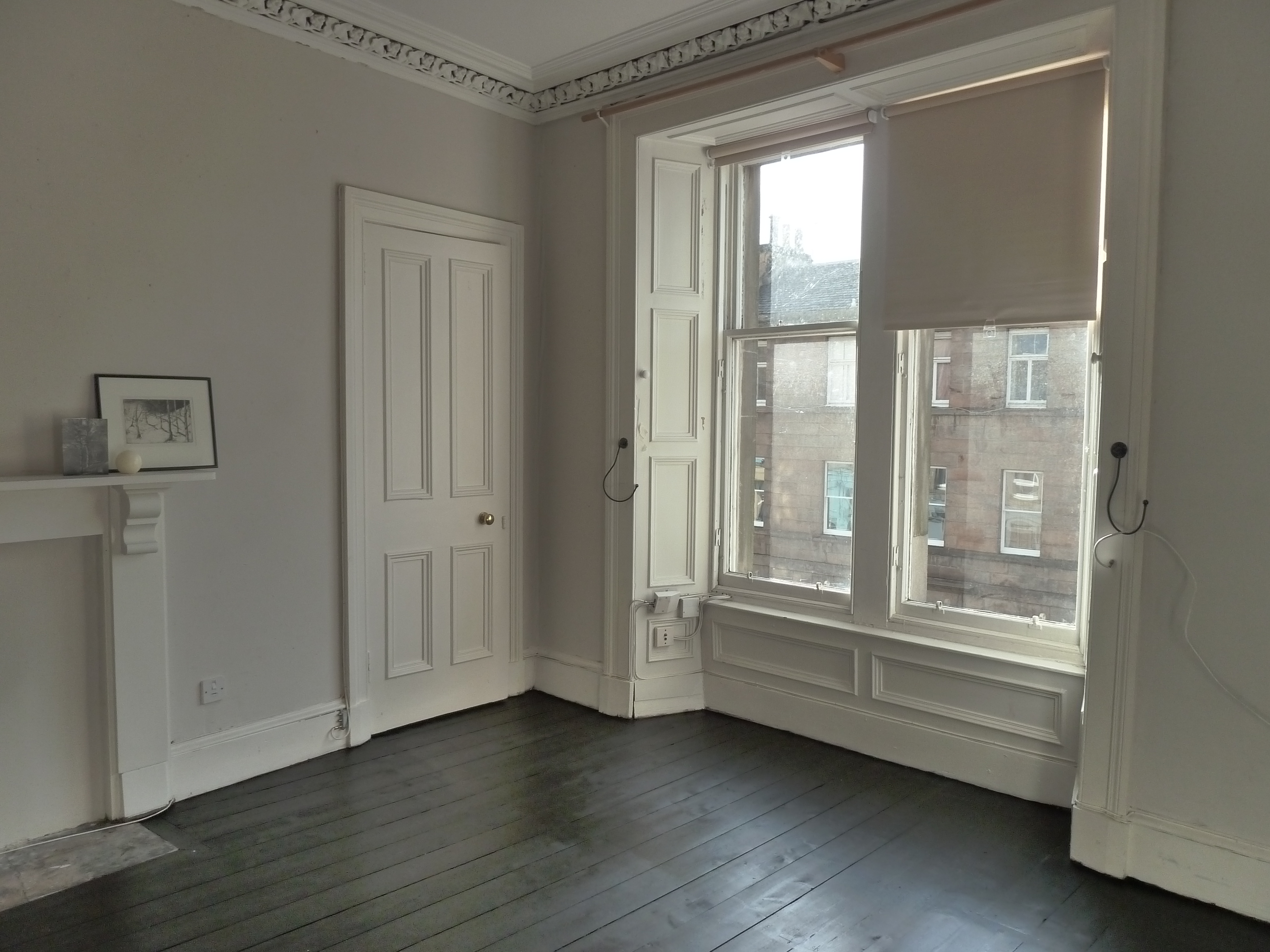
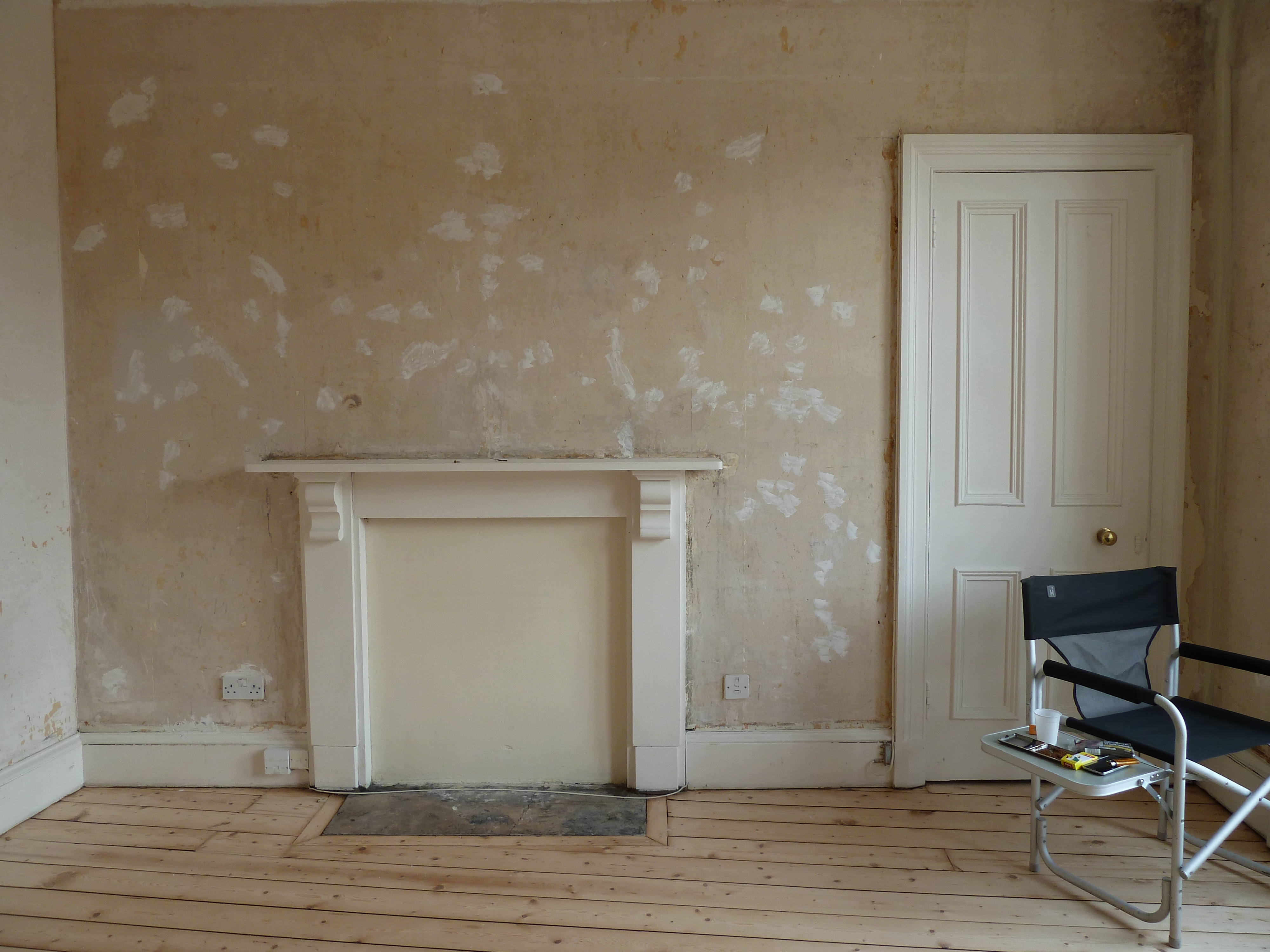
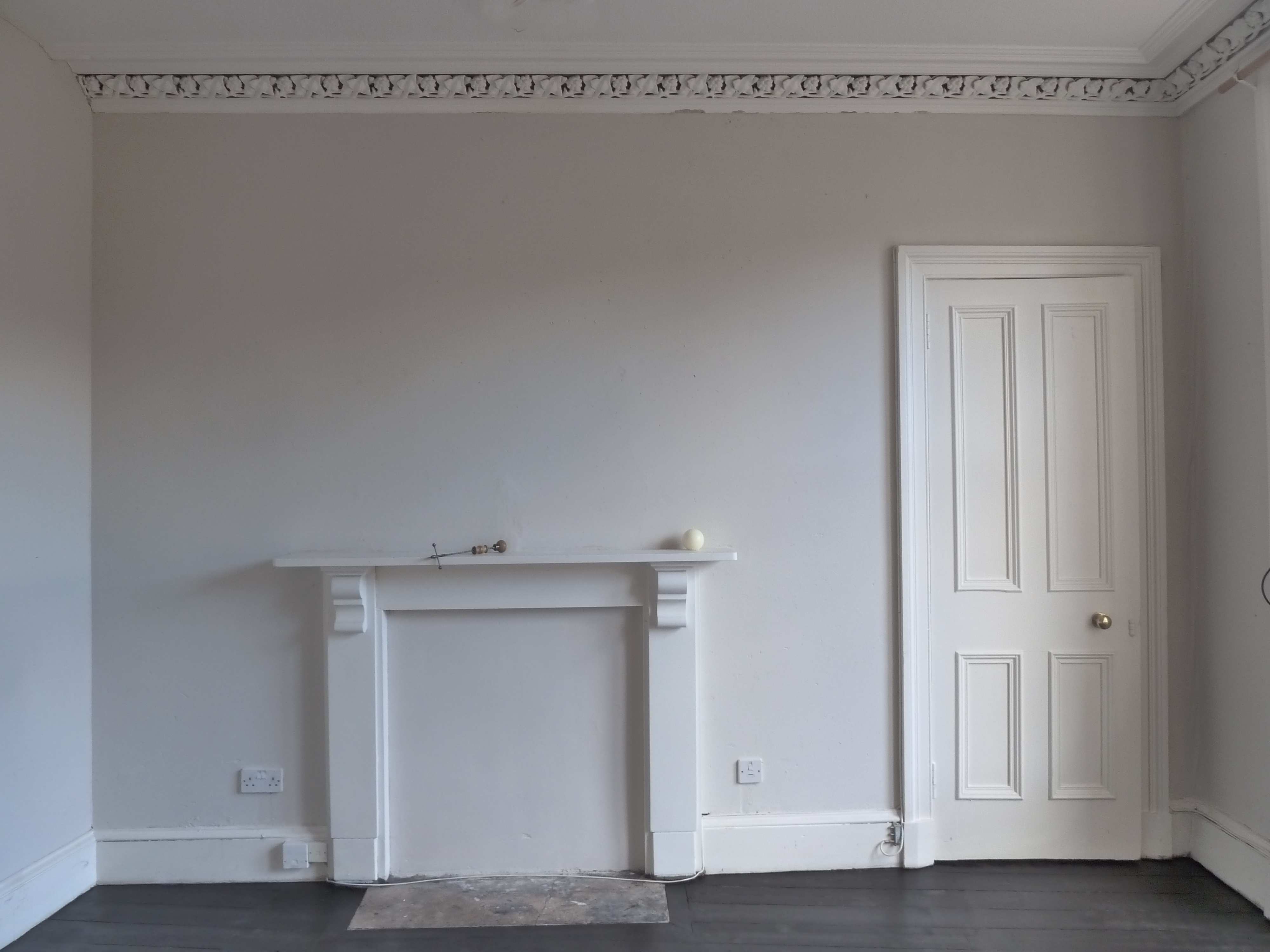
I’m on a tight budget, so most of this has been achieved through a bit of hard graft (including that of family and friends!) but also it’s amazing how a room can be transformed by floor sanding. (in this case Victorian Floor Restore who did an excellent job of repairing and sanding the floorboards which were a horrific mess with loose boards, ingrained dirt and ancient underlay). Also messed up walls with layers of tenacious woodchip wallpaper which had to steamed and scraped off (about halfway through I was losing the will to live and was thankfully helped out by my ever cheerful and stalwart friend Donald Ferguson!). Also there were millions of holes that had to be polyfilla-ed (the Beatles ‘A Day in the Life’ was playing in my head throughout – Four thousand holes in Blackburn, Lancashire, and though the holes were rather small, they had to count them all. Now they know how many holes it takes to fill the Albert Hall…
Anyway, here’s the before and after, showing just the room I’ll use for a gallery. (For the decor obsessives among you – the wall colour is Dulux Egyptian Cotton – cheapie alternative to Farrow and Ball’s Elephant’s Breath, the floor – Dulux satin black floor paint. At some point I’ll sort out an open fire as it’s there behind the mantle piece)…
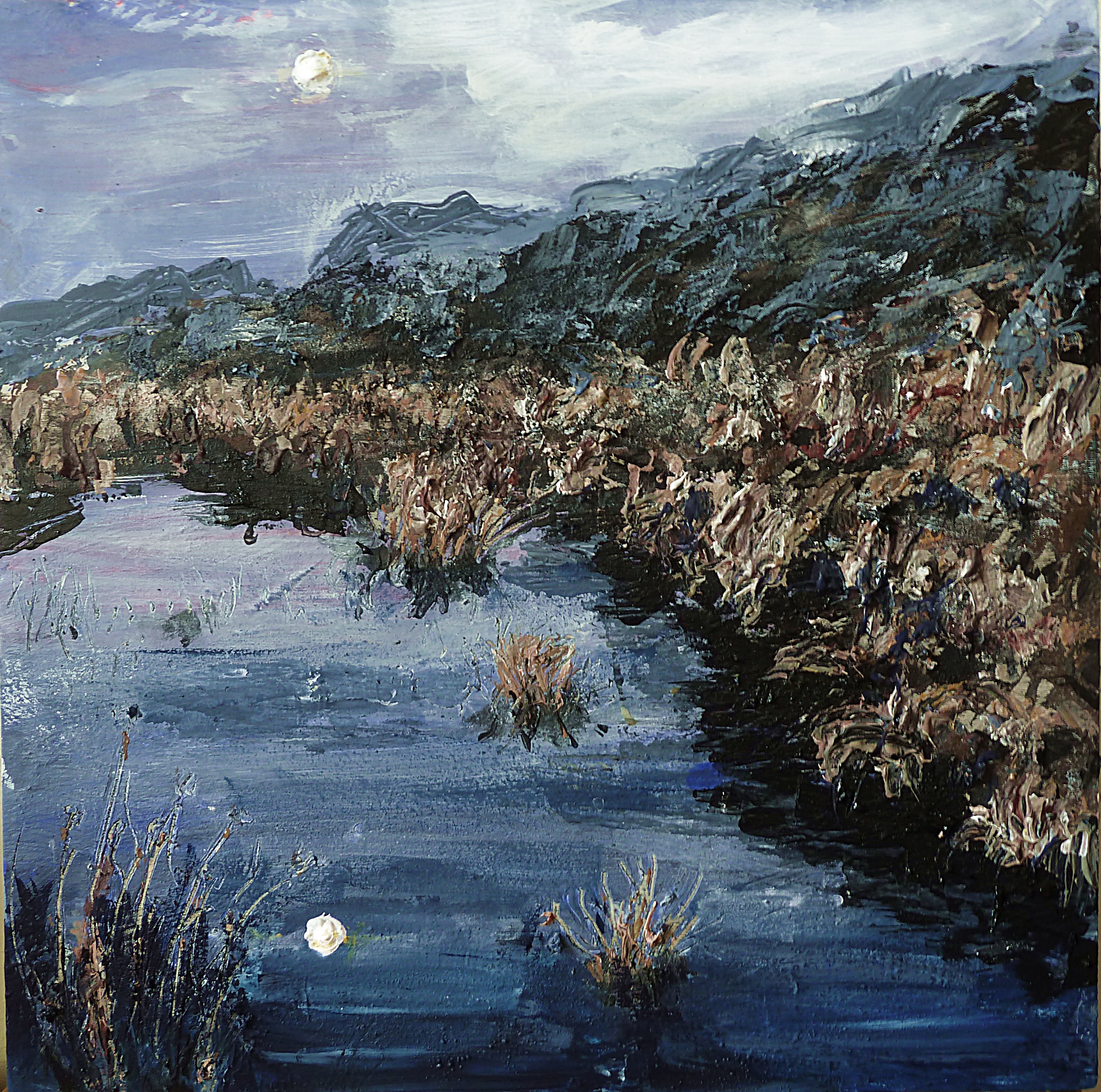
‘Harris Moon 2’. Mixed media on 16×16″ wood
Today’s painting – the third version of the Harris moon theme (also the title of the exhibition Moonscapes: Isle of Harris). I’ll be painting this theme for the largest of the paintings.
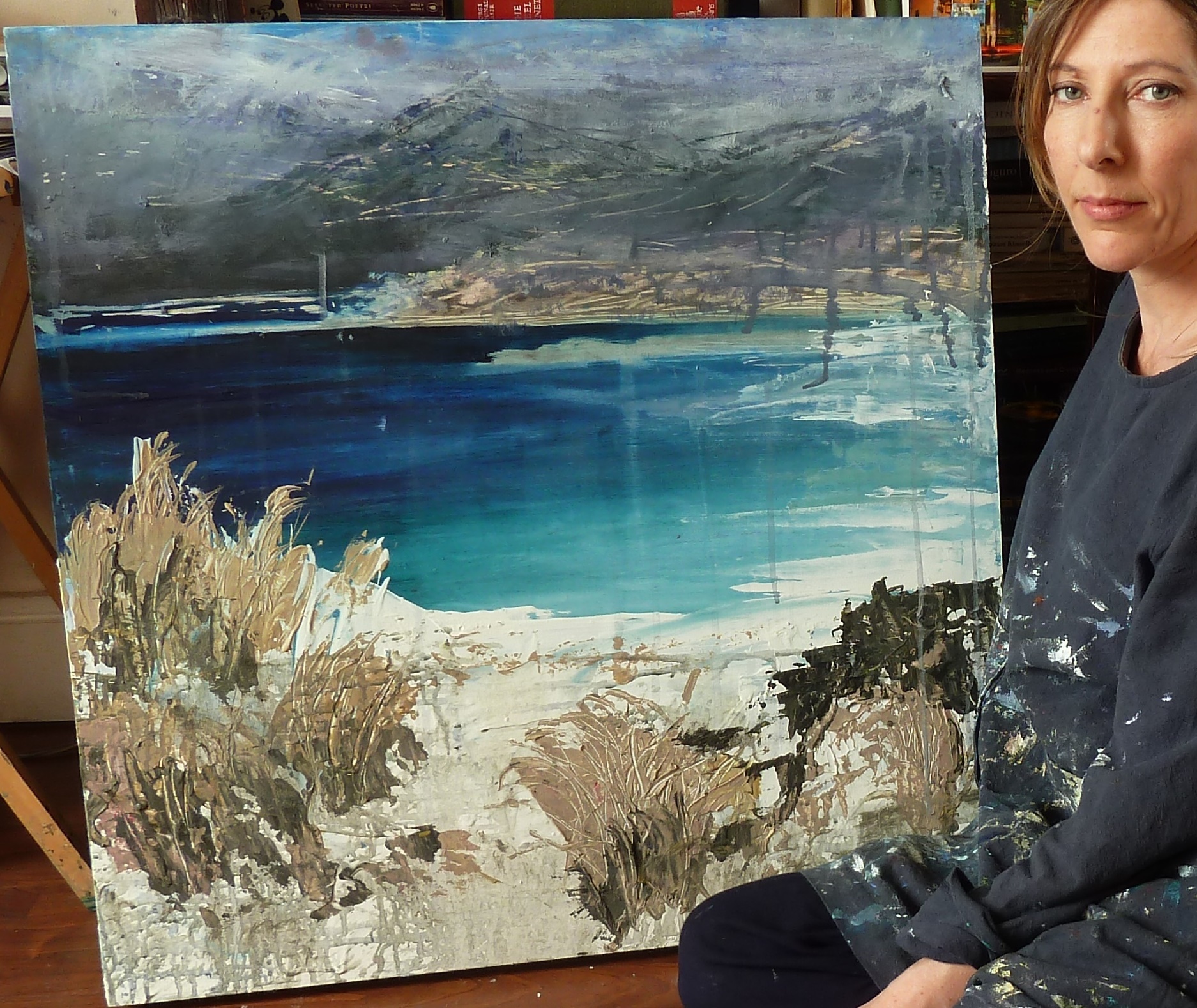
Below – a bit more work on paintings already started, and a photo of me next to Luskentir 3 so you can see the size relative to a person. People often think the paintings are much smaller (some of them are – they start at 5×5″ and go right up to 40×40″). It’s helpful to sart each series small then work up to a bigger piece once I’m confident of the approach, obviously it’s a lot less expensive to make smaller mistakes!
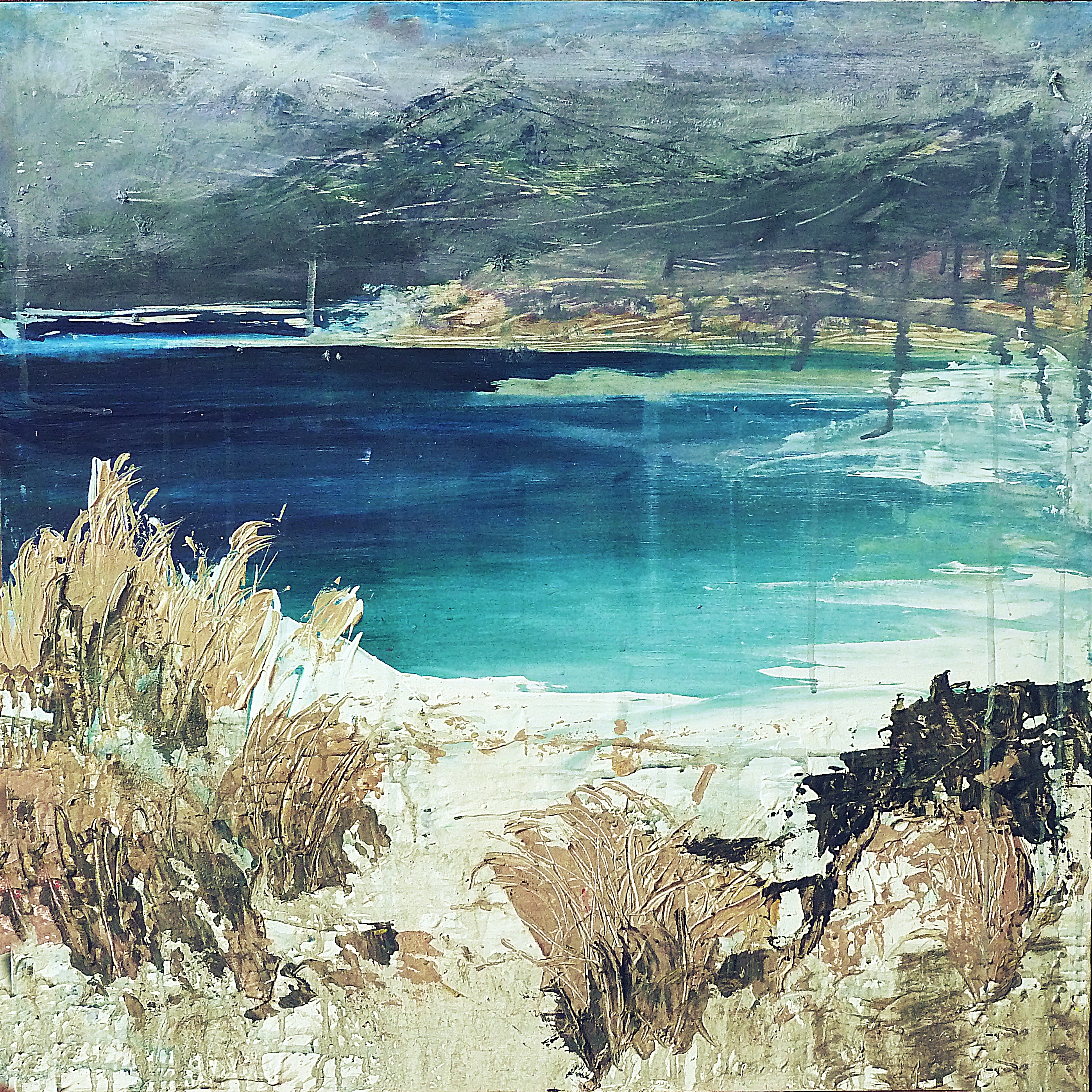
Luskentir 4 in progrss
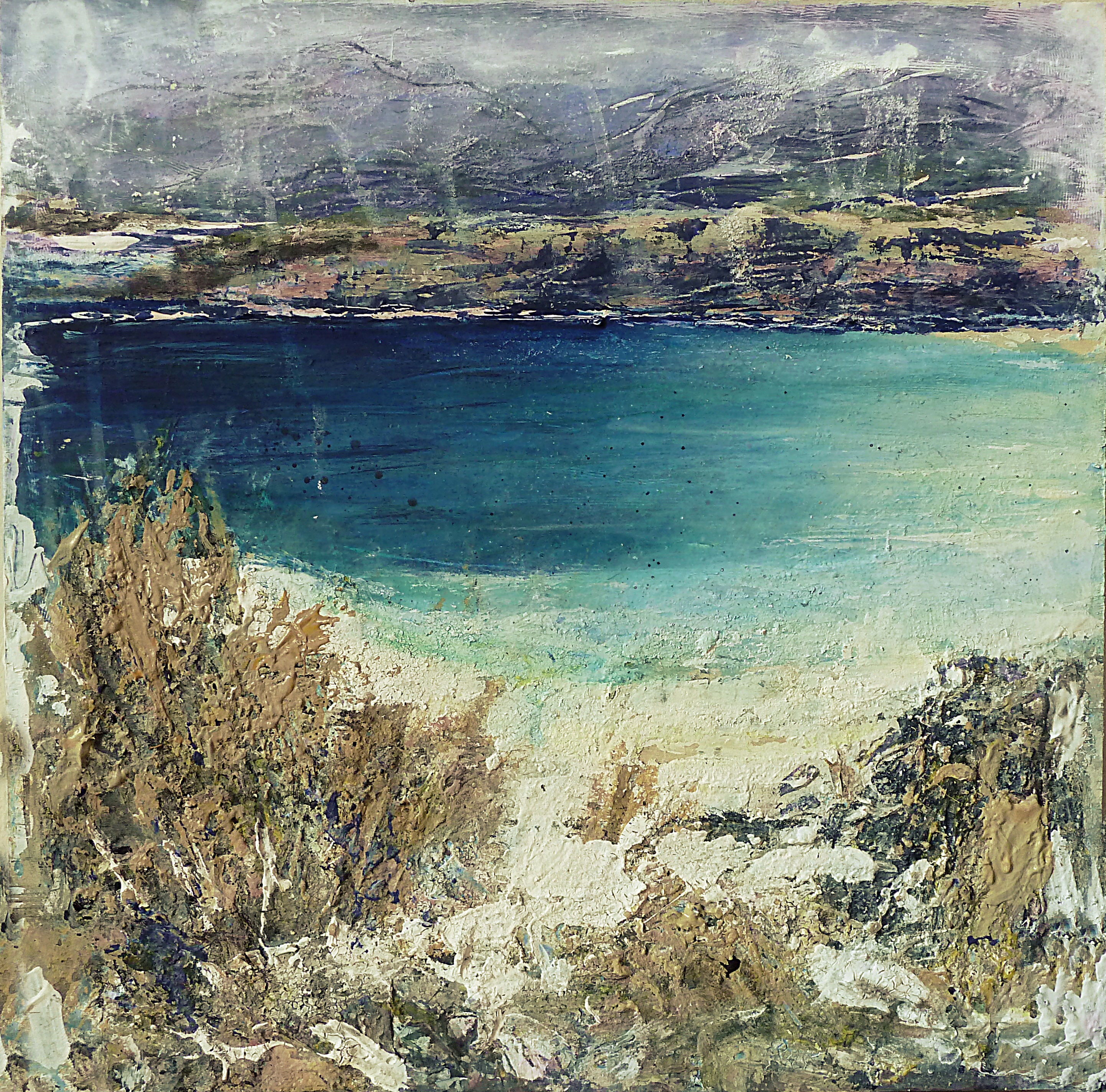
‘Traigh Luskentir 3’. Mixed media on 16×16″ wood panel.
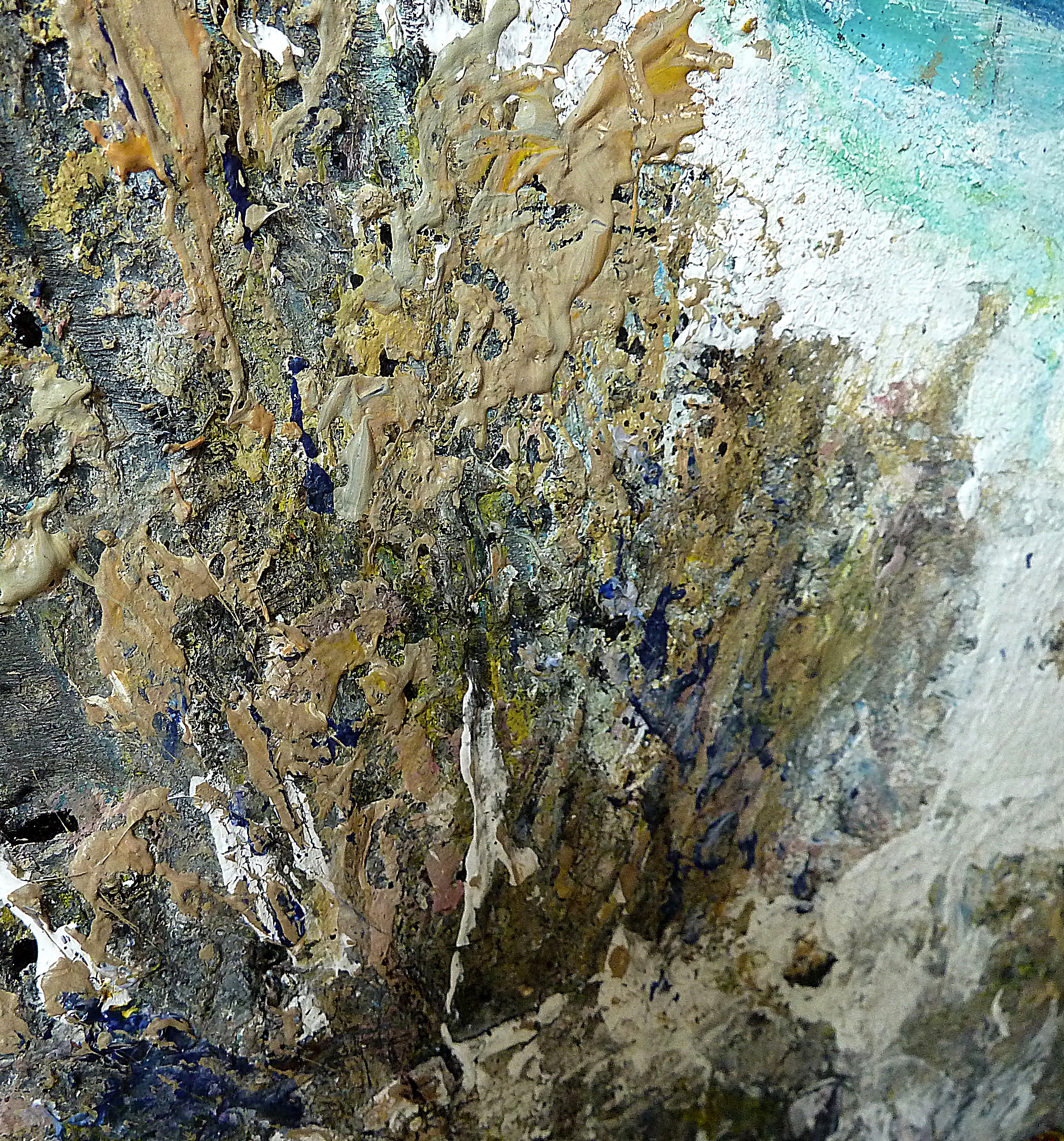
detail
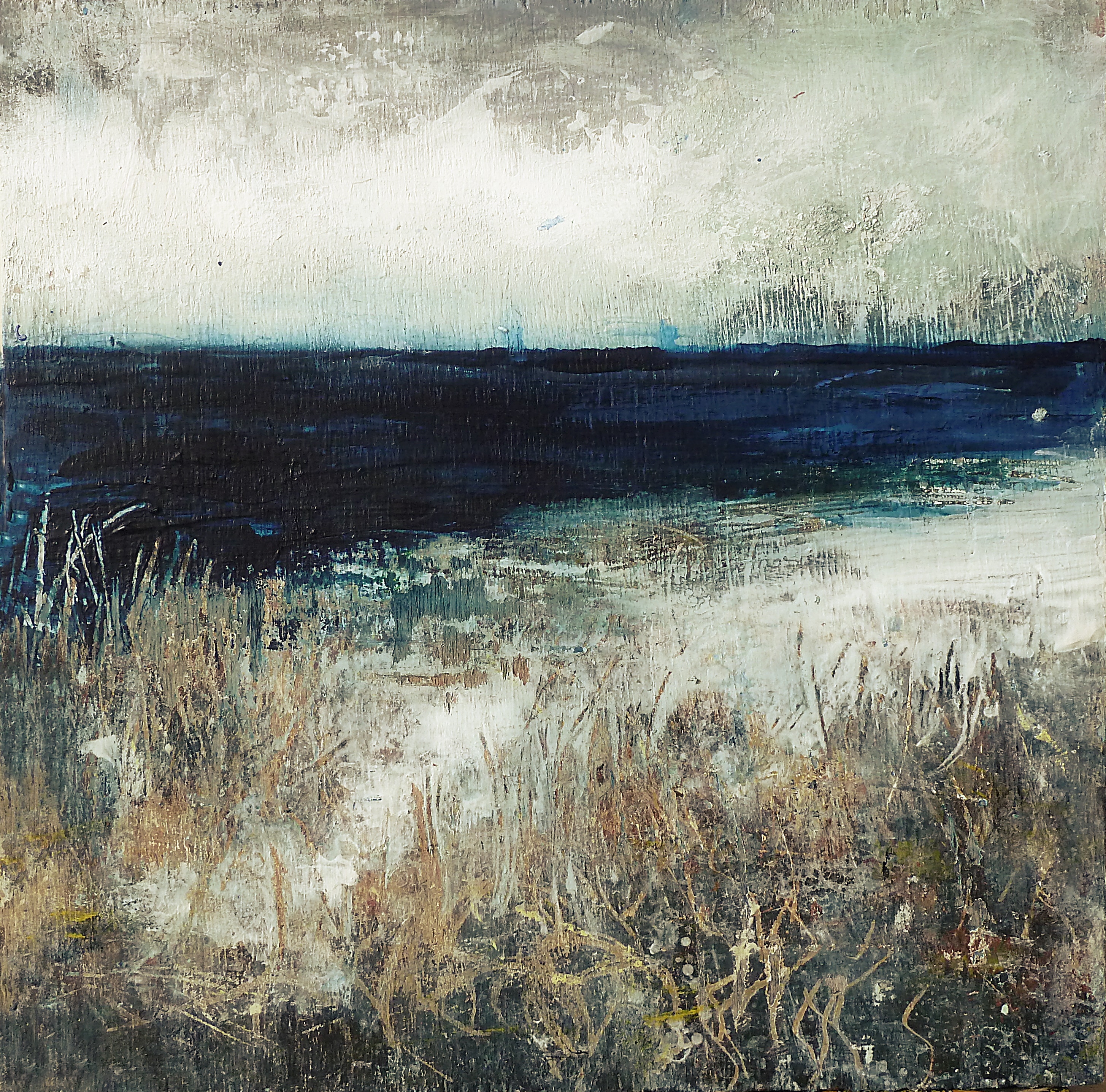
‘Tràigh na Buirgh, Harris’. Mixed media on 9.5×9.5″ wood pane
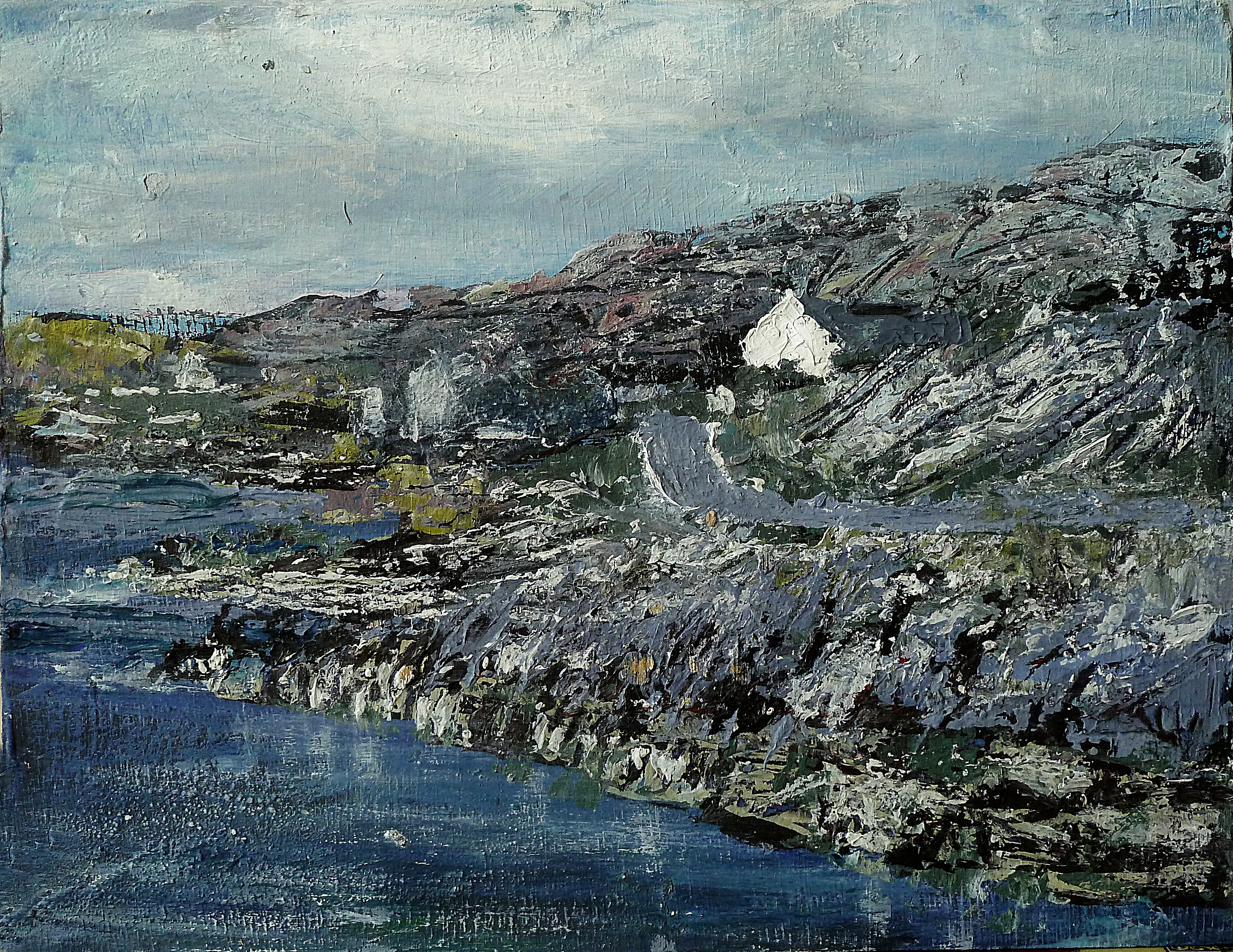
‘Coast Road near Geocrab Bay, Harris’. Mixed media on
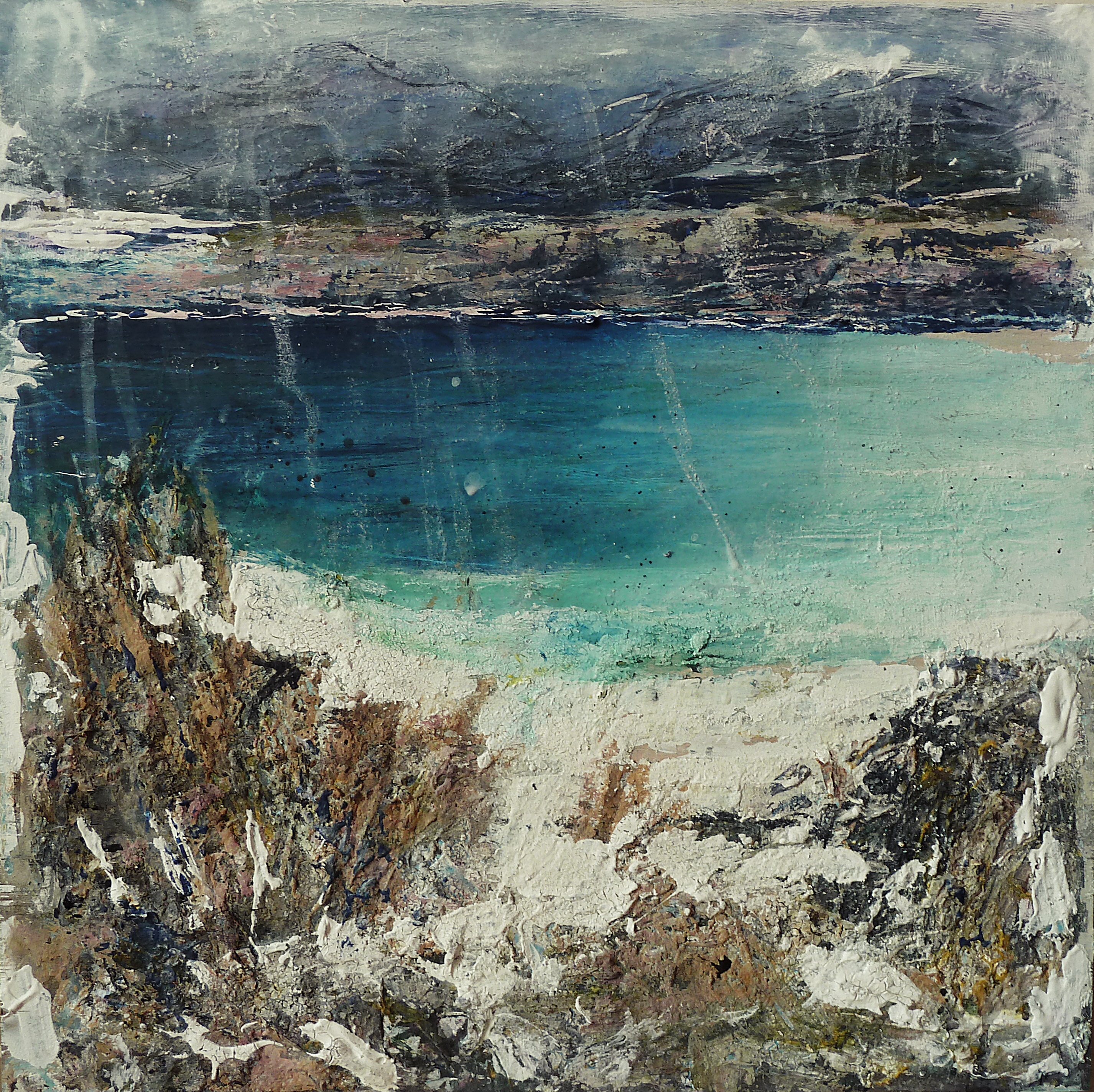
‘Traigh Luskentir 3’. Mixed media on 16×16″ wood panel.
Today’s updated ‘Traigh Luskentir 3’.
I know people like videos of paintings being created, so today I remembered to take a few videos while painting (see below). Not very professionally – in as much as I was painting with one hand and holding a camera with the other – if you like the camera work in Jason Bourne films you’ll love it!
The video shows the way I work with wood – scraping back to the wood to create texture and so on. These paintings aren’t finished yet so I might make a better video tomorrow if there’s time, though the pace is getting a bit frantic as I also have my new flat to decorate. My hands will be worn out by mid-July, but in truth I’m really enjoying all these creative projects.
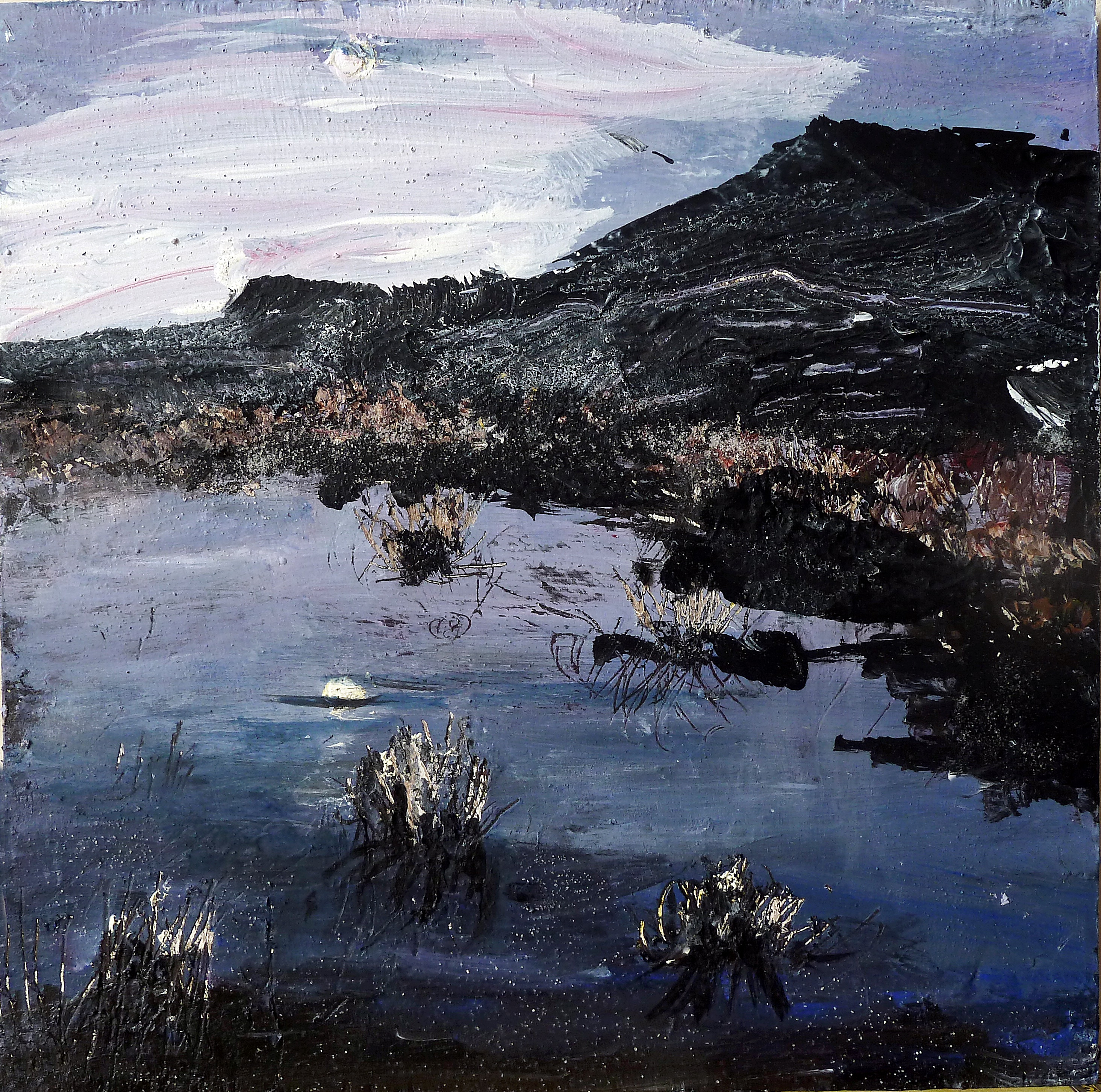
‘Harris Moon’. Mixed media on 9.8×9.8″ wood
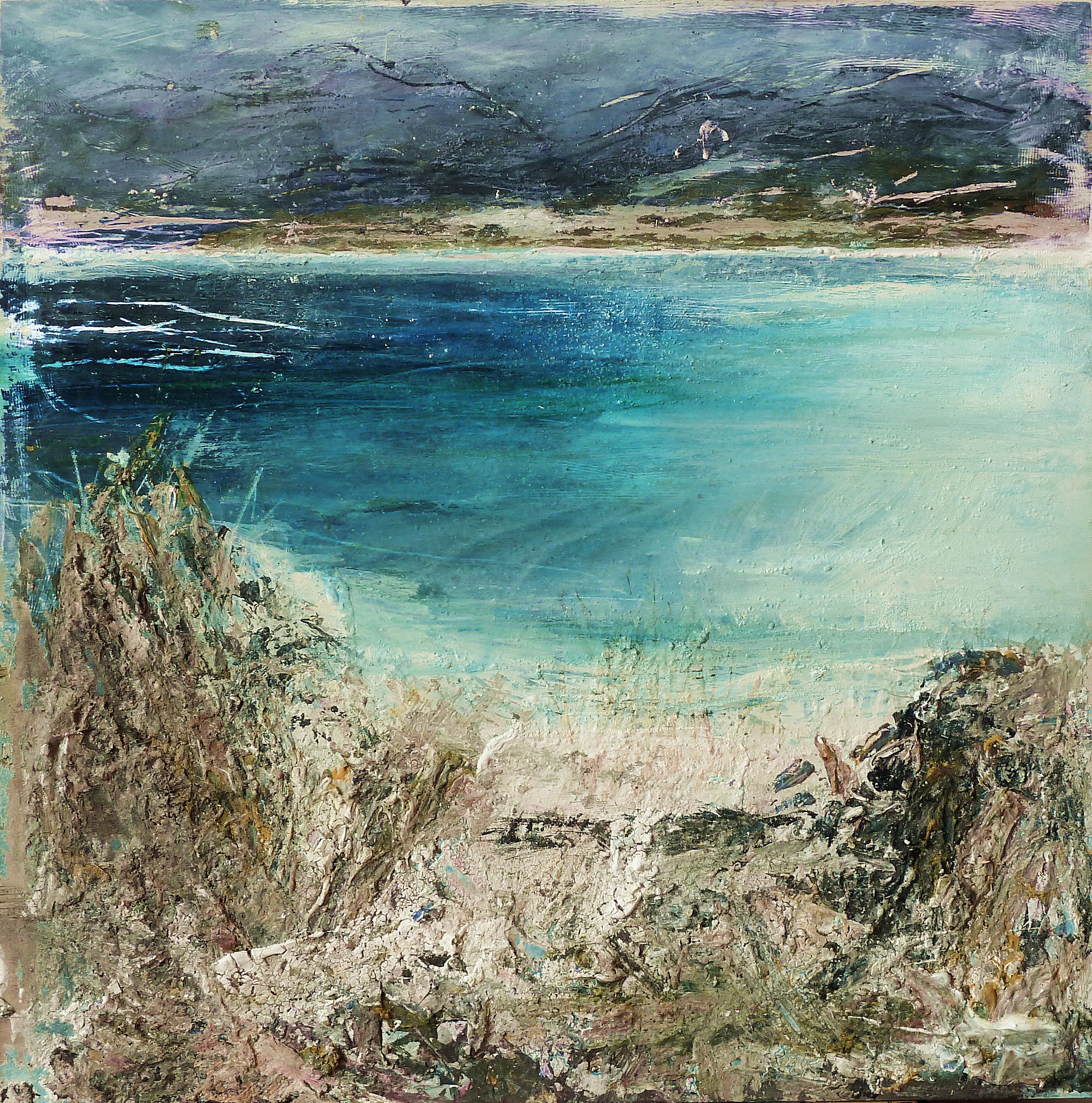
”Traigh Luskentir, Harris 3′. Mixed media on 16×16″ wood
Today’s paintings of Harris, both need a bit more work which I’ll finish tomorrow. This version of Luskentir is very similar to Lustentir 2 though this is 16×16″ – practice for a larger one at 30×30 inches.
Postcards for the upcoming exhibition on July 14th arrived today (below). If you’d like to come along you can keep up with details on this Facebook exhibition event page at this link ‘Isle of Harris’


Khadija Saye
Two days ago I hadn’t heard of Khadija Saye. There was a time when I kept up with the latest artists featuring at the Venice Biennale but it’s not a world I mix in these days. So I went online to explore her recent series, titled Dwelling: a place to breathe, which took inspiration from her recent journey to Gambia where she explored Gambian spiritual traditions. Looking at it triggered my first deeper reaction to the Grenfell Tower fire. I cried of course, but I was also inspired and deeply impressed by her work.
The works are copyrighted so please take a look at them here – http://www.sayephotography.co.uk/dwelling
I share the anger that millions of people across Britain now feel about the greed and inhumane motives that are the cause of this fire spreading so rapidly; the recent refurbishment of Grenfell Tower as part of ‘regeneration’ efforts, or more accurately yet another vanity project, consisting of un-required new ground floor communal areas with bland artworks, and the choice of plastic cladding to improve surface appearance and save money.
I have no doubt this was intended as a quick makeover, so that the surrounding high value homes, mansions and new builds of Kensington wouldn’t lose value. There was no upgrade to the fire safety system despite many warnings and letters sent by residents to the local Council. The new cladding was guaranteed to blaze rapidly throughout each (un-contained in terms of fire spread) floor of the 24 storey tower block.
This morning Saye’s death was confirmed and when I looked through her artworks I felt the loss of a loved, respected, humanitarian woman in her early twenties. She was also a talented artist whose work, as mentioned, was selected for this year’s Venice Biennale.
The Biennale runs from 13th May to 21st November every two years and it’s regarded rightly as one of the world’s best contemporary arts festivals. Its themes are often topical, political or mold-breaking in contemporary artforms or ideas – it often inspires and informs creative and formal approaches to arts across the world.
I attended the festival in 2001 and found the experience quite profound – I had never experienced such a level of high regard and thought towards presentation of the visual arts; I realised at the time that the UK had some way to go compared to mainland Europe, in terms of intelligent, thoughtful visual arts curation.
Khadija Saye was a photographer (with a BA (HONS) in photography from University of Creative Arts in Farnham) who experimented with various photographic techniques. She was born and brought up in London but her background is mixed race and multi-cultural, so much of her subject matter explores the lives, religions and cultures of British first or later generation ethnic groups and emigrants. Also her Gambian heritage, which included her recent visit to Gambia and her response to Gambian spirituality and culture resulting in this recent series titled ‘Dwelling: a place to breathe’.
There is no easy interpretation of these photographs and no paraphrasing by the artist, but the title suggests to me that for Saye, her experience of Gambian spiritual rituals was liberating.
A ‘space to breathe’ for Saye may have been a place where externally imposed identities no longer exist, where race, or the sense of displacement a person might feel as an ethnic minority in the UK now separate from their cultural origins, melts away, becomes less concrete – ‘a place to breathe’ aside from all those imposed, often meaningless labels that inform the idea of identity – and surely this liberating space is at the heart of spiritual seeking.
Those were my thoughts when I looked through these photographs; just one possible interpretation. Looking at them now it’s also impossible not to think of the way Saye died two nights ago. Yet, although she was only in her early twenties she already had a deeply insightful approach to life – as a young artist she was on the verge of great success, her life was rich, her work respected and it’s clear from all the messages and statements from those who knew Khadija Saye, that she was a much-loved humanitarian activist for people from all groups of society.
She is an inspiration and, despite the current state of UK politics, I want to believe that she and others like her represent a future that is still possible.

