Tag Archives: Scottish artists

Painting The Living Mountain. Artist’s journal. Pt 3

Pt 1: Here

Pt 2: Here

Pt 3: Here

Pt 4: Here

Pt 5: Here

Pt 6: Here

In the next few weeks I’ll be posting an artist’s diary about creating a series of paintings for The Folio Society’s publication of The Living Mountain, by author Nan Shepherd.

(The Folio Society edition of Nan Shephard’s The Living Mountain illustrated by Rose Strang and introduced by Robert Macfarlane is exclusively available at www.foliosociety.com)

Link to book …

The Living Mountain by Nan Shepherd, published by the Folio Society 2021

Pt 3: Painting Among Elementals

cover2

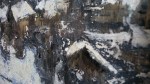
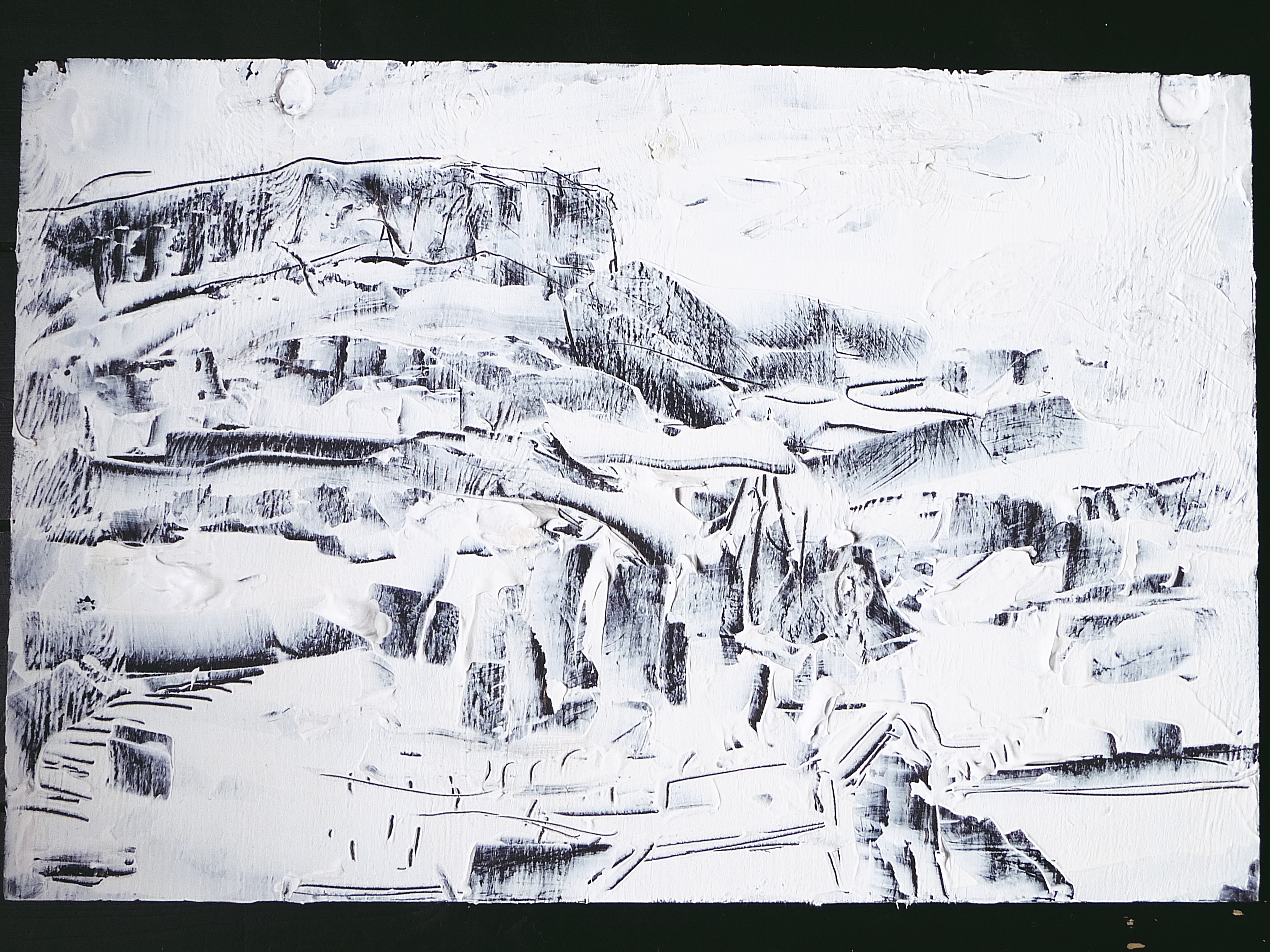
‘Among Elementals. Book cover. The Living Mountain Series. Oil on 60x42cm wood. Rose Strang 2020

My first painting attempt for the series was the book cover. Artists reading this journal can imagine how overwhelmed my mind was with possibilities. How was I going to paint Nan’s experience of the Cairngorms? Any decent landscape artist could paint a scene of the Cairngorms and, had someone got in touch with me to say; ‘Can I commission you to paint a view of the Cairngorms for my friend’s birthday?’ I’d know they were probably looking for an iconic and recognisable Cairngorms vista!

This was definitely not what Sheri Gee was looking for, nor was I. I knew what she was looking for because of the selection of paintings she sent me as examples of why she’d chosen my work. They were paintings I’d created over recent years that were mostly inspired by literature or music. None were commissions – they were all self-motivated experimental works from imagination, mostly taking the form of semi abstract landscape. I was intrigued by Sheri’s selection, because these were paintings I’d struggled over – to create something meaningful. The process had had no known outcome at the start of each painting. I wondered how I’d manage to keep this very loose experimental and intensive approach while also expressing something of Nan’s descriptions and vision; it felt like a bit of a creative tightrope to me.

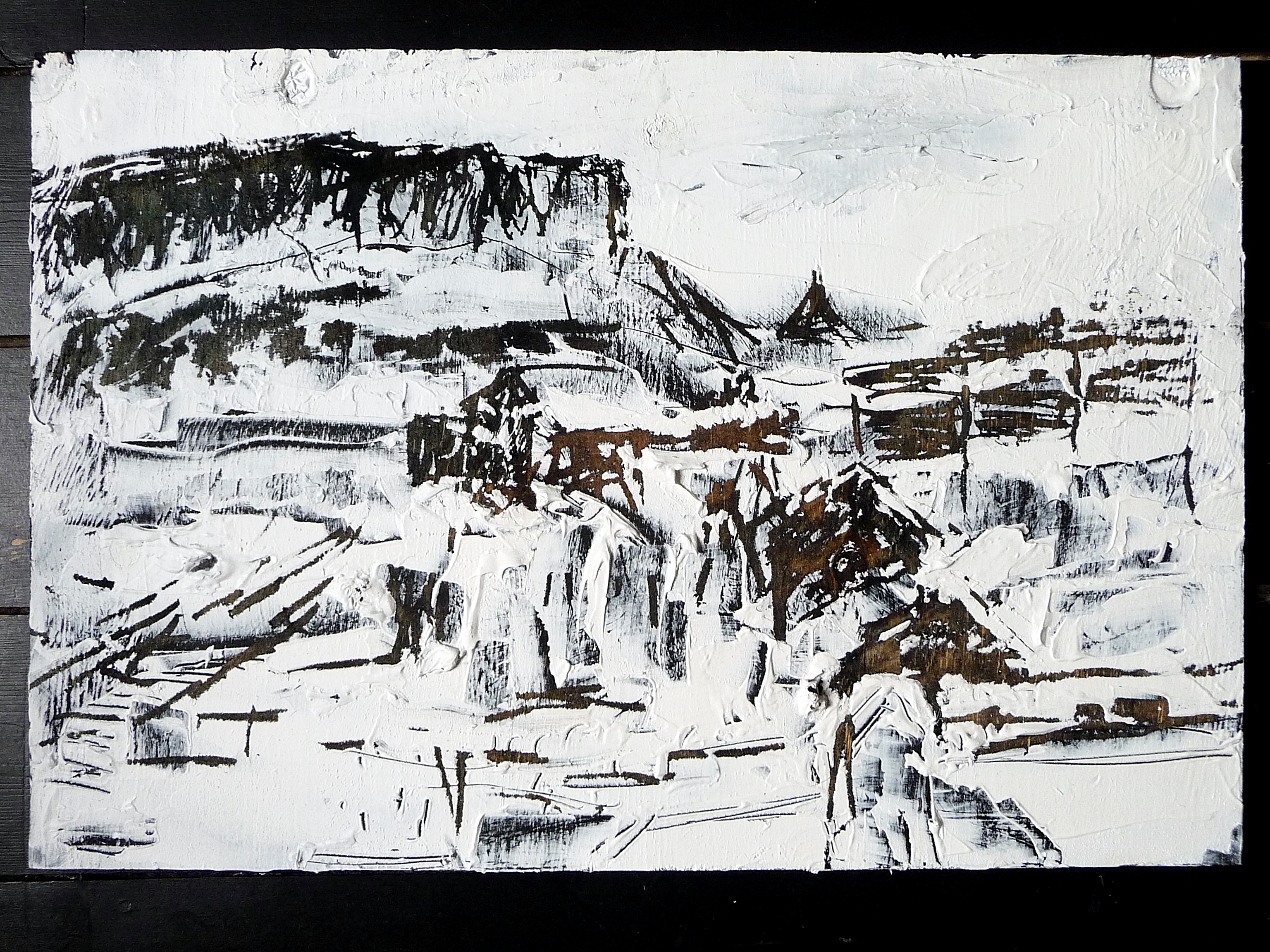
I started with the idea that Nan was inspired by Buddhism. She might have seen paintings by Chinese or Japanese artists expressing ideas of space and spirituality in landscape –  a sense of being. The painting below was my first attempt at a book cover. I was quite pleased with it and the Folio Society were too in a sense, but the problem was that it didn’t say ‘Mountain’, and for the book cover at least there needed to be something to hint at the contents of the book!

3DEC20. LivingMountainCover. Rose Strang

Front Cover painting 1. Rose Strang 2020

I made the following attempts (below) but wasn’t satisfied with those either.

By this time I’d been feeling frustrated for days. I’d ended up with too much colour when what I’d dreamed of was a mystical elemental feel in monochrome. I looked at the two beautiful Turner sketches (below), which re-inspired me to start again with a black acrylic base, onto which I began paintings swathes of oil in various shades of pale grey.

December light in Scotland is horrible to paint in – I ended up chucking solvent at the painting just to break it up and deliberately make a mess. This helped me break away from indecisive dabbing, so I could stand back and see more objectively. Usually I’d look at the painting in a mirror at this stage for further objectivity, but I just felt grumpy and tired. Later on two of our neighbours, Andrew and Carly, dropped by and said ‘that’s great’. I hmphh-ed in response then realised they weren’t just being polite and said, ‘Thanks’.

The next day I worked a little more on the area of water. The oils had dried somewhat, and as often happens with oils, the colours had resolved into something subtle and interesting. I sent it off to Sheri Gee, alongside the other cover image painting. They liked it and though I still wasn’t satisfied, I felt it worked as a book cover.

Looking at it now, with a little more perspective, it actually does capture the feel of Cairngorms in the snow, especially the sense of ever-changing snowdrifts and subtle colour changes.

Part of my frustration was that, thanks to lockdown, I didn’t know if it was possible to visit the Cairngorms. There seemed to be nowhere open where we could stay. There was also the restriction on going further than five miles. Usually I’d have gone there immediately and stayed a few days to at least imbibe the atmosphere before painting, it felt utterly wrong not to be there. I  began to scrutinise government guidelines for possibilities; how dangerous could it be to drive with Adam to the midst of a windswept remote mountain range? In terms of covid-risk surely almost zero – we’d seen almost no-one outside of close family and friends.

A peruse of the convoluted government guidelines revealed (five or so pages and several links in) that it was possible to travel for work-related purposes if the work couldn’t be carried out at home. I wanted Adam to come for photography reasons, to document our trip as well as the fact I wanted to share this experience with him. I take my own photos as occasional painting references, but I wanted to focus on that rather than documenting, plus it freed me up to focus on surroundings.

In terms of mountain climbing the Cairngorms in winter, the risk was real though. I hadn’t climbed a mountain for a few years and neither my nor Adam’s map and compass-reading skills were impressive – I’d always relied on someone else for those. Neither was our fitness level. I felt lockdown-softened and I knew I was no ‘Nan’ in terms of mountain adventure, I accepted that my role was artist not mountaineer! I decided to get in touch with Liam Irving of Cairngorm Adventure Guides, who recommended one of their guides – Emma Atkinson – to steer us up to the plateau.

To prepare, we embarked on a daily walking regime, starting with circuits of the peaks of Arthur’s Seat, then on to the biggest hills to hand near Edinburgh – the Pentlands. Conditions were ideal, with recent snowfalls the conditions were almost Cairngorm-esque we felt. All that remained was to upgrade our anoraks and wax our boots.

Coming up: Pt 4: In the Cairngorms

Painting The Living Mountain. Artist’s journal. Pt 1

In the next few weeks I’ll be posting an artist’s diary about creating a series of paintings for The Folio Society’s publication of The Living Mountain, by author Nan Shepherd.

Pt 2,

Pt 3

Pt 4

Pt 5

Pt 6

(The Folio Society edition of Nan Shephard’s The Living Mountain illustrated by Rose Strang and introduced by Robert Macfarlane is exclusively available at www.foliosociety.com)

Link to book …

The Living Mountain by Nan Shepherd, published by the Folio Society 2021

Part One. The Living Mountain Commission

Rose Strang. Photo by Adam Brewster 2021

In December 2020, with the prospect of an indefinite lockdown stretching ahead, I received an uplifting email …

Sheri Gee, Artistic Director of The Folio Society, emailed to ask if I’d be interested in creating a series of paintings to accompany their publication of Nan Shepherd’s The Living Mountain. They were not yet decided she explained, but simply wanted to get a sense of my interest in the project. My first panicked thought was; ‘If they’re asking other artists right now I’d better respond to let them know!’ and immediately rang Sheri’s phone number.

Picking up on my enthusiasm, Sheri confirmed the panel’s decision after a few days by email; ‘It’s a big fat Yes!’ she wrote. My partner Adam reached in to the fridge which contained an unopened bottle of Cava, and poured two celebratory glasses.

This commission meant a lot to me – far more meaningful than any artist’s painting award. When I first read The Living Mountain (in 2014, a year before Nan Shepherd’s portrait appeared on the Scottish £5) I remember feeling a thrill of recognition – her way of seeing felt somehow familiar to me. I expect many creative-minded people feel similarly when reading The Living Mountain.

Almost every page has vividly-written descriptions that blossom in the reader’s imagination. It became obvious to me, as I read the book, that Nan observed like an artist – that she spent a lot of time looking. Sometimes pragmatically – to assess terrain for example, but more often she gazed at length to observe the effect of the mountain on her mind and senses. Nan immersed herself wholly in the experience of the Cairngorms. Perhaps this is why the book has become so iconic. It’s obviously more than a description of mountain climbing. The holistic nature of her exploration seems to chime particularly with our times. I’m sure it would have equally in her own time, had people paid more attention.

I’d been inspired by Nan’s book in 2014, and I’d thought then of walking the Cairngorms to create a series of paintings, but life had thrown up other plans and projects. On receiving the news in 2020 that I was to be commissioned  by the Folio Society I knew that somehow, despite lockdown restrictions, I had to get to the Cairngorms. I also wanted to explore Nan’s life more deeply; what mattered to Nan, creatively – what might she have chosen if she’d sought an artist for her book?

It was around this time that Sheri Gee contacted me to ask if I’d like to meet Erlend Clouston (the Literary Executor of Nan Shepherd’s Estate). As it happened Erlend also lived in Edinburgh. I replied of course I’d love to meet him. Erlend and I arranged to meet up and it proved to be more than informative; I gained a real sense of the sort of person Nan was, given that she part-raised Erlend in a sense. More than that, I felt my approach as an artist was affirmed by him, or in other words – I got the go-ahead to do my thing!

Coming up: Part Two: Erlend Clouston on his friendship with Nan Shepherd.

The Living Mountain. The Folio Society publication.

Above But did I dream that roe? (The Living Mountain Series). Oil on 37x27x2 cm antique pine wood. Rose Strang 2021

“my eyes were in my feet”
Nan Shepherd, The Living Mountain

I’m delighted to reveal (at last!) that in December 2020 I was commissioned by The Folio Society to create nine paintings for their new illustrated publication of Nan Shepherd’s The Living Mountain. This has been a beautiful project – a challenge that I wholeheartedly welcomed as I’ve loved this book for many years.

The project has been under embargo until its launch date of October 12th 2021, so you can imagine how thrilling it is for me to see it published on the Folio Society’s website!

The link below takes you to the Folio Society’s launch page for the new publication, which features most of the images from the book, accompanying information about Nan Shepherd, and why the book has become such an iconic work of landscape literature.

Robert MacFarlane (author of The Wild Places, The Lost Words and Underlands, among many much-loved books about landscape, flora and fauna) has written the introduction for the book. For MacFarlane, and countless other readers, this book has changed or deepened the way they experience mountain climbing and landscape.

I remember the way Nan Shepherd’s vivid prose enthralled me on my first read. Alongside painting the series (from December 2020 to April 2021) I kept an artist’s journal in which I recorded the creative process; not just inspiration for the paintings, but also everything I learned about Nan from the literary executor of Nan’s Shepherd’s estate, Erlend Clouston, plus the wonderful experience of climbing part of the snowy Cairngorms with my partner Adam in March this year.

I’ll be posting the journal in a series of blogs over the coming months. In the meantime, I hope you’ll take a look at the newly published book on this link! …

The Living Mountain. Nan Shepherd. The Folio Society

Themes – Trees

Above: Spring Sycamore. Acrylic on 20×16″ canvas. Rose Strang 2013

As I’m currently painting a private commission which must remain secret until October 2021, I thought I’d post themed blogs in the meantime. Today’s theme is Trees.

My last theme was Sea. In the next few weeks I’ll also share my paintings on the themes of mountains, portraits, winter, abstraction, imagination and collaborations

It’s easy to imagine dryads or sidhe (faerie folk) hiding behinds trees in ancient forests. Many children’s stories or fantasies are set in the woods; think Tolkien, C.S. Lewis, or Robin Hood! Trees seem to spark imagination – for good or ill (think of all those spooky tales or films set in forests!) I’ve wondered why this is – perhaps it’s the fact that in a forest so much is hidden – it’s a metaphor for the unconscious, for the unlawful and rebelious.

I find that painting trees requires loose brushwork (or loose line if it’s drawing) though in a different way from sea painting – not so much gestural as allowing the paint to drip and splash, leaving patches to imagination, with a strong sense of light/dark to bring depth so the viewer is led into the forest.

When painting forests of the Scottish Borders in 2014, I was inspired by the last line of a Borders Ballad called Erlinton, about a girl who escapes to the forests to be with her lover; now we shall walk the green-wood free. To me that line beautifully evokes the idea of Medieval tapestries and tales. So with that in mind, to enhance your viewing pleasure of the tree paintings below, here’s a music piece for lute by William Byrd – Will you Walk the Woods so Wild –  Byrd

Or if you prefer, here’s a beautiful performance of Dvorik’s Silent Woods from From the Bohemian Forest –  Silent Woods

I’ve headed each set below with these terms: Spring  Summer  Autumn  Winter

Spring

My favourite time of year – from the softening of air in March, to the explosion of flowers in April and May. I think it’s inspired my best tree paintings! Spring Sycamore, below, was bought by my dad in 2013. Probably because it was painted after a walk we took in spring near Queensferry. My dad passed away in 2016 and is remembered with great love by everyone who knew him. When we were kids he’d make tree swings in Queensferry forest with lassoe techniques on the highest branches of huge beech trees, so you could swing down an entire valley, terrifying at first, then exhiliarating! As he used to say, tongue in cheek (perhaps?) ‘if a kid isnae terrified it’s no a proper game’!
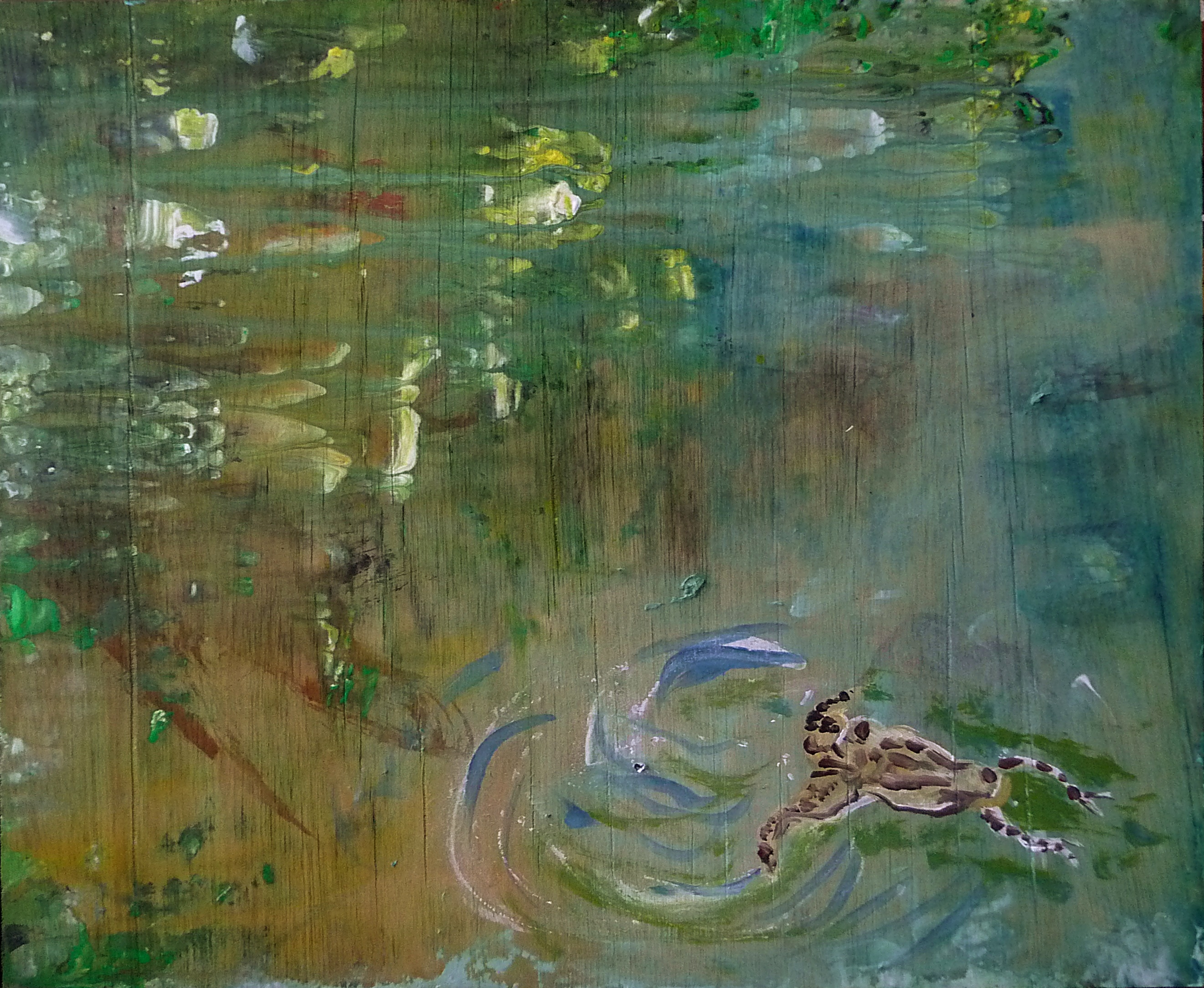
I was quite happy with the minimal paintings from the Water of Leith series below, I wanted to capture more with less (they’ve not sold though!) Spring Chinoiserie was a bit of a nod to Pollock, who expressed the energy of nature with rhythmic drips and splashes of household paint. Some works here – Pollock
Bare trees are all about lyrical line – I’m also thinking of beautiful tree drawings by the wonderful illustrator Pauline Baynes. Link to her drawings – Baynes

Summer

Emma and Friends (below) captures something of the idyllic feel of summer I hope. It’s of my niece and her friends after they’d completed their final school exams. They took a swim in the River Tweed and the green light of summer transformed them into luminous mythical nyads!  Most of these tree and forest paintings in 2014 were from a series inspired by Borders Ballads, as mentioned in my intro above. Technique-wise, I was more than a little inspired by a painting I love by Peter Doig  – scroll down on link to ‘Concrete Cabin’ – Doig

Autumn

Autumn can crackle with electric blue skies and neon oranges, or glow gently in a somnabulic way that makes me feel pleasantly gloomy and introspective. It signals hibernation to come, decay and the passing of time, with the smell of mulchy leaves and woodsmoke in the air, it’s almost clichedly poetic I suppose. Last year I’d planned a series inspired by October in a Highland mountain valley, but the focus for now is my current commission (to be revealed in October this year).

Gustav Klimt’s birches are unsurpassed I think – Klimt

Winter

Although spring is my favourite time of year, winter is endlessly inspiring creatively. The starkness and subtleties of tone make us focus on line and contrast. The monochrome work below; Canonhill Park – is the only time I’ve used a very definite technique as oppposed to experimental – the white blobs are impasto against a black ink flat background, I quite liked it it, but only for this one-off subject.

The paintings of Scottish artists Calum McClure and Andrew MacKenzie focus on line and nature, rather than colour. Winter trees feature in much of their work. McClure’s paintings are lyrical, loose and painterly, MacKenzie’s are more contained, with minimalist composition and delicate line – McClure

–   MacKenzie

Lastly, no post about trees would be complete without mention of Arthur Rackham. For anyone brought up with books featuring Rackham’s illustrations, ‘Rackham-esque’ is an unofficial term for magical-looking trees! Rackham

In the next blog the theme is mountains

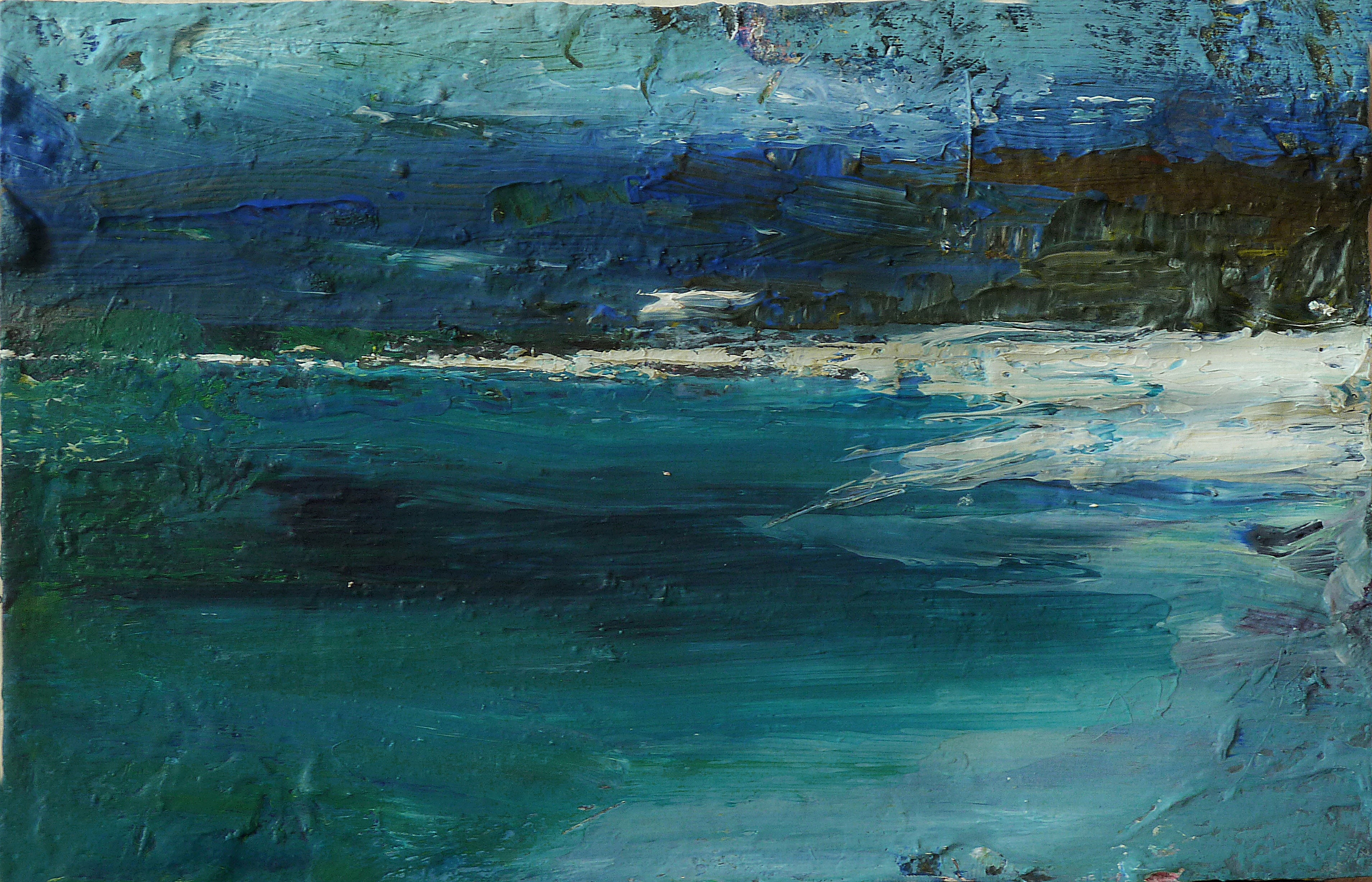
Sold. 'Pisces Moon, Isle of Iona'. Mixed media on 10x10" wood panel. Rose Strang 2018

Themes – Sea

Above: Pisces Moon, Isle of Iona. Mixed media on 10×10″ wood panel. Rose Strang 2018.

As I’m currently painting a private commission which must remain secret until October 2021, I thought I’d post themed blogs in the meantime. Today’s theme is Sea.

In the next few weeks I’ll also share my paintings on the themes of trees, mountains, portraits, winter, abstraction, imagination and collaborations

Our emotional and physiological response to the ocean means that it’s one of the most painted themes in fine art. Capturing a visceral sense of its translucence, movement, moods and light is challenging and there are limitless approaches. To enhance your viewing pleasure, here are a couple of music pieces that conjure moods of the sea! A beautiful song by Ishbel MacAskill:  An Ataireachd Ard  and a timeless sound from the Hebrides: Lewisian Psalm Singing

I’ve headed each set below with these terms: Movement, turbulence.   Light, sun.   Night, dark moods.   Colour, translucence.

Movement, turbulence

Painting movement is best achieved by making a mess I find! I try to keep the paint loose – as soon as I lose that freeness of brushstrokes it disappears. I’ve noticed that if anyone’s watching this process it looks stressful – just as it seems I’ve carefully captured a moving wave it’s time to mess that up and recreate it in looser strokes. This is one of the advantages of working in oils or acrylics, with watercolour you have to strategise more carefully. In the process of messing it up several times though, texture and interest is created.

One of the best compliments I ever recieved as an artist was when the curator of French fine art from Scotland’s National Gallery bought two of my paintings and compared them to Courbet, Encouraging praise indeed – Courbet was an Impressionist known for his wild waves. An example of Courbet’s waves on this link; Courbet


Light, sun

Every landscape artist is obsessed with the way light creates landscape. Capturing the essentials of light on sea is a constant challenge. Some artists simply make a precise copy from a photo, but that usually just creates a flatness and lack of energy and there seems not much point in recreating a photo, except for practice. The artists I most admire are those who can say everything about light with very little – something I still struggle with. One of my favourites in that regard is Alex Katz. His paintings appear simple until you realise how much he expresses with minimal marks. Alex Katz painting here – Katz


Night, dark moods

Probably the least commercial works are those that explore a more sombre mood. That doesn’t change my fascination with the subject though – it’s poetic and inspiring. We see landscape by light, so when there’s minimal light it has an emotional effect – we seek the light in the painting with a heightened focus. When painting in the introspective winter months, it’s instinctive to paint in a darker or more monochrome pallete. (subtleties of colour can be really difficult in the dark light of a Scottish winter). Tacita Dean, a hugely talented artist, captures an ominous mood in her chalk on blackboard works, yet there’s a romance to them that speaks of our long history of sea tales. Tacita Dean


Colour, translucence

Nothing expresses the unique quality of a particular sea more than colour and transclucency. The sea on Iona on Scotland’s west coast is transparent, impossibly turquoise and clear, whereas on the east coast it’s more opaque and grey-toned, even in bright sunlight. This is down to light (sun rise and sunset in east or west) pollution and geology – the sand on Iona is pinkish white, in North Berwick it’s warm brownish yellow. Go farther south to Cornwall and the sea is still magically green or turquoise but with less gem-like clarity because of a warmer-toned sun. Capturing clarity in paint is a case of clean contrasts and layers of colour. Also I find that a well-placed blob of seaweed in the shallows with just a hint of sunlit white froth on top can work well! Basically though it’s a challenge, and again I wish I could say more with less.  Hockney’s paintings come to mind, view more here Hockney

Joan Eardley’s paintings of the sea have beautiful subtlety of colour and texture, to my mind, unmatched. One of her paintings on this link Eardley

Lastly, the Scottish Colourists are the yardstick by which artists are measured in terms of understanding sea and colour! Colourists

In a few days I’ll share images and links to artworks on the theme of trees.


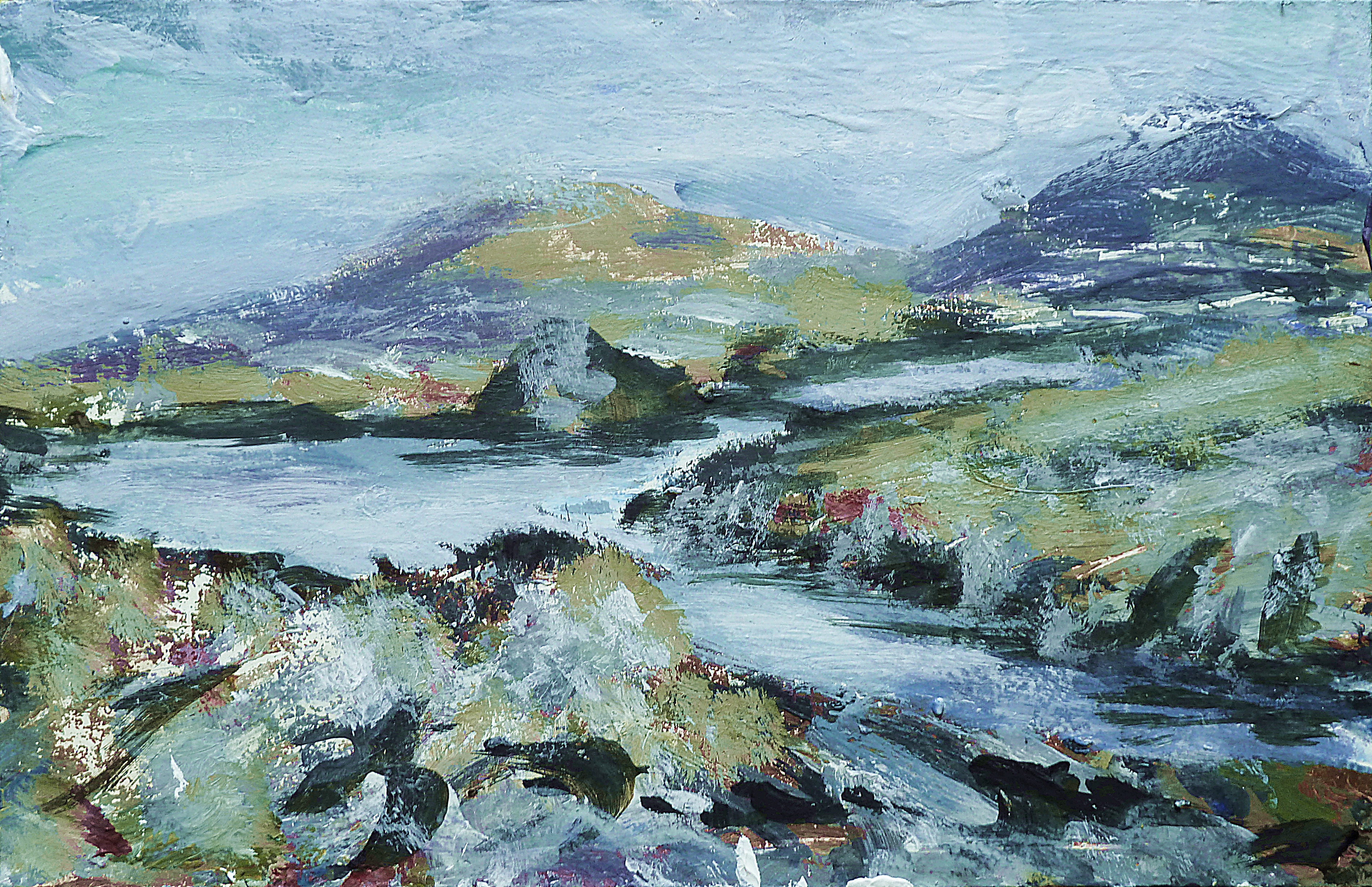
'Beinn Odhar Bheag, Glenfinnan'. Acrylic and oil on 33x23" wood panel. Rose Strang 2020

Glenfinnan

Today’s paintings – above; Beinn Odhar Bheag, Glenfinnan. Acrylic and oil on 33×23″ wood panel. Rose Strang 2020 . Below, a forest stream in Glenfinnan …

'Glenfinnan, Forest and Stream'. Oil on 33 x 23" wood panel. Rose Strang 2020

‘Glenfinnan, Forest and Stream’. Oil on 33 x 23″ wood panel. Rose Strang 2020


These are for the Limetree Gallery, Bristol, for their upcoming Christmas show which launches December 3rd and ends December 31st. (If you have any queries, please contact them on their website).

I think that allthough these two paintings show a different style, they do reflect the fact that the mountains look quite ominous from a distance. Up closer, on the lower slopes at least, the flora, trees and wildlife bring you closer and it can feel less intimidating. Farther up is a different matter! Beinn Odhar means a dun-coloured hill and Bheag means smaller (as opposed to Mhor which means big).

New Project

Between now and April next year I’m working on a new and very exciting project for a new client, unfortunately I can’t reveal what it is until October next year! So I won’t be uploading any of those particular paintings until October 2021. I’ll still post occassionally and might feature a few interviews here, with artists, or anyone creatively engaged with landscape. After April I’ll no doubt begin a new series and will post that here.

Below, a clickable image of Beinn Odhar Beag, Glenfinnan (the one above doesn’t enlarge) ..

'Beinn Odhar Bheag, Glenfinnan'. Acrylic and oil on 33x23" wood panel. Rose Strang 2020

‘Beinn Odhar Bheag, Glenfinnan’. Acrylic and oil on 33×23″ wood panel. Rose Strang 2020

The Road to the Isles …

Back in the mists of time in my twenties, one of my favourite parts of the journey to the west coast – ‘the road to the isles’ – was the stop at Glenfinnan House. After the splendour of Glen Coe (my photos and sketches, from the moving car, below) you arrive at the top of Loch Shiel …

If you were to take a boat along the loch you’d arrive at Castle Tioram in the far west of Scotland. A little road on the left takes you through the trees to Glenfinnan House Hotel. At first it looks a bit imposing, but on entering you’re met with a roaring log fire in the entrance room and offered a cup or glass of whatever you like.  I remember the first time I visited -sitting in a comfy chair that looked out over Loch Shiel and the awe-inspiring mountains beyond – feeling the silence after the noise of city and roads.

It’s well-known now as the spot where the Hogwarts express drives over the viaduct, but Harry Potter hadn’t yet been invented when I used to stop here for a drink. (To locals it’s always been known as the spot where Charles Edward Stewart gathered the Highland clans for the last ill-fated Jacobite rebellion.) I’ve always wanted to stay overnight at Glenfinnan and last weekend that little dream came true (an early birthday present from my partner Adam since lockdown would have made it impossible later this year!)

I loved it – the warmth and hospitality, the scent of woodsmoke in the air, wild venison and mash for dinner, a huge glass of red wine to take up to our room with its medieval-looking furniture and ancient paintings of Highland scenery, and in the morning the view from our room of mountains over the tree-tops.

Most of all the October colours – misty russets and lilacs, flooded lochs and streams entranced me. I was reminded of George MacDonald’s descriptions of mountain colours and rain floods in The Princess and the Goblin.


When I mentioned our trip there to my mum I detected a hint of envy; ‘aaah, in October, with its melancoholy beauty…’ she sighed! My mum used to visit Glenfinnan House some years ago. She’d travel up there with friends and enjoy a drink (or five!) since she was lucky enough to have friends who knew the locals well! She agrees with me that it feels like the heart of the Highlands.

My next series (which I’ll begin next week) will be inspired by the rich colours of October seen through mist and rain, not disimilar to ‘Through Kintail’ in my last series but in a lighter, more delicate palette.

I’ll be starting the Glefinnan series next week. A heartfelt thank you to Adam for the magical experience and inspiration – who knows how many months until we travel again? Our time at Glenfinnan will be cherished in memory and in paint!

'Through Kintail'. Oil on 14x11" wood. Rose Strang 2020

A Subtle Touch

'Ardban. Shimmering Sea'. Oil on 14x11" wood. Rose Strang 2020

‘Ardban. Shimmering Sea’. Oil on 14×11″ wood. Rose Strang 2020

My latest paintings series of Ardban and Kintail are now on exhibition at the Limetree Gallery, Bristol. The exhibition launches from the 31st of October but you can reserve paintings now or make enquiries at the gallery on the link below which shows the full catalogue of works by myself, Anna King and Mhairi McGregor…

A Subtle Touch – Exhibition at the Limetree Gallery, Bristol

The series follows a journey through the Highland Glen of Kintail, then the peace and tranquility of Ardban in Applecross. All the works are oil on wood and sizes vary from 14 by 11 inches to 33 by 23 inches. The link above has all details of prices, sizes and contacts at the gallery.

I’m honoured to be showing alongside two artists whose work I admire, and as always it’s an absolute pleasure to show at the Limetree Gallery, Bristol. My only regret is that I can’t travel down to the launch, with Covid restrictions making that a bit unpredictable. I can’t complain though, it’s been a pleasure to paint and I’m lucky to be able to keep working on creative projects!

Wishing everyone the very best of health and happiness!

Kintail to Ardban

Below – the complete series Kintail to Ardban created for a three-artist exhibition opening at the Limetree Gallery, Bristol on the 31st of October.

Applecross series day 7

;Through Kintail 2'. Oil on 33x23" wood. Rose Strang 2020

;Through Kintail 2′. Oil on 33×23″ wood. Rose Strang 2020

'Through Kintail 3' Oil on 14x11" wood. Rose Strang 2020

‘Through Kintail 3’ Oil on 14×11″ wood. Rose Strang 2020

Above (and below), today’s paintings in progress for the new Applecross series, which will be on show as part of a three-artist exhibition at the Limetree Gallery Bristol from the 31st October.

These paintings are all in progress, since they’re in oils and will take a bit longer to dry, but I’m happy with the way the series is developing. I’m exploring new subjects – travelling through the mountains of Kintail before arriving on the Applecross coast.

I’ve always enjoyed sketching from the car, it’s a nice test of observation and it often makes the eye work faster to see what’s essential. The three paintings titled ‘through Kintail’ capture the changing weather of the Highlands.

Though often misty and wet, the mood when there is strangely comforting – a soft gloom with the fresh wildness of heather and ferns. Against the deep ochres and greens the bracken turns a beautiful russet colour.

I love the feeling of reaching the coast after the rainy mountain valleys – the soft light of the west coast. I’ve tried to capture the dreamy mood of mist lifting from the sea on a calm sunny morning, and that distinctive sparkle where the clouds part above the sea and mountains. In ‘Ardban. Sea Shimmer’ I had to tone down the mountains of Skye which are so picture-esque they resemble a child’s ideal drawing of a mountain range! It’s better to smudge them up with some rainy clouds.

More paintings tomorrow …