Author Archives: rosestrang

Unknown's avatar

About rosestrang

Artist, Painter

Borders Country Day 12

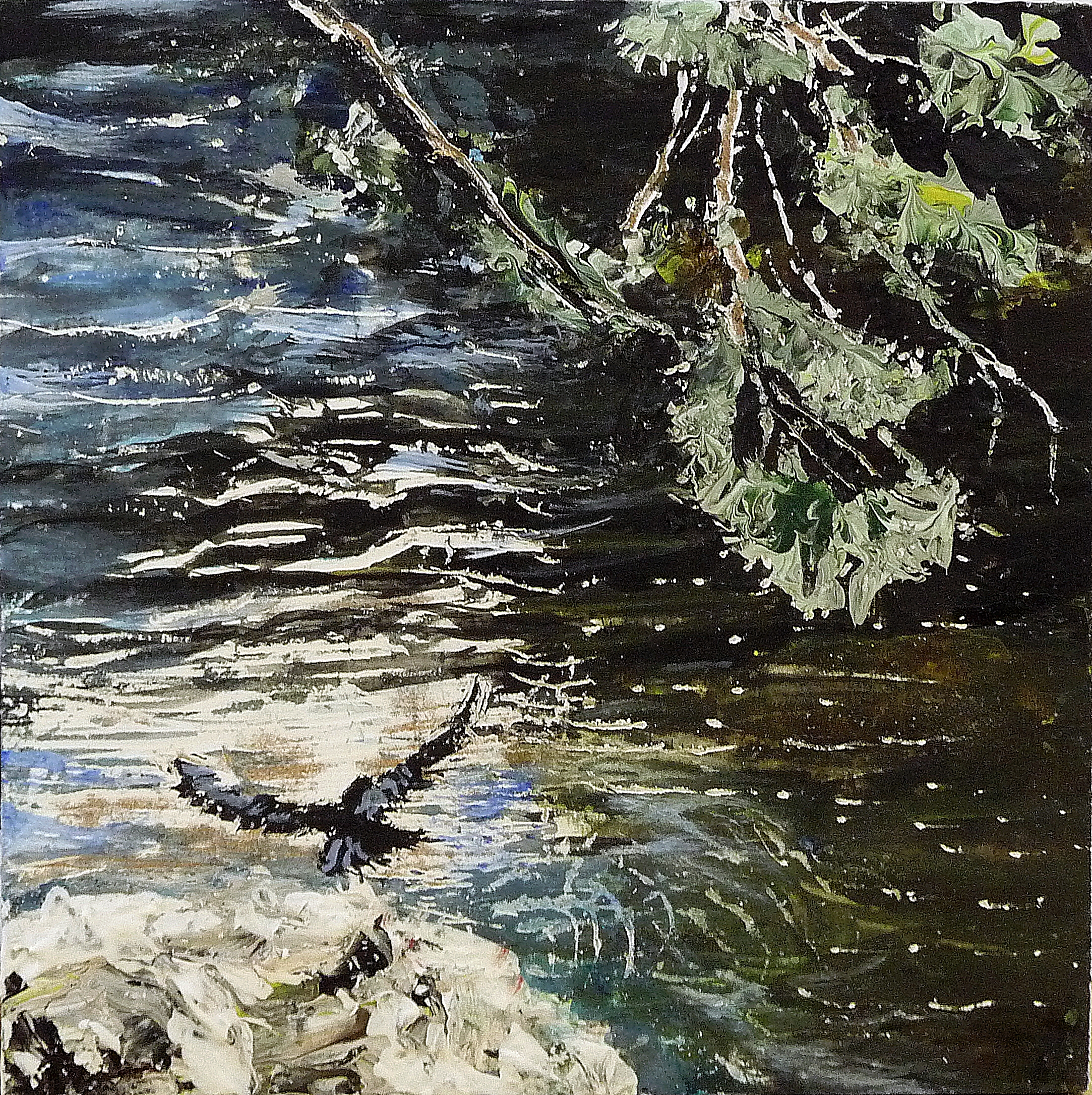
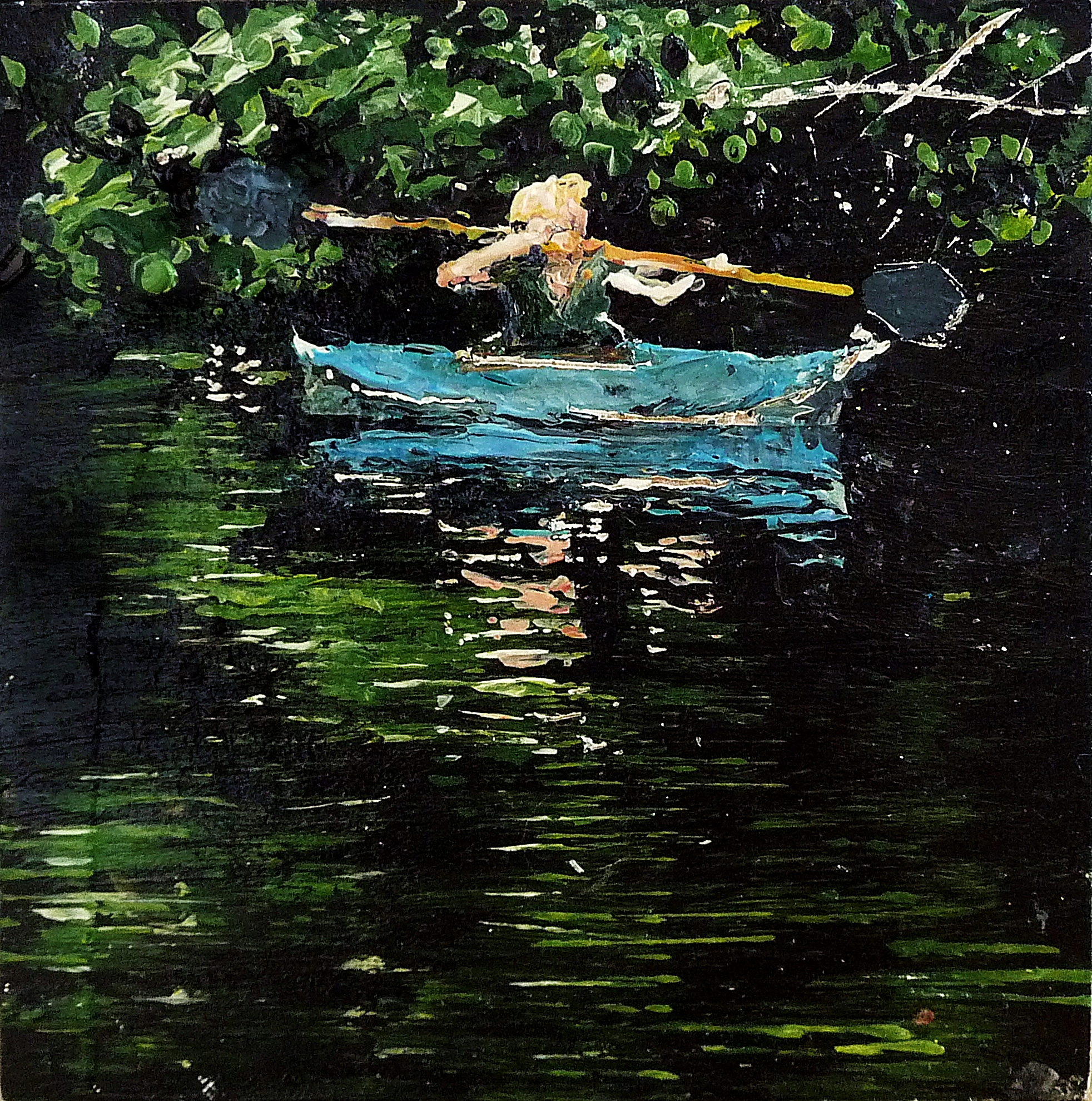
'Blue Canoe (River Tweed)'. Acrylic on 10x10" wood panel

‘Blue Canoe (River Tweed)’. Acrylic on 10×10″ wood panel

Today’s painting –  a blue canoe on the River Tweed.

This is probably the last in the series of smaller studies for the upcoming Borders Country exhibition The Green Woods Free. Today’s painting features again our family canoe. I won’t give the name away of the person rowing, but he’s the son of a friend who took to canoeing like a duck to water!

The canoe itself is quite vintage, my dad built it back in the mists of time, and it’s still going strong. It’s more difficult to capsize (a good thing since both my dad and I are hopeless swimmers!)

Despite my instinctive fear of falling into deep water, I still love being in boats; boats of all sizes, whether ferries, speed boats or our humble canoe. It’s so peaceful.

There are still 8 paintings (including the one above) available from the small paintings of the Borders on wood viewable Here) I’m now tackling work on bigger canvas. Wish me luck!


Borders Country Day 11

'Glentress'. Acrylic on 20x16" canvas

‘Glentress’. Acrylic on 20×16″ canvas

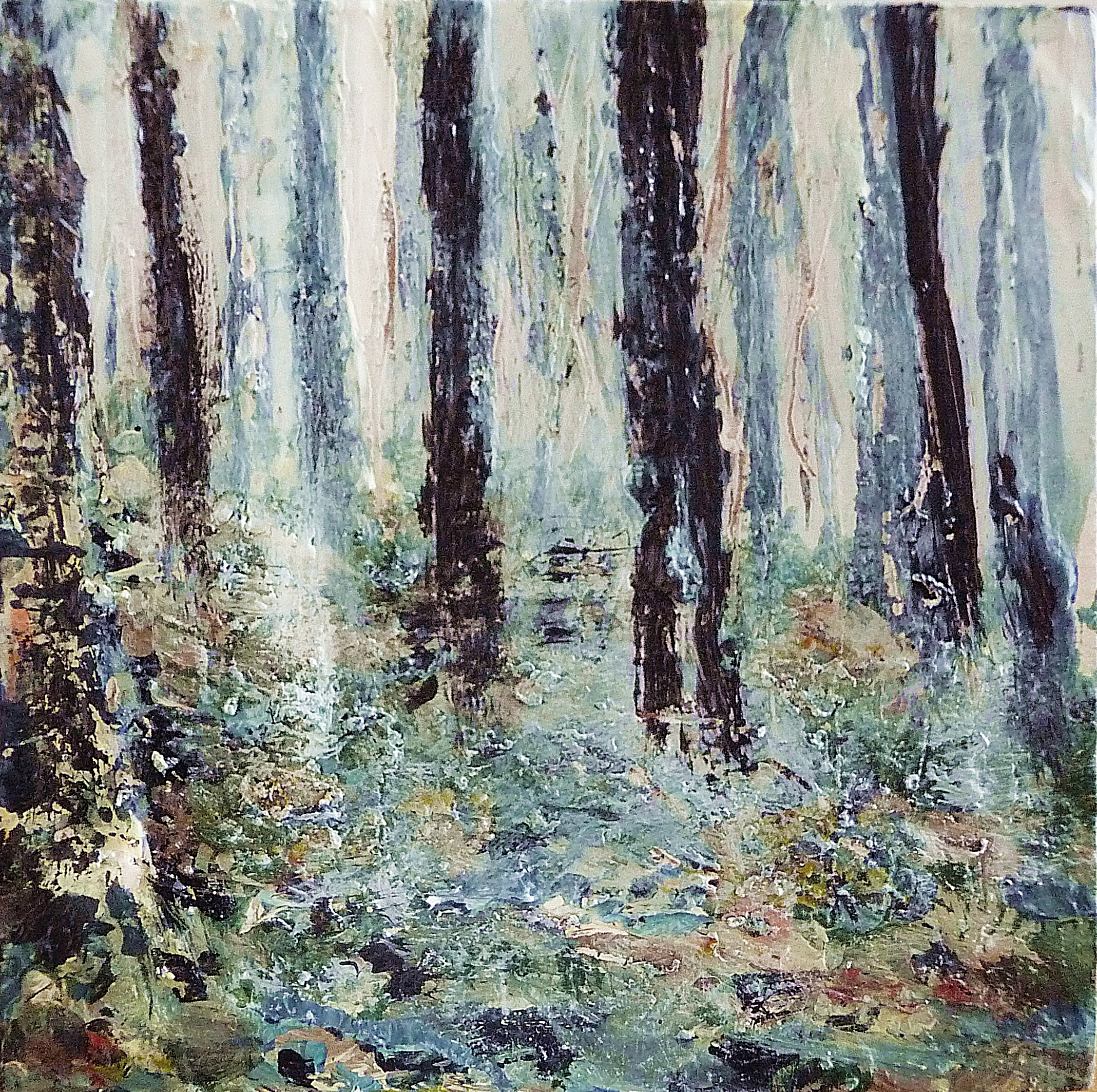
Sun shining through trees in the Forest of Glentress (in process)

It’s a just a quick post today, as I want to get out and experience some of this sunshine, while it lasts!

I was inspired by the the bright red glow of sunset lighting up the edges of trees. I have a bit more work to do on this one, it’s the first in a series of bigger paintings for the upcoming exhibition. The Green Woods Free

Borders Country Day 10

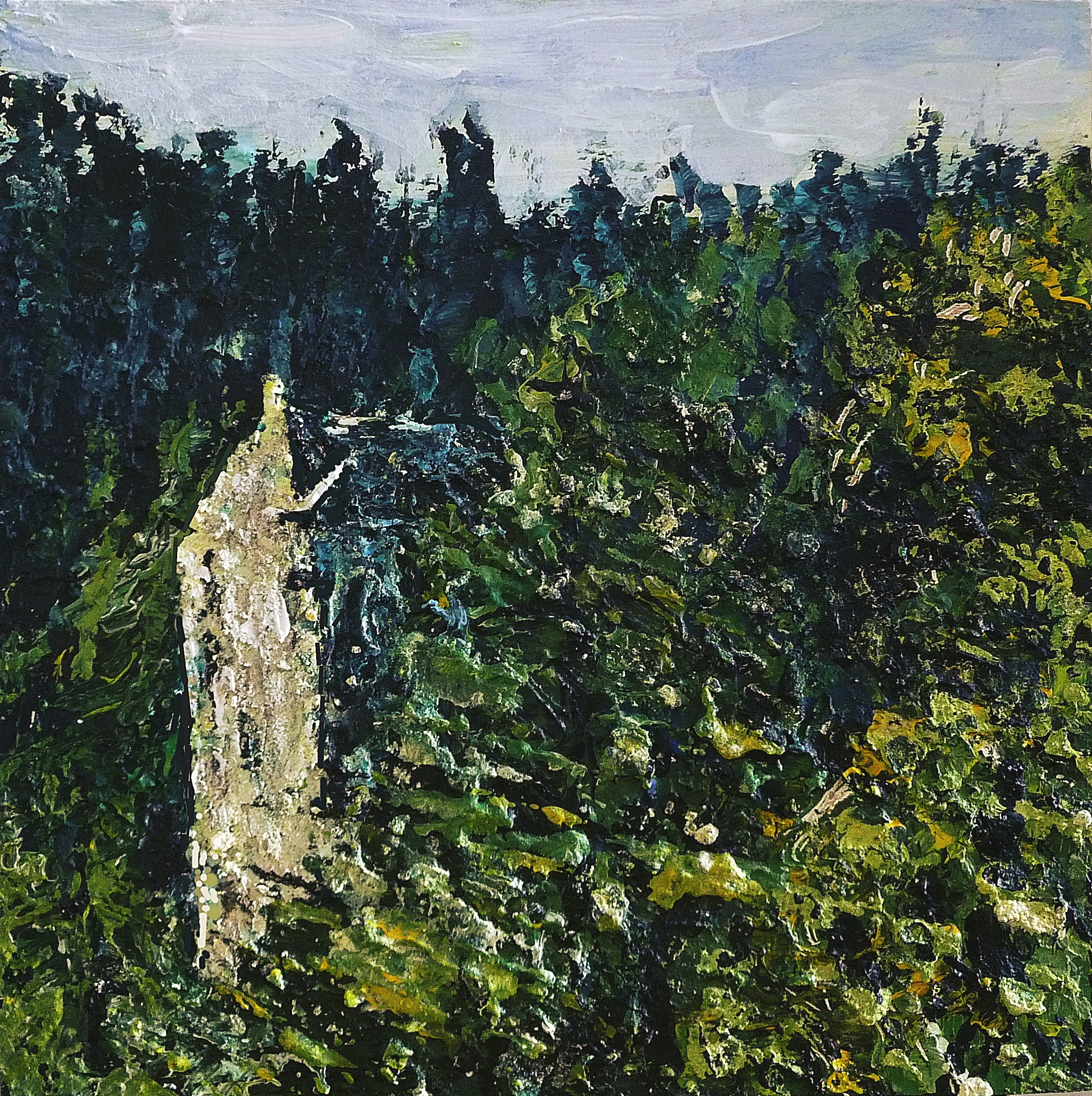
'Wood Cabin, (Leithen)'. Acrylic and varnish on 10x10" wood

‘Wood Cabin, (Leithen)’. Acrylic and varnish on 10×10″ wood

Today’s painting – a mysterious hut near Leithen, in the gardens of the equally mysterious Leithen House.

I’m very partial to cabins in the forest. They have a Hansel and Gretel magical-ness to them and there’s always the sense that someone intriguing lives there.

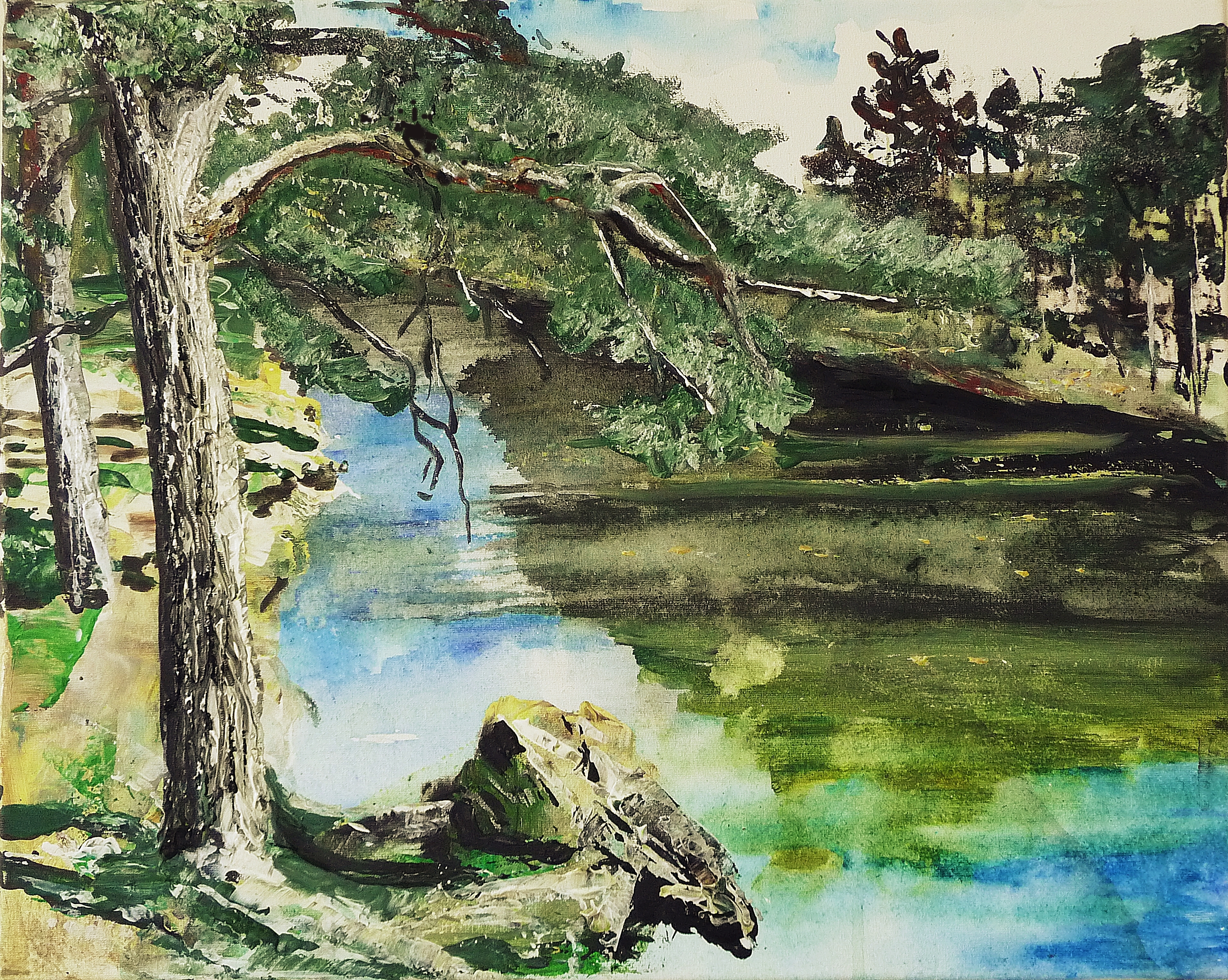
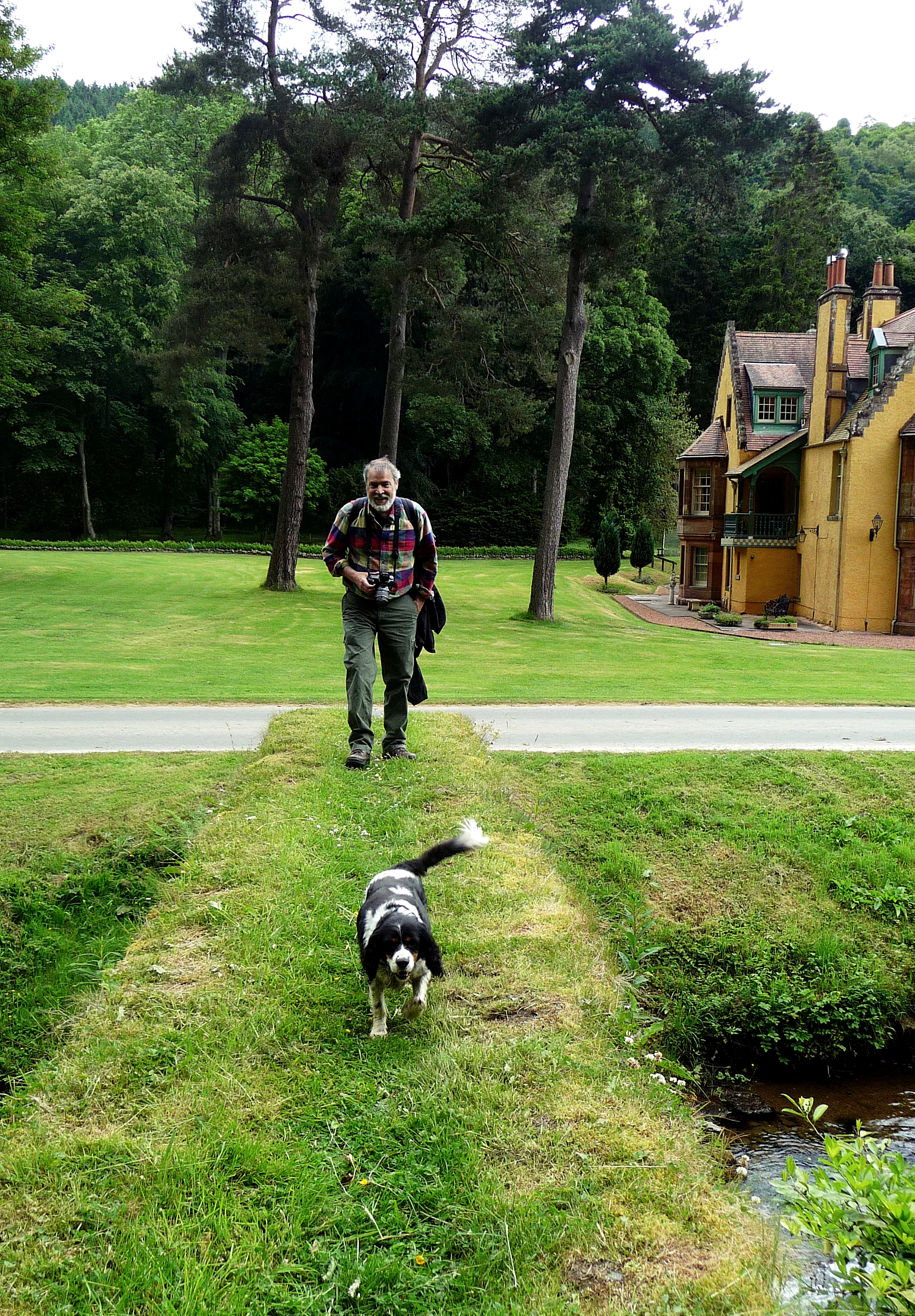
We drove through Leithen a while back, stopped near a river to explore and discovered Leithen House, which had beautiful natural grounds; huge ancient trees, a small river, pond and dense woodlands over a stone bridge.

No one seemd to be around except a small black & white dog who appointed himself as our guide, but eventually we spotted a gardener several hundred yards away, standing still and staring at us in a slightly hostile manner. I plucked up the courage to walk over and say hello and ask him where we were.

‘You’re not supposed to be here’ he answered tensely.

‘Oh? Why’s that?’ I asked, smiling

‘It’s private’ he hissed.

I said I didn’t know, but thanks and we strolled away. Only the black dog seemed to want us to stay so we ordered him ‘home’!, We’d seen no signs marking the place as private. (I’d definitely looked, as I have a mostly irrational fear of some aggressive owner’s rottweiler biting my hand off! ) Anyway, when I returned home I did a quick search online and discovered it was a luxury retreat hotel. I still couldn’t see what the gardener was so up-tight about mind you.

I’d love to say it was owned by a famous recluse or eccentric but the truth was quite ordinary. Nonetheless, the atmosphere inspired me!

Leithen House

Leithen House

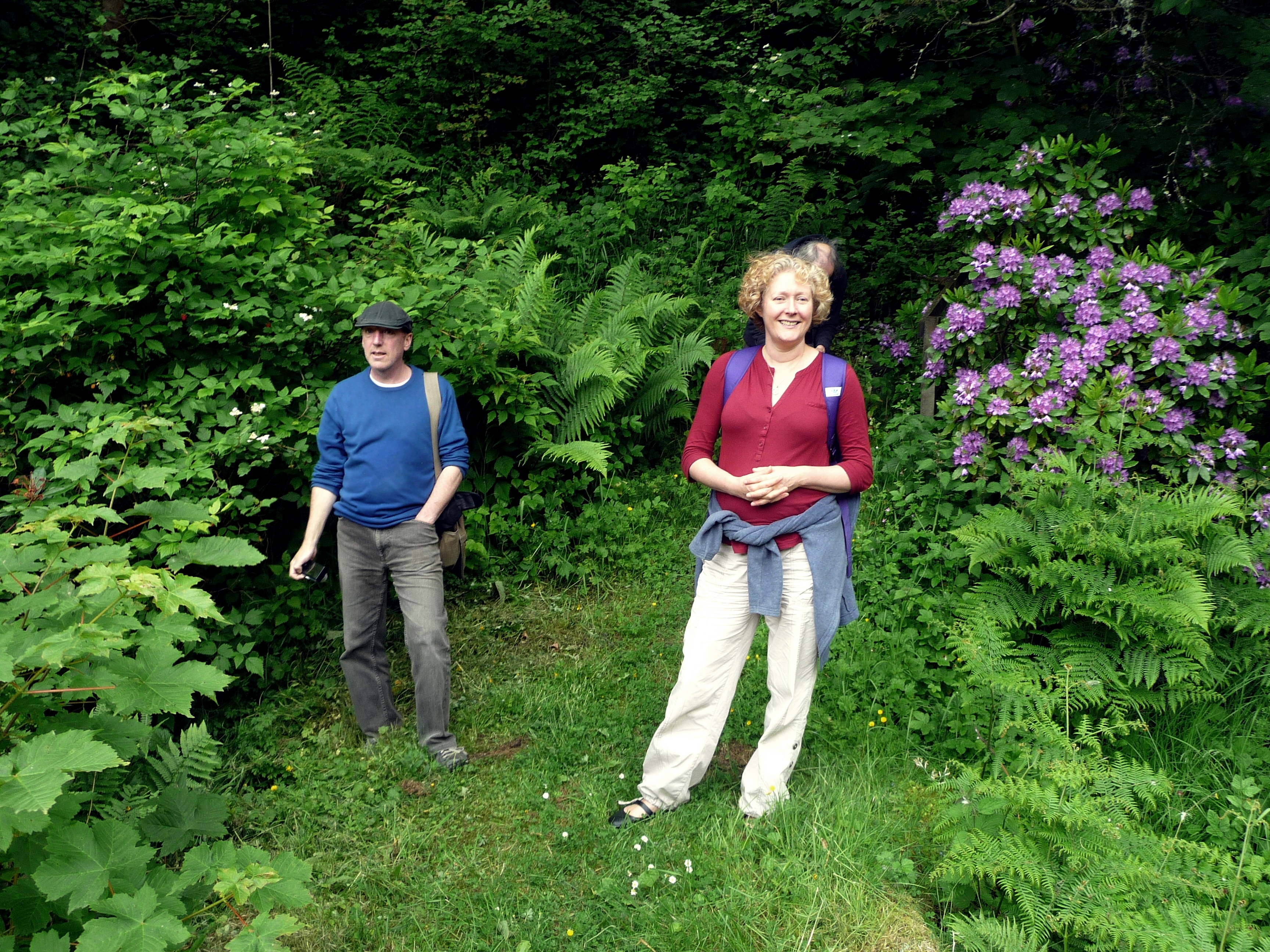
My sister Catherine and friend Donald, dad in the background, trespassing at Leithen

My sister Catherine and friend Donald, dad in the background, trespassing at Leithen

Black&white dog and Cousin Kerr

Black&white dog and Cousin Kerr

Borders Country Day 9

'Hawk. River Tweed'. Acrylic on 5x5" wood

‘Hawk. River Tweed’. Acrylic on 5×5″ wood

'Glentress'. Acrylic on 5x5" wood

‘A Rainy Day in Glentress’. Acrylic on 5×5″ wood

Today’s paintings – a hawk swooping down to the River Tweed, and mist through the trees in the Forest of Glentress.

I’m nearly at the end of George Fraser’s ‘The Steel Bonnets’ – a book about the history of the Borders Reivers. It’s been harrowing reading.

The first chapters cover the lifestyle of the Borders Reivers and the final chapters deal with the wars during Henry the VIII’s time when devasating wars wrecked the lives of people in the Borders and beyond.

Engraving, showing Borders Reivers raid on Gilnockie Tower

Engraving, showing Borders Reivers raid on Gilnockie Tower

Accounts of the Reiver families have been difficult reading in themselves, never mind the later descriptions of  war. The Reiver’s life was one of constant feuding, raiding and violent conflict, across both sides of the Border. This was partly due to previous wars which wrecked the landscape and therefore the livelihood of Borders familes, but also it simply became a way of life, and despite authorities on both sides of the border appointing Wardens to try to calm the conflicts, the chaotic lifestyle became entrenched. (The Wardens themselves often became Reivers!)

It was lucrative too, and for those who’d perfected their Reiver skills it led to the accumulation of vast wealth; some of the titled landowners, whose estates line the Borders today, are their descendants.

The status of each Borders family or clan was diverse though, and within for example the Kerr family there would be everything from titled land owners in huge castles with an army of thousands, to people living in broken down hovels.

For the battle hardened Borders Reivers, violence and war were normal, they were described as ‘scared of nothing’ and their outstanding skills in warfare were utilised by Kings on both sides. Also the feuds between Borders families were manipulated to form allegiances. Scottish fought on the English side, sometimes changing tactics mid-battle if that seemed a better plan.

P1230602While reading ‘Steel Bonnets’ it was thinking about ordinary Borders people that I found harowing. Fraser describes a widower with her children burned in their peel tower, the starvation of countless thousands of poor people because of the wrecked landscape. They’d plough fields during the night to avoid attack, but after ten years of war it must have been a bitter, miserable struggle. Also he describes, very briefly, the group of monks who held out bravely in Kelso Abbey during attack by Henry VIII’s army, but didn’t survive.

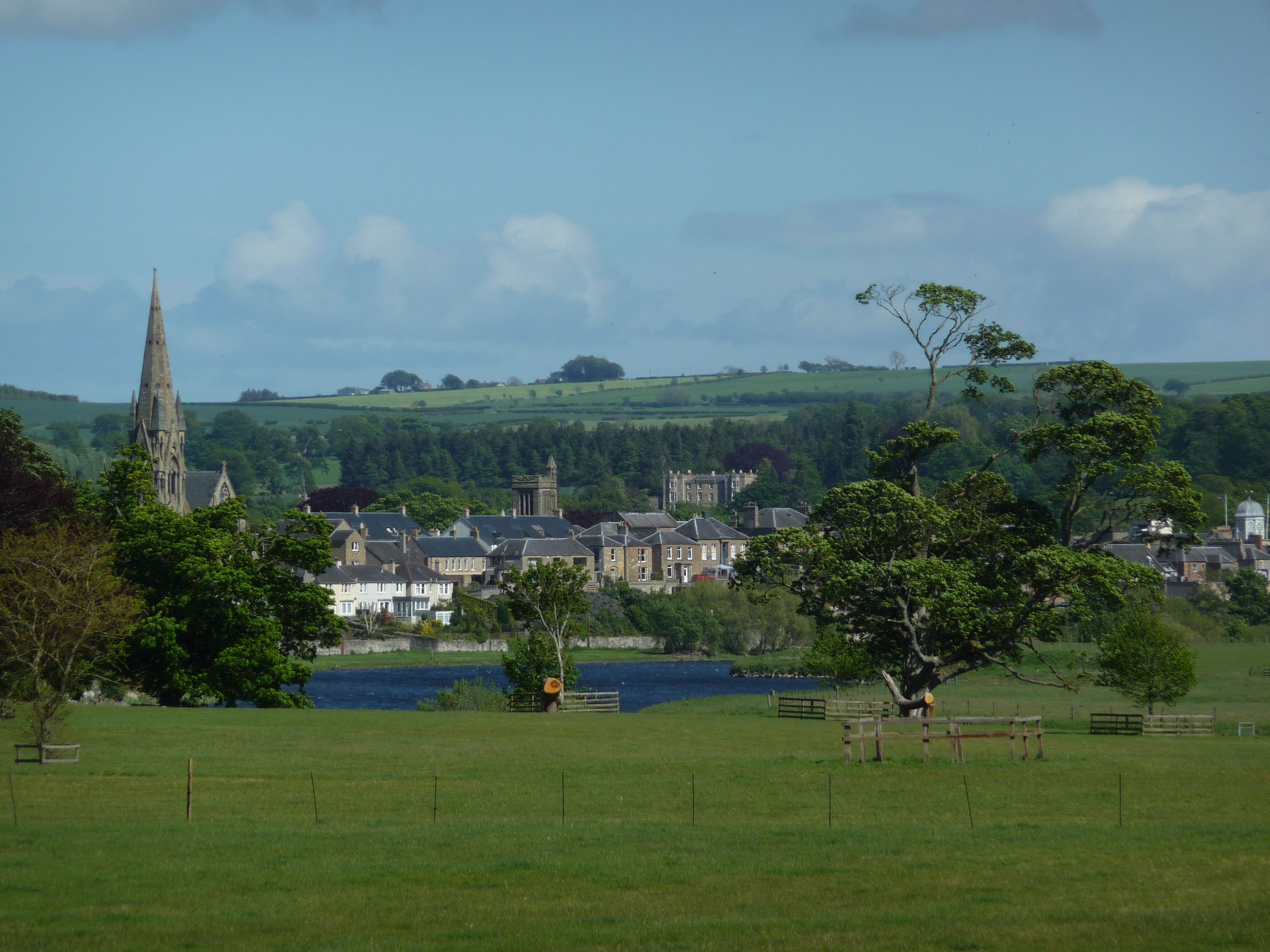
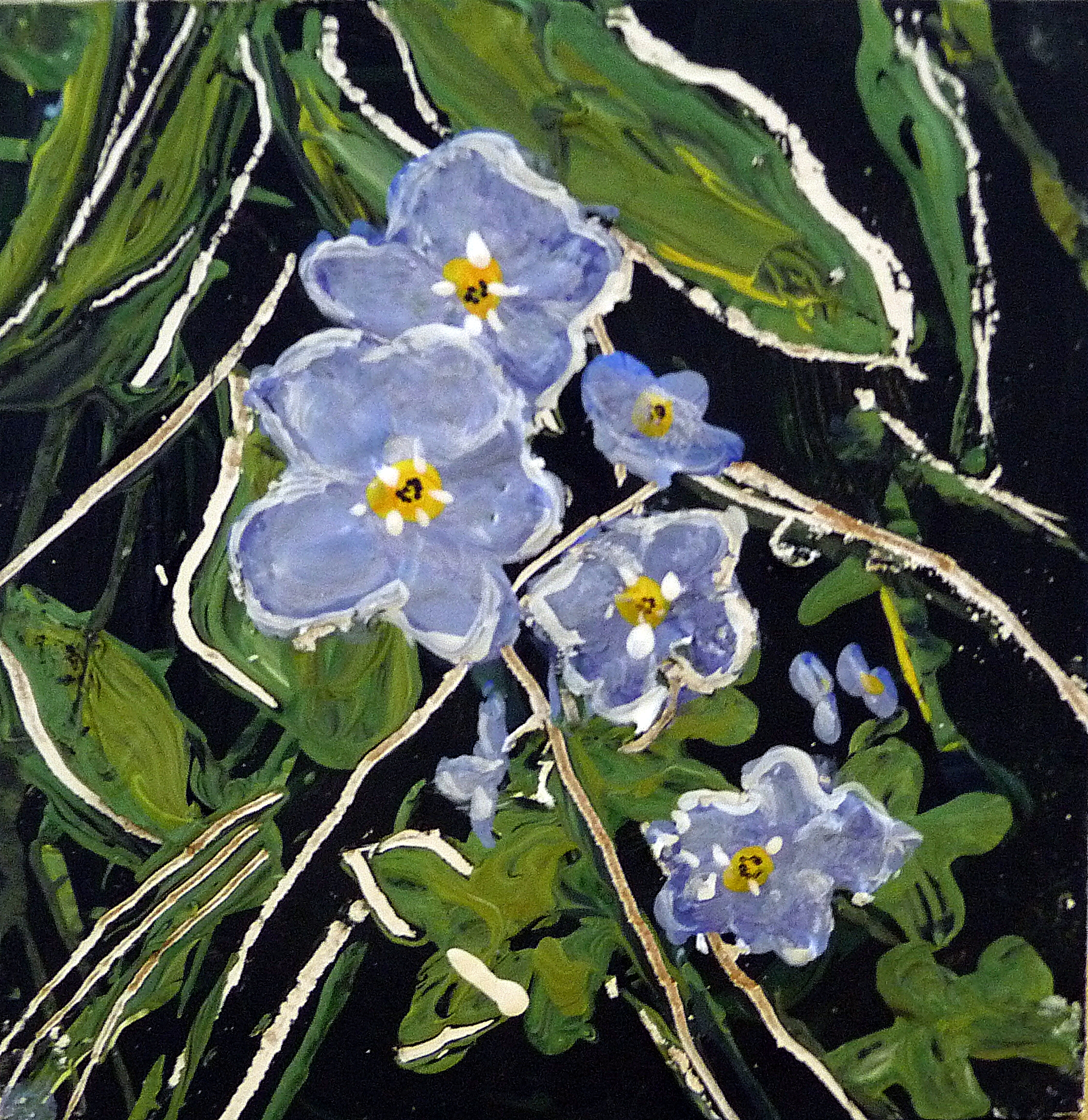
When I visited Kelso last weekend the ground was festooned with forget-me-nots, which seemed to me as symbolic as poppies; in rememberance of the ordinary people who never sought war and conflict.

'Forget-me-nots. Kelso'. Acrylic on 5x5" wood

‘Forget-me-nots. Kelso’. Acrylic on 5×5″ wood

Woven throughout the stories and Borders ballads though, references to hills, rivers and ‘forestes greene’ bring to my mind the image of a rich, medieval tapestry, and suggests the presence of faith and love of familiar landscape amidst war and fear. One Borders ballad titled Erlington made me smile, amidst all the grimness! The last line of this ballad inspires the title of my upcoming exhibition The green woods free

Borders Country Day 8

'Catherine in a Canoe, River Tweed'. Acrylic on 5x5" wood panel

‘Catherine in a Canoe, River Tweed’. Acrylic on 5×5″ wood panel

'Neidpath Castle on the River Tweed'. Mixed media on 10x10" wood panel

‘Neidpath Castle on the River Tweed’. Mixed media on 10×10″ wood panel

Today’s paintings – Neidpath Castle on the banks of the River Tweed near Peebles, and my sister canoeing on the River Tweed near Peebles.

I rarely paint people in landscapes unless there’s an inspirational reason but today I decided to paint my sister Catherine canoeing on the River Tweed. Firstly it’s a nice image and I love the reflections on the water, but also because I think it captures her personality.

A friend, Jamie Cossar (who I interviewed in this post The Healing Island, about Lindisfarne) was around last night for dinner and described Catherine as ‘floating calmly and regally, like a swan’. No doubt Catherine will have a giggle at that description, as well as finding it quite flattering!

So in this picture, here she is floating regally, but also paddling quite athletically – under the surface there’s a lot of thinking and activity going on. My sister Catherine’s a therapist, whose skills I and many others have benefited from over the years, so today’s painting hopefully captures something of her personality. You can read more about Catherine’s work on her website Here

Neidpath Castle (which sits on a bend of the River Tweed about a mile from Peebles) was built in the late 14th century (there was an earlier 12th century version). It has a long complicated history and enjoyed visits from various literary ‘giants’ such as Wordsworth and Sir Walter Scott. It’s said to be haunted…(of course!)

“The castle is said to be haunted by the ghost of Jean Douglas, referred to by Sir Walter Scott as “the Maid of Neidpath”, the youngest daughter of William Douglas, Earl of March. Forbidden to marry the son of the laird of Tushielaw, who was considered below her station, she dwined while her lover was sent away. When he returned she was so wasted that he did not recognise her, causing her to die of a broken heart. She is reputed to appear clad in a full-length brown dress with a large white collar. Sir Walter Scott wrote a poem about her”.(Wikipedia)

Borders Country Day 7

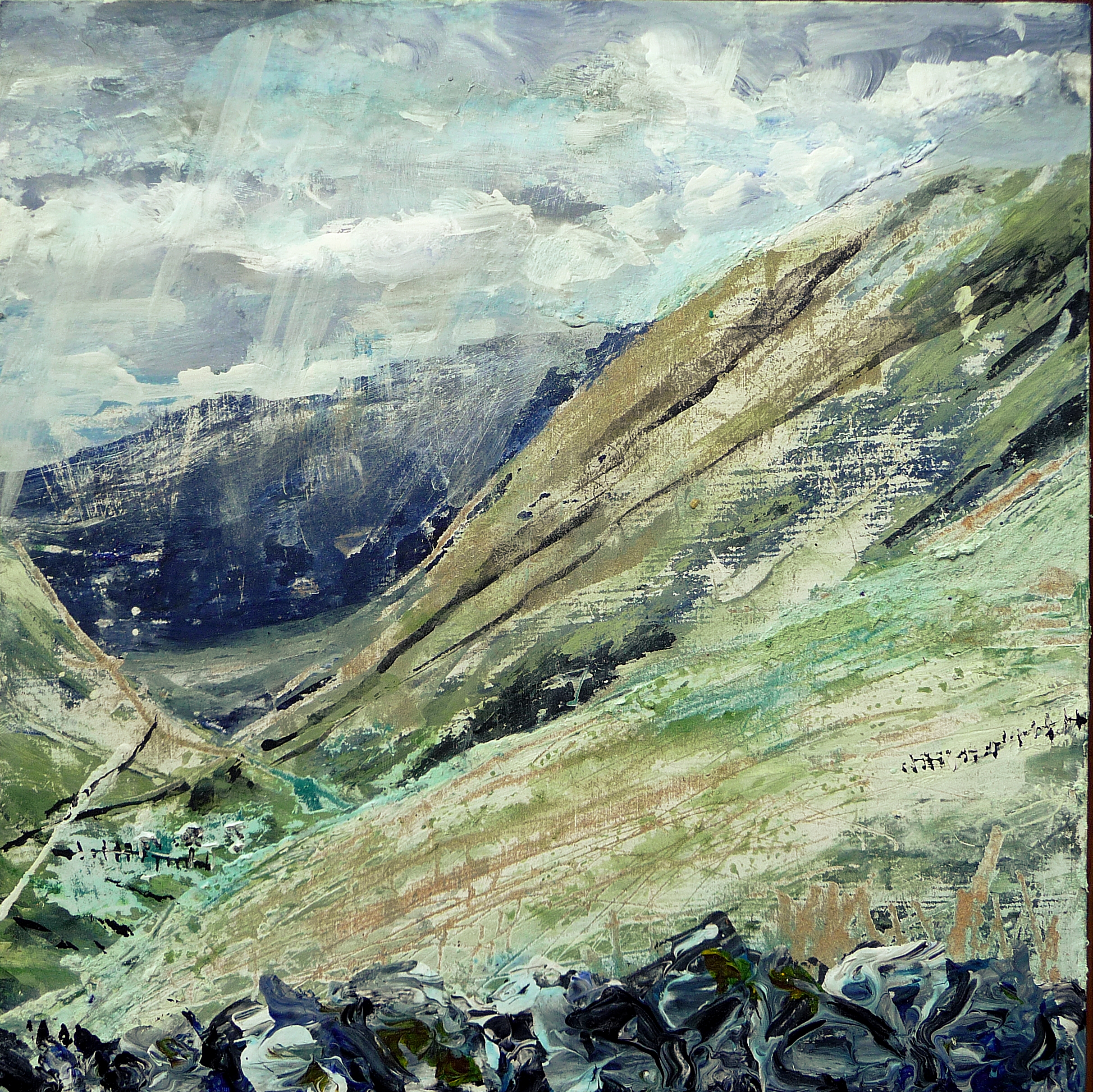
'Moffat Hills (2)'. Acrylic and ink on 10x10" wood panel

‘Moffat Hills (2)’. Acrylic and ink on 10×10″ wood panel

'White Horse (Kelso)'. Acrylic on 10x7" wood panel

‘White Horse (Kelso)’. Acrylic on 10×7″ wood panel

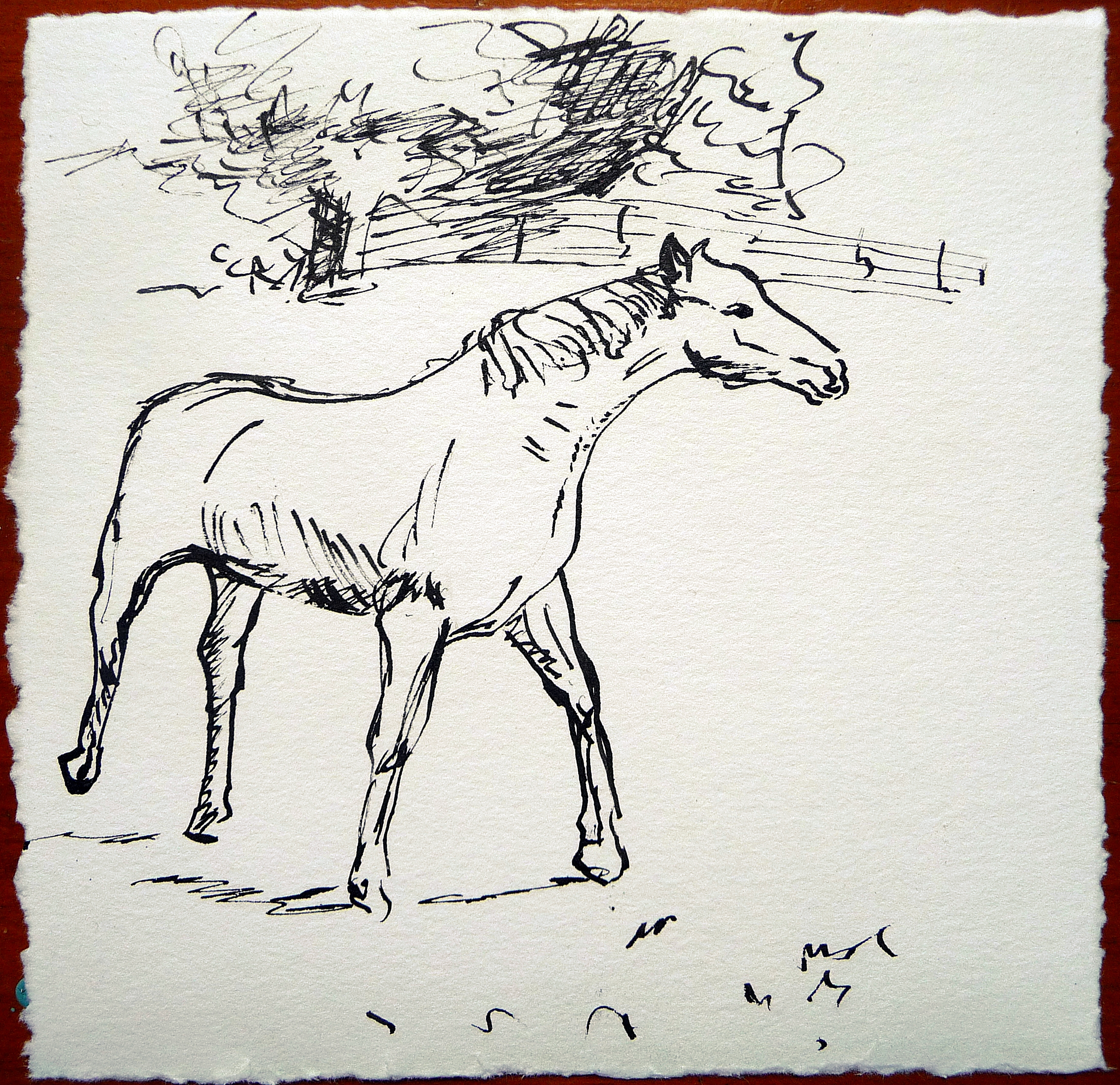
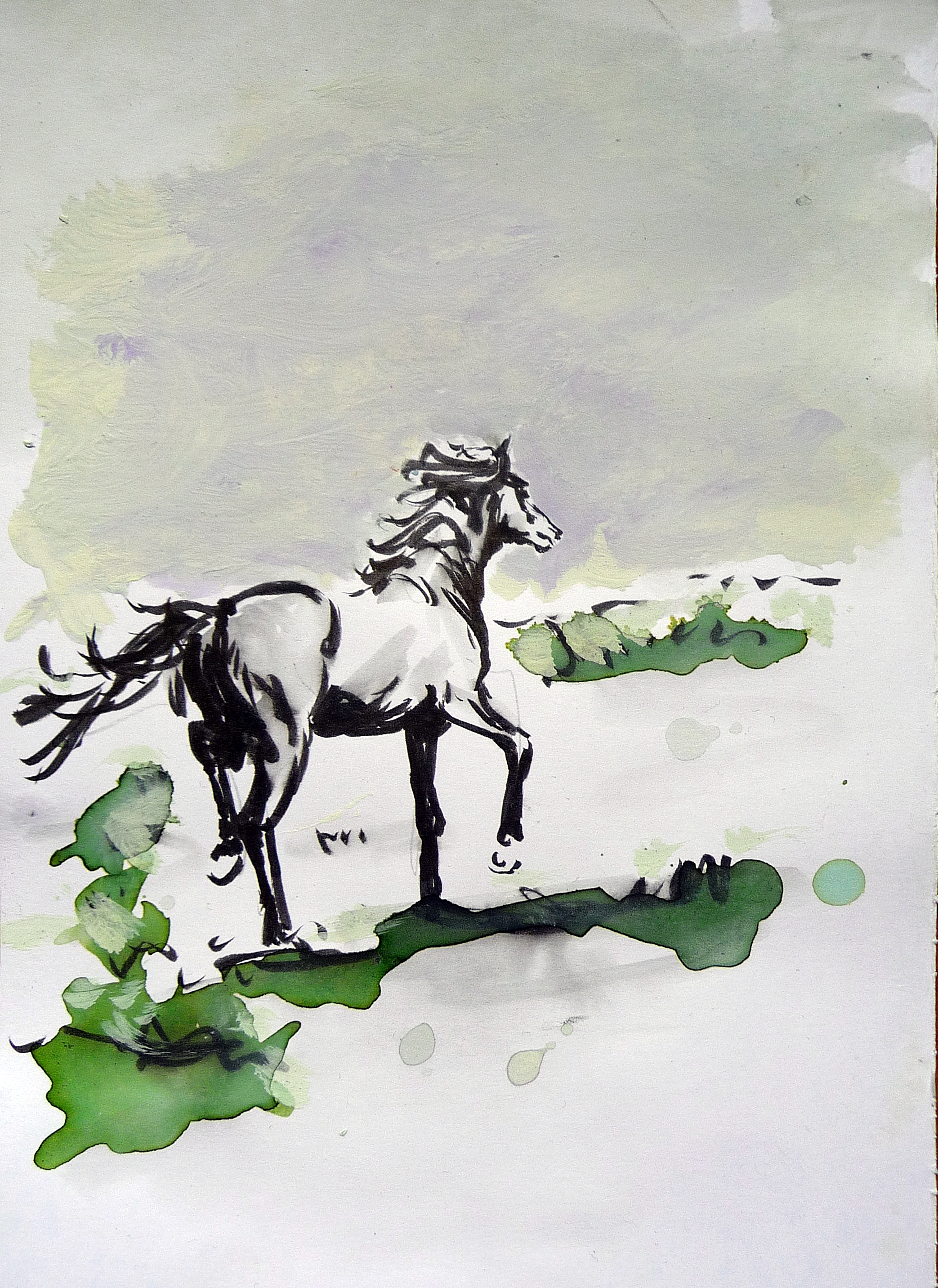
'Horse Sketch 1'. Pen and ink on 6x6" paper

‘Horse Sketch 1’. Pen and ink on 6×6″ paper

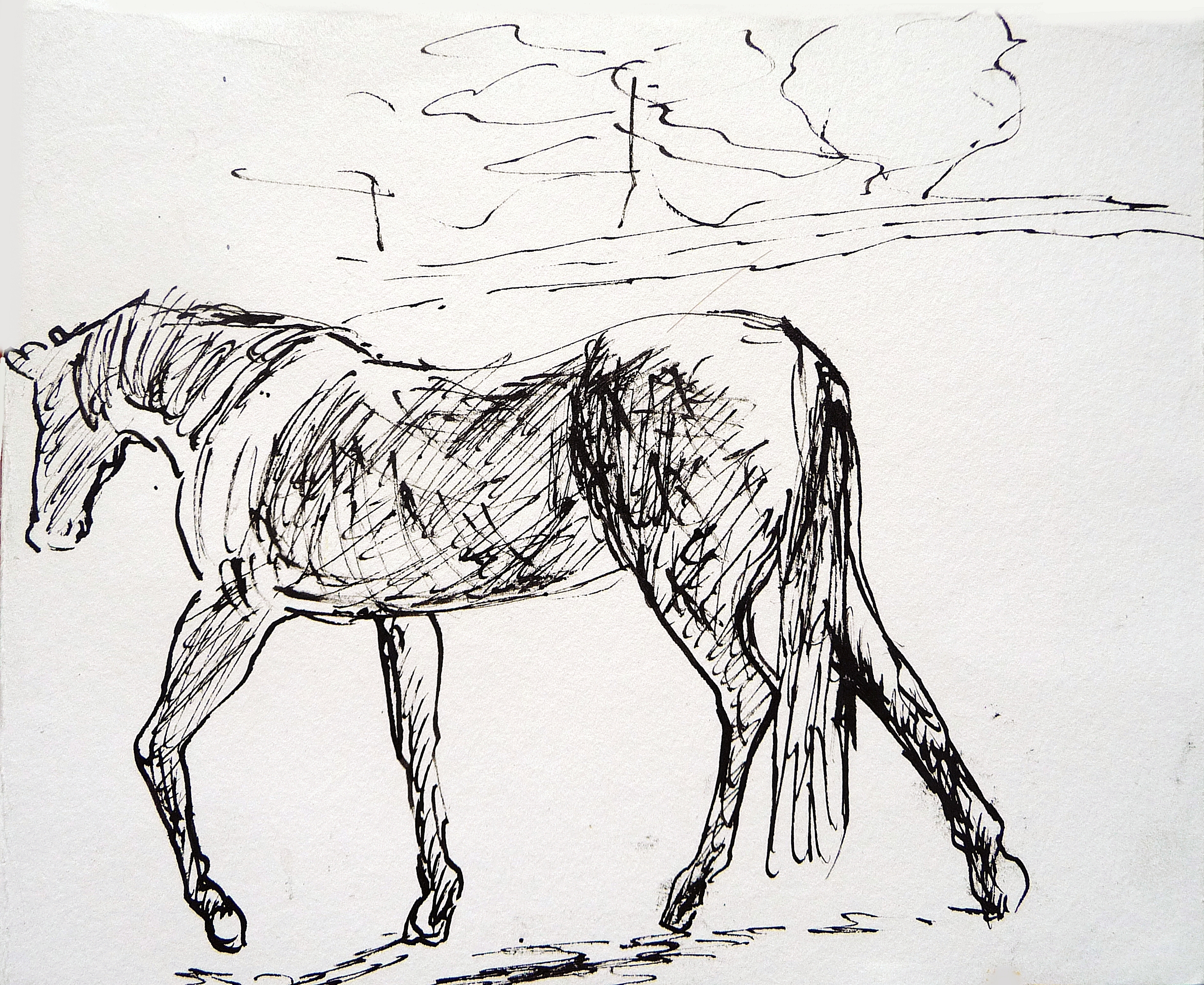
Horse Sketch 2. Pen and ink on 7x6" paper

Horse Sketch 2. Pen and ink on 7×6″ paper

Today’s paintings: In the Moffat Hills with the view down to the valley of the Grey Mare’s Tail, two horse sketches and a horse painting from this weekend’s trip to Kelso

(If you’re interested in buying the horse painting (£85) I’ll add in the two sketches free).

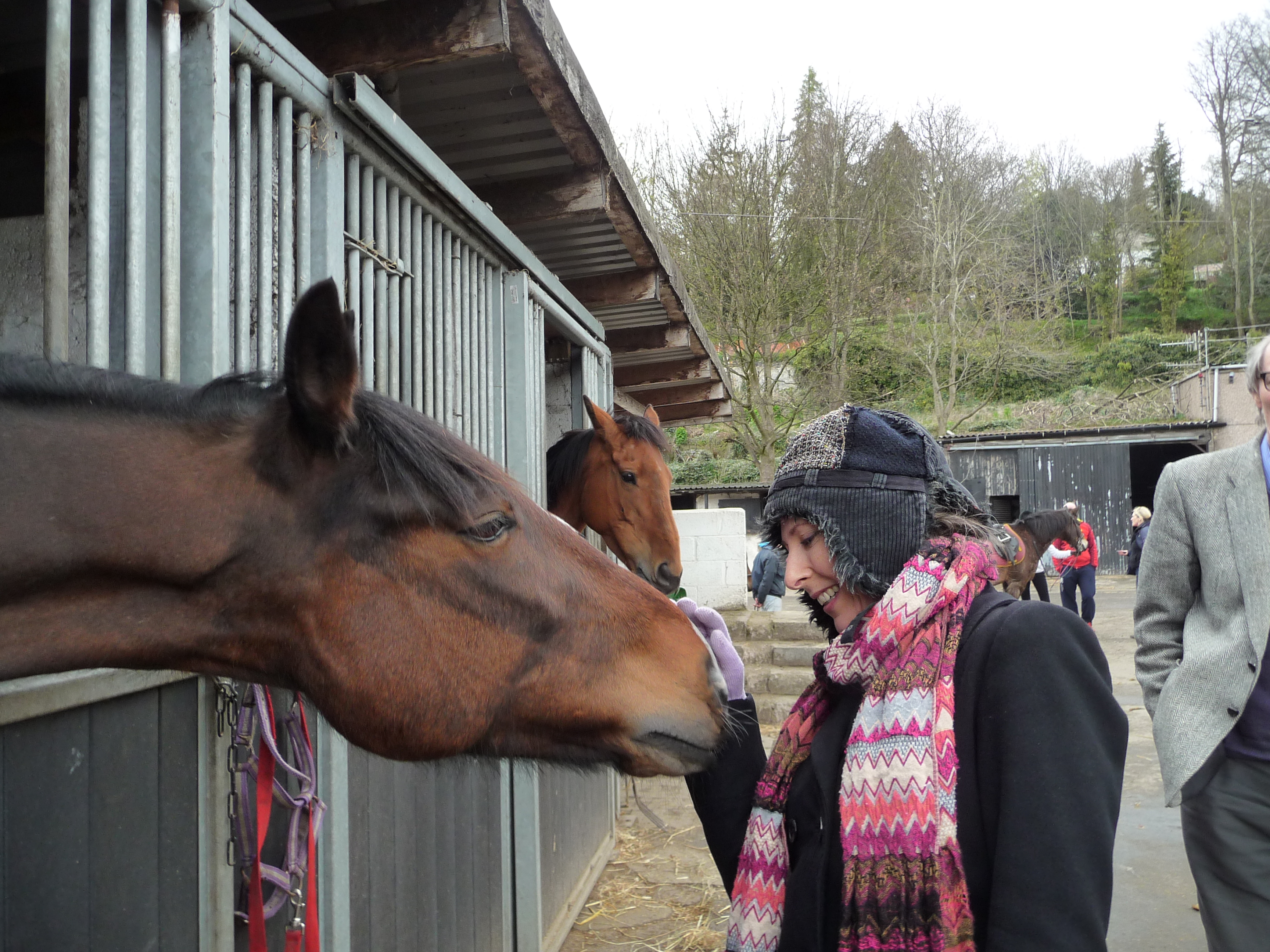
It’s been a real pleasure to spend the day sketching horses. I’ve been drawing them since I was a kid and used to enjoy horse-riding too (in fact I won second place at a gymkana when I was 12!).

It’s been a while since I’ve been on a horse though, I’m not sure if I’d stay on as I’m a bit rusty! We lived in the city and my family were’t very well off, so I never actually owned a horse, but my parents paid for a week-long horse-riding course. After that I worked in the stables every Saturday during summer and occassionally I’d get to ride a pony.


At Lasswade this year

At Lasswade this year

I remember the first time I rode a thorough-bred horse (the equivalent of a Mercedes if you want to compare horses to cars) it sprang into action at the lightest touch and floated along as though on air. I still drop into Lasswade stables outside Edinburgh once in a while.

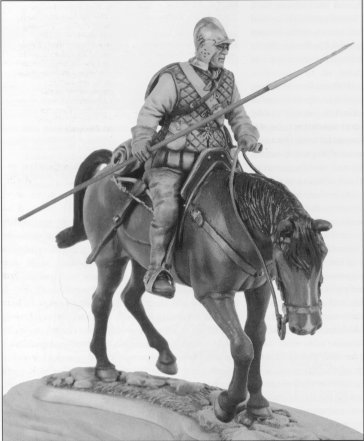
Painting horses today was not just self indulgence though, horses are very topical indeed when it comes to the Borders. Going back to Riever times and up to the present day, horses have been a huge part of Borders culture. The Rievers were famed for their skill on horseback:

Reiver on horse

Reiver on horse

“The one indisputable fact concerning the Border Reivers was their supreme ability in the art of theft and guerilla warfare. A lifestyle which required specialist equipment. The fully equipped Reiver represented an elite light cavalryman, capable of navigating rough terrain at night with practiced stealth, and when required implementing deadly force. Figure 1 (Border Miniatures, Keswick) represents a Border Reiver c. 1590. The mount of the Reiver was as specialised as the equipment they used. It was small and sure footed ideally suited to the rough terrain of the border. Known as ‘hobbys’ or ‘hobblers’ they were capable of traveling around 60 – 80 miles per day” (G Fraser, The Steel Bonnets).

Nowadays there are various horse-riding events in the Borders, including the ‘ridings’,; a Borders-wide competition representing each region. (Typically I only discovered this one day after the Ridings finished for the year! They take place in May)

The horses painted today were discovered during our trip to Floors Castle at the weekend. I heard the clip-clop of hooves and discovered two beautiful horses in a field behind a walled garden.

Another horse sketch from 2013..

'Horse Sketch 2013'. Ink and brush on 8x6" paper

‘Horse Sketch 2013’. Ink and brush on 8×6″ paper

Borders Country Day 6

Today’s paintings – various experimentations. (This is all on the same wood panel, number 5 is the last version)

It’s been a frustrating day where I couldn’t quite capture the effects I wanted, so with time and light running out I decided just to play about with effects. I think I’m almost happy with number 5 so will persevere with this tomorrow. It’s odd how certain paintings ‘paint themselves’ and others most definitely don’t! On a good day I’d have finished two.

Grey Mare's Tail

Grey Mare’s Tail

The view is of the hills approaching the Grey Mare’s Tail before you go down to the bottom of the waterfall. So far I haven’t walked to the top of the waterfall but hope to do this next month.

The hill on the right in the paintings is (I think) called Watch Knowe which is where the Covenanters (Presbytarians who’d signed a treaty to say they didn’t accept that the monarchy were appointed by divine right) would watch out for government troops entering the town of Moffat. I look forward to seeing the same view in less harrowing circumstances!

Tomorrow I’m off for another trip to the Borders, not sure where yet, but I’ll be posting paintings from the trip on Monday.

A lamb enjoying its day out at the Grey Mare’s Tail..

P1210697


Borders Country Day 5

St Mary's Loch. Acrylic on 10x10" wood panel

St Mary’s Loch. Acrylic on 10×10″ wood panel

Detail

Detail

Today’s painting – a view of St Mary’s Loch on a brisk spring day

Overlooking the loch is a statue of James Hogg; 18th -19th century shepherd, novelist, poet and song writer born in Ettrick near St Mary’s Loch. He’d be very familiar with this view, so perhaps I’ll dedicate today’s spring painting to him, as I sense his life was beset by gloom.


P1210567Hogg was variously celebrated and ridiculed by Edinburgh’s gliteratti of the time who nicknamed him ‘The Ettrick Shepherd’ due to his rural, modest beginnings, and caricatured him quite cruelly in literary publications. He was described by Wordsworth (who wrote a poem in appreciation of Hogg after his death) as both ‘uncouth’ and ‘a genius’!

This was the dawn of the Victorian era, which perhaps partly explains these attitudes. The previous, more creative and intellectually pioneering atmosphere of Edinburgh’s Enlightenment had been welcoming to Robert Burns (a hero and inspiration to Hogg) despite his similar rural beginnings, earthiness and pithy observations of society.

Maybe Hogg was born in the wrong generation, or just didn’t fit in with city people, he seems to have always been somewhat on the periphery of the literary in-crowds, never at the centre. Though he was on occassions part of the most famous literary circles at the time.

The work he’s best known for, ‘The Private Memoirs and Confessions of a Justified Sinner’ describes the fictional memoirs of a man who kills those he considers to be sinners, though that’s a very simplistic description of a complicated novel which, though its quite obscure, can be interpreted as a dark critique of Scottish Calvinism and religious hypocrisy.

It was not until the early 20th century, long after Hogg’s death, that his work was P1210580rediscovered and more seriously appreciated. Author Irvine Welsh cites the book as an inspiration and I can see why; this was a brutal work in subject matter, but also an incisive attack on hypocrisy. Hogg was born to a fairly poor but cultured family and worked for the early part of his life in the most low paid of jobs, in later life he was often destitute, so this critique of society was perhaps in some ways a reflection of his personal experience of the prejudice  and sanctimonious attitudes of society at his time – though as relevant today as then, albeit cloaked in different guise!

Hogg’s favourite haunt was Tibbie Shiels Inn, which still exists as a very nice Inn and pub, situated towards the end of St Mary’s Loch. My painting looks south from the north end of the loch. Tibbie Shiels Inn is a mile or so along the road.

If I was to meet Hogg on the way to the pub he’d be walking down the hills from the east, ahead of me. He and Tibbie (the pub’s landlady) got on very well apparently, in fact it seems he got on well with quite a few women ( a feature he shared in common with Burns!). As others have mentioned, it’s fitting that his statue looks out directly to the hills of his youth with Tibbie Shiel’s Inn in the foreground.

More descriptions of his life and work on these links from Wikipedia and the The Ettrick and Yarrow Borders website..

http://en.wikipedia.org/wiki/James_Hogg

http://www.ettrickyarrow.bordernet.co.uk/history/hogg-shepherd.html

Borders Country Day 4

'Moffat Hills', Acrylic on 10x10" wood panel

‘Moffat Hills’, Acrylic on 10×10″ wood panel

Detail

Detail

Today’s painting – the Moffat hills just past the small town of Moffat, in the valley of Annandale near Dumfriesshire. (This is a larger painting at 10×10 inches)


Here’s the first sketch developed later in the studio…

P1230331


The character of Borders hills is not disimilar to the Yorkshire Dales in some areas, but on a smaller scale. I love the rolling shapes, dappled light and subtle gradations of colour of these hills and as I become more familiar with painting the Borders I’d like the brushwork to become looser – more expressive of the landscape’s rythms.

Grey Mare's Tail

Grey Mare’s Tail

This is near the source of the River Tweed. As you drive up into the hills the landscape becomes wilder, more stark, leaving behind the lush, tree-filled river valleys. This is also where you’ll find the Grey Mare’s Tail and the Devil’s Beeftub – thus named because it was where the Borders Reivers would hide their stolen cattle after one of their moonlit raids!

Devil's Beeftub (image from www.walkhighlands.co.uk

Devil’s Beeftub (image from http://www.walkhighlands.co.uk

I’ve mentioned a little of the Reivers history in a previous post – particularly how grim it was. This was all captured in the Borders Ballads of the time.


39662d0054ea2f3fc6e72daf869ed936At the moment I’m exploring a wealth of poetry and song inspired by the Borders, from past to present, and I hope to make these part of the theme of exhibitions later in the year.

I’ll leave you with a contemporary poem which I discovered a few days ago (on the excellent Scottish Poetry Library website), by Valerie Gillies. It’s beautifully evocative, both of the Borders landscape and its history. She mentions many places, among them Talla; a natural loch developed now into a resevoir, also along this stretch of countryside..

Stream Rhythm by Valerie Gillies..

The Powskein, the knife-slash,
then Cor Water, the long marsh,
Badlieu, all mossy-grey,
a wet spot through the day,
Smid Hope, the blacksmith’s yards,
Glencraigie, rock-hard,
Fingland, with white gravel,
shining on bright pebbles,
and Hawkshaw, if it could talk,
the haunt of the hunting hawk.
Fruid water, the running one,
swift flow in shallow current,
Glenbreck, in speckled folds,
Glenwhappen, the whaup calls.
Menzion, at the standing stones,
Talla, the waterfall foams
Gameshope, a winter month,
back of the wind, a shivery one,
Glencotho where the cuckoo’s heard,
Glenrusco whose skin is fair,
bark from wood, the stripping-bare,
Kirk Burn of the grouse hen,
the hare’s stone at Hearthstane,
Glenheurie has the yew wood.
The wolfhunt land is a Polmood
where Kings came to hold assize,
every kind of fruit tree thrives.
Kingledores, the champion’s gateway,
Holms’ meadows, islands of greenery.
Hopecarton, old fort in the midden,
Drumelzier, Medlar’s dun is hidden.
The Scrape burn, the gash in the hill,
a rough scart, see it you will,
the little Louran, a chatterbox burn,
the loud voice, the shouting one.
Manor’s stony settlements rise,
Posso the pleasance, earthly paradise,
Hundleshope and Waddenhope,
a man’s name in hollow court.

Time passing, blooms in places,
people there tell differences
on the ground by a tributary,
name a feature, give stability.
It’s for a man who’s not yet born,
it’s a place for a future dawn.

Borders Country – Day 2

‘Tweed River near Peebles 2′. Acrylic on 5×5″ wood

‘Tweed River near Peebles 2′. Acrylic on 5×5″ wood

‘Water Reflections (River Tweed) 2’. Acrylic on 5×5″ wood

‘Water Reflections (River Tweed) 2’. Acrylic on 5×5″ wood

Today’s paintings – two studies of the River Tweed.

As mentioned in last Sunday’s post this year I’ll be painting the Borders landscapes of Scotland and England.

There’s no particular topical reason for this (Scottish independence for example) – I just decided to paint the Borders because it’s such a familiar landscape and I’ve been visiting the area since I was a girl.

In summer we usually spend quite a lot of time at the River Tweed – building fires, canoeing, or just sitting around enjoying a picnic.

Borders countryside is quite gentle compared to the Scottish Highlands, or even the Yorkshire Dales farther south, but there’s definitely a distinct Borders look and feel; characteristic rolling hills, the patchwork of farmland, tree plantations, un-tended areas of wilderness that are variously verdant and lush, or stark and bleak.

There are numerous lochs, reservoirs, castles, Peel towers and rivers. Dry-stone dykes, sheep – loads of them, and horses (an excuse for me to paint horses, which I love to do!) And of course there are the west and east coastlines in Dumfries and at Berwick.

It’s very varied, which is why I’m looking forward to painting this series so much. As always, I’ll blog about the places I paint since that’s all part of the fun. People, the arts, places to visit and so on. Also, the Borders country has a very dramatic history – due partly to wars between Scotland and England.

Engraving, showing Borders Reivers raid on Gilnockie Tower

Engraving, showing Borders Reivers raid on Gilnockie Tower

‘Reiving’ (raiding cattle and other resources across the borders) became a way of life for many in the Borders.

In the first place this was through necessity – as a side effect of war and its devastating impact on the land, but then even in peace time Border Reivers chose to live this way, and they didn’t take kindly to being monitored  by the authorities of the time!

I’ve been doing quite a bit of research and in tomorrow’s blog, I’ll explore more about the Border Reivers. You’ve maybe read or heard of Sir Walter Scott’s famous stories about the Borders, and though factual in terms of names and some events, these were highly romanticised.

Statue of Borders Reiver, Galashiels

Statue of Borders Reiver, Galashiels

In fact, the more I read about Border Reivers history (Charles MacDonald Fraser’s ‘Steel Bonnets’ among other books) the more it sounds like a cross between cowboys, guerilla warfare and the Mafiosi (but more anarchic!)

Nowadays the Borders are as calm and safe as it gets – sleepy villages with antiques shops and small art galleries, sheep farmers, baroque hotels. You’d never guess its dark and difficult history, the only clues to the past in the landscape are the occasional Peel Towers (defensive look-out towers) dotted around the countryside, and of course there’s a wealth of literature and history to be explored in the numerous books on the subject, also castles, abbeys, ancient houses and museums

So how did this area change so radically after the Union of the Crowns in 1707? I suspect that this may reveal yet more grim history. It’s not all gloom though – there are Borders Ballads and poems, not to mention the beautiful landscape of which I have many happy memories, and there’s another reason I want to explore Borders history; one of the most notorious Borders Clans or families were the Kerrs, and as my Grandmother was a Kerr, I definitely have ancestors from the Borders!

So this year’s blog will be a combo of painting forays and ‘Who do you think you are’ minus the celebrity angle!

Today’s paintings again, from different angles, showing texture/size etc. (All paintings at 5×5 inches are available to buy at £57 each, or £100 for two)

P1220144 P1220151 P1220139