Tag Archives: Scottish landscape painting

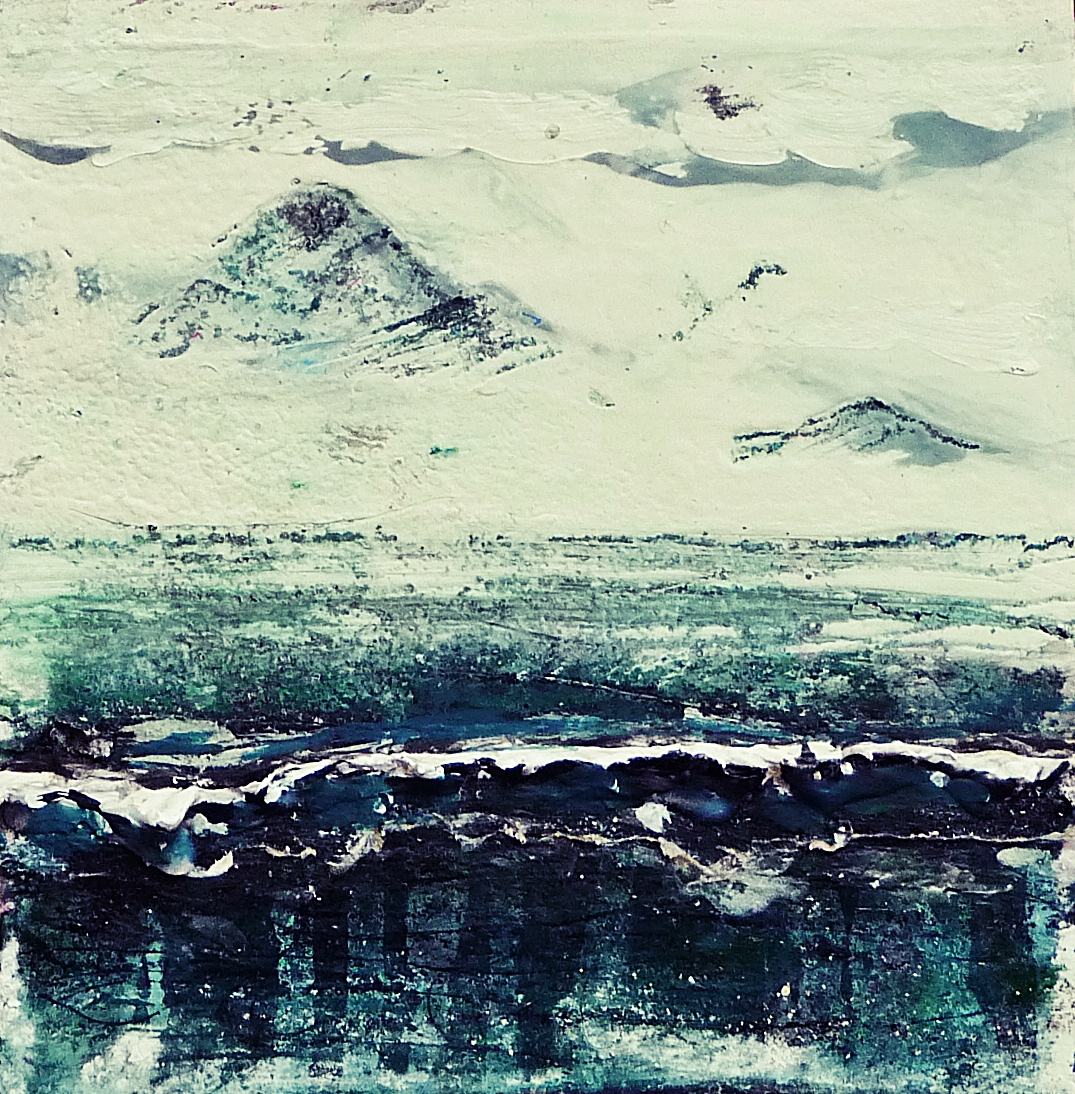
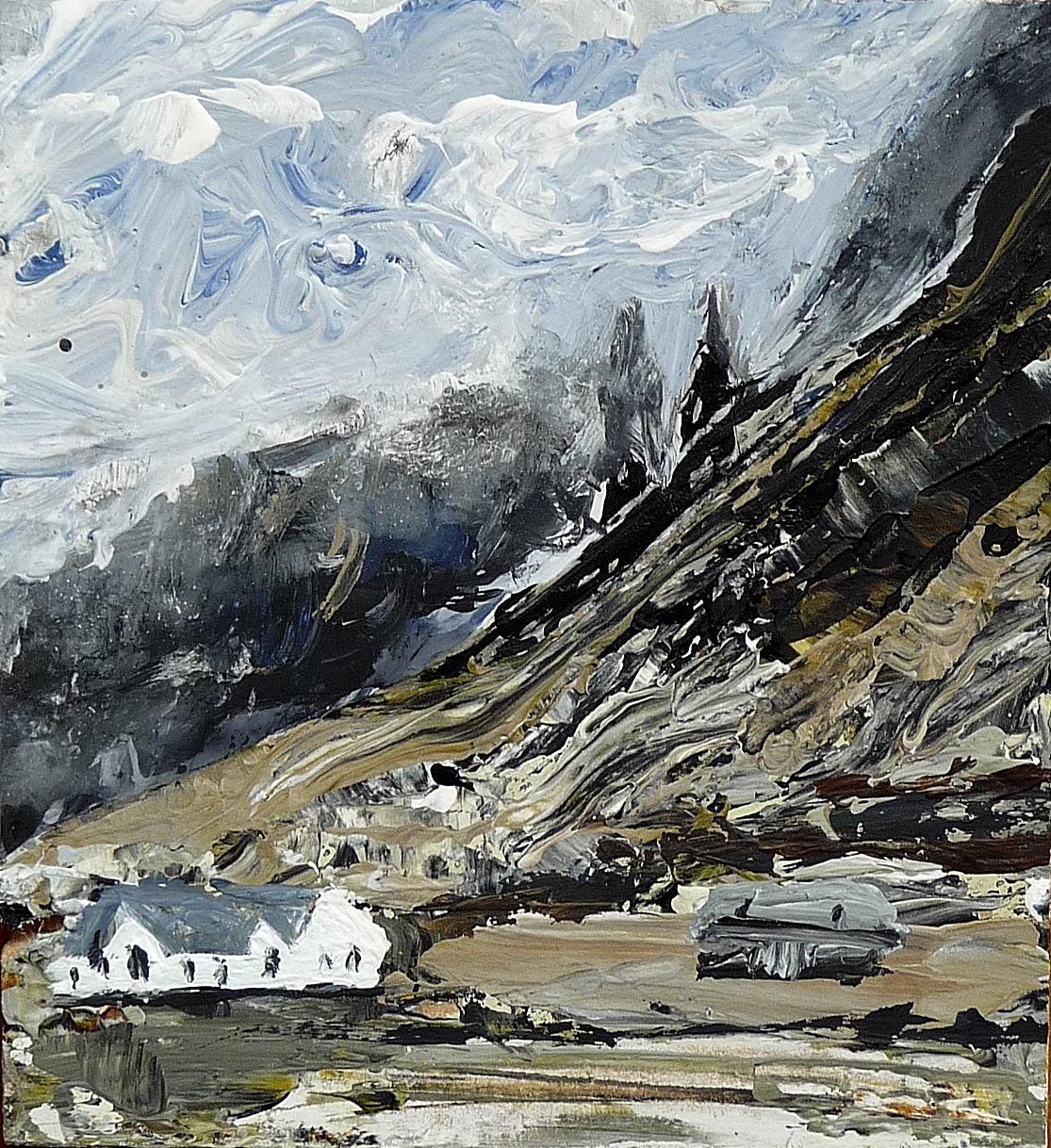
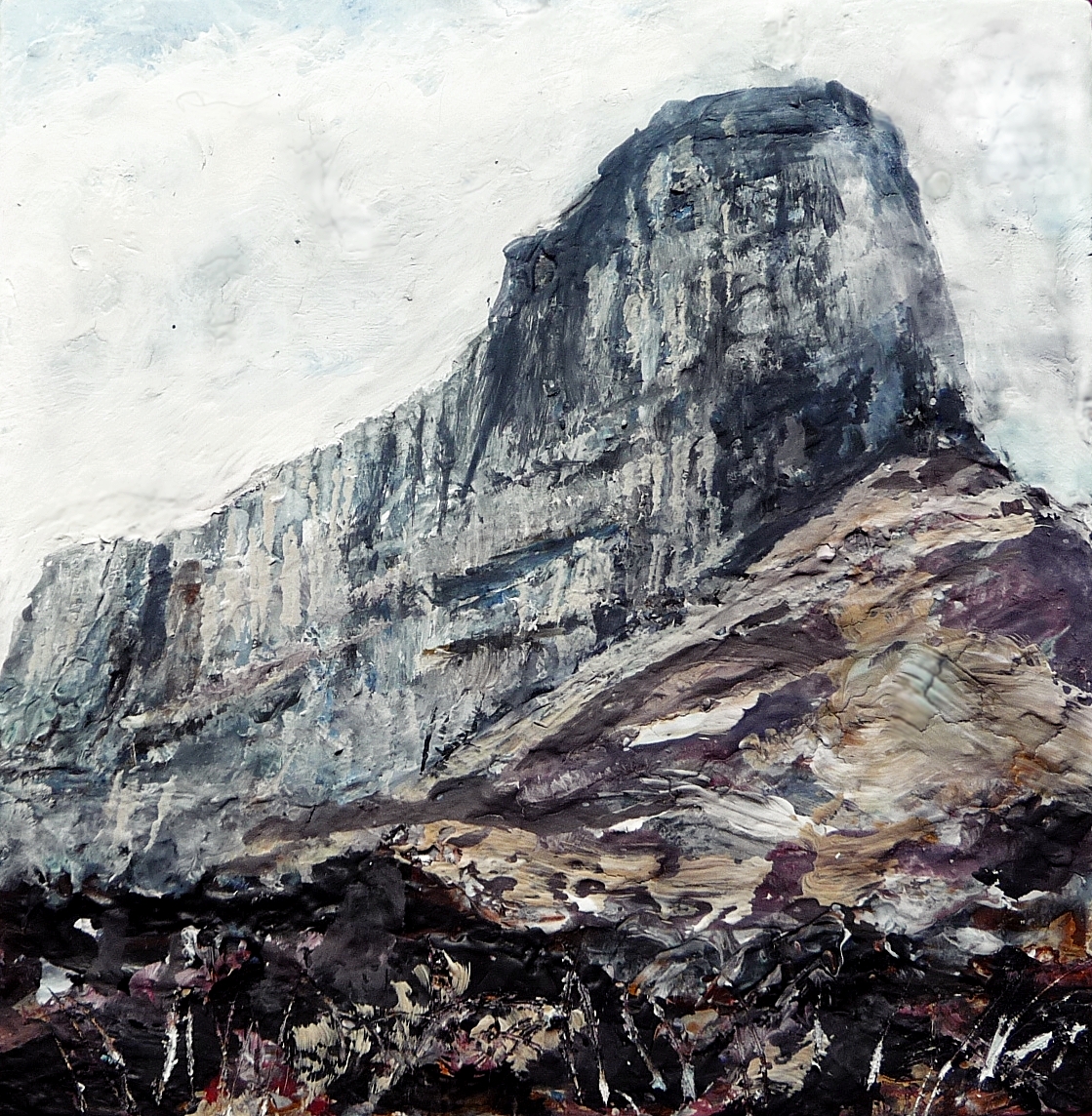
50 Paintings of Eigg Series. Day 14

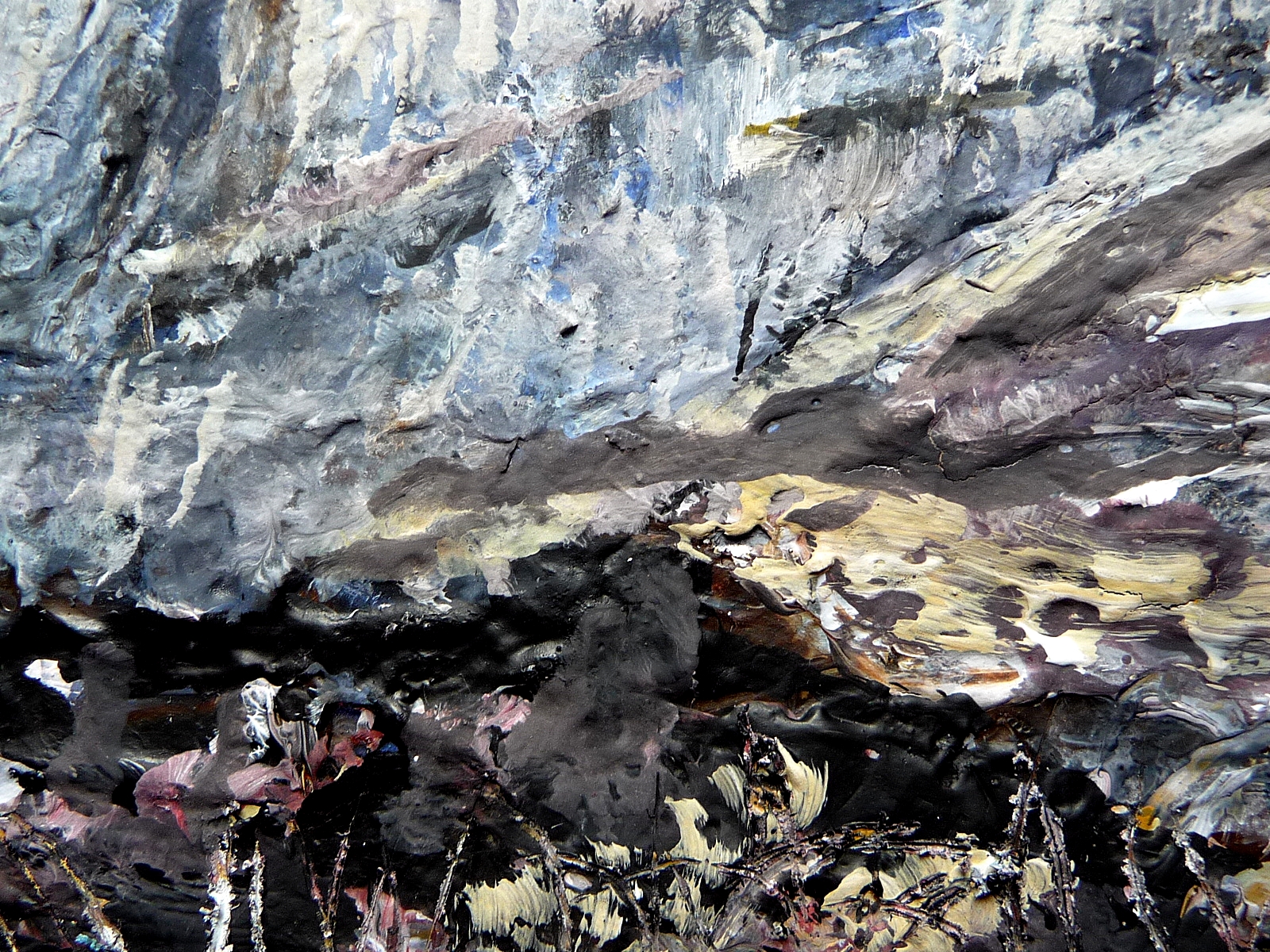
Eigg Series. No 14. Acrylic on 5x5" wood

Eigg Series. No 14. Acrylic on 5×5″ wood
P1100660

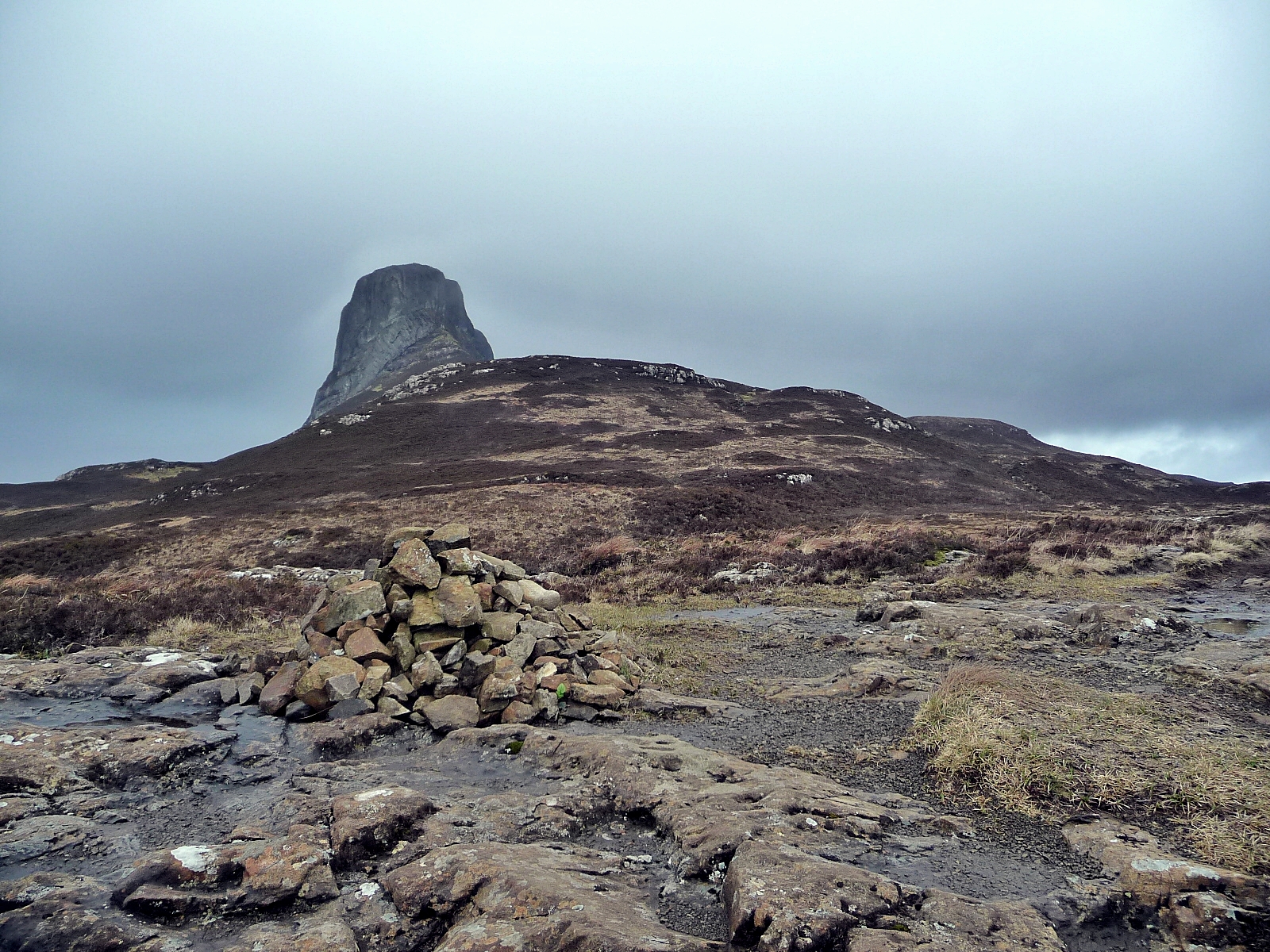
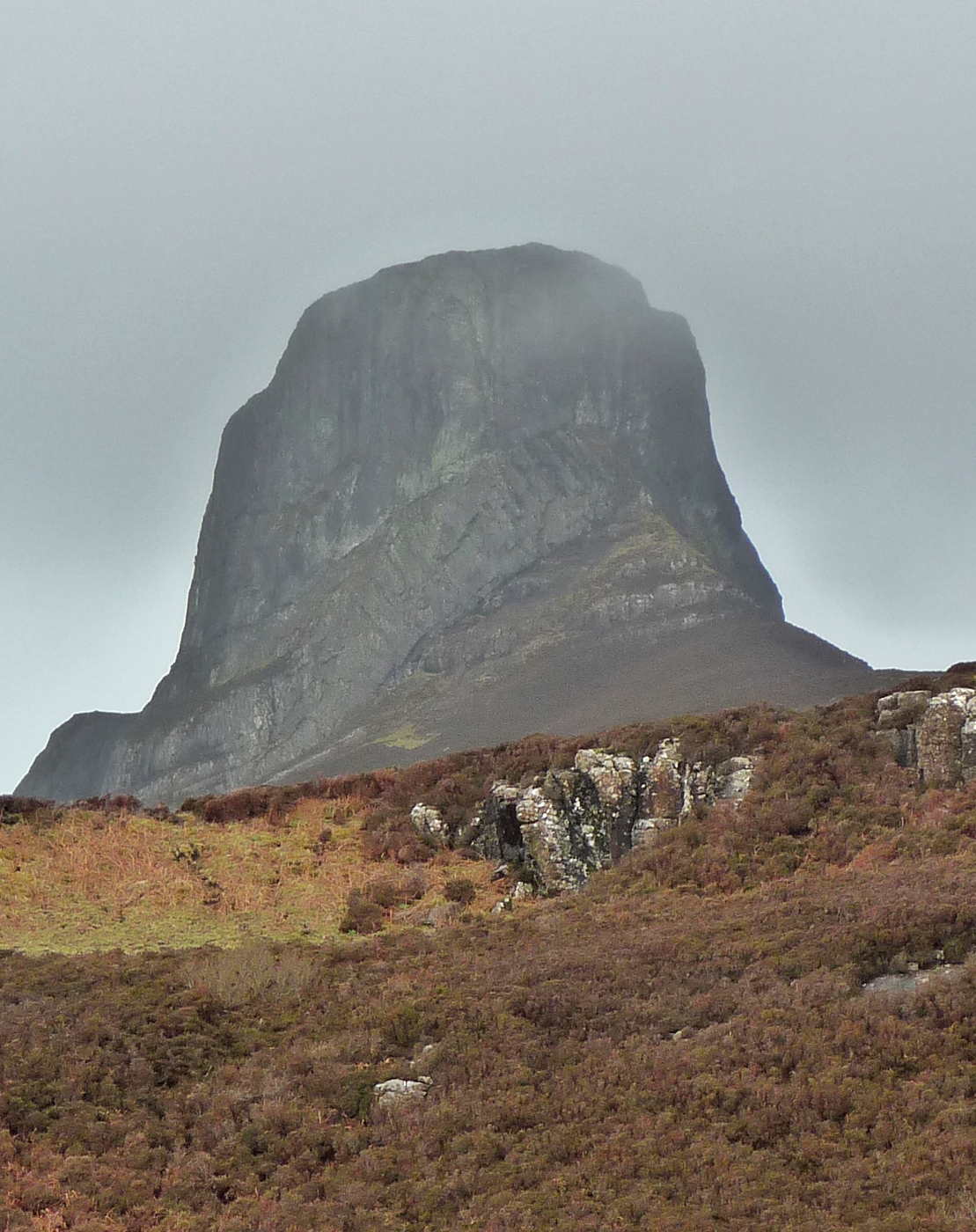
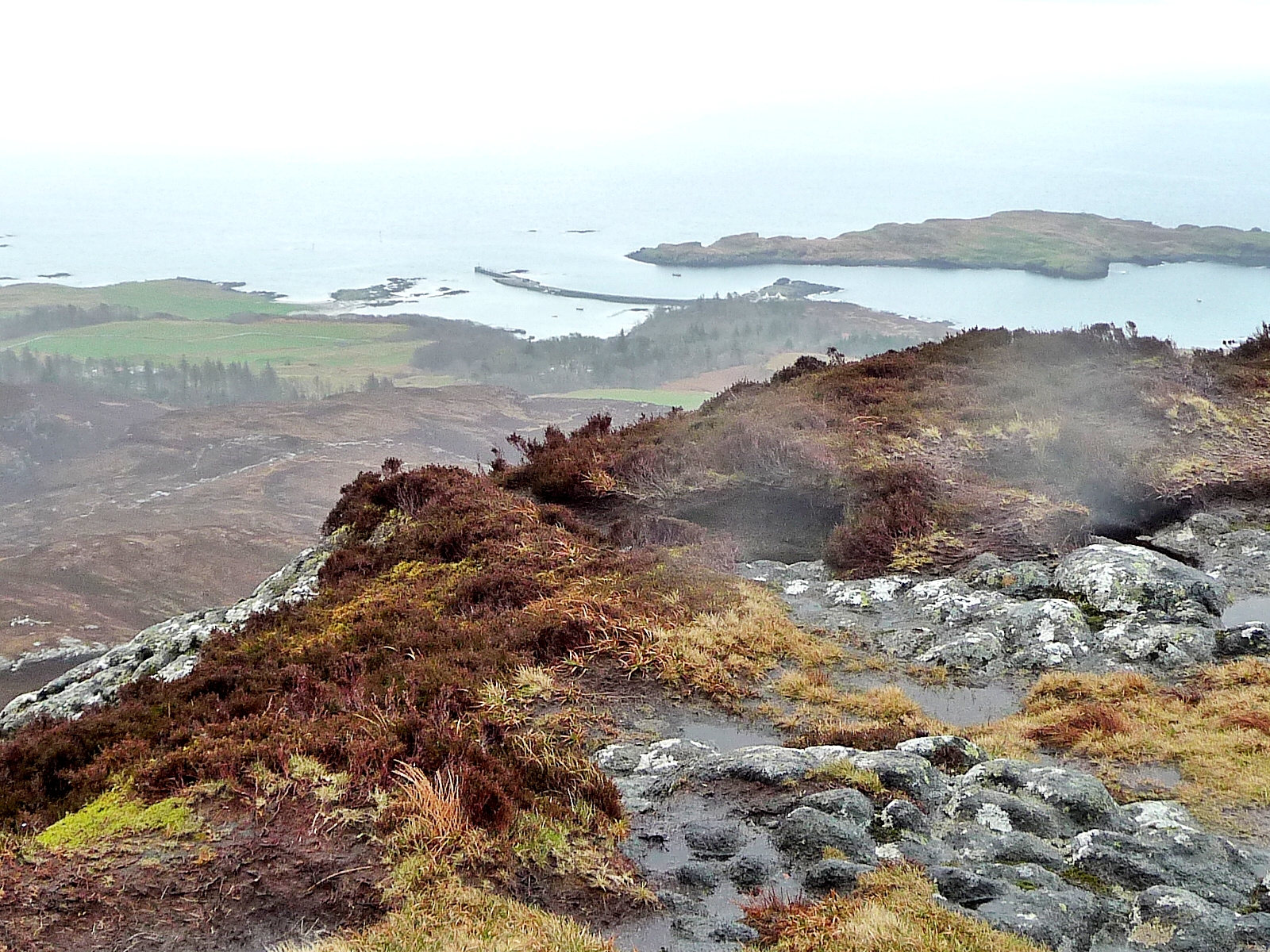
A view of Eigg’s distinctive landmark; The Sgurr of Eigg, with mist beginning to rise in the afternoon.


Now, get your anoraks on folks and dust off your mustard cords, it’s time for a geology lesson!

The pier at Galmisdale has an arts and craft shop which usefully stocks booklets about the island, including – ‘The Geology of Eigg’ by Jon Hudson and Anne Allwright, in which I learned all about the many interesting shapes and natural sculptures of Eigg.

From an arts perspective, the Sgurr looks to me like a huge sculpture from a giant’s kiln, and the process isn’t dissimilar. If you want to make a bronze sculpture, one method (or the one I learned at art college anyway) is to mold a shape from flexible wax, attach a wax tube to it, cover it in rough cement, then when that hardens, pour molten bronze into the wax tube. The wax shape inside melts and is replaced by bronze. When it cools you simply break way the rough cement and voila, you have a bronze work of art!

The epic making of the Sgurr began about 60 million years ago, when repeated lava flows (on what’s1 now the Isle of Rum) erupted across the landscape, creating plateaus of basalt which now form most of Eigg.
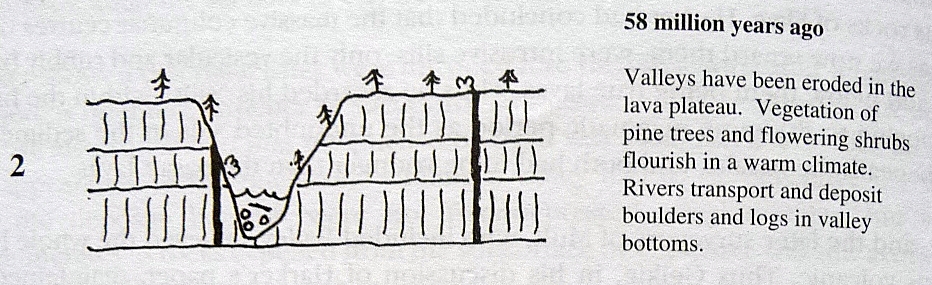
 

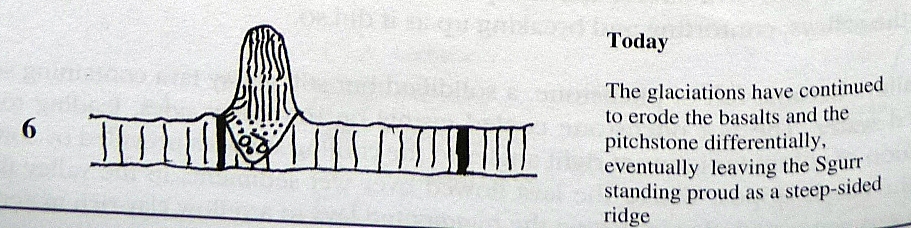
2Those hardened and weathered over a millions years to form river valleys, then volcanic action resumed, this time a bit more violent, with gas explosions blasting the trees down the river valleys. This was followed by lava flows which mixed with pumice and sedimentary rocks from river flows to form an extremely resilient volcanic rock called ‘pitchstone’ that filled the river valley on the pre-historic Eigg landscape.

Over a few more million years the original basalt rocks wore away, leaving the stronger 3pitchstone behind. Then, like a giant sculptor adding finishing touches, glaciers passed over the north of Scotland, wearing away softer rock, so what you see today in the Sgurr of Eigg, is the more resilient pitchstone lava which once filled a valley.
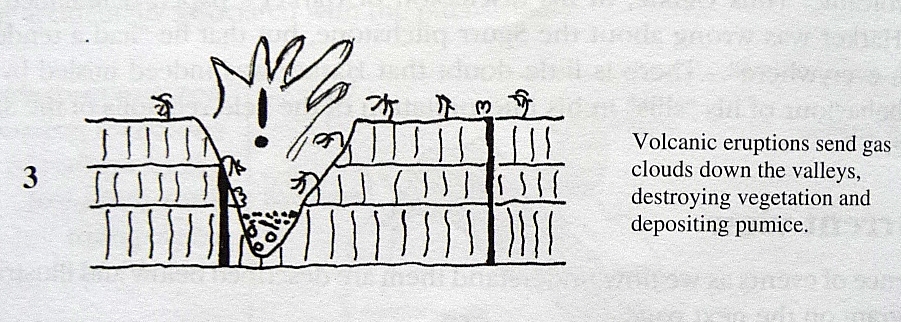
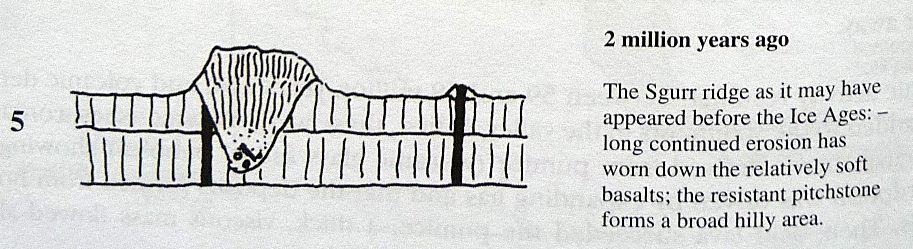
45The valley’s sides crumbled away to leave the 1300 foot Sgurr behind. It’s quite breath-taking isn’t it?

As was the walk up the Sgurr, though the views were wonderful!
6


Photos of the Sgurr..

P1090688 P1090686


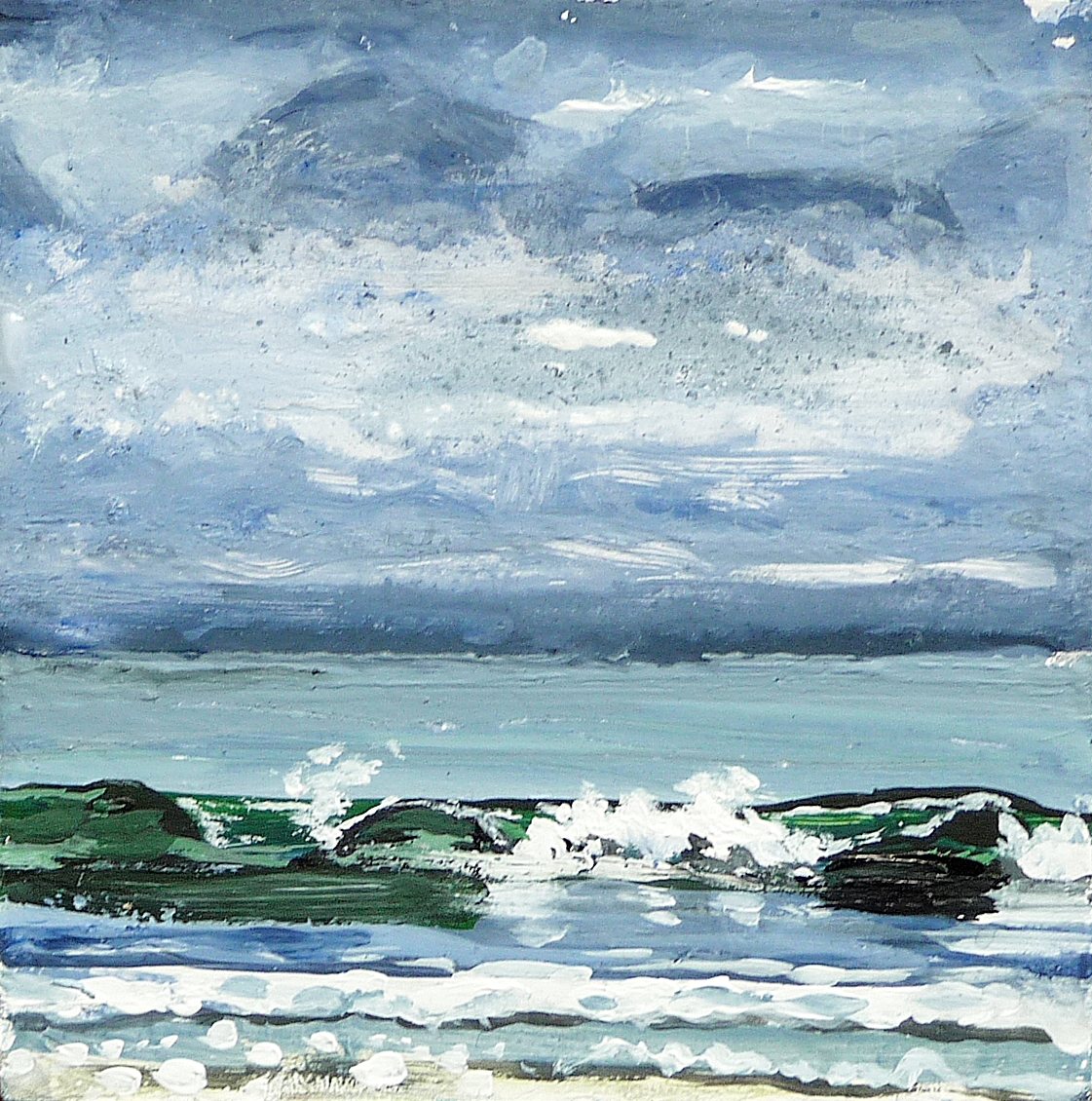
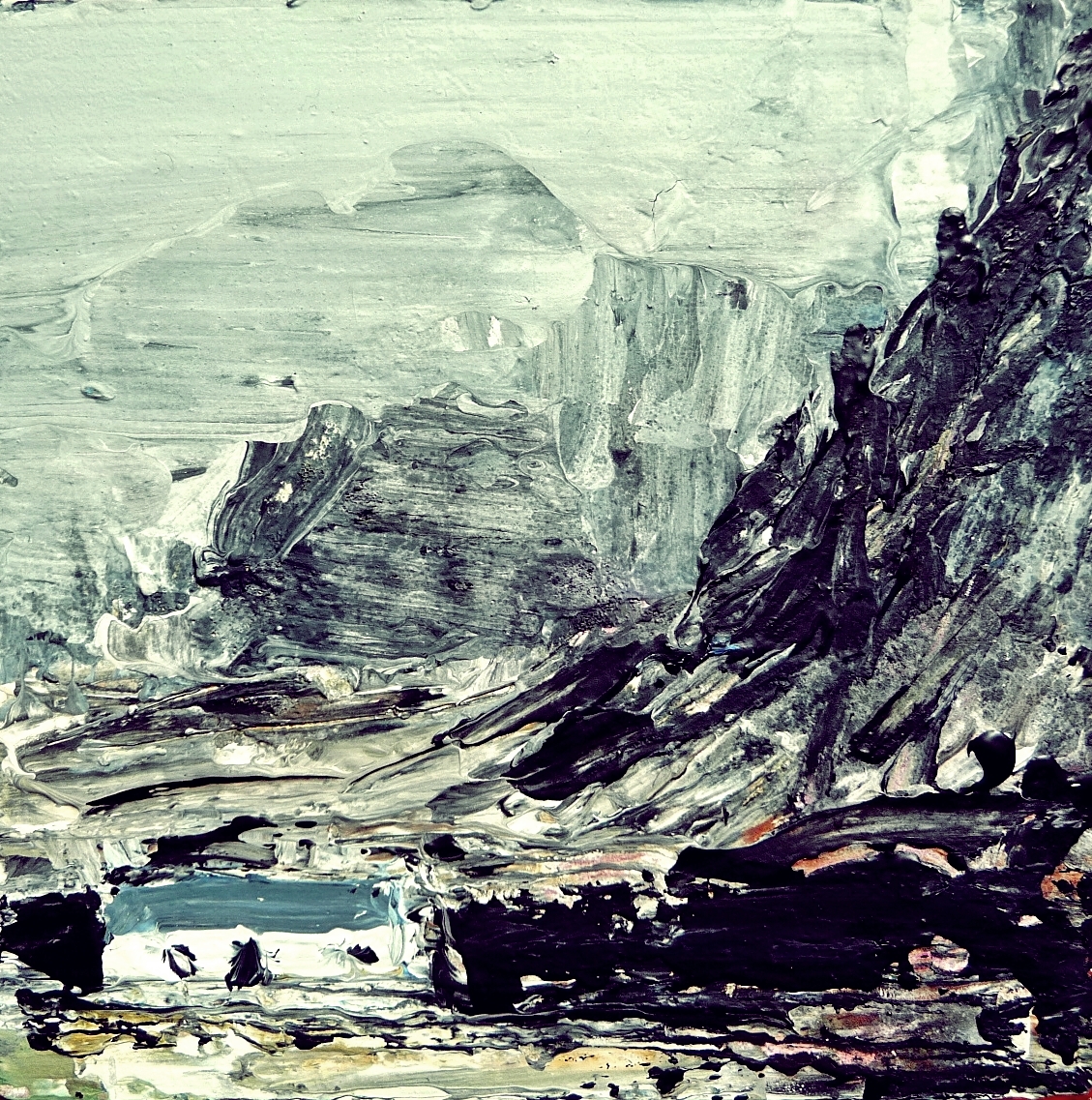
50 Paintings of Eigg Series. No. 9

Eigg Series No 9. Acrylic and ink on 5x5" wood

Eigg Series No 9. Acrylic and ink on 5×5″ wood

P1100438

Today’s painting is a moody depiction of Laig Bay looking towards the south.

In the past, the remote islands of the West coast attracted many Christian missionaries from Ireland, the most well-known being St Columba who settled on Iona in the 7th Century. On Eigg you can still see the remains of a chapel in Kildonan Bay, founded by St Donnán from Ireland.

I’ve always been fascinated by this era of ancient Christianity and first began to explore this time in history when I was 20 and visited Iona off the West Coast of Mull. While there I could see  and experience for myself what was meant by the expression ‘a thin veil between heaven and earth’. In those times it was common for practicing monks or nuns to embrace solitude or silence (a practice that continues to this day) and, although I’m not a part of any practicing religion, I know I’m not alone in finding these remote islands conducive to contemplation.

St Donnán’s life came to a violent end when he was killed alongside 52 monks on Easter Sunday, which was most likely to have been Norsemen since this was a common occurrence in those times.

Nowadays, Eigg has two churches, in the East and West of the island, as well as the peaceful yoga retreat at Glebe Barn in the middle of the island overlooking Kildonan Bay (you can read about Glebe Barn Yoga retreat Here)

I’m thinking of the news about Abdullah Deghayes today, and also of some friends of mine who’ve been involved indirectly in the Syrian conflict. My heart goes out to people who are unable to live in peace because of circumstances beyond their control, and I wish everyone a peaceful and loving Easter weekend

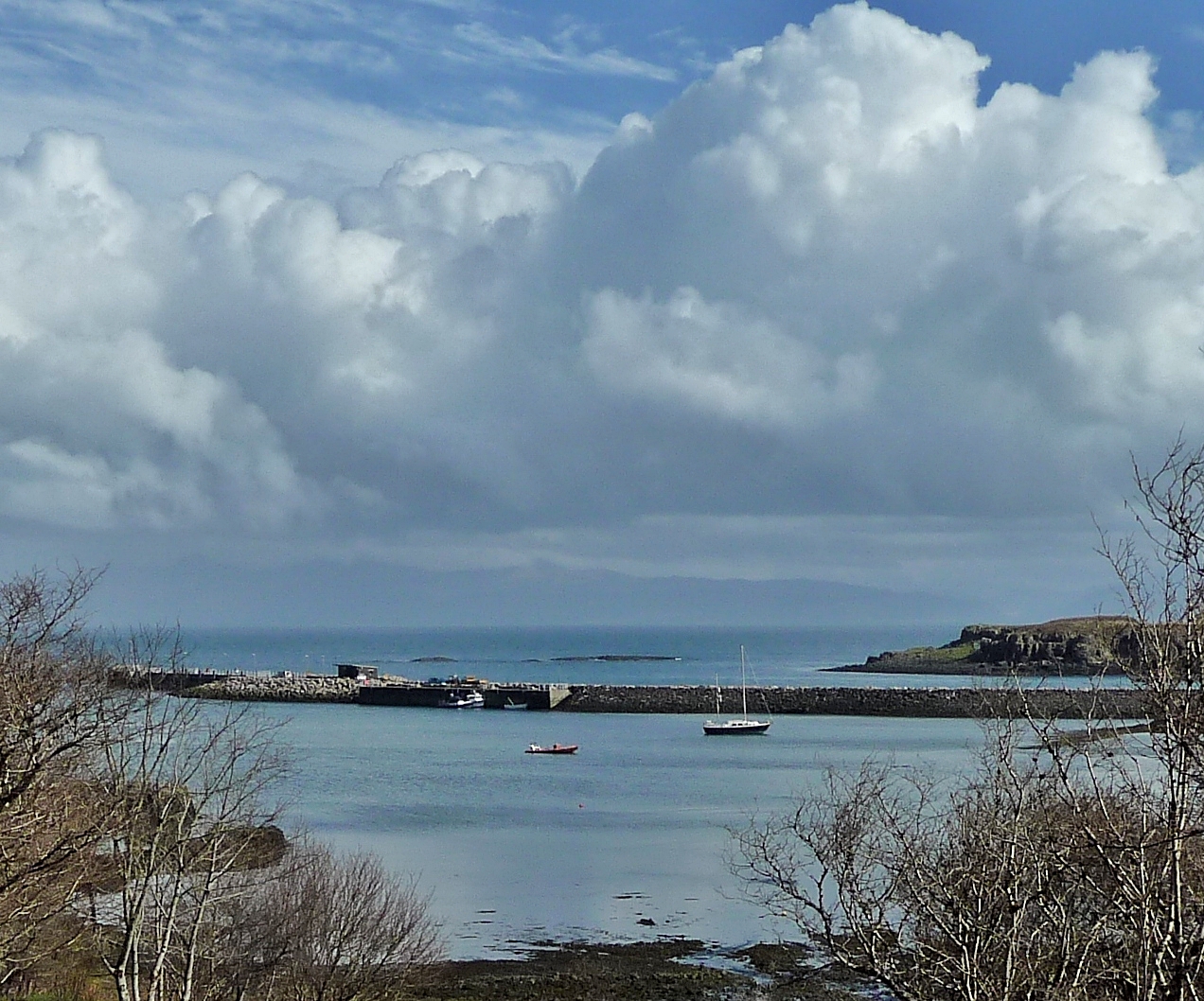
Looking East to the mainland from Kildonan Bay..

P1090780


The view from The Sgurr of Eigg down to Kildonan Bay and the pier at Galmisdale..

P1090724

7 Paintings of Eigg

These are the first seven paintings of the ’50 Paintings of Eigg in 50 Days’ series. Forty three to go!

* (Numbers 1 2 and 3 have sold)

They are all on 5×5″ wood, £45 each and are available on a first come first served basis. Please feel free to email me at rose.strang@gmail.com if you have any questions. (£45 includes post and package).

You can also read more about each painting and Eigg by clicking on ‘Home’ above, and scrolling down to previous posts

Eigg Series. No 1. Acrylic and ink on 5x5 inch wood

Eigg Series. No 1. Acrylic and ink on 5×5 inch wood


Eigg Series No. 2. Acrylic, ink and varnish on 5x5 inch wood

Eigg Series No. 2. Acrylic, ink and varnish on 5×5 inch wood


Eigg Series. No 3. Acrylic, ink and salt on 5x5 inch wood

Eigg Series. No 3. Acrylic, ink and salt on 5×5 inch wood

Eigg Series No 3. Acrylic on 5x5 inch wood

Eigg Series No 3. Acrylic on 5×5 inch wood

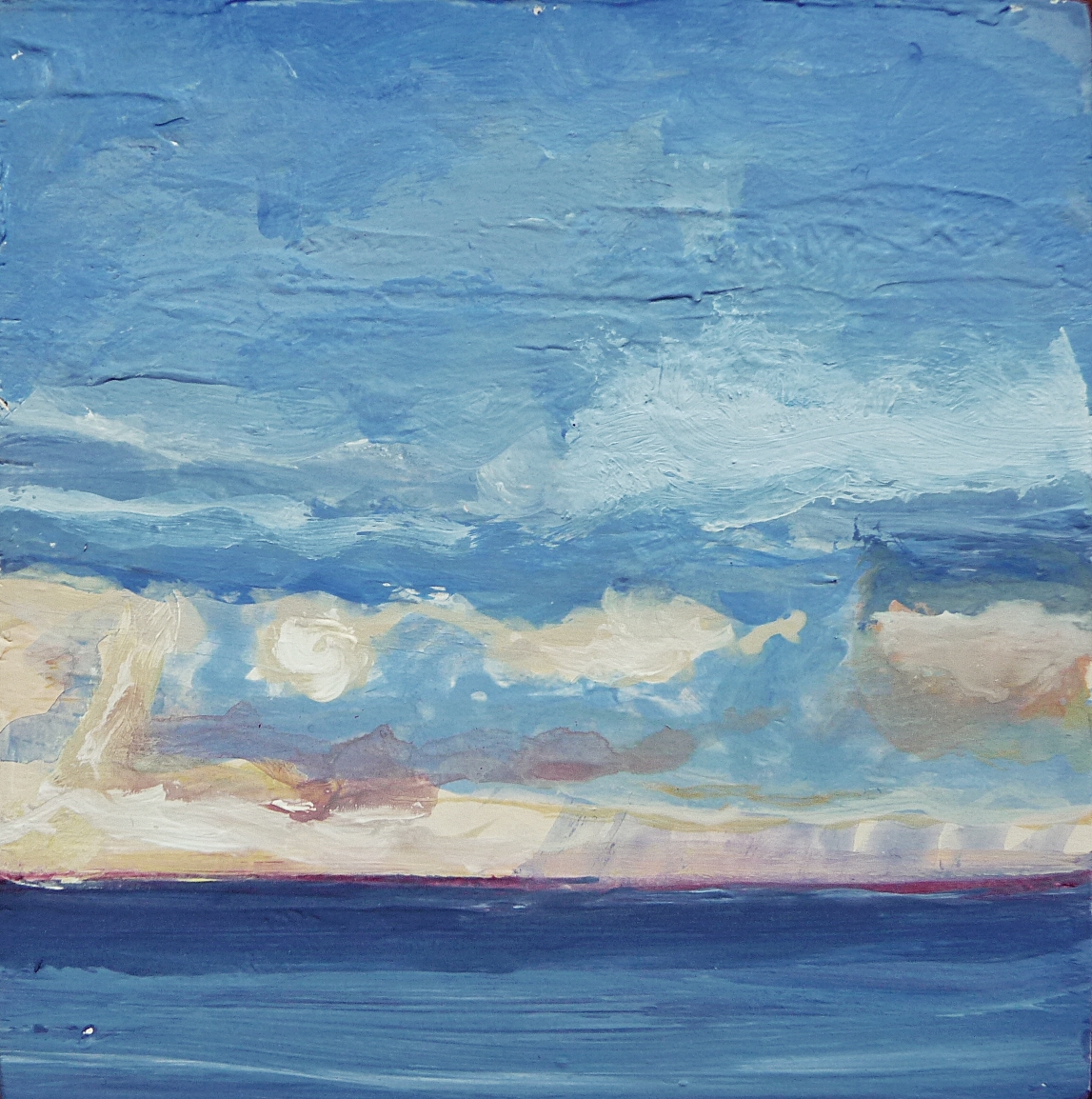
Eigg Series. No 5. Acrylic on 5x5 inch wood

Eigg Series. No 5. Acrylic on 5×5 inch wood

1

Eigg Series. No 6. Acrylic on 5×5″ wood


Eigg Series. No 8. Acrylic, ink, salt and sand on 5x5" wood

Eigg Series. No 8. Acrylic, ink, salt and sand on 5×5″ wood


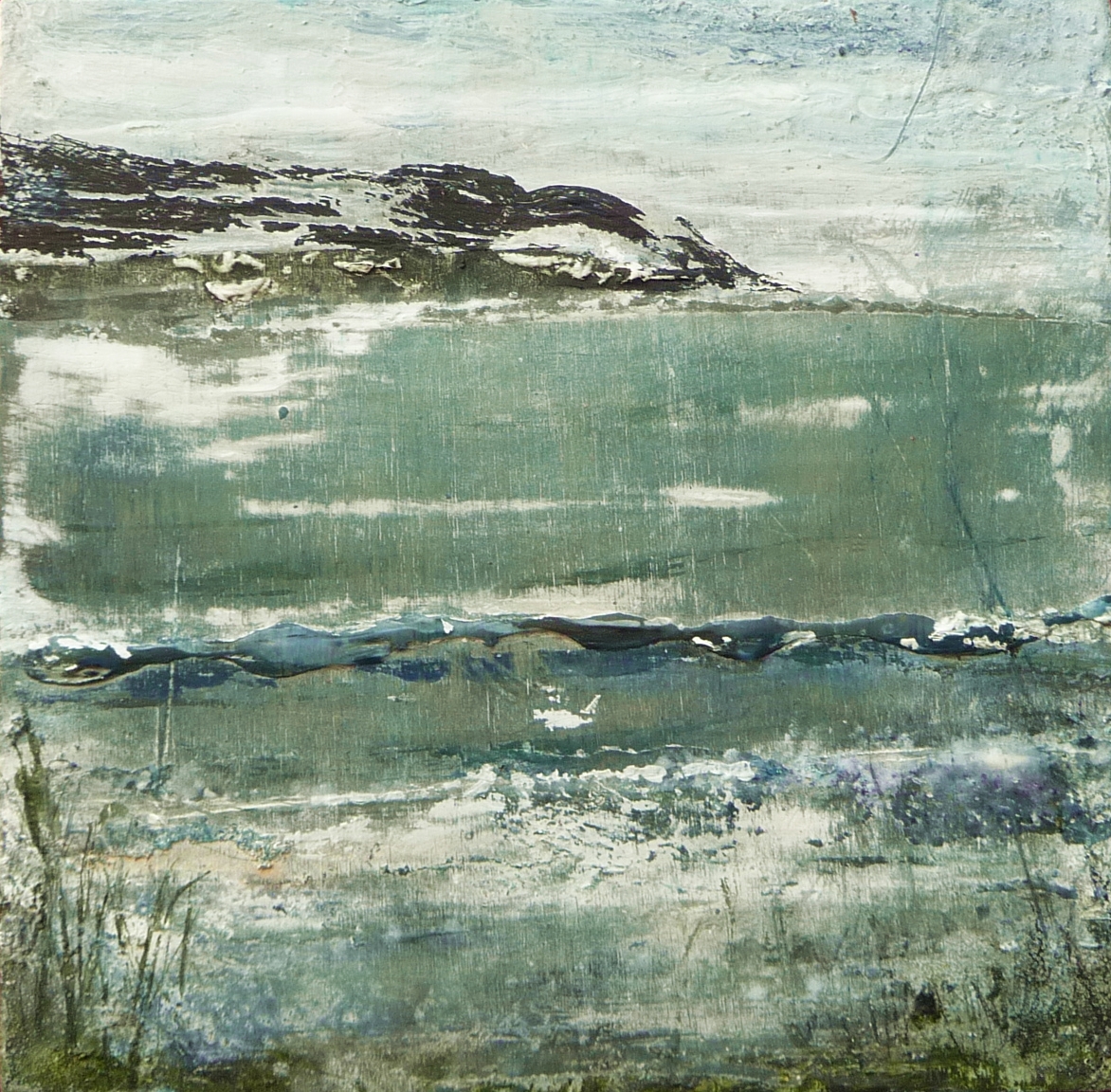
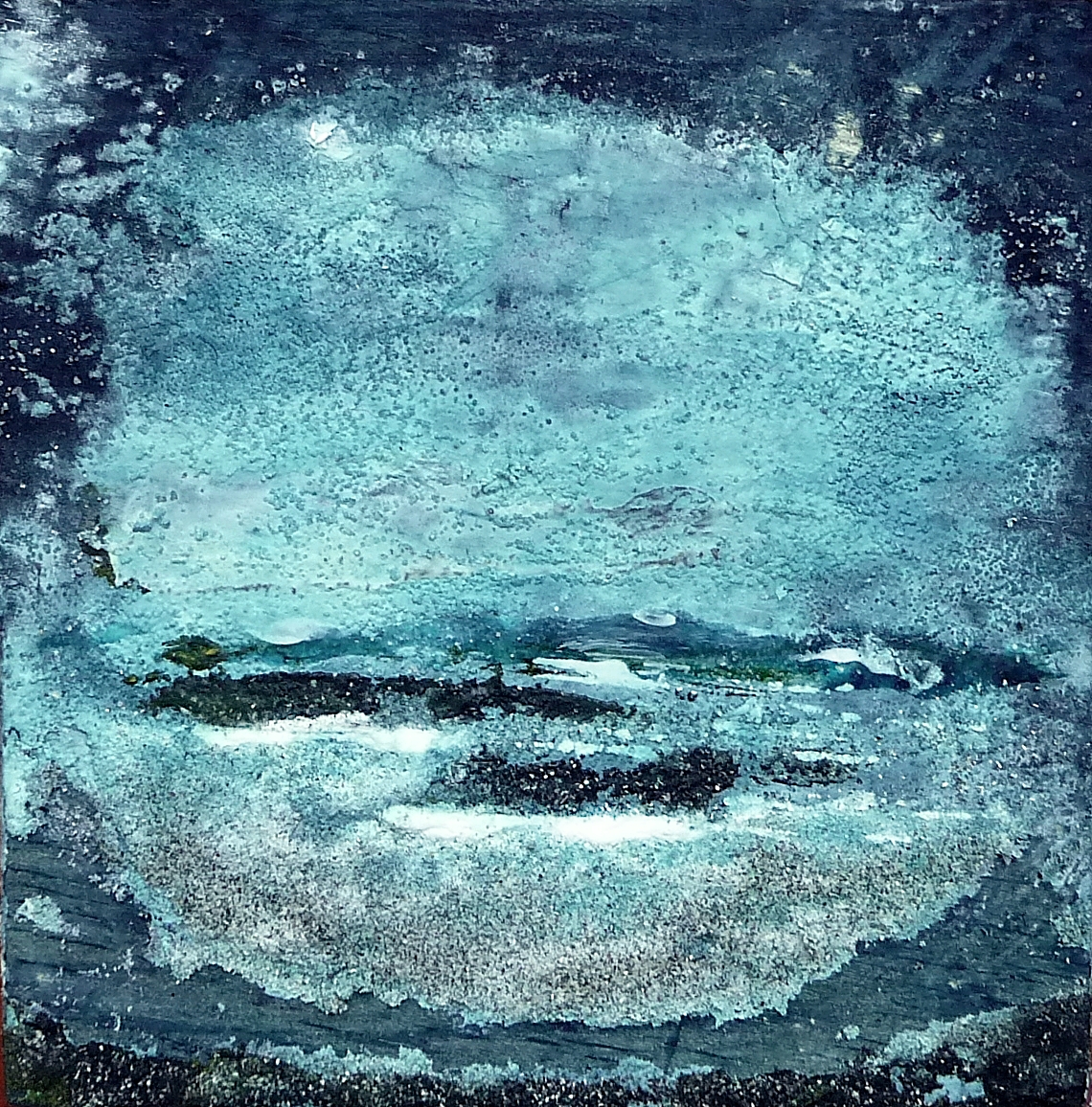
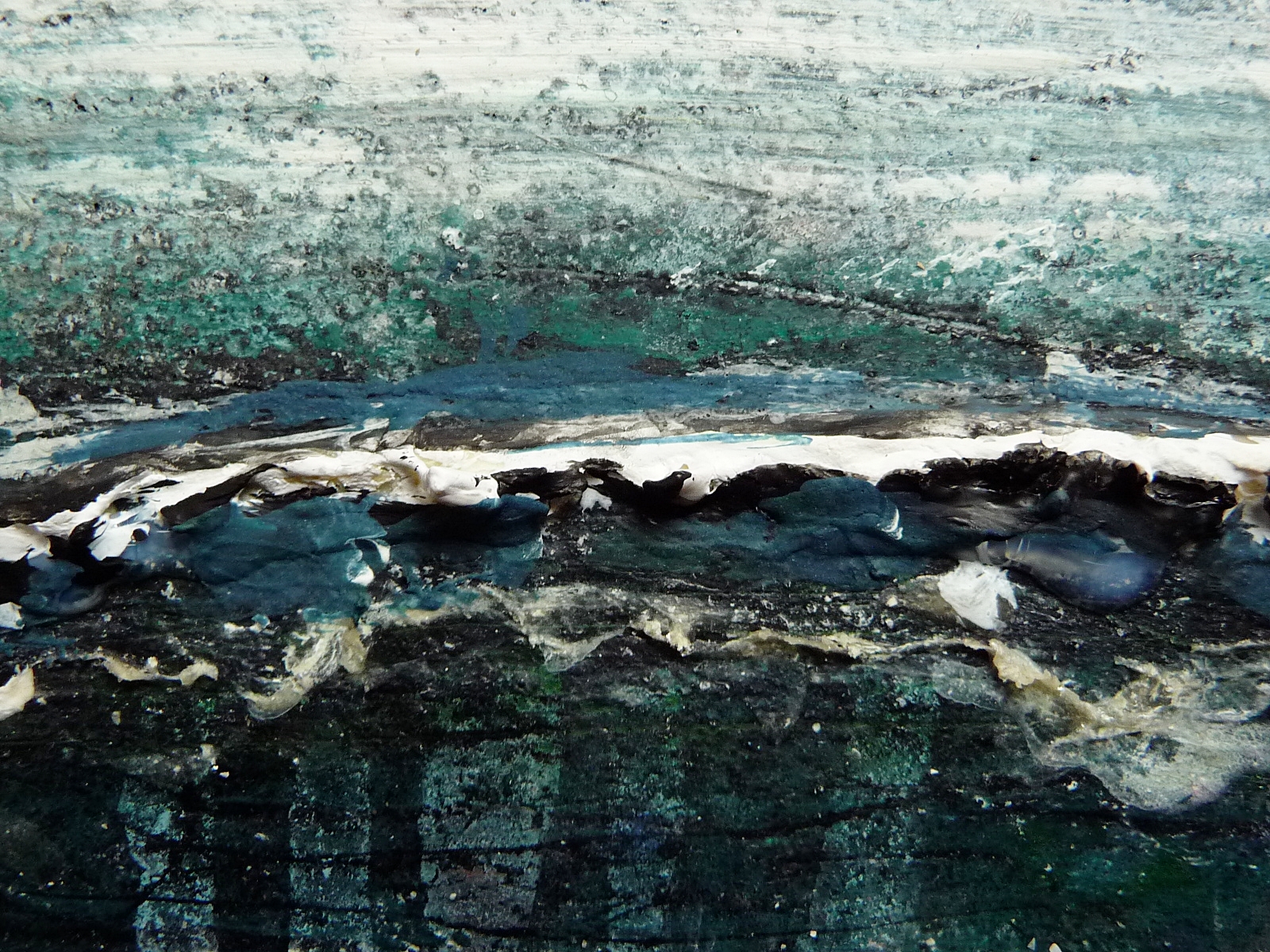
50 Paintings of Eigg Series: No 2


Eigg Series No. 2. Acrylic, ink and varnish on 5x5 inch wood

Eigg Series No. 2. Acrylic, ink, sand and varnish on 5×5 inch wood. (Sold)

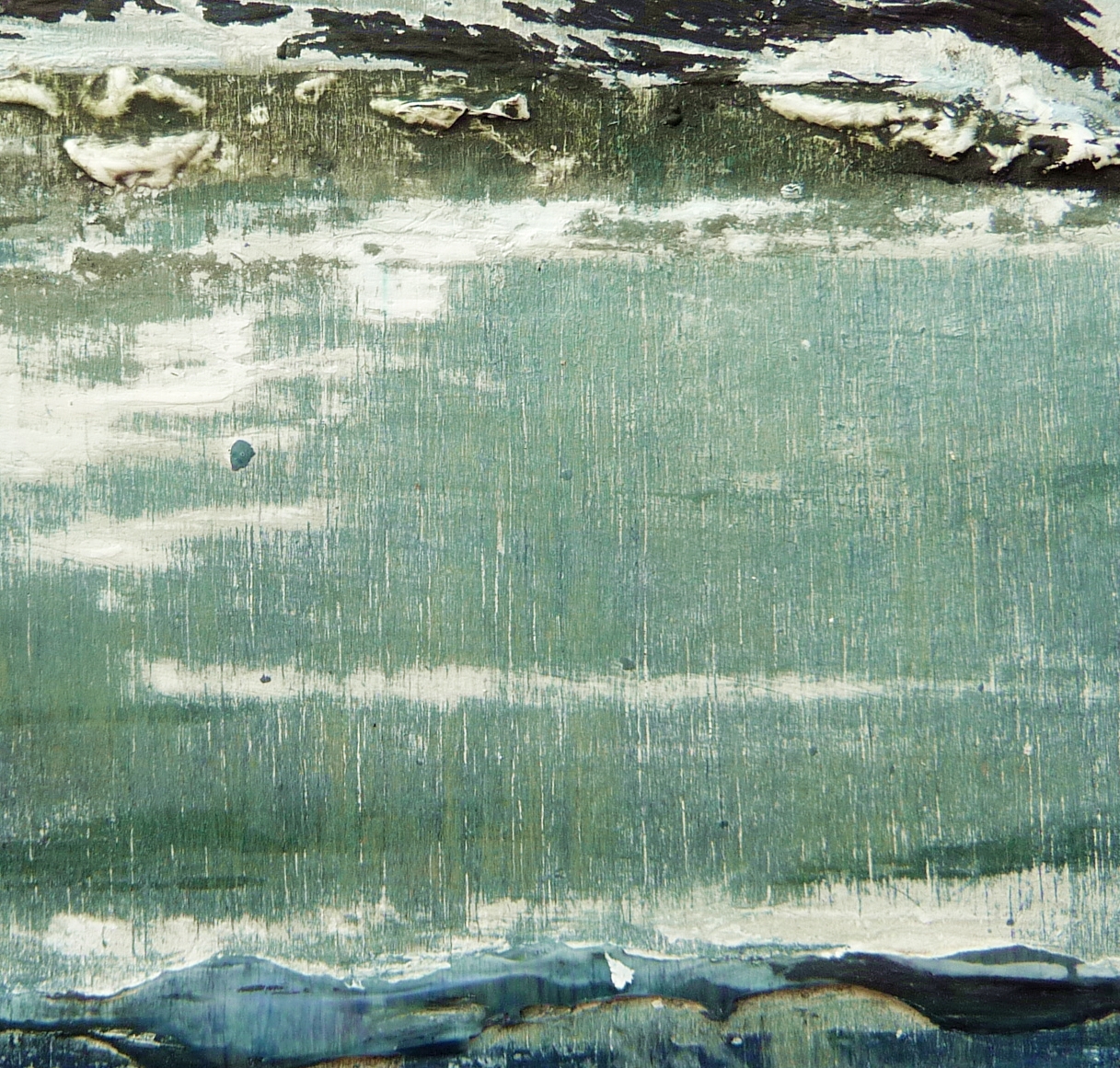
Detail

Detail

A slightly more playful version of waves in Laig Bay today. What I like about painting on wood is the layering and texture it allows, so there are various layers here, built up and scraped back, then some varnish and fine-grained sand from Laig Bay for texture. I think I’m also beginning to capture something of my emotional response to Laig Bay.

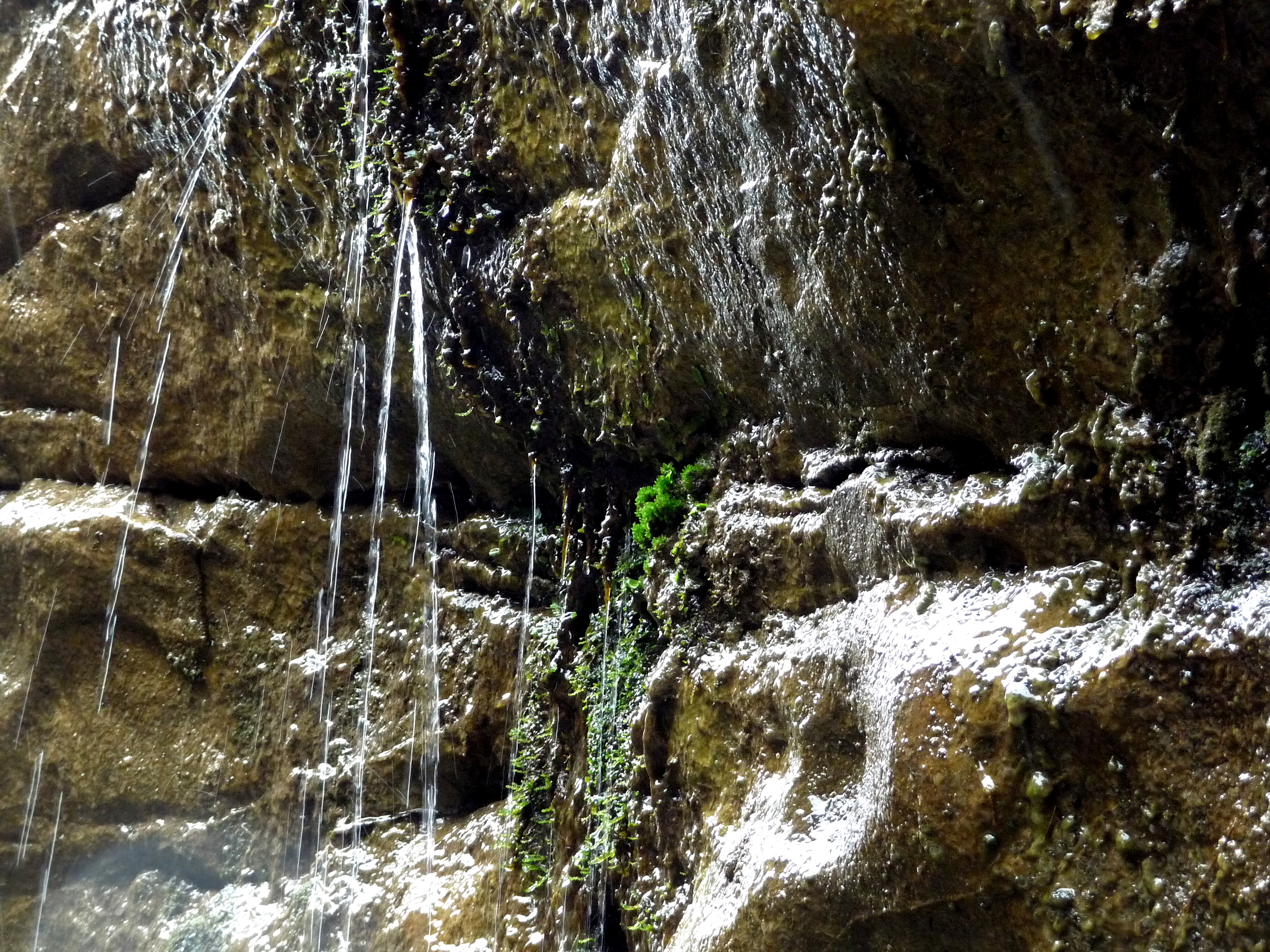
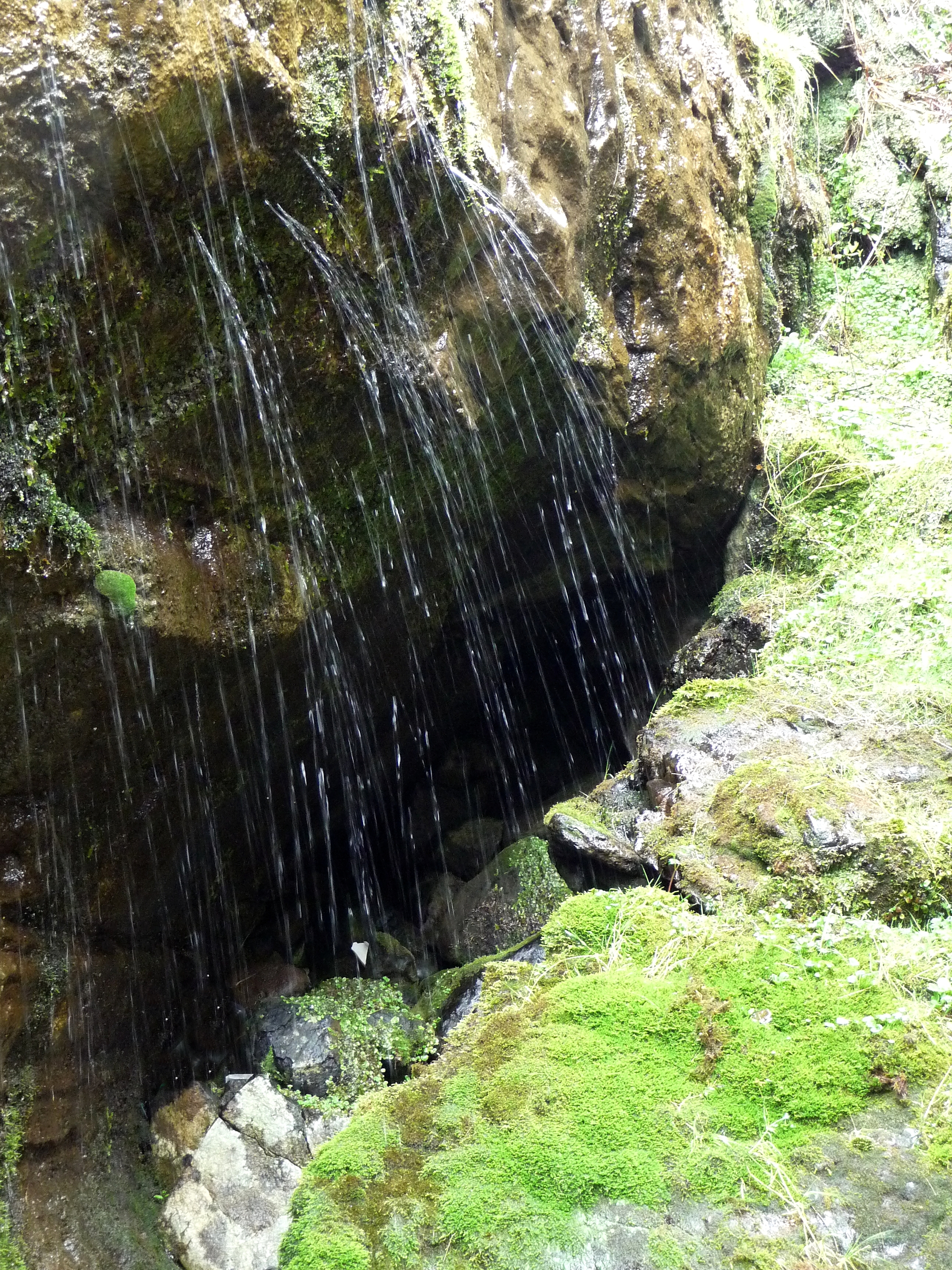
This was another somewhat rainy day, bad for tourists but good for painting! It all adds to atmosphere and these lovely miniature waterfalls on the rocks..

P1090379

P1090372

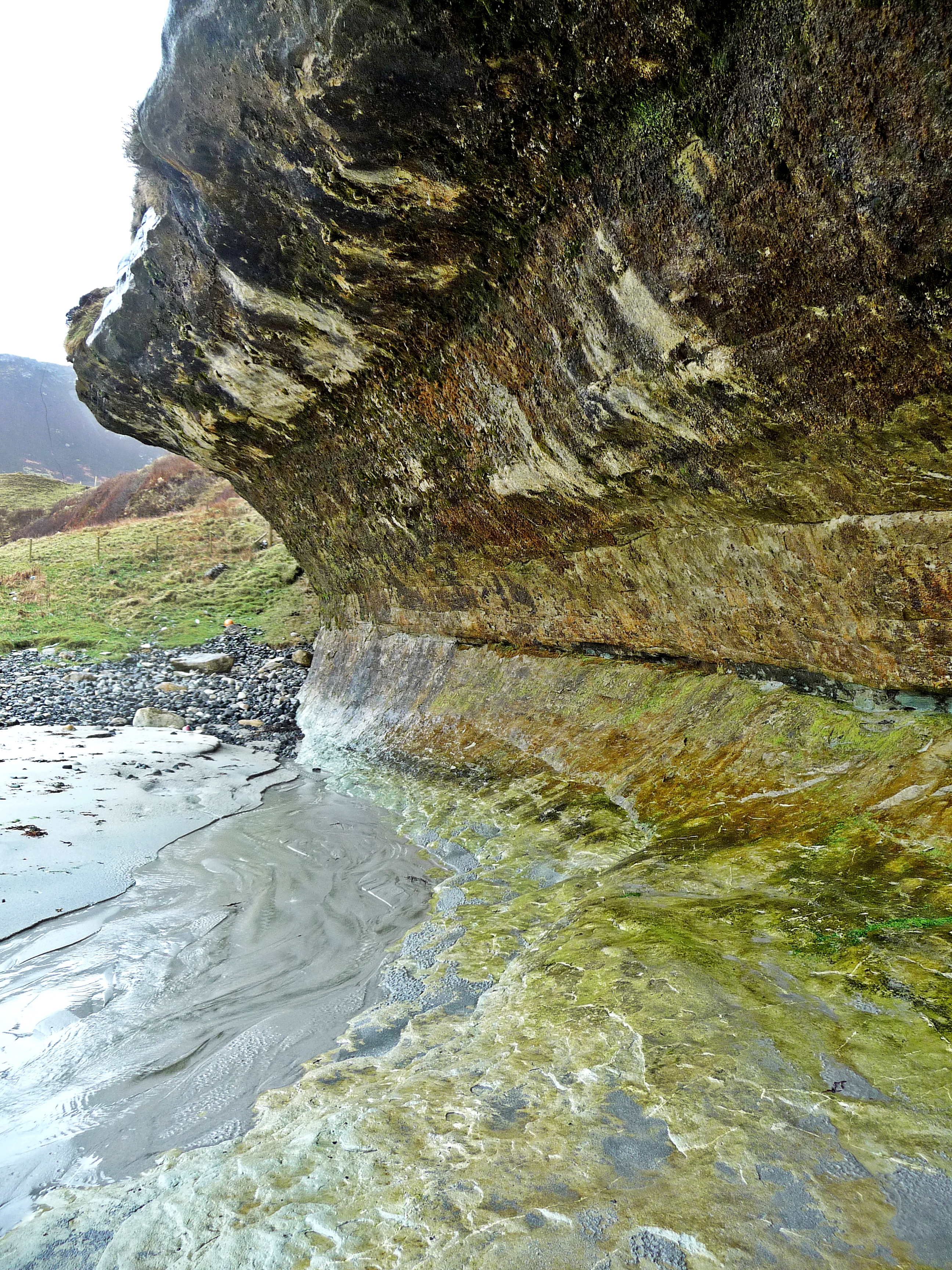
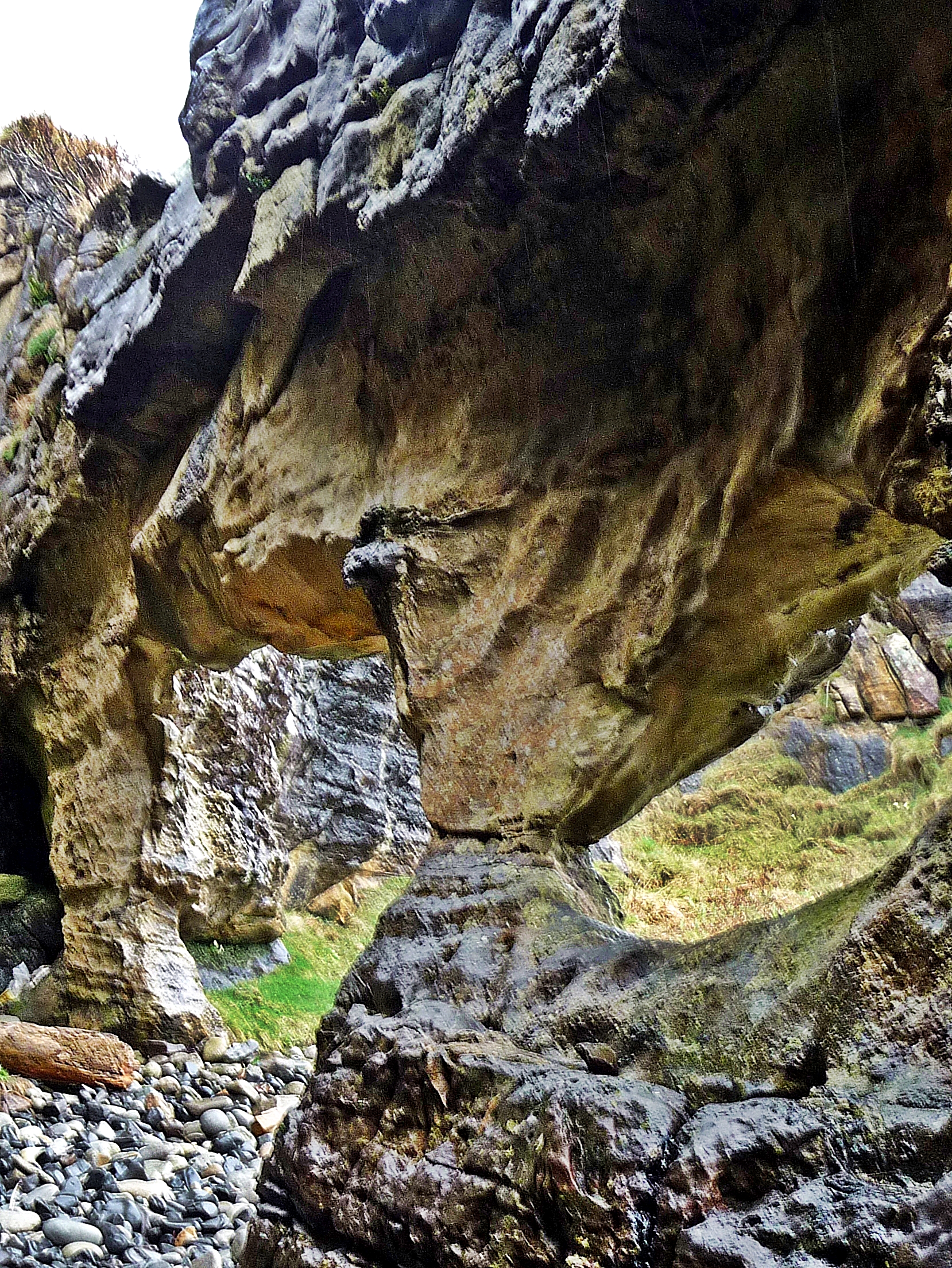
We began to explore The Singing Sands Bay (Camus Sgiotaig in Gaelic – if there are any Gaelic speakers here, do feel free to offer any translations in comments below). Thus named for its fine quartz sands which sing when dry, but as it was rainy they were subdued (and I’m told it’s more akin to squeaking than singing!). More fascinating were the mysteriously sculpted rocks and small caves which served as shelter from the rain

P1090371

P1090348

P1090368

These sandstone rocks are the oldest on Eigg, about 200 million years old. They were inter cut with lava flows and intrusions which baked and hardened the sandstone, making it almost indestructible. The lava has crumbled and the sandstone remains – sculpted by lava and waves over millions of years.

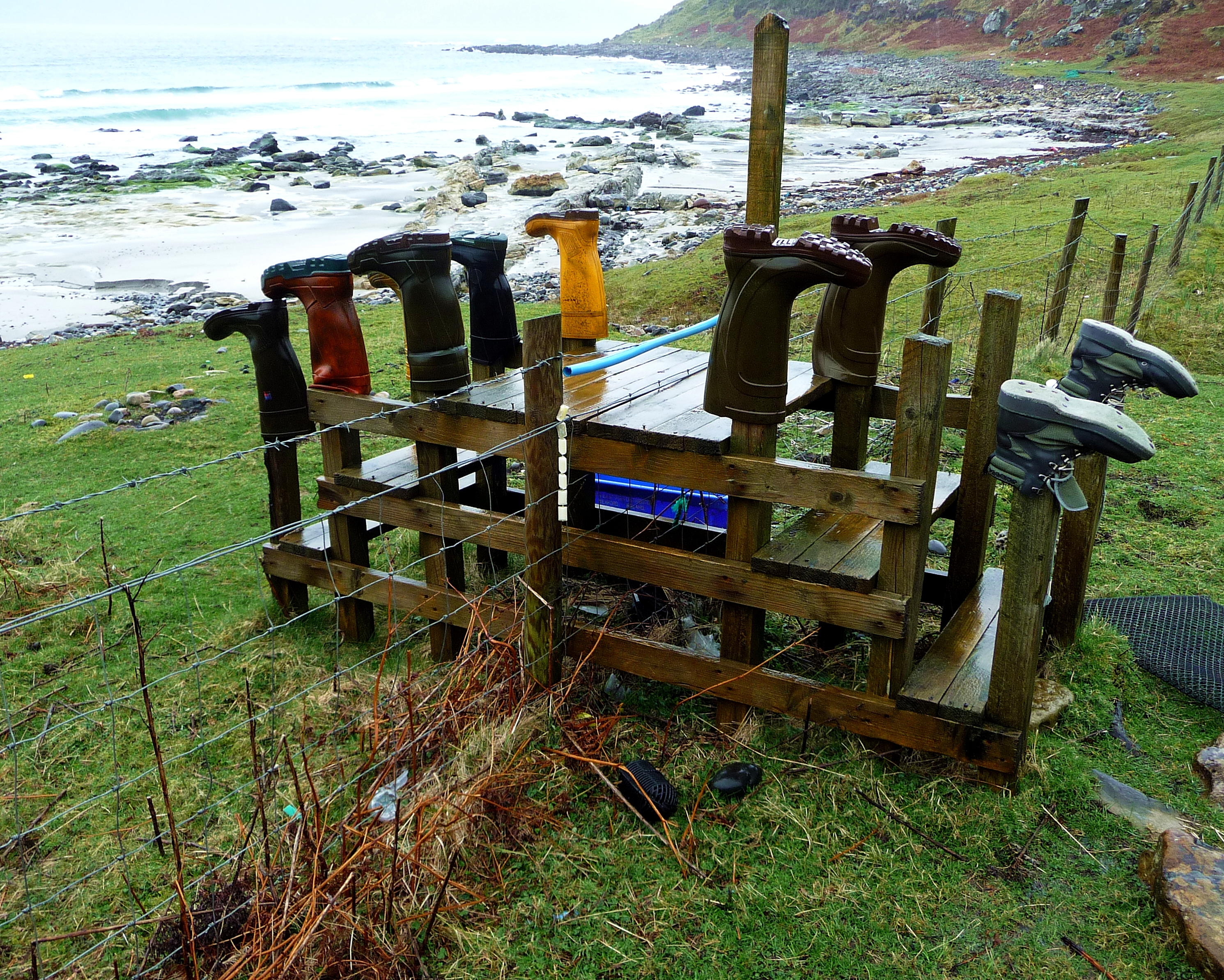
These were also a mystery..

P1090337

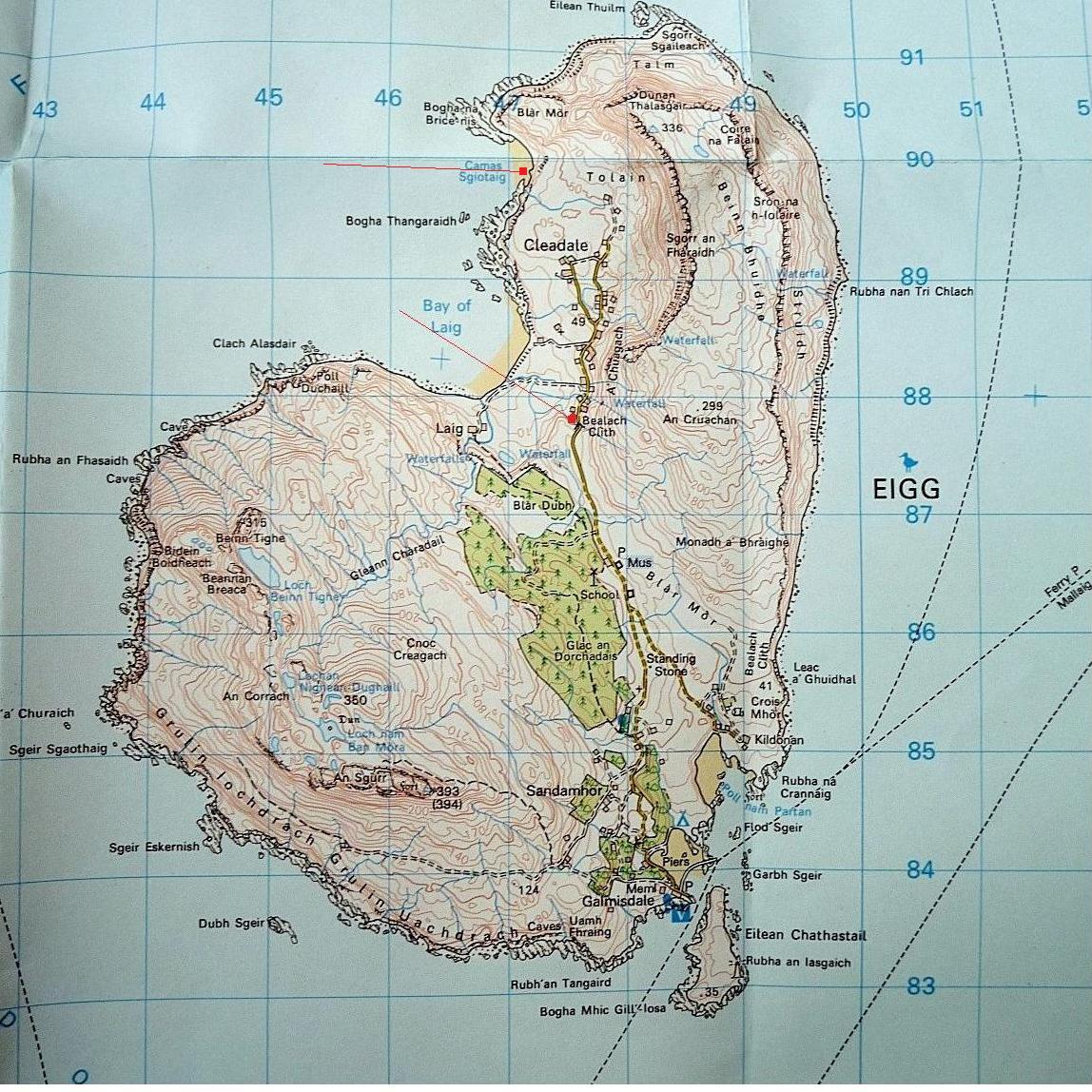
Map showing Laig Bay and Singing Sands Bay

map 2

In the next few days I’ll be heading inland to the landscape and people of Cleadale (behind Laig Bay and the Singing Sands) with its beautifully ominous cliffs of ancient crumbling lava.