Tag Archives: Scottish artists

Borders Country Day 15

'Hawk. River Tweed 2'. Acrylic on 20x16" canvas

‘Hawk. River Tweed 2’. Acrylic on 20×16″ canvas

Today’s painting – a larger version of ‘Hawk (River Tweed)’ on canvas.

This is the version from last week on 5×5 inch wood..
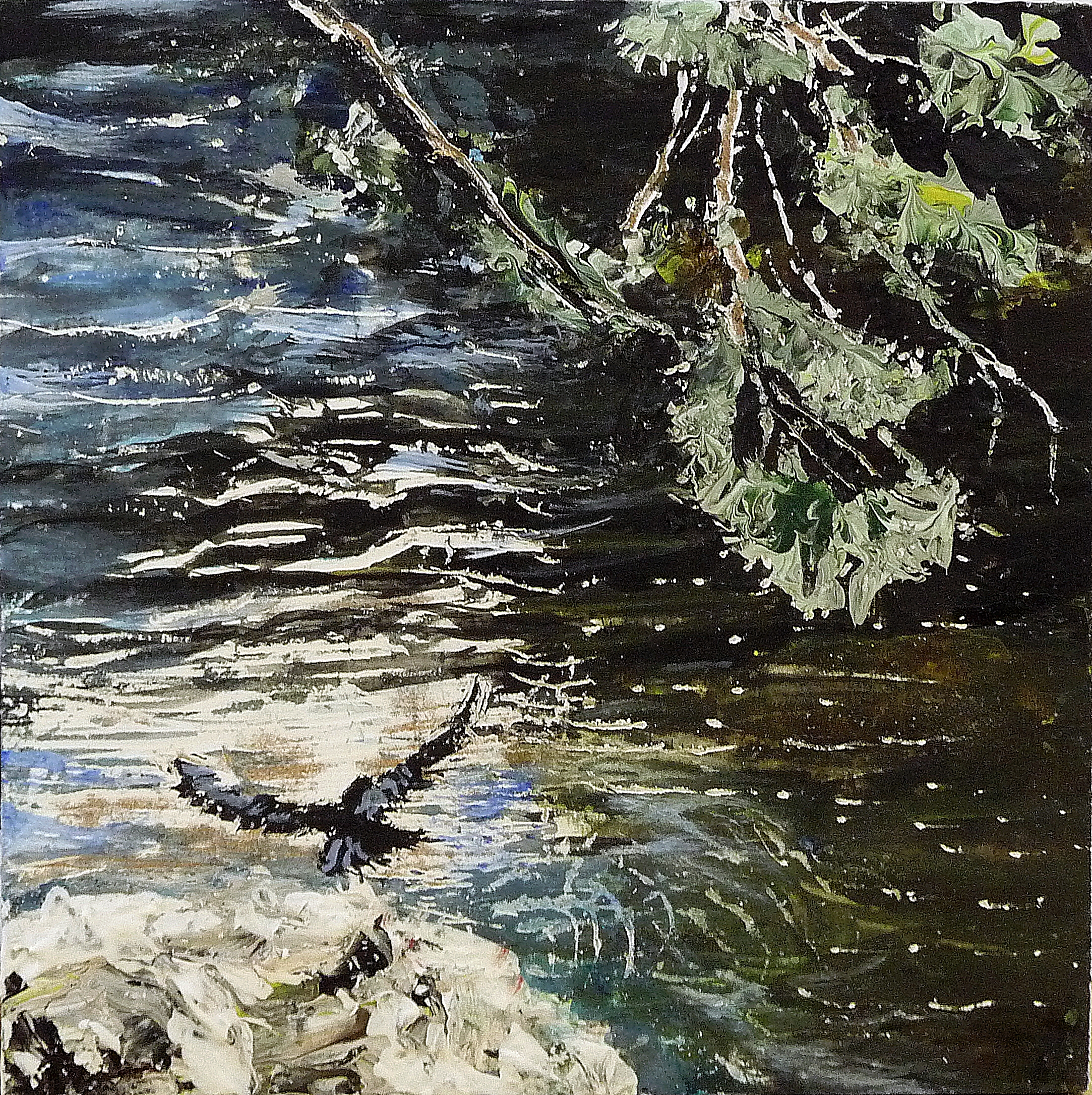
'Hawk. River Tweed'. Acrylic on 5x5" wood

‘Hawk. River Tweed’. Acrylic on 5×5″ wood

As this subject seems to work at a larger scale I might paint it at 40×40 inches on wood.

I think the wood background maybe suits this subject more than canvas. The highlights on water are  easier on wood, which I prime with white gesso and paint so it’s easy to scrape into the top layer of paint to create nice, sharp light effects. On canvas I usually make those sharp white edges with white paint and palette knife, which can somewhat take away from a more expressive line.


This weekend we took a trip to St Abbs Head in Berwickshire, which was a nice destination for Father’s Day combined with a spot of sketching and photography on the east coast of the Borders. And it was a suitably beautful, sunny day for the summer solstice.
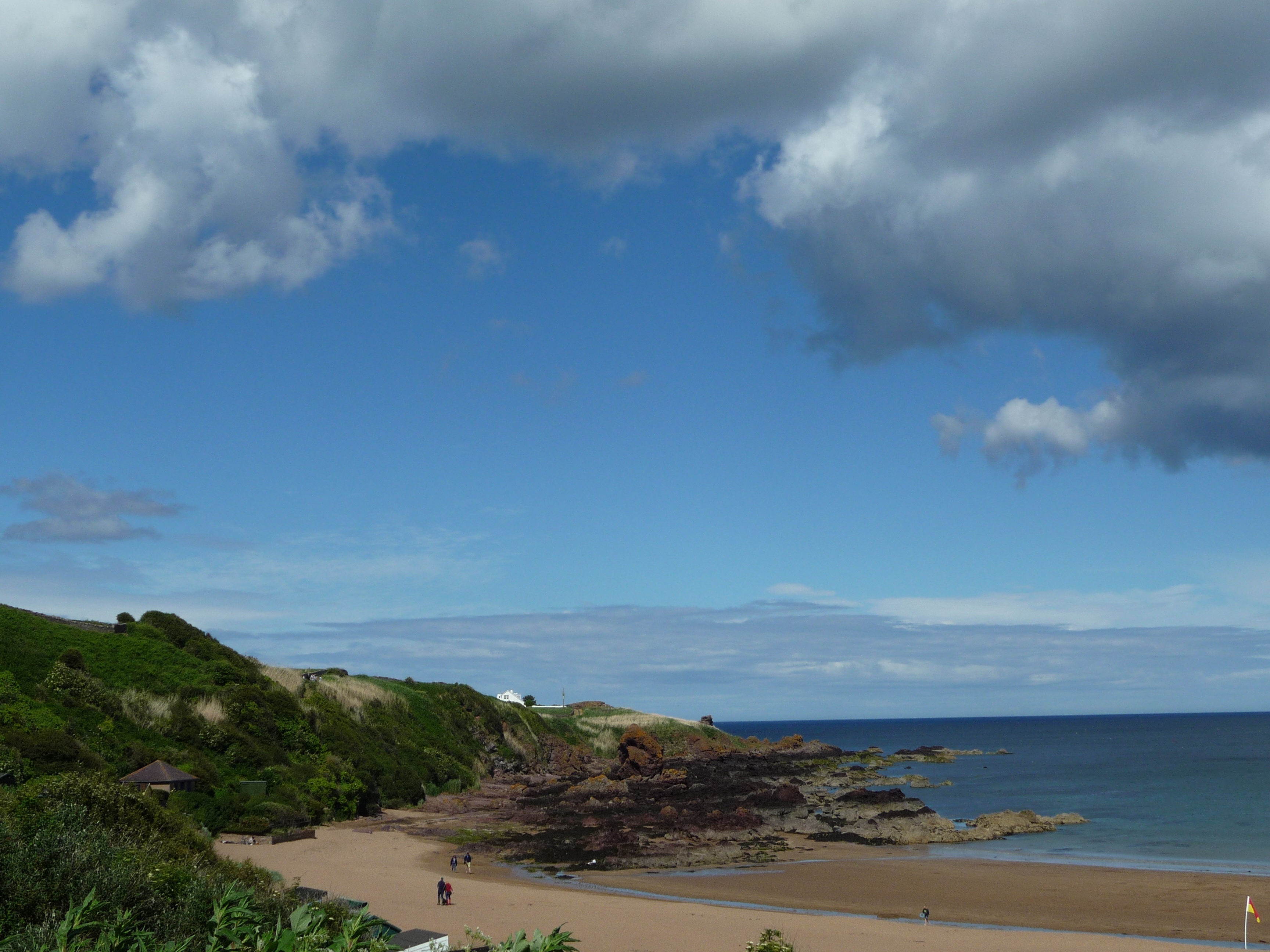
Coldingham Sands

Coldingham Sands

St Abbs used be called Coldingham Shore (Coldingham Sands – are just a mile or so along the coast).

It’s popular with divers and surfers but it was only in the 19th century that people settled here, though it’s always been a place to fish.


In the 7th century, a monastery was set up near St Abb’s Head, by Aebbe of Coldingham, a former Princess turned Abbess. She was originally from the North of England but after her father was killed in war, she, her mother and brothers fled to Scotland. While there she converted to Christianity. When the conflict was over, she returned to England, then later set up monasteries in England and at Coldingham.

She was politically astute and helped prevent several conflicts (no doubt a valuable skill given the Borders history of violence!). I imagine her childhood must have taught the harshest lesson in the painful outcomes of violent conflict. After her death the monastery was abandoned and became a ruin, but her memory wasn’t forgotten..

Aebbe’s story was recorded and written down by 12th Century monks so that her legacy of peace remains to this day in the name of the village and headland – St Abbs.

Tomorrow I’ll begin paintings of this coastline.

Some photos from yesterday..
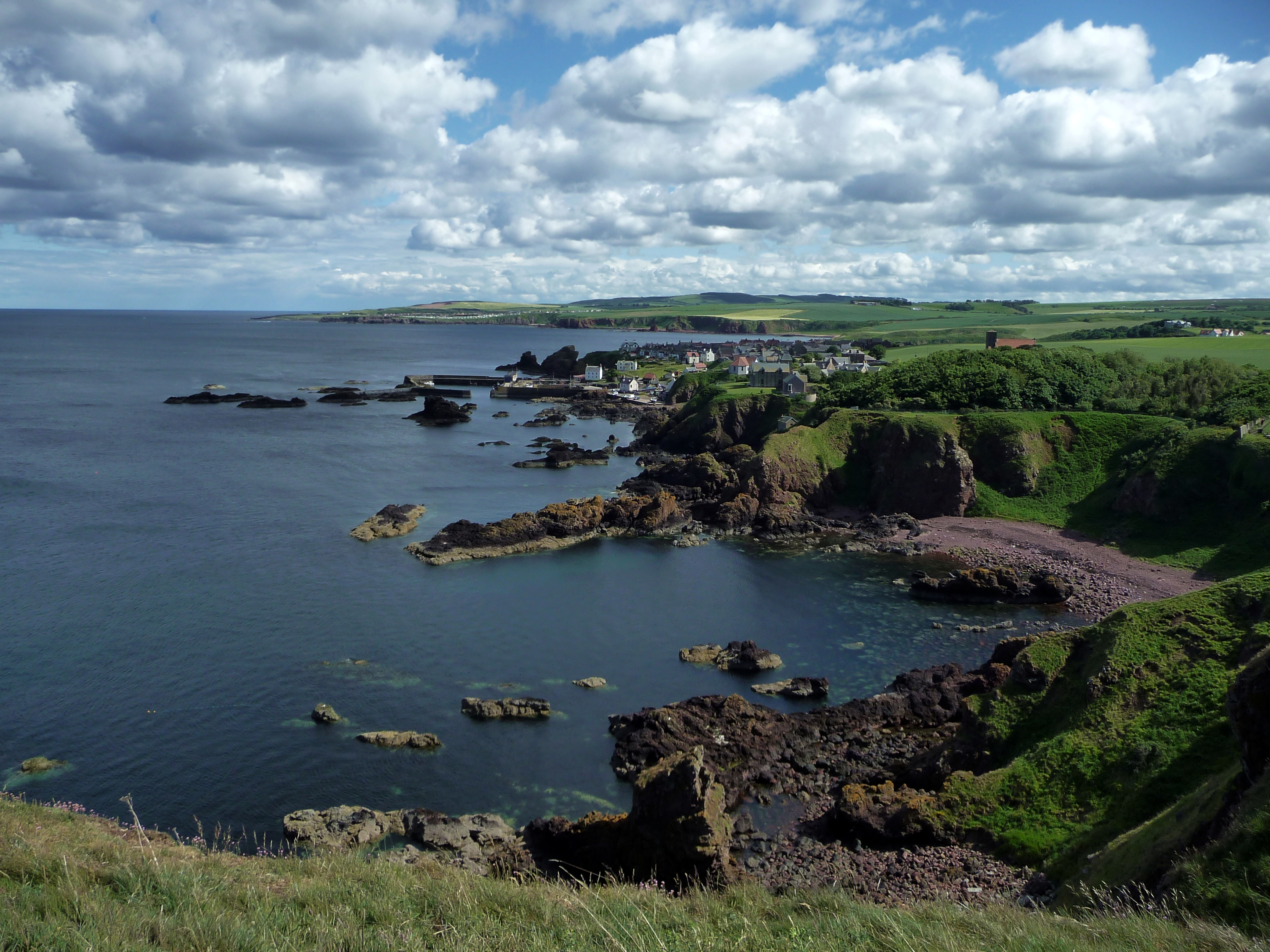
P1240864 P1240714 P1240895


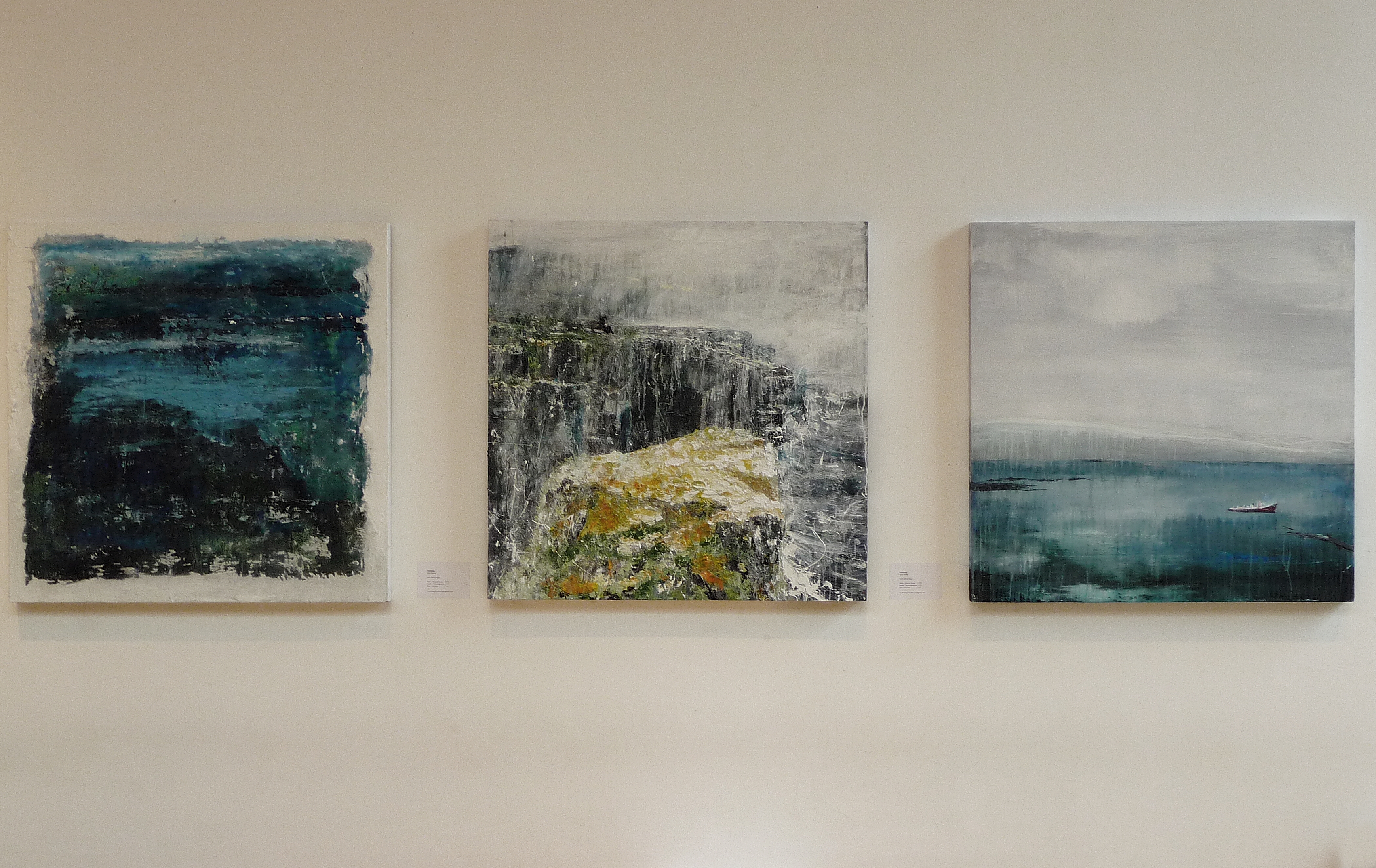
‘Eigg Island’ Trilogy

Rose Strang 'West', 'North' and 'East'

Rose Strang ‘West’, ‘North’ and ‘East’. Mixed media on 40×40″ wood panels

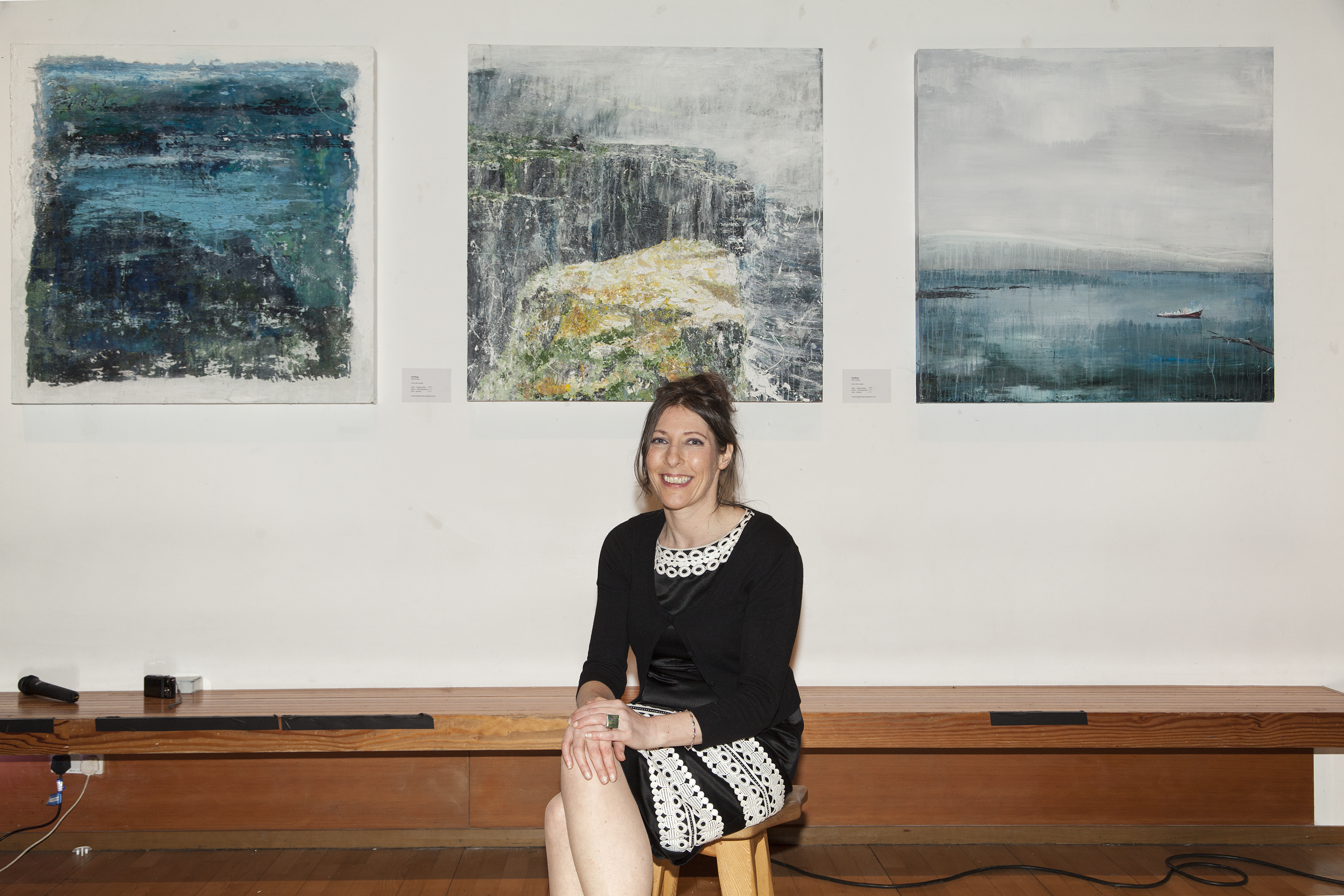
Rose Strang and artworks.(Photography Eleni Laparidou)

Rose Strang and artworks.(Photography Eleni Laparidou)

The trilogy of ‘West’, ‘North’ and ‘East’ were painted over two months as the culmination of a year-long project in response to the Isle of Eigg in the Scottish Hebrides, which included collaborations between myself, composer/cellist Atzi Muramatsu and poet JL Williams


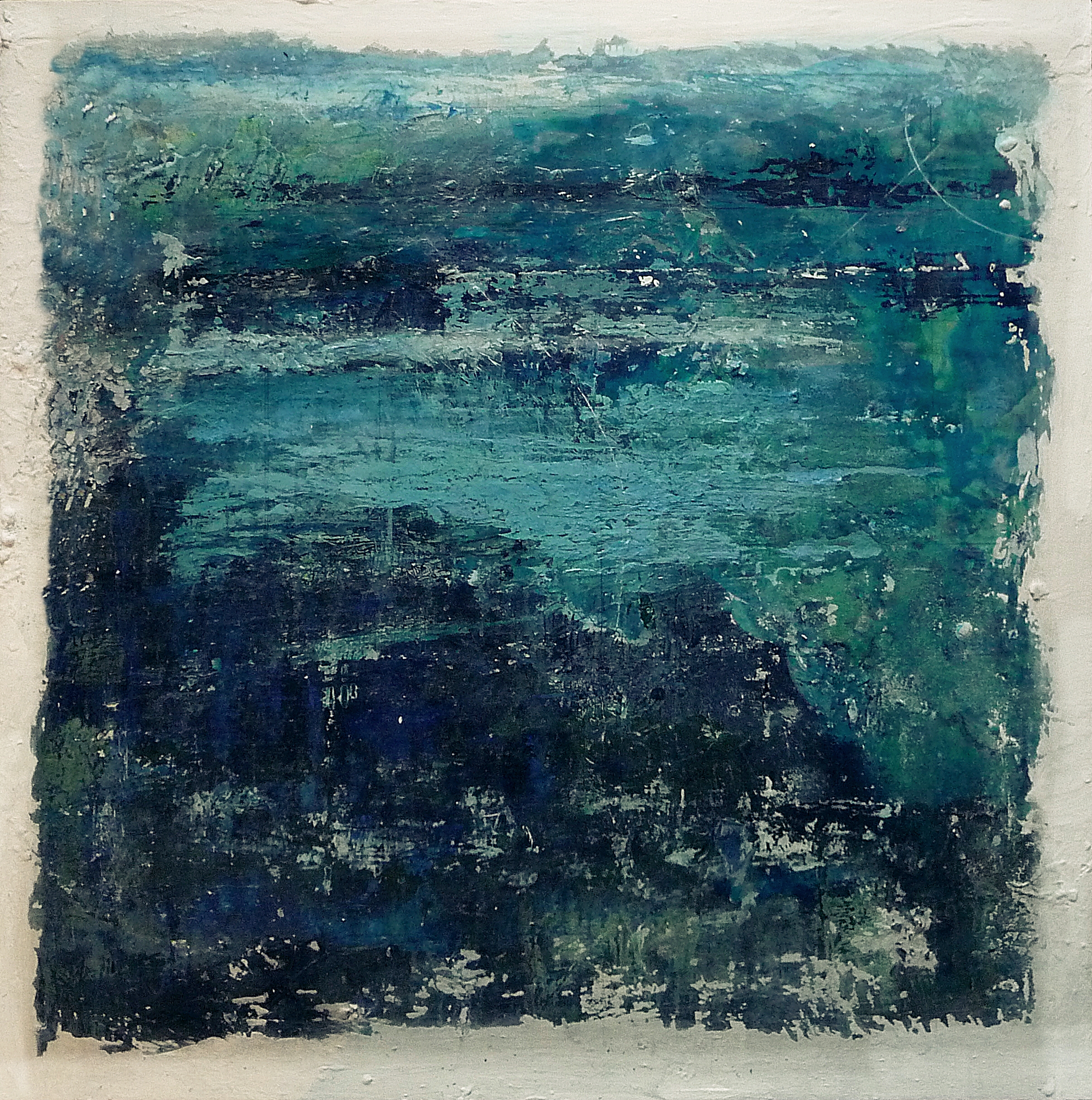
West – Singing Sands

'West - Singing Sands'. Mixed media on 40x40" redwood panel

‘West – Singing Sands’. Mixed media on 40×40″ redwood panel

West – Singing Sands. Mixed media on 40×40″ wood panel
‘West’ is about imagining an island;  what we project onto an island
in our imagination before arriving. The painting could be viewed as an old map, or a faded
painting of a view across the sea. We bring our own and others’ history to a new place.
‘Singing Sands’ refers to the name of the bay on the west coast of the island,
whose sands are said to ‘sing’ when dry (which intrigued me before I first visited Eigg!).

This painting was a very gradual process of building up then scraping back layers of paint, crackle glaze and varnish.

North – Transmigration

'North - Transmigration'. Mixed media on 40x40" redwood panel

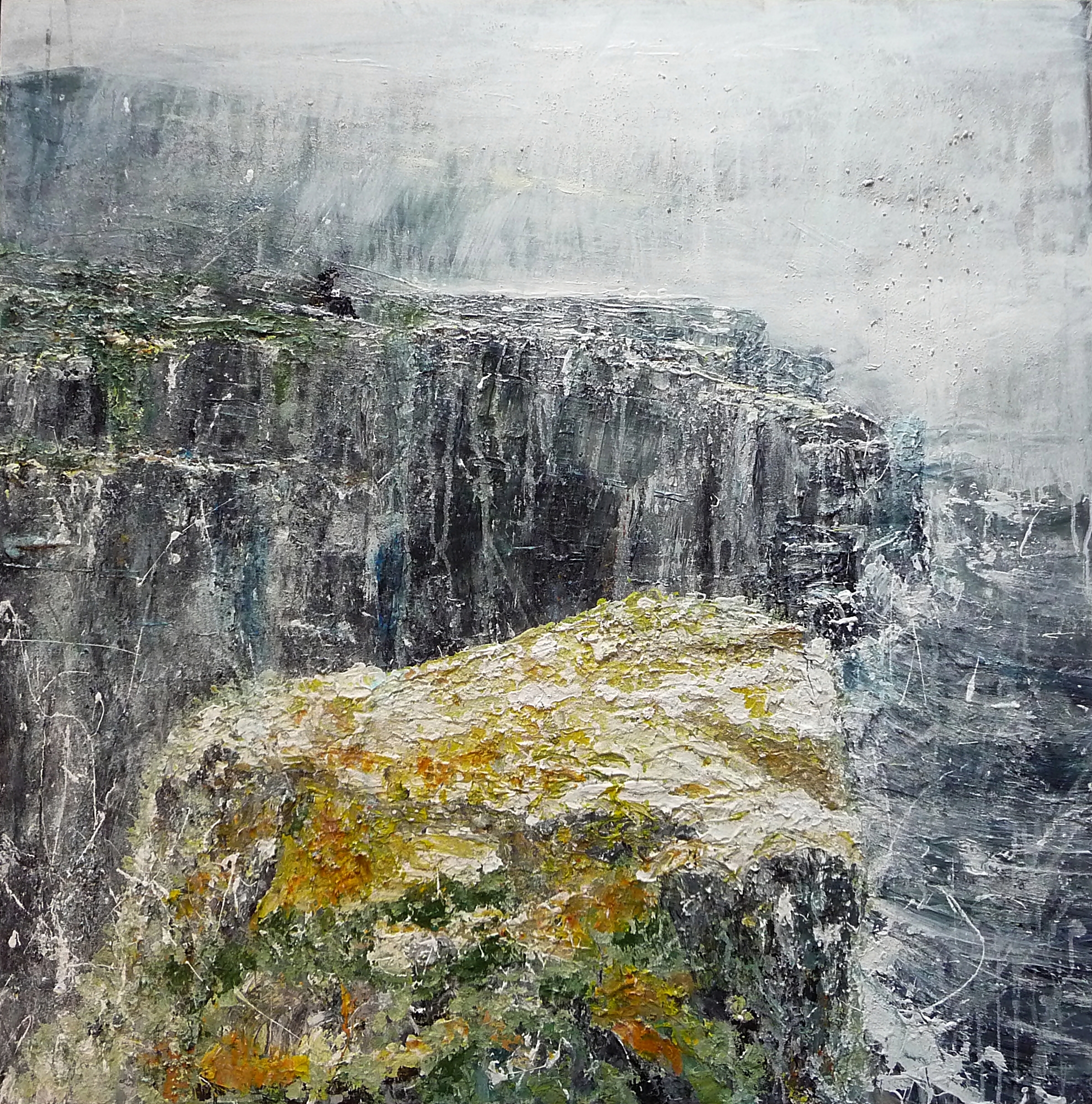
‘North – Transmigration’. Mixed media on 40×40″ redwood panel

North – Transmigration. Mixed media on 40×40″ wood panel
‘North’ is about the reality of nature on a Hebridean island, the toughness,
grittiness of weather and atmosphere – also fear of nature and how
it can feel impersonal. We observe it and wonder if we’re really a
part of it, though of course we are.

North (detail)

North (detail)

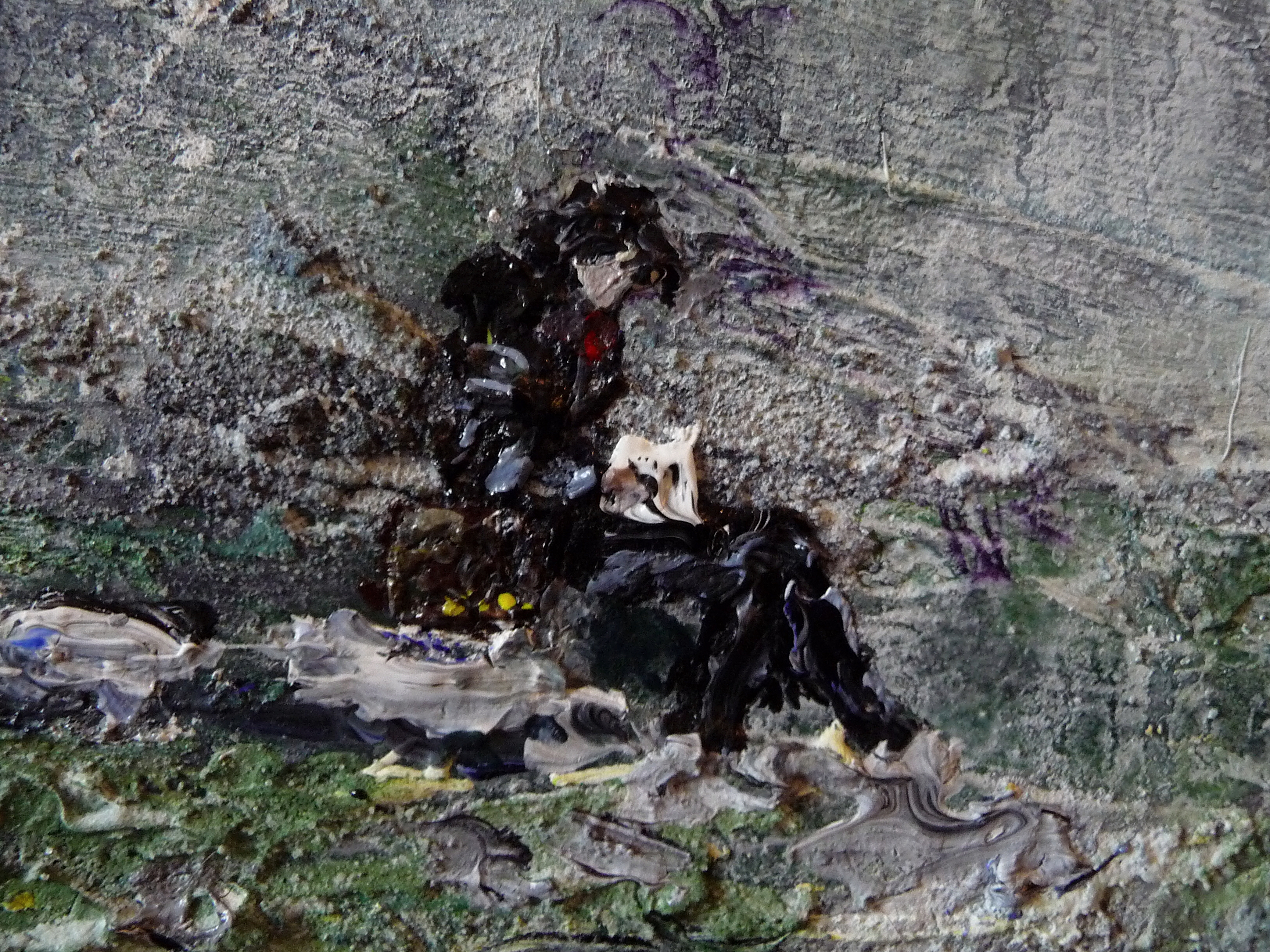
The small figure on top of the cliff is Atzi Muramatsu, a composer/cellist who I collaborated with on the project.
Sitting on these cliffs on the north end of the island (as part of a geology tour we joined) he began to compose a piece for string quartet called ‘Gaea Metemphsychosis’.

Metempsychosis is about transmigration of the soul and ‘Gaea’ of course means earth.
His piece was about fossils in these cliffs, formed 47 million years ago, slipping into the sea, also being there in a moment of time and the fact that we too eventually become part of the landscape again.

This is a very free-style painting, the basic composition was over-laid with washes and splashes of salt, glaze and paint to build atmosphere, before finally adding the figure.

East – Harbour

'East - Harbour'. Mixed media on 40x40" redwood panel

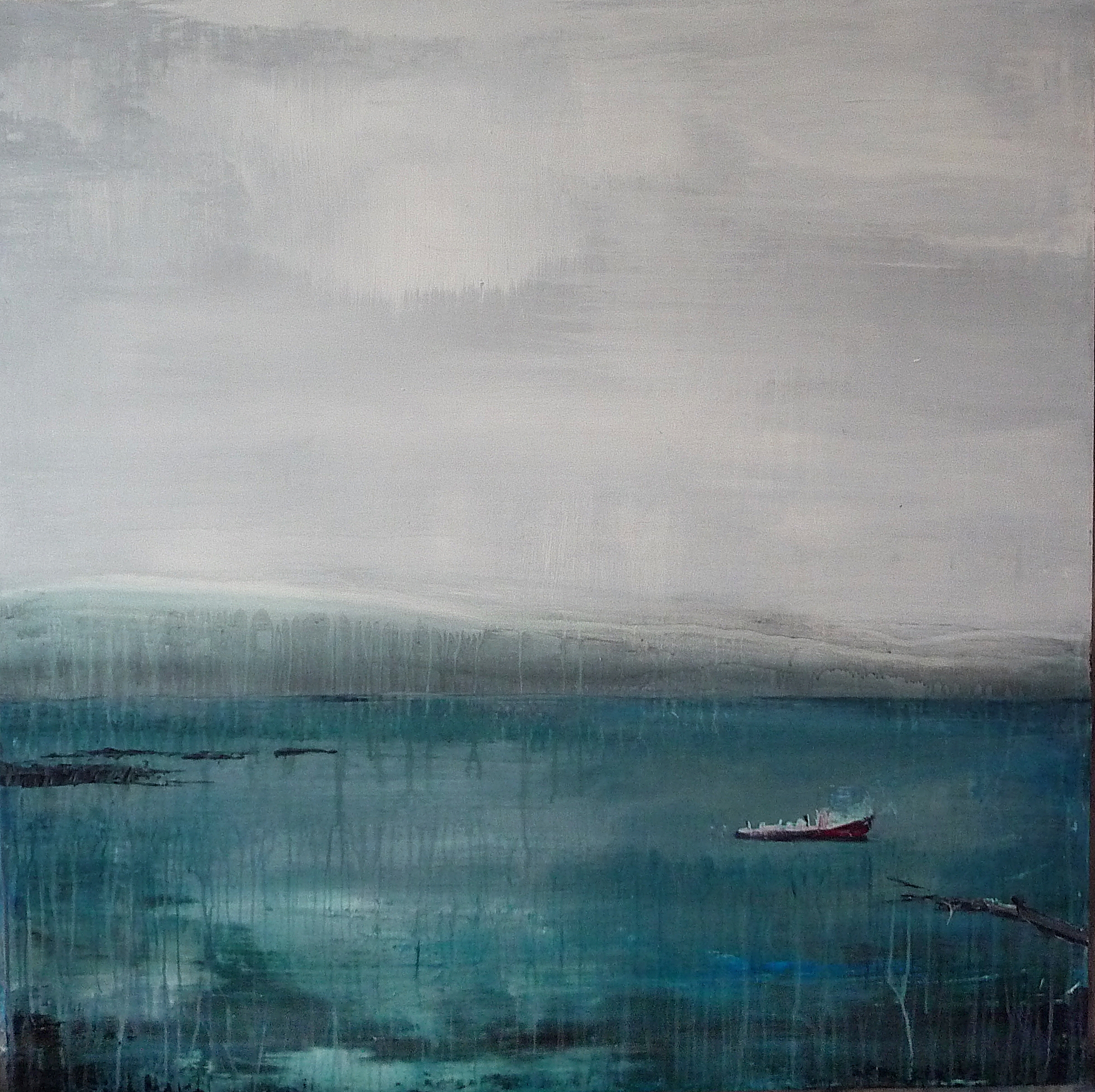
‘East – Harbour’. Mixed media on 40×40″ redwood panel

East – Harbour. Mixed media on 40×40″ wood panel
‘East’ is a view of the harbour bay from the island, looking out to
sea. There is the sense of a haven, which has a lot to
do with people met there, but also the fact of physically having being on
most parts of the island. You find your place, then leaving to
return to the mainland brings mixed feelings. Islands can seem an oasis from
a troubled world, which is no doubt why religious or spiritual centres are often
founded on islands.

East (detail)

East (detail)

The painting process was in itself very peaceful; simple layering of colours and glazes, allowing drips to form, then adding the small boat.


After the exhibition launch I’ll be sure to post videos/photos of JL Williams and Atzi Muramatsu’s performances, which I’m really looking forward to seeing next Thursday!