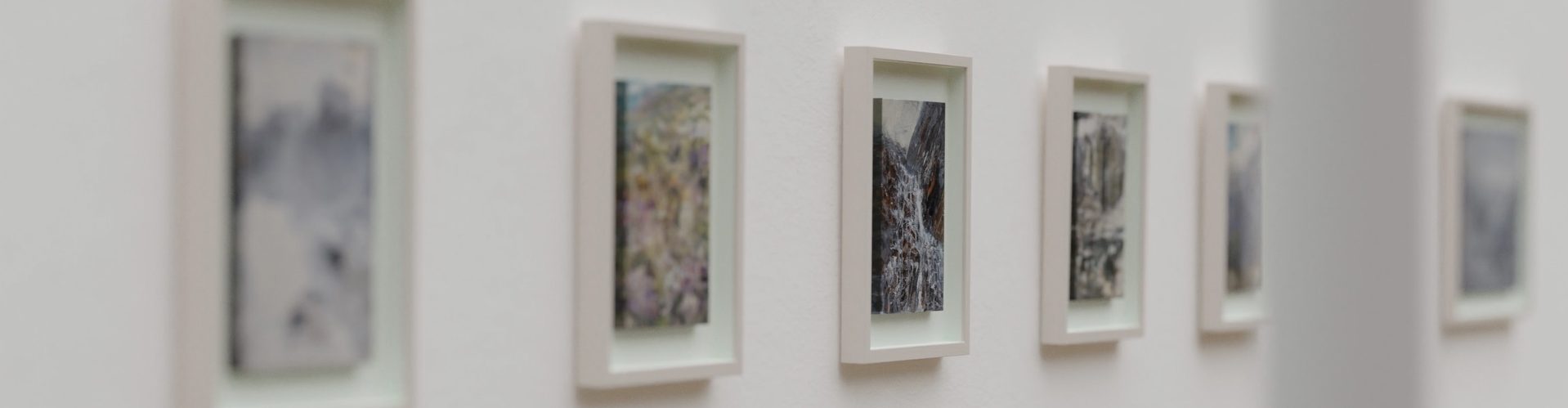
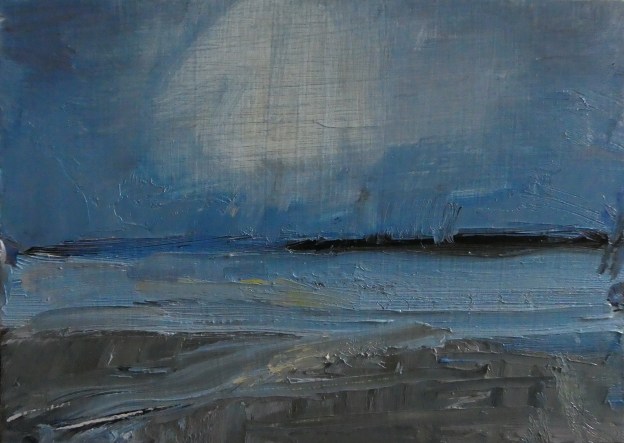
Above Aberlady Sketches 1. Oil on 5×7″ wood. Rose Strang 2024
A start to the year and a new project with this small, twilit painting of Aberlady.
It’s a project a long time in waiting. I was beginning to explore ideas back in early 2020 when the obvious event struck, causing a small panic about income, but then three painting commissions came at me from out of the blue and I’ve been busy ever since it seems.
The Village of Aberlady is not a place you’d describe as mysterious or dramatic, unless you knew it well. The first impression is of a very pretty, conventional village, perfect for the rich retirees. A train used to stop here but the railway was dismantled in the 1970’s. There are one or two shops, a couple of inns and a takeaway.

So why am I so obsessed with painting a series about my response to this place? Well, I’ll be painting and writing about ‘why’ for the rest of 2024!
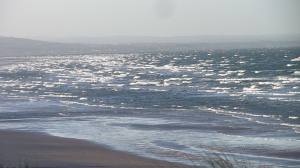
The most obvious appeal, beyond the village itself, is of course the nature reserve that stretches across a mile or two of grassland and dunes to an expanse of glittering sand reaching far out to sea at low tide. It’s one of the very few places I’ll swim in Scotland. In August when the sea has become less cold and has flowed back in across the warm sand, bathing here in shallow water is almost bath-like. Plus there’s hardly anyone around since, compared to the amount of people at North Berwick further south along the coast, relatively few will walk the two miles to the sea. There are of course hundreds and thousands of birds, and deer, rabbits galore and any amount of other species I don’t know about.


The appeal for most people visiting Aberlady these days is peace in nature. One thing that fascinates me though is the way places change in importance over several hundred years, depending on their function. Think of St Andrews in Fife, it was the ecclesiastical centre of Scotland hunreds of years ago. Now it’s known as the home of Scotland’s oldest university, and for its golf course. (also made more famous by the royal romance I suppose. I was attending post graduate art studies there at the same time as Will and Kate but never bumped into them, not quite moving in the same circles!) Or think of York, known now for its olde worlde timber-framed buildings and awe-inspiring York Minster – when in the past it was the centre of power in England.
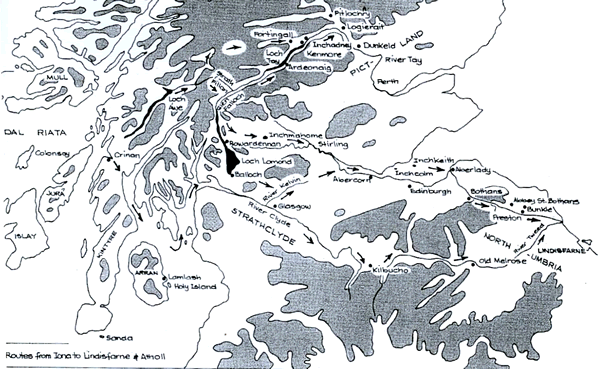
Going farther back in time, Aberlady was a place that had to defend itself from violent attack, and going even further back to the 7th century it was the last stop for pilgrims on their way from Iona to Lindisfarne.
Beneath its pleasant exterior I find Aberlady to be a place of deep mystery and drama. It’s something you can’t see, but rather it’s something you feel after years of immersing yourself in its landscape and history.
Hence why I’ll be working towards a series of paintings this year to explore my fascination with Aberlefdi, as it was originally named – a mixture of Pictish aber meaning river mouth and Lef, the name of a Viking warrior whose remains are interred beneath Luffness House in Aberlady Bay. That’s just one little detail in the whole story though.
More to follow in the coming weeks as the light improves and I can really get into painting this series …
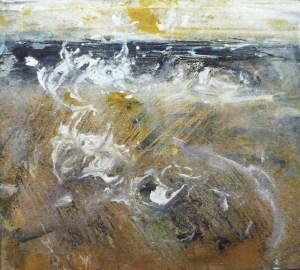
One of my Aberlady paintings from 2020:
 Rose Strang Artworks