Tag Archives: art

Forest of Luffness. Painting progress 24

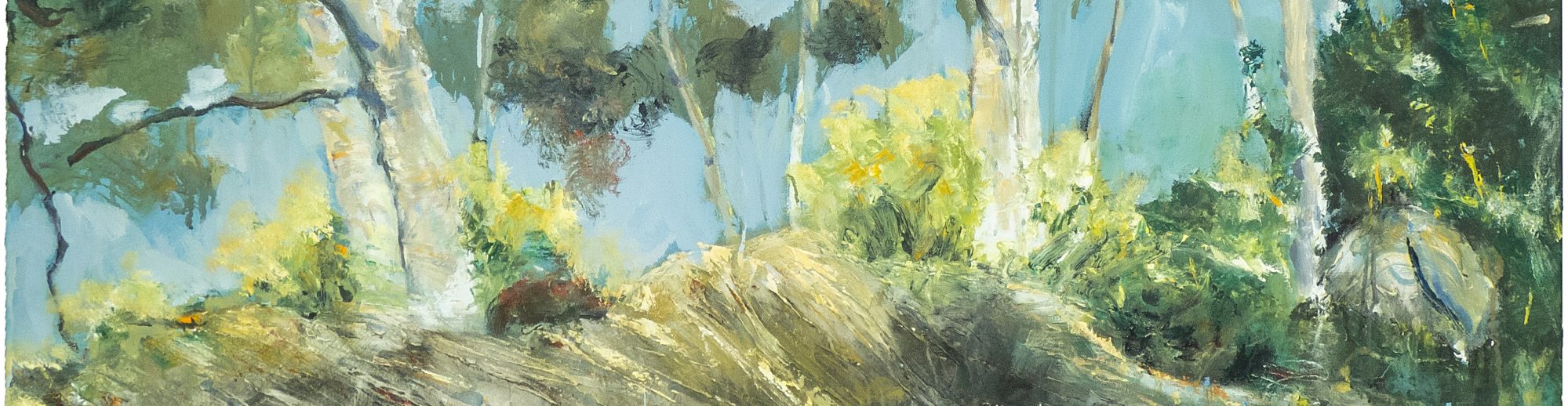
Above: Forest of Luffness 17. Oil on 30×30 inch canvas. Rose Strang 2025

This is changed quite a bit from the last post, I wasn’t getting the sense of light in the forest – it was afternoon and the tones were warm.

Here’s the last version and posted and today’s side-by-side …

A detail and a close up of my palette – there’s always a nice build up of the coour scheme by the end of a series, then it’s all scrubbed back (this is a glass palette so it’s easier to scrub back) before the next series. …

One more painting and the series will be complete! I’d love to get on with that that tomorrow but we’re off to the beautiful Isle of Iona for our anniversary!

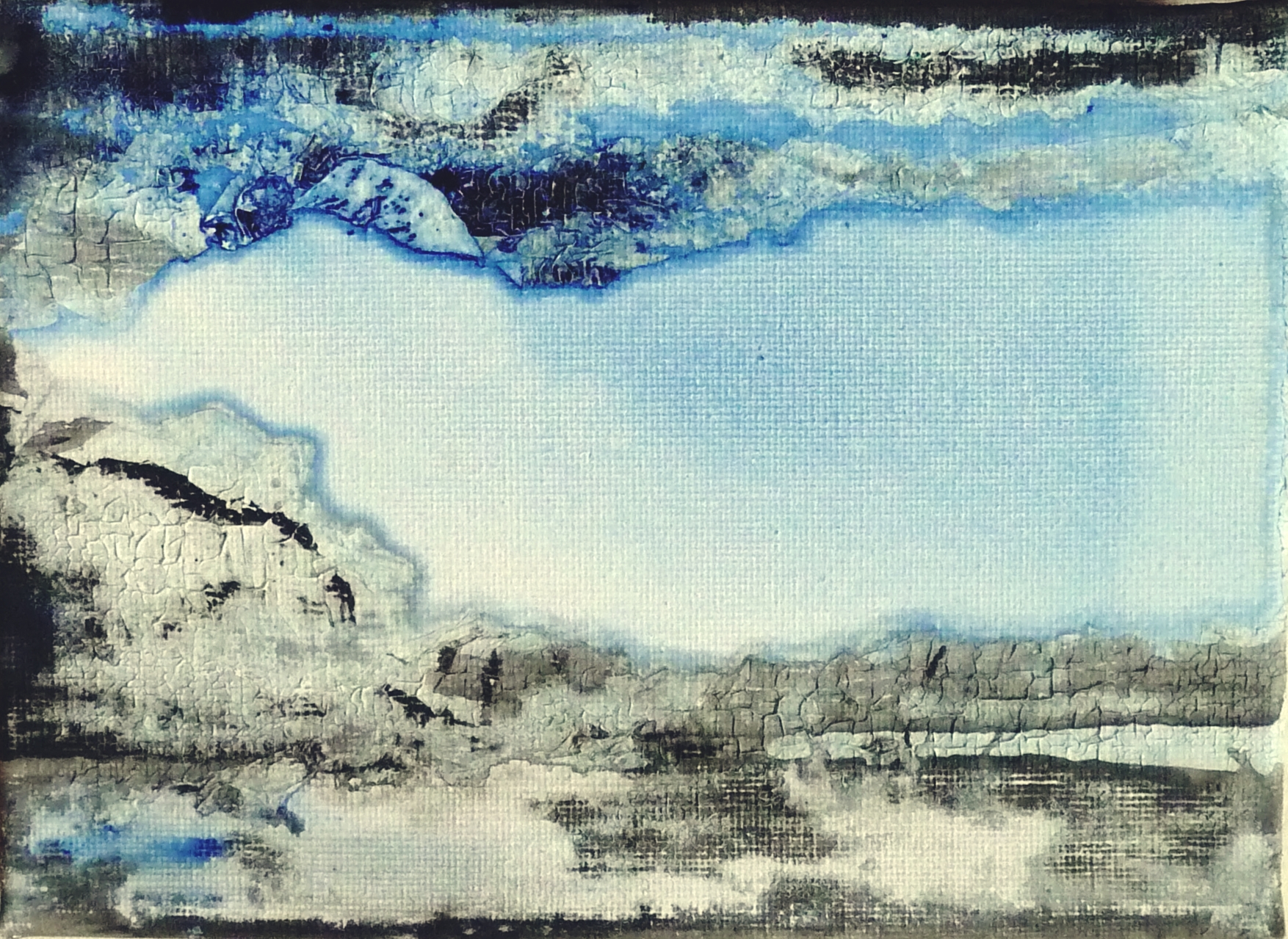
While there I’ll be sketching, painting and photographing for my next series, which will be some large, textured semi-abstract seascape paintings on unbleached linen for the Graystone Gallery, Edinburgh

I’m very excited about the Graystone Exhibition – it launches 18th July and will be part of the Edinburgh Festival. If you click on the link above you can see they show some exciting work and it’s great to be a part of that.

I’ll also be contributing some work as part of the Limetree Gallery‘s Summer Exhibition this year and if you read this blog you’ll know how happy I am to be included as part of their excellent year-round exhibition programme!

Much more about all of that soon, but, one thing at a time. I’ll complete the Luffness series first!

The Luffness series is very much a ‘slow-burn’ as it were, since I want to show the series privately at first, alongside the accompanying documentary. It has been the most absorbing and challenging series of my life so far. The documentary describes the collaborative aspect of a long-term art project like this – all the much loved people involved, the ideas, themes, research and experience.

The Luffness series and documentary probably won’t show publically until early next year. So in a couple of weeks I’ll be posting more here about the Graystone Gallery and Limetree Gallery series very soon!

Forest of Luffness, painting progress 5

Above and directly below: First of June. Luffness 2. Oil on 12 x 12 inch canvas. Rose Strang 2024

This is the second smaller work in a series exploring a day in June among the ruins of a Carmelite Friary. If you follow this blog you’ll know I’ve been exploring this theme from the start of the year and it’s been an interesting time…

Because I share a bit about my own creative process, it’s all hanging out there for everyone to observe how difficult it is to find the right way to approach a complicated subject!

I began with the idea of exploring a war-traumatised psyche – a dreamlike series exploring archetypal and abstract imagery. It produced these paintings below, quite different from my usual approach. It didn’t come easily but it was interesting as creative exploration.

This was followed by an attempt to depict the atmosphere of the small forest at Luffness, and the strangely affecting presence of an aged effigy depicting a 12th century crusader – almost worn to nothing. Mostly I was just trying to loosen up and find a way forward through a complicated subject – I’m an instinctive painter and although my mind is constantly active, I just can’t paint from a strategic cerebral perspective because my thoughts are rarely conclusive.

It was at this stage that a few people questioned the themes of my work, which brought me to a temporary grinding halt – a good thing since it made me think more deeply about the themes and where I stand regarding subjects such as faith, Christianity and war.

That experience was followed by a day which has now become the title of this series: The first of June in Luffness. There’s no way to summarise that day because so many aspects of it are ongoing parts of life. There’s no conclusion to my relationships to family and friends, the exploration of faith and spirituality, the exploration of art, or the response to violence and war. There’s just the fact that these things exist, ongoing.

I remember back in art college, when we were being taught about post-modernism, we were told that nothing is real, all is subjective. At the time, a good friend said ‘but suffering is real’, meaning that is surely something we can all agree on – an objective truth even though suffering has degrees of difference. How we respond to that is the question. Maybe one of the most useful books for me in recent years has been C.S. Lewis’s The Abolition of Man – all about the concept of objectivity. It’s not an argument for religion or Christianity, it’s a philosophical work which looks at the concept of objectivity and ethics in cultures worldwide. Is there such a thing as a set of objective ideals we all understand to be true?

I’ve always liked Beckett’s lines:

Spend the years of learning squandering
Courage for the years of wandering
Through a world politely turning
From the loutishness of learning.

I won’t pander to louts is the upshot of all this! Anyway, in these latest paintings I think I’ve found a way to explore the themes. More on this later.

“A welcoming of the creatures …”

Above – the latest triptych with myself included for an idea of scale.

I’ve been utterly dissatisfied with my paintings on the theme of Luffness, the Carmelite Friary, Aberlady and the entire theme of the last year – it feels I’ve not really captured what I set out to. Insead of authentic expression, I ended up painting what looks like childrens’ storybook paintings.

So as you can see, below, there’s the original triptyche, and below that – whatever it is I painted over it with today!

The top painting is prettier but it’s too literal. Even if it doesn’t matter that it’s very literal, it can’t be acceptable without an aknowledgement, or disclaimer about my intentions as an artist.

The effigy featured on the right of the top, original painting) is of a crusader from the 13th century. The fact that I’m looking at it with one of Europe’s most dedicated arts impressarios on the theme of art, war and the possibility of art as a means of healing dialogue (Richard Demarco) isn’t enough. Nor is the fact that my neice holds her baby tenderly in the bottom right of the painting. To my mind one of the world’s most powerful symbols of a plea for love in the face of military violence.

Today’s viewer is quick to judge. Not only viewers who are strangers to me, but even friends (as I discovered this year) take offense when my intention is to encourage questions. Why are we all there? Why are we witnessing this scene? Why is there a broken arch in the centre of the original painting? Why is the beauty of nature depicted alongside such a deathly artefact? Well, it doesn’t matter now, the broken arch is painted over.

Today’s painting over the original was nothing more than an instinctive splurge of graffiti over my previous effort. Maybe it’s better – or more free. I didn’t think much as I painted, except that a poem by Bejan Matur came to mind (see below) and for a few seconds I cried while I painted. Bejan Matur is from Kurdistan – one of the most militarily beleagured countries in the world. Her poems are full of vivid imagery and they talk of a time of peace and love, in this way she tells us exactly what we have to lose. I quoted ‘A Peaceful Morning’ in this post from 2016.

In a review of Matur’s writing, Anahit Poturyan observes:

(Matur) “writes from a country whose leaders are unkind to dissenters or freethinkers, especially those who remember the ghosts of the country’s past. Her poetry is mystical and tragic — she unearths and acknowledges the secrets witnessed by the stones and poplar trees. Evoking pagans and gods of lost times, she breathes new life into the village, nature, and forgotten parts of history with her words.”

(Original piece In the LA Review of Books)

Roses feature in my over-painting as a worldwide symbol of love. Also on the left, is the outline image of a Persian war helmet I copied as an art student many years ago. When I see these captivating, beautifully made artefacts of war – the effigy of a medieval crusader, or a Persian war helmet – I’m struck by the incongruity – why do these things co-exist? Back then and today, I’m inspired by the thought of what someone from those times might say to us now, if they spoke.

Academically, we can’t project our ideology on to history but rather we need to understand context, as I learned during post graduate studies at St Andrews where I studied museum and gallery curation.

(Above left, created in my early 20’s in 1993, in response to a Persian war helmet, above right).

As artists however, we can meditate on these ideas. So in all those times in these last few years when I visited the remains of the Carmelite friary and contemplated the effigy of a 13th century crusader, the phrase that repeated in my mind, along with a feeling of terrible sadness was ‘It continues’.

It shouldn’t be neccessary for me to explain that I am disgusted by the destruction of people in Palestine, or that I reject violence of any nature, from any group, especially when visited on innocent people. However, because apparently my guilt and sheer war-hawk bloodthirst as a white westerner is assumed, the worst will be imagined if I include the image of a stone effigy depicting a 13th century crusader in my painting, even though I include many references to question the western history of war in the name of religion.

Feeling stultified as an artist, I have given up on the theme that has occupied me for years, for now.

A Peaceful Morning

A time before time
A morning of peace
Of roses
And fountains.
A welcoming
Of the creatures
Of the latecomer
Rescued from the hand of sleep
In the dappled dawn.
So arms
Moved away from a statue’s body
And found a human.
Desired.
What belonged
Far more than words
Was love.

Bejan Matur

Autumn Exhibition

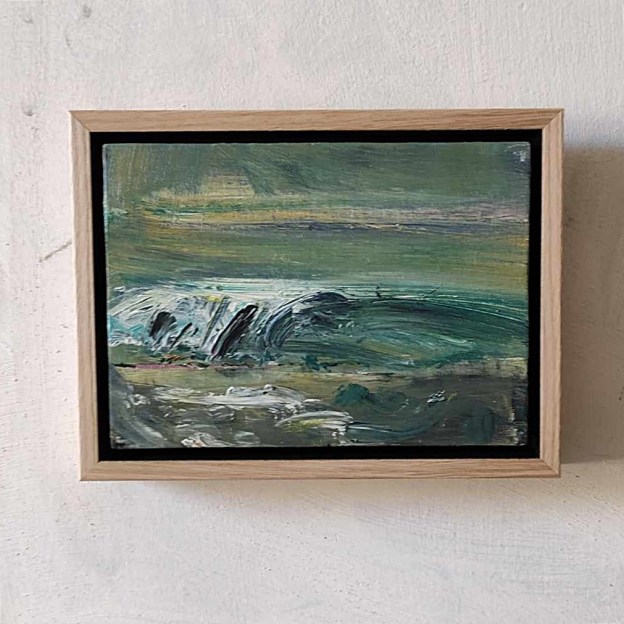
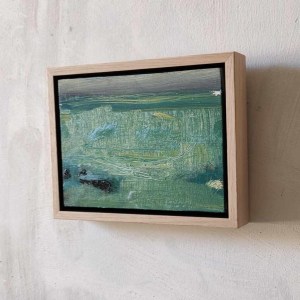
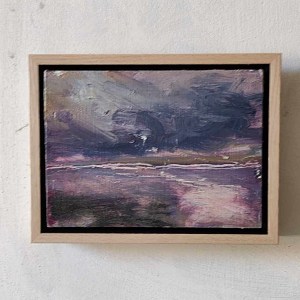
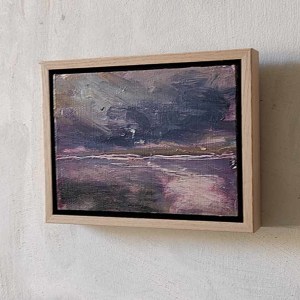
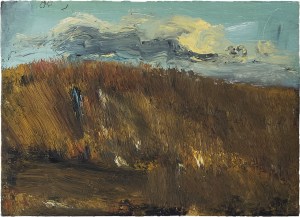
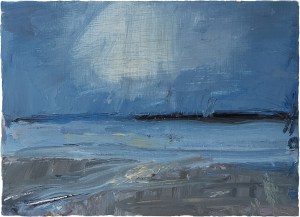
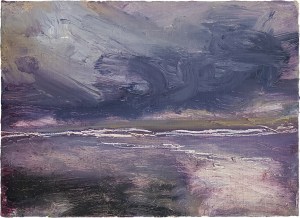
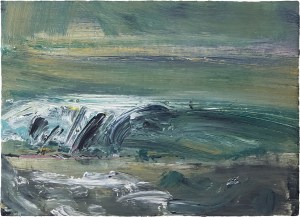
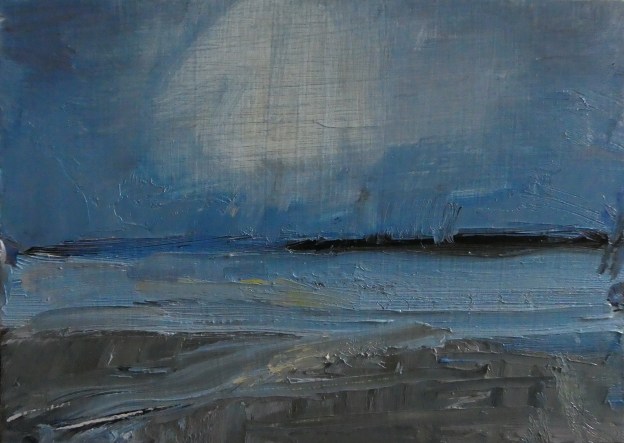
Above – Aberlady Shorelines III. Oil on 8×5.5 inch wood in oak frame. Rose Strang 2024

I’m delighted to be exhibiting these small oil sketches, framed in oak, at The Limetree Gallery this October. If you’re interested in the paintings, or would like to reserve one, please contact the gallery for details.

The Limetree Autumn Exhibition launches on the 24th October at Limetree Gallery, Bristol

Here are a few photos I took with my mobile today, showing these lovely oak frames, then below those – at the end of this post – are more detailed photos of all the paintings available for the Autumn Exibition at the Limetree Gallery, with titles and sizes.

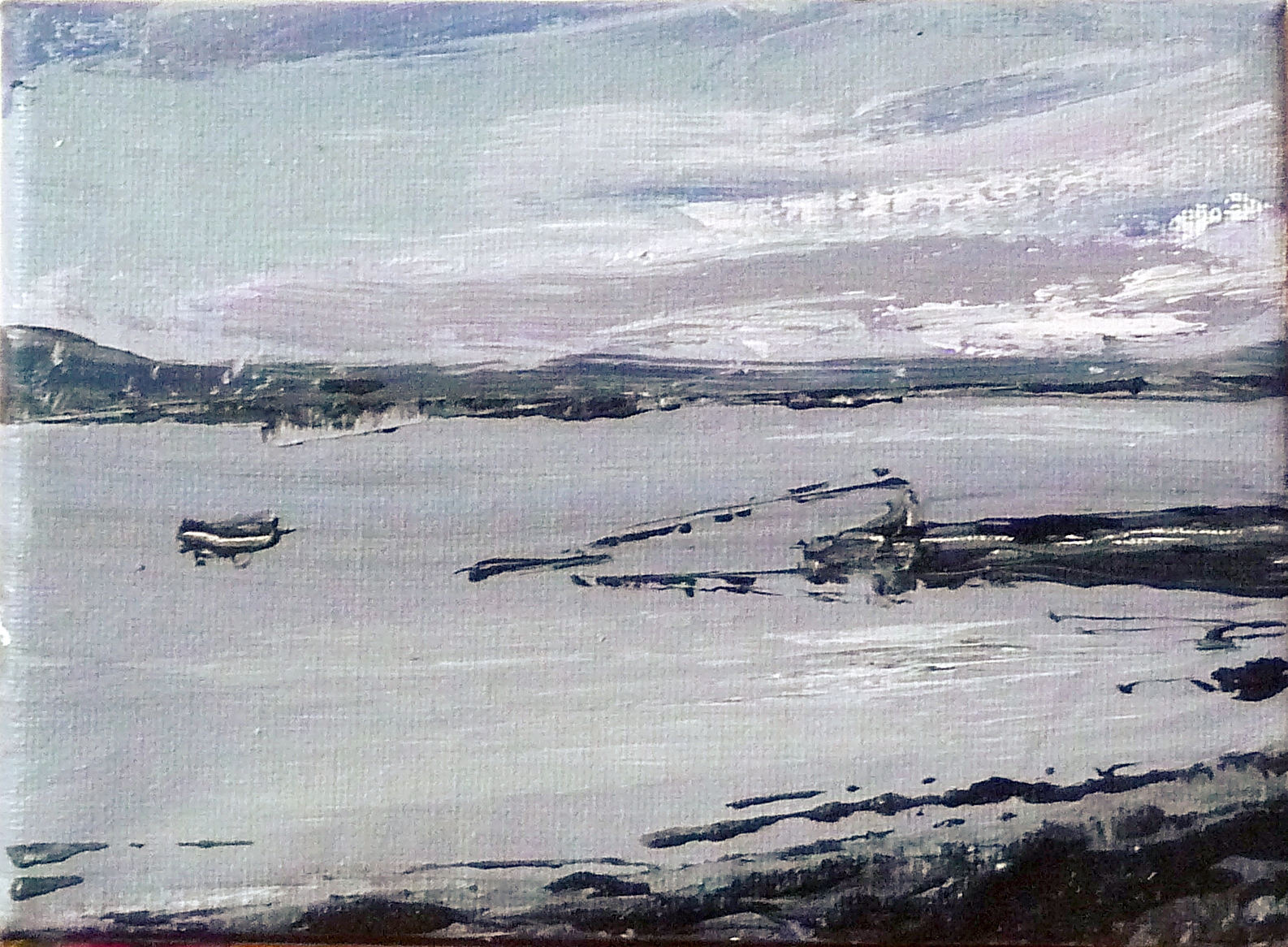
These paintings represent the start of my Aberlady-inspired series this year. They were quick oil sketches designed to capture the atmospheric solitude and moody colours of the east coast in winter, such a contrast to my later paintings of Aberlady in June this year! More on that tomorrow…

In the meantime, here are all the paintings, below, which will be on exhibition at The Limetree Gallery, Bristol. As mentioned,please contact the gallery if you’d like to reserve any of these paintings before they go on exhibition 24th October this year…

Forest of Luffness, painting progress 2

Above Forest of Luffness 3. Oil on 33×23″ wood. Rose Strang 2024.

A few changes to the painting since my last post (both versions below) . .

P1080592

P1080615

Although the character on the left is based on me I wanted to make it more anonymous. The exagerrated outline brings something stronger to the painting and rubbed out areas bring more mystery I hope.

I think the broken archway also becomes more mysterious, with the faint blue sky enhancing the idea of a passageway.

The video I mentioned in my last blog will explore the background of this series, but more than that I think it will reveal what’s interesting about the creative process in general. A painting doesn’t just involve the artist in their studio, but rather many experiences, involving many people. It’s not simply created to make money, or it shouldn’t be at least!

I think it was just a matter of time before I brought people into my landscapes. I’ve always loved figuratve drawing, especially line and expression of line and movement.

Before I studied for a degree in art (back in 1994) I completed the usual art and design course for those interested in becoming artists – a foundation national certificate in art and design at Edinburgh’s Telford College. Luckily while there I was taught life drawing (drawing of the human figure) by one of Edinburgh’s well known artists and teachers, Bill Gillon.

I’ve got to say he was a much better art teacher than those I encountered while studing my degree in art in later years! Every Monday we all spent seven hours intensively painting a nude model. I came to love the human body in all its manifestations ; young and old, large and small, willowy or weighty – all were fascinating to draw.

Mostly it was a process of frustration – my figures looked insubstantial, weightless, out of proportion – but over time – with Bill Gillon’s tuition and encouragement and in fits and starts, I began to make some headway.

I remember when I got a crit’ at the end of the year (always a very difficult thing for a budding artist!) and I glowed with happiness when he described a couple of my life paintings as ‘real crackers!’. He wasn’t so positive about some of my other work – namely a painting of a tedious vase of flowers – ‘Why? What’s it saying?’ he demanded, quite rightly!

Back in 2016 when I was creating my portrait of Richard Demarco, Richard asked me who’d taught me drawing, I replied ‘Bill Gillon’, since I really didn’t get a tuition in drawing and painting at art college. It turned out that Bill had been one of Richard’s pupils when Richard was an art teacher!

I was sad to hear that Bill had taken ill and passed away in 2014, but it was good to see there’s now a Facebook page set up in his honour where artists can upload work inspired by Bill, or talk about their memories. I might add a link to this post.

Start to the year …

Above Aberlady Sketches 1. Oil on 5×7″ wood. Rose Strang 2024

A start to the year and a new project with this small, twilit painting of Aberlady.

It’s a project a long time in waiting. I was beginning to explore ideas back in early 2020 when the obvious event struck, causing a small panic about income, but then three painting commissions came at me from out of the blue and I’ve been busy ever since it seems.

The Village of Aberlady is not a place you’d describe as mysterious or dramatic, unless you knew it well. The first impression is of a very pretty, conventional village, perfect for the rich retirees. A train used to stop here but the railway was dismantled in the 1970’s. There are one or two shops, a couple of inns and a takeaway.

So why am I so obsessed with painting a series about my response to this place? Well, I’ll be painting and writing about ‘why’ for the rest of 2024!

The most obvious appeal, beyond the village itself, is of course the nature reserve that stretches across a mile or two of grassland and dunes to an expanse of glittering sand reaching far out to sea at low tide. It’s one of the very few places I’ll swim in Scotland. In August when the sea has become less cold and has flowed back in across the warm sand, bathing here in shallow water is almost bath-like. Plus there’s hardly anyone around since, compared to the amount of people at North Berwick further south along the coast, relatively few will walk the two miles to the sea. There are of course hundreds and thousands of birds, and deer, rabbits galore and any amount of other species I don’t know about.

The appeal for most people visiting Aberlady these days is peace in nature. One thing that fascinates me though is the way places change in importance over several hundred years, depending on their function. Think of St Andrews in Fife, it was the ecclesiastical centre of Scotland hunreds of years ago. Now it’s known as the home of Scotland’s oldest university, and for its golf course. (also made more famous by the royal romance I suppose. I was attending post graduate art studies there at the same time as Will and Kate but never bumped into them, not quite moving in the same circles!) Or think of York, known now for its olde worlde timber-framed buildings and awe-inspiring York Minster – when in the past it was the centre of power in England.

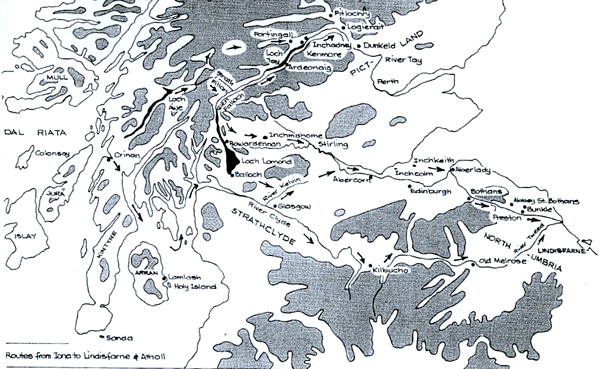
Going farther back in time, Aberlady was a place that had to defend itself from violent attack, and going even further back to  the 7th century it was the last stop for pilgrims on their way from Iona to Lindisfarne.
iona3

Beneath its pleasant exterior I find Aberlady to be a place of deep mystery and drama. It’s something you can’t see, but rather it’s something you feel after years of immersing yourself in its landscape and history.

Hence why I’ll be working towards a series of paintings this year to explore my fascination with Aberlefdi, as it was originally named – a mixture of Pictish aber meaning river mouth and Lef, the name of a Viking warrior whose remains are interred beneath Luffness House in Aberlady Bay. That’s just one little detail in the whole story though.

More to follow in the coming weeks as the light improves and I can really get into painting this series …

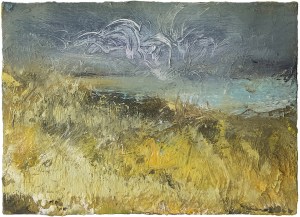
One of my Aberlady paintings from 2020:
Today’s paintings

P1010463 P1010453 P1010466I acquired a few smaller canvases this weekend so decided to experiment today.

The painting on wood is on top of a painting of Moffat from last year which I didn’t like so ended up using as a pallete (why waste all those interesting colours I thought) so I’ve just enhanced it.

I’m quite happy with the mood of the larger square work – a sort of ‘gloaming’ or half light. They could all do with a bit more definition though so I’ll work on them tomorrow.

I can see various ideas emerging from the painting in the middle so will have a think..