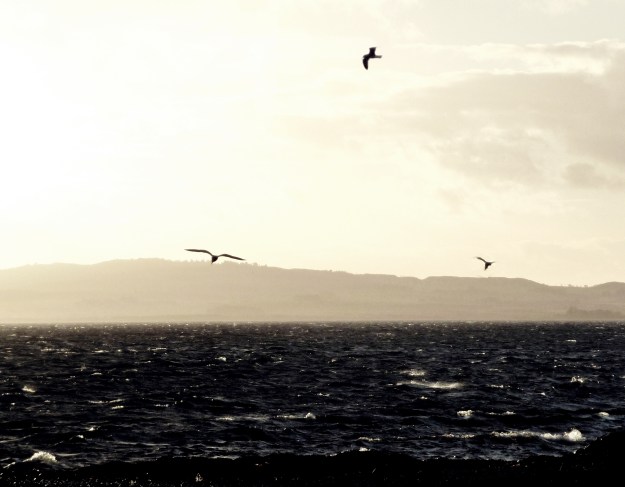
 “If you’re spiritually open, then the island, its landscape, its beauty and the power of nature certainly seems to do its own work . I do actually think that the old name of the island – Medcaut – if it really does mean ‘healing island’, is very apt”
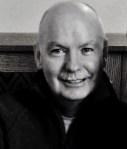
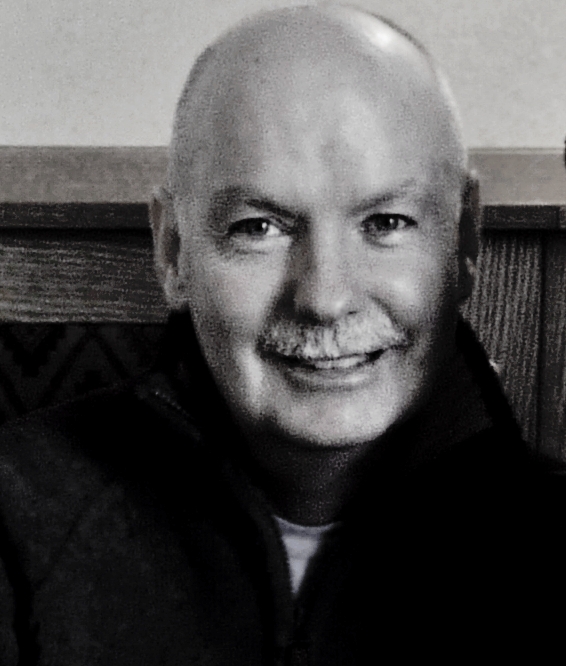
Today I’d like to introduce you to Jamie Cossar, who lives and works on Lindisfarne as a member of the Aidan and Hilda community…
R: Hi Jamie, I’ve known you for many years as a friend of the family, so I’m very interested in your decision to move to Lindisfarne to join the community because, apart from adapting to island life, it also seemed to be a commitment to an entirely new way of life
So firstly, I know that Lindisfarne has attracted pilgrims for many centuries (including yourself most recently!) Can you tell me a little about your background, and what first attracted you to Lindisfarne?
J: I have always been drawn to nature and wild places, starry skies and the ceaseless movement of the sea. It has constantly been a part of my spiritual journey. When I was a teenager I was drawn to meditation and contemplation through Buddhist practice. However, I became a Christian in my early twenties and discovered the tradition of the Desert Fathers and Mothers.
They were Christians in the fifth and sixth Centuries who withdrew to the Egyptian, Palestinian and Sinai deserts to live lives dedicated to prayer and solitude. However, they became so famous and were regarded as such wise mentors, that lots of other people followed them and eventually there were thousands of people spread throughout the deserts; some lived in communities and some lived as solitaries.
 This type of desert monasticism spread to Ireland and then through communities like Columba’s in Iona, to other parts of Northern Britain, including Lindisfarne.
My own spiritual journey has been one of a desire for solitude, empty places and finding God in nature, as well as deep within myself.
As you say, Lindisfarne has been a place of pilgrimage for centuries and I came to the island in 2012 to learn to do Celtic Knotwork design.
I had been a couple of times before as a day visitor, but spending a few days on the island following the rhythm of the tide, when the island empties of tourists as the causeway closes, it felt completely different.
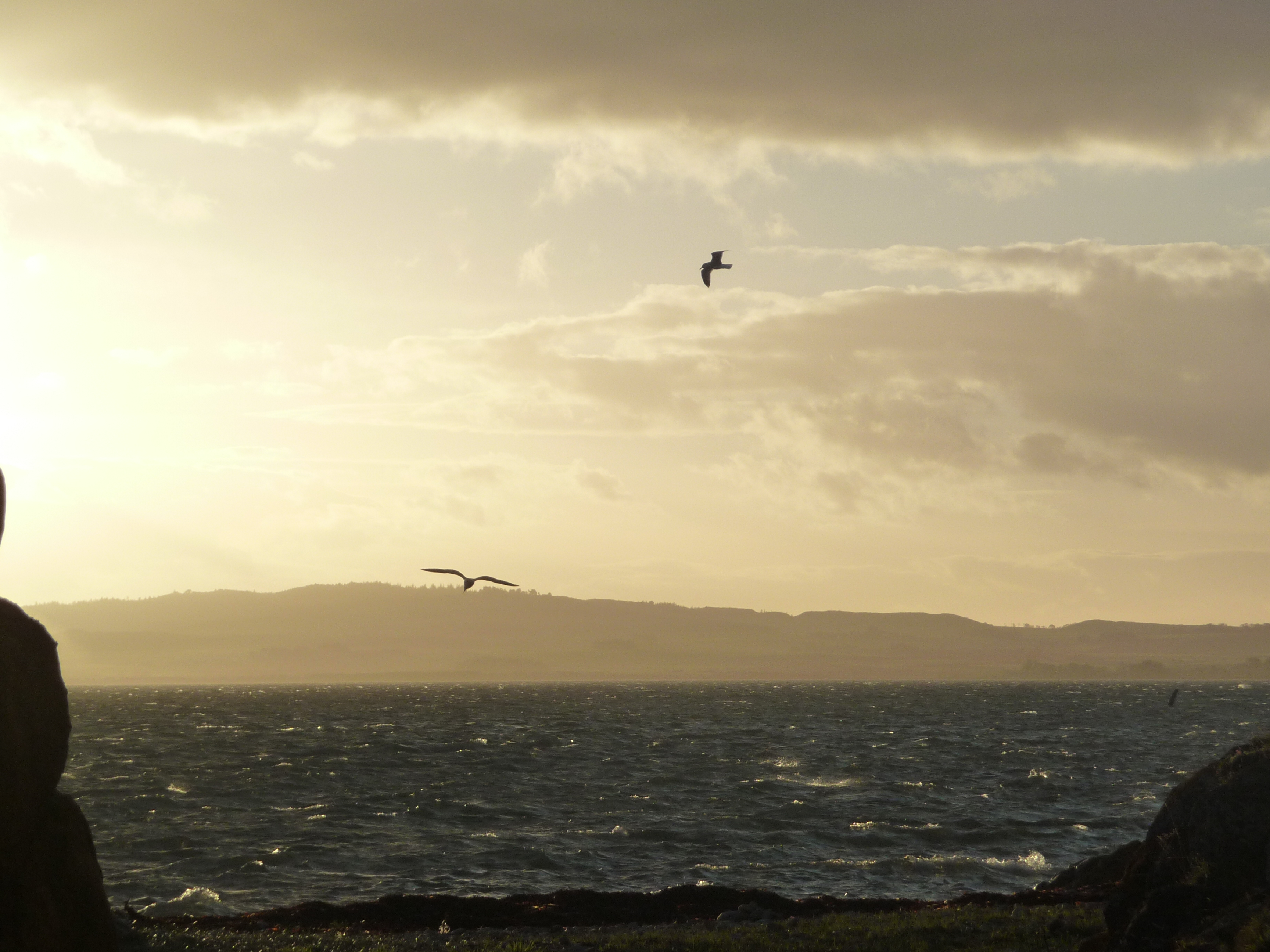
The island is famous for its wildlife, particularly migrating birds and countless numbers of seals. The skies are incredible, there’s such a sense of vast empty spaces above and in places like the North Shore of the island where the sands stretch for miles when the tide is out.
While I was on the island for the Knotwork course I met people from the Community of Aidan and Hilda and the rest, as they say, is history!
Why is it you were particularly drawn to the Community of Aidan and Hilda, and what did it offer to you, that previous religious groups perhaps couldn’t?
The Community is part of what is described as the ‘New Monasticism’ movement. This basically means that those involved try to live a rhythm of life based on daily routines of prayer, work and re-creation. It’s similar to the traditional monastic model except that it has been adapted for contemporary society and without the need for people to live behind walls and to be celibate.
The Community of Aidan and Hilda is a dispersed community. In other words people don’t actually live together but we live a Way of Life that is held in common by all of us. There are members throughout the UK, Scandinavia, Australia, New Zealand and the USA.
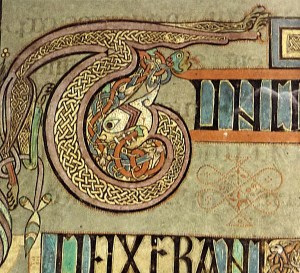 The Community is influenced by the Celtic Christian tradition and attempts to interpret what is thought to be the way that the early Celtic Church lived. There aren’t a huge amount of records relating to the early Celtic Church although we do have an idea of how they lived.
In the Celtic tradition, there was an emphasis on the Trinity (The Three-in-One Godhead), the importance of nature, the rhythm of the seasons, a sense of God’s presence in all that we are and do and so on.
It was very similar to the Eastern (Orthodox) Church when it came to the mystical experience of Christianity.
The Celtic Church in Ireland had never been part of the established Roman Church as the country was never conquered. It wasn’t subject to imperial influences in the same way that the Roman Church was when Constantine adopted Christianity as the official religion of the Roman Empire in the fourth Century.
The Celtic Church was non-hierarchical and women and men played an equal part in its life, as well as in many other aspects of administrative and daily living.
As someone who has a sense of God in everything, believes in equality and who has an anti-establishment streak when it comes to top-down religion (or politics for that matter!) then this type of spirituality appeals.
Can you tell us a little about the process of joining the community, and what you do in the Aidan and Hilda Community?
The process of joining the community is similar to the traditional monastic way of becoming a member of an order.
People have the option of either being a ‘friend of the community’ or initially becoming an Explorer. A friend is someone who may well have an interest in the life, work and ethos of the Community but who doesn’t feel able to commit themselves further.
They are kept informed of what’s happening in the Community through the quarterly magazine, The Aidan Way and other updates when appropriate.
An Explorer, as the name might suggest, is someone who explores a Way of Life based on the three Life Giving Principles of Simplicity, Purity and Obedience and the Ten Elements of the Way. Without going into too much detail, these Ten Elements include a commitment to life-long learning, spiritual journey, care for creation, a simple lifestyle, openness to God’s spirit, healing fragmented communities and unity, to name some of them.
In conjunction with what we call an Anam Cara, or Soul Friend (someone who accompanies us on our spiritual journey), the Explorer formulates a Way of Life and tries to live by it in their daily life. To me, the beauty of our Way is its’ flexibility as we have people who come from all walks of life; some who are married or parents, grandparents, single people, some who work etc.
The Way of Life is formulated to fit in to people’s lives and it’s called a Way rather than a Rule which can feel much more prescriptive.
After living this Way for a minimum of a year (I was an Explorer for two-and-a-half years) you then decide with your soul friend if it’s appropriate to the take the next step, which is to become a Voyager, or full member of the Community. Of course, you may decide that the Community isn’t for you and can leave it at that.
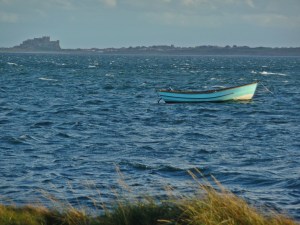
This process is similar to the traditional monastic way of being a novice and then taking first, or ‘simple’ vows.
The service of becoming a Voyager is called ‘The First Voyage of the Coracle’ and symbolically mirrors the stories of the early Celtic monks, such as Columba, literally getting into their coracles (or currach, a larger boat) and seeing where the wind, the sea – and God – takes them.
You take vows to live your Way of Life to at least one of the three Community Guardians (leaders).
There are then options after becoming a Voyager. Some people are happy to remain permanently as a Voyager, while others, after a minimum of seven years, become Long Voyagers, who commit to becoming life members of the Community – this is similar to Solemn Profession (Life Vows) in a traditional monastic community.
Currently there is also an option of becoming a Monastic Explorer and Monastic Voyager after you have been a Voyager for three years. This involves a commitment to living a more monastic way of life with very few possessions and as a celibate person. To date nobody has explored this option but it’s one that I am looking at. It would be new for the Community and it’s a case of ‘watch this space’!
Regarding what I ‘do’ in the Community, please see 10 below.
Can you tell me anything about early religious or spiritual settlers? Does history tell us anything about pre-Christian settlements on Lindisfarne?
There’s very little known about the island before Aidan arrived in 635. Remains of rubbish have been found which date back to between 8000BC and 3000BC and it’s thought that there was also a Roman village on Lindisfarne.
The island was formerly known as Medcaut, an old Brittonic or Welsh name which, according to some interpretations, means ‘healing island’, owing perhaps to the island’s reputation for healing herbs.
In terms of early religious settlers, no doubt the Stone Age and Roman settlers would have had their own belief systems, whatever they might have been.
What do you think differentiated Celtic Christianity from traditional Christianity, what are the differences in focus, or prayer?
See what I said above in relation to the differences between the early Celtic Church and the
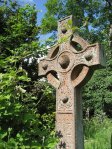
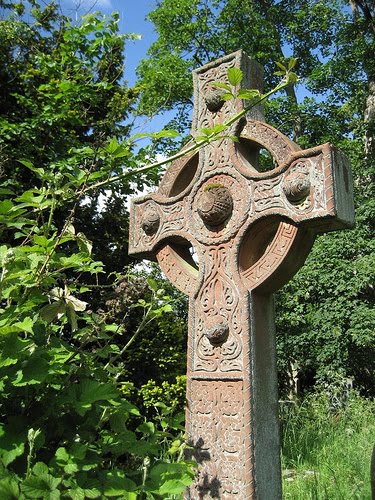
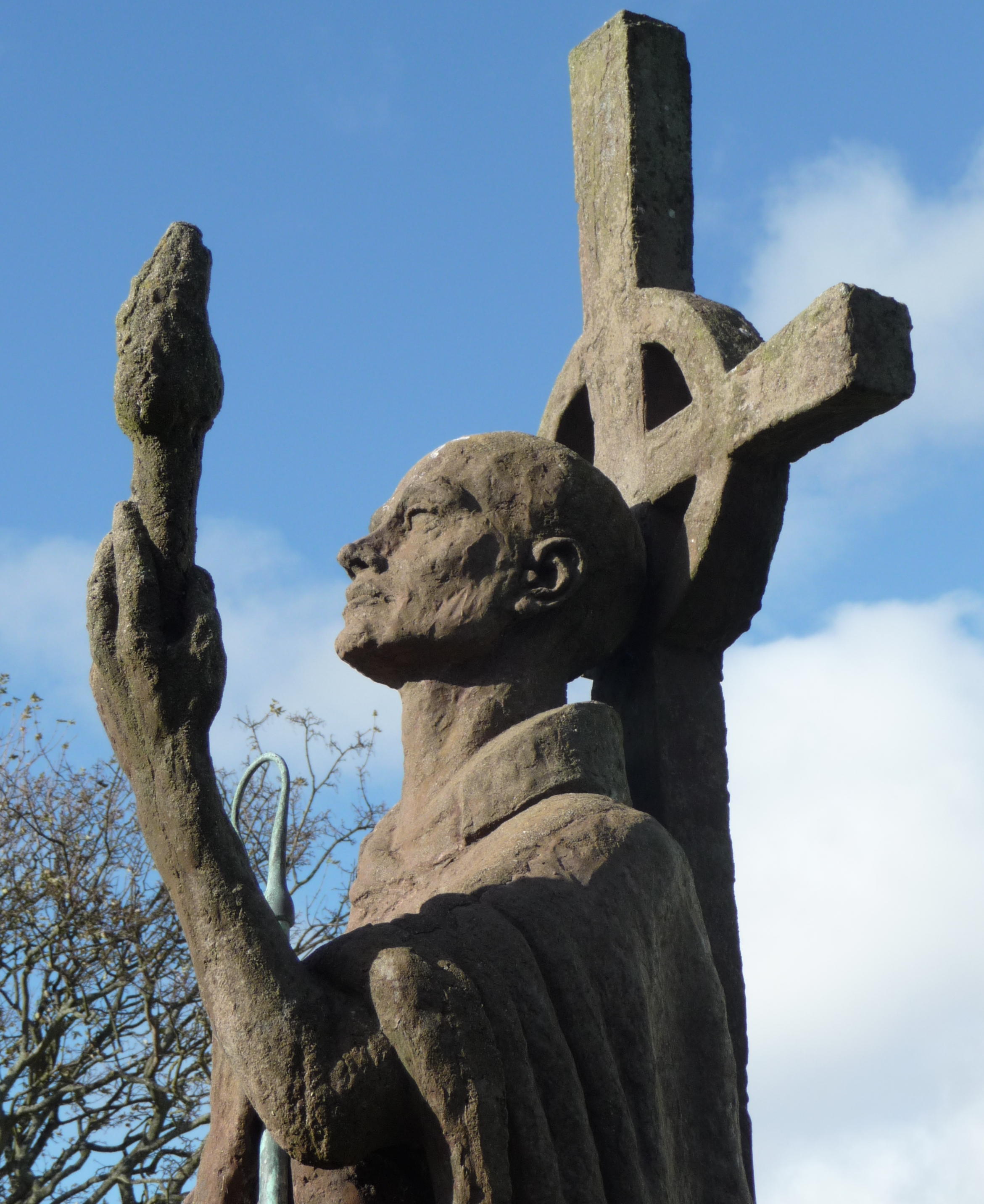
Early Celtic Christian Cross
Roman Church. One thing that appeals is that the Celtic Church was around before the great schism between Rome and Constantinople in 1054 and the subsequent Protestant Reformation in Europe.
Part of the calling for members of the Community of Aidan and Hilda is to heal broken communities and to work towards and pray for Christian unity.
As I also mentioned above, I think there was a greater emphasis on the mystical nature of God in some aspects of Celtic Christianity, although that is also part of the other traditions, though sometimes ignored.
However, it’s in the emphasis of understanding that God is in everything. We can see that as recently as in the late 19th Century when Alexander Carmichael collected songs, prayers, blessings and stories of Gaelic folklore in his publication of the Carmina Gadelica.
These were collected from the Gaelic-speaking areas of Scotland and show that many of the prayers and blessings were said before and after simple tasks at home or at work, indeed for almost anything you did in a day. It was/is that recognition of God is in everything we are and do.
How, and why did Aidan come to Lindisfarne?
Aidan came to the island in 635AD at the invitation of King Oswald, who was King of Northumbria.
Oswald’s father, Aethelfirth, had formed the kingdom, which ranged from what is now the Lothians in Scotland to south of York in England. However, he was killed in battle in 616 and his family fled to Iona, where the Irish Columban monks were.
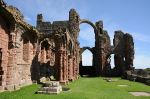
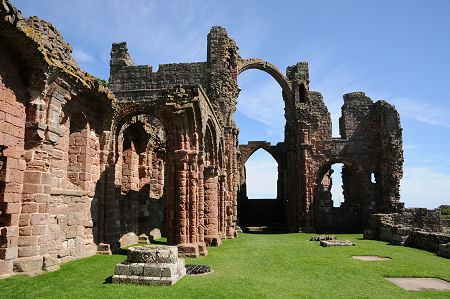
Remains of Lindisfarne Monastery
It was on Iona that Oswald accepted Christianity. He was the second son of Aethelfirth and was determined to regain his father’s kingdom. When he succeeded he asked the community at Iona to send someone to preach the faith to his people.
After an unsuccessful first attempt, Aidan and 12 others came to Northumbria and was offered land by King Oswald, who was based at Bamburgh on the Northumbrian coast. Aidan chose Lindisfarne, a tidal island, partly, it is thought, for its closeness to (and protection from) Bamburgh but also because if could offer solitude at times when the island was cut off from the mainland.
It was on Lindisfarne that Aidan formed a monastery, school and eventually a bishopric, or ‘see’.
How was St Aidan described? Do we know anything about his personality?
 Aidan was famous for his gentleness, humility and simplicity of life. He must have had a great deal of inner strength and faith to begin a completely new Christian settlement in a part of the country that was torn apart with wars and invasions and also that was dominated by pagan religious-thinking.
He treated everyone the same, be they king or slave. When he was given money or donations he would distribute it to the poor or would use it to buy slaves and free them – many then studied at Lindisfarne and became monks themselves.
There is a well-known story that when he was given a royal horse by King Oswin, who succeeded Oswald after he had been killed in a battle (see what I mean about how violent the time and place was?!), Aidan gave the horse with all its’ royal livery away to a beggar. Oswin was angry at first but then realised how humble and saintly Aidan was and asked his forgiveness.
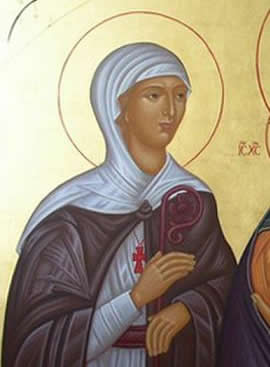
Who was St Hilda and what do we know of her life and character?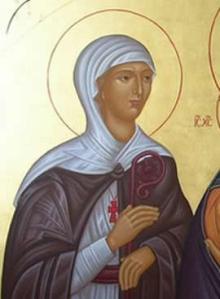
It is not known where Hilda was born, but her birth took place in 614. She was the second daughter of Hereric, great nephew of King Edwin of Northumbria, and his wife Breguswith. Her elder sister Hereswith, married the King of East Anglia. Hilda’s noble status is important in understanding her, but it did not mean she had an easy life.
When she was still an infant, her father was murdered by poisoning while in exile at the court of the British King of Elmet, (in what is now West Yorkshire). It is generally assumed that she was brought up at King Edwin’s court in Northumbria.
In 627 King Edwin took the step of accepting the Christian faith.
Hilda was among the nobles and courtiers who were baptised with him. This means that as a girl she must have been aware of the traditions of the Church in Rome and of the existence of monastic life.
From 627 to 647 there is nothing documented about Hilda. It seems likely that when King Edwin was killed in battle in 633 she went to live with her sister at the East Anglian court. According to the Venerable Bede, who documented the rise of Christianity on early Britain, she was going to join her widowed sister at a convent in France. She decided instead to answer the call of Bishop Aidan of Lindisfarne to return to Northumbria to live as a nun. This was the turning point in her life.
The exact place where Hilda began her life as a nun is not known, except that it was on the North bank of the River Wear. Here with a few companions, she learned the traditions of Celtic monasticism which Aidan brought from Iona. In 657 Hilda became the founding abbess of a new monastery at Whitby (then known as Streonshalh); she remained there until her death in 680.
Hilda suffered from fever for the last six years of her life, but she continued to work until her death on 17th November 680, at what was then the advanced age of sixty-six. The place of her burial is unknown.
Bede describes Hilda as a woman of great energy, who was a skilled administrator and teacher. She gained such a reputation for wisdom that even kings and princes sought her advice, but she also had a concern for ordinary folk like Caedmon. He was a cowherd at the monastery, who was inspired in a dream to sing verses in praise of God. Hilda recognised his gift and encouraged him to develop it. Although Hilda must have had a strong character, she inspired affection. As Bede writes, “All who knew her, called her mother, because of her outstanding devotion and grace.”
Why were these particular saints chosen by the community you work for?
Aidan was chosen as he was the founder of the monastery at Lindisfarne and for his gentleness, simplicity and leadership qualities. Hilda for the reasons about her character above. Also, they represent the male and female tradition of the Celtic Church where men and women worked and prayed together as equals.
There were many monasteries where women and men lived and worshiped together – Hilda’s monastery at Whitby was one such place. They are examples of how we are all equal in God’s sight and, to me, represent the opposite of a patriarchal church and society where women are neglected and treated as second class citizens (if they’re lucky!).
How do you find life on the island? Do you find it conducive to contemplation?
I absolutely love living on the island. I came a year ago after having a sense of being called to the island particularly in relation to prayer and contemplation. As I explained before, my spiritual journey has been woven with a desire for solitude, silence and emptiness.
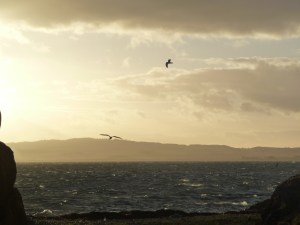 Although Lindisfarne attracts three quarters of a million visitors a year, you can still find plenty of places to be alone as most tourists stick to the village and the tourist attractions.
It was agreed that I would come and be part of the Community of Aidan and Hilda’s presence on the island.
 We run a retreat house called the Open Gate and I help out there part-time. It can be as simple as making breakfast for guests, clearing up after meals and changing rooms, to helping lead retreats on Christian Meditation and Mindfulness and offering soul friendship to people who ask for it.
However, that’s the part-time work. The specific reason I’m here is, as I said, for prayer and contemplation.
I live as a solitary, mainly in silence when I’m not with other people, although I do listen to the radio for news etc but I don’t have a TV.
I have a four-fold pattern of prayer each day, which starts off in silence, meditation and what is called ‘intercessionary prayer’.
This is when I pray for people or situations. It’s not a shopping list of prayer but more about entering into humanity at a deeper level. Some people think if you’re called into a desert (or in my case ‘island’) way of life that you’re actually running away from the world. It is, in fact, the opposite. The tradition in Christian mysticism is very much about being open to our own egos being stripped away, to leave space for God to work within us. That’s the idea of poverty – or simplicity – when we let go of the trappings of the material world and all the things that distract us from facing who we really are.
It’s a tough, lifelong process, but when you’re faced with all the emotional baggage we carry around and, ultimately, our own mortality, it makes us realise how little control we actually have over our own lives. That, in turn, gives me a sense of depending on God entirely for all that I am – that’s the real meaning of humility in the Gospel sense.
Anyway, I’m digressing a little.
As I said, I have a fourfold pattern of prayer, mornings in silence and solitude, midday prayer in our community chapel, evening prayer at St Mary’s, the Anglican church and night prayer at the community chapel again or said privately depending on how tired I am.
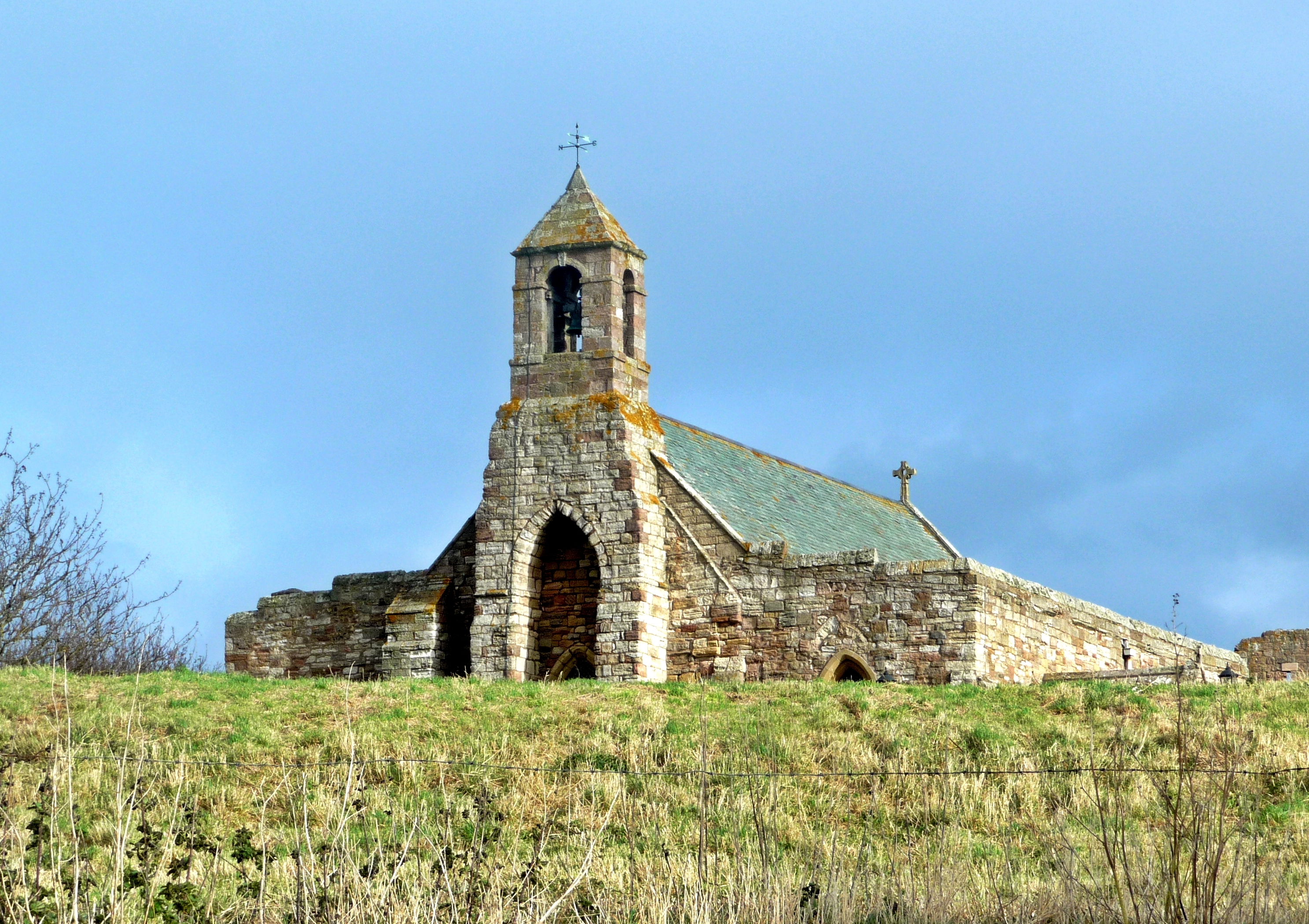
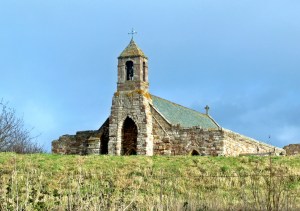 I have to say, I get a real spiritual kick out of praying at St Mary’s as part of it was built on the site of St Aidan’s original monastery.
That means that we’re praying in the same spot that people have prayed in since 635AD – that’s almost 1400 years of prayer!
It’s maybe part of the same question, but what are your thoughts on spiritual or religious seeking, and their relationship to landscape?
Yes, it is part of the same question. Although I do have times of formal prayer, I spend a lot of the time on the island, walking, engaging in nature and sitting or standing by the sea and literally getting lost in the sense of the presence of God.
In Celtic Christian spirituality, we talk about certain places being ‘thin places’. This is the belief that the space between heaven and earth is so thin that you can sense another worldly presence.
Lindisfarne is one such place, as is Iona.
I came to live on the island last winter (my friends thought I was off my head wanting to live on an island in the North Sea in the middle of winter!). The reason was to experience the wildness and emptiness of the place – it didn’t disappoint and I know that autumn and winter on the island is now my favourite time.
We had a beautiful spring and summer and the island was very busy, but there’s just a different feel to the place off-season.
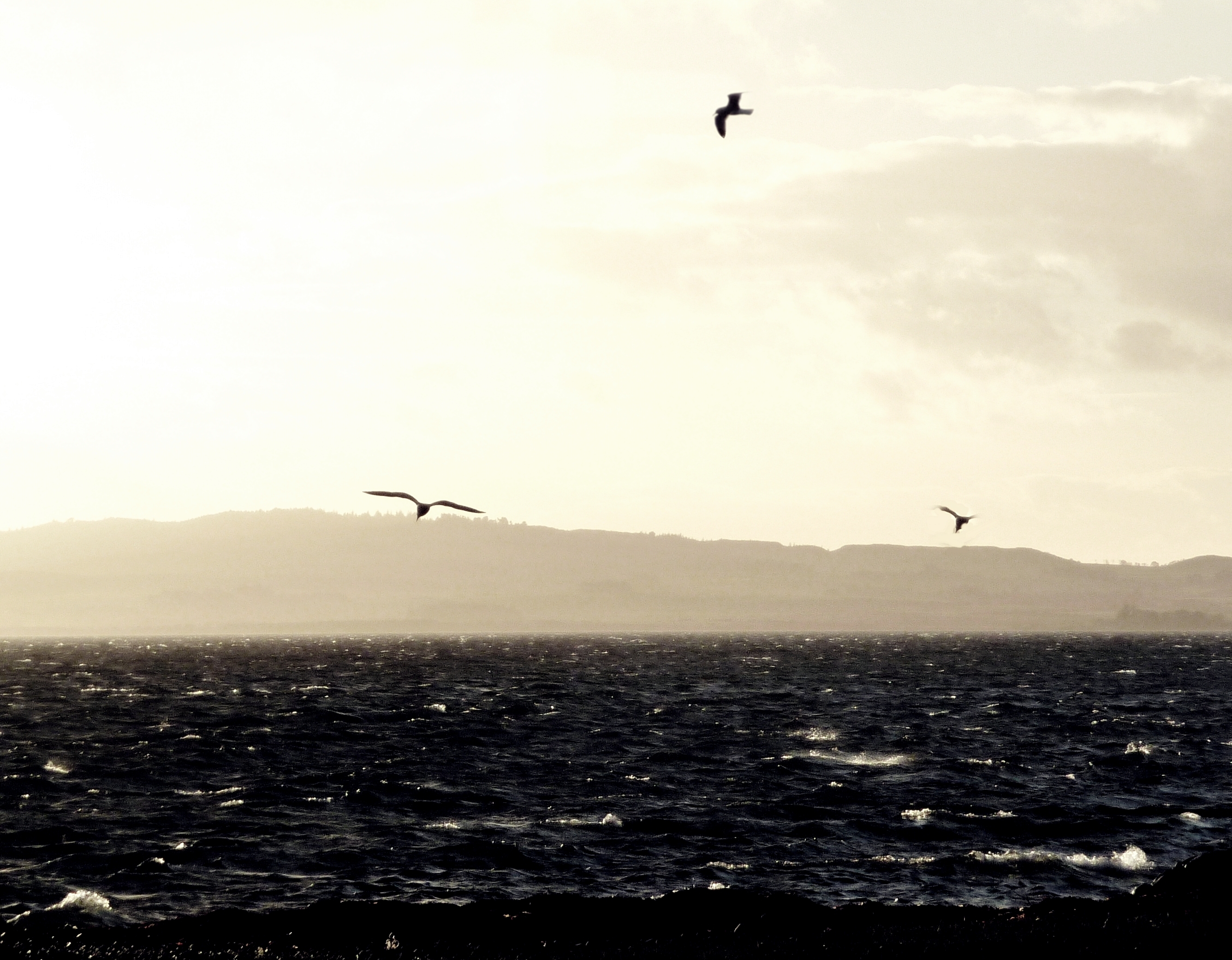
It’s as if the island ‘breathes a sigh of relief’ and settles into the winter. The human visitors go and the migrating birds arrive.
I discovered that I can simply ‘be’ by the sea, watching the countless birds and seals, tune into the rhythm of the waves and have an almost tangible sense of an inner stillness and space. So much so that I feel I could put my hand into my chest, bring this ‘space’ out, look at it and put it back in. It’s what I call the ‘everythingness and the nothingness’ of God.
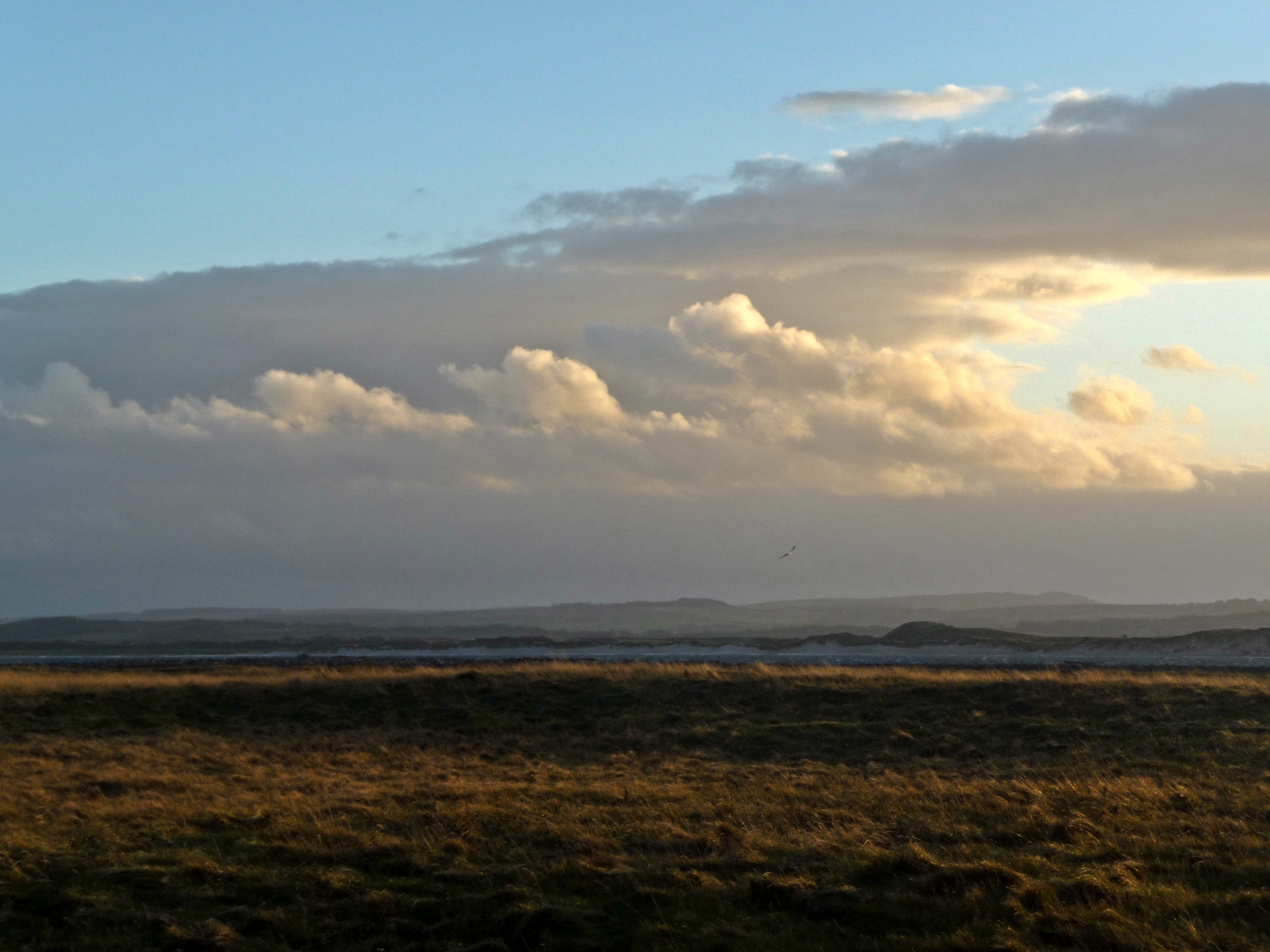
The skies are amazing in the winter, both during the day and at night. There’s a sense of the vastness of the sky and there are some amazing light effects. Also, as there’s virtually no light pollution, you can see the Milky Way at night and more stars than I’ve seen anywhere else.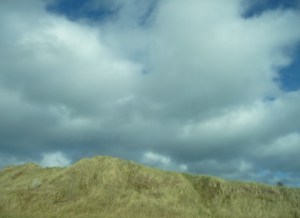
I can understand why the Celts felt an affinity with the landscape and it’s certainly enhanced my own sense of being in God’s presence.
I was once told by someone to ‘let the island do the work for you.’ and it’s so true. I’ve mentioned this to many guests at the Open Gate. Quite often they would come to have a retreat on their own, with their own ideas on what they were going to read or do. I’d say that almost all of them have told me that they never did what they had planned to do but just ended up experiencing the island and letting it soak into them.
If you’re spiritually open, then the island, its landscape, its beauty and the power of nature certainly seems to do its own work . I do actually think that the old name of the island – Medcaut – if it really does mean ‘healing island’, is very apt.
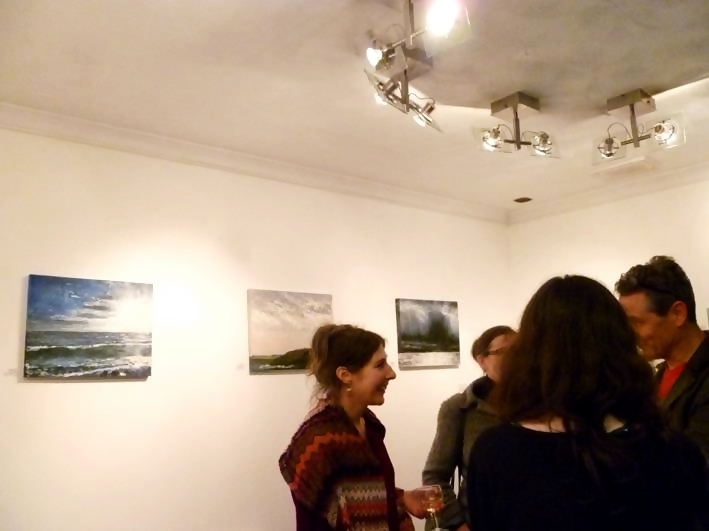
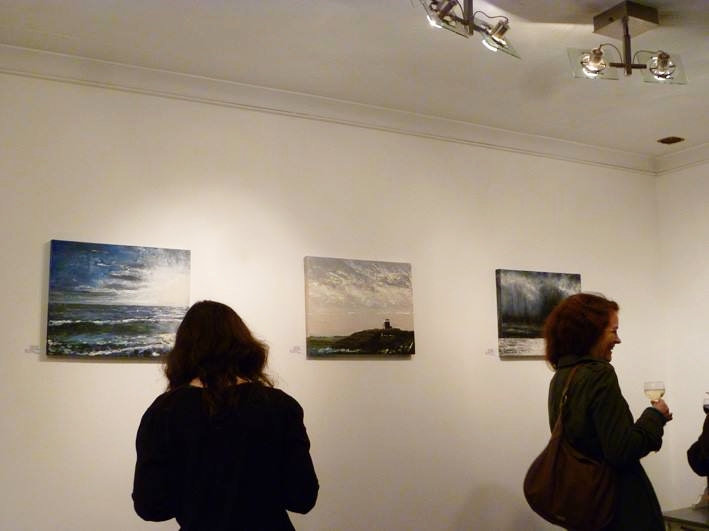
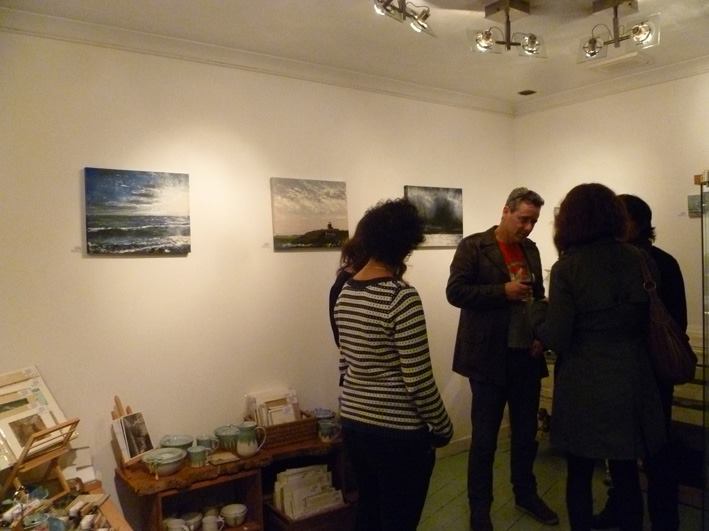
Jamie, many thanks for this fascinating account of the early Celtic Christians and their way of life, also for describing so poetically your own response to the island, and your spiritual calling to Lindisfarne. It’s been a pleasure to interview you, and I hope to see you at the exhibition in Edinburgh on the 22nd November (Lindisfarne tides willing!)
You can find out more about the Open Gate and the Aidan and Hilda Community here – Open Gate
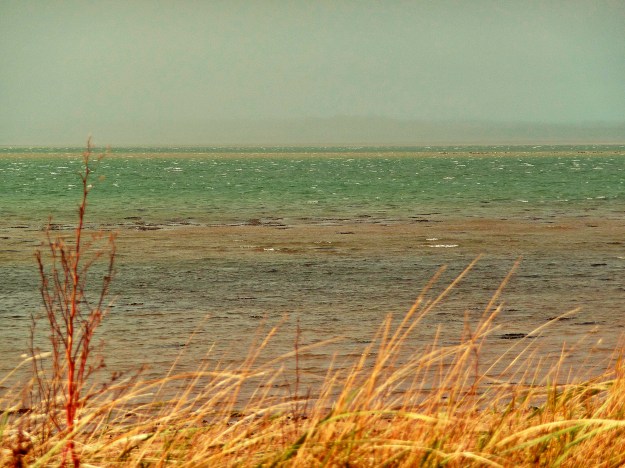
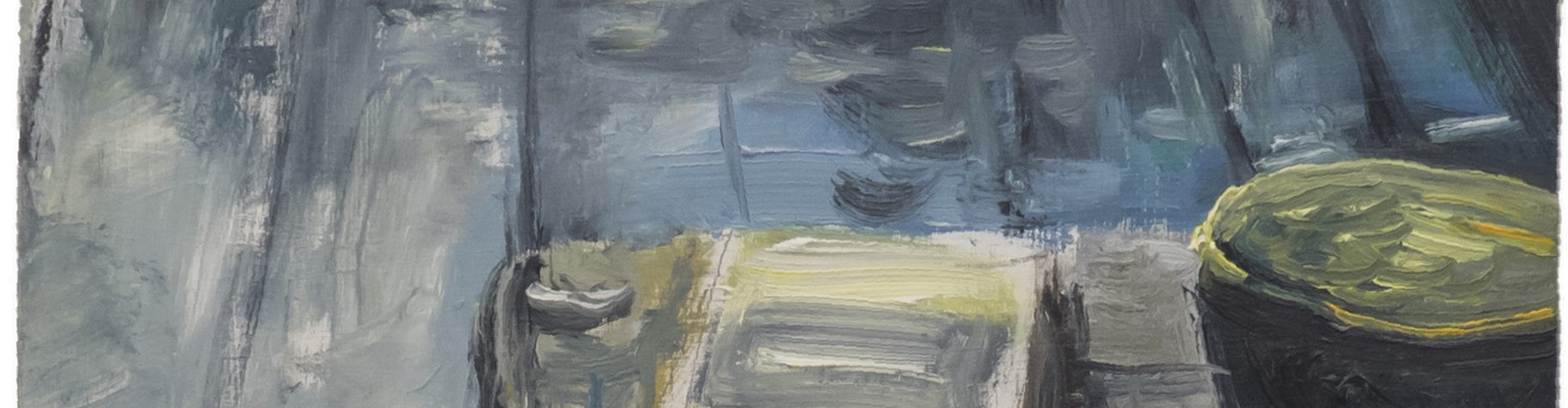


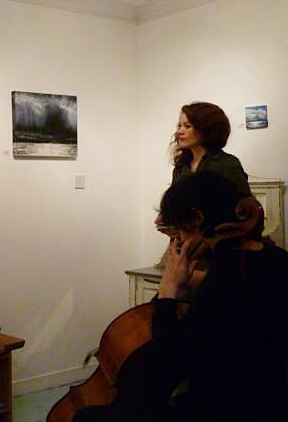
 Atzi Muramatsu began (unbeknownst to me!) to write a music piece which became ‘Gaea Metempsychosis’; a piece for string quartet, which will be performed at the exhibition launch.
 ‘Metempsychosis’ is a Greek word meaning transmigration of the soul – or its reincarnation after death, ‘Gaea’ meaning of course – the earth. So the inspiration of fossils, and of being on the island in a particular moment in time, yet feeling the sense of our own infinity – and that, like fossils, we become part of the landscape once more, was the inspiration behind Atzi’s music.
 from millions of years ago, their remains crushed by the weight of rocks and ocean over time into dense, heavy white marble. You can see seams of serpentine – a silicate formed by algae and water that ran into cracks and faults of the marble.







 Rose Strang Artworks