Author Archives: rosestrang

Unknown's avatar

About rosestrang

Artist, Painter

‘The Artist as Explorer’

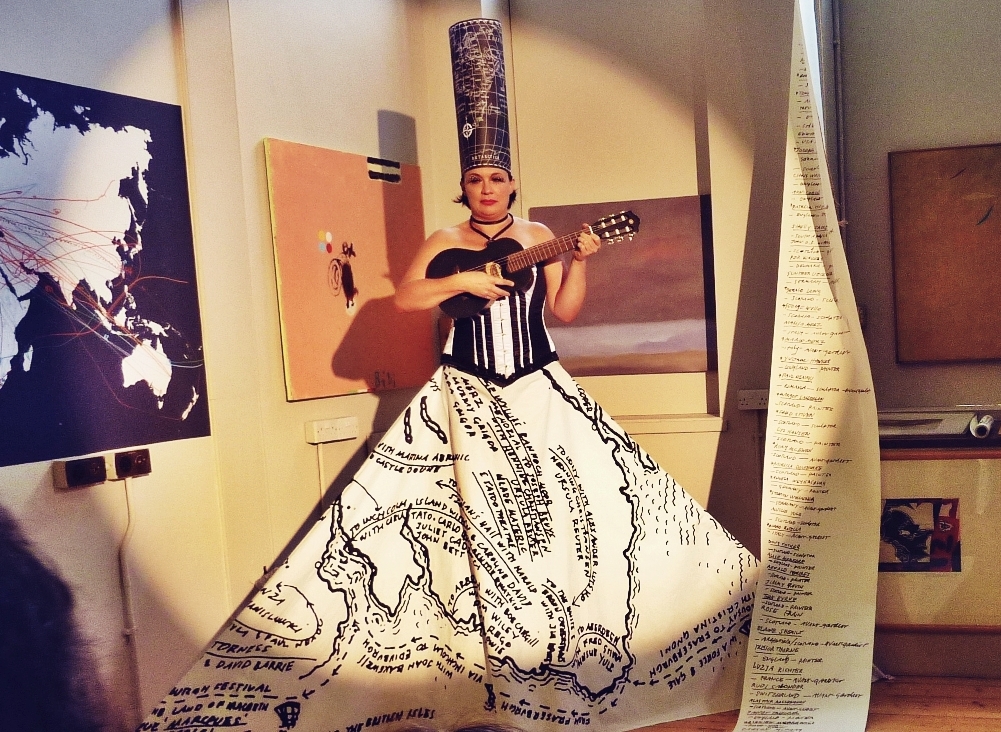
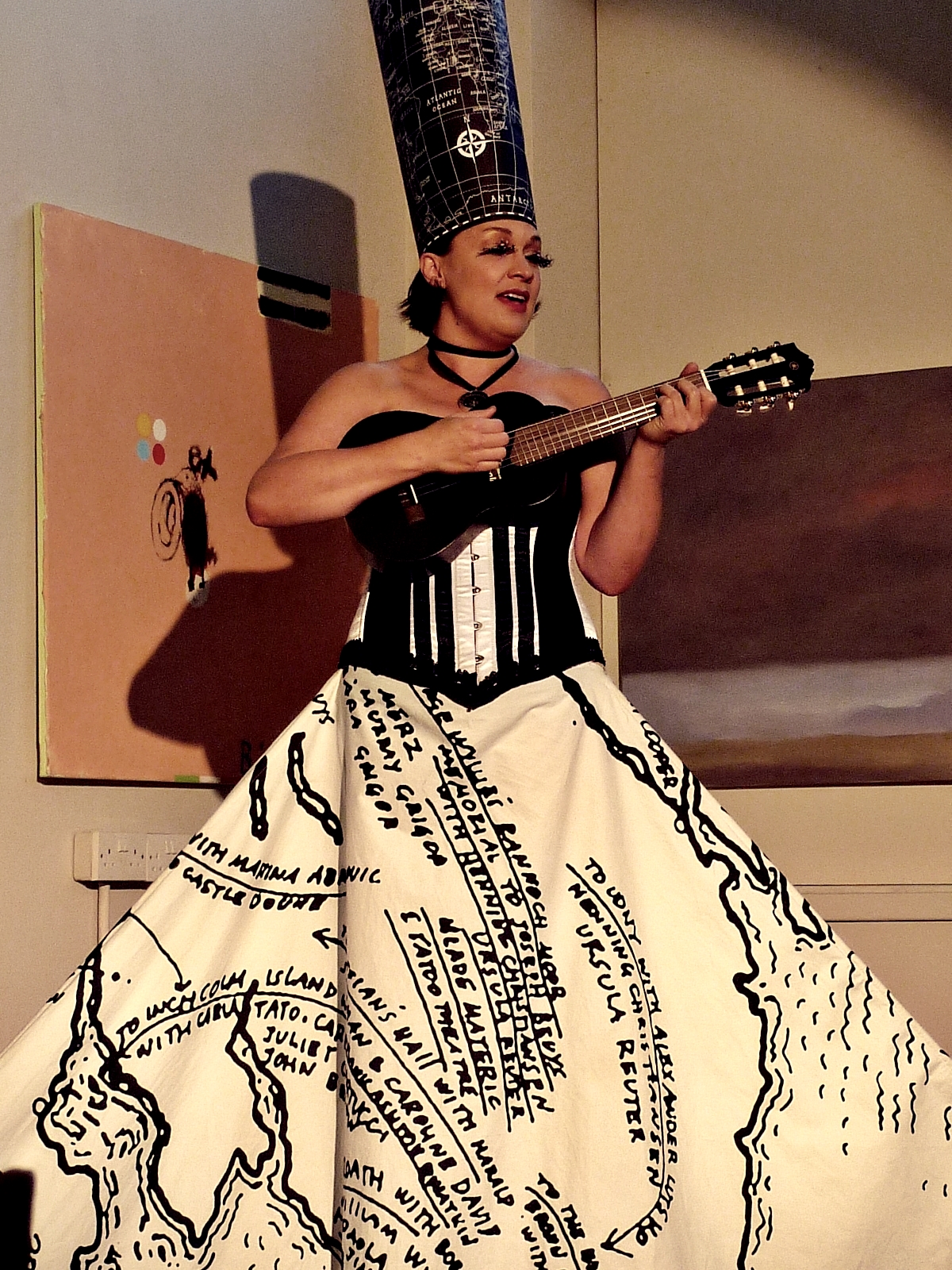
Aletia Upstairs performs ‘The Artist as Explorer’ in response to the Demarco Archives at Summerhall Edinburgh, August 2017

I haven’t written here in a while as I’m preparing for upcoming shows and a new series of paintings which I’ll begin in October. This time I’ll be responding to music rather than landscape – a direct visual response to music by composer Atzi Muramatsu. It will be a new challenge and I think a deeper exploration of the collaborative process.

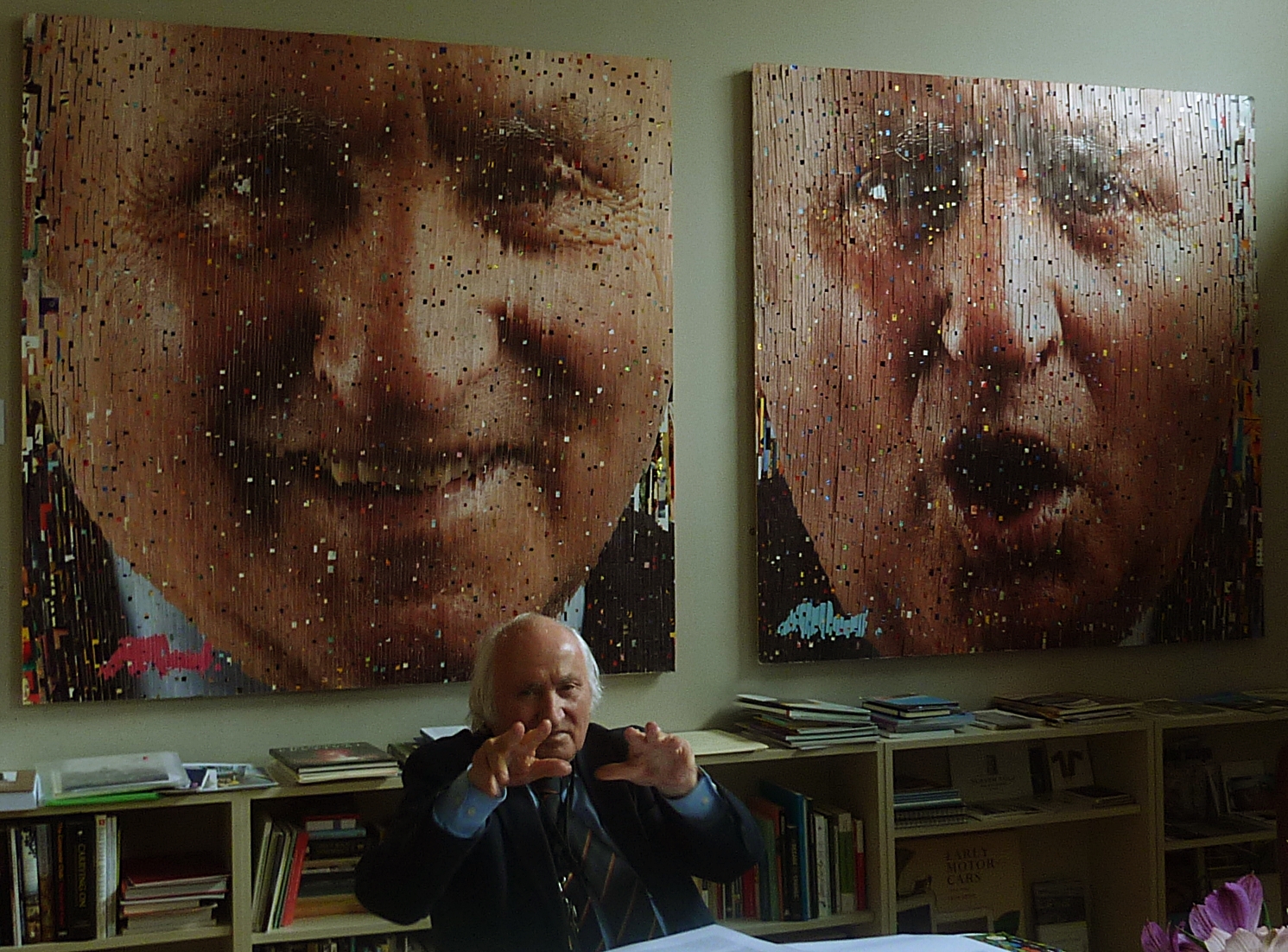
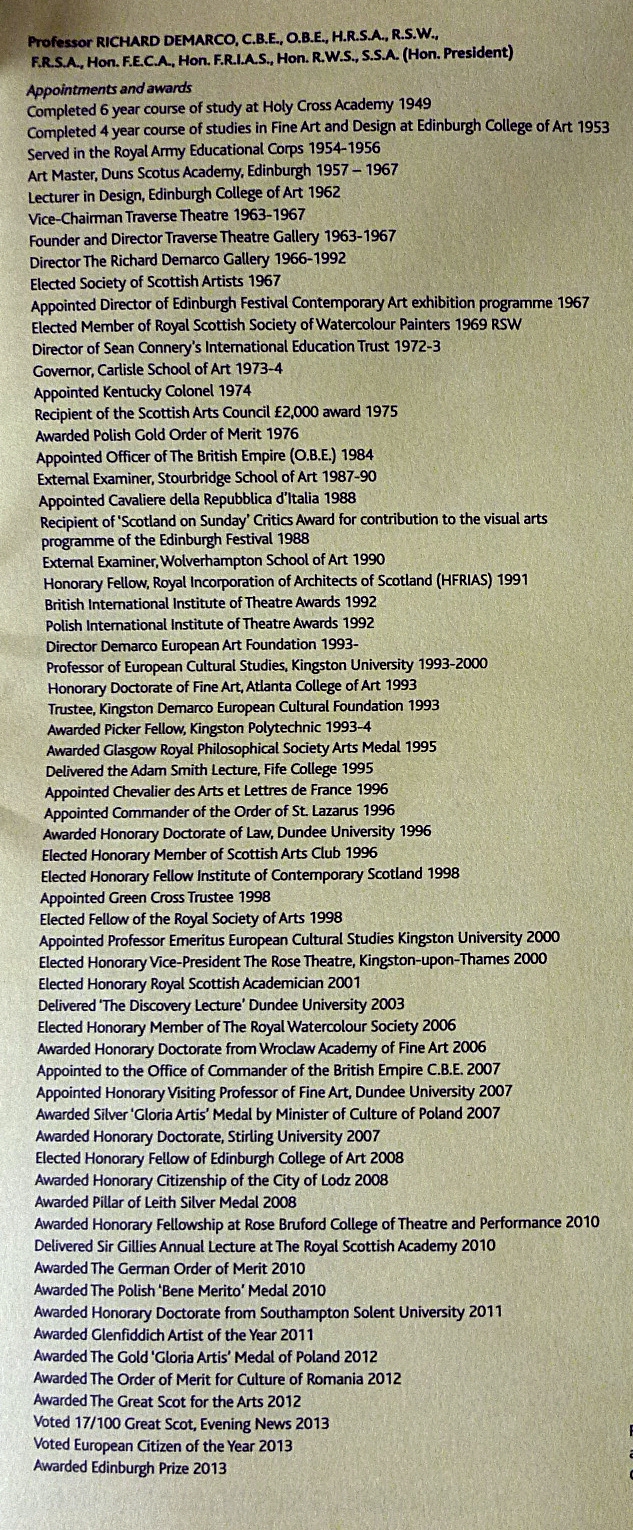
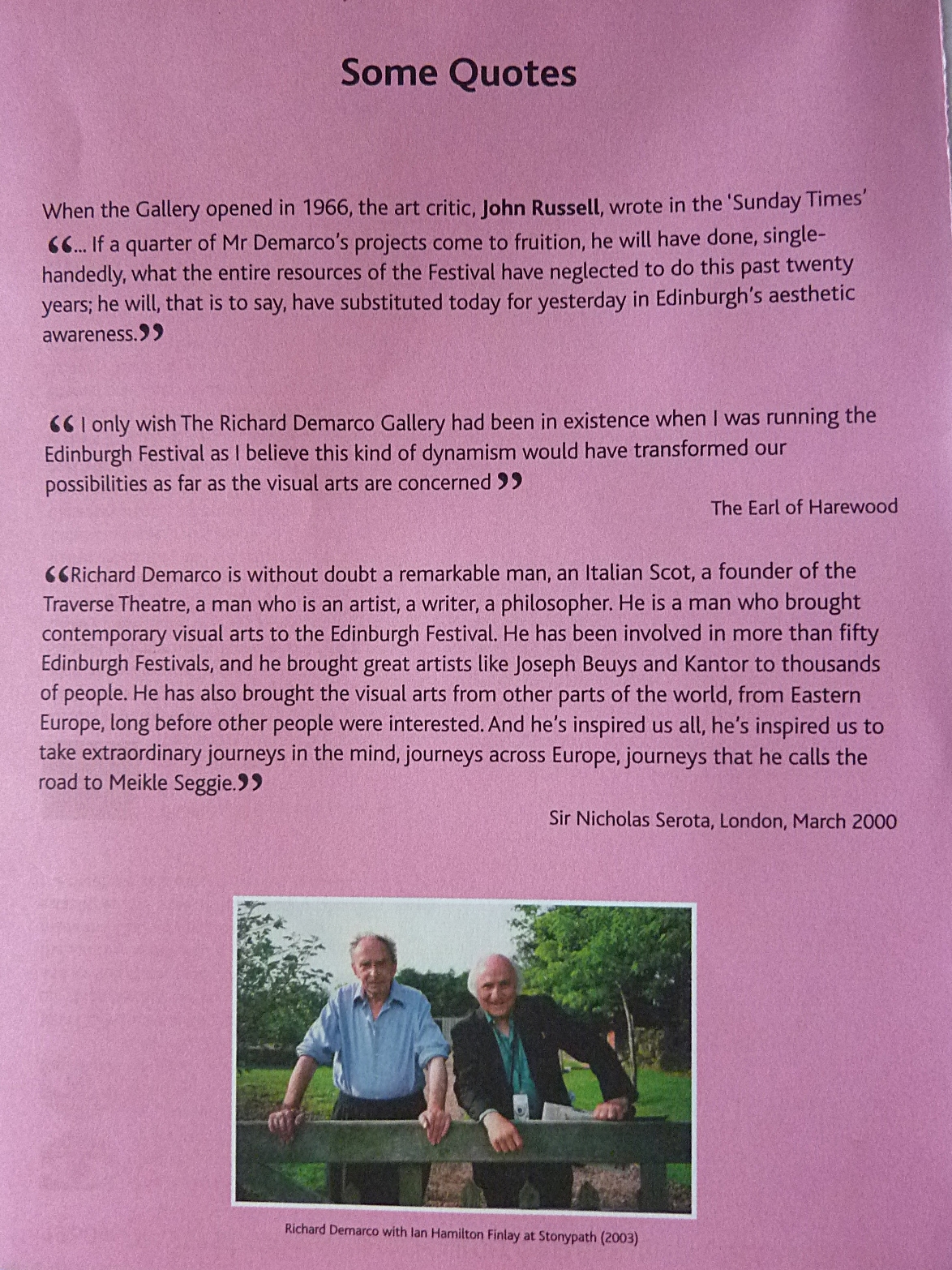
In their small way, collaborative explorations such as these echo the approach of Richard Demarco; a watercolourist, arts impressario, teacher and, as some describe him, ‘champion of the avant garde’, now in his 87th year and still very active in the arts in Edinburgh and across many countries. (for a more comprehensive description of his work, see links at end of this post). I attended a performance by Aletia Upstairs yesterday (photo above) which has inspired this blog post.

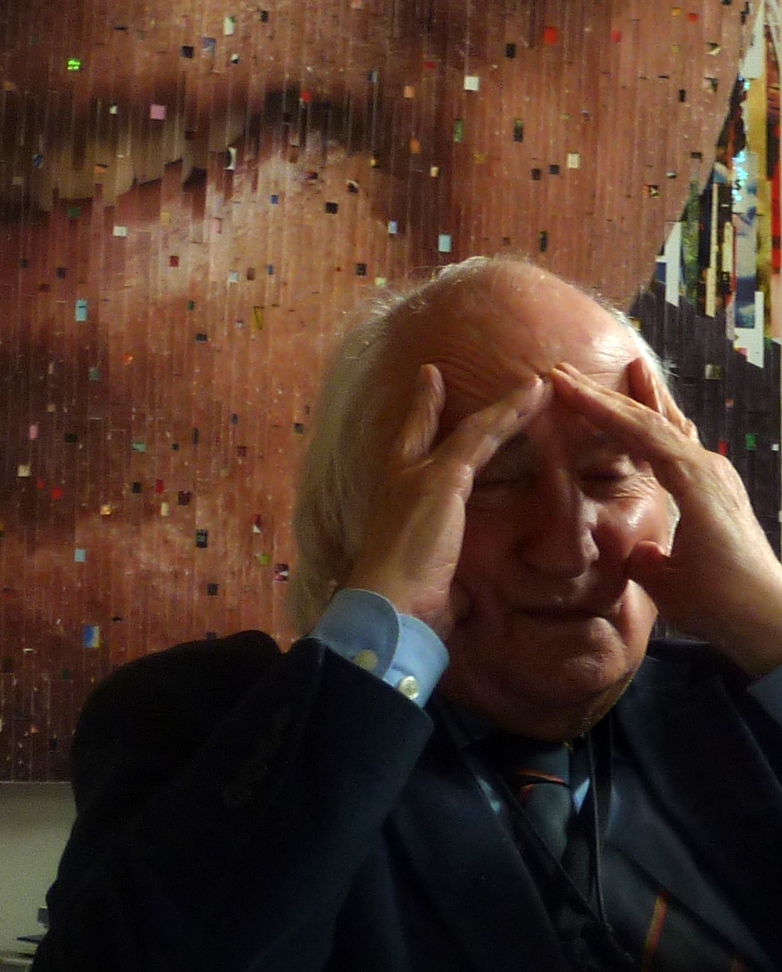
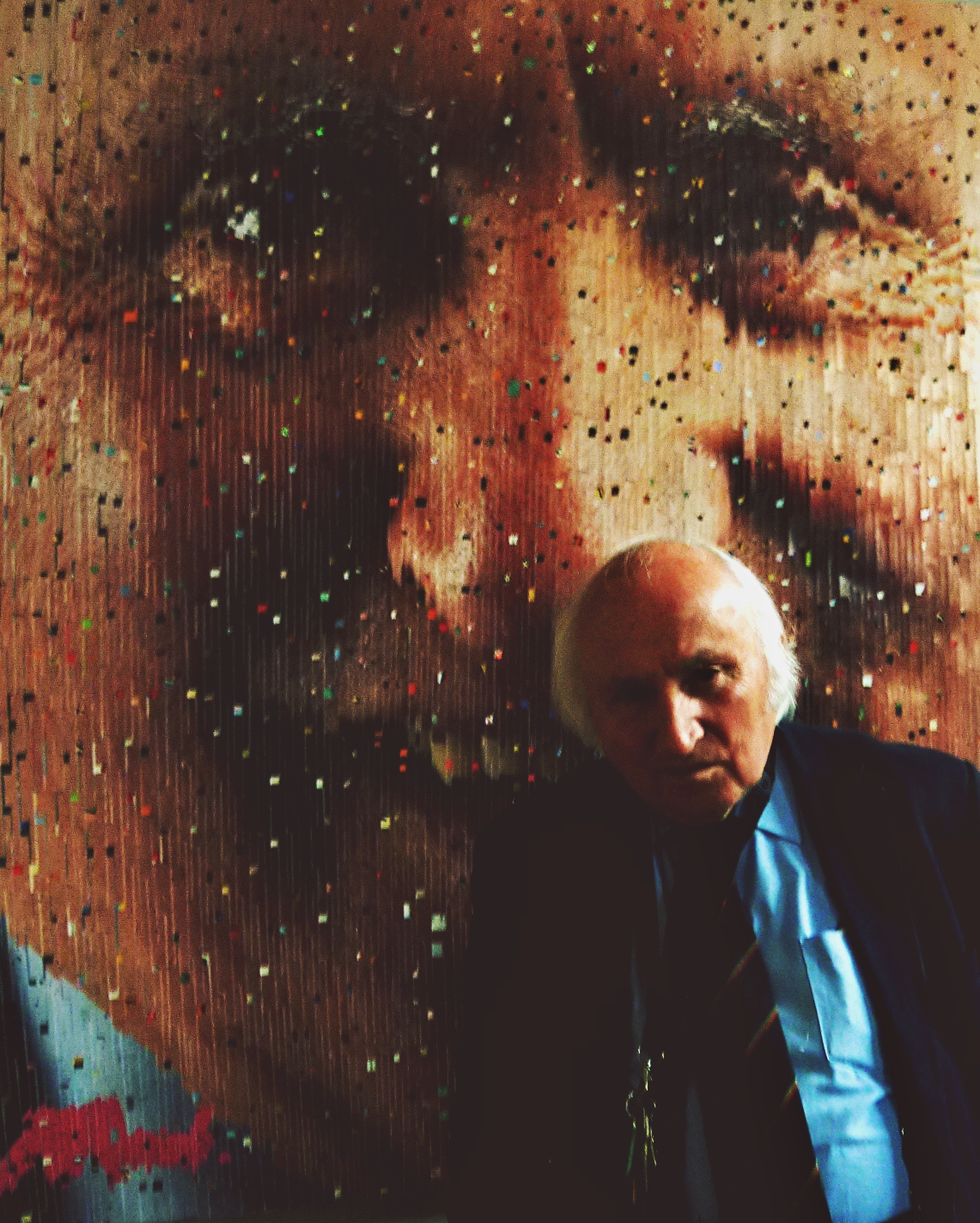
Richard Demarco


After art college, I worked with Richard Demarco in 1999, and on several subsequent projects over the years. I could have folllowed the more conventional route of working with publically funded or commercial art galleries, but then I’d always been interested in a multi-disciplinary approach to the arts (my arts degree was in Fine Art and Related Arts, focussed on collaborative approaches).

Demarco’s work has always involved cross-overs between artforms, though far more profoundly it also explores collaboration between areas such as arts and science, health, landscape, sociology, history, politics – art interwoven with all aspects of life. This ‘spoke’ to me, it felt authentic, more in keeping with how I perceived the world of art, though at the time I was unclear of how that might manifest in my own life.

For Richard Demarco, who was undoubtedly unusually switched on to a sense of purpose from an early age, one manifestation of that approach was a series of projects, better described perhaps as creative adventures, which in the 70’s took the form of ongoing projects titled ‘Edinburgh Arts’. These involved creative people from all backgrounds – writers, artists, dancers, musicians, but also those people met as part of the journey who might be from any background or practicing any occupation or activity.

Through working with the artist Joseph Beuys (who Demarco had invited to Scotland in the 70s) this approach included working with prisons, which led to subsequent projects with Jimmy Boyle who had been imprisoned for murder. This was probably the most controversial approach Demarco had taken so far, which among other activities resulted in the Scottish Arts Council severing annual arts funding of the Demarco Gallery.

At the centre of Edinburgh Arts journeys was a concept Demarco described as ‘The Road to Meikle Seggie’. This was originally inspired by his walks in the countryside of Fife where he discovered a sign pointing to a place called ‘Meikle Seggie’ which was almost impossible to find, but in the process of searching and exploring he encountered magic and beauty in the landscape:

Discovering the Road was like opening a door beyond which lay the reality of my dreams of a world beyond the confines of the 20th Century. It promised a landscape I would wish to define with pen and ink and watercolour. Each bend and corner would be like another door opening up gradually more and more aspects of the landscape I had known in my childhood when every door and every road was an invitation to a mysterious space, forever desirable and forever new. It was the sacred threshold through which I had to pass which would reveal the space in which I would seek freedom from all restricting linear concepts of time…

… it is the space I would like to give anyone who valued or sought freedom. It is the space I should like to offer to all those who live and work in prisons where physical journeys are unthinkable.

Richard Demarco, excerpts from The Road to Meikle Seggie

‘The Road to Meikle Seggie’ became a metaphor for a way of seeing, or perceiving the world – and although it began in Fife it led Demarco all over the world, for example it resulted in projects that encouraged cultural dialogue between war-torn countries, particularly in Eastern Europe.

What resonance this has for any creative soul! It captures the essence that an artist in any form wishes to explore and show or communicate –  the way they perceive the world around them – to express meaning and share that with others. It’s the essence of being alive, of being present to witness truth whether it’s in the lines of a landscape, a face we love, or the tragedy of conflict.

Which brings me to the point of this post – a performance I atended yesterday by a singer and performance artist known as Aletia Upstairs. Those maps that form her skirt and hat are enlarged drawings by Richard Demarco, they mark his journeys across Europe and the names of people he encountered and the meaningful relationships and art projects that were born from these journeys.


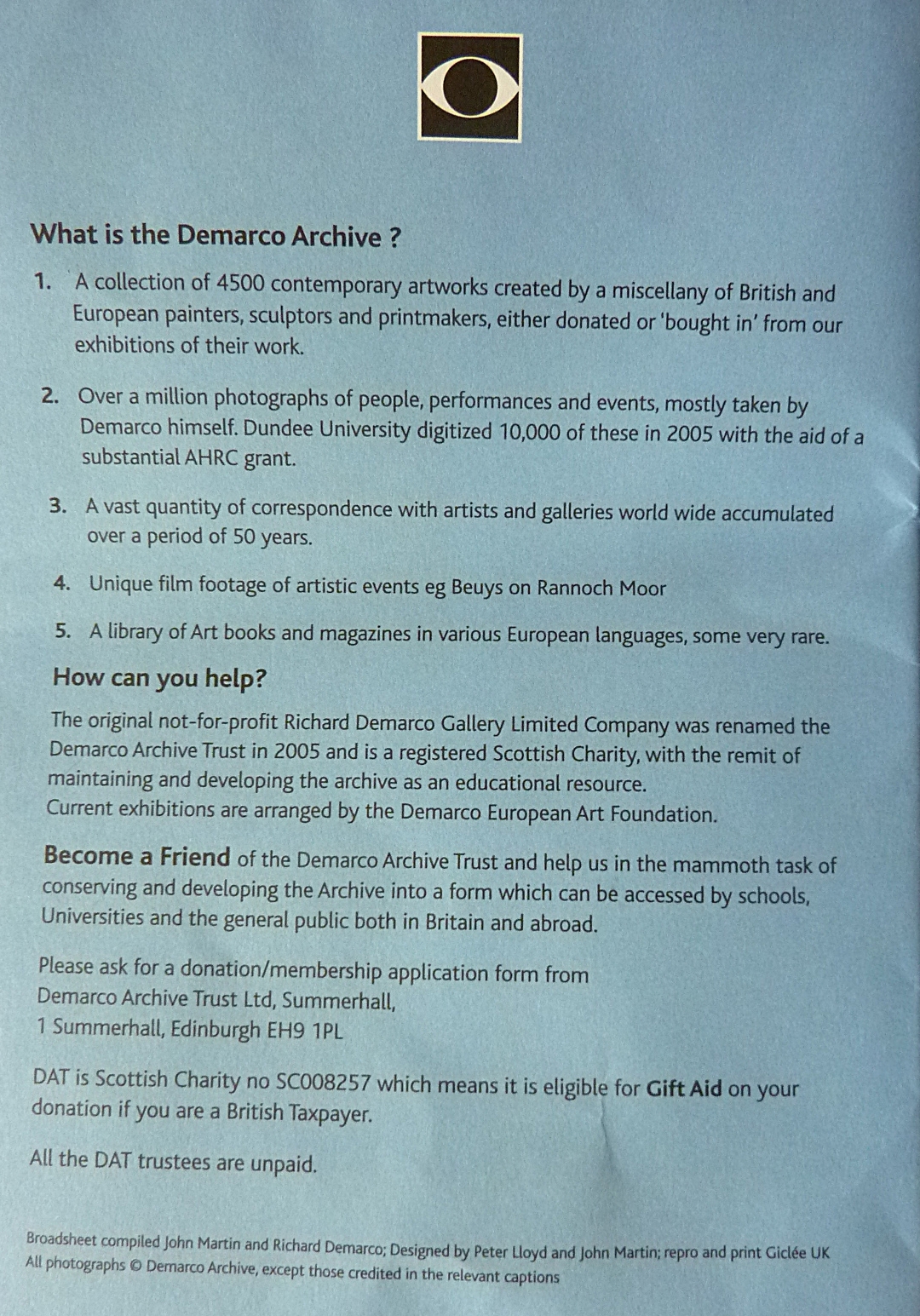
Aletia Upstairs is currently studying for a PHD at Leeds Beckett University, and as Richard Demarco is involved with the University she decided to focus on the Demarco archives as part of her PHD. She describes how, through interviewing Richard Demarco, she wanted to understand the essence of his work, or what he might wish his legacy to be. Richard Demarco’s answers formed the lyrics for the songs she sang during the performance. I was not alone in feeling deeply moved by these, not just because she has a beautiful voice, but the sense that these archives exist in part to honour the art made by the  thousands of artists, musicians and writers Demarco has worked with over the decades.

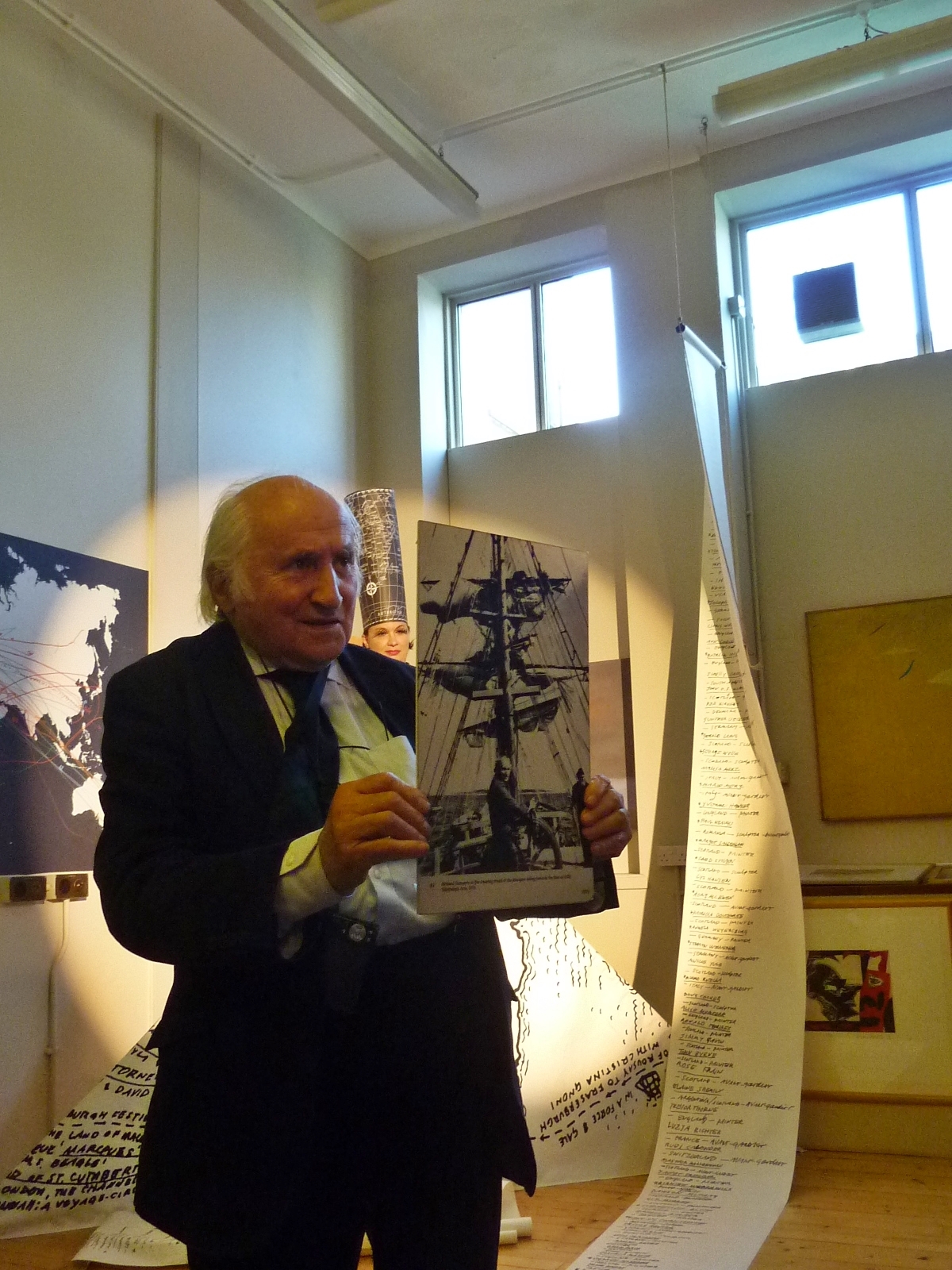
Richard Demarco describing Edinburgh Arts journeys, with an image of ‘The Marques’ on which he was accompanied by fellow artist explorers.

As he’s now 87 it’s a stark fact that many of them are no longer with us – at one point of the performance Aletia unfolded a scroll and sang the names of some of these artists now gone. It was deeply poignant, I don’t think anyone there was unaffected.

Ultimately though, the essence of the performance, which included talks by Richard Demarco interpsersed with songs, was the legacy of a way of seeing; ‘The Road to Meikle Seggie’, and a reminder that as artists we must follow our instincts in seeking truth, and the beauty inherent in truth, rather than recognition, financial reward or success alone. It requires courage, since as Demarco might say it’s not always the easiest or most obvious path.

What I received above all from this performance was the sense of love and connections. It is a joy to understand that my path has touched at times on the same places as Demarco’s Road to Meikle Seggie – finding the meaning and magic in sacred places like the Stones of Callanish for example, or the landscapes of Iona and Lindisfarne, the wells of Arthur’s Seat, or discovering the traces of all the people who’ve been on these paths before us, in the stones of old buildings, or pathways and roads created organically by people who live with landscape, as opposed to motorways made simply to reach a destination! :

The Road to Meikle Seggie exists for me as a physical reality, but it works more importantly as a metaphor for all the roads which lie beyond it in our imagination. It also represents that land or space I should dearly like to see honoured and protected and extended in our own times, that particularly beautiful man-made landscape or townscape whether it be Giuliano Goris’s Fattoria Di Celli in Tuscany, Somserset, or the Villa Guoni-Mavarelli in Puglia, Cumbria, Sardinia, Brittany, Argyll, Pembrokshire, Venice, Salisbury, St Paul de Vense or the Trossachs.All are beyond the plans of any one generation of architects.  All are about generations of farmers, fishermen and craftsmen, knowing instinctively how to use local materials to best advantage. Not one was built as an environment for tourists.

Richard Demarco, The Road to Meikle Seggie

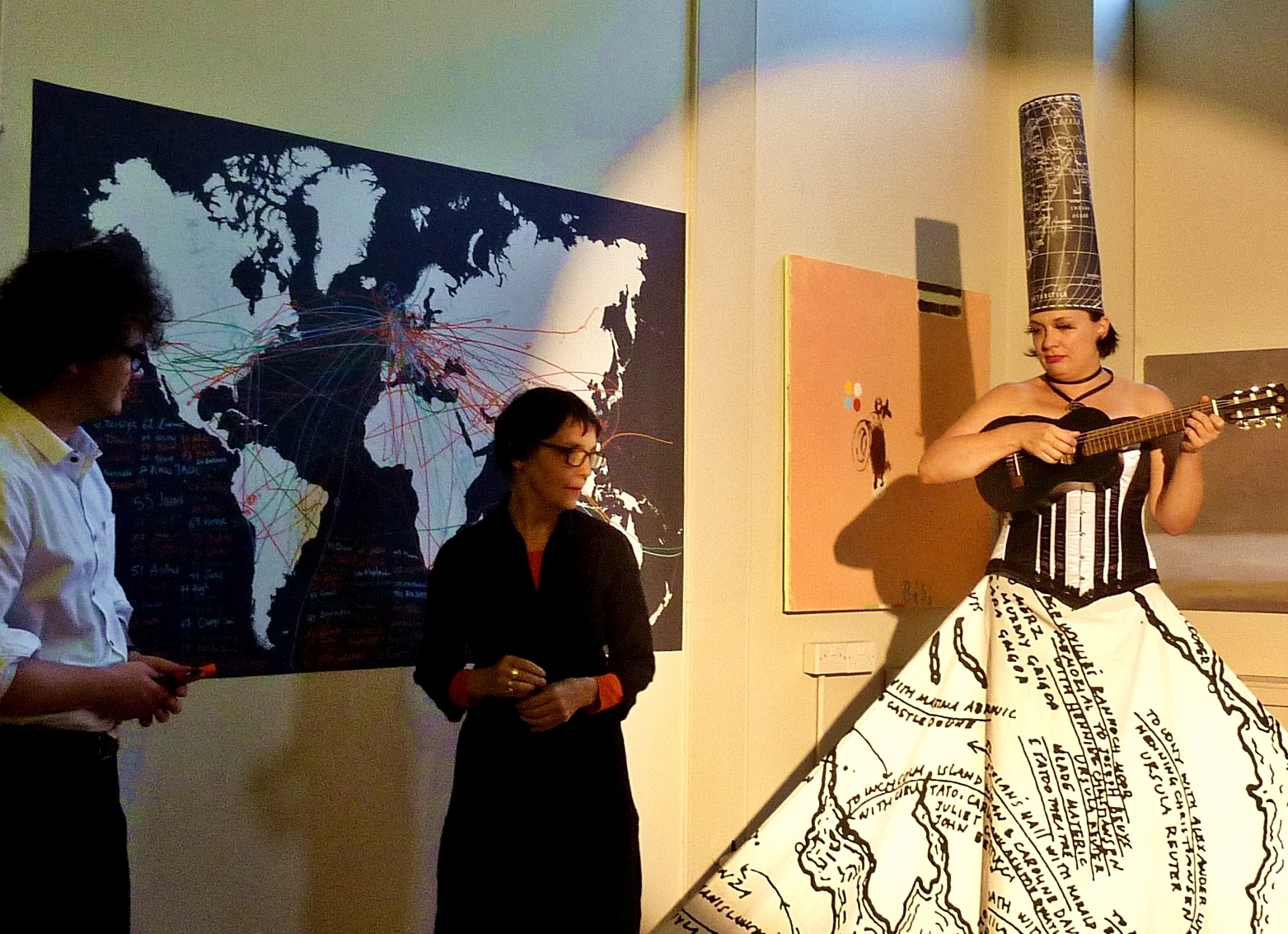
The performance concluded with Richard inviting us to make our mark on a blackboard (no doubt an echo of Beuy’s blackboards used during his talks as part of Strategy Get Arts) to mark the place or places where we discovered art or a way of seeing; our own Road to Meikle Seggie…

In contemporary times we add these marks whenever we respond to landscapes or cityscapes with creativity and love, and when we connect with like-minded souls on the road to Meikle Seggie, which may lead anywhere in the world and in imagination.


Link to website of Aletia Upstairs: http://aletiaupstairs.com/

If you’re interested in finding out more about ‘The Road to Meikle Seggie’ you can buy the book on this link – http://www.luath.co.uk/the-road-to-meikle-seggie.html

I asked Richard to sign my copy and was deeply touched by his inscription …

This post has been a personal response to the work of Richard Demarco, there are of course far more academic explorations and essays about his work! Click links below to find out more, or if in Edinburgh drop in the see the archives at Summerhall  https://www.summerhall.co.uk/ 


Demarco Archives online: http://www.demarco-archive.ac.uk/

General Wiki info https://en.wikipedia.org/wiki/Richard_Demarco

New projects

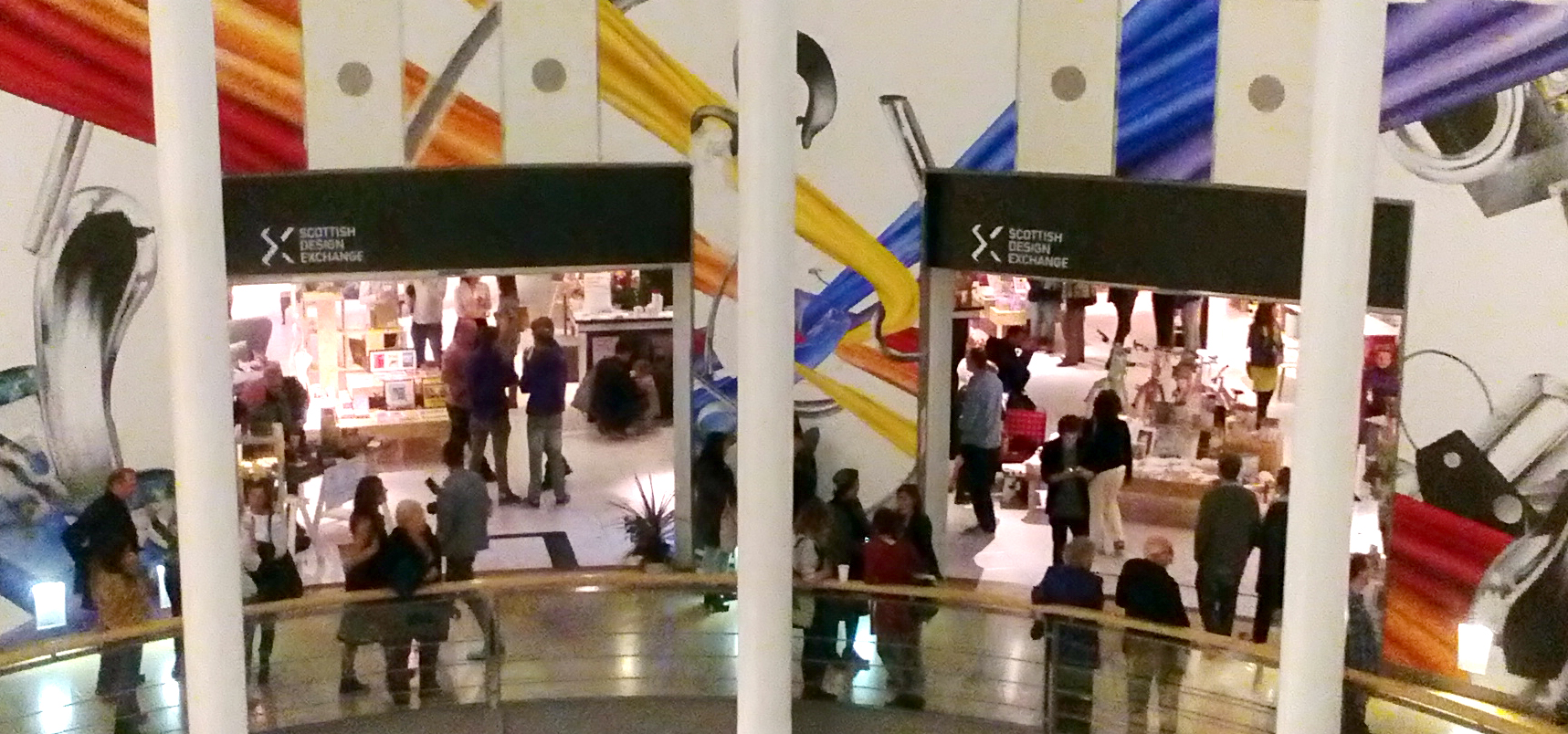
Scottish Design Exchange

The rest of this year is going to be interesting, with a couple of new projects coming up, though I’m taking it fairly easy after a very busy few months which have resulted in strained elbows and shoulders and general wear and tear!

So unfortunately I’ve had to cancel the Lindisfarne workshop in September, which is physically quite demanding (carrying lots of equipment mainly, which I’m keeping to a minimum just now), but I can at least still paint.

In September I’ll be displaying a series of paintings at the Scottish Design Exchange; a not-for-profit arts retail and project space set up in Edinburgh’s Ocean Terminal. I’ll add more details once the works are installed there.

In late November there will be a group show at Edinburgh Art Fair at the invitaiton of the  Limetree Gallery.

I’m also excited about plans for November and December as I’ll be creating a new series of winter landscapes in collaboration with cellist Atzi Muramatsu, possibly also a poet, though I’ve not decided on anyone as yet.

The general idea is a project lasting 12 days in which every other day Atzi and I exchange music and painting in response to each other’s winter-related ideas – six paintings and six music pieces.

The idea is still taking shape, but will most likely include a preview evening at my studio with open fire and mulled wine to accompany the wintery theme. Also two open-studio days. This happens to coincide with my 50th birthday at the end of November( I almost can’t wait for winter to arrive!) But before then I think I’ll indulge in a sunny holiday abroad at some point, for a few days at least!

Pecha Kucha No. 37

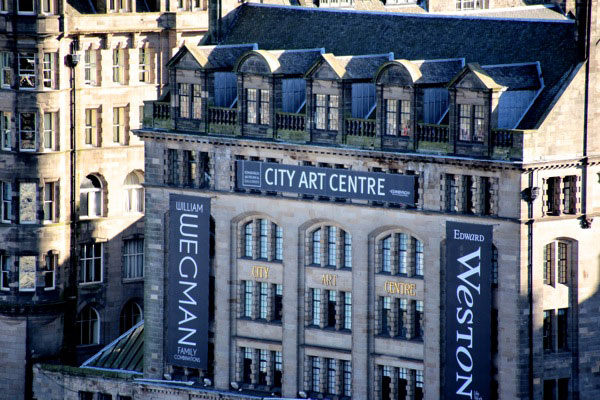
Tomorrow evening Atzi Muramatsu and I will be presenting our work as part of the regular Pecha Kucha evening. It starts 6pm and the venue is the City Arts Centre in Market Street.
Pecha Kucha was first created by architects Astrid Klein and Mark Dytham,  the first one was presented in Tokyo and the events now take place all over the world. The Edinburgh version is run by architect Gordon Duffy.

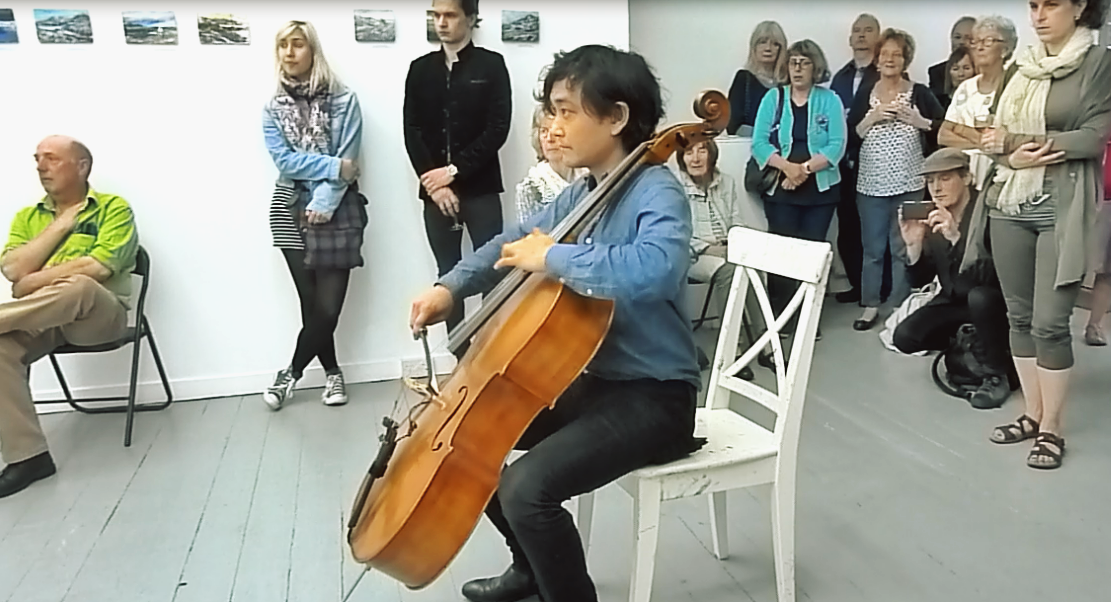
Basically it’s a way to present ideas in a less formal setting, avoiding long (possibly tedious!) lectures – hence why the format restricts each presentation to 20 slides and 20 seconds per slide to talk, or in our case, for Atzi to play cello in response to my paintings which will be presented on slides.

Also presenting their work as part of the evening are a range of creative people from arts, business and music fields (info on link below)

What I’m looking forward to is sitting back and watching Atzi play without the hecticness of my exhibition openings – there may be Q&A after the presentation but essentially I can just relax for a change!

This link has all info about the event http://www.pechakucha.org/cities/edinburgh/events/59694eca3c70efce690007f3


Available paintings

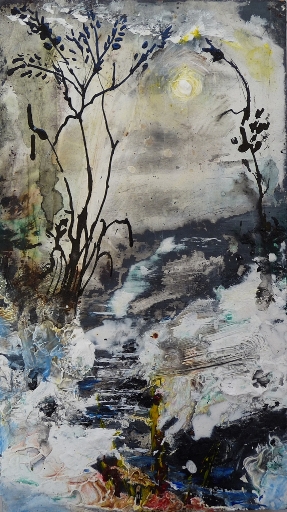
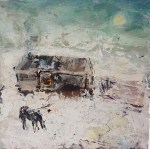
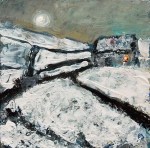
 Winter Series. 2017

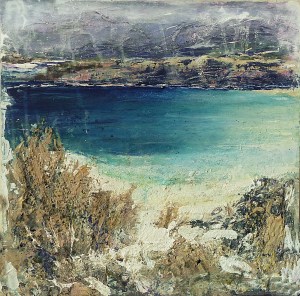
Isle of Harris. 2017


Harbours. 2016


Casares 2016


Harris video – a journey in music and image

Photo: Sarah Bader

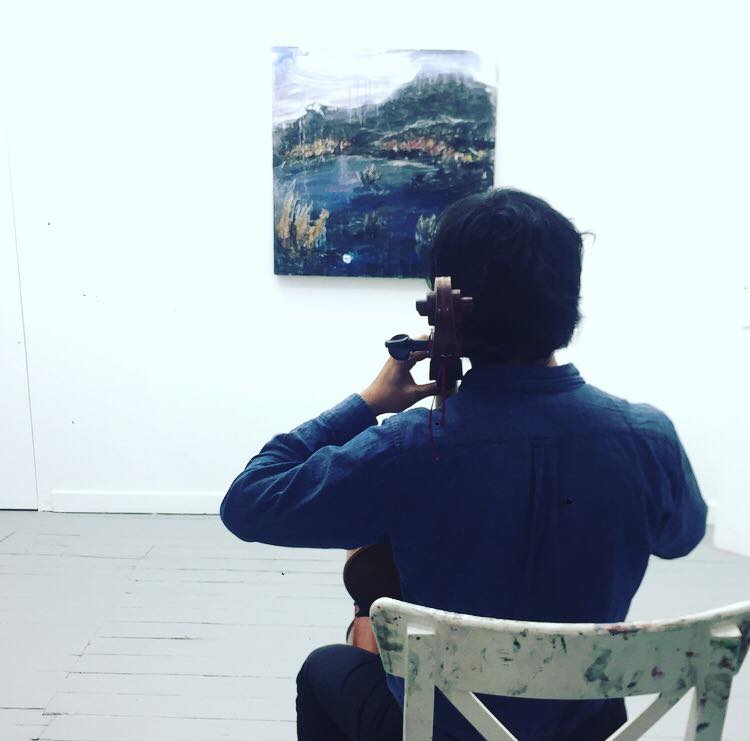
I spent most of yesterday evening creating a video montage of the Harris paintings and Atzi Muramatsu playing cello at the exhibition preview. (video below)

I think it captures a little bit of what’s so beautiful about our collaboration, and what people in the gallery respond to with such enthusiasm and emotion.

Gallery previews are quite hectic events, there’s a lot of stimulus, and if you’re the artist who’s also organised it, well, to be honest my heart is usually hammering – not anxiety as such, more excitement (you spend two or three months painting then your paintings are presented publically in a way that gives you a whole new perspective on how they work as a series, and you’re bombarded suddenly with friendly enthusiastic people talking about them, it’s quite a high!)

I find that Atzi’s performance gives me, and everyone else, a chance to slow down and contemplate, to remember why all these paintings are here in the first place. It’s an appreciation of being alive, it’s pretty much the meaning of life if you’re an artist in any form.

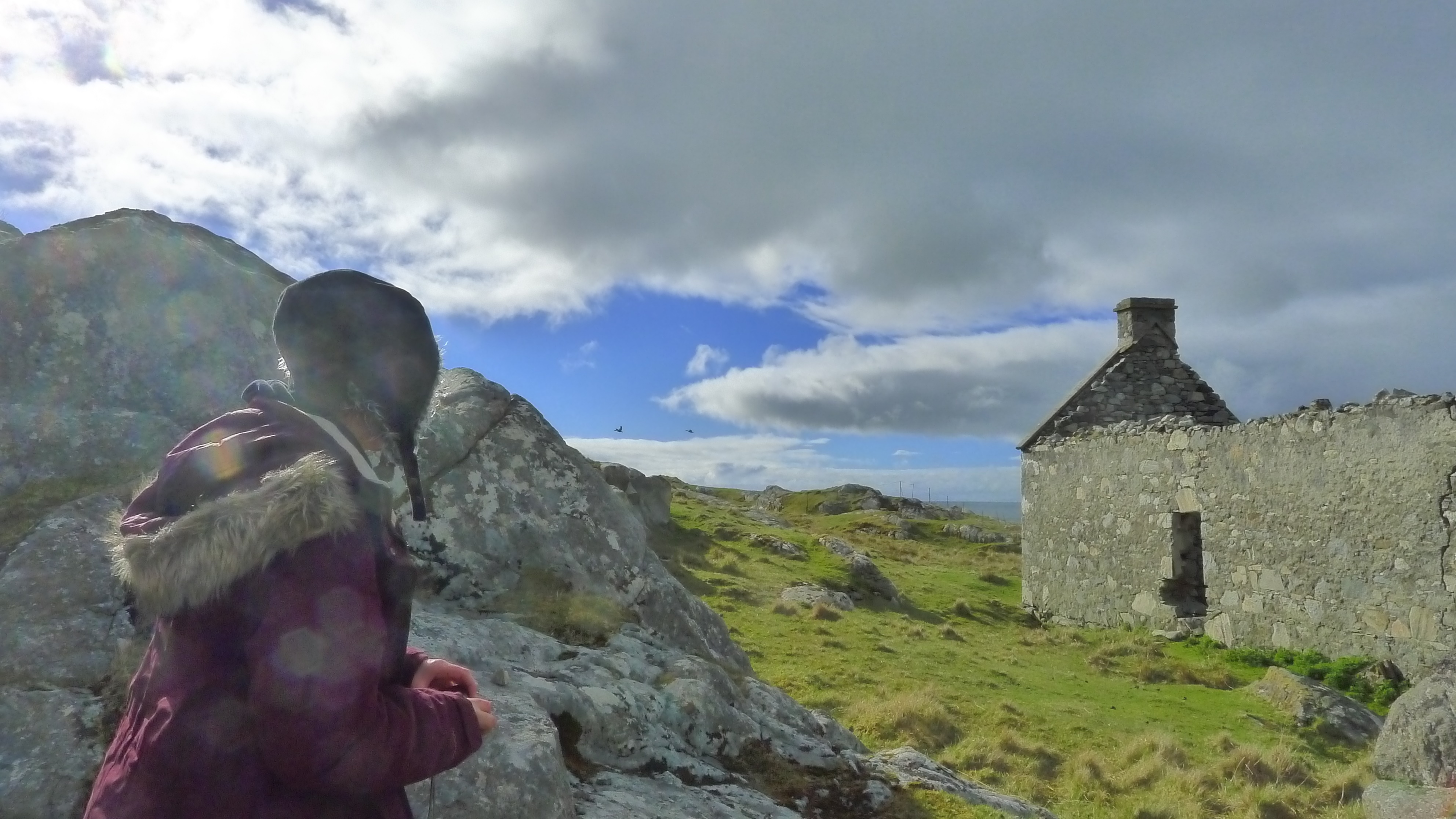
Exploring Harris. Photo by Donald Ferguson

Each time we collaborate I’m reminded anew of what’s so rewarding about the process: while I’m in the place I’m painting, and throughout the painting process, I’m constantly researching – reading, talking to people from the place, exploring everything about the landscape that makes it unique and compelling. Atzi’s response feeds that experience back and extends it, even if we haven’t discussed all the inspiration behind the paintings. I’ve learned to simply trust that he’ll ‘get’ it.


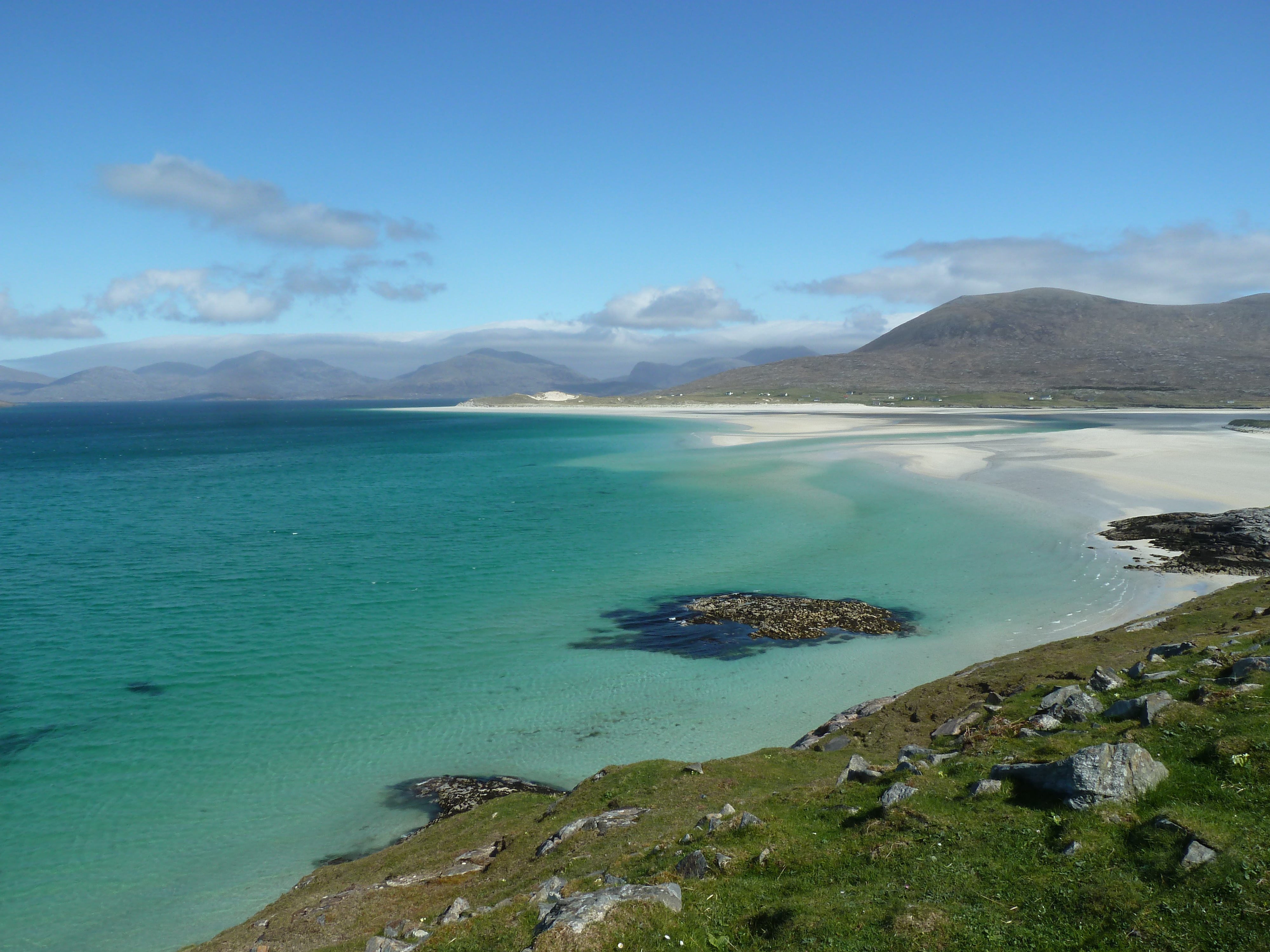
Everyone travelling to the Isle of Harris tells you that you must visit the turquoise seas and white sands of Luskentyre on the west coast, and so you must, it’s beautiful, almost incredible visually! But I was also reading about the islands – (I recommend Bill Lawson’s Harris in History and Legend) the origins of people, the possible meanings behind the stones of Callanish on Lewis (particularly the significance of the moon in its formation), the music, poetry and of course the tough lives of the islanders who lived there over thousands of years through constant challenge and change.

You find it in the place names; echoes of Viking culture – Gaelic and Norse combined, you see it in the ruined houses, abandoned crofts or fishing piers, or the long, black seams of peat (the sole source of fuel in past times) cut into rain and wind-lashed hilltops. Ordinary people here certainly suffered at the hands of land owners’ whims – the ever changing, or failed, industries, the Clearances of course and not least the hard rocky ground and wild winter weather that made farming this land so arduous. They’re still here though, the Scottish Gaelic language survives, as does the humour, the story-telling, art, music and poetry.

Much of all this is there in my paintings if you’re looking for it. Atzi Muramatsu’s cello playing brings it back to life for me. When I heard these three music pieces in the gallery I was transported back to Harris, re-experiencing the darkness and light I discovered there.

Music lovers will hear a bit of everything, from playful Scottish reels to the darkly Baroque, then avant garde dissonance, but also wonderful expression and interpretation absolutely unique to Atzi.

And remember, all of this is improvised response!


‘Moonscapes: Isle of Harris’ launch

Last night’s launch of Moonscapes: Isle of Harris was a great sucess and most enjoyable. There was a good mix of people, familiar faces and new – many interesting conversations.


Rose Strang, photo Maria Doherty


Atzi Muramatsu’s performance was magical as always. I will be posting the videos here soon. His response to Harris Moon 4 was suitably sombre and dramatic; it’s quite a dark, stormy and mysterious piece, but my favourite was probably the piece he played in response to a series of smaller works, it was evocative of being on Harris, driving along the winding coast roads watching the landscape unfold in shimmering light.

Atzi Muramatsu, photo Sarah Bader


The Edinburgh organisor of Pecha Kucha, Gordon Duffy, enjoyed the combination of music and paintings and has invited us to present our work at the next Pecha Kucha on the 27th of July, which will be a pleasure (all info on the ‘Pecha Kucha’ link above). I’ll post more about that in a few days.

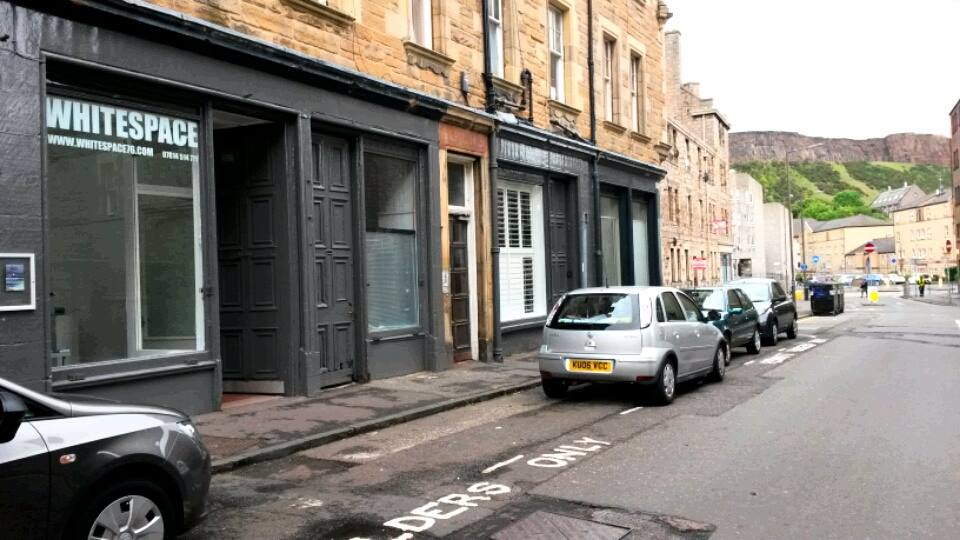
I’ll be in the Whitespace gallery every day from 12 noon to 6:30pm until Thursday, so if you are in Edinburgh drop in for coffee and a chat! (map and directions etc Here)

Many thanks to Catherine Strang for hosting and sales, to Donald Ferguson for helping with set up (and for his excellent company on the trip to Harris earlier this year) and to Atzi for another excellent performance – this is our fifth year of collaboration and friendship and as Atzi said last night ‘it gets better and better’. Also thanks to Leigh Chorlton (artist and manager of Whitespace) for his friendly support, it’s a lovely space and a delight to show there!

Harris paintings day 13

‘Traigh Luskentir, Harris. 4’. Mixed media on 30×30″ wood panel.

Finishing touches today on the largest version of Traigh Luskentir, Harris, which concludes my paintings for the upcoming exhibition – Moonscapes: Isle of Harris

All paintings in the series can be viewed from the top of the gallery page – Here. One painting has already sold – you can buy a painting now if you like, it will be marked ‘sold’ at exhibition then when the show ends on 20th July I will post it to your address (any queries to rose.strang@gmail.com)

This is always the busiest time of year, and with a ten-day session of house decorating in addition to painting I’m pretty exhausted! All I have to do now is have all paintings professionally scanned (for limited editon prints), frame the aquatint Leaving Harris, hang the paintings on Friday and order wine/glasses for the preview.

As always, I’ll make a live recording of Atzi Muramatsu’s cello performance to post here along with photos of the paintings in the gallery and the launch night.

Hope to see you on Friday 14th, 7pm (all info on Moonscapes link above)…

Harris paintings day 12

‘Harris Moon 3’. Mixed media on 36×36″ wood

Today’s painting – the largest version of Harris Moon at 36×36 inches (3 by 3 feet) on wood.

Exactly one week now to exhibition! All details here Moonscapes: Isle of Harris

I took photos of some of the stages of painting…

Lyne Street Studio

In between painting for the July exhibition (link – Moonscape: Isle of Harris ) I’ve been decorating my new flat. What’s most exciting for me is that it can be used as a open studio space from time-to-time (I’ll probably paint and show a series of snowscapes this December).

The flat (in a traditional Victorian Edinburgh tenement) had previously been a flat for rent, so it was magnolia and beige-ified throughout, and has about six phone lines thanks to tenants getting new phone services installed each time they move in!

I’m on a tight budget, so most of this has been achieved through a bit of hard graft (including that of family and friends!) but also it’s amazing how a room can be transformed by floor sanding. (in this case Victorian Floor Restore who did an excellent job of repairing and sanding the floorboards which were a horrific mess with loose boards, ingrained dirt and ancient underlay). Also messed up walls with layers of tenacious woodchip wallpaper which had to steamed and scraped off (about halfway through I was losing the will to live and was thankfully helped out by my ever cheerful and stalwart friend Donald Ferguson!). Also there were millions of holes that had to be polyfilla-ed (the Beatles ‘A Day in the Life’ was playing in my head throughout – Four thousand holes in Blackburn, Lancashire, and though the holes were rather small, they had to count them all. Now they know how many holes it takes to fill the Albert Hall…
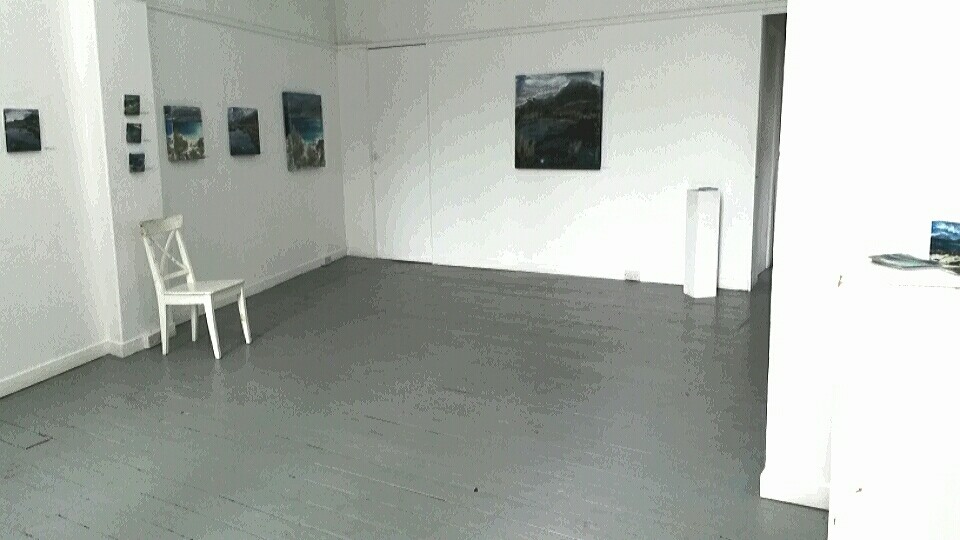
Anyway, here’s the before and after, showing just the room I’ll use for a gallery. (For the decor obsessives among you – the wall colour is Dulux Egyptian Cotton – cheapie alternative to Farrow and Ball’s Elephant’s Breath, the floor – Dulux satin black floor paint. At some point I’ll sort out an open fire as it’s there behind the mantle piece)…