Author Archives: rosestrang

Unknown's avatar

About rosestrang

Artist, Painter

The Wells of Arthur’s Seat – new project

An engraving of St Anthony’s Well from William Ballingall’s Edinburgh Past and Present. Copyright RCAHMS (SC431735)

EXHIBITION AND EVENT

The Wells of Arthur’s Seat

Date/Time: Saturday 16th June, 7 – 9pm

Venue: 5 Lyne Street, Abbeyhill Studio, Edinburgh, EH7 5DN

This is a new project, in which I’ll be painting Arthur’s Seat from a unique perspective, also creating a video of the project.

For those of you unfamiliar with Edinburgh, Arthur’s Seat is the hill, or extinct volcano, situated in the middle of the city.

I’m delighted to be collaborating with two talented and lovely people on this project: cellist and composer Atzi Muramatsu (who I’ve colllaborated with since 2013) and poet and author Alan Spence.

Alan Spence was recently ‘put forward’ as Edinburgh’s Makar for 2018. ‘Makar’ is a Scots word meaning a versatile and learned poet. The role is nominated then chosen each year by representatives of the Scottish Poetry Library, Scottish PEN, The Saltire Society, Edinburgh City of Literature Trust and the City of Edinburgh Council. It’s given to a poet known and respected for their work over many years, who’s been published and who will focus on the city of Edinburgh, through poetry,  for the year.

I can see why Alan was chosen, not just for his talent as author and poet, but for his open-minded friendly attitude. It just so happens that he and his wife Janina recently opened up a bookshop and meditation place called the Citadel just across the street from me, so I pop in every so often to catch up, hence the idea to ask if he’d be interested in this project.

I recently read Alan’s latest book Night Boat; a lively, atmospheric and semi-fictional description of the life of Hakuin, who was the world’s best known teacher of Zen philosophy and spirituality. More on the book Here

If circumstances allow, there may also be a musical event or small gig on Arthur’s Seat itself as part of the project, featuring Dominic Waxing Lyrical, though I await confirmation).

In the meantime, read on for the background to the project ..

The Wells of Arthur’s Seat

Edinburghers are completely familar with the distinct features of Arthur’s Seat, but as with all my projects, it’s not a scenic view I’m looking for as an artist, it’s the ‘feel’ of a place once you look under the surface.

If you just walk to the 800m-high summit, you’ll stick to a well-worn path, and even in the depths of winter you’ll be surrounded by fellow walkers.

Not that I’m criticising anyone for getting some excercise of course! It’s true though, that  still, quiet contemplation – often reveals more about a place.

If you wander through the valleys most weeks though, with no aim in mind, in all weathers, you begin to wonder about certain features; what’s that round patch of dry brown grass? What are those lumpen dips in the landscape up there, different from the rest of the land? Why is this pond in the valley growing each year and is this why its original name was ‘Hunter’s Bog’ before it became ‘Piper’s Bog’?

I found answers to most of my questions – the brown grass in Hunter’s Bog is the mark left behind by a Bronze-age round-house, the lumpen dips were part of an ancient stone quarry. It was called Hunter’s Bog because it always had a pond, and a rich diversity of birds and wildlife. The Military drained the bog, cut the trees and allowed sheep to graze back the indiginous plants.

Nowadays, new ideas about landscape conservation have of course influenced the way the landscape, flora and fauna are conserved. It’s all allowed to flourish now – it’s for the enjoyment of all (though that wasn’t always the case).

Some features on the hill remained a mystery to me though – St Anthony’s Well, for example. I knew that the well most likely preceded St Anthony’s Chapel (as anyone interested in religious history knows, early Christian missionaries and leaders tended to build places of worship on sites used for many centuries by indiginous people as their place of worship).

Why was the spring marked so significantly with a huge boulder, and stone basin to catch the water? Why had it dried up? Clearly the water ran from deep within the hill since it emerged at the bottom of the cliffs, and maybe it would have fed St Margaret’s loch (a human-made or enlarged loch in honour of the Scottish Queen Margaret).

I love a mystery, and I was intrigued to discover that if I drew a straight line on a map, following the precise angle of my street (Lyne Street, pronounced ‘line’ appropriately enough) to St Anthony’s Well, it matched up exactly!

I looked at old maps of Edinburgh side-by-side with modern, and it turned out that my street was called Roslyn Street in its first decade of existenc (around 1880 it was changed to Lyne Street).

The site, pre- 1870s, was a garden owned by Baron Norton, which included a Rosicrucian-shaped garden design. Taken north, the line led to Loch Leven Castle, taken south, it led to Dalhousie and Craigmillar Castles, then to Notre Dame in Paris.

Spooky, eh?! I wanted to find something tangible though, some actual facts (since all ley-line related things, crosses etc, apparently lead inevitably to Dan Brown!)

So I widened my search online and discovered some history about St Anthony’s Spring, namely from a book called Ancient and Holy Wells of Edinburgh, written by Paul Bennett.

He’s an amateur writer, but it’s a fascinating book, and so far the only source I’ve found with collated information about the well.

To quote:

Tradition tells that the remains of St. Anthony’s Chapel was built on the northern ridge by Arthur’s Seat, “mainly for guardianship of the holy well named after the saint” — which sounds rather like the christianization story of a heathen site.

Francis Grose (1797) told that “this situation was undoubtedly chosen with an intention of attracting the notice of seamen coming up the Firth; who, in cases of danger, might be induced to make vows to its tutelar saint.”  If this was the case, it sounds even more like a site that had prior heathen associations. (Bennett, Paul. Ancient & Holy Wells of Edinburgh (Kindle Locations 1048-1054). Kindle Edition.)

This was more the sort of information I was seeking, and even better there were some actual eye-witness accounts of local people interacting with the well in the 19th century, here’s Paul Bennett again:

Local people of all social classes frequented this ancient spring, particularly on that most favoured of heathen days, Beltane.  The site was of considerable mythic importance with a certain order about it.  As Hone (1839) said: “…the poorer classes in Edinburgh poured forth at daybreak from street and lane to assemble on Arthur’s Seat to see the sun rise on May-morning.  Bagpipes and other musical intruments enlivened the scene, nor were refreshments forgotten …

(I’ll definitely be waking at the crack of dawn on May 1st this year to visit the well, just to see if any locals still observe this tradition!)

It was this following excerpt though, from 1883, which fascinated me most; what were these people doing? What kind of ritual were they enacting and what did it mean? Quoting Bennett again…

Another early account describing St. Anthony’s Well is from an article in the outstanding Scottish Proceedings of the Society of Antiquaries journal of 1883.  Here, J.R. Walker wrote:

“an incident which showed that the faith and belief in the healing virtues of the wells is still strong, the writer was but a few months ago an eye-witness.  While walking in the Queen’s Park about sunset, I casually passed St. Anthony’s Well, and had my attention attracted by the number of people about it, all simply quenching their thirst, some possibly with a dim idea that they would reap some benefit from the draught.

Standing a little apart, however, and evidently patiently waiting a favourable moment to present itself for their purpose, was a group of four.  Feeling somewhat curious as to their intention, I quietly kept myself in the back ground, and by and by was rewarded.  The crowd departed, and the group came forward, consisting of two old women, a younger woman of about thirty, and a pale, sickly-looking girl — a child of three or four years old.  Producing cups from their pockets, the old women dipped them in the pool, filled them, and drank the contents.

A full cup was then presented to the younger woman, and another to the child.  Then one of the old women produced a long linen bandage, dipped it in the water, wrung it, dipped it in again, and then wound it round the child’s head, covering the eyes, the youngest woman, evidently the mother of the child, carefully observing the operation, and weeping gently all the time.  The other old woman not engaged in this work was carefully filling a clear flat glass bottle with the water, evidently for future use.  Then, after the principal operators had looked at each other with an earnest and half solemn sort of look, the party wended its way carefully down the hill…”Bennett, Paul. Ancient & Holy Wells of Edinburgh (Kindle Locations 1080-1082). Kindle Edition.

You can see the remains of metal on the boulder today, where the tin cup would have been attached. The water in the stone basin is just muddy rain water since the stream stopped flowing in the 1980s. What a shame we can’t drink the water, it must have had good iron content, flowing as it did through the volcanic cliffs (we pay good money for bottled volcanic spring water these days!).

My thoughts about the health properties of the water are speculation, what I’m excited about though, is that I now have evidence of what that healing ritual was (as described above, from 1883). This is thanks to a fairly obscure thesis written in 2002 by a PHD student called Aude Le Borgne (I can’t find contact details for her anywhere, but let me know if the name rings a bell)

Her excellent thesis (which I found online) details accurate evidence of the ways that water springs were used for healing rituals in Scottish history. Ordinary people in those days usually couldn’t write, not only that, their beliefs were seen as anything from mere superstion to devil worship, so how can we discover their actual thoughts and beliefs? Well, we can find out what these were because local people conducting ‘heathen’ rituals around the well, were prosecuted during the Protestant Reformation in the 16th and 17th centuries and so there are court records.

Now you know a bit more of the history though, isn’t the engraving (below) quite telling? It has no date but looks Victorian – a time when a sort of ‘Celtic revival’ emerged; a sentimentalising of the lives of ordinary folks (after they’d been effectively slienced!)

I’ve written quite a lot here for this first post about the project, so I’ll save the next part for next week, when I’ll post images of my first paintings of Arthur’s Seat, and reveal the ancient rituals around Scotland’s Clootie Wells as evidenced by 16th/17th century court cases during the height of Scotland’s witch-hunt. What moves me is the fact that these people continued their traditions despite fear of imprisonment, even death.

I’m now working on the first paintings, so in the next blog I’ll post those, and write more about the beliefs behind rituals at the wells…

Portrait and ‘Hawk’

Sold. ‘Hawk, River Tweed 3’. 40×40 inches £1500

Just a quick post to say that as I’m submitting my painting of Richard Demarco for a portrait award, I have to take all references to it off social media until around August this year.

Also – I recently sold ‘Hawk, River Tweed’ through the Limetree Gallery in Bristol, which is lovely news. I’m very fond of the painting, since the River Tweed is a special place for me, so will say goodbye to it by sharing this video (below) of the making of ‘Hawk’ again, which is accompanied by music by talented composer and pianist Jane Gardner (we were both really pleased with the way music and image enhanced each other). Thanks to The Limetree again, and to Jane!

Edinburgh in the Snow (and a brief history of Edinburgh!)

Not for sale. Edinburgh Snow (High Street and Arthur’s Seat from Regent Road). Mixed media on 22×16 inch found wood panel. Rose Strang 2018

Today’s finished painting of Edinburgh in the snow. I’ll be submitting this for competition next month, wish it luck!

The view is from Regent Road looking across to Salisbury Crags on Arthur’s Seat. In the foreground you can see buildings of the Royal MIle obscured by snow.

I’ve deliberately kept it vague since that’s how it appears as you walk into a snow blizzard along Regent Road, which is underneath Calton Hill halfway down to the valley of the Royal Mile or High Street (my photo below from a few weeks ago) …

Walking along Regent Road


I also wanted to get across the ‘feel’ of the Old Town, with its medieval buildings and wood timbers, hence the exposed wood in the painting and roughened edges, blurring old and modern buildings. Some close-up details below showing texture …


Edinburgh has just been voted the most popular tourist destination in the UK, and living here can make us a bit blasé about the features that make the city so unique and appealing, but the recent snow seemed to bring everyone out of winter hibernation. Arthur’s Seat was thronging with folks enjoying the snow – kids on sledges, a plethora of snowpeople! I slid about in the snow with my pal Donald, and it was great to see and experience…


And although I felt thwarted in my plans to get to the Cairngorms this spring due to train cancellations, I ended up appreciating Edinburgh instead. It is truly beautiful in the snow, hence these recent paintings (I’m working on a couple more).

So for those of you who don’t know so much about Edinburgh, and in the spirit of internationalism (and let’s face it, without the Edinburgh International Festival, Edinburgh would be a fairly boring place arts and people-wise, not-with-standing my dear Edinburgh family and friends!) I thought I’d include some brief words about Edinburgh’s history.

Briefly though, today I decided for the first time to check overall blog stats since 2013 and it turns out that visitors to this blog include folks from, in order of most views:

UK, US, Germany, France, Poland, Australia, Canada, Spain, Sweden, Netherlands, Ireland, Italy, South Africa, Switzerland, Greece, Japan,  Brazil, Belgium, Russia, India, New Zealand, Denmark, Columbia, Portugal, Dominican Republic, South Korea, Singapore, Quatar,  Hong Kong, Austria, Norway, Mexico, Jordan, Serbia, Turkey, Romania, Brazil, Czech Republic, Finland, Chile, Pakistan,  Hungary, UAE, Croatia, Slovenia, Israel, Jordan, Egypt, Thailand, ,  Philippines, Malaysia, Luxenburg, Argentina, Taiwan, Georgia, Lithuania, Ukraine, Slovakia, China, Kazakhstan, Latvia, Malta, Nigeria, Cyprus, Sri Lanka, Moldova, Albania, Panama, Vietnam and loads more going into vistor numbers under 50.

So, thank you to folks taking interest in an obscure Scottish painter’s blog!

Anyway, here we go with a condensed Edinburgh history (illustrated with my own photos) …

A condensed Edinburgh history …

Edinburgh Castle from Grassmarket

Edinburgh’s dramatic landscape was formed by volcanic activity that took place between around 358 and 298 million years ago.

The view from Edinburgh in my painting above sits between two of Edinburgh’s extinct volcanos – Calton Hill and Arthur’s Seat. If my painting panned to the right you’d also see Edinburgh Castle on top of the volcanic plug that forms the base of the castle.

After volcanic activity ceased, the landscape was submerged under sea water. Sedimentary rock (formed by waves of sediment washed over the land by water over millions of years) then began to form the Salisbury Crags (the cliff seen in my painting and in photo to the right), which were gradually tilted up to their current dramatic angle as pressure eased after the ice age.

The ice-age sculpted Edinburgh’s landscape into the shape it retains to this day – for example the ‘spine’ that forms the Royal Mile from Edinburgh Castle down to Holyrood House was formed by retreating glaciers dragging or depositing debris with them to create a trail behind each hill and mountain.

18th cent’ map. ‘Spine’ of the Royal Mile, castle on left, Holyrood Palace at the right, at the bottom of the hill. http://www.royal-mile.com/maps/royalmile18thc.

These rocky promontories must have had immediate appeal to early settlers as look-out spots;  almost all of the summits of Edinburgh’s volcanic hills reveal signs of early bronze age people.

Although I’ve been walking around Arthur’s Seat since I was a kid, the fact that I now live so close to it has inspired me to explore more, and I’m beginning to get an ‘eye’ (with the help of my archaeologist friend Sabine!) for Bronze-age remains (shapes or patterns in the land as opposed to actual buildings) not to mention spotting Edinburgh’s early sites of worship, healing or spiritual interest – such as wells; the traces of which can be found alongside later Christian religious buildings and sites (more on this in later blogs).

Edinburgh in twilight from Arthur’s Seat. The castle easily spotable on the horizon

If we’re thinking about a definitive beginning for Edinburgh though, it would clearly be the Castle Rock; easily defendable with its sheer basalt cliffs. It was called Dun Edin (‘dun’ means hill) and we know that there were settlers there from at least 850BC

As more people settled around the dun, or rock, the city would have grown in reputation as a stronghold or well-defended fort.


The castle itself (or the original building) was built from around the 12th century. To protect the growing city that began to grow along the ‘spine’ of the Royal Mile down to Holyrood Abbey, a wall (the Flodden Wall, remains of which can be seen today) was built around the city, and this was the catalyst for the distinct, tall buildings or tenements that lined the Royal Mile or High Street.

A charming, cleaned up ‘close’ in Edinburgh’s High street today

Builders built upwards, not outwards, because of the restricting wall. As centuries passed this created fairly unsavoury conditions (extremely unsavoury by today’s standards!). Packed into twelve storey tenements, Edinburgh’s effluent had nowhere to go and (readers from Edinburgh will groan with boredom at this point, having heard this story too many times) the oft-heard cry of gardez l’eau (pronounced GARRRDY LOO! with a strong Scottish accent!)  rang in the streets as residents chucked the contents of their chamber pots into the filthy cobbled streets below.

(Edinburgh had long-held connections with France, for many reasons, hence the familiarity with French language)

Old Edinburgh featured narrow closes between the closely packed buildings

Disease was rife, and no matter how posh you might be, you lived cheek-by-jowl with ordinary folks. On top of that, numerous open fires in such a small, over-inhabited space meant that the High Street was black with soot and smoke, hence Edinburgh’s nick-name of ‘auld reekie’ (old stinky).

This issue (for Edinburgh’s rich inhabitants anyway) was finally addressed when an architecture design competition was held in the mid 18th century and a young architect called James Craig won (I think he was in his early to mid-twenties at the time, I’m not fact-checking most of this but do correct me if I’m wrong!).

James Craig’s plan for the New Town


new town splendour

The plan was to create an entirely new area outside the High Street/Royal Mile, across the valley (which now contains Princes Street Gardens and Waverley train station) to the north of the old town, hence why this area of Georgian architecture is called ‘the New Town’ to this day.

All the filth that had accumulated in the Nor Loch (the loch or lake below and to the north of the Castle Rock) was dredged, this, and the detritus from building the new town, was used to form a bridge south to north from old town to new town.

This was called the Mound, and atop of this now sits two of Edinburgh’s most elegant buildings; Edinburgh’s National Art Gallery and the Royal Scottish Academy of Arts (Stock photo above right, looking west along Princes Street).

Only the richest inhabitants of Edinburgh could afford this new luxury accommodation, so people in Edinburgh’s Old Town still had to muddle along with their chamber pots, and up to the 1970’s, the High Street was seen as a bit seedy. Nowadays, it’s the most distinct part of historic Edinburgh and the most popular tourist destination. It retains an extraordinary level of historical features, not disimilar to cities such as York, which was similarly ‘neglected’, thankfully, for the sake of history at least.

This brings us pretty close to the present day, but the18a and 1900’s were truly, literally, headier times to say the least. Maybe it was imbibing all that volcanic spring water, but Scotland’s Enlightenment (much of which was born from, or whirred around the hub of Edinburgh)  is rightly perceived as impressive for a wee, chilly country in the north (read more Here)

As a born and bred Edinburgher, thinking about the sheer magnitude, depth and breadth of invention, creativity and brain power of Edinburgh’s Enlightenment days brings a tear to my eye!

Yet, as I wander around the slopes of Arthur’s Seat, the voices I wish I knew more about are those of Edinburgh’s less vocal past; ordinary folks who held sacred vigil at the wells of Arthur’s Seat, long before the hand of organised (politicised) religion silenced their voices and beliefs. We only know what their thoughts and beliefs may have been because of the numerous court cases at the time of the Protestant Reformation …

That will be the subject of my next painting series; the wells and springs of Arthur’s Seat. I know I’ve mentioned it several times, but it’s a bit ambitious, I’ve been researching alot – there is much mystery to reveal (genuinely, I’ve discovered some interesting, possibly new information about those times) and so I have now postponed the exhibition and event to the 21st June.

St Anthony’s spring, Arthur’s Seat


Edinburgh Snow – painting in progress …

In Progress. 2 ‘Edinburgh Snow. (Arthur’s Seat from Regent Road)’. 24×16″. Rose Strang 2018

In progress, 1 ‘Edinburgh Snow (Arthur’s Seat from Regent Road)’. 24×16″. Rose Strang 2018

Two photos showing progress on my painting of Edinburgh in the snow last month. The view is looking South, of Salisbury Crags on Arthur’s Seat from Regent Road, also showing the shape of the Royal Mile.

I began with a piece of reclaimed wood from the local timber merchant, painted it in a thin coat of black, then covered it in a thick layer of white gesso. Before it dried I scraped a rough pattern of the crags and buildings and left it to dry overnight. (image on right)


This morning I gave it a nice hot shower in the bath to soften the gesso, then scraped through gesso and black paint to reveal the wood beneath (painting at top of post). I like the effect  of textured wood showing through, also the rhythms or shapes of the painting,  so I’m not quite sure where to take this next without messing that up!

I’m painting two on similar size boards (24×16 inches – 2 feet along longest side) and I’ll submit them for the annual RSA Open (Royal Scottish Academy) by May this year.

Resipole Studios

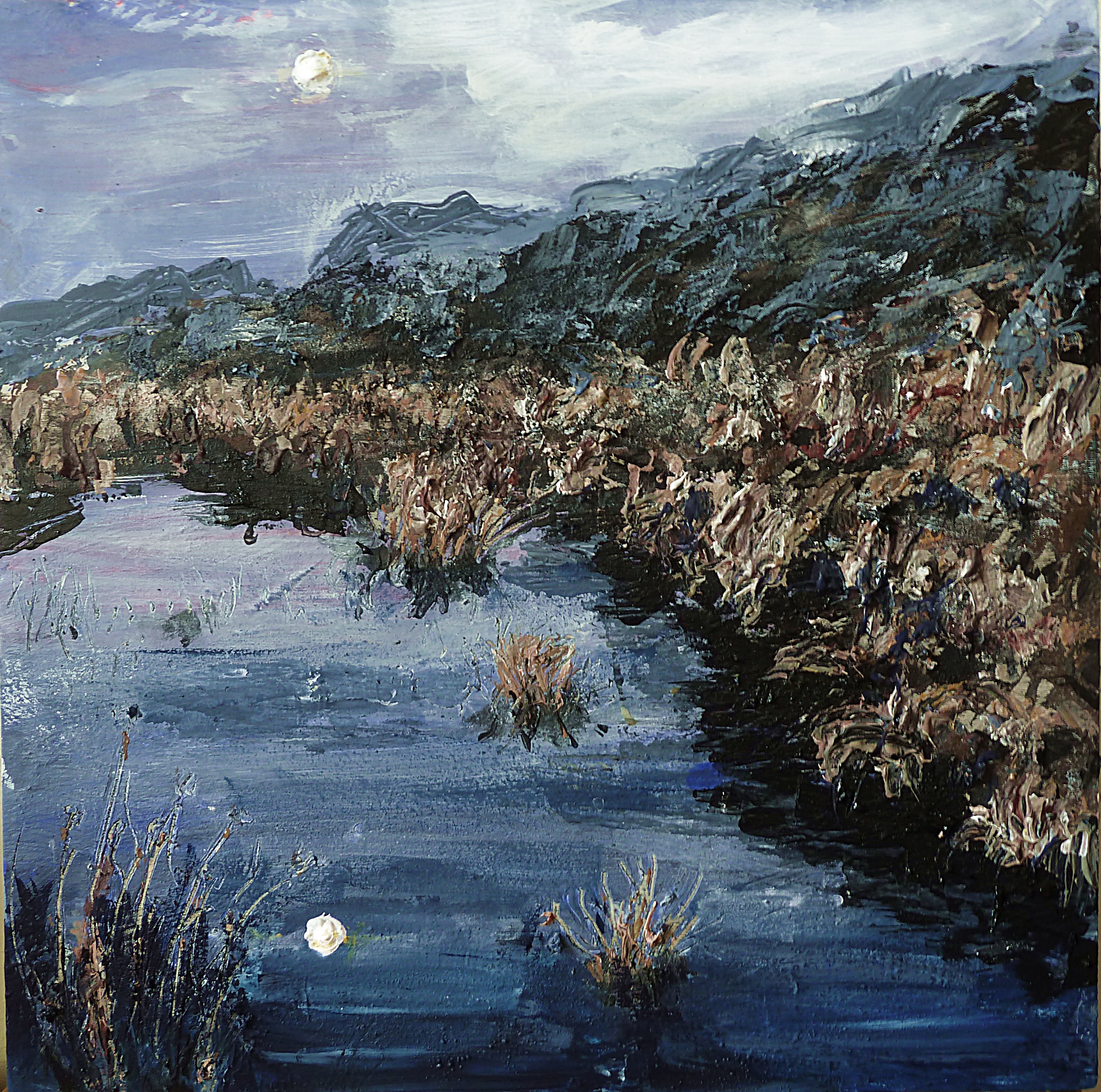
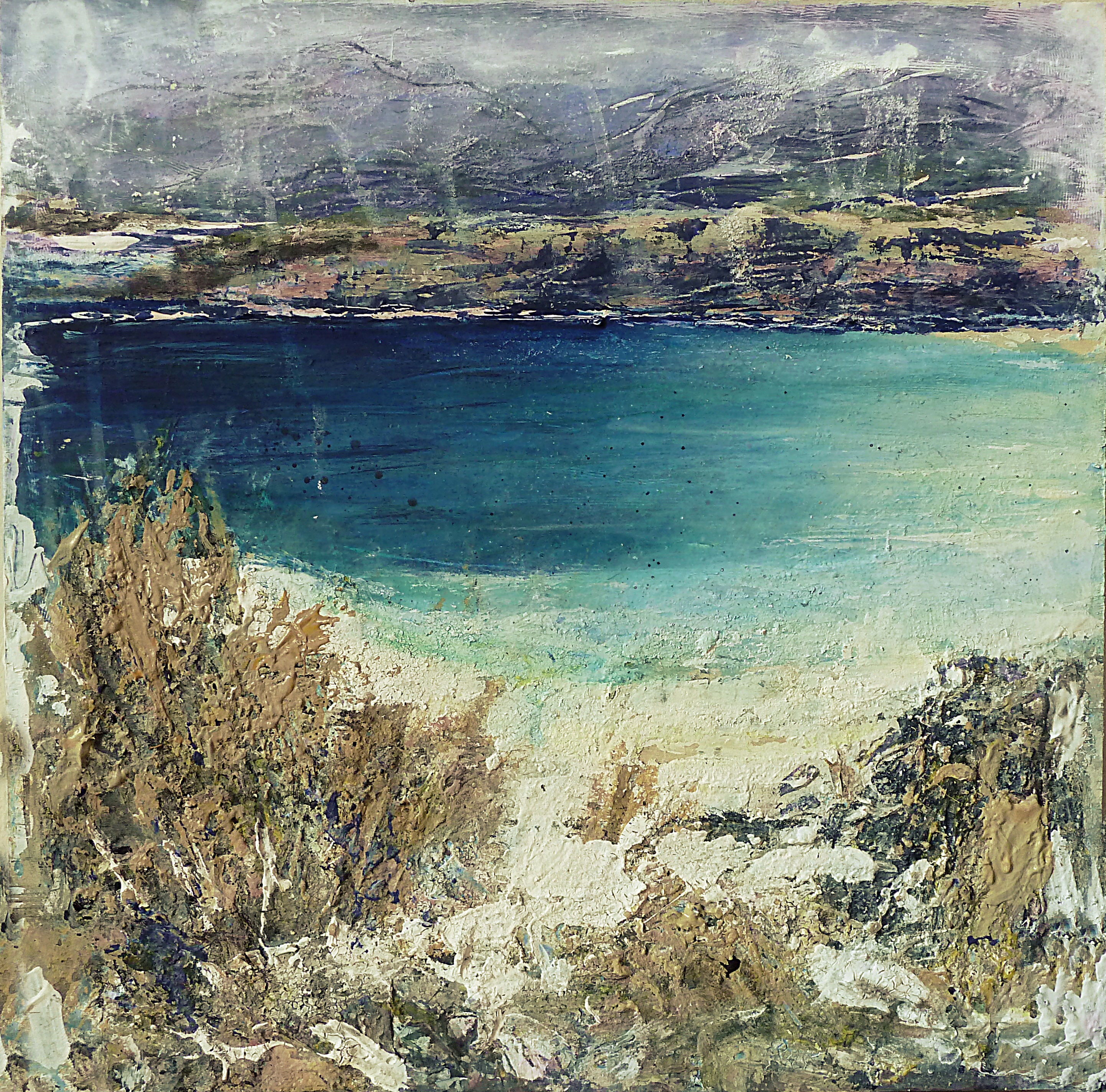
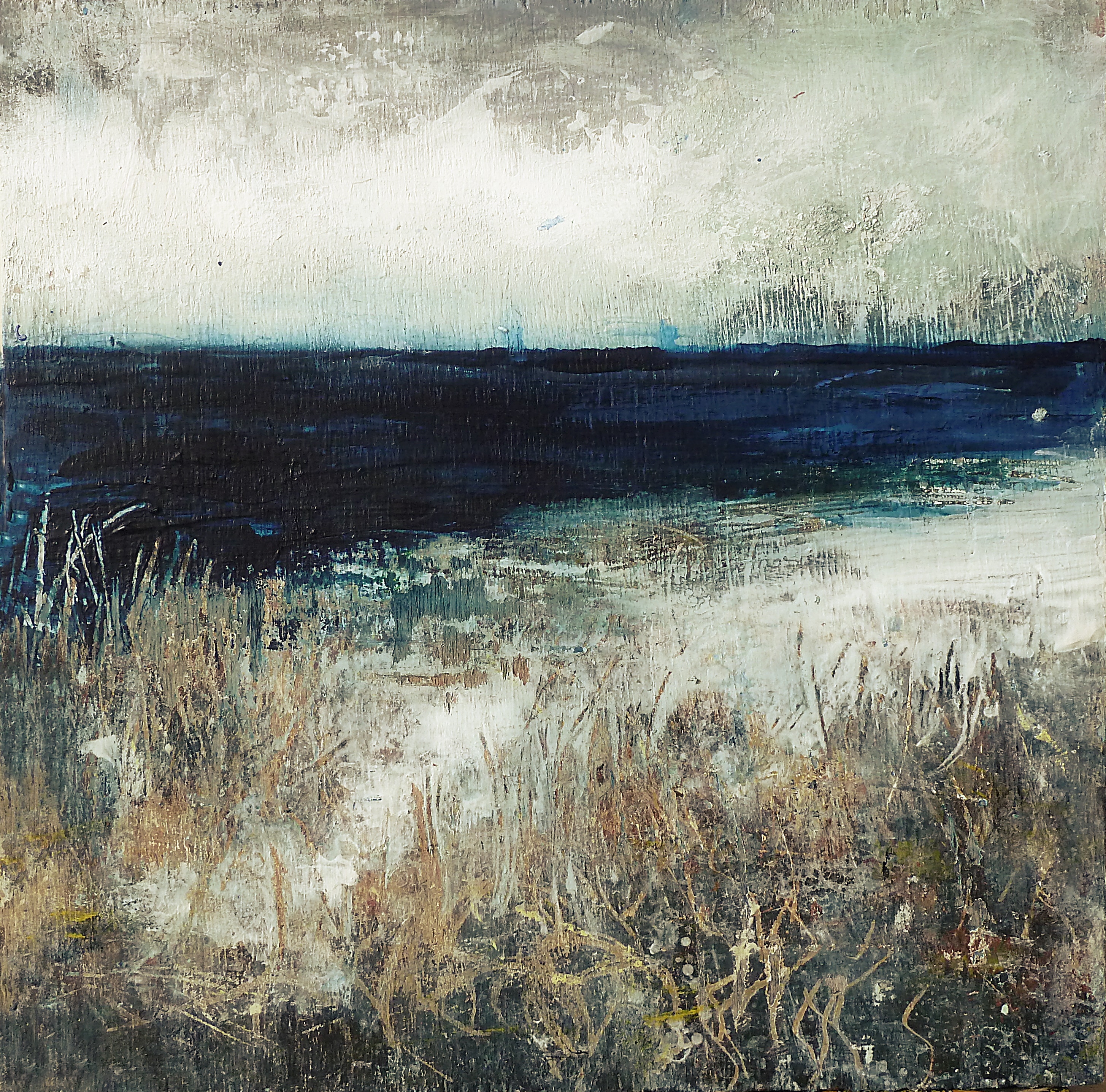
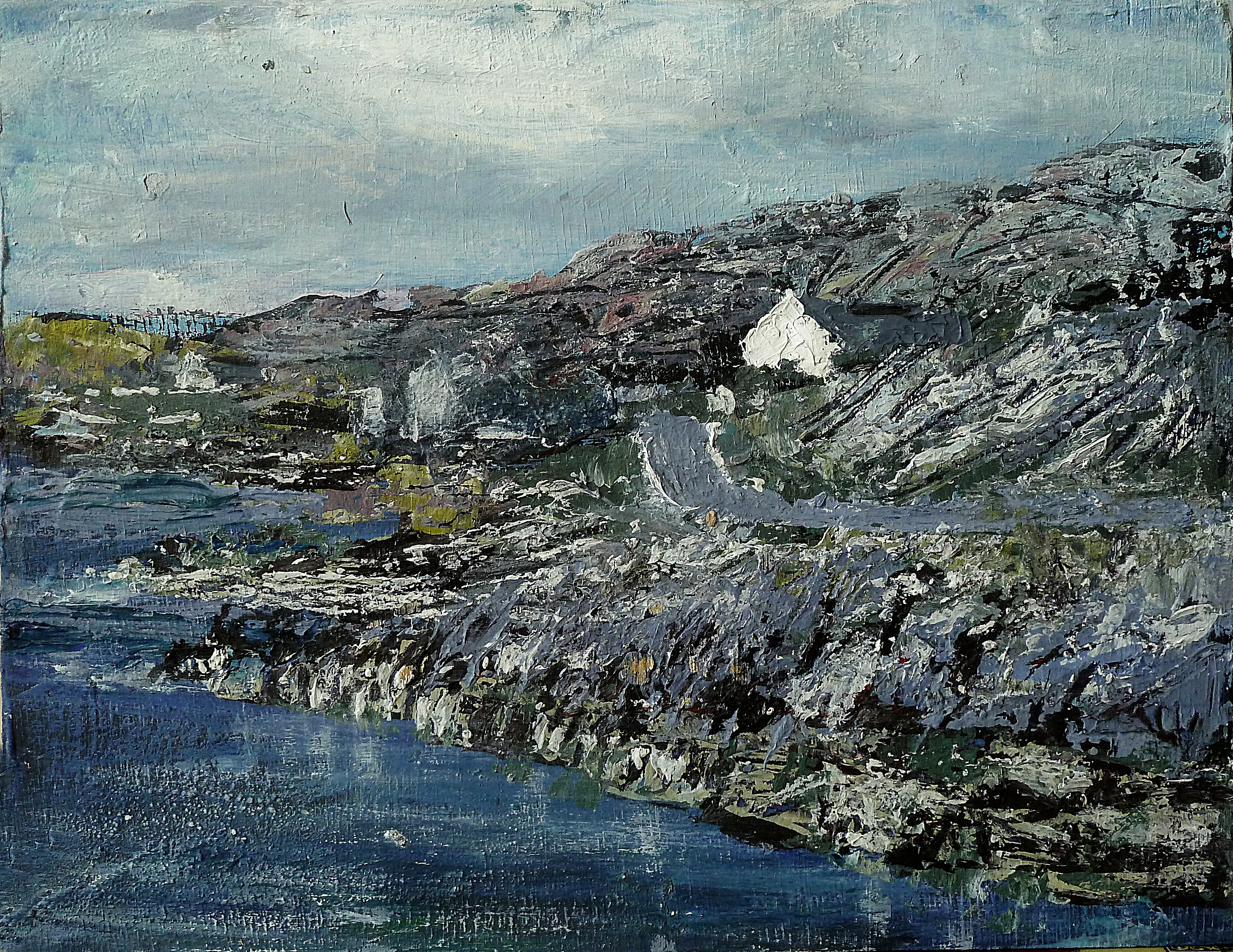
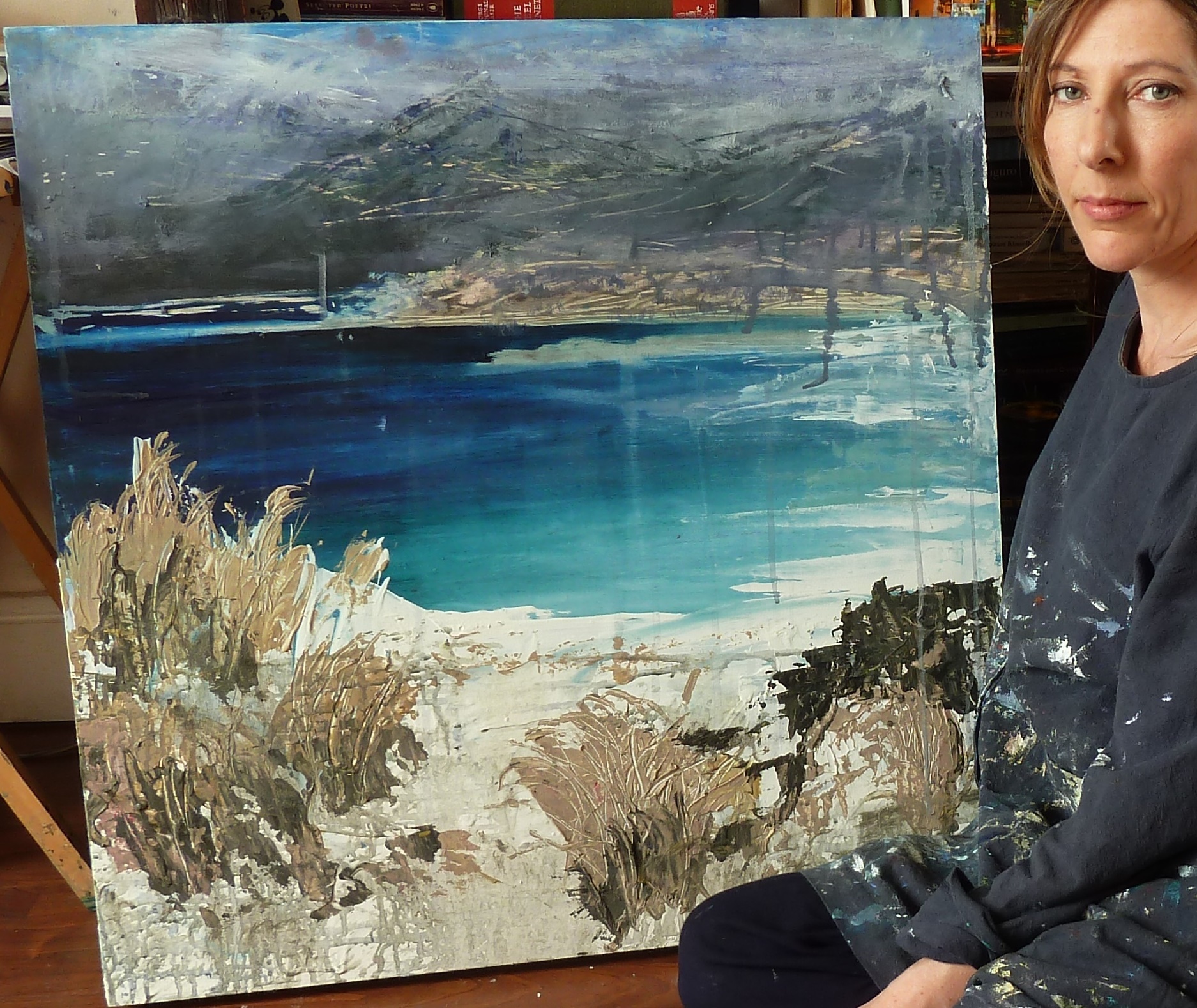
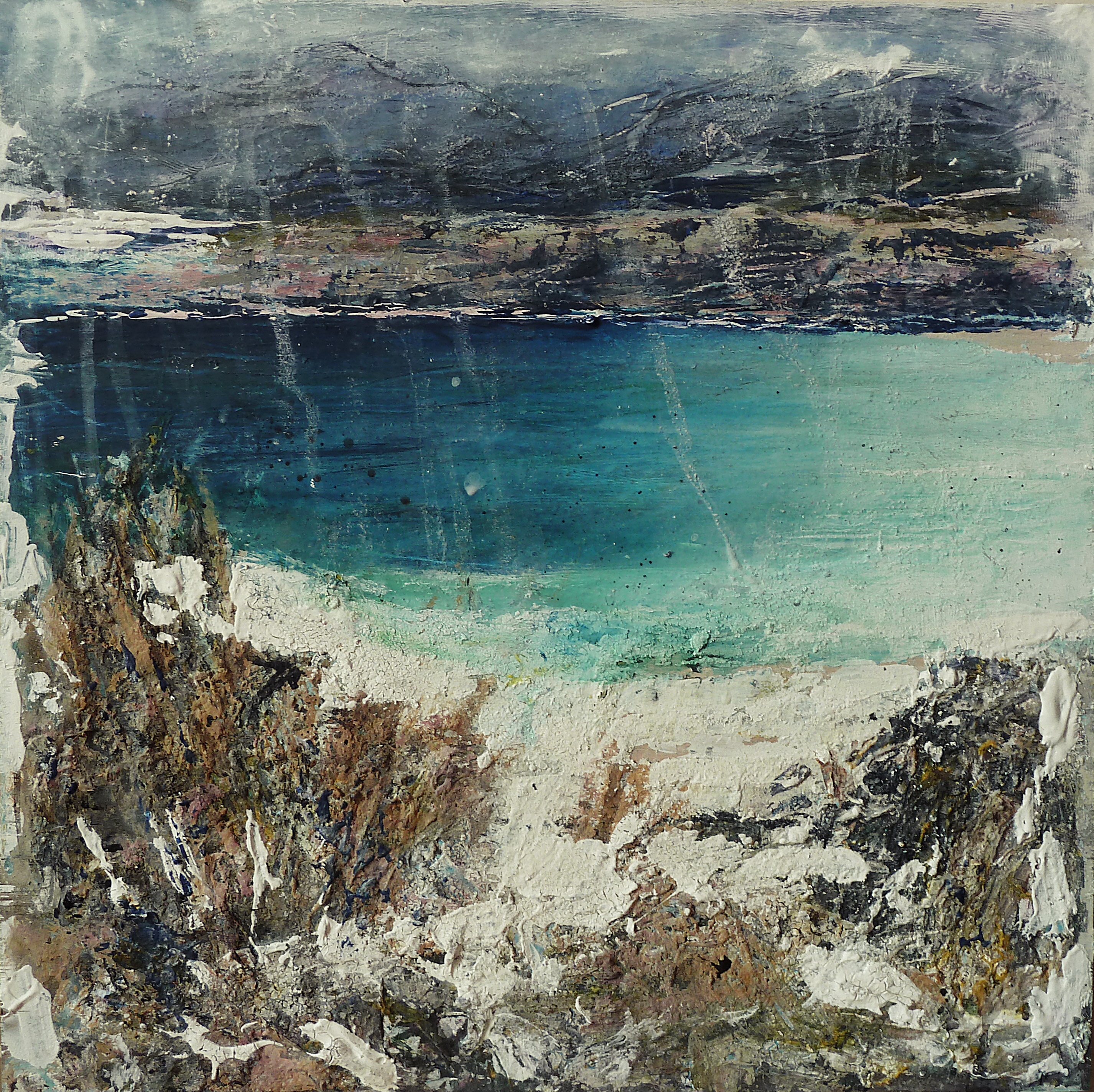
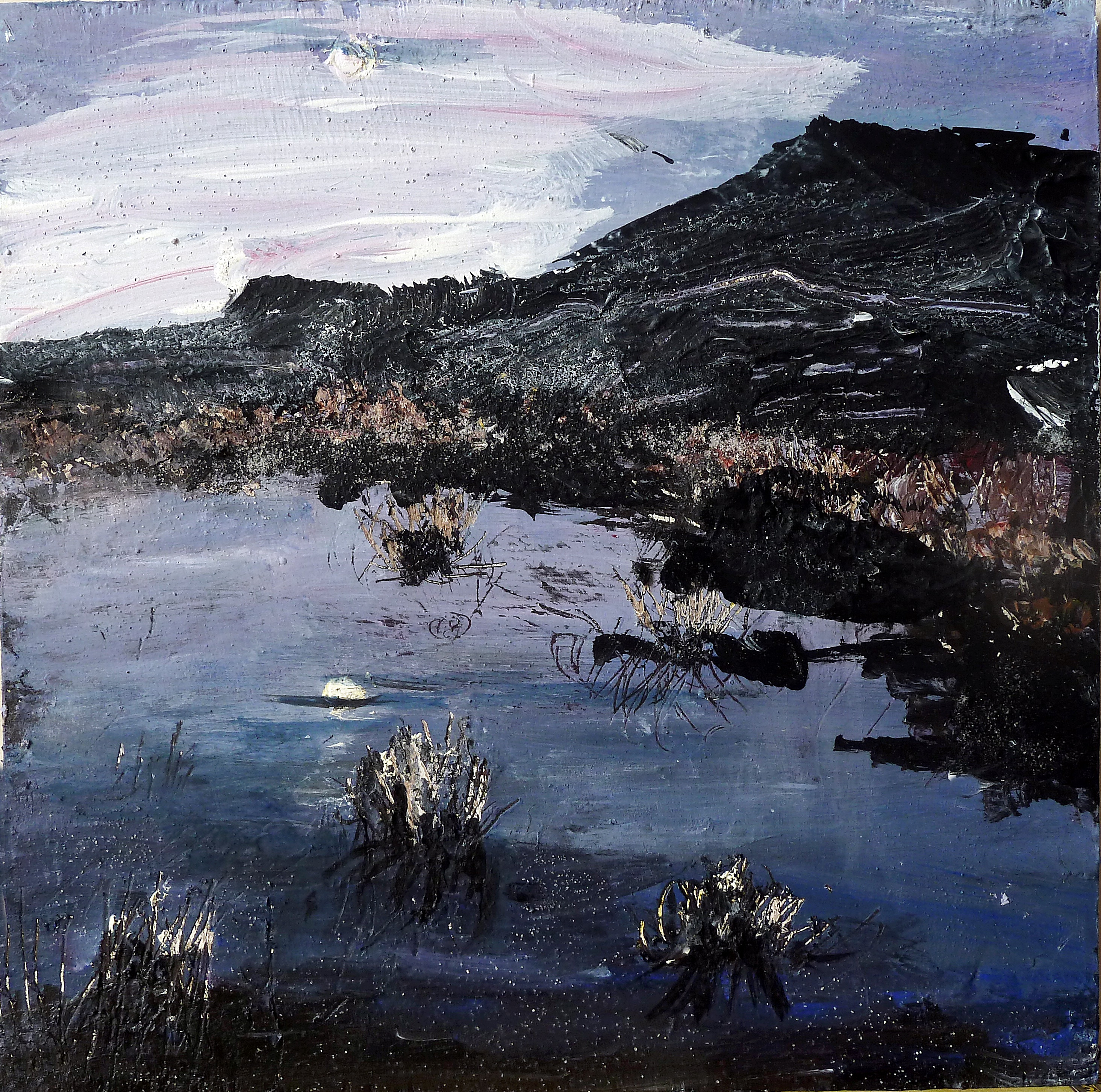
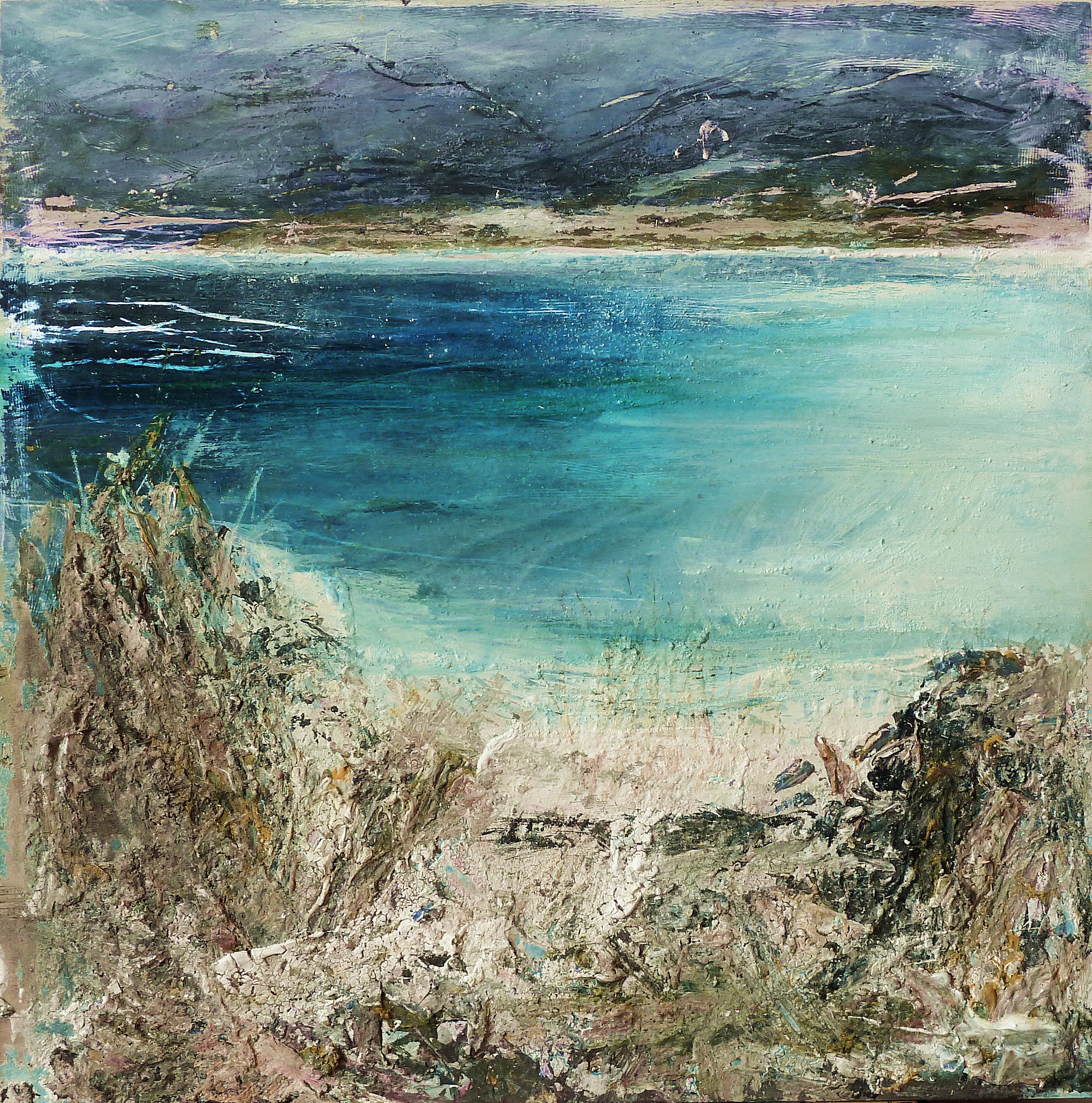
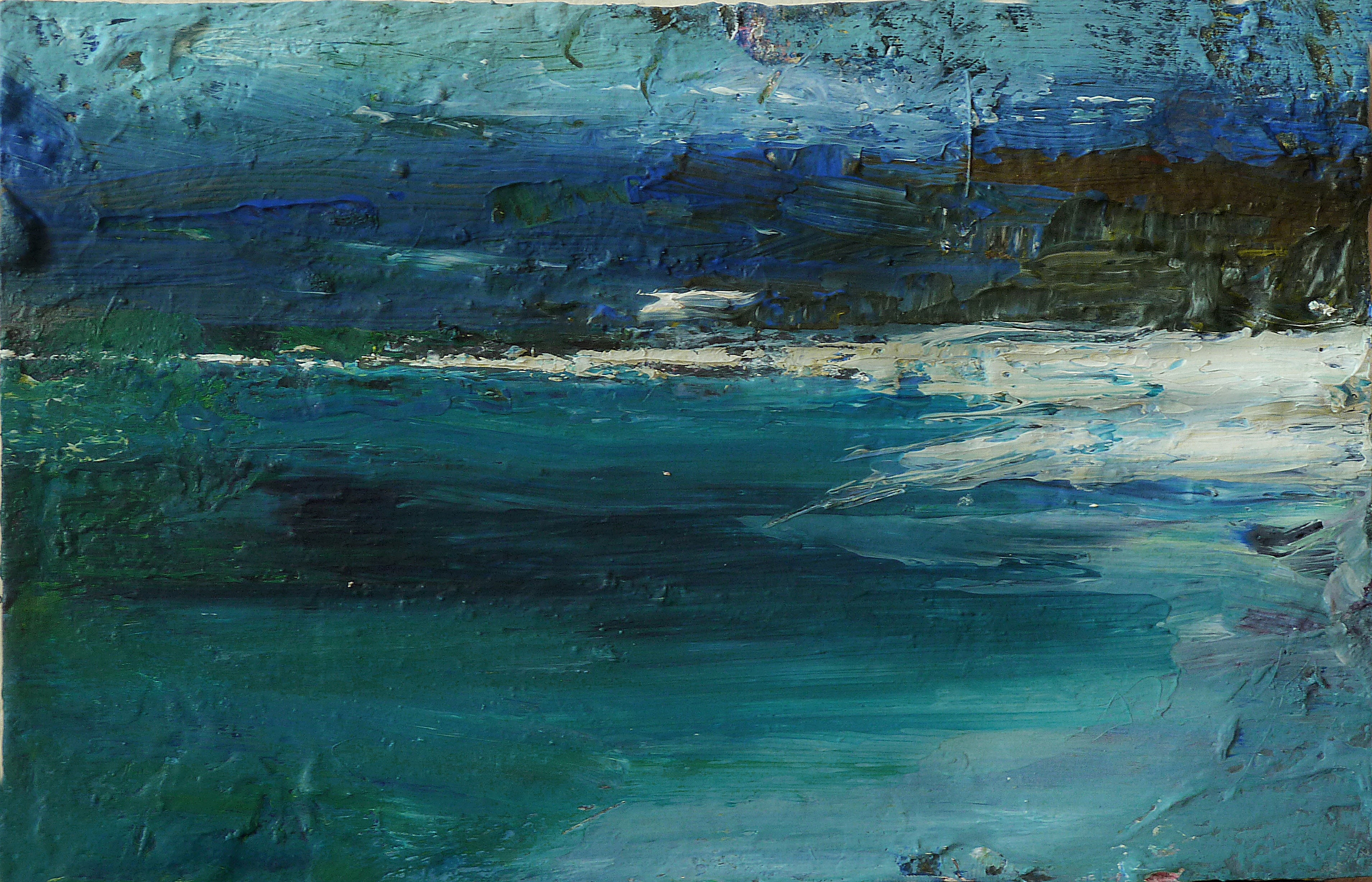
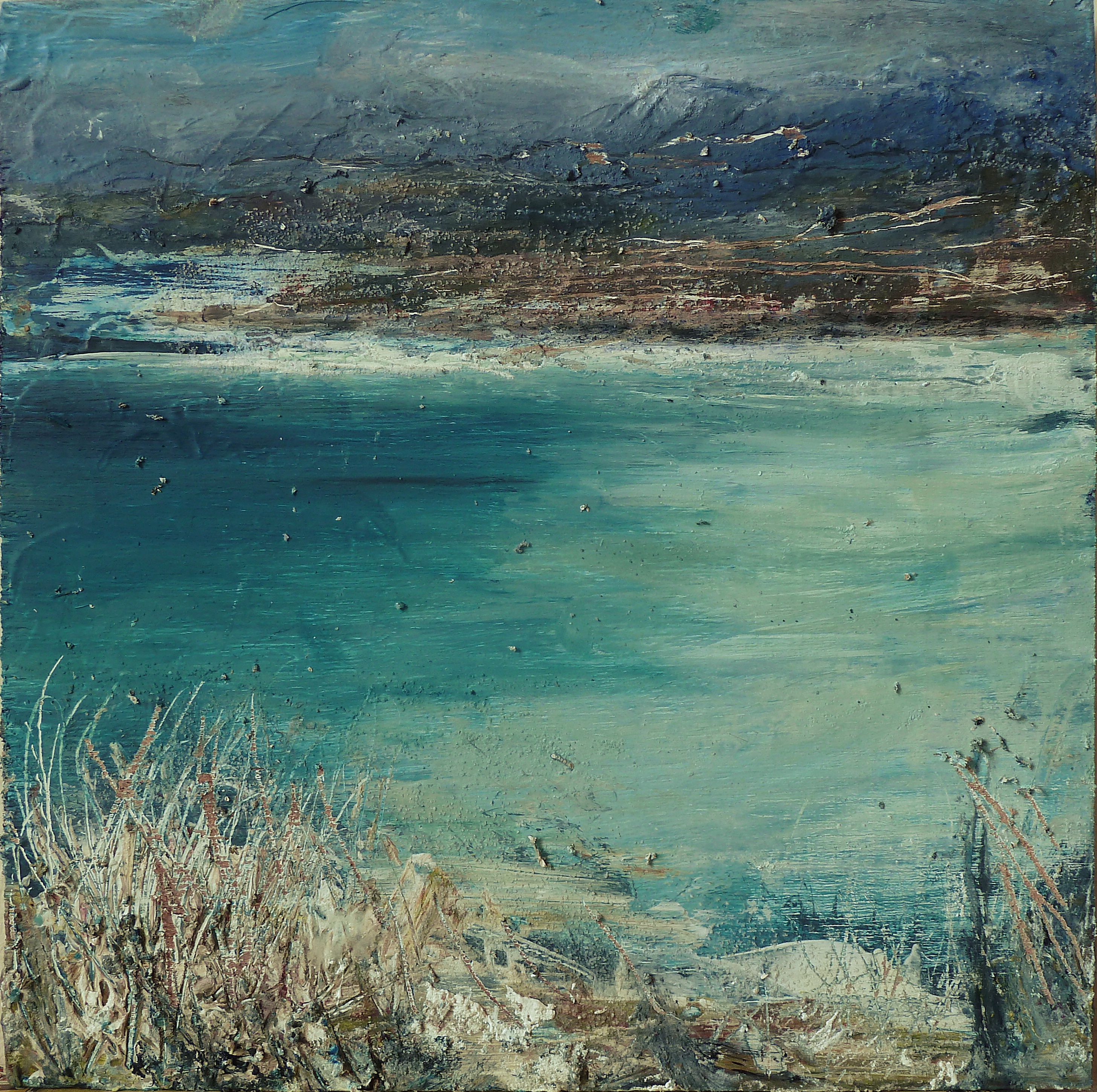
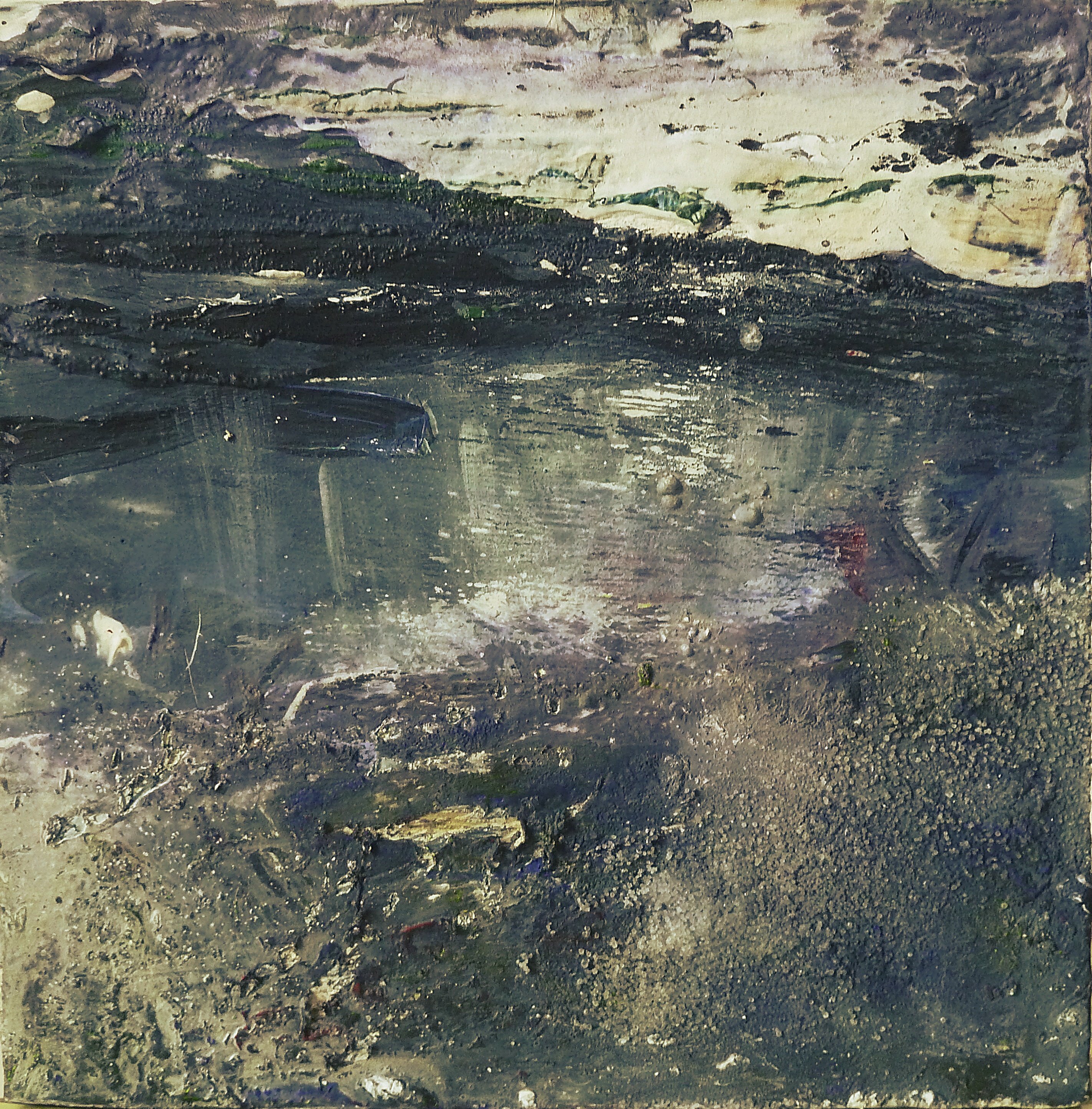
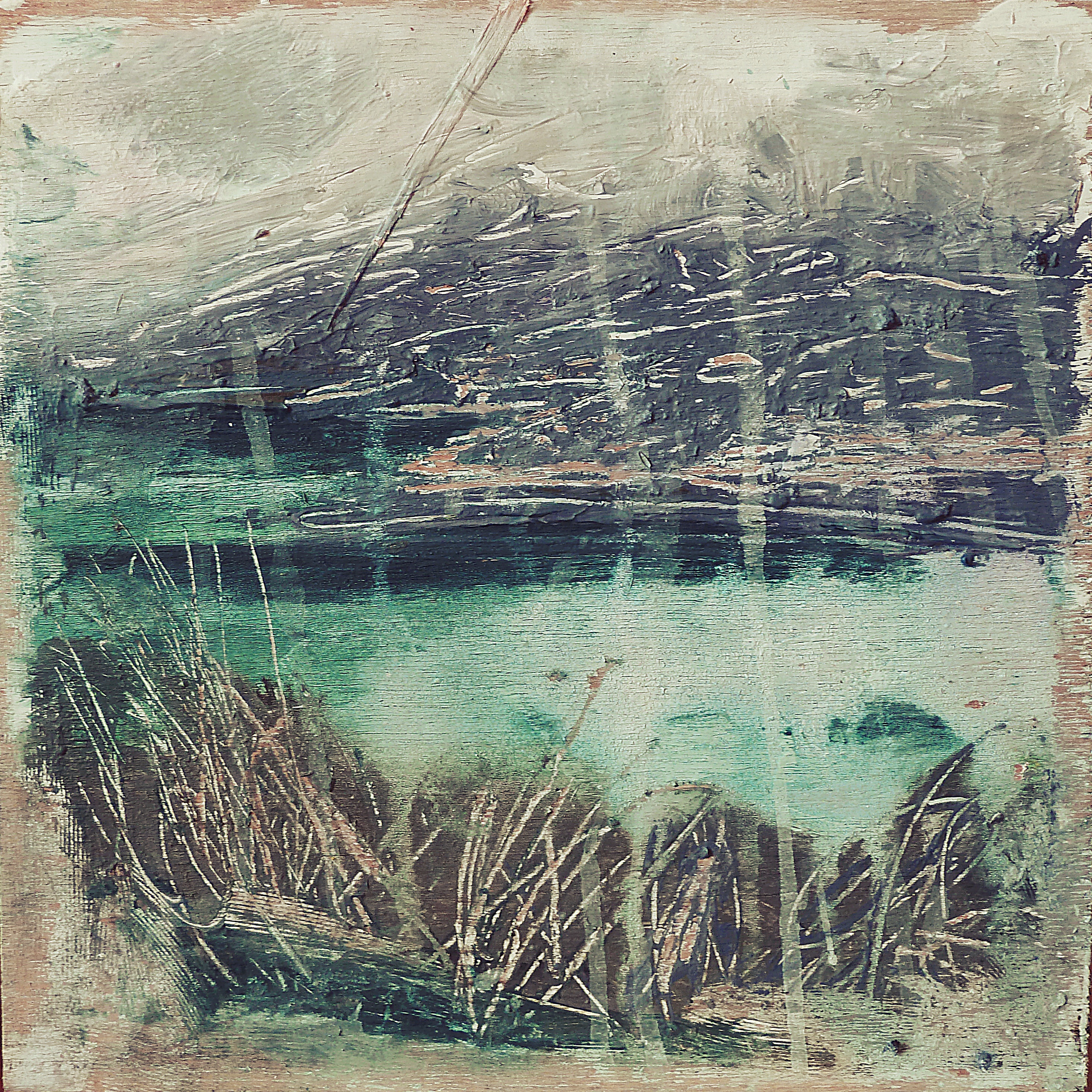
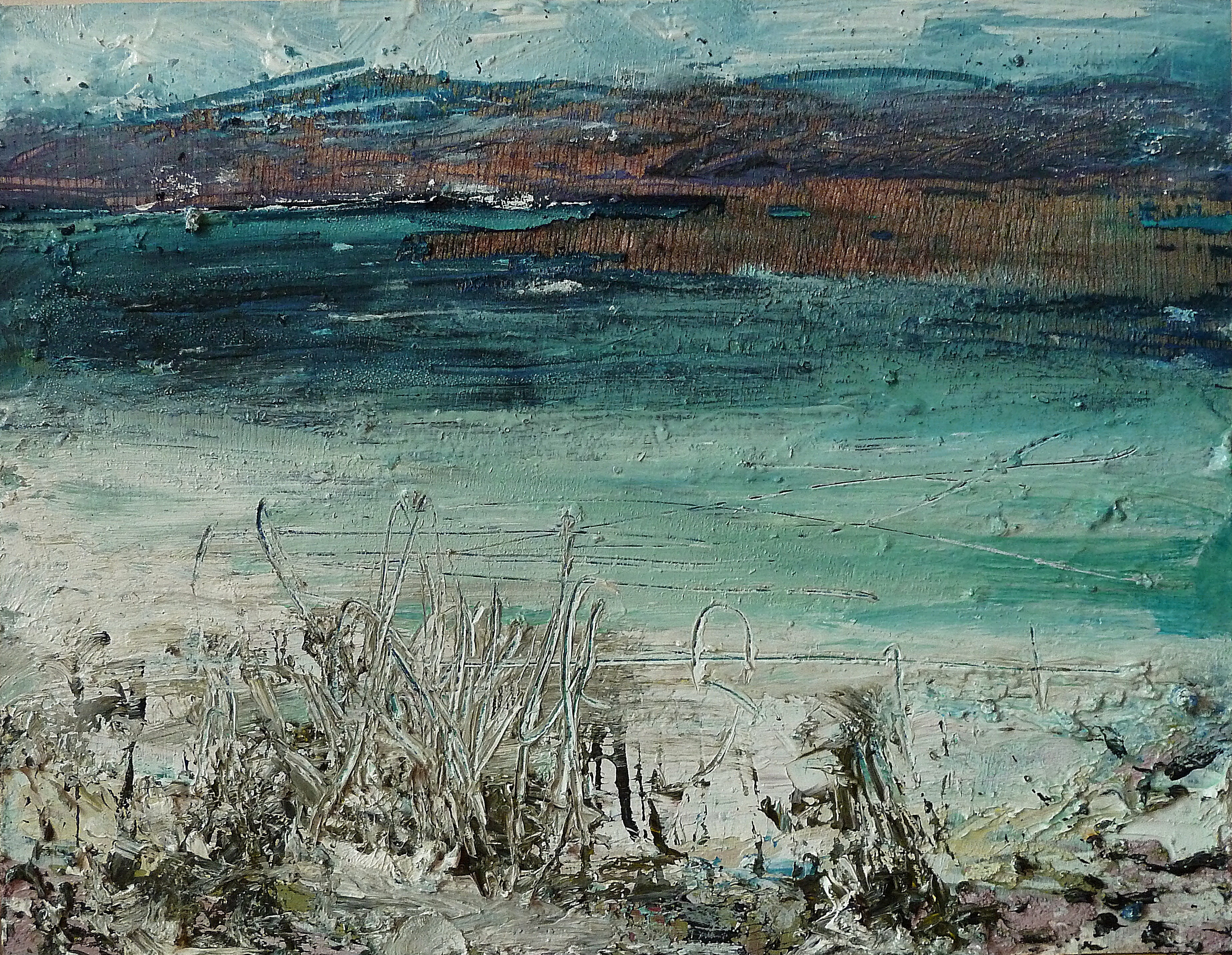
Loch near Beacravik, Harris. Mixed media on 6.5×5″ wood block £85. Rose Strang 2017

Loch near Beacravik, Harris. Mixed media on 6.5×5″ wood block £85. Rose Strang 2017

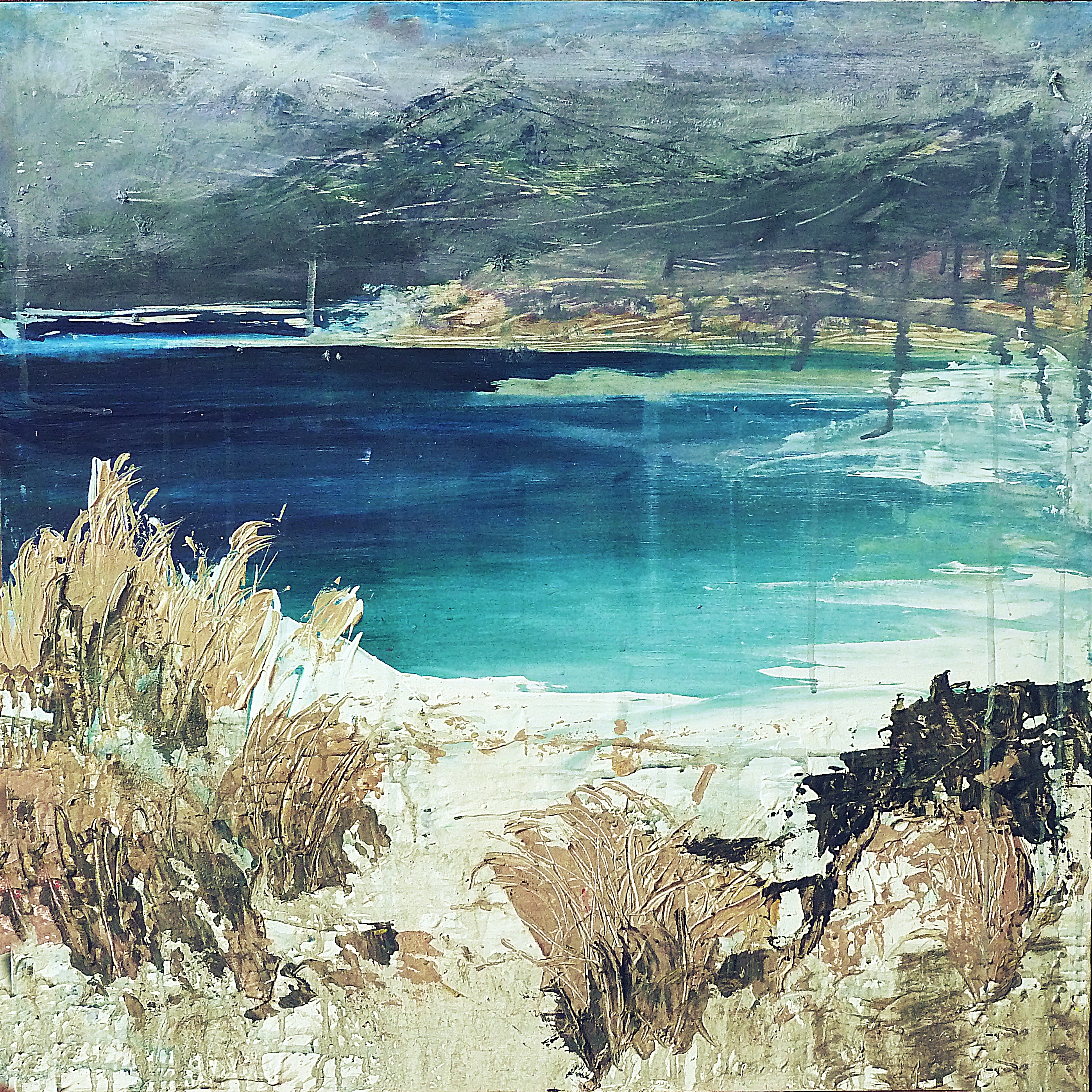
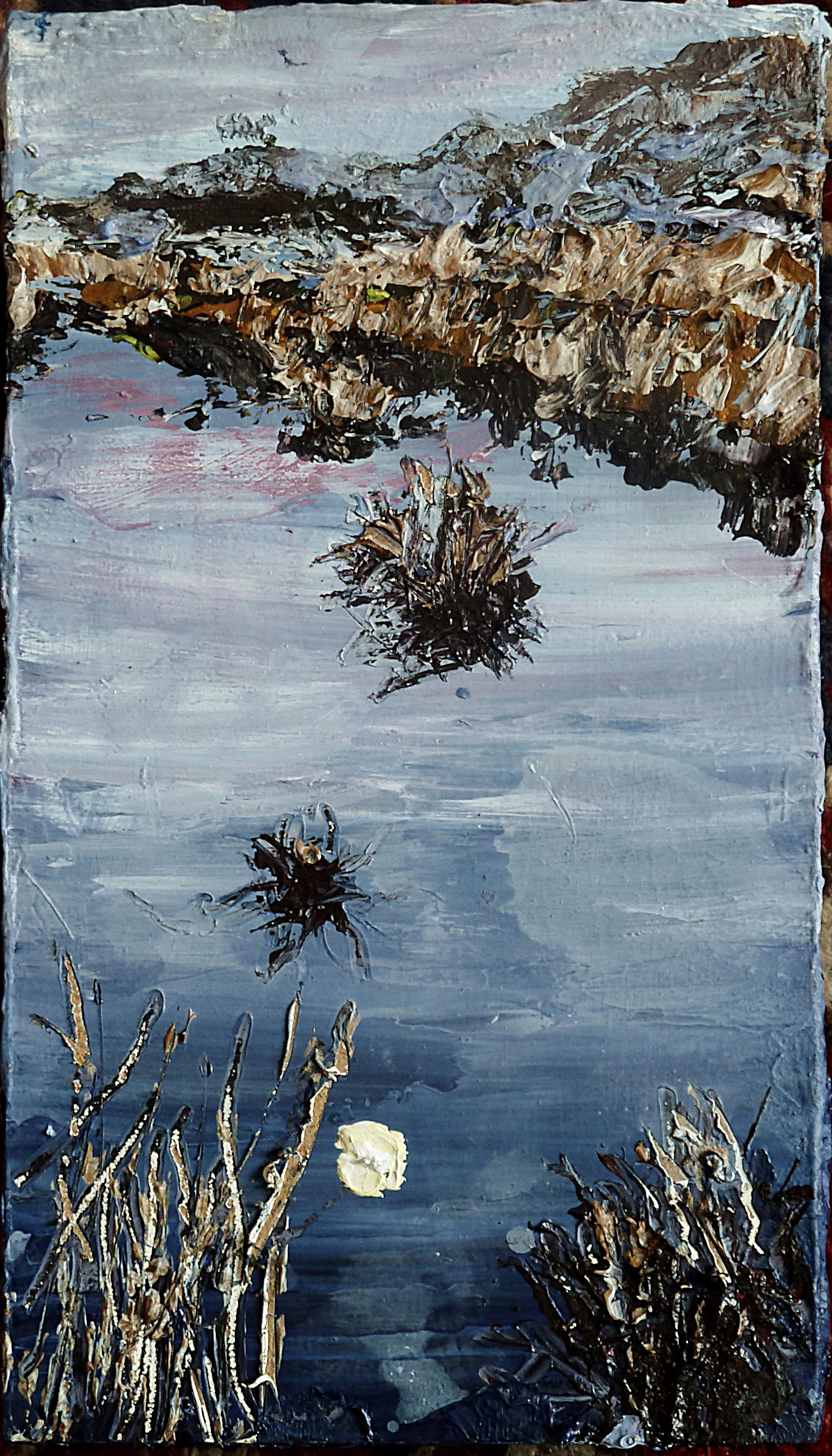
Luskentir Sea, Harris 1. Mixed media on 6.5×5″ wood block £85. Rose Strang 2017

Luskentir Sea, Harris 1. Mixed media on 6.5×5″ wood block £85. Rose Strang 2017

Recently Resipole Studios and Fine Art Gallery got in touch to ask if I’d like to exhibit with them, so I’ll be sending some smaller works of the west coast (including those to the right here) then more later this year.

I’m delighted to be showing there as the gallery features the work of some of my favourite Scottish artists including Gillian Murray and Joyce Gunn Cairns, also the paintings of the wonderful Jon Schueler (1916-1992).

Ardnamurchan coast (wikipedia website)

It’s not only the quality of artists though, the gallery itself is situated in the wild and beautiful Ardnamurchan peninsula on the west coast. I’ve only travelled there twice as it’s not the most accessible of areas (hence its unspoilt beauty).


As I’ll be staying on the west coast this year for most of July and August I’ll look forward to creating some paintings of the area.


Heavy snow (‘the beast from the east’) meant that my plans to visit the Cairngorms didn’t go ahead this Spring, so instead I’ll be painting two large works of Edinburgh in the snow, starting this week.

I’ll also be working on a series for May which explores the landscape and ancient history of Arthur’s Seat in Edinburgh, it’s right on my doorstep and recently I’ve been exploring the history of its ancient wells – I will post more about that soon!

The Cairngorms come to Edinburgh!

Thwarted in my plans to get up north to do some winter/spring painting in the Cairngorms  due to weather! I’m not complaining though, it’s beautiful in Edinburgh just now, and I’ll re-book the train for next week anyway.

The photos above are from just outside my house in Abbeyhill, I’m lucky to live right next to Arthur’s Seat. I’m planning a project for May to do with the hill and its history, more on that in a few weeks.

The photo below is of the home of a guy called Ashton who lives under a pile of bags and bits of tarpaulin, in the park just outside my house. He’s perfectly happy there and doesn’t want to live indoors, but due to the weather people are bringing him hot water bottles and tea, I left a flask today and he gave me a smile – a man of few words!


Someone on facebook posted this short vid (below) today, which is worth a watch – about a guy who likes to live outdoors –  ‘the snow makes me happy’ . ..

Cairngorms in Spring

(A few photos from my trip to the Cairngorms last year).

From March 1st I’ll be travelling up north to the Cairngorms to visit my sister. While there I’ll begin a new series of paintings to celebrate spring.

It’s going to be beautiful up there at this time of year – still plenty of snow and ice, but also snowdrops and rivers in full flow as the spring thaw begins.

The paintings will be available from around mid-March and I’ll post them here as they develop. Usually I’ll create some sketches in situ, then develop paintings in my studio at home, so I’ll send a couple of blog posts while up north (depending on internet connections!) then more on my return to Edinburgh.

Early next week I meet with Richard Demarco at Summerhall to discuss plans for the portrait I completed earlier this year (info Here). It feels really good to get this year’s projects up and running – I’ll post all updates and new paintings very soon…

In the meantime, if you’re in either Edinburgh or Suffolk, my work is on show at the Long Melford Gallery, Suffolk, and I have one painting (sold) in the SSA Open (Scottish Society of Artist’s annual exhibition at the RSA building on the mound, Princes Street, Edinburgh). The SSA show is well worth a visit, among the many strong works there it’s also great to see some excellent artwork representing artists from the Hebrides, through the Ann Lantair Gallery in Stornaway, Lewis. More info on the SSA Open Here 

SSA Open Exhibition

Sold . ‘Harris (Sea Loch 2)’ Mixed media on 10×10″ wood

I’m delighted that Harris Sea Loch 2 (right) has sold at the SSA+VAS Open Exhibition (as part of the Society of Scottish Artist’s section).

There was a very lively buzz to the preview, and  I enjoyed it  – quite a few familiar faces in the photo below! I’ll definitely go back to view the works properly now  it’s a bit quieter .

The show runs from 29th Jan to 8th March 2018 (Monday to Saturday, 10am to 5pm, ​Sunday 12 noon to 5pm) at the Royal Scottish Academy, The Mound, Edinburgh EH2 2EL. Link – Here

First Look – new exhibition

‘West Coast, Harris 3’. Mixed media on 13.5×12″ wood panel

Three of my most recent landscape paintings are included in the up-coming exhibition at  Limetree’s second Gallery in Long Melford, Suffolk.

The exhibition, called First Look runs from 10th February until March 20th. If you like the works (right and below) but can’t get to the exhibition, you can contact the gallery on their website, on this link –  Limetree Gallery


‘West Coast, Harris 2’. Mixed media on 14×10″ wood panel

‘West Coast, Harris 1’. Mixed media on 14×10″ wood panel

Completed portrait of Richard Demarco

‘Portrait of Richard Demarco’. Mixed media on 20×30″ wood panel. Rose Strang, 2018

In October last year I decided to paint a portrait of Richard Demarco.  It’s been a hugely enjoyable challenge to create this portrait, not simply because I’ve known Richard Demarco since 1999 and found his work an inspiration, but also because I took time to consider what I wanted to portray.

A straightforward portrait or reasonable likeness could have been completed in a few days, but the challenge for me was how to encapsulate the wealth of ideas, experiences and artistic references; everything from the concept of the Road to Meikle Seggie and the artists Richard has collaborated with over the decades, most notably Beuys, Abramovic, Kantor and Neagu, but more importantly a belief that the role of the artist is to witness and communicate truth, that art might open dialogue and therefore has potential to heal the trauma of war.

The backdrop of the portrait is a wood panel painted with blackboard paint, the portrait itself is painted free-hand with gesso, on Richard’s left is a rough copy of Beuy’s drawing of a stag, its antlers reach up to the pencil drawing of three telegraph poles representing the road to Meikle Seggie.

While making this portrait, I was considering Richard Demarco’s role in creating artistic dialogue between war-torn countries, and the fact that both he and Beuys sought a creative approach that crossed boundaries and promoted healing in post-war Europe. I hope this portrait expresses renewal of faith and love in dark times and the unfailing determination Richard brings to his work.

The responses of Richard Demarco and Terry Newman (Deputy Director of the Demarco Trust) today were very rewarding. Richard very kindly remarked it was the best portrait of himself he’d seen! I tend to think the portrait by artist David Mach is the most impressive, but I think Richard was responding to the ideas I attempted to express with this portrait. It’s now a permanent part of the Demarco Archives, viewable at Summerhall in Edinburgh.