Author Archives: rosestrang

Unknown's avatar

About rosestrang

Artist, Painter

Harris paintings days 11

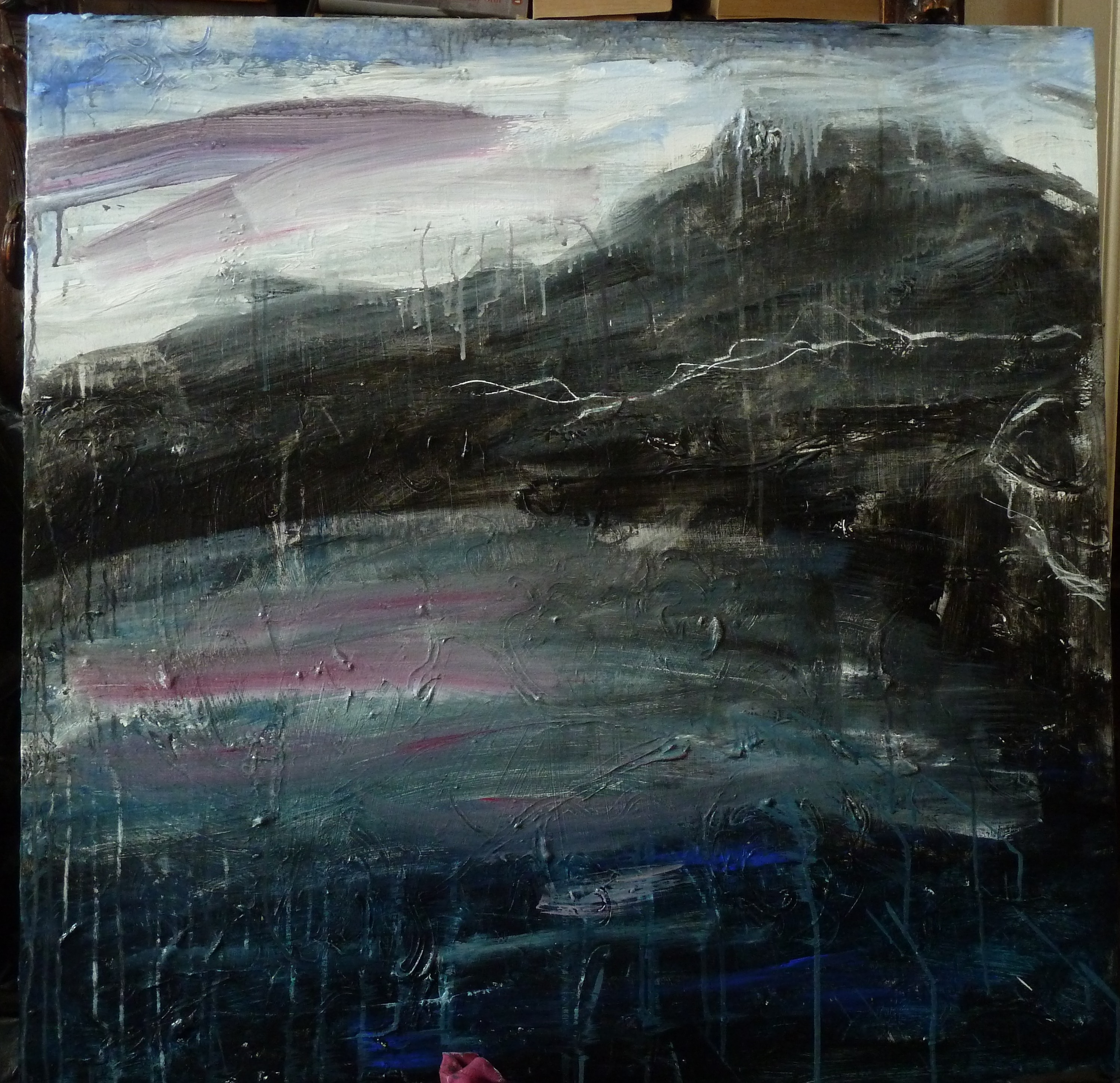
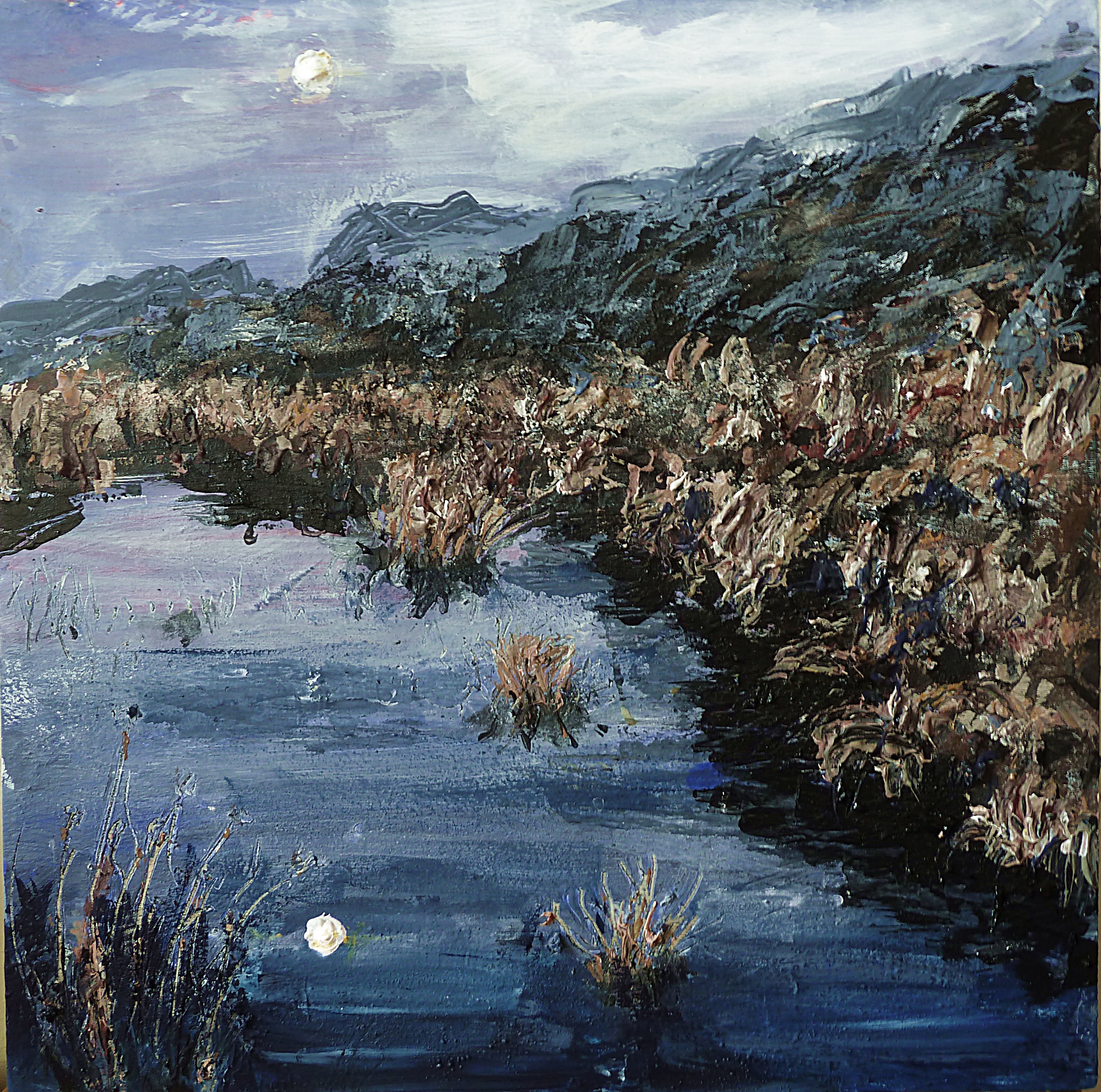
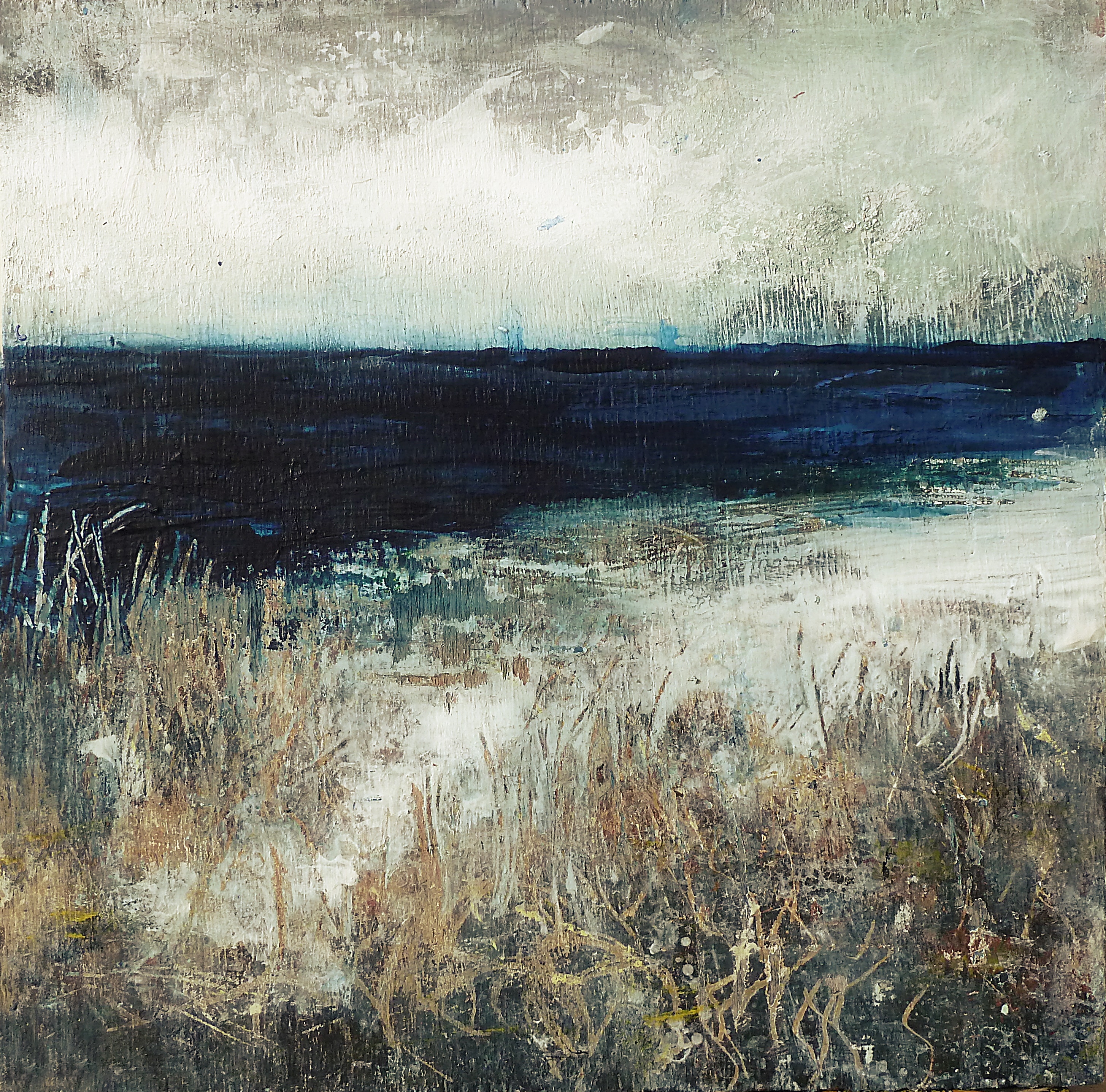
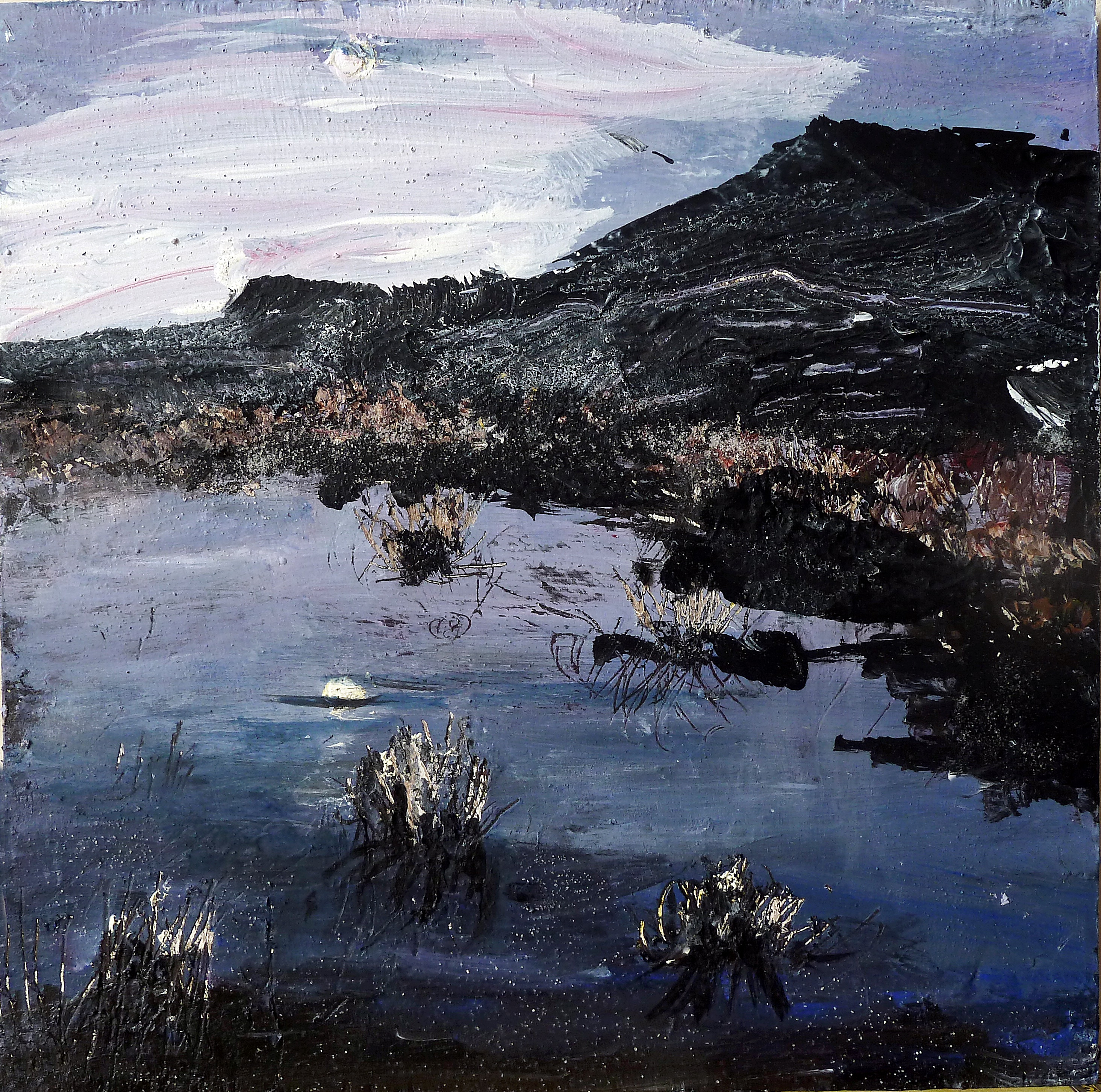
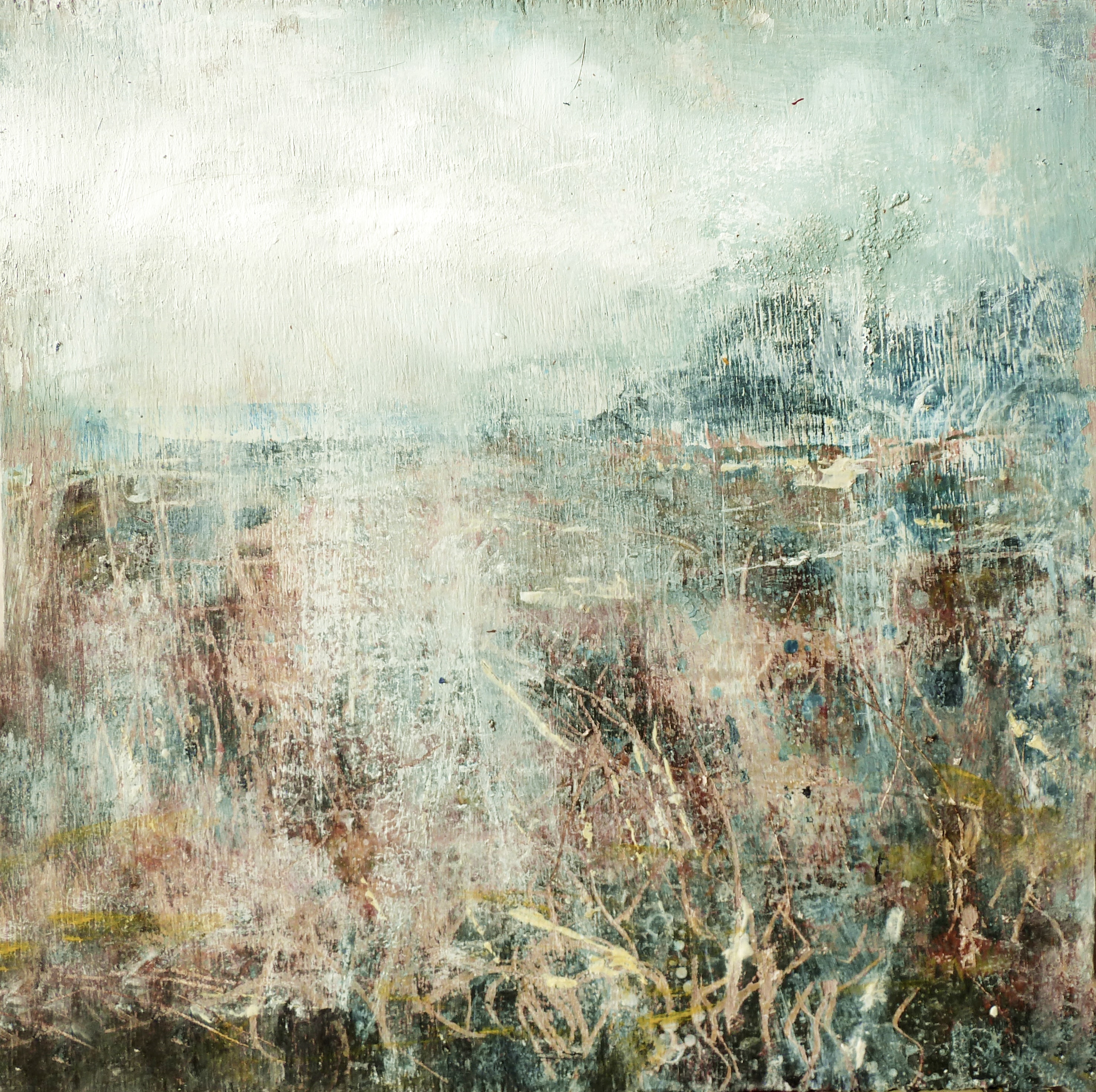
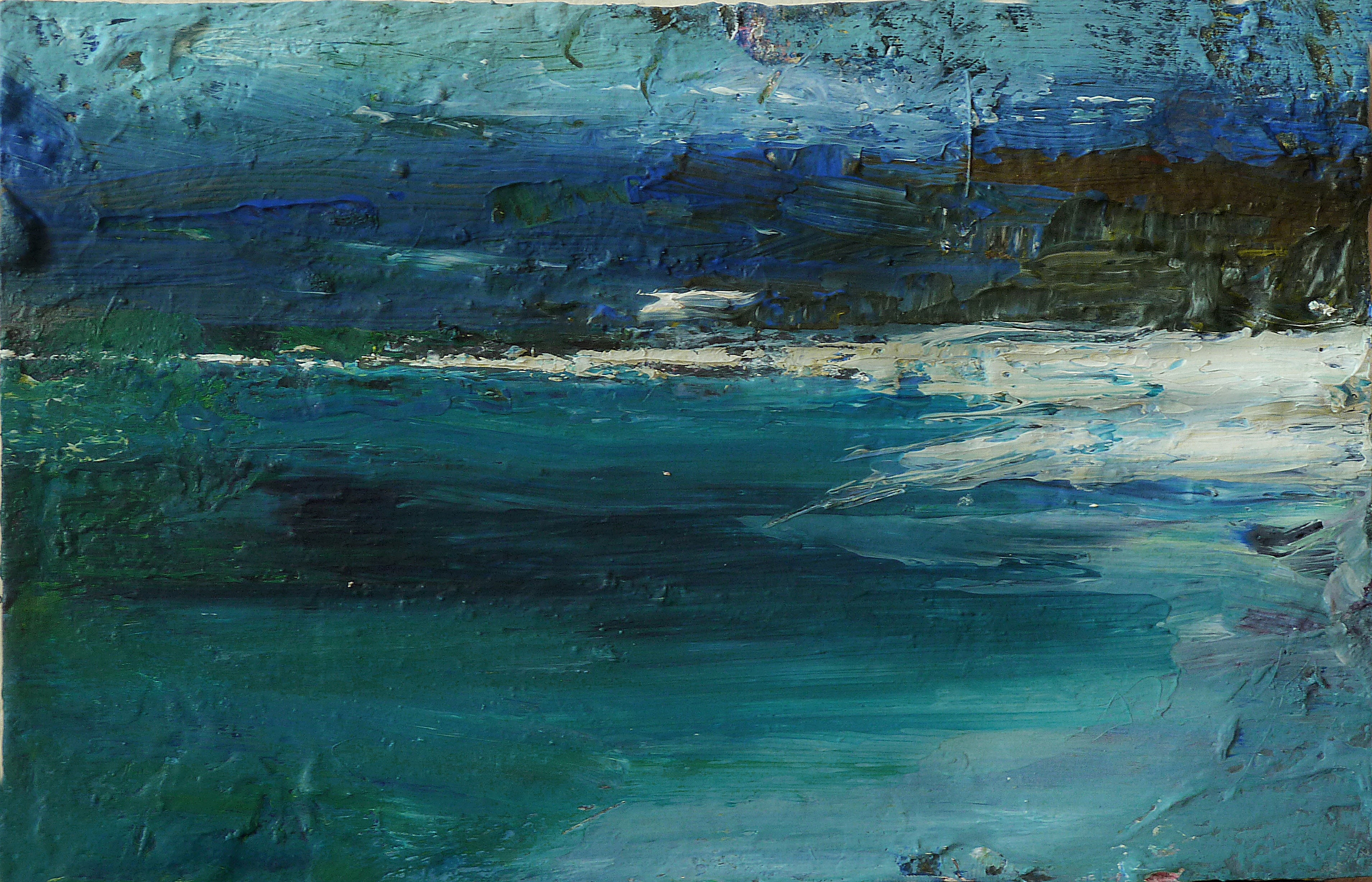
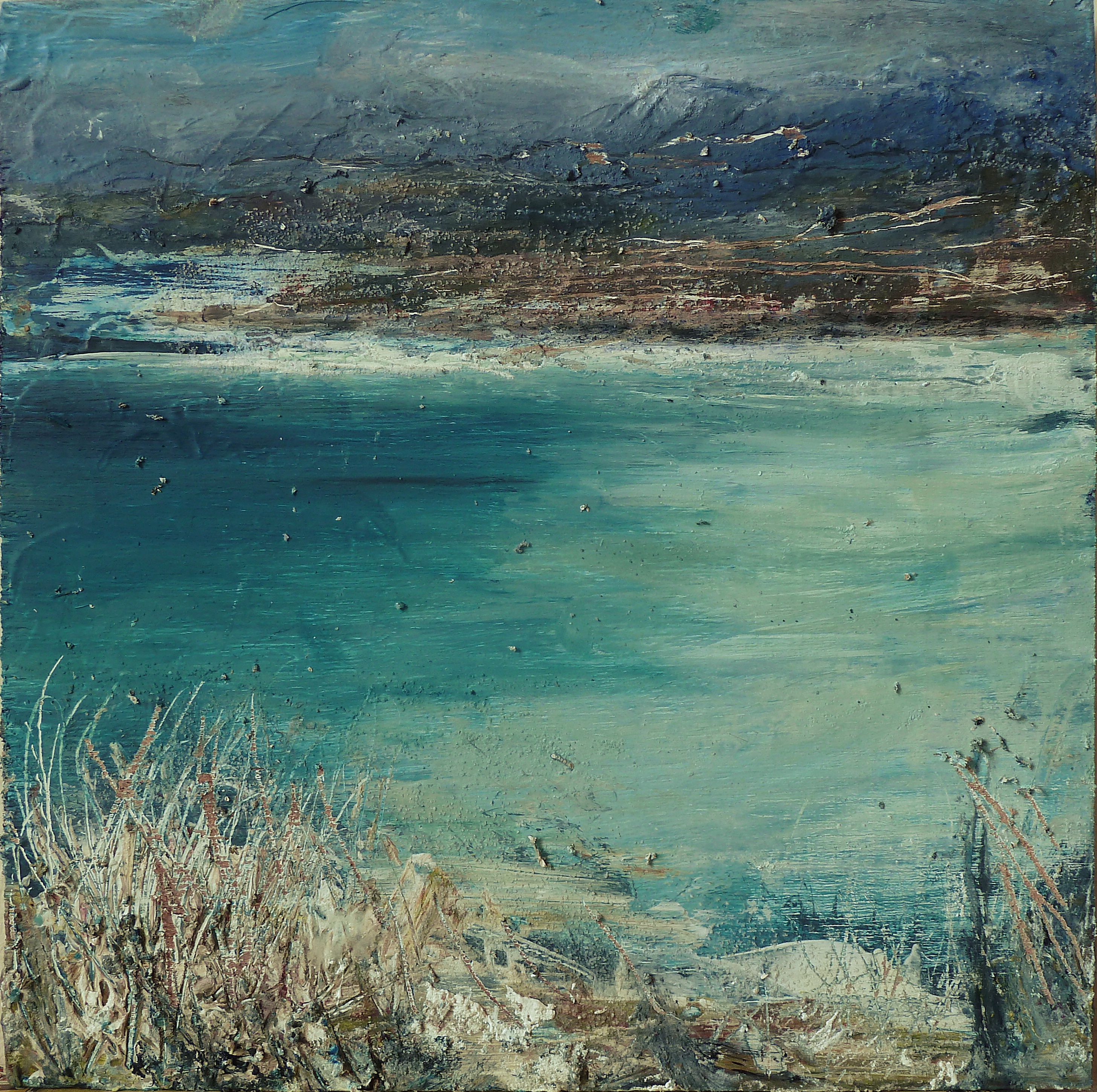
‘Harris Moon 2’. Mixed media on 16×16″ wood

Today’s painting – the third version of the Harris moon theme (also the title of the exhibition Moonscapes: Isle of Harris). I’ll be painting this theme for the largest of the paintings.

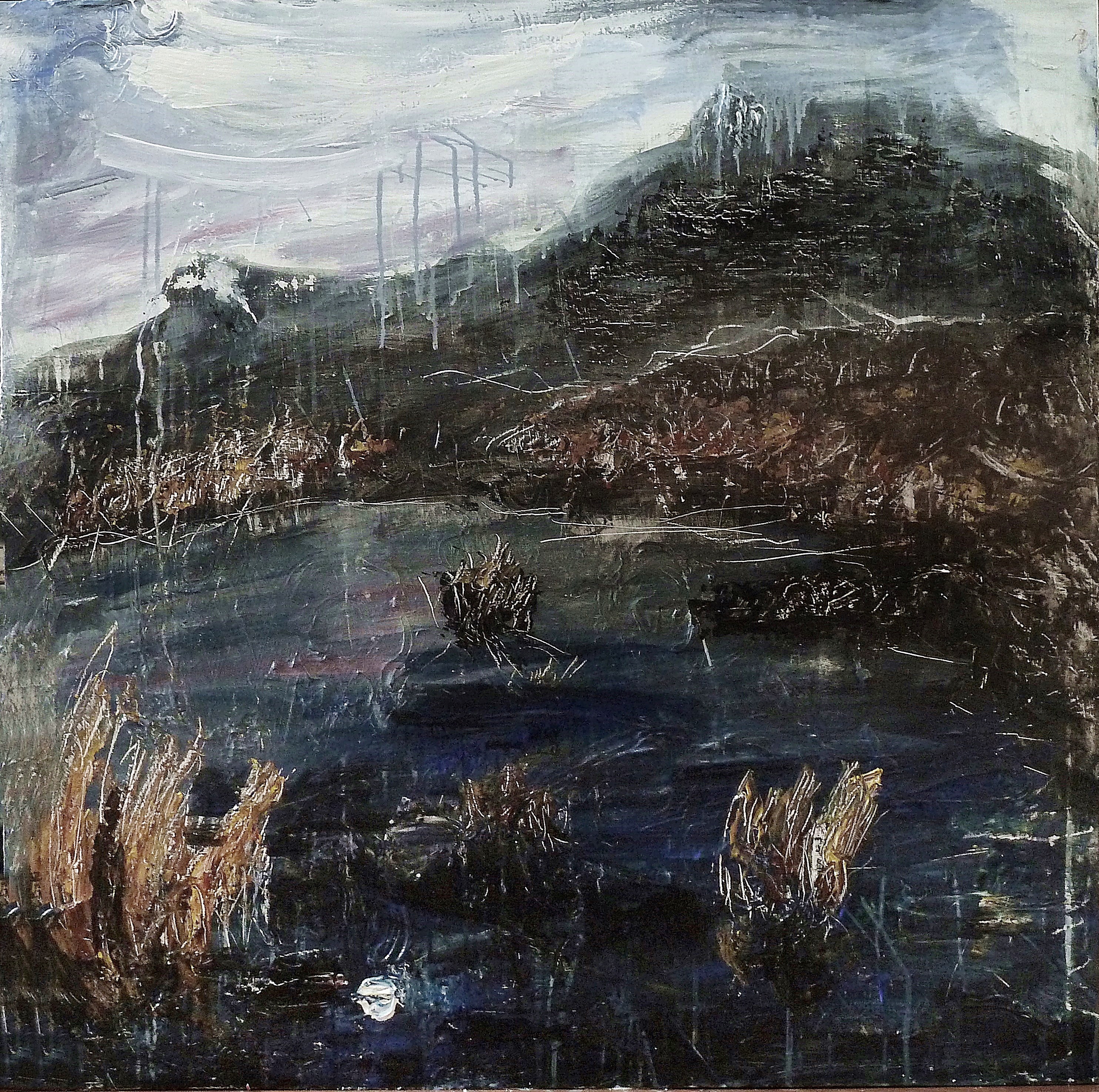
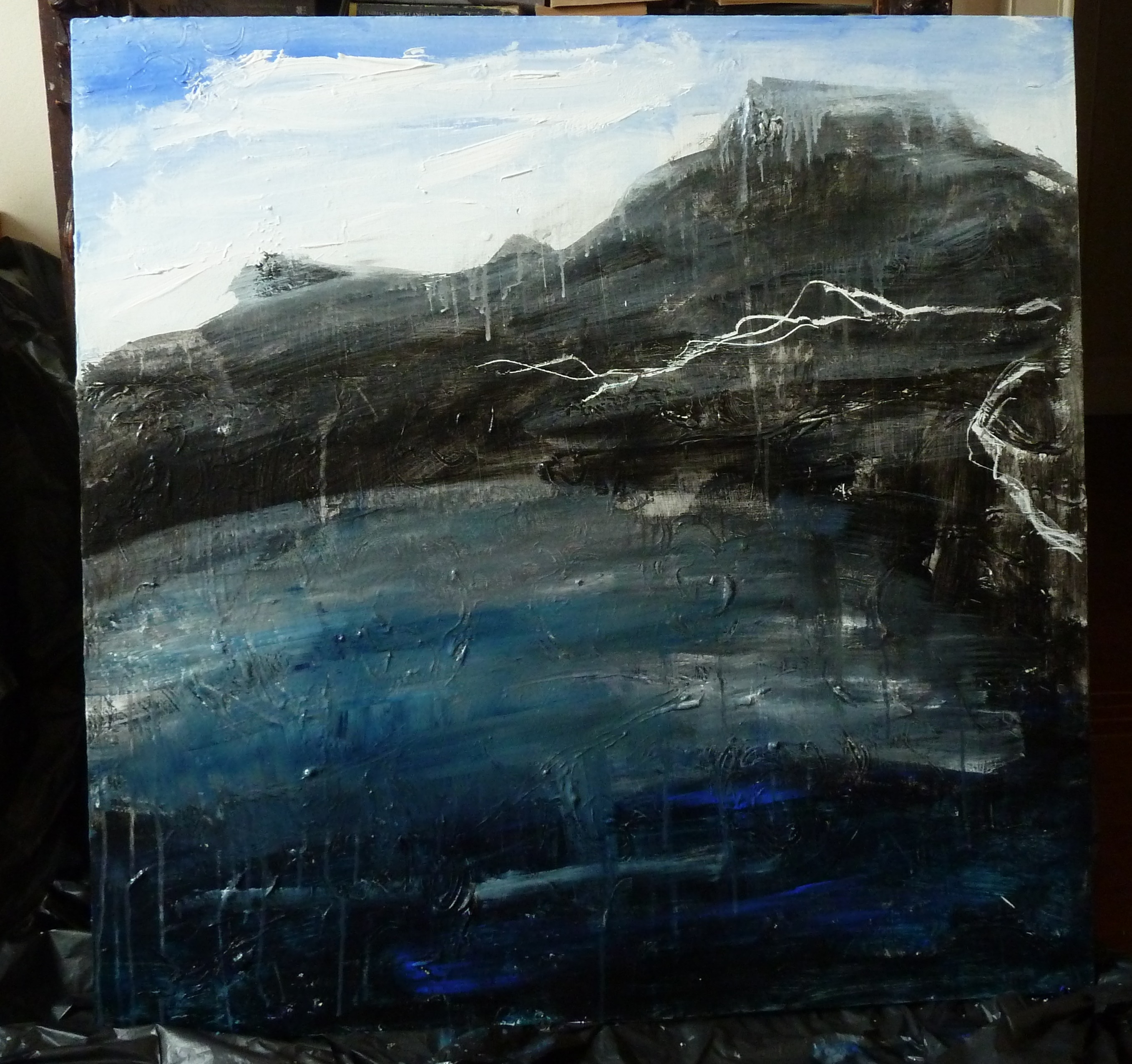
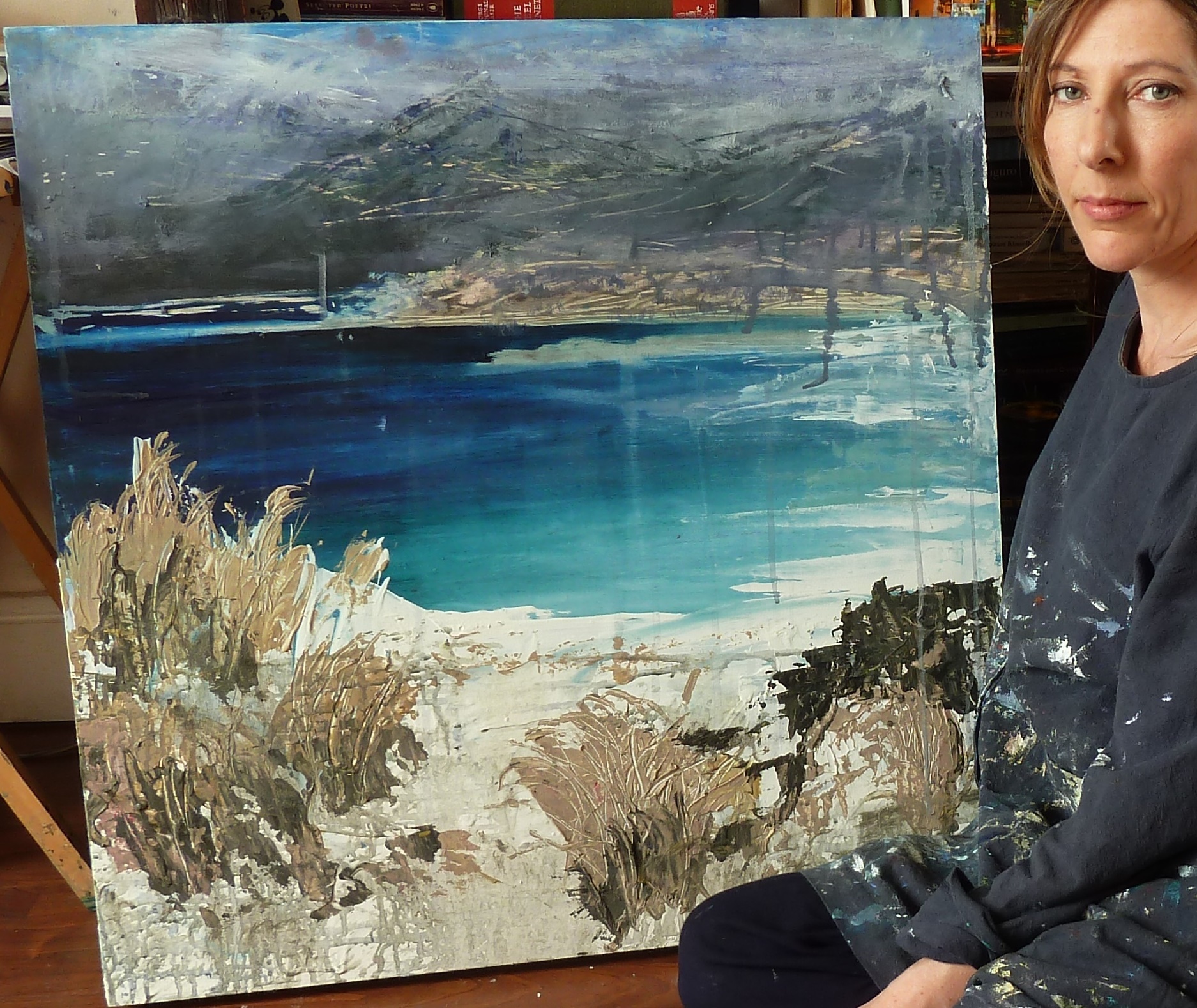
Below – a bit more work on paintings already started, and a photo of me next to Luskentir 3 so you can see the size relative to a person. People often think the paintings are much smaller (some of them are – they start at 5×5″ and go right up to 40×40″). It’s helpful to sart each series small then work up to a bigger piece once I’m confident of the approach, obviously it’s a lot less expensive to make smaller mistakes!

Luskentir 4 in progrss

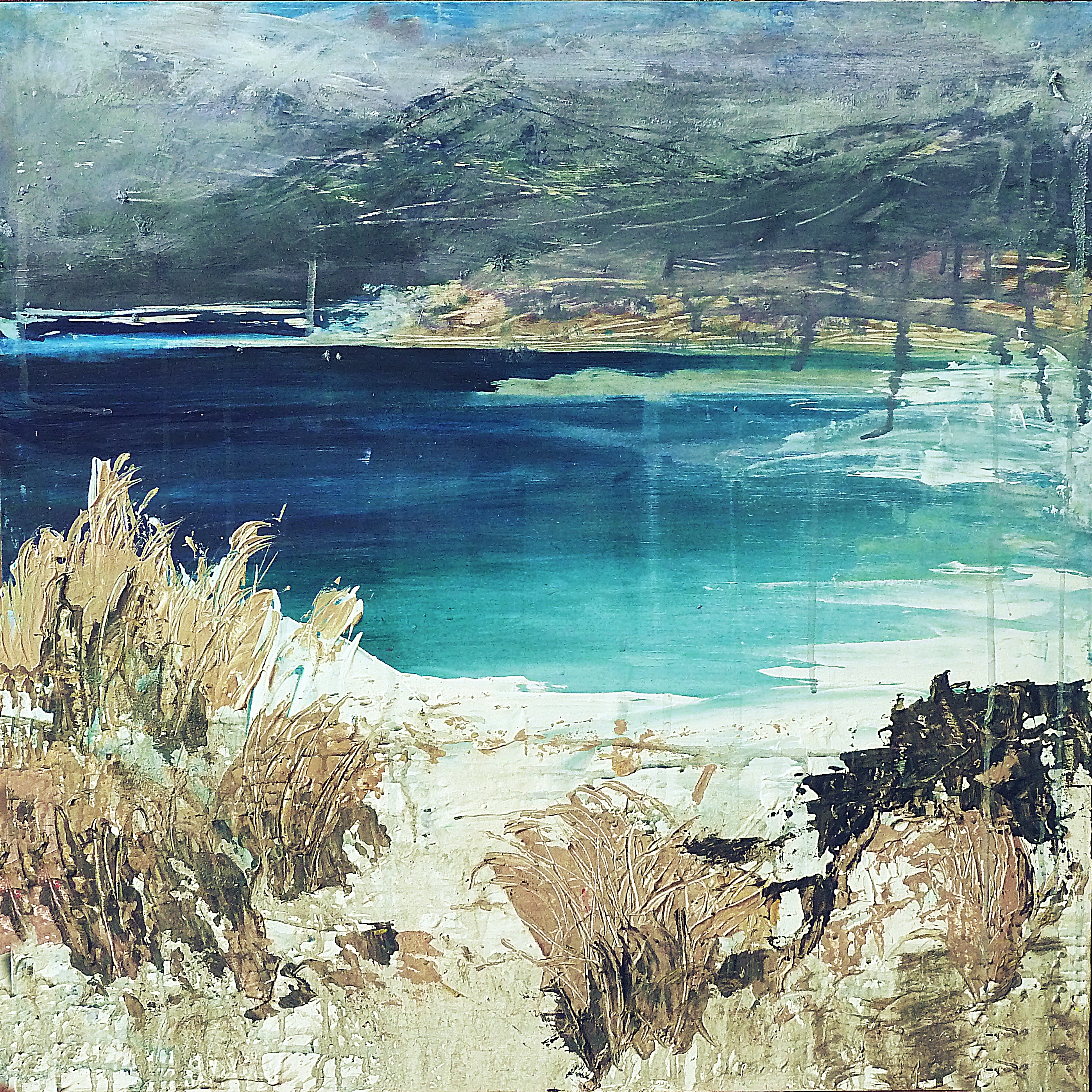
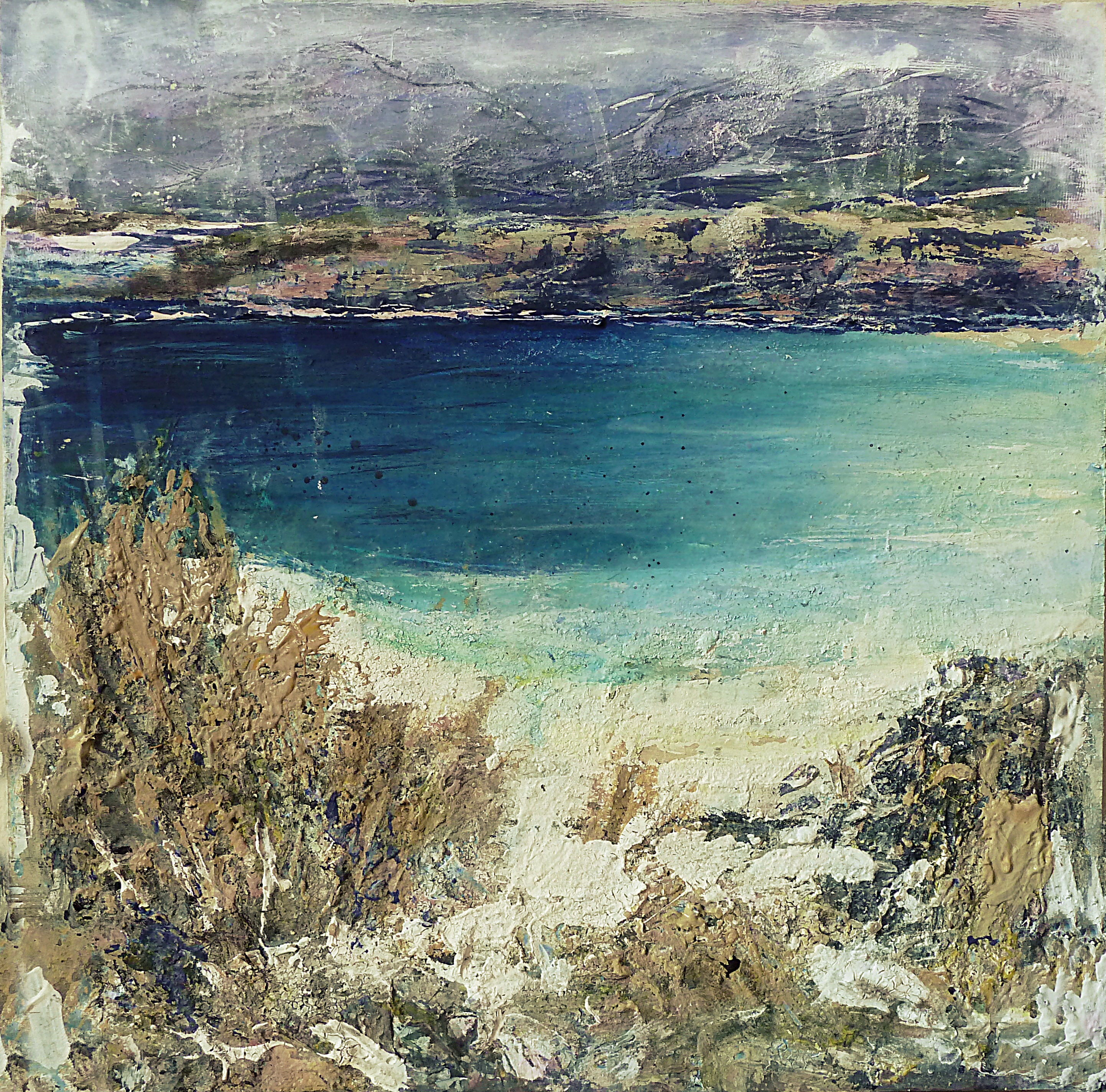
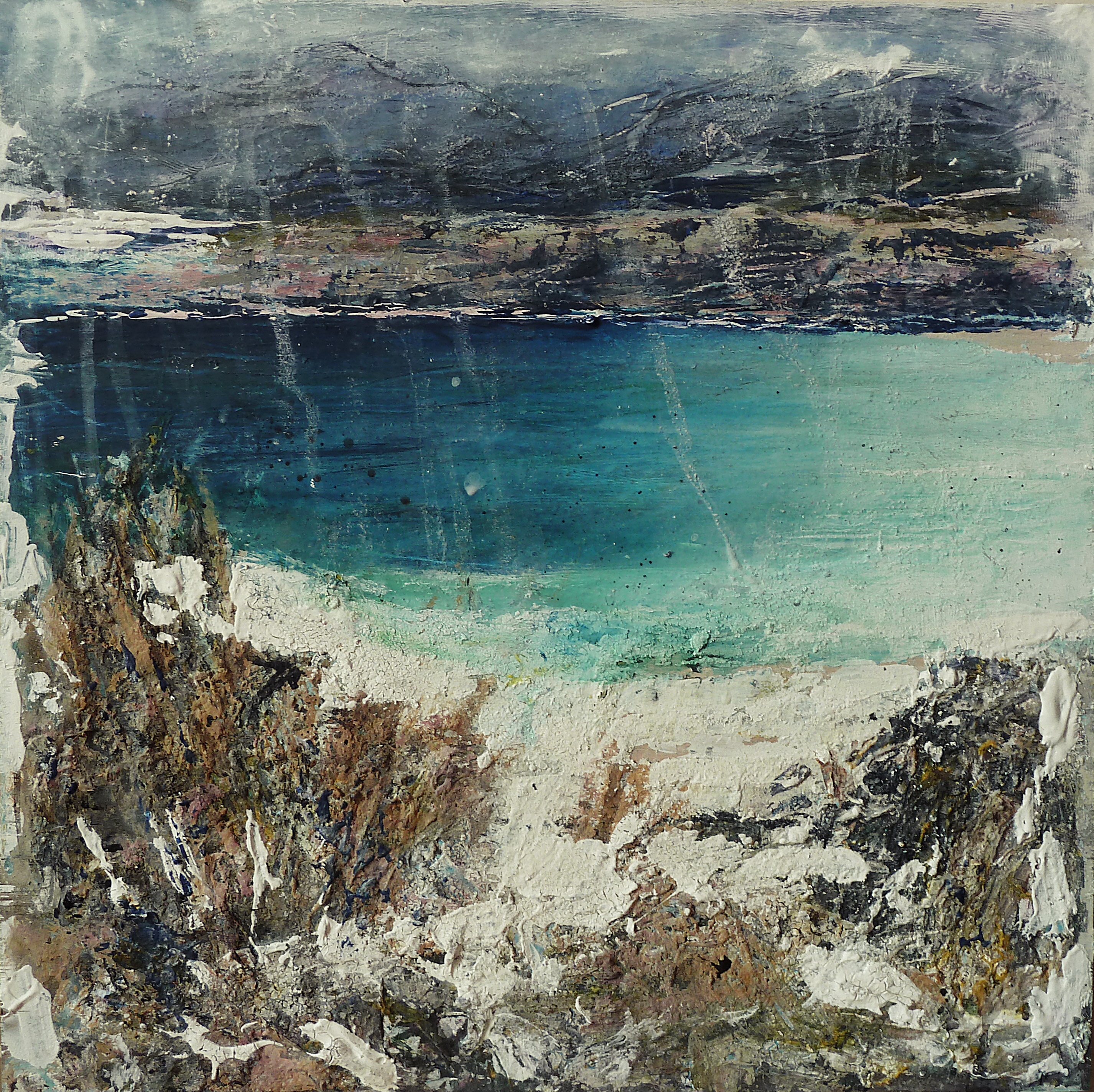
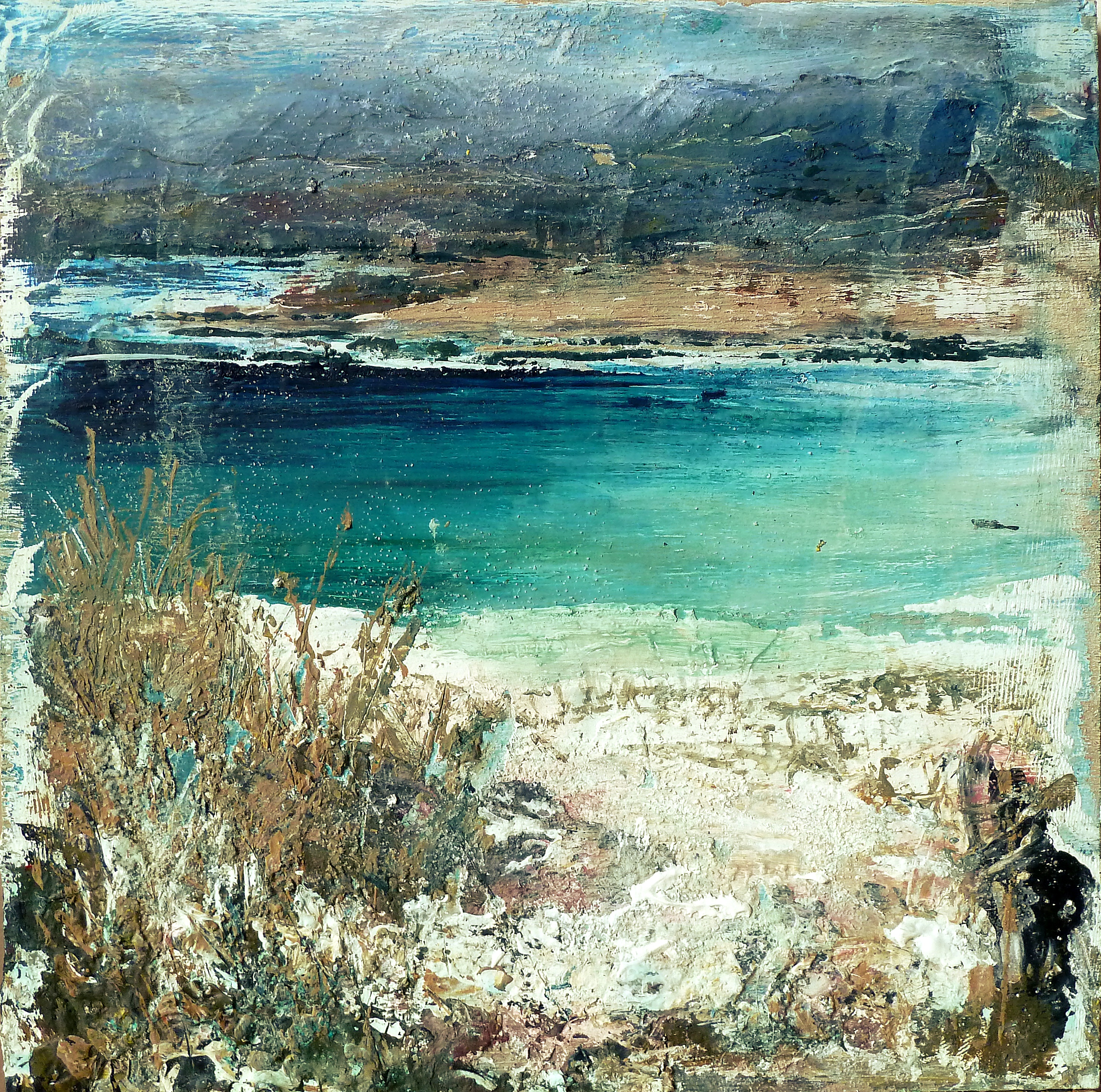
‘Traigh Luskentir 3’. Mixed media on 16×16″ wood panel.

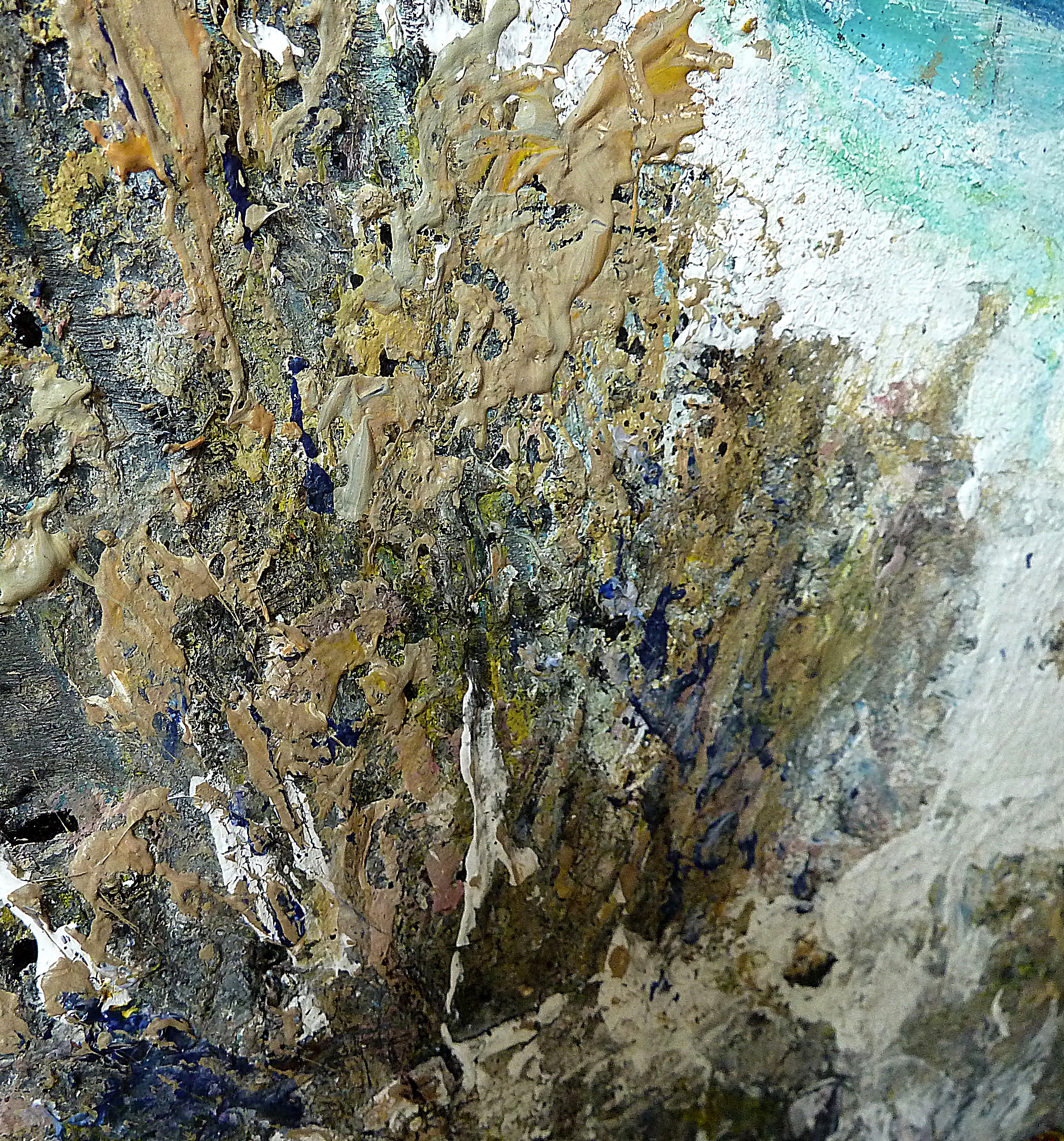
detail

‘Tràigh na Buirgh, Harris’. Mixed media on 9.5×9.5″ wood pane

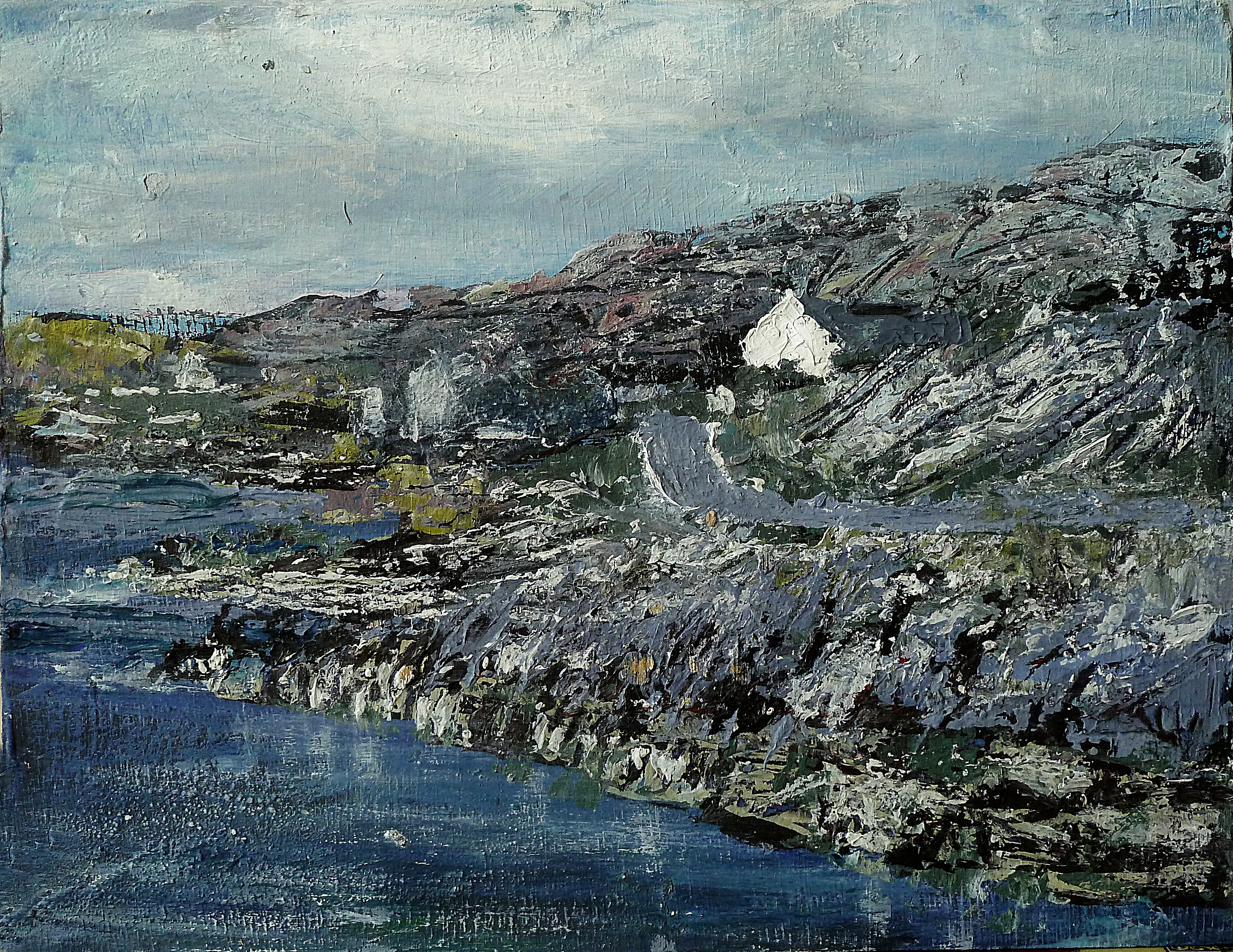
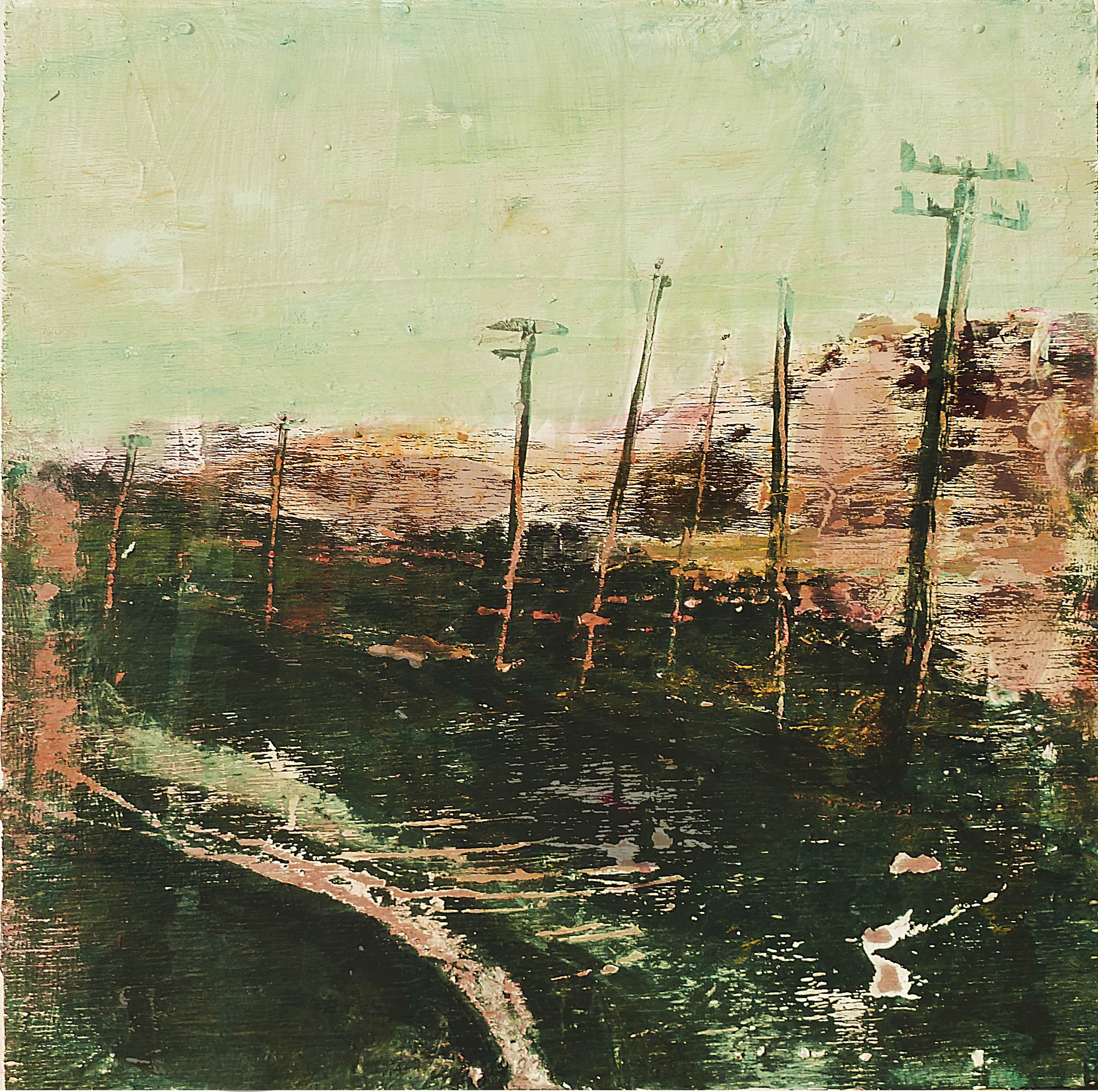
‘Coast Road near Geocrab Bay, Harris’. Mixed media on


Videos – paintings in progress

‘Traigh Luskentir 3’. Mixed media on 16×16″ wood panel.

Today’s updated ‘Traigh Luskentir 3’.

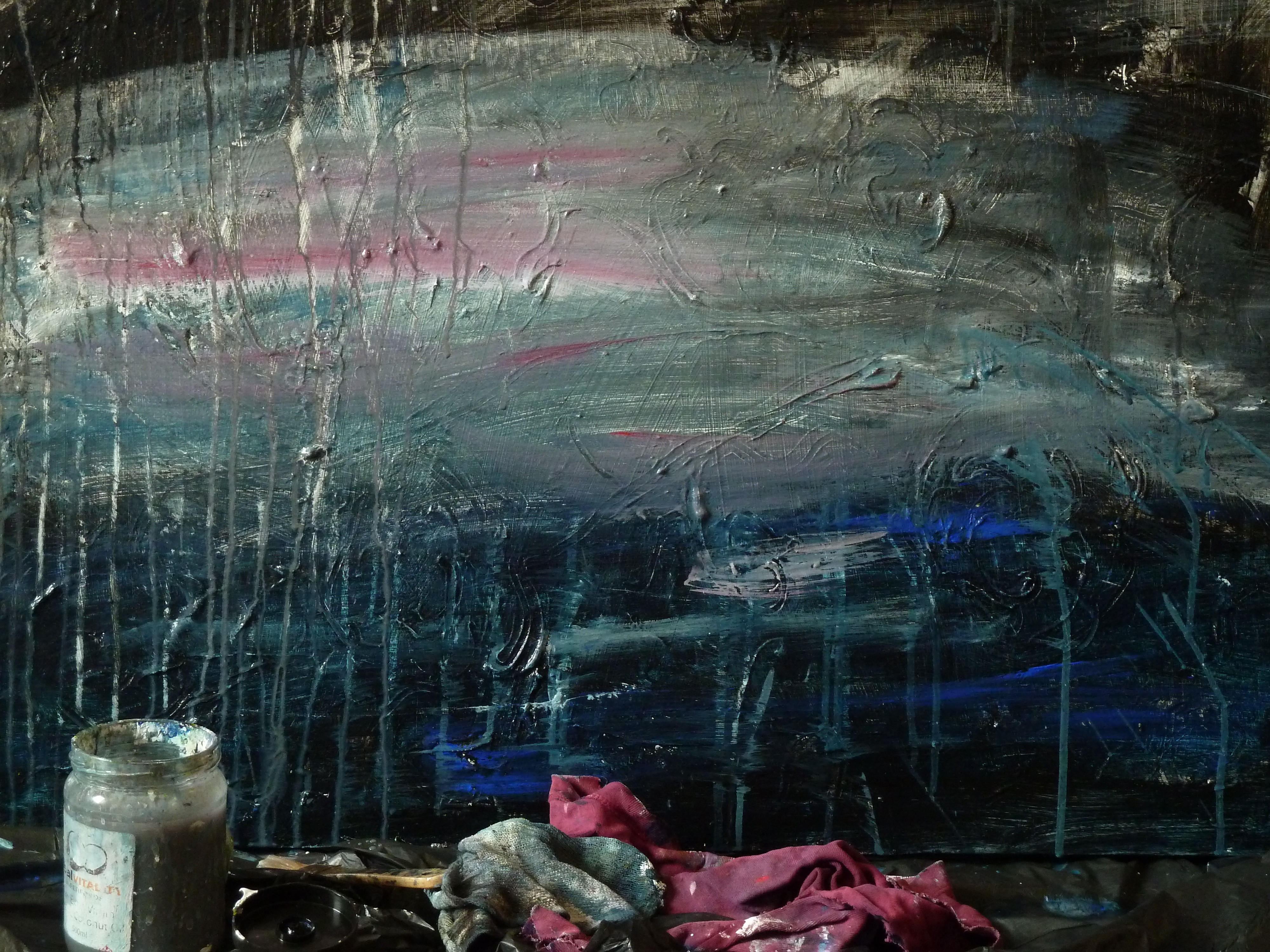
I know people like videos of paintings being created, so today I remembered to take a few videos while painting (see below). Not very professionally – in as much as I was painting with one hand and holding a camera with the other – if you like the camera work in Jason Bourne films you’ll love it!

The video shows the way I work with wood – scraping back to the wood to create texture and so on. These paintings aren’t finished yet so I might make a better video tomorrow if there’s time, though the pace is getting a bit frantic as I also have my new flat to decorate. My hands will be worn out by mid-July, but in truth I’m really enjoying all these creative projects.


Harris paintings day 9

‘Harris Moon’. Mixed media on 9.8×9.8″ wood

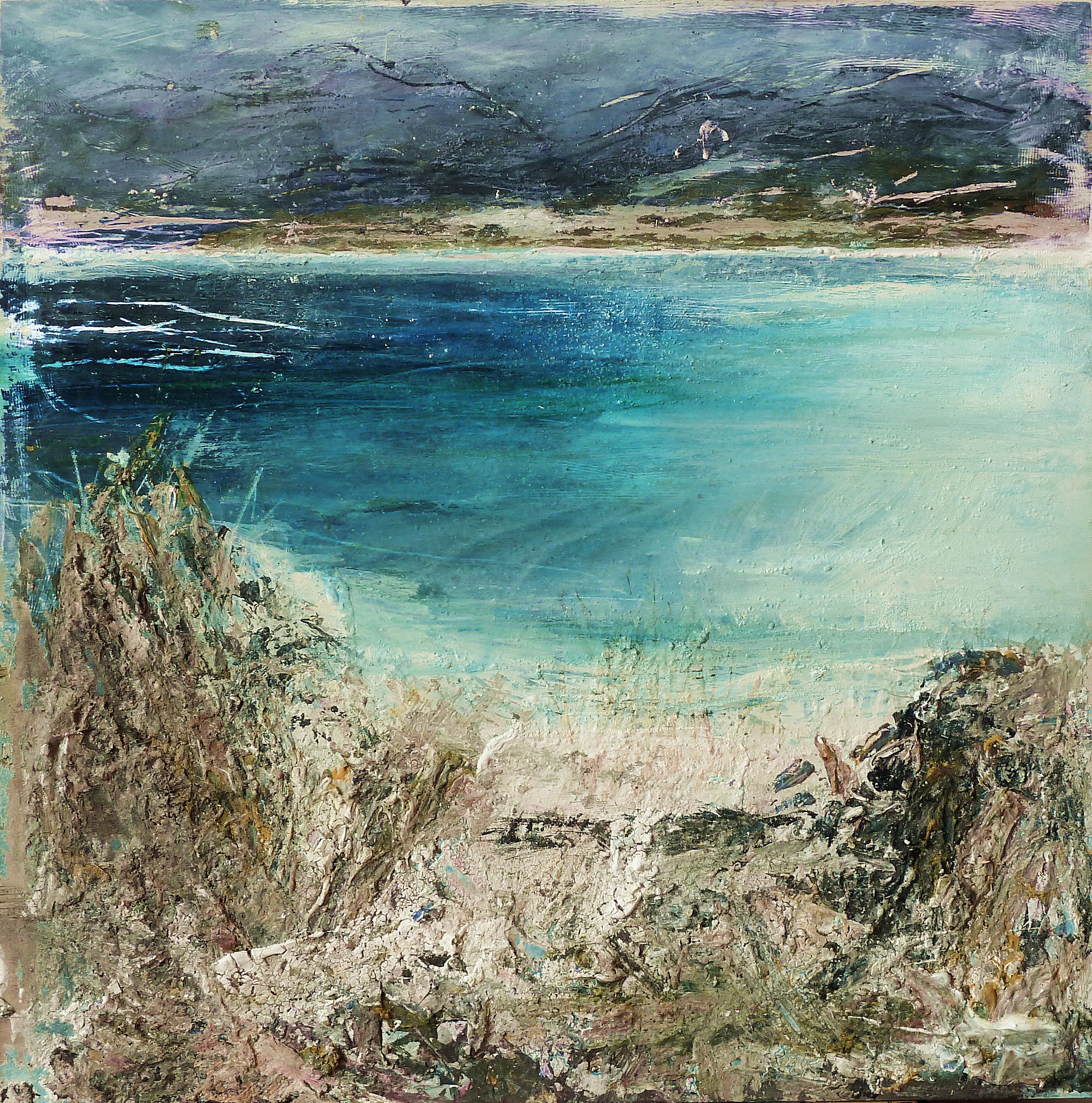
”Traigh Luskentir, Harris 3′. Mixed media on 16×16″ wood

Today’s paintings of Harris, both need a bit more work which I’ll finish tomorrow. This version of Luskentir is very similar to Lustentir 2 though this is 16×16″ –  practice for a larger one at 30×30 inches.

Postcards for the upcoming exhibition on July 14th arrived today (below). If you’d like to come along you can keep up with details on this Facebook exhibition event page at this link ‘Isle of Harris’ 


Khadija Saye


Khadija Saye


Two days ago I hadn’t heard of Khadija Saye. There was a time when I kept up with the latest artists featuring at the Venice Biennale but it’s not a world I mix in these days. So I went online to explore her recent series, titled Dwelling: a place to breathe, which took inspiration from her recent journey to Gambia where she explored Gambian spiritual traditions. Looking at it triggered my first deeper reaction to the Grenfell Tower fire. I cried of course, but I was also inspired and deeply impressed by her work.

The works are copyrighted so please take a look at them here – http://www.sayephotography.co.uk/dwelling

I share the anger that millions of people across Britain now feel about the greed and inhumane motives that are the cause of this fire spreading so rapidly;  the recent refurbishment of Grenfell Tower as part of ‘regeneration’ efforts, or more accurately yet another vanity project, consisting of un-required new ground floor communal areas with bland artworks, and the choice of plastic cladding to improve surface appearance and save money.

I have no doubt this was intended as a quick makeover, so that the surrounding high value homes, mansions and new builds of Kensington wouldn’t lose value.  There was no upgrade to the fire safety system despite many warnings and letters sent by residents to the local Council. The new cladding was guaranteed to blaze rapidly throughout each (un-contained in terms of fire spread) floor of the 24 storey tower block.

This morning Saye’s death was confirmed and when I looked through her artworks I felt the loss of a loved, respected, humanitarian woman in her early twenties. She was also a talented artist whose work, as mentioned, was selected for this year’s Venice Biennale.

The Biennale runs from 13th May to 21st November every two years and it’s regarded rightly as one of the world’s best contemporary arts festivals. Its themes are often topical, political or mold-breaking in contemporary artforms or ideas – it often inspires and informs creative and formal approaches to arts across the world.

I attended the festival in 2001 and found the experience quite profound – I had never experienced such a level of high regard and thought towards presentation of the visual arts; I realised at the time that the UK had some way to go compared to mainland Europe, in terms of intelligent, thoughtful visual arts curation.

Khadija Saye was a photographer (with a BA (HONS) in photography from University of Creative Arts in Farnham) who experimented with various photographic techniques. She was born and brought up in London but her background is mixed race and multi-cultural, so much of her subject matter explores the lives, religions and cultures of British first or later generation ethnic groups and emigrants. Also her Gambian heritage, which included her recent visit to Gambia and her response to Gambian spirituality and culture resulting in this recent series titled ‘Dwelling: a place to breathe’.

There is no easy interpretation of these photographs and no paraphrasing by the artist, but the title suggests to me that for Saye, her experience of Gambian spiritual rituals was liberating.

A ‘space to breathe’ for Saye may have been a place where externally imposed identities no longer exist, where race, or the sense of displacement a person might feel as an ethnic minority in the UK now separate from their cultural origins, melts away, becomes less concrete – ‘a place to breathe’ aside from all those imposed, often meaningless labels that inform the idea of identity – and surely this liberating space is at the heart of spiritual seeking.

Those were my thoughts when I looked through these photographs; just one possible interpretation. Looking at them now it’s also impossible not to think of the way Saye died two nights ago. Yet, although she was only in her early twenties she already had a deeply insightful approach to life – as a young artist she was on the verge of great success, her life was rich, her work respected and it’s clear from all the messages and statements from those who knew Khadija Saye, that she was a much-loved humanitarian activist for people from all groups of society.

She is an inspiration and, despite the current state of UK politics, I want to believe that she and others like her represent a future that is still possible.
Harris paintings day 10

‘Tràigh na Buirgh, Harris’. Mixed media on 9.5×9.5″ wood pane

Just one painting today as I’m geting on with the marketing and publicity, with just under a month to the exhibition.

Also I have a new flat to decorate – I’ll post more about that in a few weeks as it will also be a studio and occassional gallery space, quite excited about it!

Harris paintings day 9

‘East Coast Road, Harris’. Mixed meda on 9.5×9.5″ wood panel

‘Traigh Luskentir, Harris 2’. Mixed meda on 9.5×9.5″ wood panel

‘Lickisto, Harris’. ‘East Coast Road, Harris’. Mixed meda on 9.5×9.5″ wood panel

Today’s paintings of Harris for upcoming exhibiton at the Whitespace Gallery from 14th to 20th July.

There will also be a preview event on Friday 14th July with a live cello performance by Atzi Muramatsu in reponse to the themes and paintings of the exhibition. If you’ve followed this blog for a while you’ll know that Atzi is a friend and collaborator I’ve worked with since about 2013.

In 2016 he won the Best Composer Award at the BAFTA Scotland New Talent Awards for his work on a short film ‘The Violinist’.

Below are a few short video examples of work we’ve done together, including – Sea, space and sky a short video created last year following a trip to the west coast of Scotland – Achiltibuie then Lewis and Harris in the Hebrides. The film features a poem by Lewis-based poet Ian Stephen (read by Ian Stephen), and several new poems written by another friend and collaborator, Louise Palfreyman. Also below, from an earlier collaboraton on the Isle of Eigg, a performance of Atzi’s work in progress for string quartet; Gaea Metempsychosis


Harris Paintings day 8

‘Luskentire’ – in progress

Today’s paintings of the west coast of Harris, both need a little more work.

I’m fairly happy with these after a very distracting and busy time which reminded me of how much focus painting needs!

Talking with an artist aquaintance recently who’d had some health concerns which resulted in many months where she was unable to paint, I was further reminded that it’s hardly worth painting if you just don’t have the energy required for the inspired focus that’s needed. My aquaintance was ok carrying on with the rest of life’s demands – parenthood, working, involvement in various community groups, but painting had to take a back seat until recovery.

Not painting is not an option for me really though, since it provides half of my income (the other half at present through letting a flat). I’m not exactly minted to say the least, but I actually prefer the constant financial stress of self employment to being stuck in an office where my creativity and well-being feels as though it’s being systematically crushed!

I’ll never forget the last duty I was tasked with while working as an arts manager for the NHS in the West Midlands. It was to record and computer-enter the data of all artworks in the old building which was being decommisioned for a new hospital. The ‘artworks’ consisted mostly of thousands of faded bashed up art posters which were clearly junk. I had to wander around endless abandoned locked up hospital wards which had the most extraordinarliy miserable atmosphere; grubby beds and linen, machinery and medical equipment discarded like something from an Edwin Muir dystopian poem – not to mention the smell of disinfectant, un-identified smells of human detritus and the weird institutional colours of sludge pink, magnolia and green.

After a few weeks of these solitary wanderings through the enormous hospital, I began taking photos and actually forgot about my task. This new hobby extended to taking photos on my way to work through the beautiful parks of Birmingham, which distracted me from the actual time I was supposed to arrive at work. Naturally an Estate Manager noticed that not much was happening and reported this to my Line Manager (who’d apointed me this thankless task in the first place!) He brought this to my attention, his pale blue eyes bulging with cold rage in a florid alcohol-flushed face, at which point I judged it a good time to hand in my notice.

That memory haunts me sometimes, it reminds me of a short story written by Will Self where a social worker in a psychiatric ward gets lost in the bowels of the hospital, never to return!

The moral of the tale is: don’t stick creative people in meaningless jobs where they’re not valued. In fact don’t stick anyone in a meaningless job when they’ve trained or worked most of their life for the work they’re best suited to, for what they enjoy doing most in life, unless you pay them a decent living wage to compensate. And the moral of that that last point might just swim into focus in Theresa May’s mind after the 9th June results!

Harris day 7

‘Harris Twilight’. Mixed media on 5×5″ wood block

‘Luskintir Sea, Harris’. Mixed meda on 9.5×9.5″ wood panel

Today’s paintings of Harris for exhibition at the Whitespace Gallery from 14th to 20th July.

I’m quite happy with these today – it’s going in a more atmospheric direction and avoiding the picture postcard look that’s too easy to fall into when painting the west coast beaches.

I’ll paint a 30×30 inch version of this, and several more paintings at 10×10 inches, then I’ll be just about ready for exhibition in a month.

Harris paintings day 6

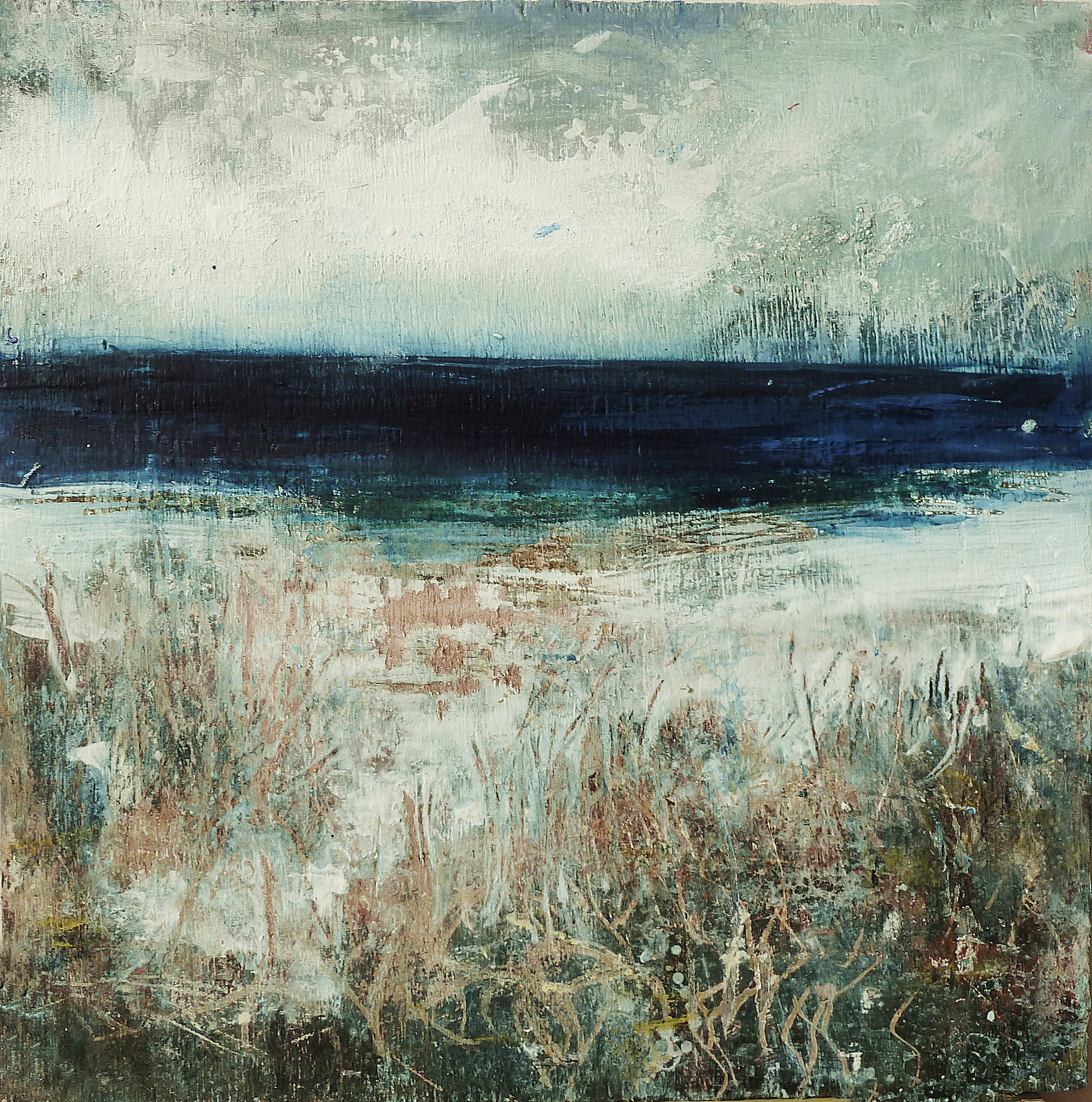
‘Coast Road near Geocrab Bay, Harris’. Mixed media on 9.5×7.5″ wood panel

‘Traigh Luskentir, Harris’. Mixed media on 9.5×7.5 wood panel

‘Moon reflected in Harris Lochan’. Mixed media on 7×4″ wood block

Today’s paintings of the Isle of Harris for the upcoming exhibition at Whitespace Gallery on the 14th – 20th July.

I’m trying to capture the way light bounces of the rocks of Harris – which is called Lewisian Gneiss after the Island of Lewis and Harris. It’s one of the oldest rocks in the world (3 billions years old) definitely the oldest in Britain,  very varied and jumbled in appearance as the original volcanic rock has  been mangled by pressure, so the geology nerds among you will know that the rocks were originally igneous (volcanic) and now metamorphic (changed by pressure, glacial action and weather).

Sometimes you’ll see glittering seams of rose quartz or various types of quartz and feldspar, which reflect the white Hebridean light in beautiful ways.

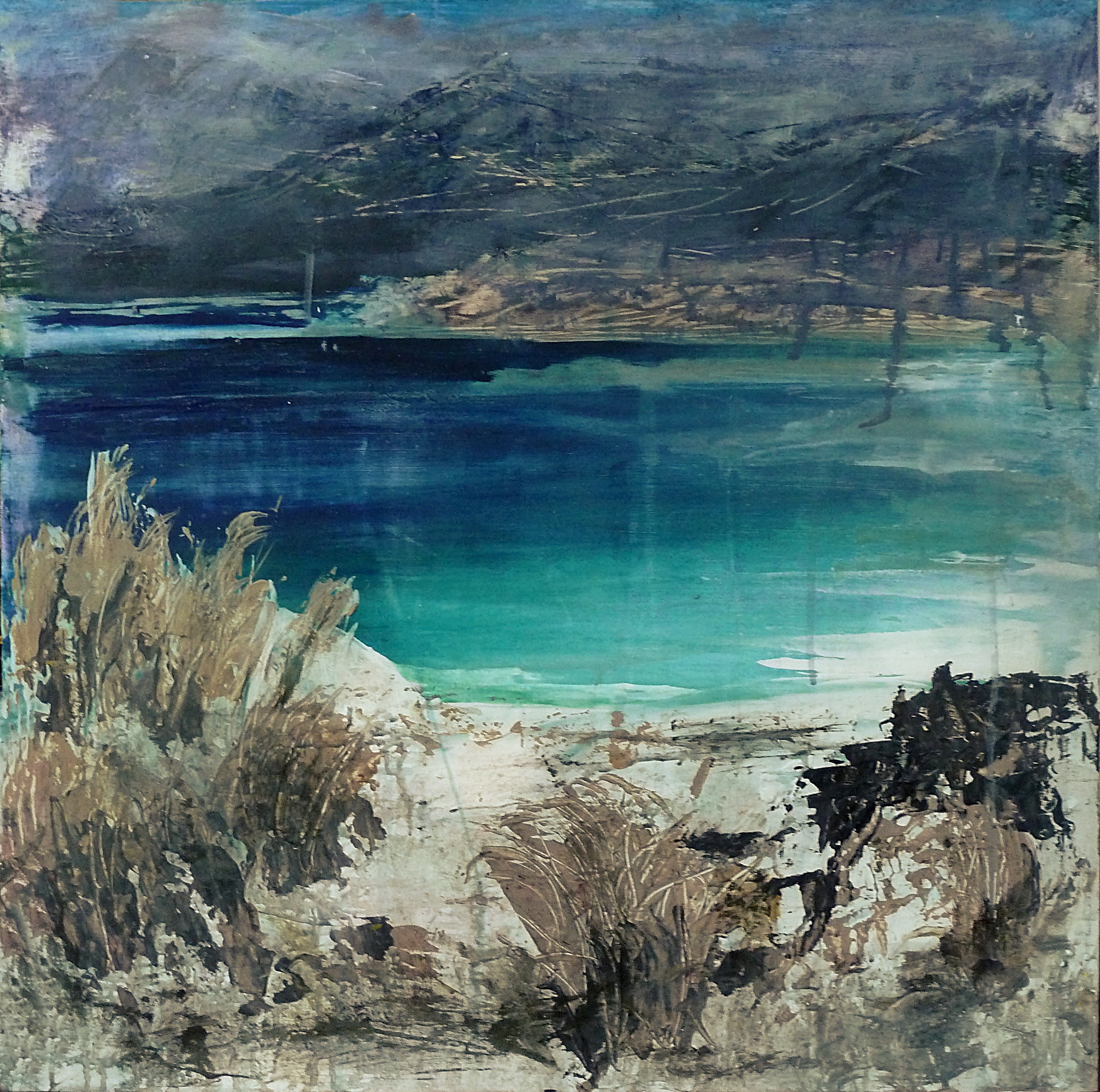
I’m also attempting more paintings of the sea and it’s difficult to avoid making it look picture postcard-like – it looks exaggerated, though the sea is even brighter than this painting of the beach at Luskentyre. I’ll probably go more abstract as the paintings get larger..


Harris paintings day 5

Today’s paintings of the luminous Na Buirgh beach on the west coast of Harris.

I’ve decided to go with the Gaelic place names for most of this series, mostly because it reflects the history of the island. Many of these are Gaelicised Norse due to Norse settlers and rulers in Hebridean history.

Na Buirgh is also written as ‘Borve’. ‘Na’ means ‘the’. Buirgh, roughly translated, means ‘burgers’ or inhabitants. It’s probably pronounced something like Na Beeyuryih.

I can’t speak Gaelic, though I know quite a few words (mostly through singing Gaelic songs and travelling through the west coast where the sign posts are in English and Gaelic). Opinion is divided on maintainance of Gaelic place names, since it costs double the money (same in Wales) but most feel it’s an essential way of keeping a language therefore a history, alive.

Of the (approximately) 26,000 plus inhabitants of the Outer Hebrides, about 50% speak Gaelic (in the 1920s it was around 75%).

There’s a lot of history surrounding survival of the Gaelic language. Since I’m not a historian I can’t do the whole subject justice here (and anyway this is an arts blog with occasional forays into other subjects) but to give a brief picture – the dropping numbers of Gaelic speakers in recent history has much to do with compulsory English taught in schools throughout the UK, but it goes back much farther than that, to the aftermath of the Jacobite wars.

It’s a history well worth exploring if you’re not familiar with it, basically Gaelic and Highland culture in general was suppressed after the final Jacobite rebellion at Culloden. Tartan was banned of course  – much later revived when Queen Victoria, much influenced by the romanticised Highland history as written by Sir Walter Scott, decided to build Balmoral and encourage the wearing of tartan and general symbols of Highland culture in general.

There is a very dark irony around that of course, since many of the more violent aspects of the destruction of Highland culture and society after 1745, in addition to the later Highland clearances, amounted to ethnic cleansing.

Written Gaelic looks unwieldy if you don’t know how to pronounce it, but hearing it spoken or sung is a different matter. Here’s acclaimed Gaelic singer Rachel Walker singing Braighe loch lall. (Braes of Locheil). If you’re interested in the translation I’ve included original Gaelic and translation below..


Lyrics: English Translation:
O thèid is gun tèid Oh I’ll go, I’ll surely go
O thèid mi thairis Oh I will go over
Gu innis nam bò To the cattle grazings
Far an ceòlmhòr ainnir Where the young women are tuneful
Sèist: Chorus (after each verse):
Ill ò bha hò Ill ò bha hò
S’na hao ri ri rì o hi S’na hao ri ri rì o hi
Hoireann o gù o hill ò bha hò Hoireann o gù o hill ò bha hò
Gu innis nam bò To the cattle grazings
Far an ceòlmhòr ainnir Where the young women are tuneful
Gu Bràighe Loch Iall To the Braes of Locheil
Far am bith fiadh s’an langan Where the bellowing stags are
Gu Bràighe Loch Iall To the Braes of Locheil
Far am bith fiadh s’an langan Where the bellowing stags are
Is earbag nan stùc And the little roe of the peaks
Tha lùghmhor eangar So nimble and lightfooted
Is earbag nan stùc And the little roe of the peaks
Tha lùghmhor eangar So nimble and lightfooted
A bhean an fhuilt rèidh Girl with the glossy hair
Guidheam fhèin dhut mo bheannachd I give you my blessing
A bhean an fhuilt rèidh Girl with the glossy hair
Guidheam fhèin dhut mo bheannachd I give you my blessing
Mo beannachd ad dhèidh My blessing go with you
Ged is fheudar bhith dealaicht Though we had to part
O thèid is gun tèid Oh I’ll go, I’ll surely go
O thèid mi dhachaidh Oh I will go home
Gu Bràighe Loch Iall To the Braes of Locheil
Far am bith fiadh s’an langan Where the bellowing stags are
(Sèist 2x) (Chorus 2x)

(from – http://www.celticlyricscorner.net )