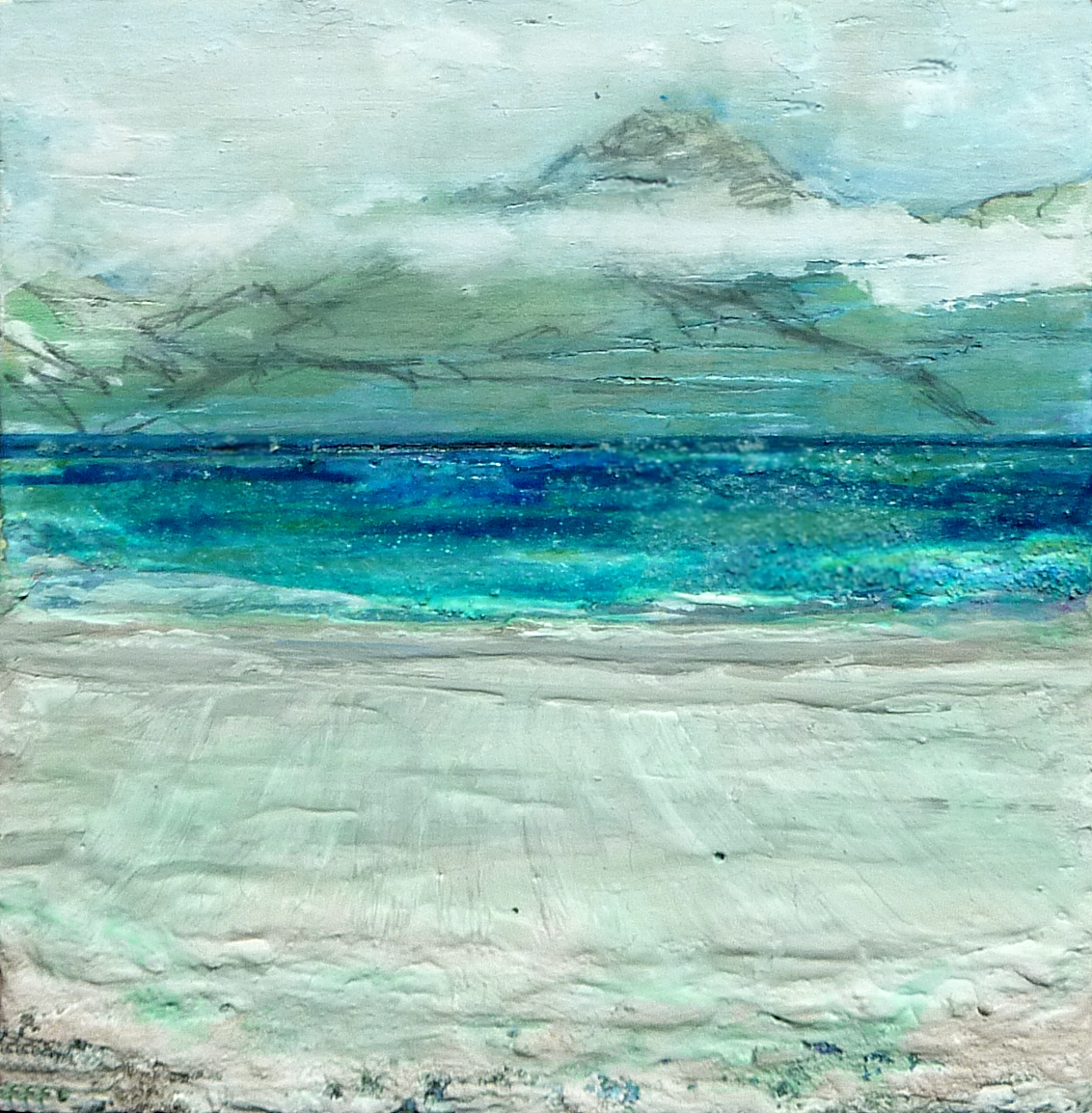
Sold. Eigg Series No. 18. Acrylic and ink on 5×5″ wood
Sold. Eigg Series No. 18. Acrylic and ink on 5×5″ wood
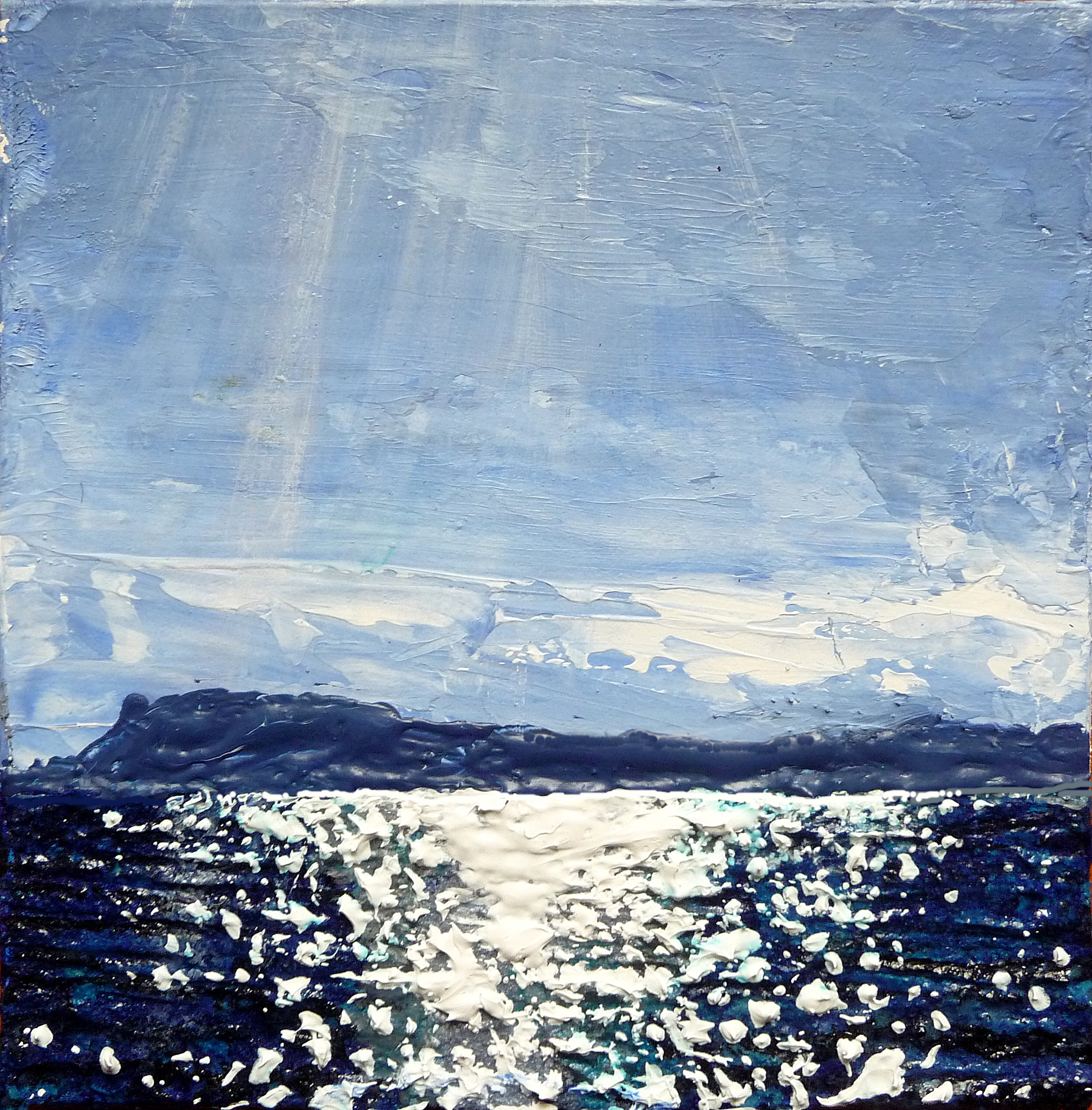
Eigg Series No. 50. Acrylic, ink, salt and varnish on 5×5″ wood
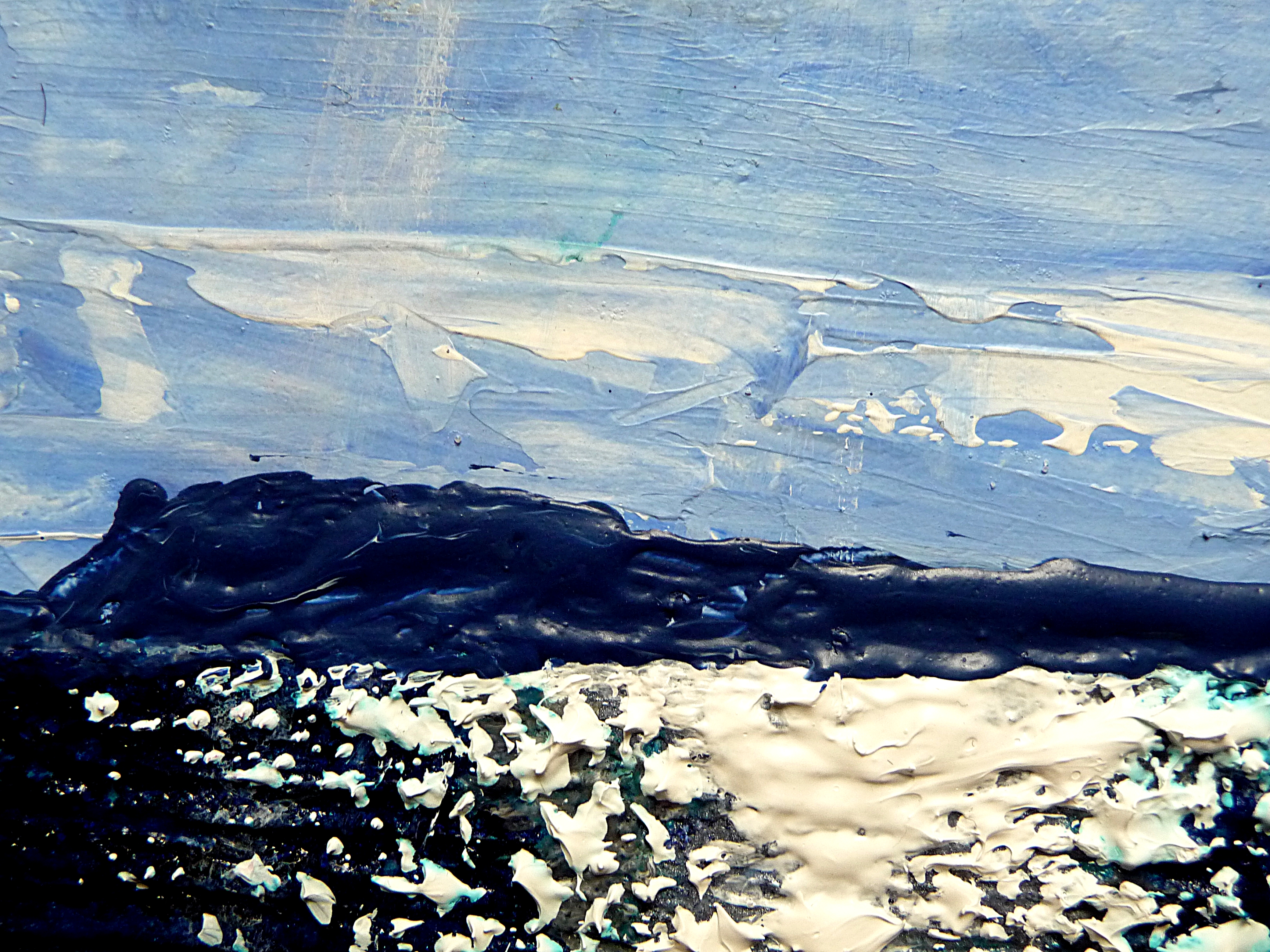 No 50; A view of Eigg from the ferry, with sunlight sparkling on the sea.
Well, this has been such an enjoyable project – mostly the daily discipline of painting, and the feedback that follows, thank you!
Also it’s been enjoyable for the chance to explore subjects I care about – landscape, ecology, social justice, history and the arts. The Isle of Eigg has been a perfect focus for that – a wonderful example of a way of living that’s collaborative, innovative, cultural and above all respectful of our planet.
I’ll be continuing the Eigg project and exhibiting new works as part of two shows this summer:
Map/address on this link – Gallery Ten
Map/Address on this link Whitespace (Whitespace is at 25 Howe Street, Edinburgh from April to August 2014)
I’ll send an emailed flyer invite to everyone whose email I have, also it will be on Facebook and Twitter
It’s been wonderful getting to know new people through the 50 Paintings Blog, many thanks for following it.
I’ll be blogging once a week with updates on paintings and exhibitions, so to receive updates by email click on ‘FOLLOW’ on the right-hand column (underneath the Facebook section)
Or click ‘like’ on the Facebook section on the right and you’ll receive facebook updates
Sincere thanks to readers, also the following Eigg people, buyers and social media sharers. It’s much appreciated!
Lucy Conway – Eigg Box
Maggie Fyffe – Eigg Island Heritage Trust
Camille Dressler – Eigg Island History
Norah Barnes and Bob Wallace – Eigg Island Eco Centre
Trevor Leat – Artist
And many thanks to buyers, I hope you enjoy the paintings! –
Alicia Devine
Alison Kidd
Angela Williams
Carol Strang
Donald Ferguson
Eilidh Soe-Paing
Francis Snee
Gillian Strang
Helen Squires
Ian Nimmo Smith
Jacqueline Tunney
Julia Campbell
Kirsten Beard
Linda Cairnes
Lucy Conway
Lynn Carter
Malcolm Strang
Norah Barnes
Oonagh Reynolds
Rosanna Law
Tony Jones
Around 20 paintings are still available at £45 each, or if you buy two – £80. If you’re interested in any of these, feel free to contact me at rose.strang@gmail.com
I wish you all a lovely summer!
Best wishes
Rose x
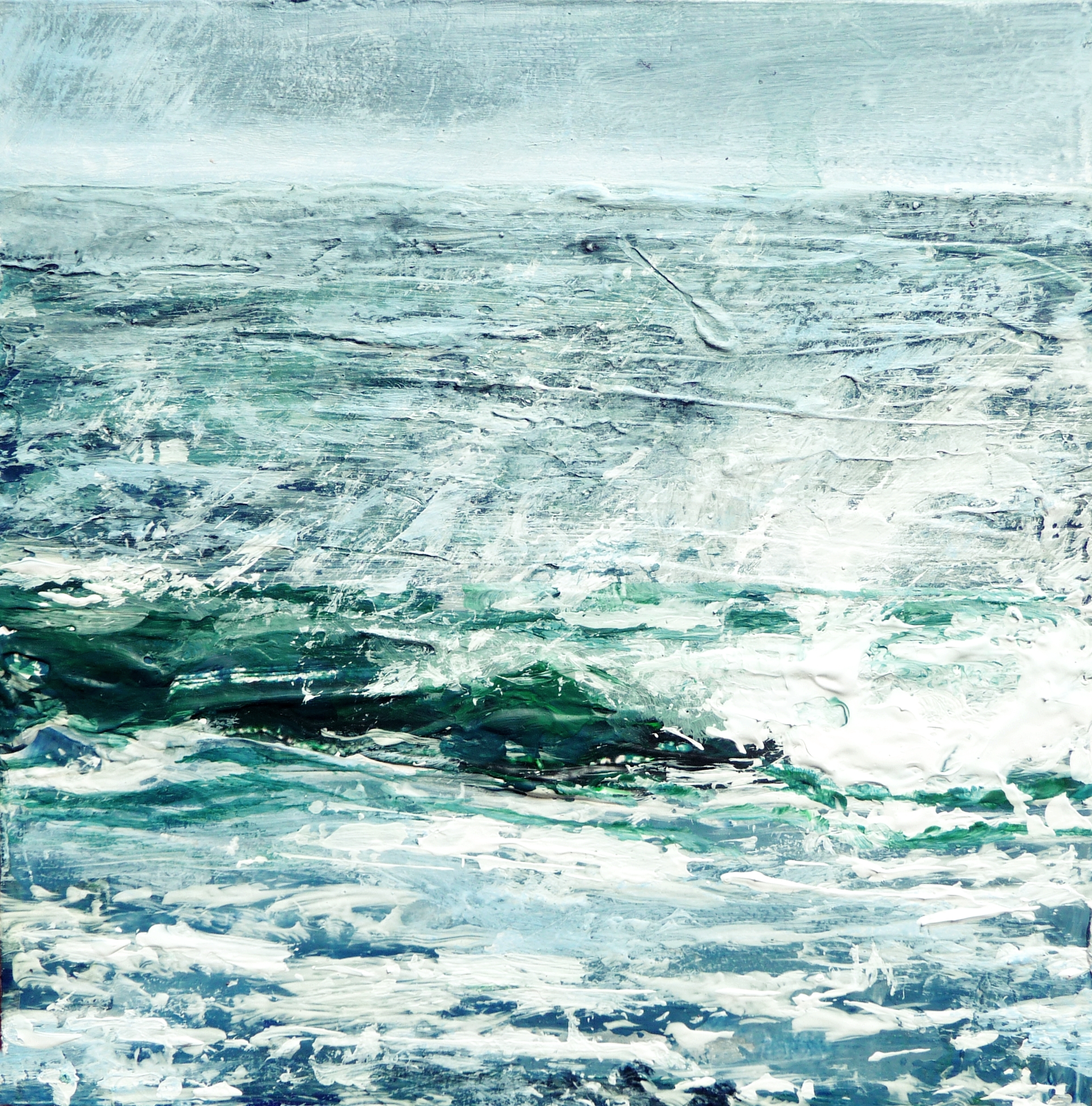
Eigg Series No. 48. Acrylic on 5×5″ wood
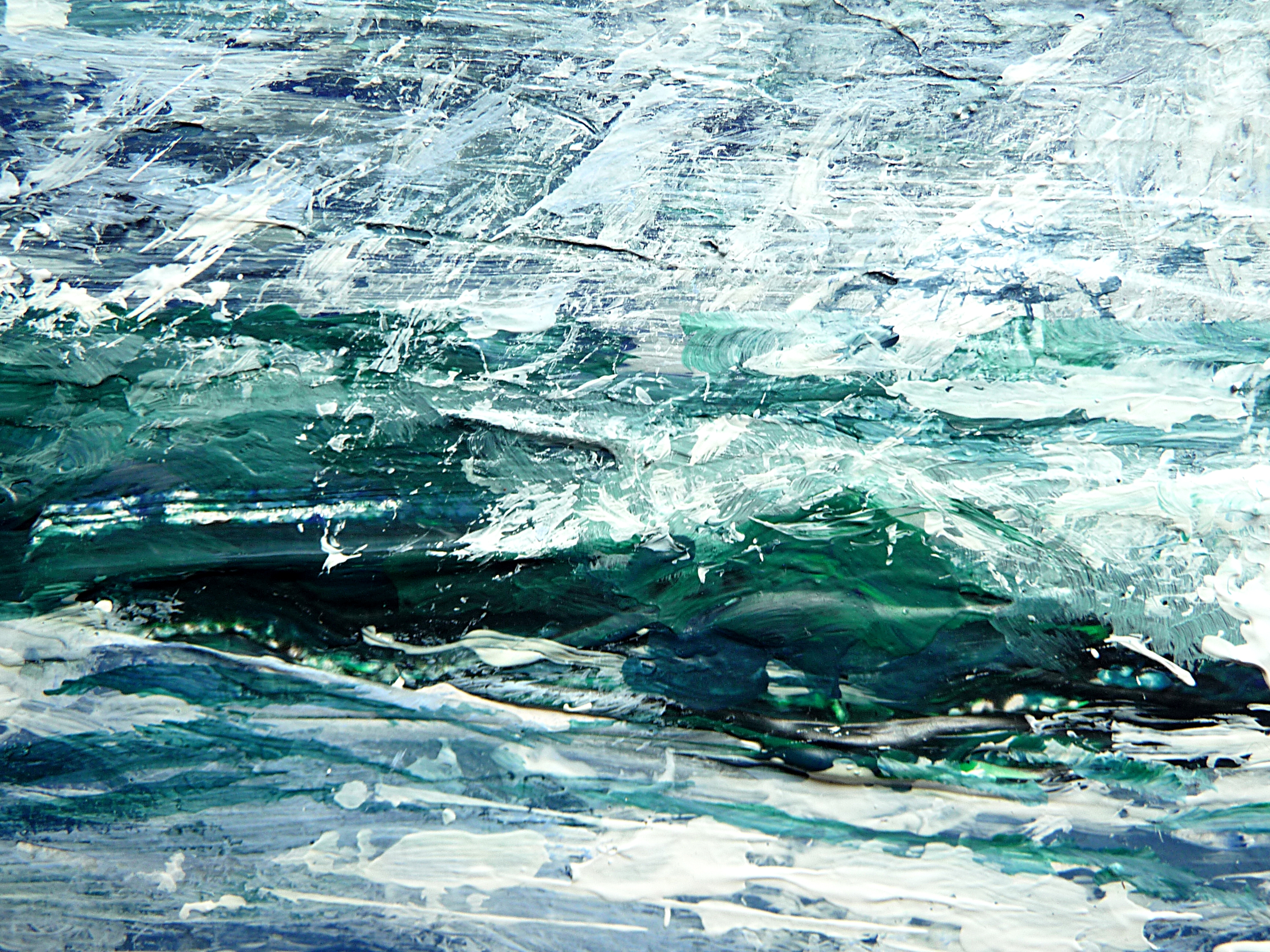 Today’s painting; Sea-spray and turquoise wave in Singing Sands Bay.
I haven’t included any Scottish artists so far in this blog, or female artists come to that, very remiss! And as it happens, my two favourite Scottish landscape painters are female; Joan Eardley and Kate Downie.
Eardley was born in Essex to a Scottish mother and English father then later, in 1940, moved to Glasgow and enrolled at Glasgow School of Art. (Incidentally you may have heard the sad news about the fire that recently broke out at Glasgow’s School of Art. I was relieved to hear that there was just 10% damage, but there was also quite a lot of damage to art work including student’s degree work for this year. Terrible news, but I have no doubt that restoration of this beautiful Rennie MacIntosh-designed building will be meticulous.

Brother and Sister. Joan Eardley
Eardley was renowned for her portraits of children in Glasgow tenements in the 40s and 50s, though as a landscape painter I’m most interested in her landscapes. It’s said she was influenced by the Scottish Colourists, but I tend to think her work is more intensely expressive and semi-abstract – far less post-impressionist in feel.
She eventually set up a studio in Catterline near Aberdeen and focused on landscape painting while there.
I’ve long admired her expressive, immediate and atmospheric style; she has that visceral quality to her work – a way of making the viewer ‘feel there’. Although highly acclaimed in the art world, she perhaps never gained the full recognition she deserved due to her untimely death at the age of 42.
Works by Eardley –
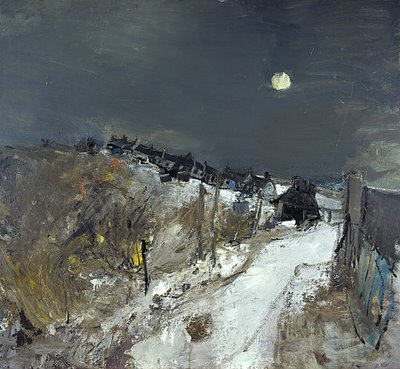
Catterline in Winter. Joan Eardley
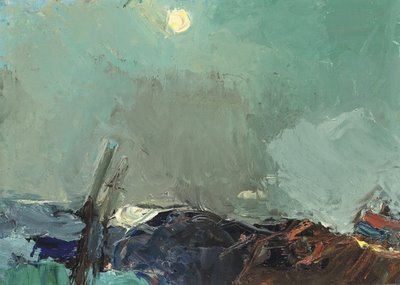
Sea and Sky. Joan Eardley
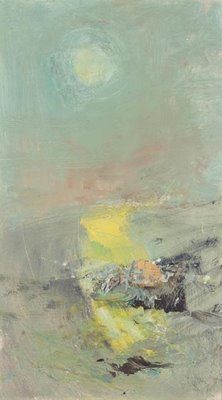
The Sun and the Sea

Todness Lighthouse, Catterline
Kate Downie was born of British parents in America, but moved to Aberdeen at the age of 7. She’s a high profile artist within Scotland and was recently President of the Society of Scottish Artists. Though influenced in many ways by Eardley’s work, Downie’s style is far more graphic, less textural and often includes line work in ink.
I love this combination of line and free paint, also her sense of travel – of moving through a changing landscape and the atmosphere of changing light
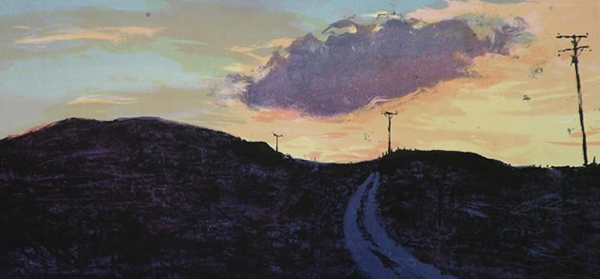
Indigo Road. Kate Downie
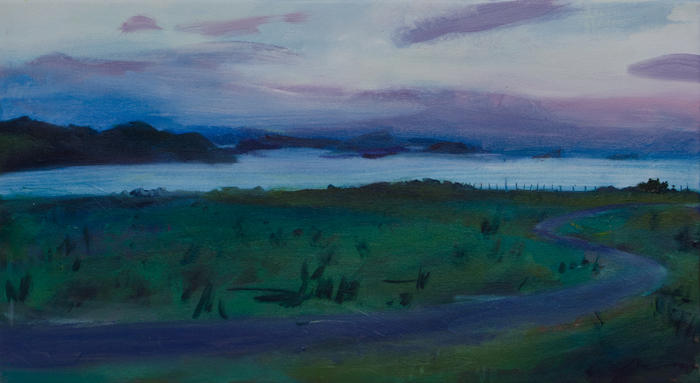
The Long Walk Home. Kate Downie
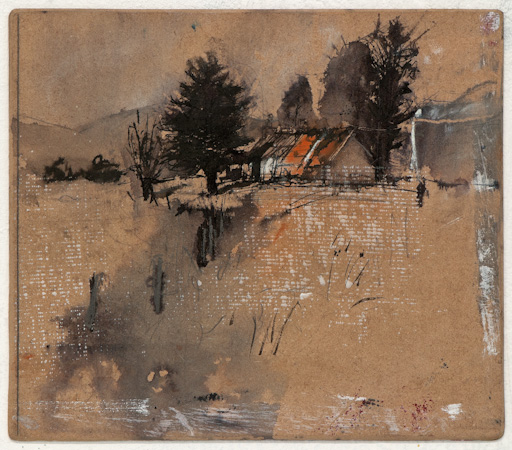
River Croft. Kate Downie
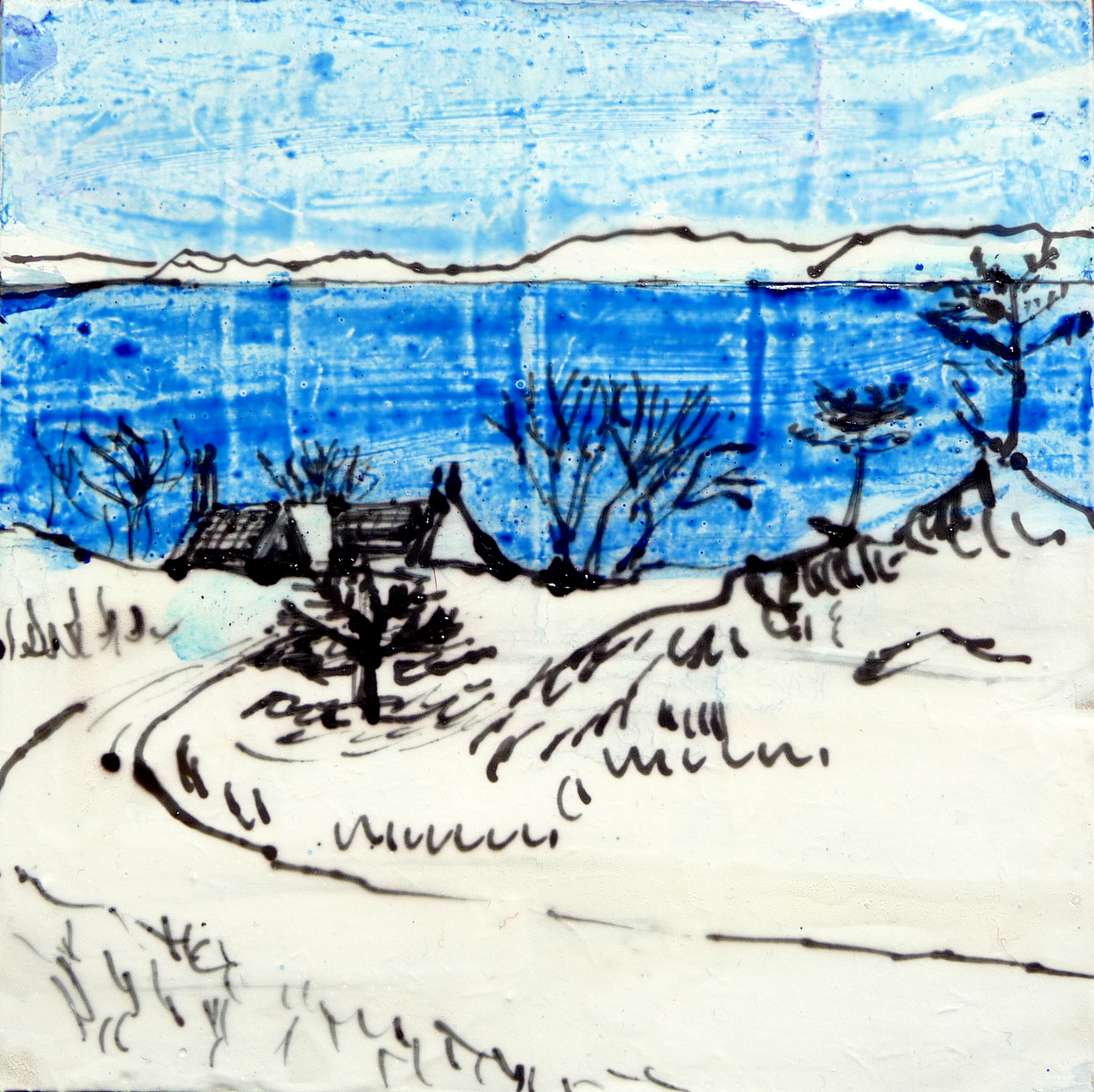
Eigg Series No. 46. Ink on 5×5″ wood
 Today’s painting; a sketch of the view to the mainland from Eigg’s east coast, on primed wood in pen and black ink with a blue ink colour wash, sealed with varnish
It’s been a busy two days, with a visit to Dunbar and a trip to East Lothian today where we discovered the 16th century Red Tower. Apparently it was used as a halfway point for pilgrims on their way to St Andrews further north.
I love the red sandstone characteristic of East Lothian, and its beautiful beaches..


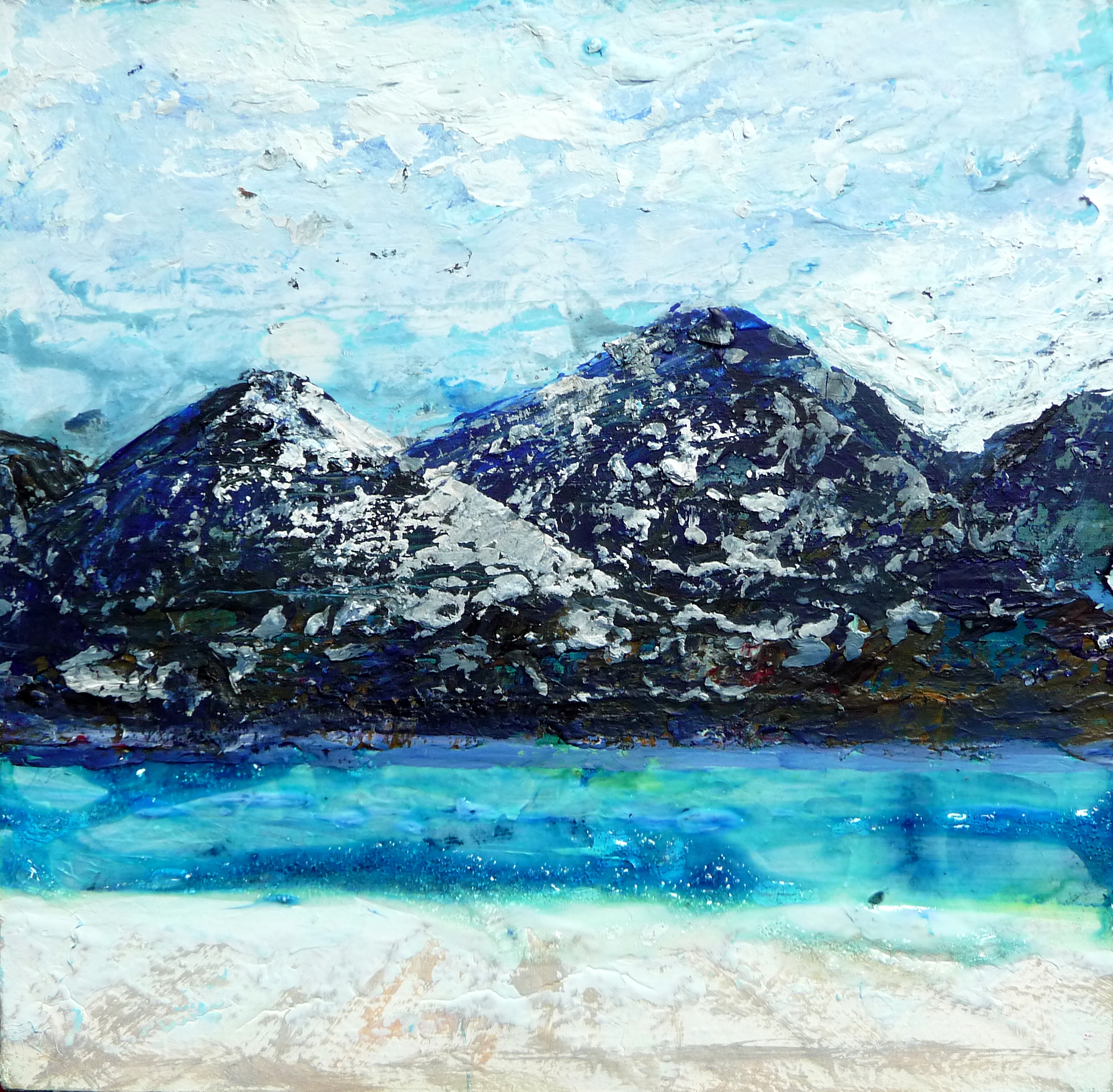
Eigg Series No. 45. Acrylic and ink on 5×5″ wood
 Today’s painting; a view of the mountains of Rum from Laig Bay in acrylic and ink
In yesterday’s blog I described the way I became more familiar with Beuy’s work through the Demarco archives, but my perspective was also coloured by articles I’d read about Beuys..
There was an amount of controversy around the story of Beuys having been healed by tartar tribes with felt and fat after being shot down in his plane, but to me, the story serves its purpose; to transmit a visceral sense of what Beuys understood as the important elements of our existence – for example protection, nurture and survival. Also compassion for our fellow human beings, regardless of ideologies or comparative status.

Joseph Beuys on Rannoch Moor (Demarco archives)
Going through the archives , I dscovered a short video made around 1970 when Beuys visited Scotland at Demarco’s invitation. I was immediately fascinated by the grainy black and white footage of a windscreen wiper, filmed from inside one of those tiny 70s style cars, rain lashing against the screen and views of the Scottish Highlands flashing past. Eventually the car stops and Beuys walks out onto Rannoch Moor.
There’s something in his hand which appears to be pulsing and I wonder if it’s a live animal. In close-up I can see it’s a lump of gelatin formed into the shape of a heart, Beuys then makes a hole in the ground and buries the gelatin heart in the earth of Rannoch Moor, suggesting a healing gesture. This possibly refers to the painful history of Highlanders over the centuries – the massacre of 1692 in nearby Glencoe following the beginning of the Jacobite uprising, and later the Clearances .
Today Rannoch Moor is appreciated by tourists and mountaineers as an area of stark beauty, but its tree-less emptiness is due to ecological change as well as the effects of tree clearing for sheep during the Highland Clearances
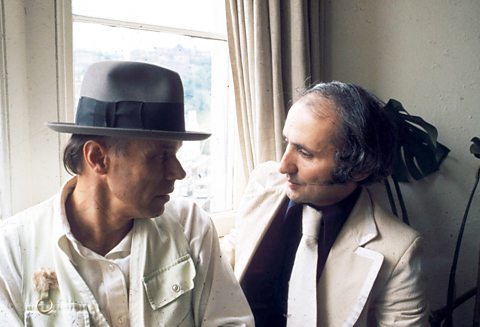
Beuys died in 1984 of a heart condition. I once interviewed Richard Demarco as part of my
Beuys (left) and Demarco (right)
post graduate studies in Museum and Gallery curating and asked about the ways Beuys had influenced him as a gallery director and arts curator, to which he replied; ‘I miss him, he made me feel not alone. When he first visited the Demarco Gallery he questioned it and found it wanting, and though it was painful, having to change, I knew he was right and it was inevitable’.
Jospeh Beuys and Jimmy Boyle (Demarco archives)
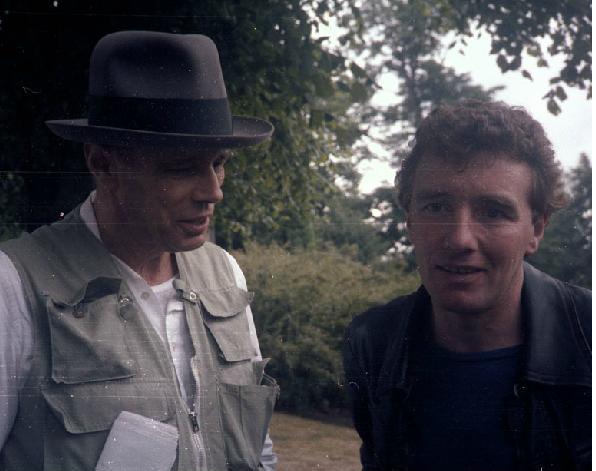
The subsequent changes, which included supporting an art exhibition of Jimmy Boyle who had been imprisoned for murder and was on parole, resulted in The Demarco Gallery’s Arts Council funding being cut. For Demarco and Beuys, the exhibition had been a natural development of the idea of art as a healing or redemptive influence.
I Like America and America Likes Me. Coyote. Beuys, 1965
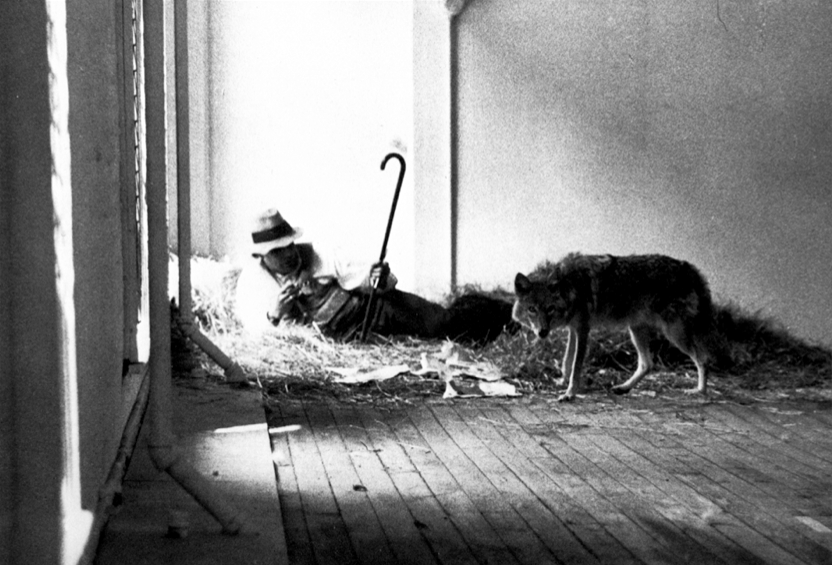
On first meeting Beuys, while on parole, Boyle remarked ‘I am the coyote’. He’d seen Beuys’s work from 1968; ‘I like America and America Likes Me’. In which Beuys spent three days in a small space with a coyote. The coyote, similar to a fox in the UK, is seen as vermin in America.
For Beuys it represented aspects of native American culture that he was interested in, and the notion that society should include outsiders or those who can’t align themselves with mainstream approaches or ideologies. This concept related to Beuy’s concept of ‘social sculpture’ – the idea that art communicates across the spectrum of society – the opposite of exclusive or elitist presentations of art. One of Beuy’s most well-known statements is ‘everyone is an artist’, by which he meant we can all be creative, we can step beyond our modus operandi, however un-comfortable that may feel, to communicate with others and create new ways of thinking or collaborating
A legacy of this idea might be multi-disciplinary art projects – acknowledgement of the diverse influences and interests involved in creativity. Also the idea that artworks are not just a product in themselves, but that art has a deeper, more profound human value, going beyond materialism.
Lastly on a personal note, I remember attending an art exhibition organised by the Demarco Foundation in 2000, swanning around in a nice dress chatting to people, as you do at exhibitions. Richard Demarco said to me ‘I hope you know why you’re here’. I’m not 100% sure I did at that time!
But I also remember, a few years later (while driving to Stoke on Trent where I began work as an arts curator for the NHS) listening to the interview I’d taped with Richard Demarco where he discussed Beuys and the context of art; ‘You know where you are in a gallery, there’s the art on the walls, in gold frames or whatever, but though it’s difficult, as an artist you have to take the road that’s harder, it can be more painful’.
Working for the NHS was more painful, Demarco was right about that. But it was valuable. Nowadays the influence of Beuys and Demarco on my work as an artist, is my wish to embrace a wider context of art. Although I exhibit in galleries, I avoid government funding and try to position the work I do, modest as it is, in a setting that has an everyday context which I hope interweaves with other areas and ways of life.
In the next few days towards the end of 50 paintings of Eigg, I hope to include an interview with Norah Barnes, manager of Eigg’s Eco Centre
Links relating to this blog –
http://en.wikipedia.org/wiki/Joseph_Beuys
http://en.wikipedia.org/wiki/Richard_Demarco
http://www.tate.org.uk/whats-on/tate-modern/exhibition/joseph-beuys-actions-vitrines-environments

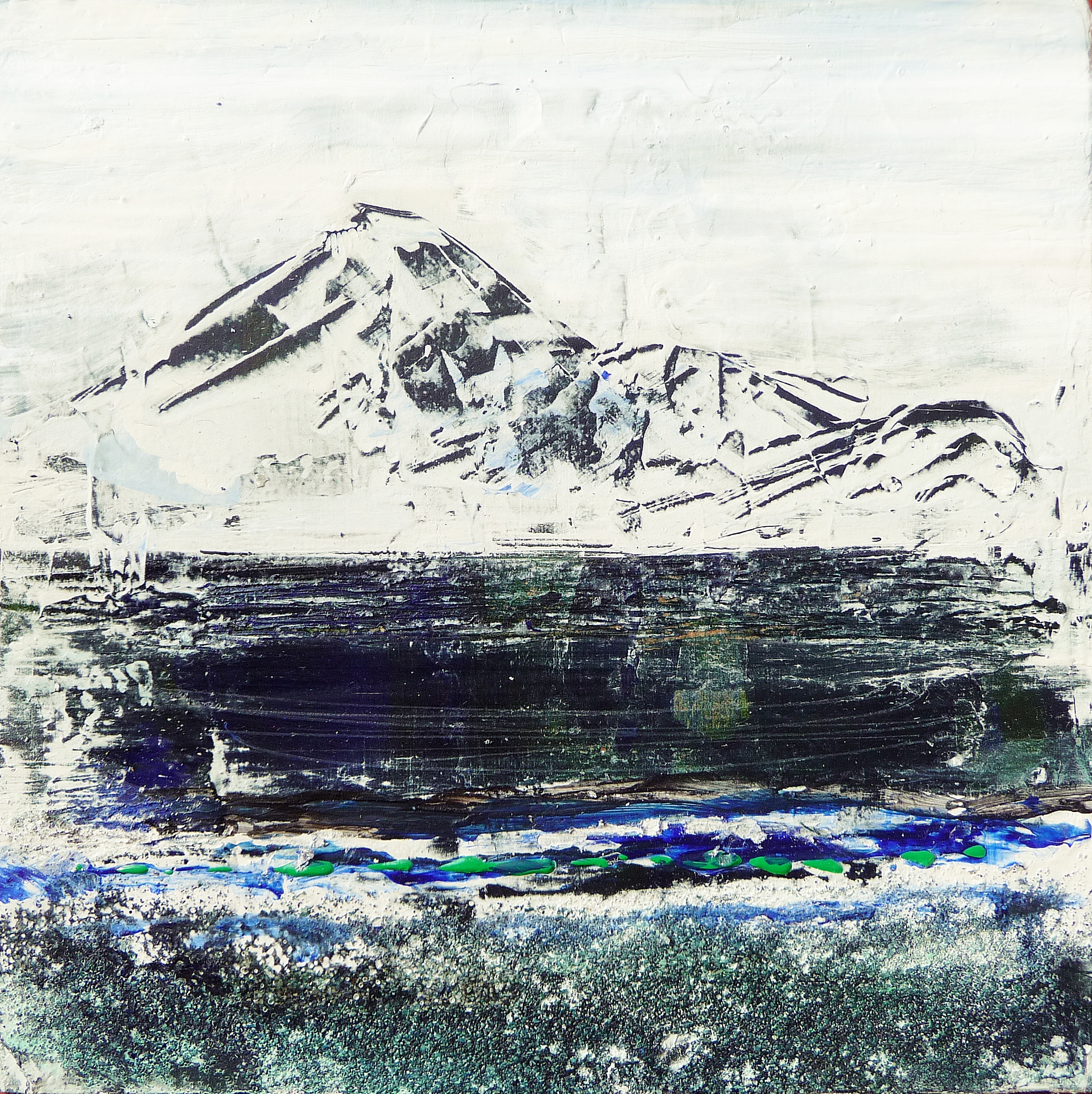
Eigg Series Day 44. Acrylic, ink and sand on 5×5″ wood
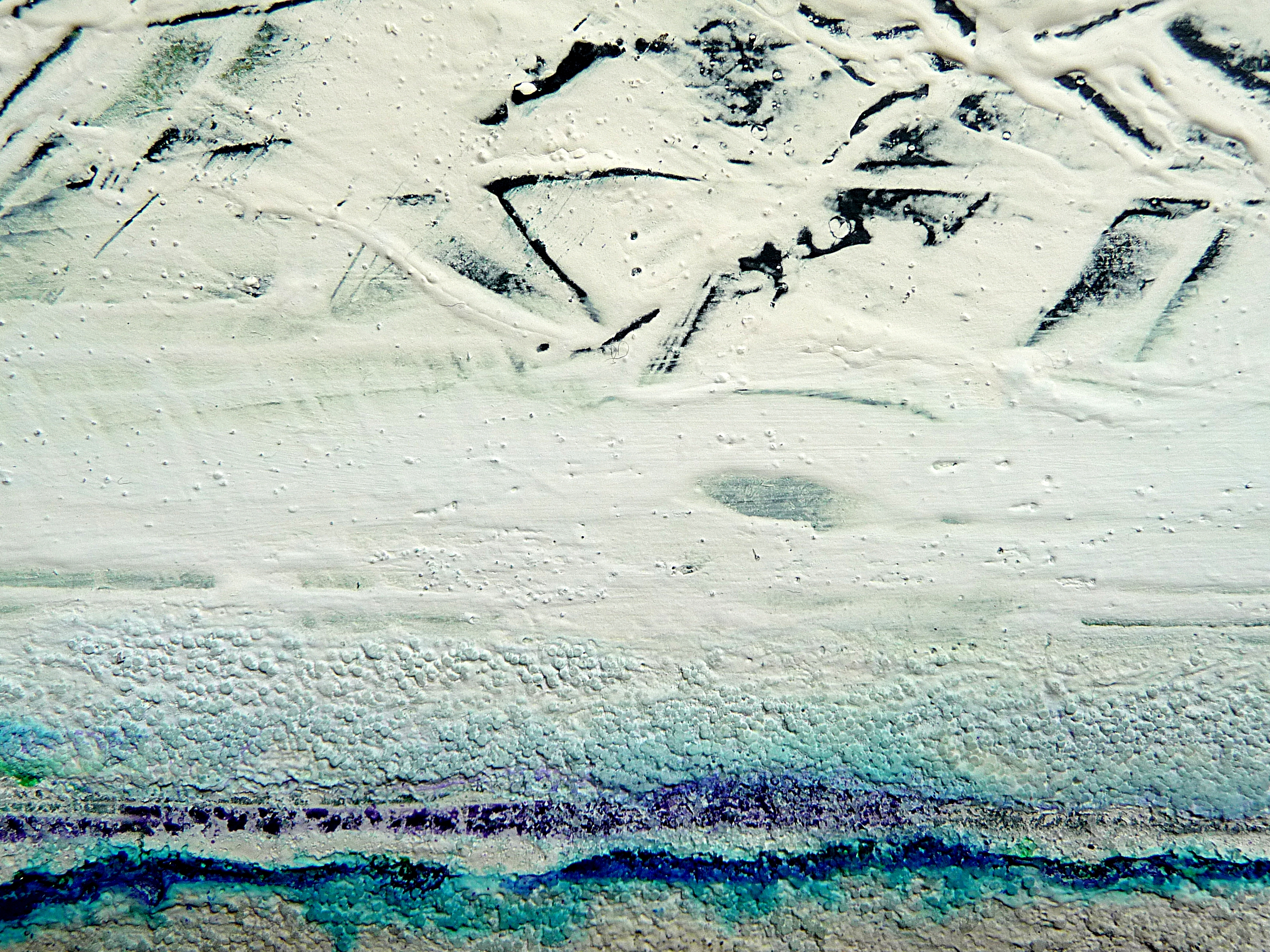 Today’s painting; mountains of Rum from Laig Bay. A deep blue/green base of acrylic was overlayed with gesso and white paint, into which mountain shapes were scraped with a palette knife. The foreground includes sand (from Laig Bay!) and subtle blue/green ink stain
Yesterday I mentioned that I’d explore Joseph Beuys and his work in today’s blog. In the process of writing this I’ve realised how influential Beuy’s work has been on my life as an artist and curator, so I’ll make this a two-part blog, to be continued tomorrow.
While at art college, we didn’t focus on Beuys particularly, though he was there in the background – described as an important artist who’d influenced or pioneered creative approaches such as installations, interventions and ‘happenings’ (such a 60s sounding term now!)
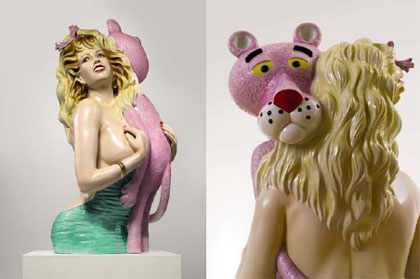
Jeff Koons, Pink Panther. 1988
My time at art college was post-80s; Jeff Koons, Saatchi and Young British artists dominated our artistic horizons. The artistic mood was sensationalist, at times flippant and somewhat cynical. One tutor, advising on ways of getting noticed in the art world, stated ‘if all else fails, get your kit off’ (and I’m afraid to say most of us did at some point in our three year degree course, as part of cringe-worthy video installations!).
We’d discuss how life might be post-art college, and for some of the art students I spoke to, the pinnacle of artistic endeavour would be to have your work included in the Royal Bank of Scotland’s art collection, or similar.
It would have been utterly uncool to align oneself with anything resembling an arts manifesto, or statement of intent, and needless to say this was an atmosphere entirely unrelated to Beuy’s involvement in, for example, ecology (he was a founder member of the Green Party) his post-war concern with art as a means of communication and healing, or his role as a pedagogue and (self appointed) shaman.
What seemed to remain from his artistic legacy was the art installation; an interesting creative approach in itself which allowed work to be seen in context, relating to its environment and removing art from a conventional gallery setting. But in some ways it had perhaps become a marker of ‘contemporary’, therefore cool, indicating awareness of the current art milieu.
My proper introduction to Beuys was through mysterious anecdotes, and in a sense it was exactly that – a proper introduction – since Beuy’s work was never meant to be experienced in a dry intellectual context.
I’d graduated from art college, and felt instinctively unmoved by the usual arts career ladder. Pre-art college I’d attended various arts and theatre events at the Demarco Gallery in Edinburgh which had been an inspiration, so I decided to work with the Demarco European Art Foundation. (The D.E.A.F.’s purpose was to promote artistic dialogue between European countries. Its director, Richard Demarco, had fostered numerous fruitful connections with European artists over the decades, and creative connections with war-torn countries.)
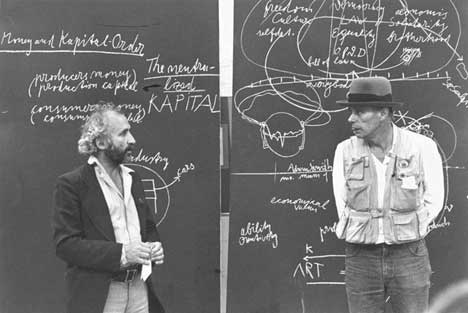
Joseph Beuys and Richard Demarco
Beuys had been central to the development of Richard Demarco’s approach as gallery director and arts impressario. Sifting through the arts archives one day in 1999, I came across the anecdote of how the two met, which went something like this:
Richard Demarco, an Italo/Scot gallery director decidedly at odds with the parochial Edinburgh arts scene, traveled to Kassel, Germany in 1968 where he met, among others, Joseph Beuys (an artist whose reputation was already becoming fairly stellar though pretty much unheard of in Edinburgh). Observing that Beuys was surrounded by a small throng of acolytes in the gallery, Demarco approached him and simply handed him several postcards. They showed Scottish highland scenery; a stag, mountains, desolate moorland…
Beuys examined the postcards then said to Demarco; ‘You show me the land of Macbeth, when shall we two meet again, in thunder, lightning or in rain? When the hurlyburly’s done, when the battle’s fought and won’.
Demarco knew that Beuy’s work centered around the concept of healing in the post WW2 climate. Beuys was also interested in Celtic mythology as a means of a shared European identity. This echoed the role that Demarco had played (and still does at the age of 83) in developing the Edinburgh Festival, which had been set up post WW2 as a means of promoting peaceful cultural dialogue across Europe. (Demarco was a co-founder of the original Traverse Theatre).
Demarco invited Beuys to Edinburgh and the resulting exhibition ‘Strategy Get Arts’ – a celebration of art from Dusseldorf – took place at Edinburgh Art College. Demarco said at the time;

Richard Demarco outside his Melville Street Gallery in 1967
‘I’d always wanted an exhibition which would restore my faith in the activity of the visual artist in 20th century society, and which would help redefine the role of the gallery director. I had looked for an exhibition which would emphasise the artist’s role as a powerful defender of the truth inherent in fairy tales and as a magician able to revive our sense of wonder. I wanted an exhibition which would free the artist if he wished from the responsibility of making master works, revealing more clearly his act of creating and his acceptance of his role as a performer involving every new means of communication with the so-called layman. I wanted an exhibition which would weaken the spirit of materialism, from which more than ever the artist must rescue us’.
Strong, inspiring words (aside perhaps from the repetition of ‘he’!) But this was the 70s after all and Demarco’s fostering of the arts included collaborations with talented influential female artists such as Marina Abramovic and Barbara Hepworth.
There was much literature in the archives pertaining to Beuys, lots of flyers, related letters and other miscellaneous items, but one rainy afternoon I came across a print by Beuys. It depicted a perfectly drawn clover leaf in the middle of a large piece of paper against a simple brush-sweep of clay coloured paint (it might have actually been watered down clay). I was moved by the simplicity of the image; the sense of the importance of this tiny weed as well as the humility of the artist’s approach.
Beuys’s drawings were wonderful – precise, expressive and minimal, with the sense of total presence or immersion in the work. His first interests while growing up in Krefeld, Germany were botany and science, and he had deep respect for the natural world, so this reflected in many of his earlier drawings. Beuys went on to become a founder member of the Green Party and one of his later projects (in 1982) included the 7000 Oaks Project, for which he planted 7000 oaks in the city of Kassel, Germany, each oak accompanied by a basalt stone.
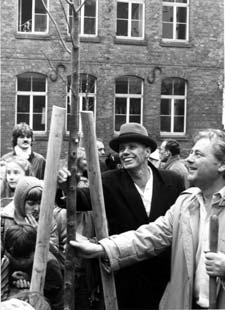
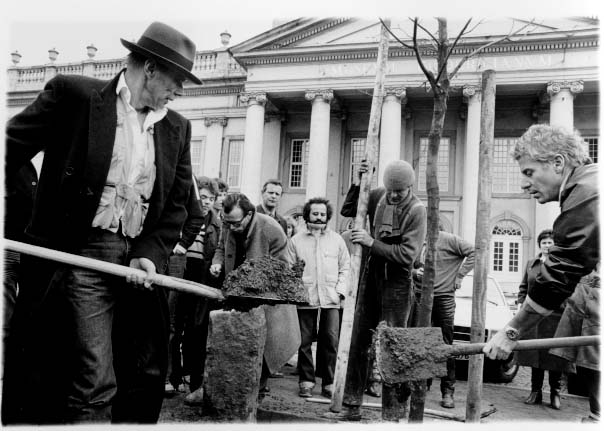
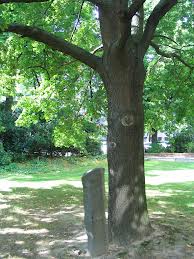
‘I believe that planting these oaks is necessary not only in biospheric terms, that is to say, in the context of matter and ecology, but in that it will raise ecological consciousness – raise it increasingly, in the course of the years to come, because we shall never stop planting.
So now we have six- and seven-year-old oaks, and the stone dominates them. In a few years’ time, stone and tree will be in balance, and in twenty to thirty years’ time we may see that gradually, the stone has become an adjunct at the foot of the oak or whatever tree it may be’. Joseph Beuys
The above statement is characteristic of Beuys; slightly obscure, not spelling out the precise meaning of the basalt stones. In a way it’s a pity he explained it at all; because it’s the presence of the stones; at first dominant then gradually becoming a footnote to the trees, that would allow passers-by to feel the message of the work in a visceral sense.
This visceral quality was an important element to Beuy’s artworks. The story, or myth, goes that Beuys, as a fighter pilot in the Lufwaffe, was shot down, landing in the Crimea where he was taken in by a Tartar tribe who rescued him by wrapping him in felt and fat – two natural elements which appeared again and again in his work.
Tomorrow I’ll explore the ways that Beuys incorporated these ideas into his work, including a healing ‘intervention’ on Scotland’s Rannoch Moor, and his unique views on the way that our society values art
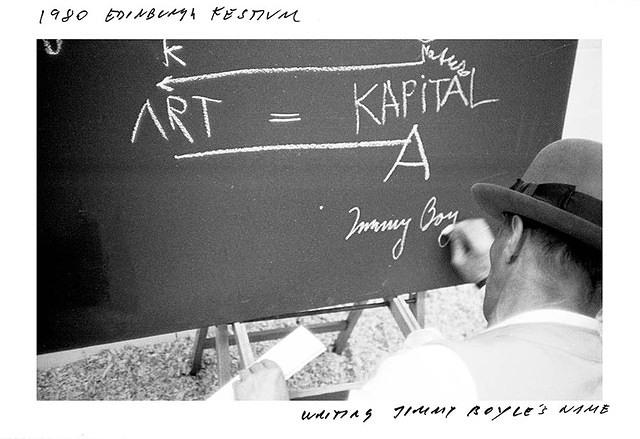
From the Demarco archives ‘Art = Kapital’
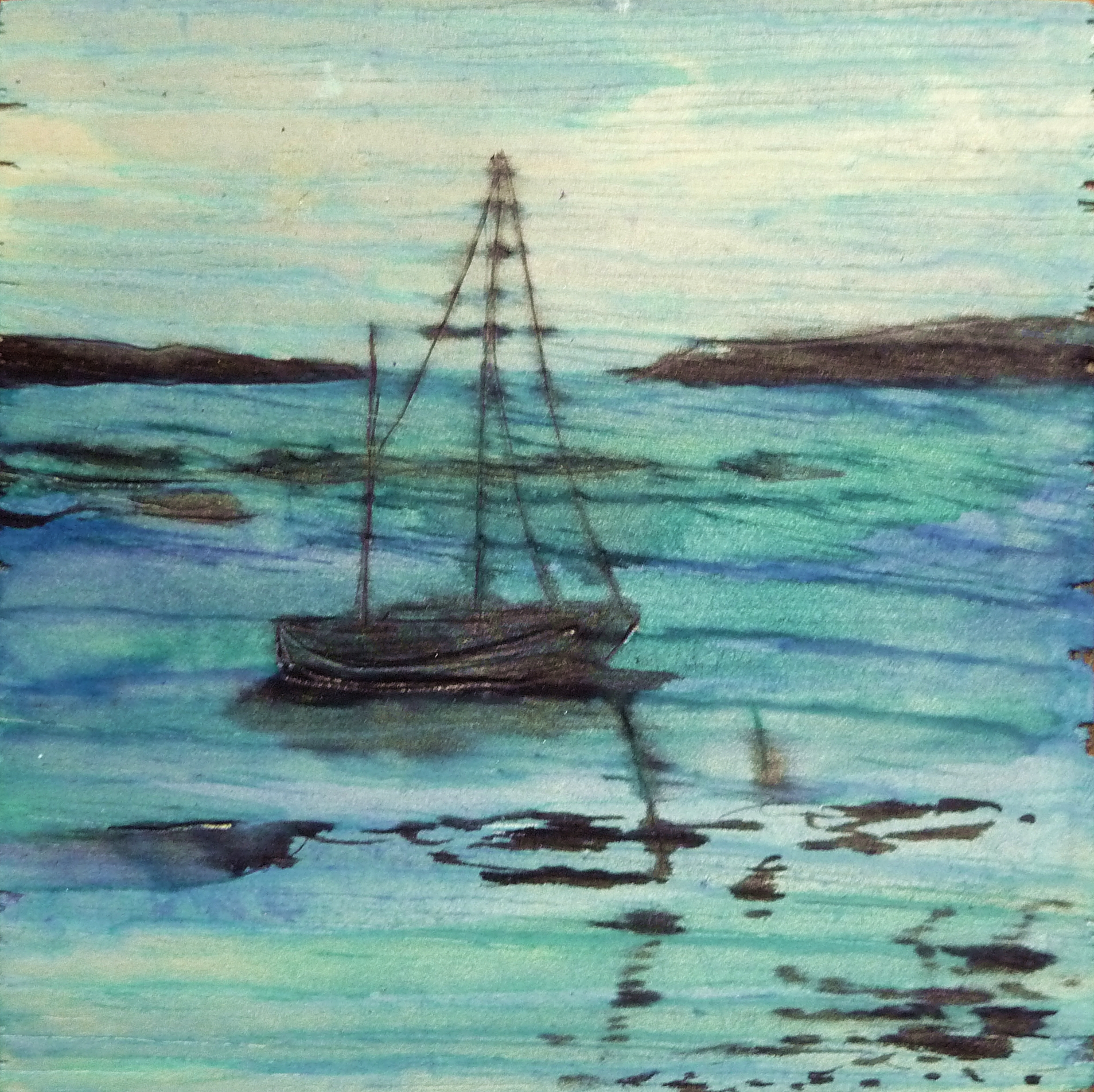
Eigg Series No. 42. Ink on 5×5″ wood
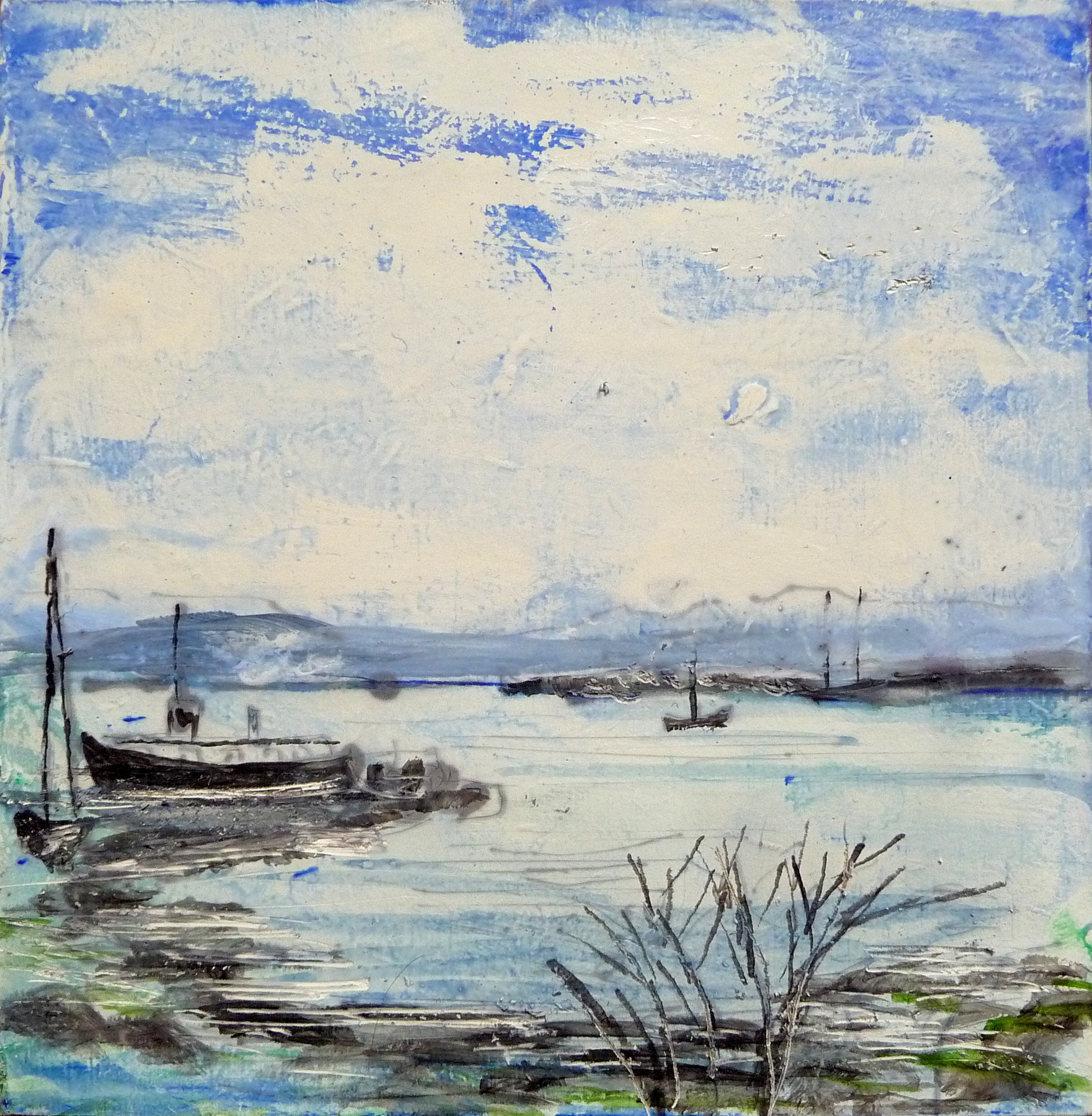
Igg Series No. 43. Acrylic and ink on 5×5″ wood

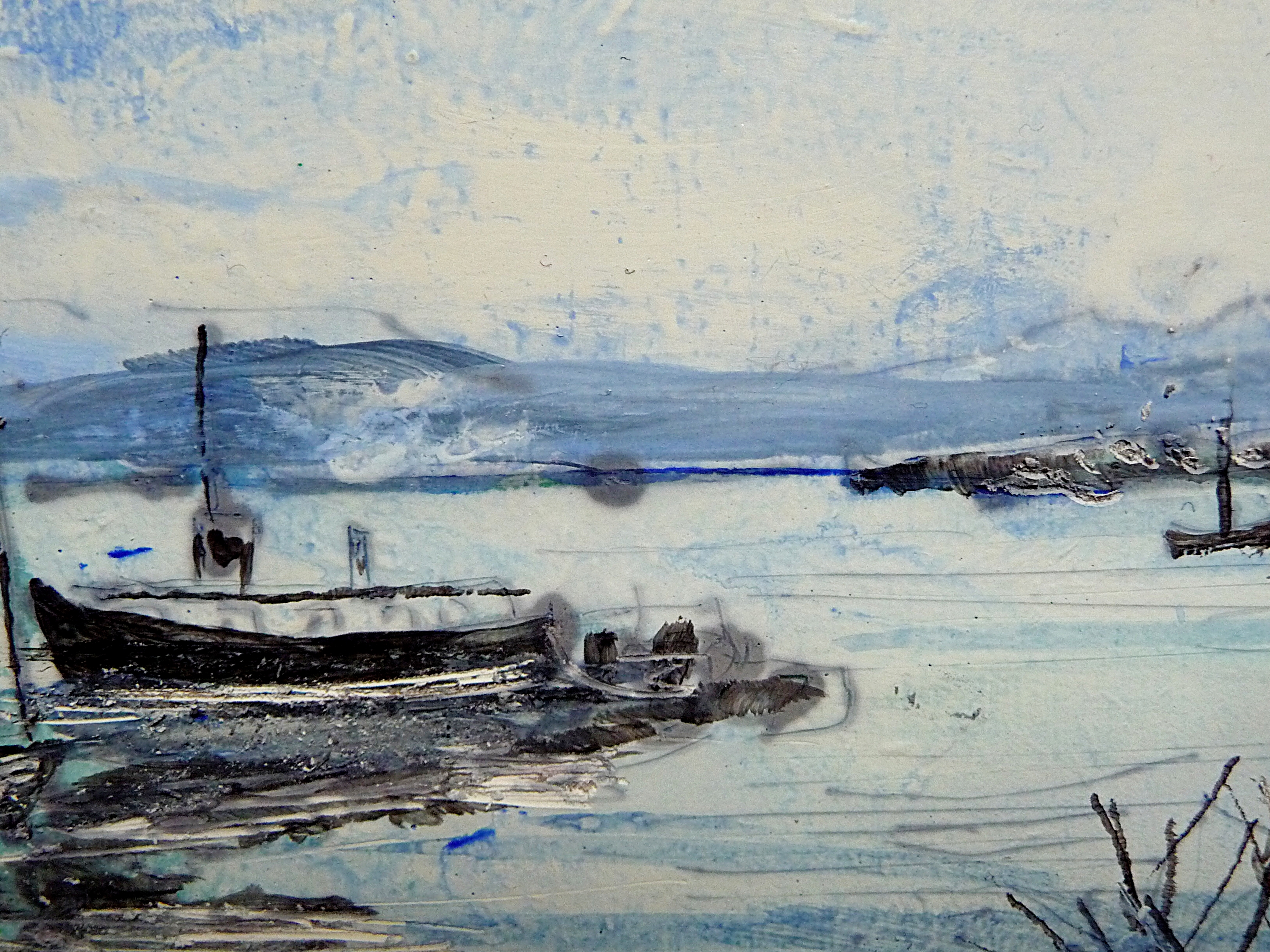 Today’s paintings; two simple sketches on wood of boats in the Pier Bay on the east coast of Eigg.
I’m offering these two paintings as a pair at £60
Recently I was involved in an interesting discussion about literalism in art; for example themes that are non-abstract and can be read as symbols or allegories, or which tell a story or narrative. A recent example might be Grayson Perry’s The Vanity of Small Differences (which refers to the story of The Rake’s Progress as depicted by Hogarth).
Without going into all the history, I’d say it’s quite a British tradition to view art in this way – as a means of telling a story. In the UK there’s also still a tendency perhaps to admire or prefer realist, or photo realist art as opposed to abstract work where meanings are unclear. For many, it feels more comfortable to understand exactly what the artist is telling us!
I don’t speak as an artist here particularly; I’m not attempting to break traditions or challenge ideas of what art can be (I’ll leave that to the geniuses that come along every century or so!). But I do hold a strong belief that art, at its highest level, is not easy to paraphrase or pin down to precise meaning
There are many reasons for this, one being that a truly creative mind doesn’t seek to reflect the status quo, but rather explores possibilities. Institutions, art colleges, academia, political influence through public funding – all of these can be a kind of death knell to creative thought processes.
One of the artists whose work I most admire, Joseph Beuys, spent his lifetime eluding these influences. Taken separately, his works individually aren’t easily accessible or understood, but taken as a whole his work becomes enriching as it’s explored more deeply.
I have a free day tomorrow to research online and indulge myself in appreciation of Beuys, so I’ll continue this theme tomorrow and I hope you’ll find it interesting!
In the meantime, some images..

7000 oaks project

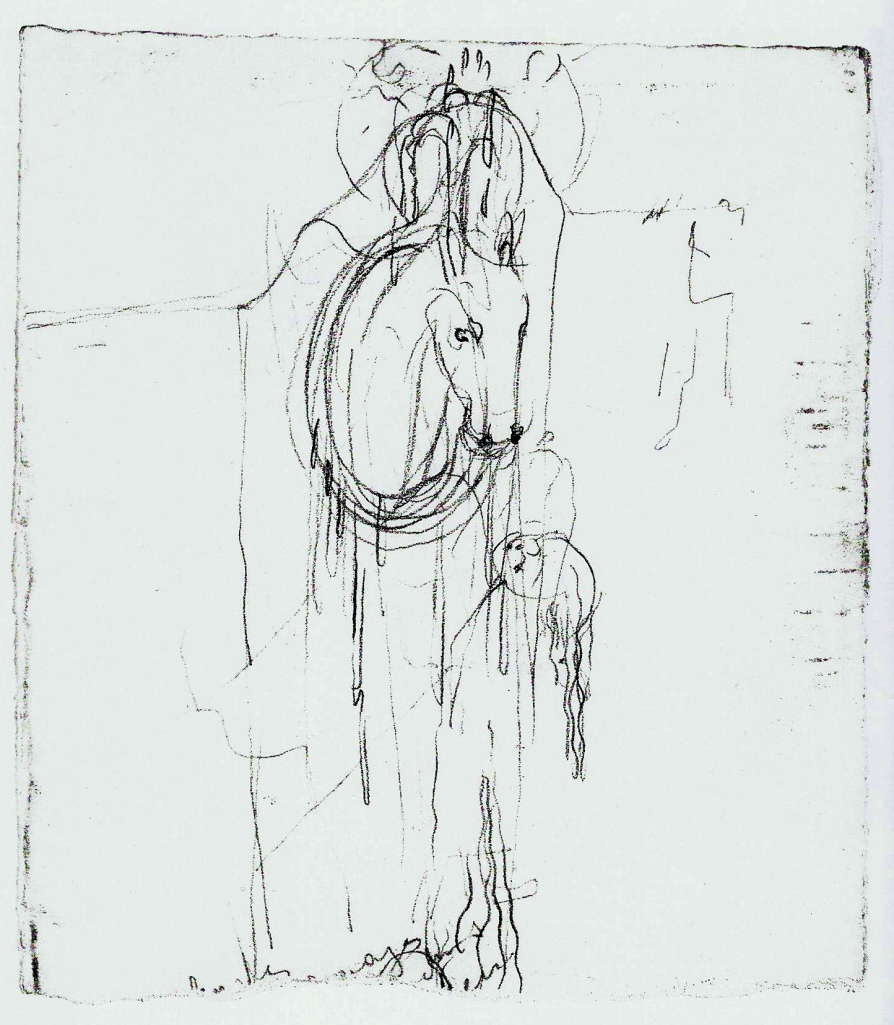
‘Oh Falada There You Hang’. Beuys, 1950
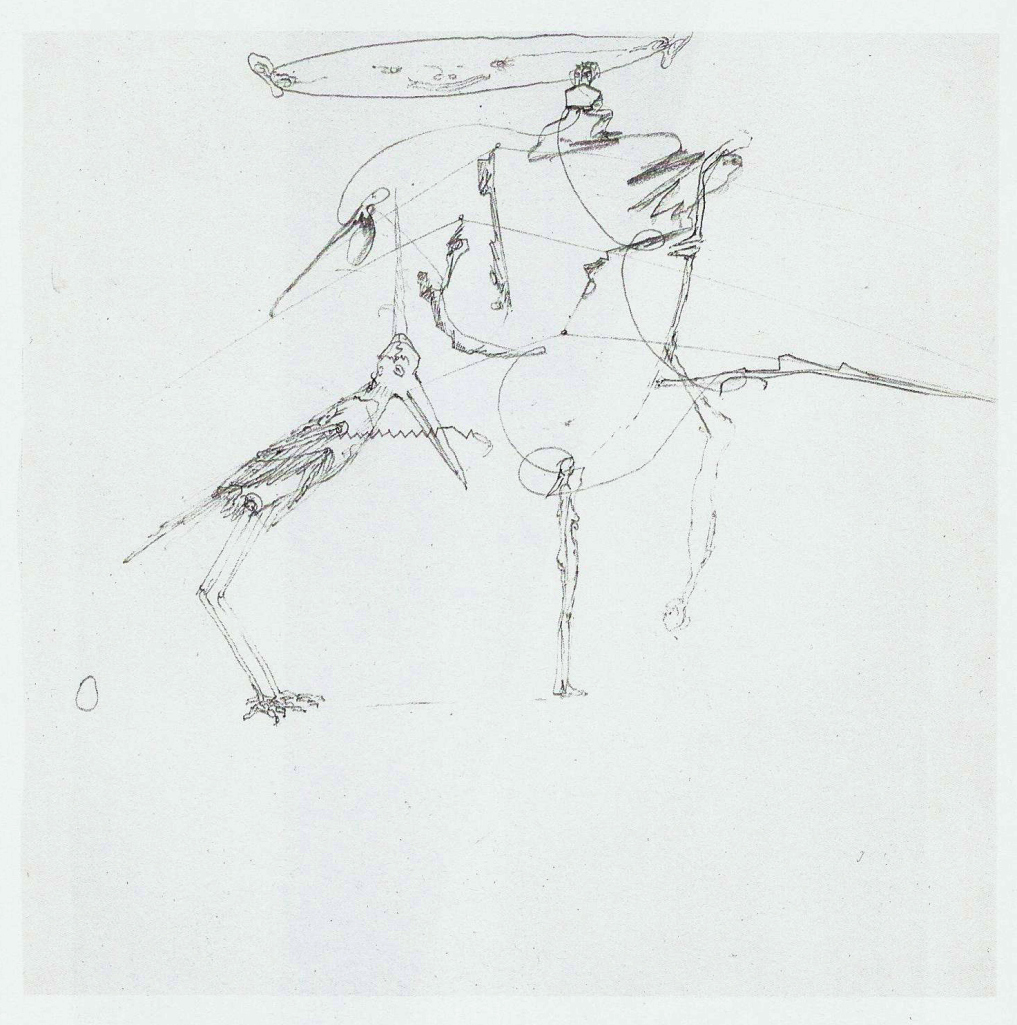
‘The Difficulty of Producing an Egg’. Beuys, 1968

I Like America and America Likes Me. Coyote. Beuys, 1965
I Like America and America Likes Me. Coyote. Beuys, 1965
On Thursday next week my 50 paintings of Eigg series ends. It’s been such an interesting process and I’ve enjoyed exploring the Isle of Eigg. I’ll miss the daily painting, but the Eigg project continues with two exhibitions coming up in June and July, for which I’ll be painting a series of larger works of Eigg on wood and canvas, and another stay on Eigg in early September
Below are numbers 1 to 41 of the ’50 Paintings of Eigg in 50 Days’ series
They are all on 5×5″ wood, £45 each and are available on a first come first served basis. Please feel free to email me at rose.strang@gmail.com if you have any questions. (£45 includes post and package). * Please note which ones have sold in the caption of each painting
You can also read more about each painting and my Eigg project by clicking on ‘Home’ above, and scrolling down to previous posts..
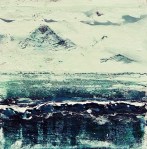
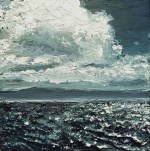
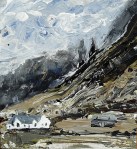
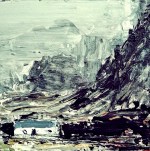

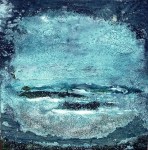
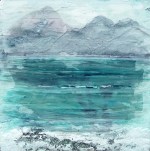
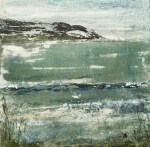
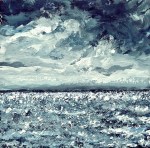
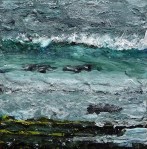
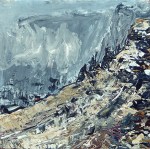


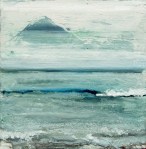
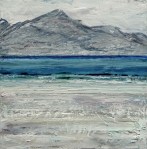

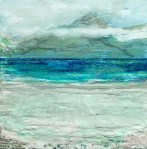
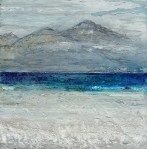


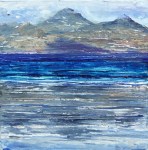
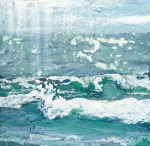
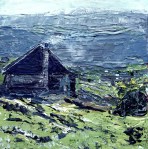
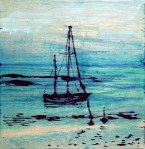


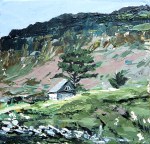

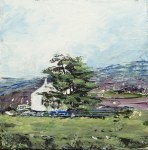
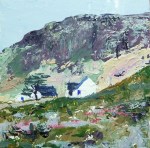
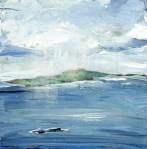
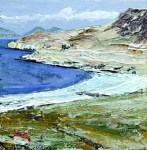
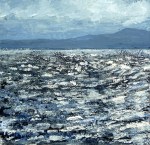
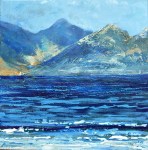
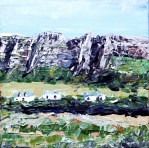
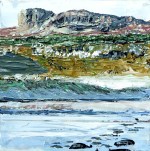
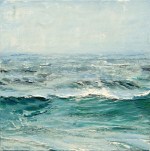

Eigg Series No. 41. Ink, acrylic and sand on 5×5″ wood
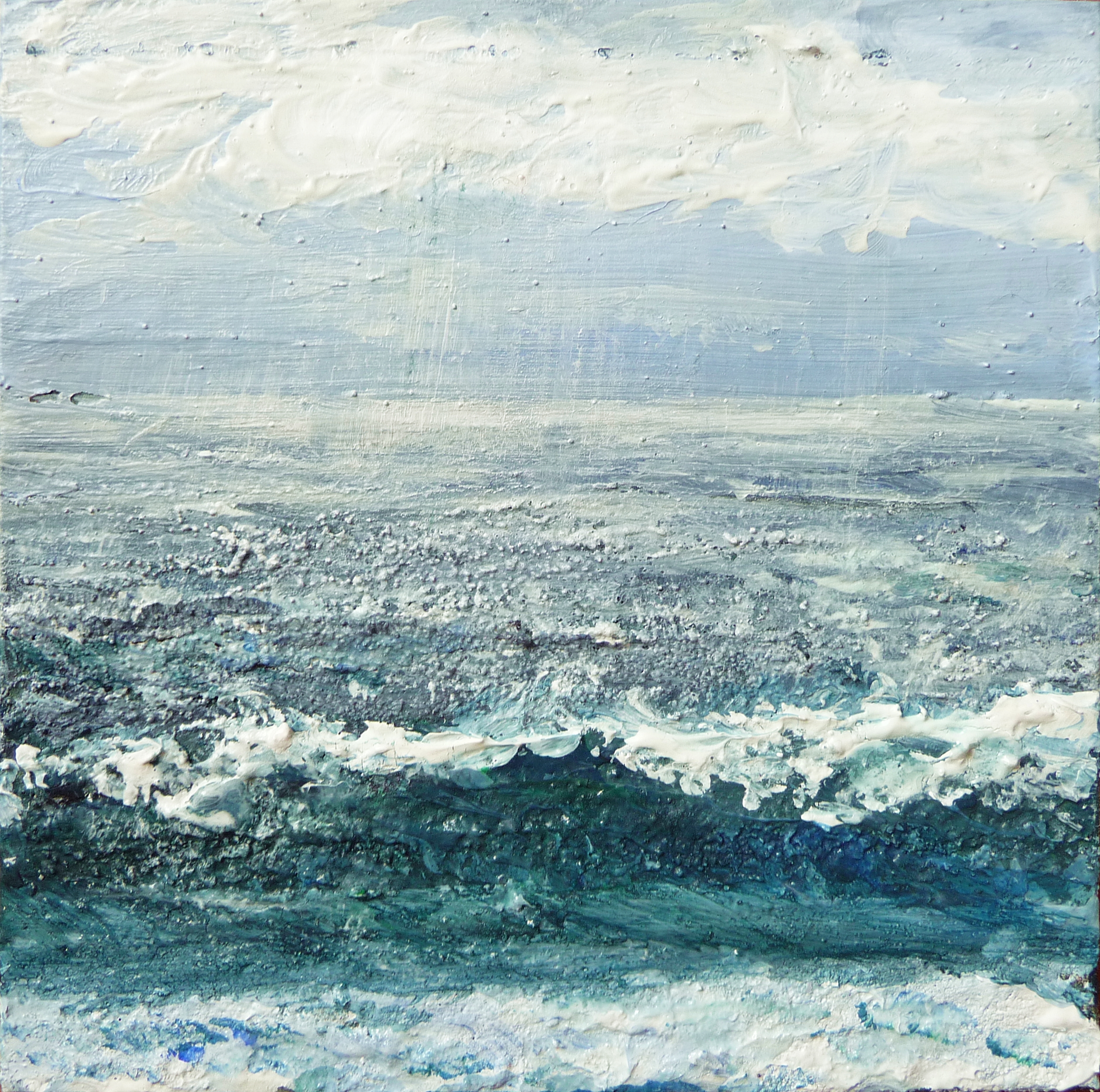
Eigg Series No. 40. Acrylic and sand on 5×5″ wood
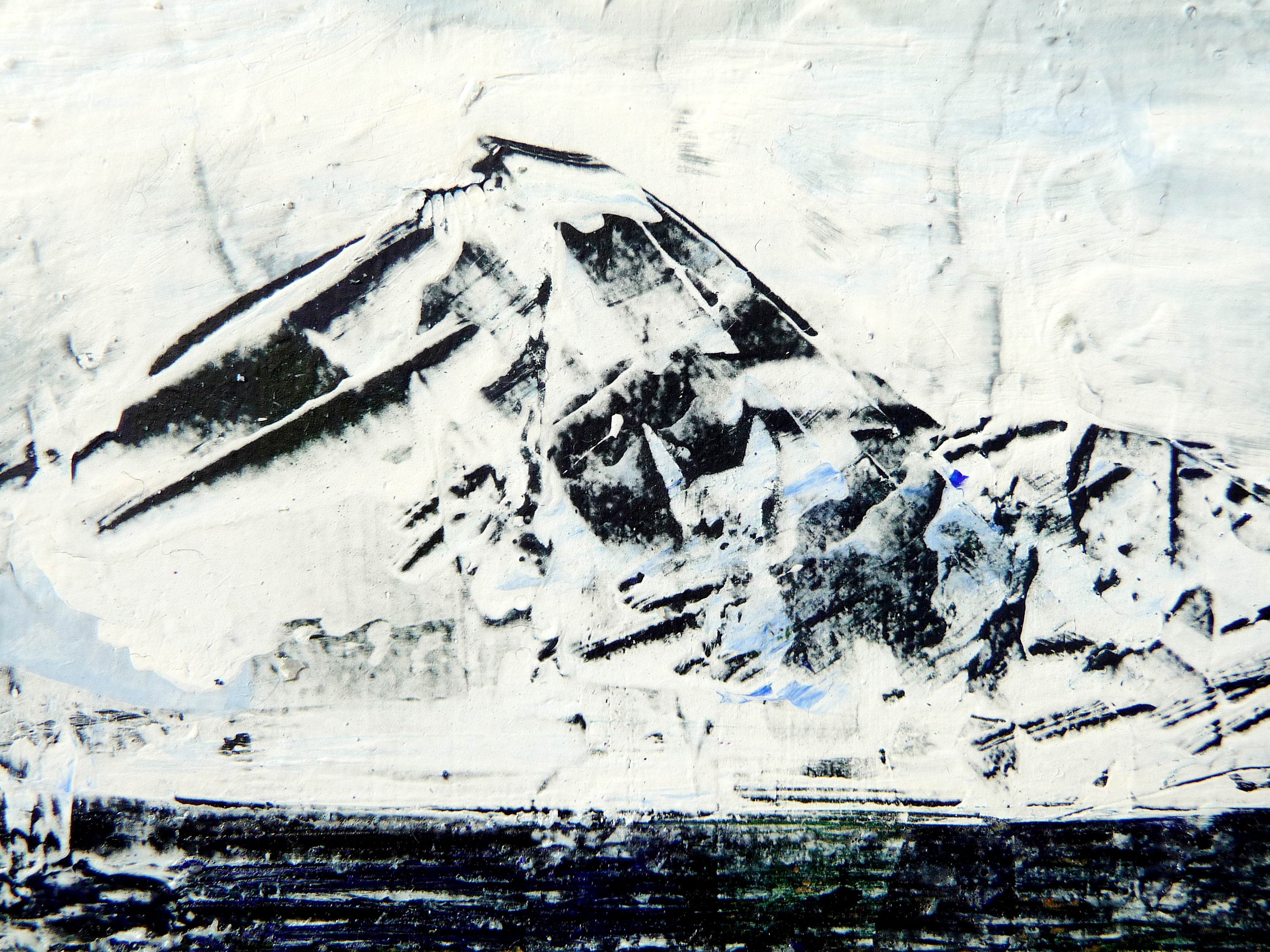
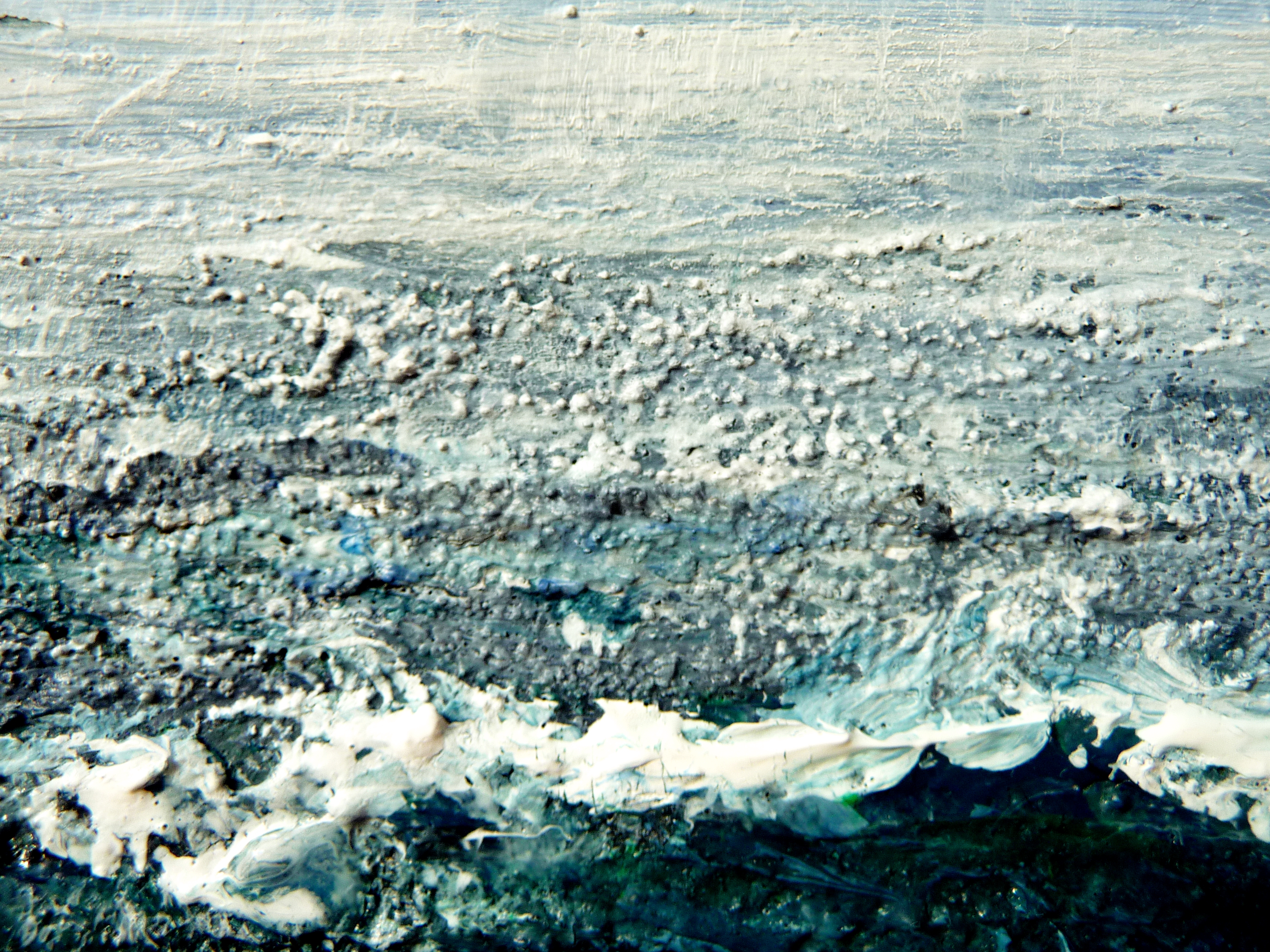 Today’s paintings; A wave at Singing Sands Bay and the mountains of Rum from Laig Bay.
If you like the idea of a mid-summer music festival on Eigg you’ll probably be interested in the Howlin Fling Festival, organised by Lost Map Records (a music label and collective organised by Johnny Lynch, former FENCE collective manager and organisor of the Pictish Trail).
I didn’t realise that Lost Map Records was actually based on Eigg. They’ve organised many events and gigs around the UK, but Howlin Fling is Lost Map’s debut festival on Eigg.
The festival runs over the weekend of 18th to 20th July. Performers include Beth Orton, also Steve Mason (who used to be in the Beta Band). I’ve seen both live and would love to attend this but sadly it clashes with my exhibition. Live music with the backdrop of the mountains of Rum and west coast sunsets sounds blissful – I’m not a fan of huge crowds, small outdoor festivals are far more relaxed – a million miles away from the epic, mud-drenched nightmare of events like Glastonbury!
There’s more info about times/tickets in The List Here
And here are a few videos..
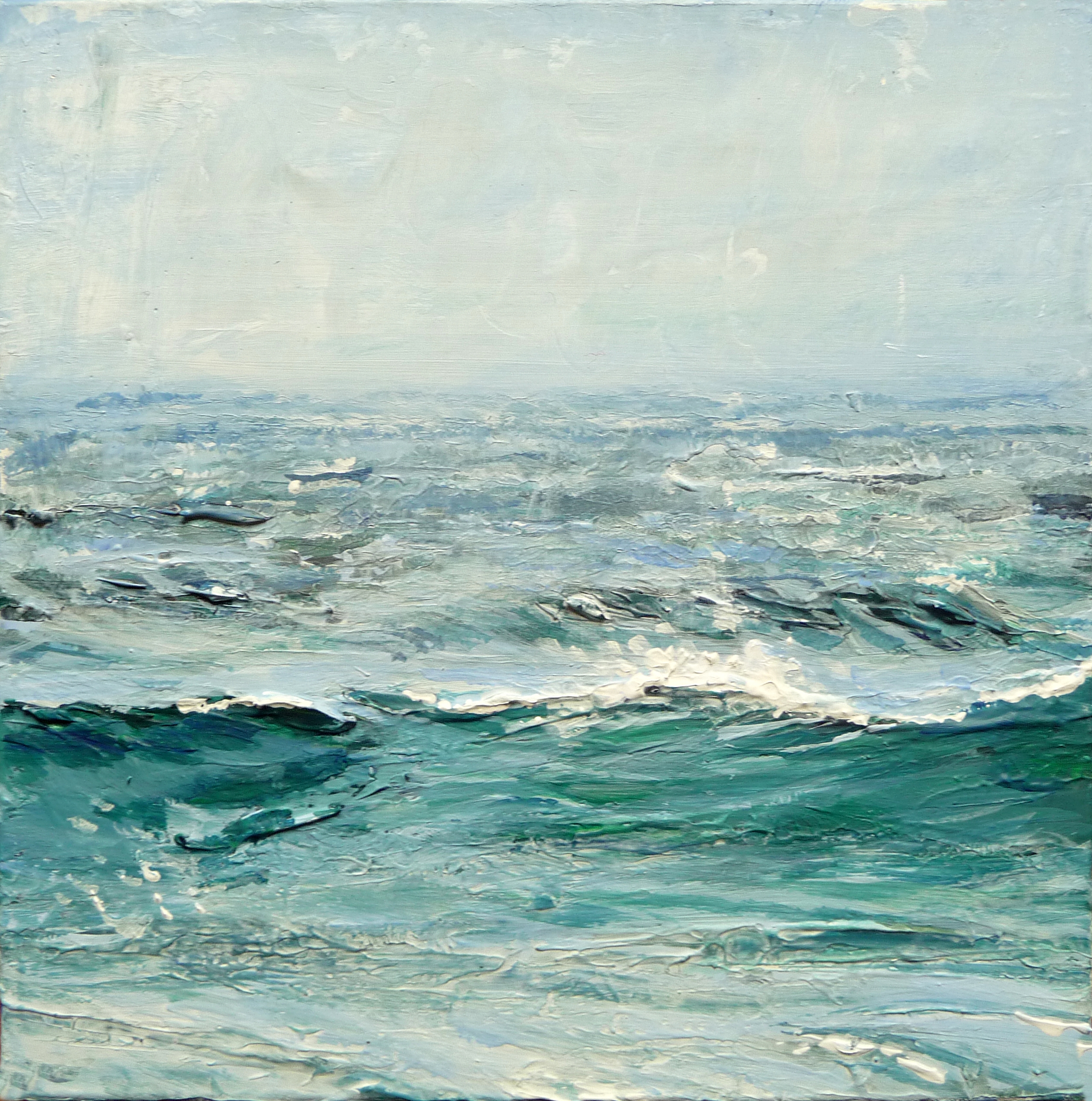
Eigg Series No. 38. Acrylic on 5×5″ wood
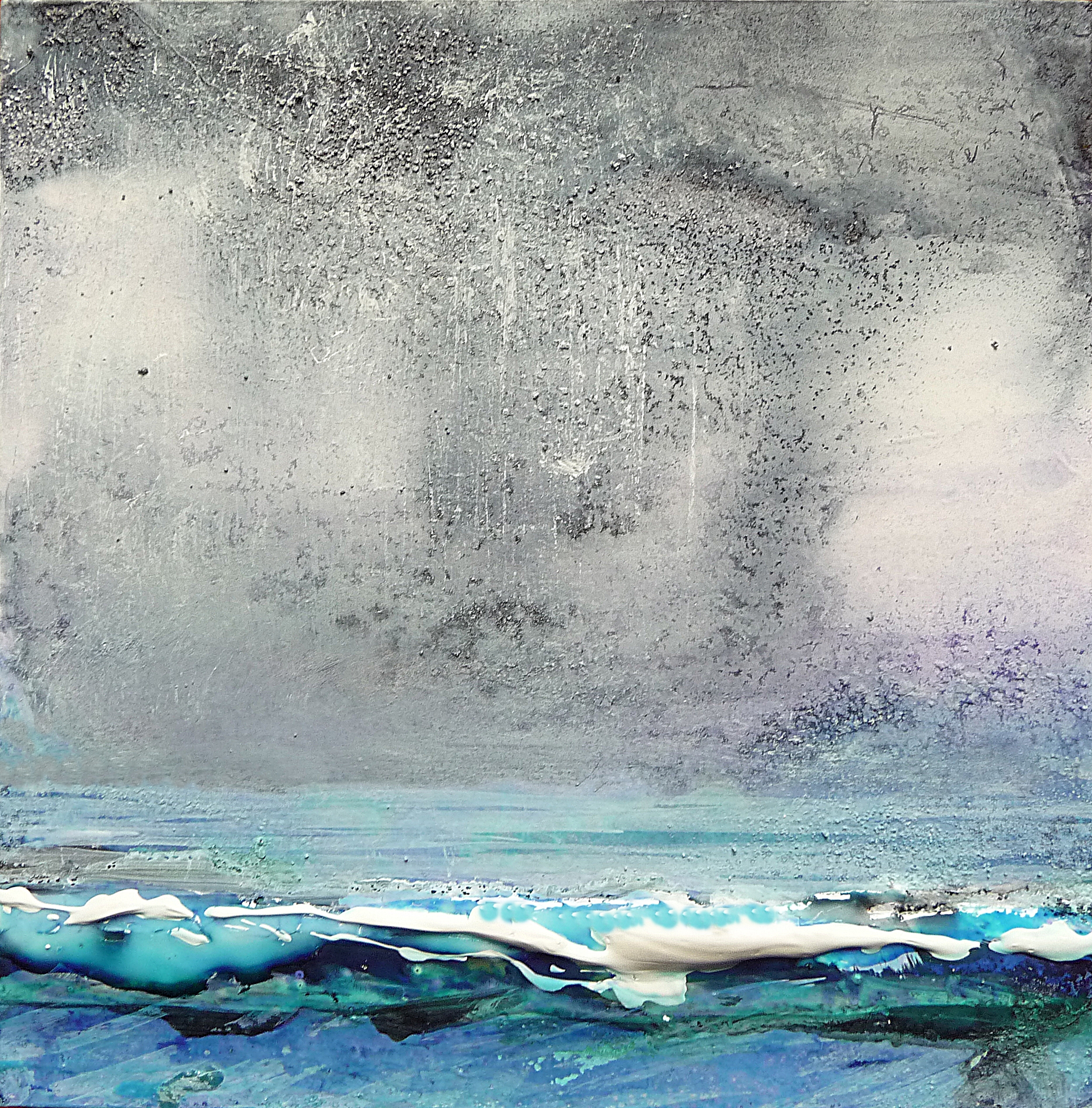
Eigg Series No. 39. Ink and acrylic on 5×5″wood
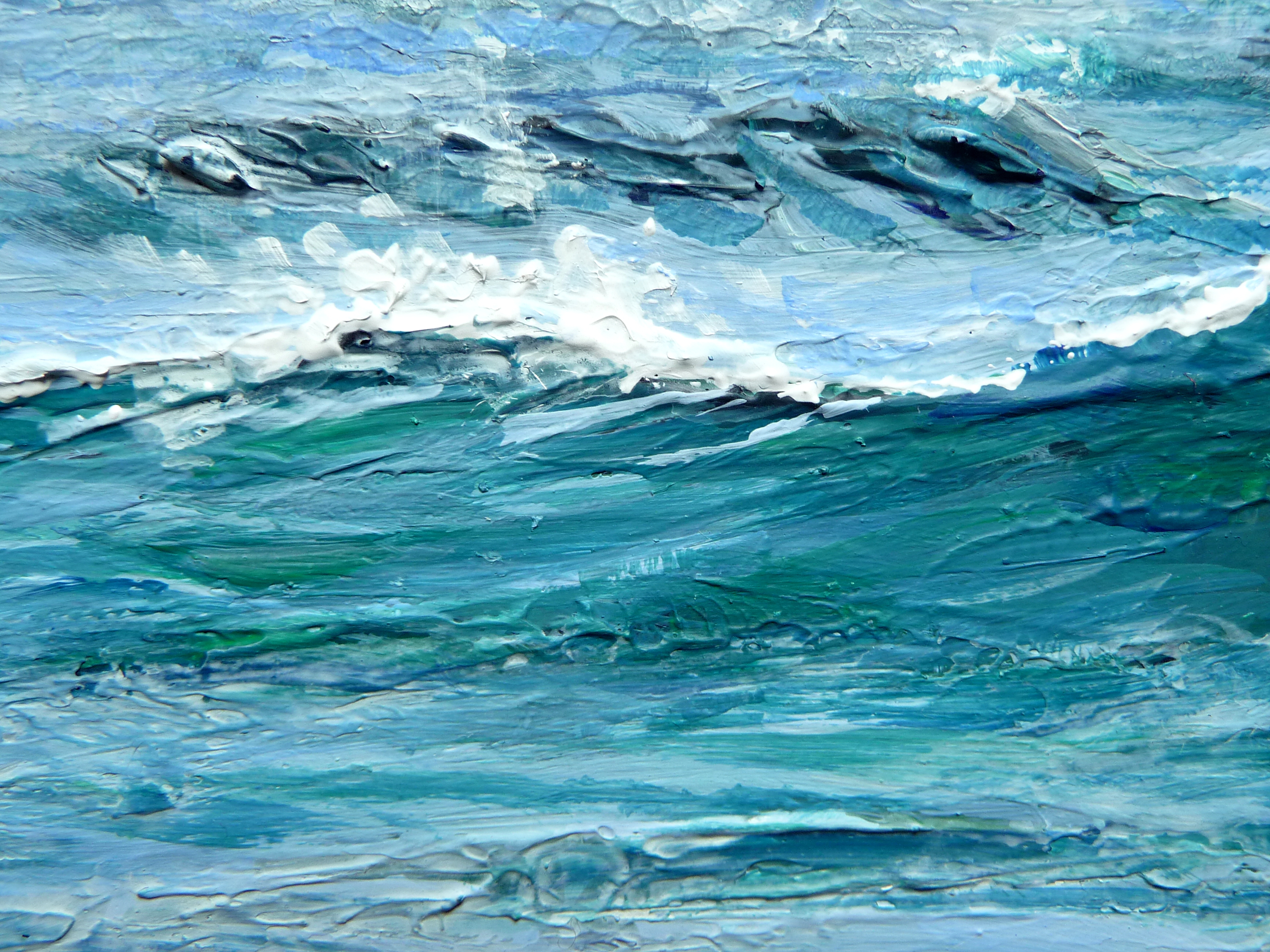
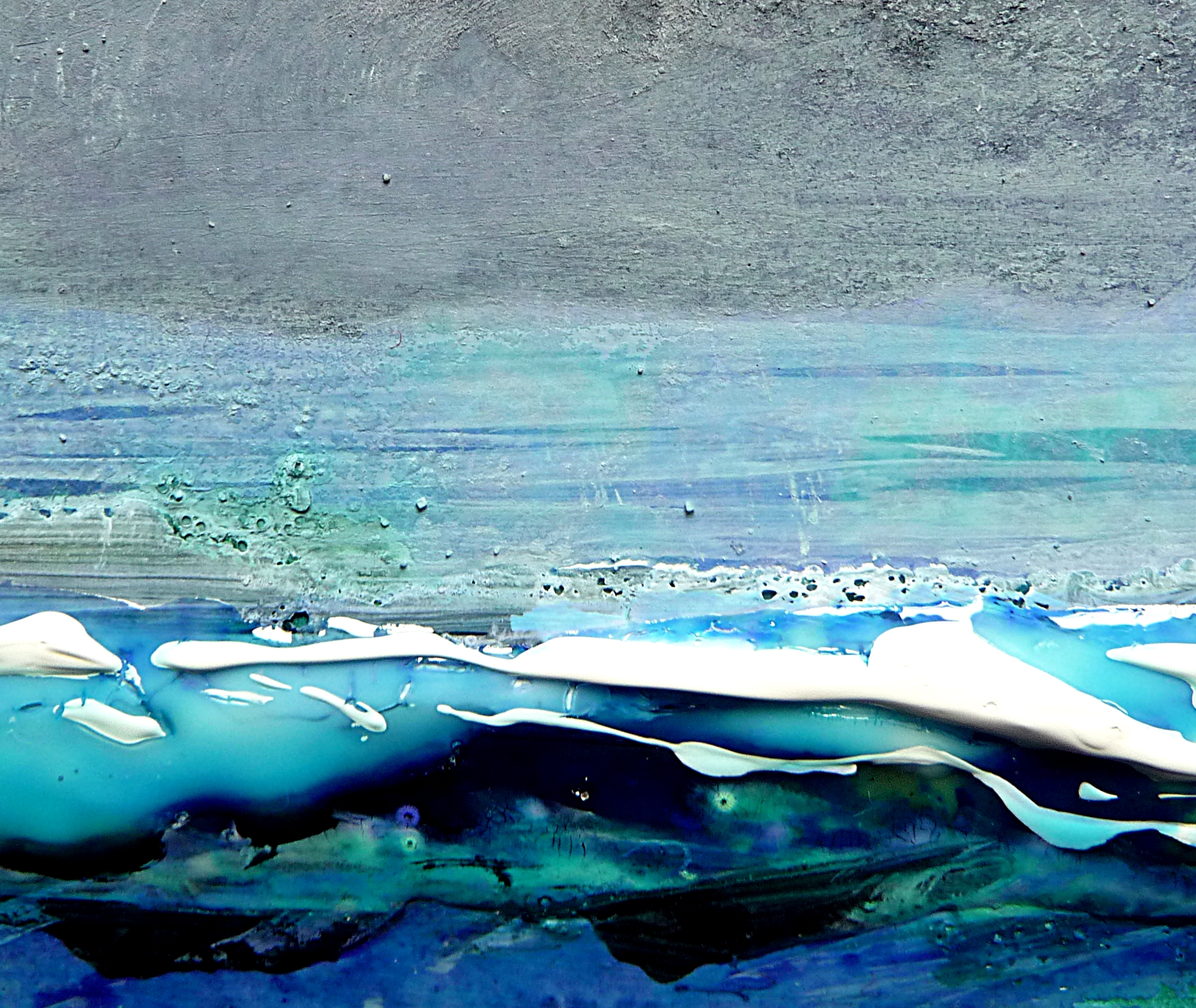 Today’s paintings; waves in Singing Sands Bay. Showing contrast between ink and acrylic
(I’m happy to announce that as of today my blog is working again! )
As mentioned a while ago, I contacted Camille Dressler, Eigg’s local historian, to ask a few questions about the island’s history. Camille runs two projects on the island; a small museum which focuses on the island’s geology and involves local schools in history projects, and a Croft in the Cleadale Valley which she’s restored exactly as it would have been 100 years ago…
Rose: Firstly Camille, many thanks for agreeing to answer some questions about Eigg’s history. Can you tell me how you came to live on Eigg and also, was it your first move from France?
Camille: I was living in France studying English, and my boyfriend’s mother found us this place on Eigg for a winter let so we came to spend the winter here to study, write and paint!
R: Can you tell me what you do now on Eigg?
C: As well as running the museum and croft I’m studying energy arts, such as qi gong and dao yin yoga, also writing and making arty crafty things…
R: So, going back to Eigg’s early history, is there any evidence of pre-historic settlers on Eigg, such as archaeological remains or evidence of how the earliest settlers might have lived?
C: There is evidence that the first people of Scotland – people of the Mesolithic, i.e. 8000 years ago – were on Eigg as well as Rum where they collected flint-like bloodstone. They seemed to have been camping by the shore and spending much time making bloodstone tools, as a lot of their discarded tiny flint shards have been found when gardens have been dug close to the shore….
R: And what would you say are the most significant changes they would have experienced over the centuries – such as different houses or ways of finding food?
C: Probably the introduction of cultivation was the most significant change for these hunter gatherers, then the way they bury their dead in stone costs in the middle of the land, indicating that it was important to have the blessing of the ancestors for its continuing fertility…
R: Can you tell me about life for Eigg’s inhabitants in the Middle Ages – how were communities organised and what kind of hierarchical systems existed then?
C: They’d have been part of the clan system, a tacksman holding the land from the clan chief to whom he was more or less distantly related, and a lot of ordinary clansmen tilling the land in exchange of military service…. land being used to grow oats and raise cattle mostly, it’s a system that was basically unchanged until the end of the clan system in the 18th century…
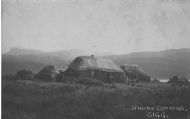
© Katie Maclean (from Eigg Historical Archives)
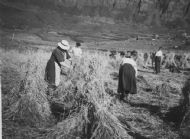
© Chrisie Oliver (from Eigg Historical Archives)
R: Scotland went through many changes from the 15th to 18th centuries. Can you tell me about the most significant changes for these communities over that time? For example the Clearances?
C: Well, after Culloden, there was massive emigration to the New World, Crofting put an end to that by attaching people to the land by forcing them into wage labour to supplement what they could grow. And then, when the kelp boom subsided that had employed people for 30 to 40 years, folks were then being sent overseas to make room for sheep, which were more profitable for the landlord.
R: Are there any individual stories you know of from the time of the Clearances, for example how might individual lives have been affected?
C: The impact could be devastating. One woman was so upset after having to leave Grulin and seeing most of her neighbours have to leave the island that she threw herself from the cliffs near her new home into the sea and drowned.
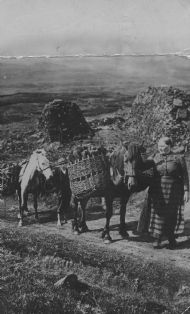
© Katie Maclean (From Eigg Historical Archives)
R: How far did the population numbers of the island change due to the devastation of the clearances? And when did the island begin to recover again?
C: It went from almost 500 in the late 18th century to 60 in the 1960’s. It’s been increasing since then and is now at around 95 people
R: When I was on Eigg it was highly recommended I visit Croft No. 6, I discovered it in the late evening and it made quite an impression; it was rather haunting – as if the inhabitants had just left, or were about to return. It beautifully captures the life of an Eigg dweller in the last century. Can you tell me about the inspiration for the project?
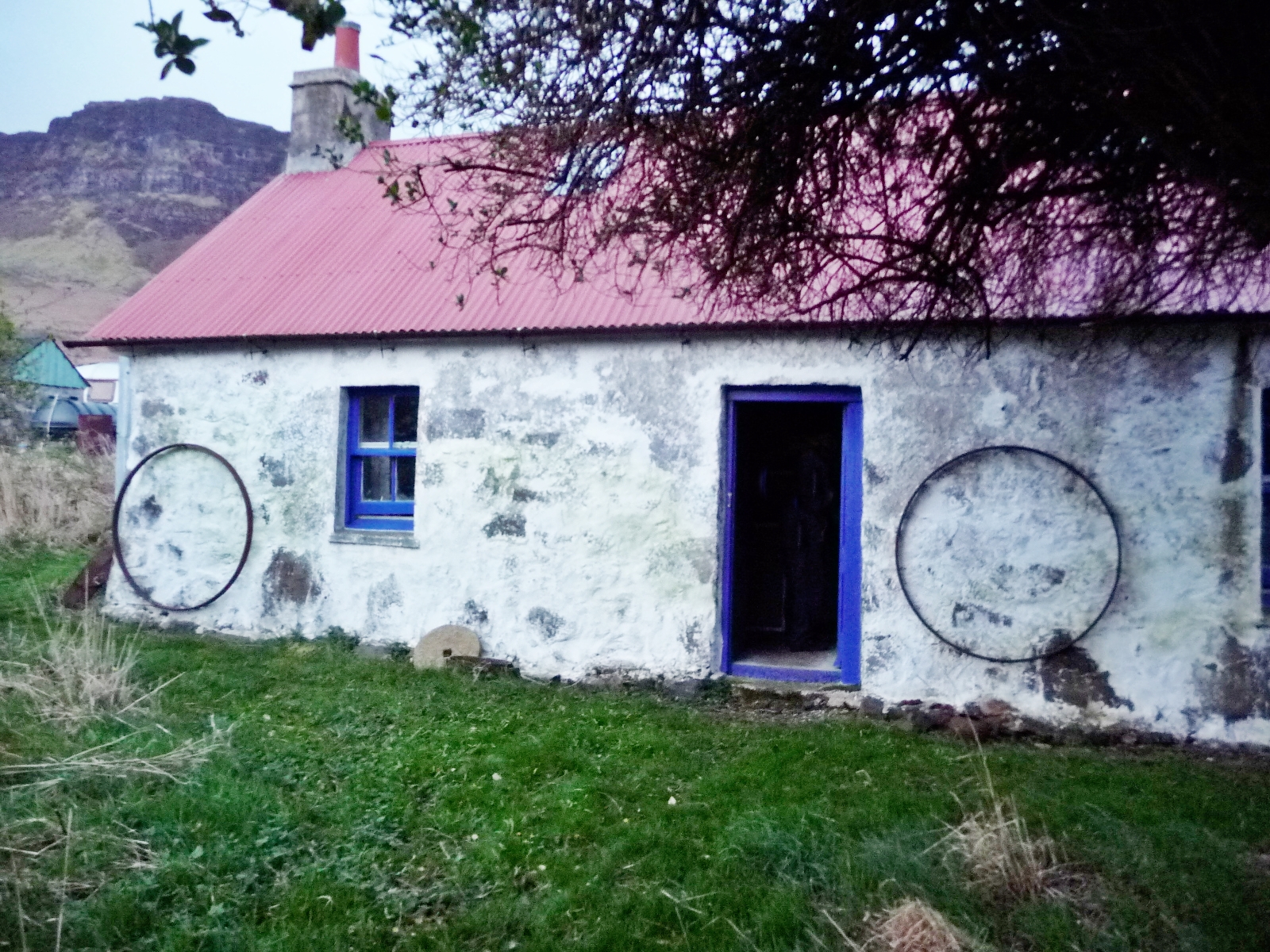
Croft 6
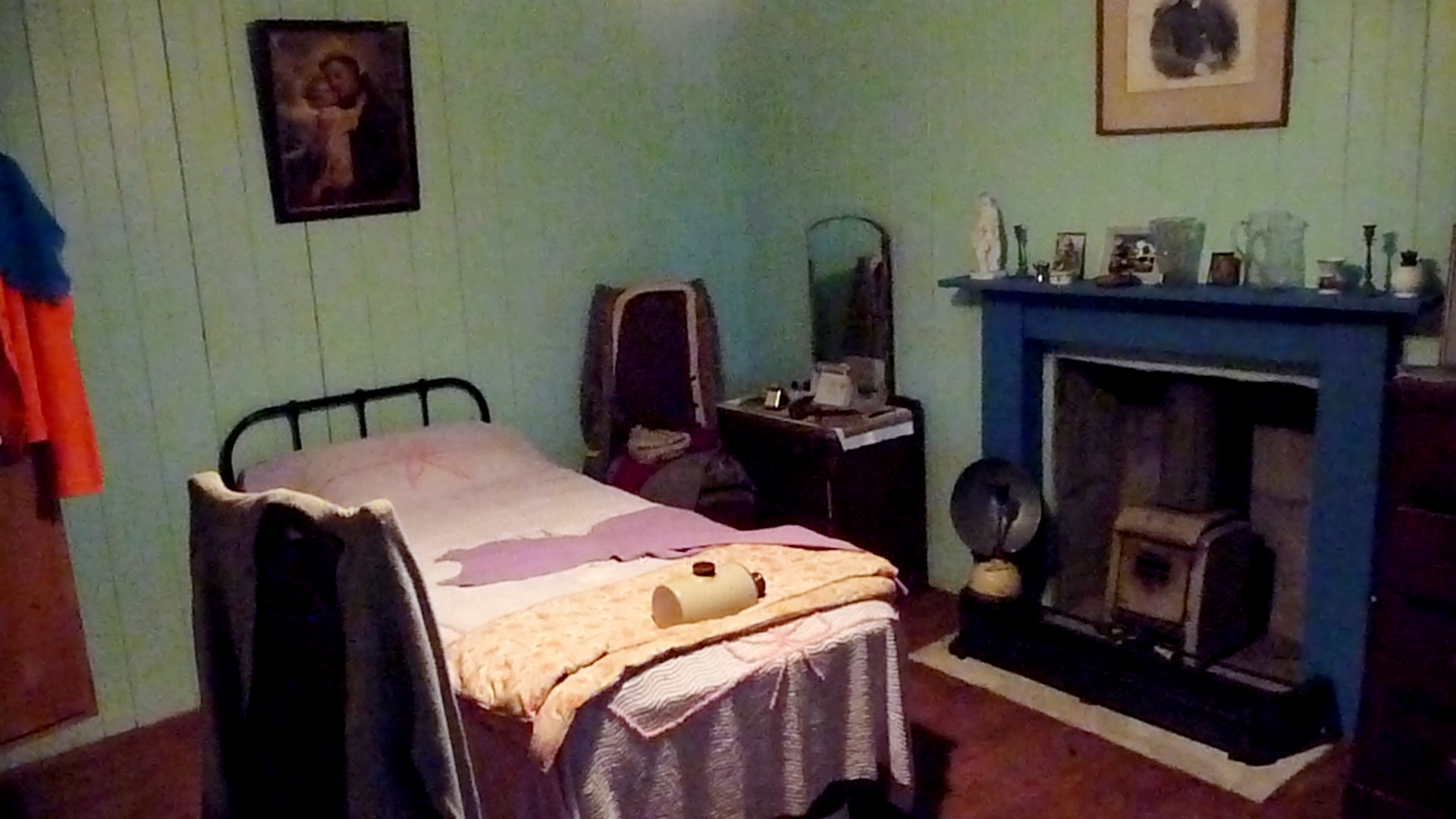
Croft 6
We just wanted to ensure people could compare the way of life then with the way they live now. The way we set up the museum was largely inspired by the Spinster house museum I visited in a visit to Finland, where the islanders there decided to keep the spinster house just as it was after the last spinster -and spinner of flax- died. We wanted people to feel that experience of coming into an islander’s home, and discover the objects therein for themselves, rather than setting it up as a museum where everything is labelled and out of bounds.
R: That’s exactly how I experienced it; quite fascinating and refreshingly unlabeled so visitors can explore in their own way! Lastly, what projects are you working on now, and can you tell us where we can find more information about them?
C: We are about to start on phase 2 of the croft museum, involving renovation of the cart shed and the henhouse, one of which will be thatched. I’m also involved in research into how we can become part of the international beach art project which seeks to raise awareness of the extent of plastic pollution in the marine environment…
R: Many thanks Camille for introducing us to Eigg’s history. There’s a lot that canbe explored so if you’d like to read more, Camille has written a book called Eigg: The Story of an Island which you can read about or buy Here
 Also, for more information on the Clearances and their impact, some more information Here
 Rose Strang Artworks