Tag Archives: Scottish landscape painting

Borders Country Day 19

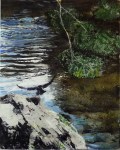
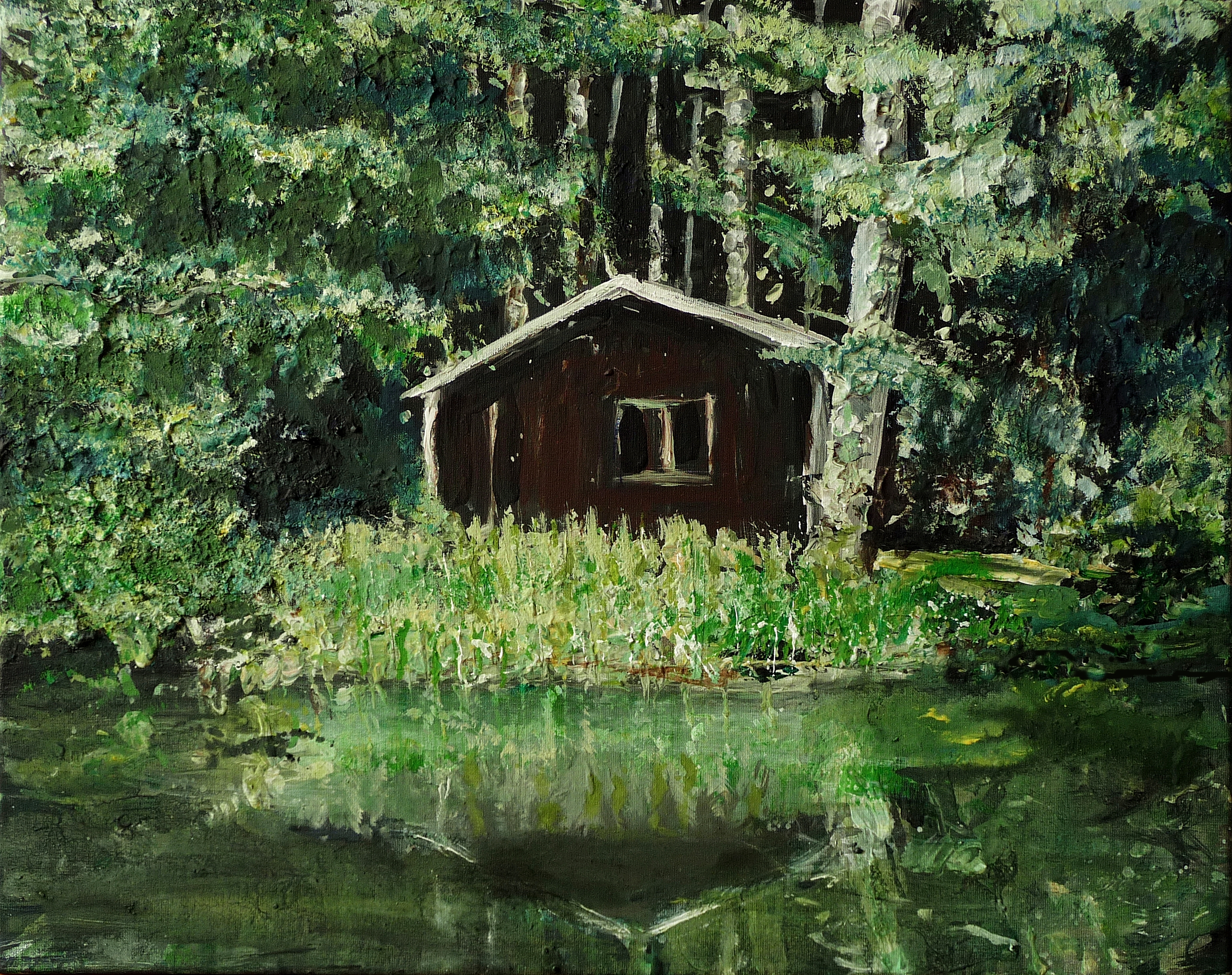
'Wood Cabin, (Leithen) 2'. Acrylic on 20x16" canvas

‘Wood Cabin, (Leithen) 2’. Acrylic on 20×16″ canvas

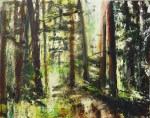
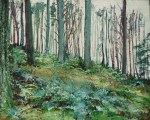
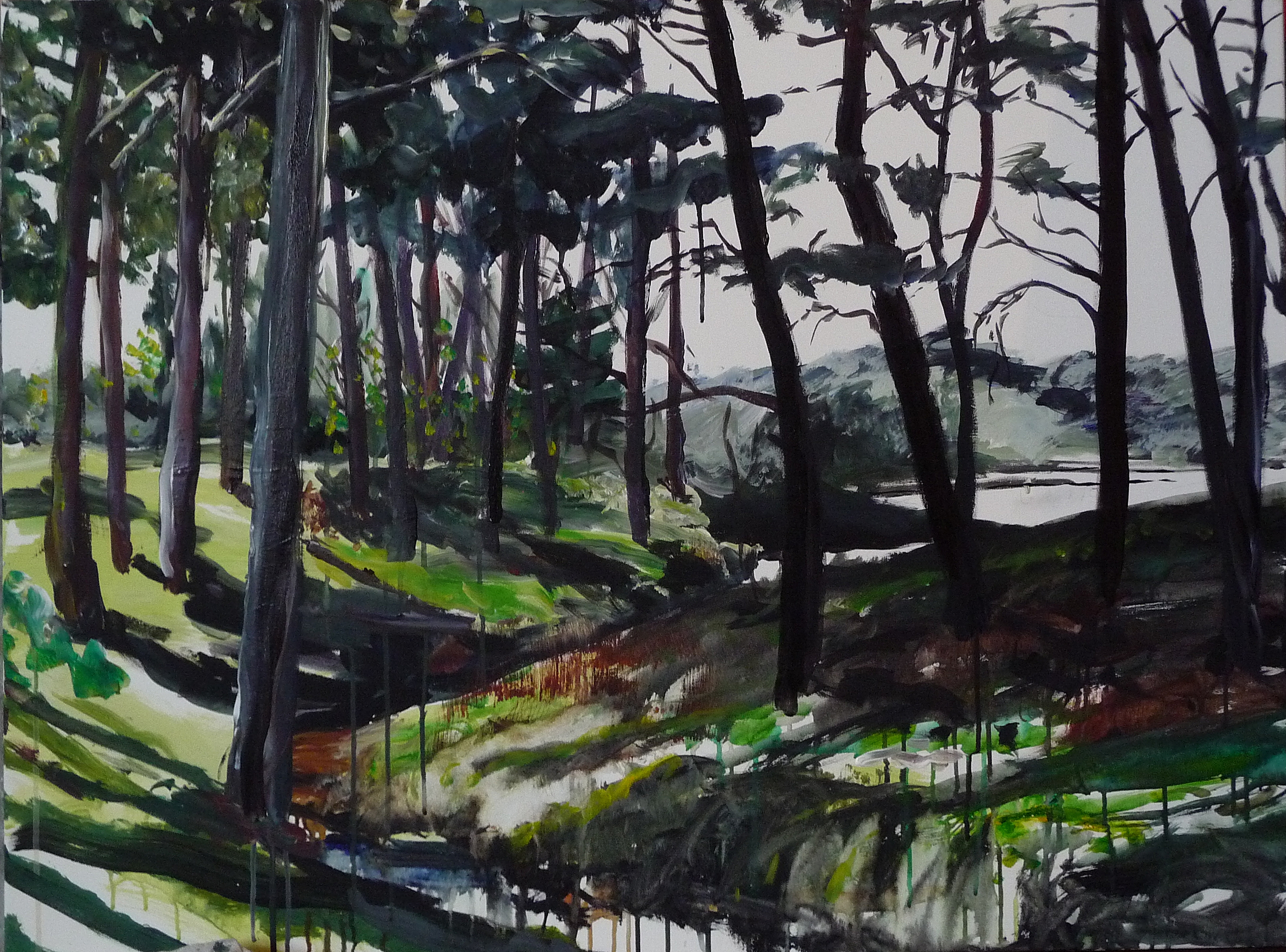
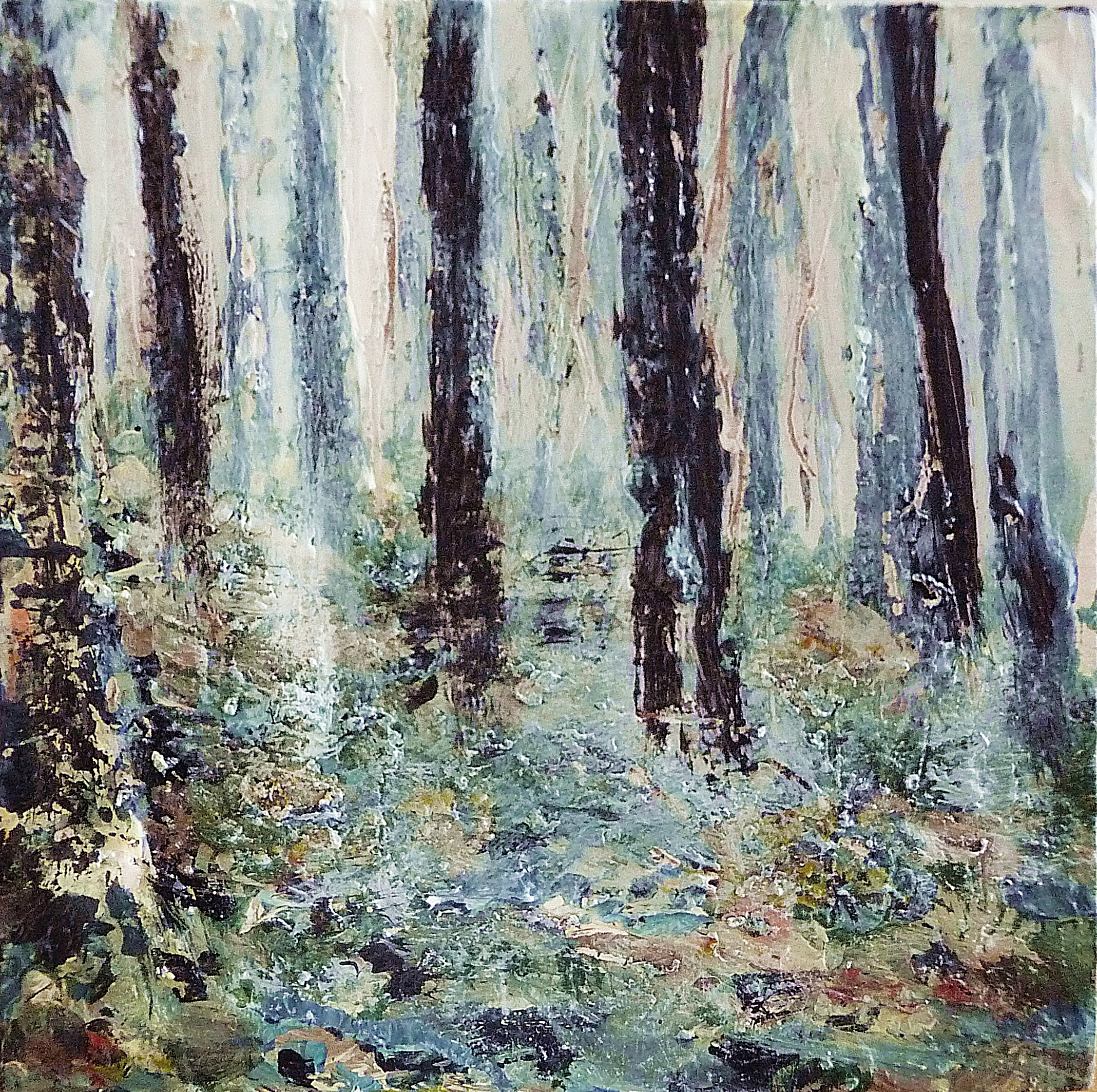
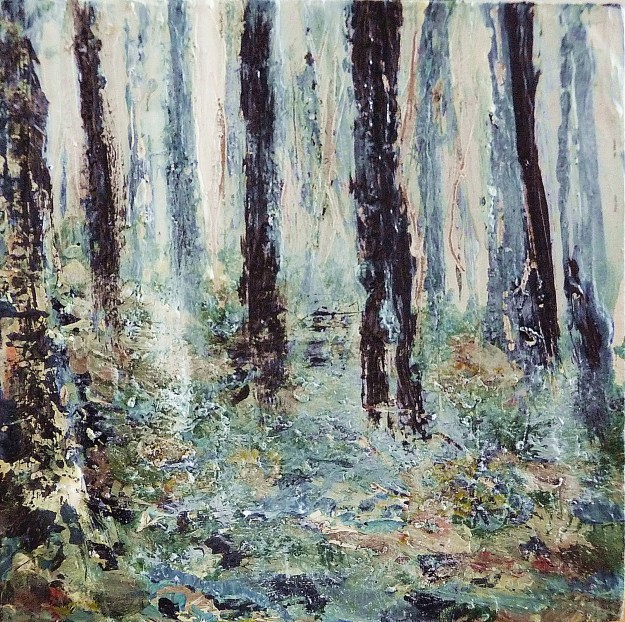
P1250921Today’s painting, a larger version of the wood cabin at Leithen. Also a new start on yesterday’s forest painting (left). I painted over the original as it just didn’t seem to have the right feel I was looking for, it was too predictable.


I’m seeing this first Borders series as experimentation into what I want to capture about the Borders, hence the range of approaches! I think the more successful paintings are those where I’ve become more free with the paintbrush, but that requires a lot of familiarity with the subject.

There’s something quite satisfying about white-washing a painting I’m not 100% satisfied with, then starting again. There’s a metaphor in there somewhere, but I’m starting to feel a bit exhausted with all the concentration! The bigger paintings are definitely more of an effort physically.

Just one week till the exhibition launches! Details here – https://rosestrangartworks.wordpress.com/2015/06/03/new-exhibition/

Borders Country Series

P1250985Below are all available paintings from the Borders Series and exhibition, The Green Woods Free, which continues until the 23rd July


Borders Country Day 18

P1250862 P1250866Today’s painting in progress – trees near Gladhope Reservoir. This is a bigger work at 40×30 inches which I’ll probably finish by tomorrow.

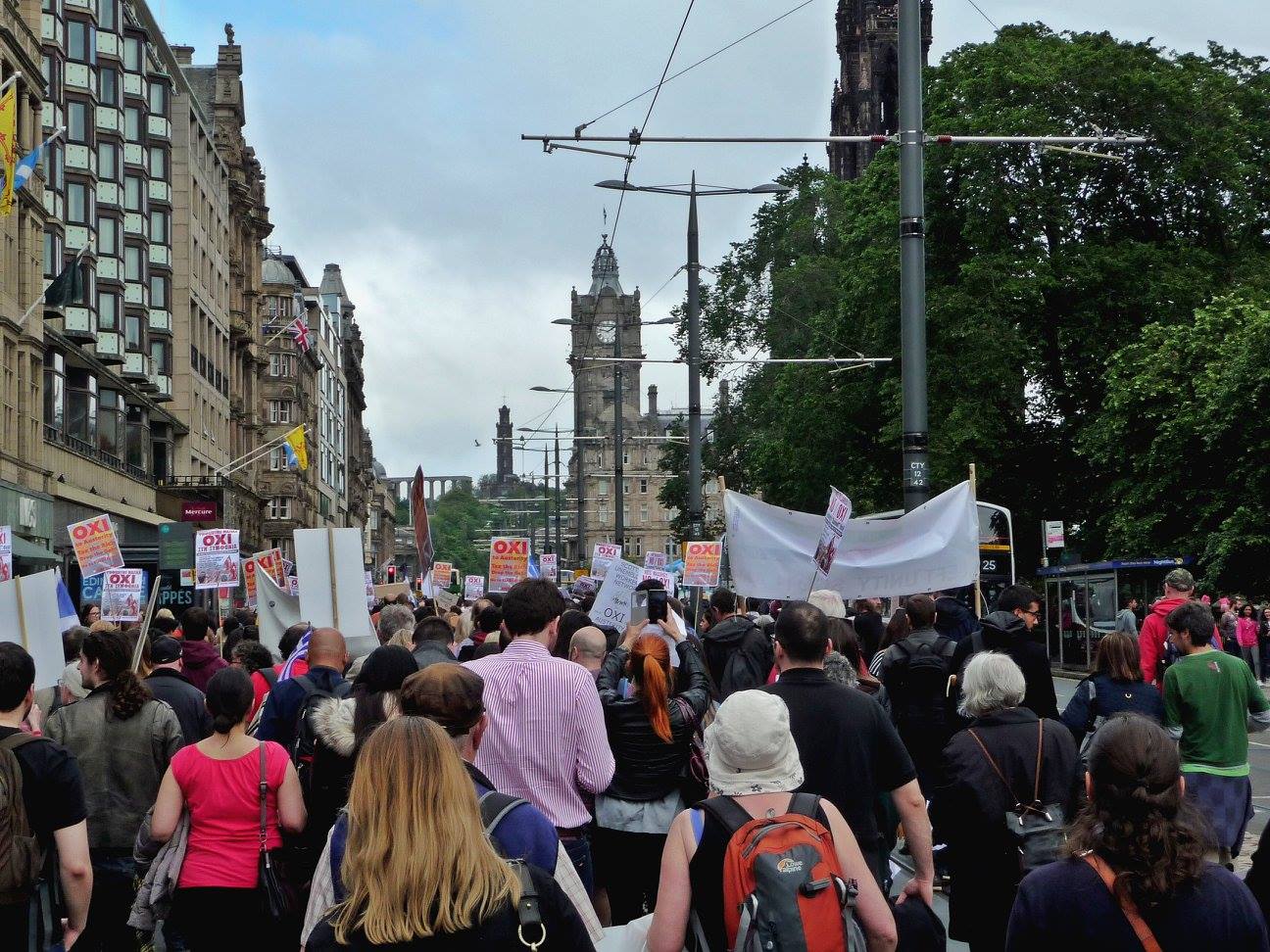
I’m thinking about the people in Greece today, full of admiration for their brave vote. Either a yes or no wouldn’t have meant an easy time, but voting oxi brings few certainties except the knowledge that you’ve voted for what you truly value.

I read a bit of Foucalt at art college and through the years. One of his books, ‘Fearless Speech’ explores the roots of democracy and the Greek word associated with that ancient movement – parrhesia – meaning ‘fearless speech’. Nowadays we call it freedom of speech, but its original meaning was more specifically about ordinary people having the freedom to speak without fear of punishment. It was understood that the cities and rural landscapes were managed at grass roots level by ordinary people, the least rich. Therefore when they spoke it came from knowledge of life and of making their societies work for the majority; they spoke for the many, not the few. The ancient Greeks saw this as the antidote to elitist corruption…

I’m not even going to say that well-worn phrase!

I feel more than interested in what happens to Greece as I lived there in my late teens for a year. I was quite an adventurous soul and had met an interesting Greek man on holiday who asked if I’d like to stay there. Every parent’s worst nightmare probably! But I didn’t, as many predicted, get pregnant! I’m not saying it was always easy adapting to a rural island culture out of tourist season, but the experience stayed with me for life, creatively and politically. I have very fond memories of the Greek people I came to know and love, their endless generosity, great humour and community spirit.

The thing I missed most when I returned, apart from the people and the sun (I’ve never really re-adapted to UK weather – rain is lashing on to my window as I type!) was the food, and walking in the mountains. I bought a horse while there, but couldn’t ride it as it wasn’t trained for amateurs such as myself! But I’d take it for walks up the mountains valleys.

Greece in spring is a revelation; it begins in February with the heavy rains, then the valleys are transformed from barren ochre grass and dry river-beds to lush green valleys filled with swaying crocuses alongside gushing clear waterfalls. I’d walk up the hills with my horse, through the tall eucalyptus trees and further up amongst ancient gnarled olive trees, she’d trot along beside me then wait patiently while I collected armfuls of crocuses.

It says a lot for the people of Paros that they never treated me as though I was mad – I mean, who takes their horse for a walk all the way up a mountain without actually getting on it?!

I’m wishing the lovely people of Greece all the very best in these coming days and years and I know where I’ll be going on holiday this year, if my exhibition goes well 🙂

αλληλεγγύη! 

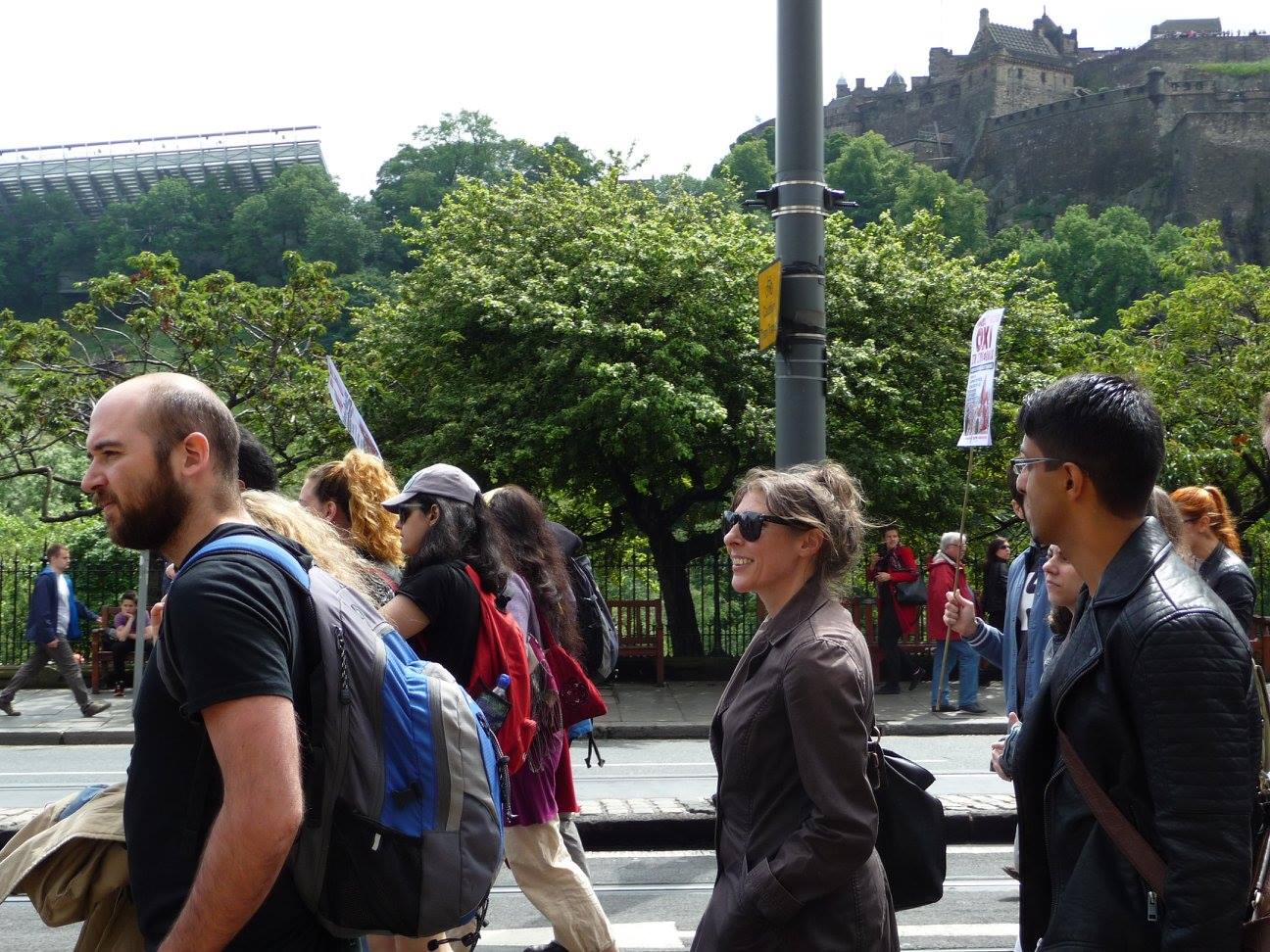
Demonstrating with Syriza Scotland in Edinburgh last Saturday..

1534982_922679567795394_2873965848824616209_o 11289421_922679587795392_7027765152456838571_o


Borders Country Day 17

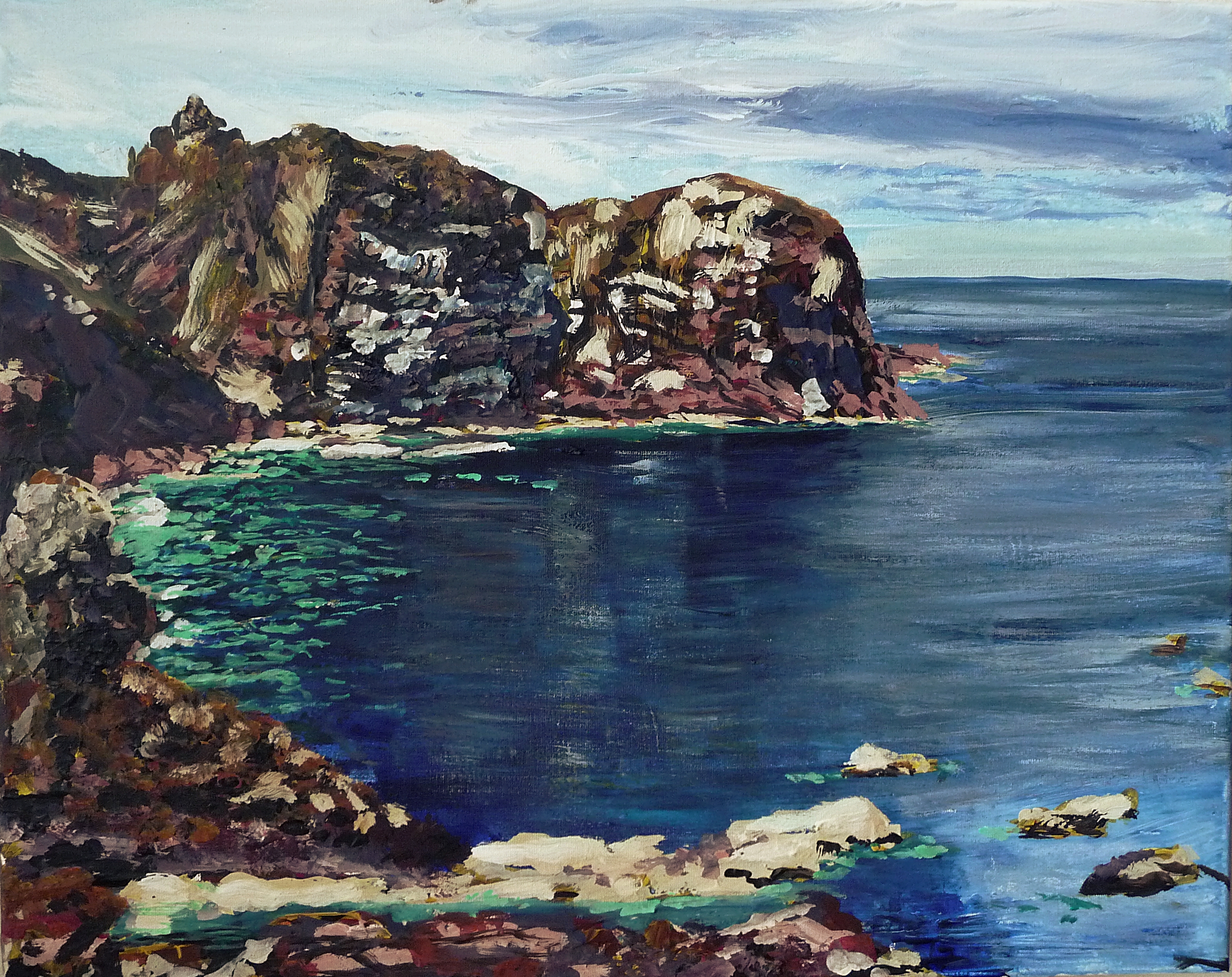
'St Abbs'. Acrylic on 20x16" canvas

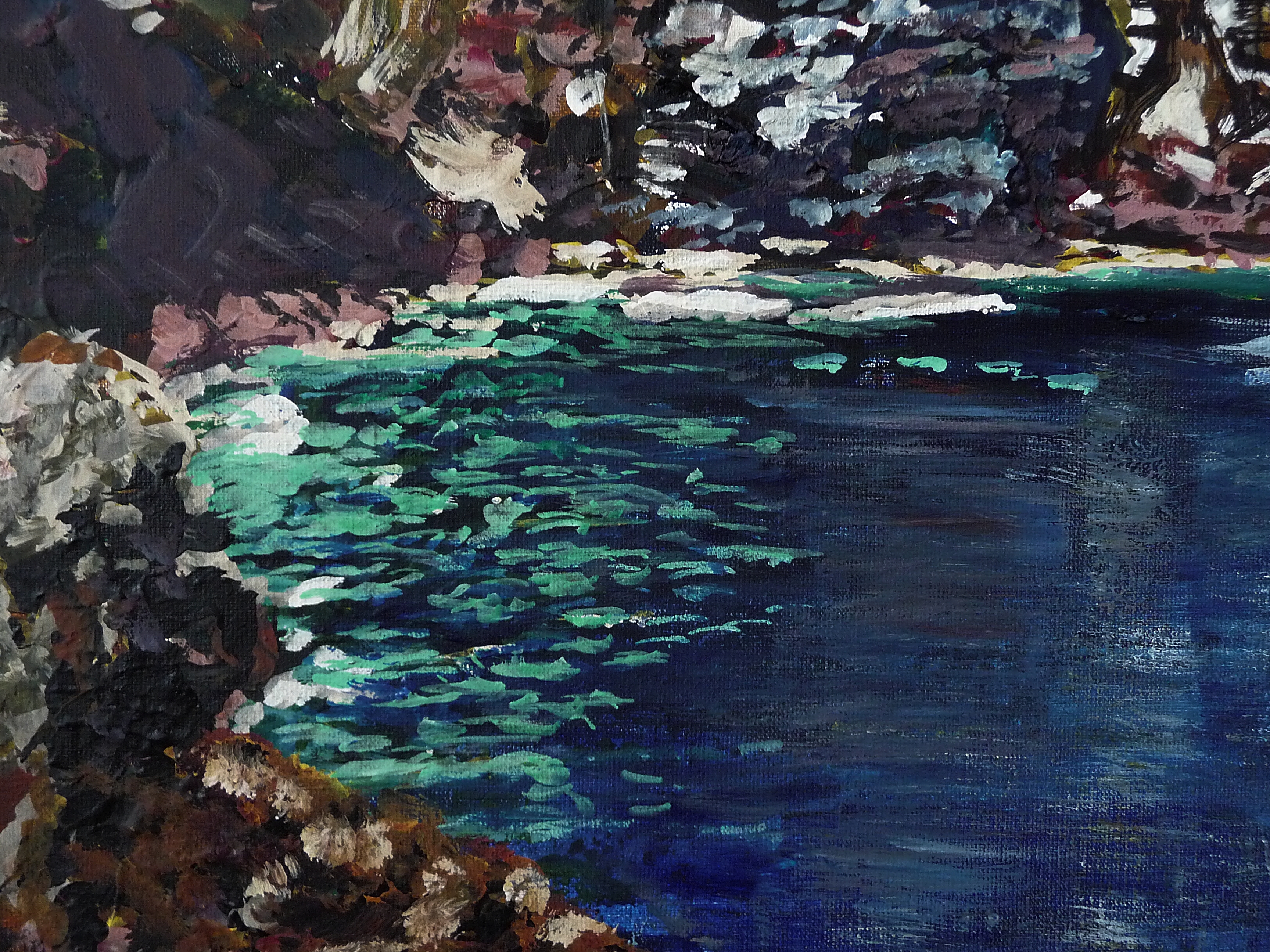
‘St Abbs’. Acrylic on 20×16″ canvas

St Abbs (detail)

St Abbs (detail)

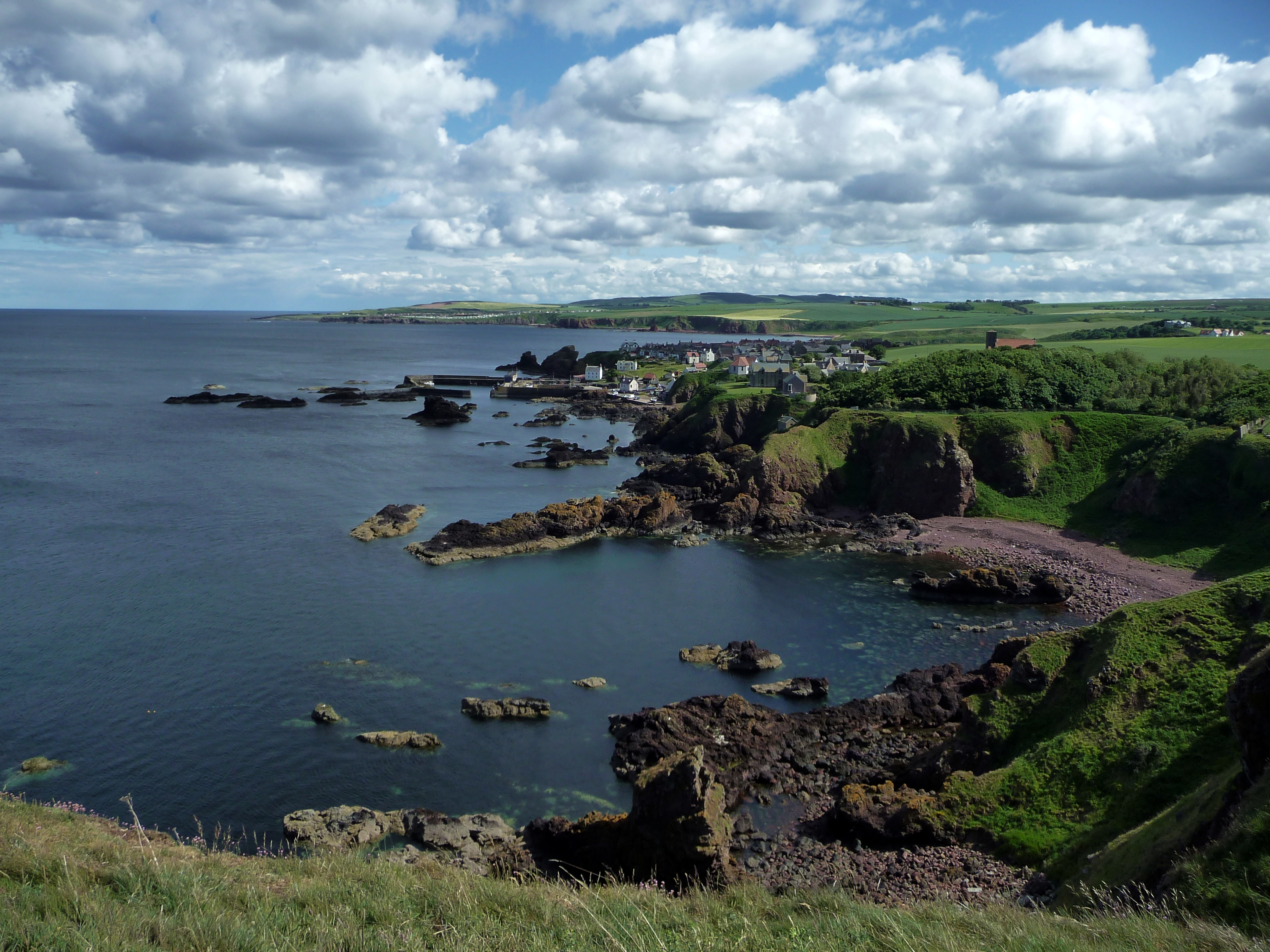
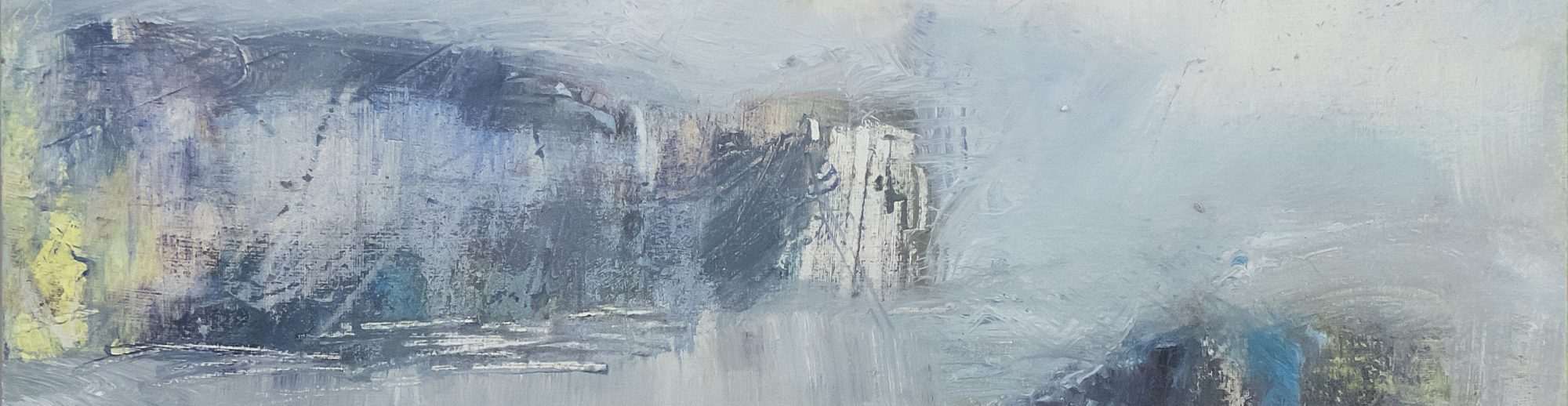
Today’s painting – St Abbs Bay on the east coast near the Border.

Those rocks really are as colourful as they’ve been painted. This part of the coastline is quite famous for its beauty, but also it’s near to where Professor Hutton made his discoveries about geology at Siccar Point


There’s a trail named after him which takes you all along the east coast from the Borders to Dunbar, where you can see the faults and intrusions which proved Hutton’s theory that our planet was much, much older than first believed.

The pink, yellow and purple rocks above are igneous  and the grey lower rocks, called Greywrake, are a remnant from the Silurian era – the former beach basically – you can see the bleached effect of tides from an earlier era, which also shows up the colour of crystal clear water. Apparently there would have been more tropical climes then, not unlike today’s weather – we have a mini heatwave in Edinburgh today, and though I know a lot of people hate this mugginess I’m quite enjoying it!

Borders Country Day 16

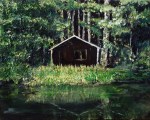
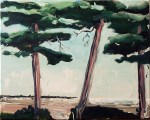
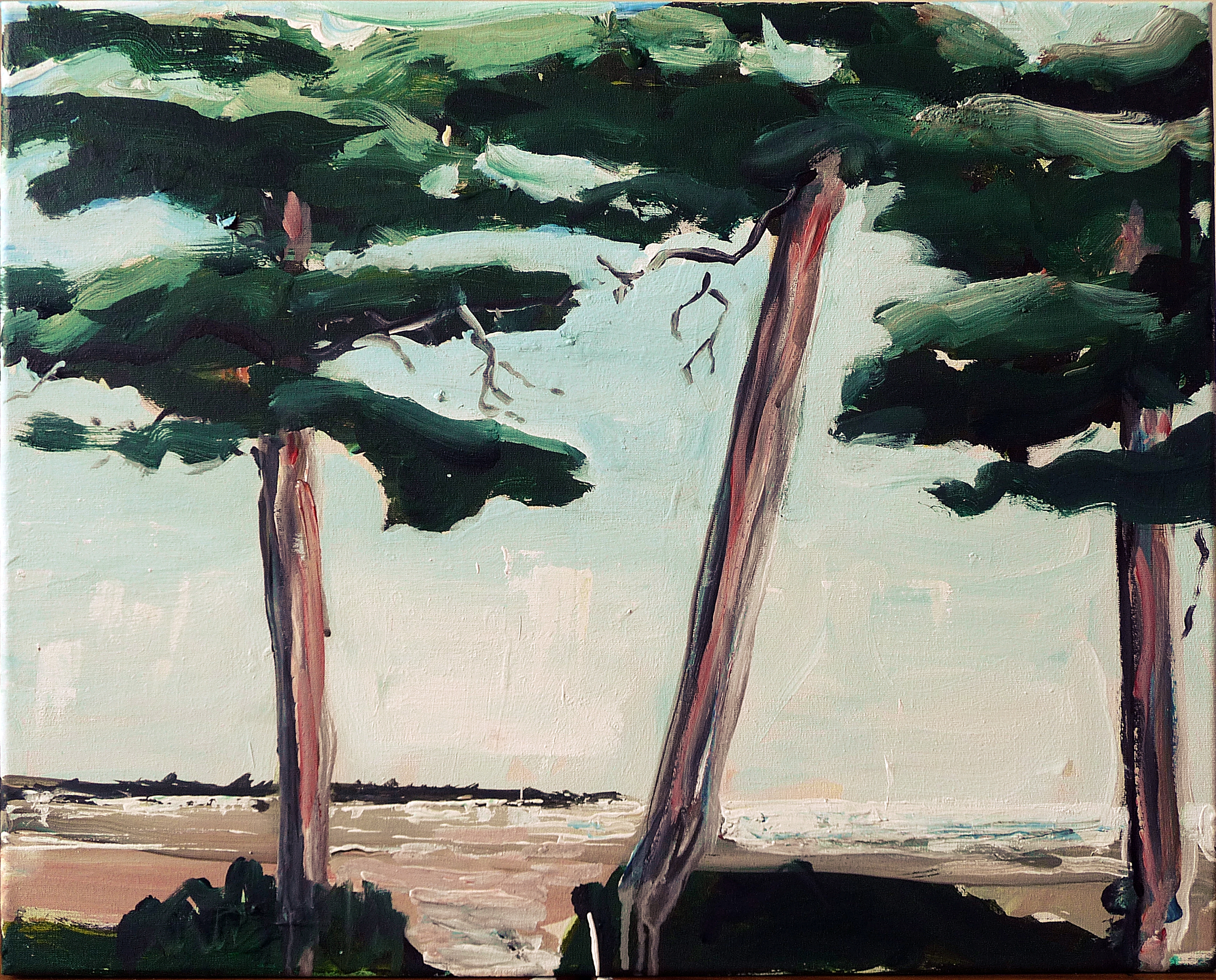
'Scots Pine near Coldingham'. Acrylic on 20x162 canvas

‘Scots Pine near Coldingham’. Acrylic on 20×162 canvas

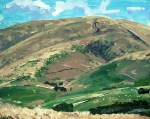
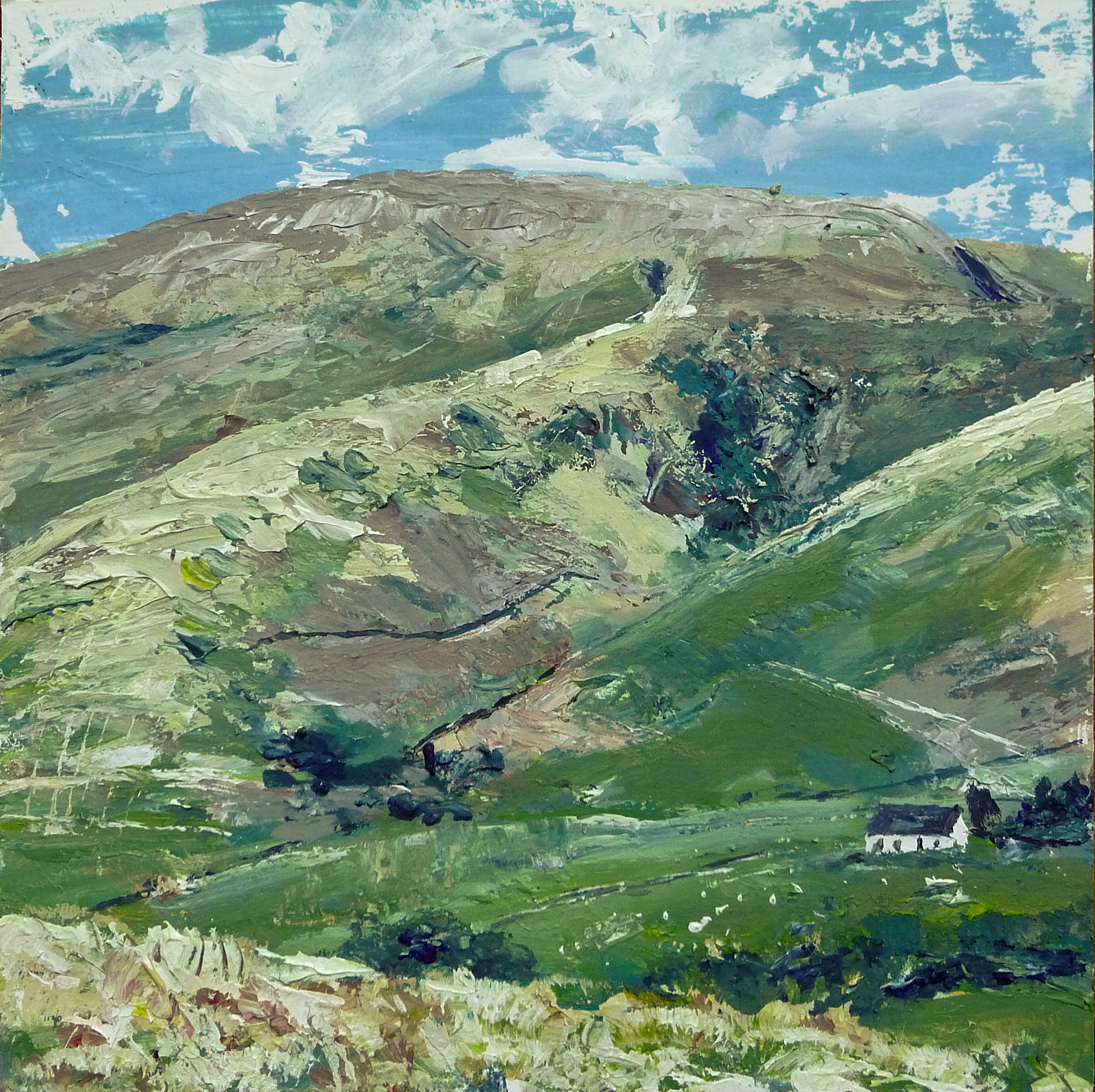
'Moffat Hills 2'. Acrylic on 20x16" canvas

‘Moffat Hills 2’. Acrylic on 20×16″ canvas

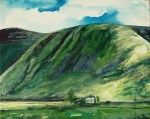
Today’s paintings – a second version on canvas of the hills near Moffat, and Scots Pine near Coldingham Bay.

Earlier version on 10×10 inch wood –

'Moffat Hills', Acrylic on 10x10" wood panel

‘Moffat Hills’, Acrylic on 10×10″ wood panel

I love these rolling hills with their velvety green grass. A friend observed that the hills look like a sheet being shaken out and I see what he means, with their folds and creases.

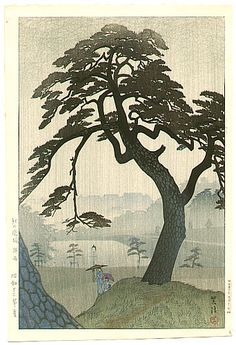
I’ll be painting more Scots pines on a larger piece of canvas in the next few days, their elegant shapes were quite often a feature of Japanese prints (example below) from the last century -partly inspiration for today’s painting, though my painting is much looser.


e7ee16cd2a8b5de8b03b649aca96259f

My exhibition The Green Woods Free is in just three weeks!


Eigg Paintings at the Flaubert Gallery

Many thanks to the Flaubert Gallery for featuring the Eigg project on their website (link below) – paintings by myself, poems, J.L Williams and music by Atzi Muramatsu.

The feature includes a link to our collaborative video made earlier this year, one of those projects I can truly say I feel proud of! I still find it very moving – beautiful work by Jen and Atzi.

The paintings ‘West’, ‘North’ and ‘East’ are available to buy through the Flaubert Gallery where they’ll be on exhibition until later this year.

https://sites.google.com/site/flaubertgalleryedinburgh/artists-3/rose-strang

Flaubert Gallery

Flaubert Gallery

Borders Country Day 15

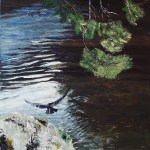
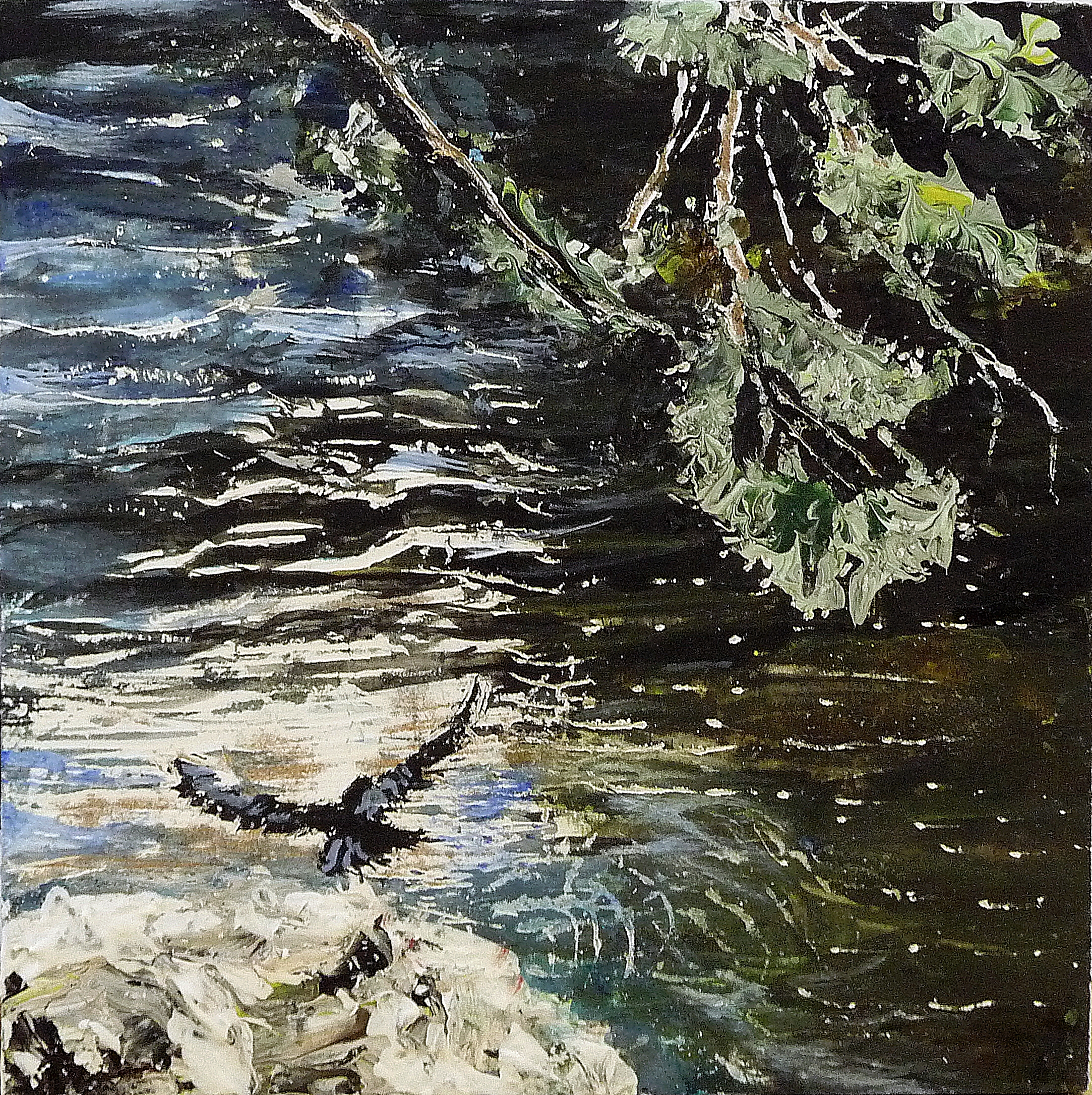
'Hawk. River Tweed 2'. Acrylic on 20x16" canvas

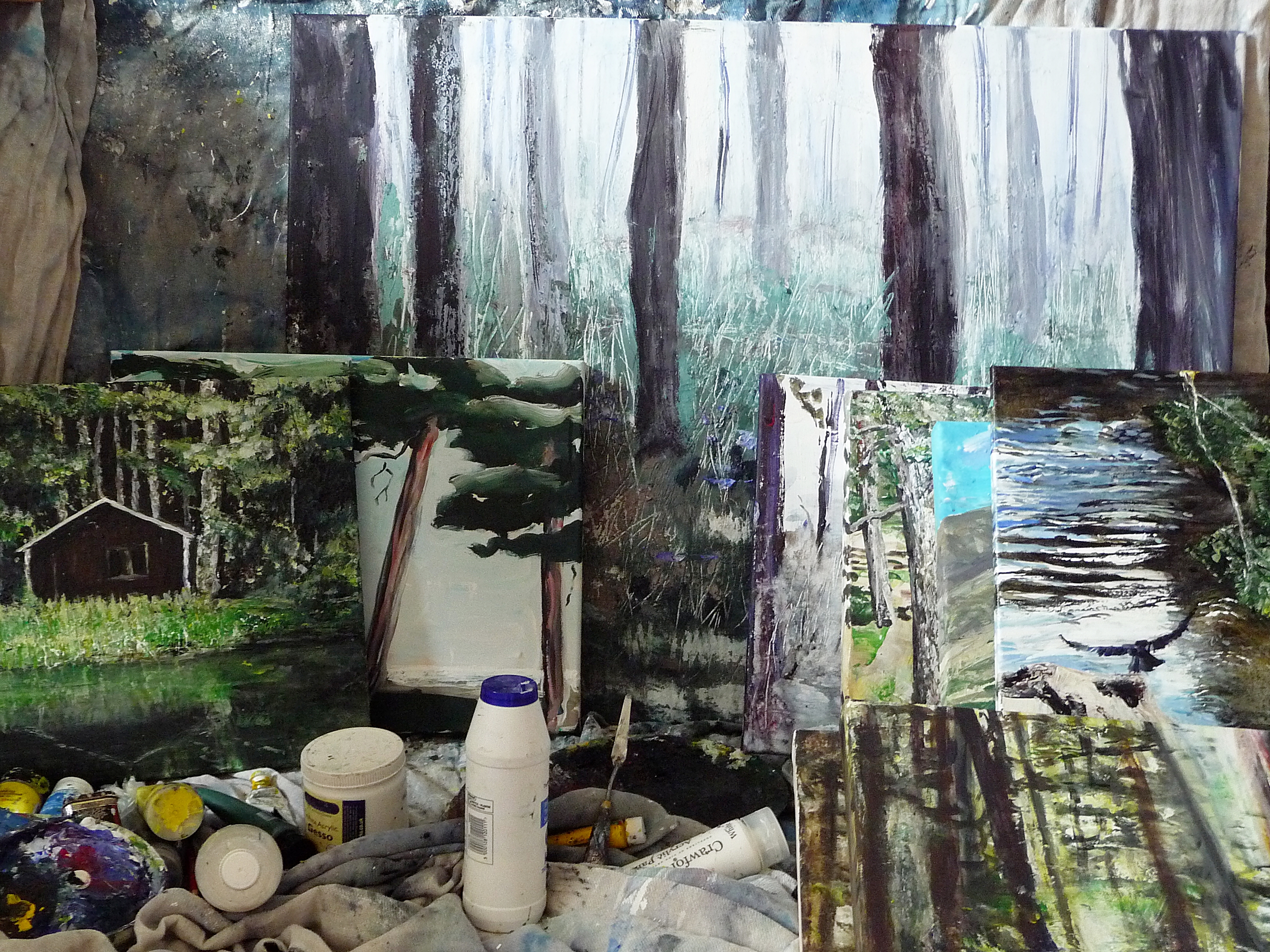
‘Hawk. River Tweed 2’. Acrylic on 20×16″ canvas

Today’s painting – a larger version of ‘Hawk (River Tweed)’ on canvas.

This is the version from last week on 5×5 inch wood..

'Hawk. River Tweed'. Acrylic on 5x5" wood

‘Hawk. River Tweed’. Acrylic on 5×5″ wood
As this subject seems to work at a larger scale I might paint it at 40×40 inches on wood.

I think the wood background maybe suits this subject more than canvas. The highlights on water are  easier on wood, which I prime with white gesso and paint so it’s easy to scrape into the top layer of paint to create nice, sharp light effects. On canvas I usually make those sharp white edges with white paint and palette knife, which can somewhat take away from a more expressive line.


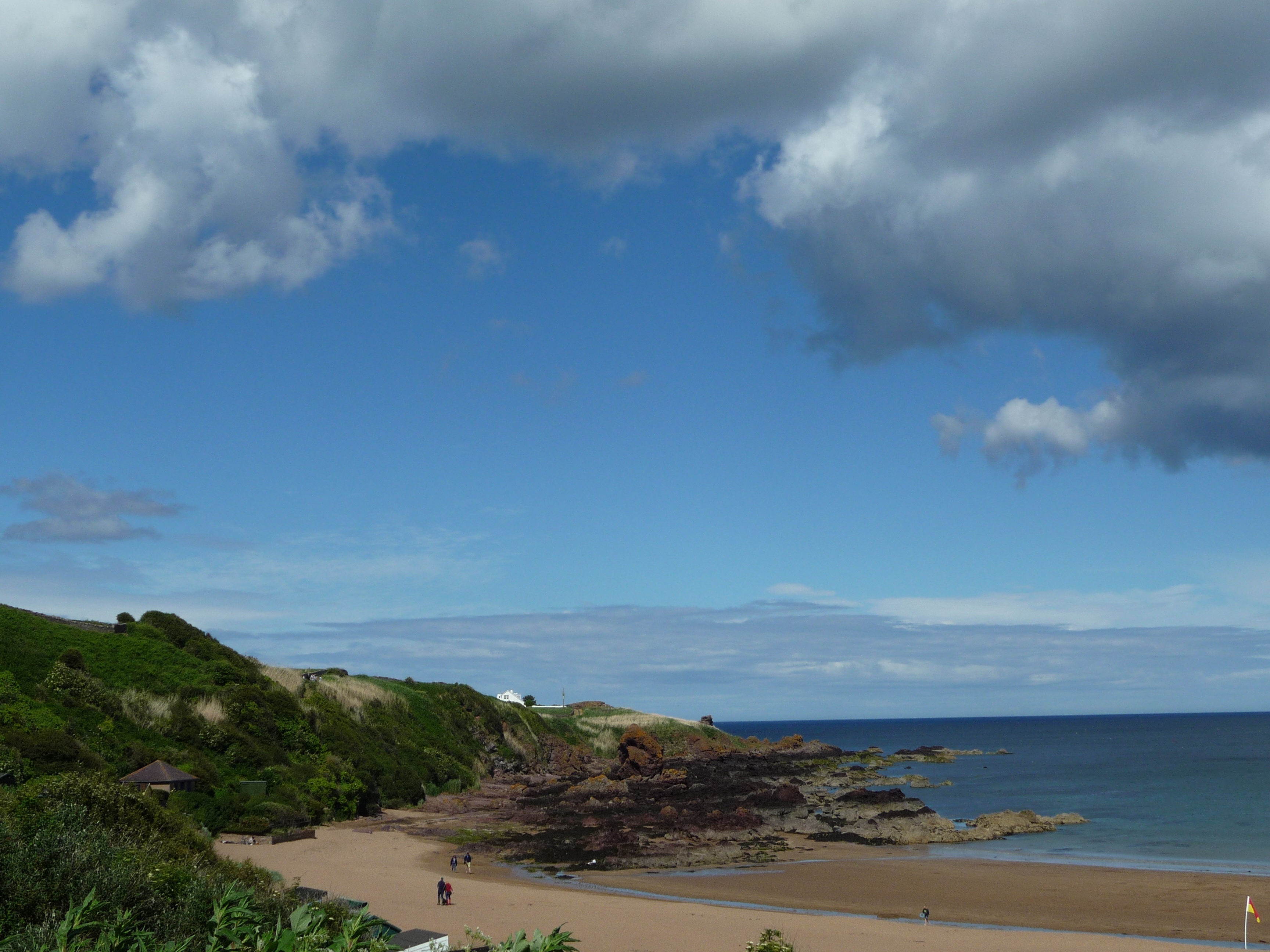
This weekend we took a trip to St Abbs Head in Berwickshire, which was a nice destination for Father’s Day combined with a spot of sketching and photography on the east coast of the Borders. And it was a suitably beautful, sunny day for the summer solstice.

Coldingham Sands

Coldingham Sands

St Abbs used be called Coldingham Shore (Coldingham Sands – are just a mile or so along the coast).

It’s popular with divers and surfers but it was only in the 19th century that people settled here, though it’s always been a place to fish.


In the 7th century, a monastery was set up near St Abb’s Head, by Aebbe of Coldingham, a former Princess turned Abbess. She was originally from the North of England but after her father was killed in war, she, her mother and brothers fled to Scotland. While there she converted to Christianity. When the conflict was over, she returned to England, then later set up monasteries in England and at Coldingham.

She was politically astute and helped prevent several conflicts (no doubt a valuable skill given the Borders history of violence!). I imagine her childhood must have taught the harshest lesson in the painful outcomes of violent conflict. After her death the monastery was abandoned and became a ruin, but her memory wasn’t forgotten..

Aebbe’s story was recorded and written down by 12th Century monks so that her legacy of peace remains to this day in the name of the village and headland – St Abbs.

Tomorrow I’ll begin paintings of this coastline.

Some photos from yesterday..

P1240864 P1240714 P1240895


Borders Country Day 10

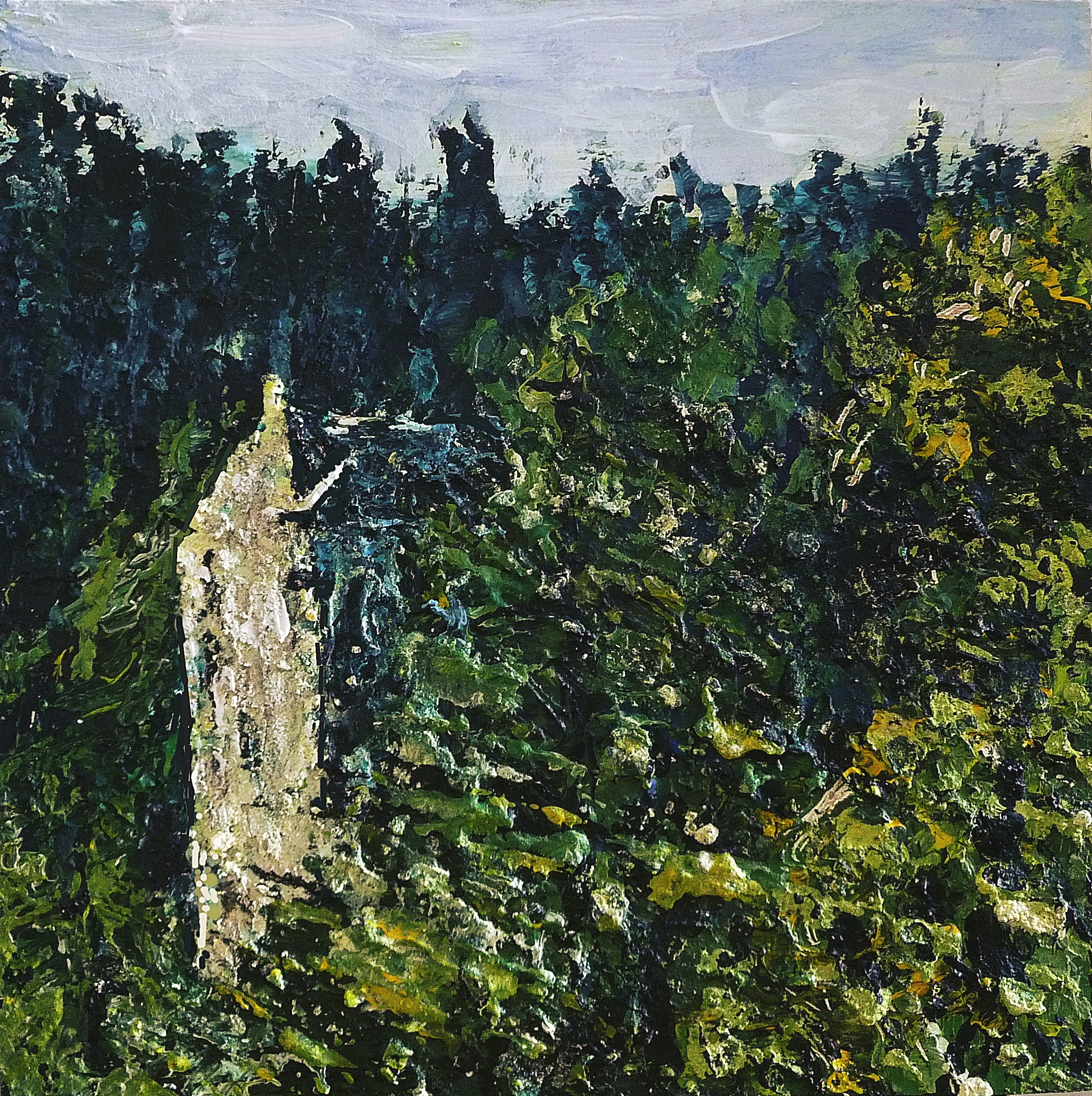
'Wood Cabin, (Leithen)'. Acrylic and varnish on 10x10" wood

‘Wood Cabin, (Leithen)’. Acrylic and varnish on 10×10″ wood

Today’s painting – a mysterious hut near Leithen, in the gardens of the equally mysterious Leithen House.

I’m very partial to cabins in the forest. They have a Hansel and Gretel magical-ness to them and there’s always the sense that someone intriguing lives there.

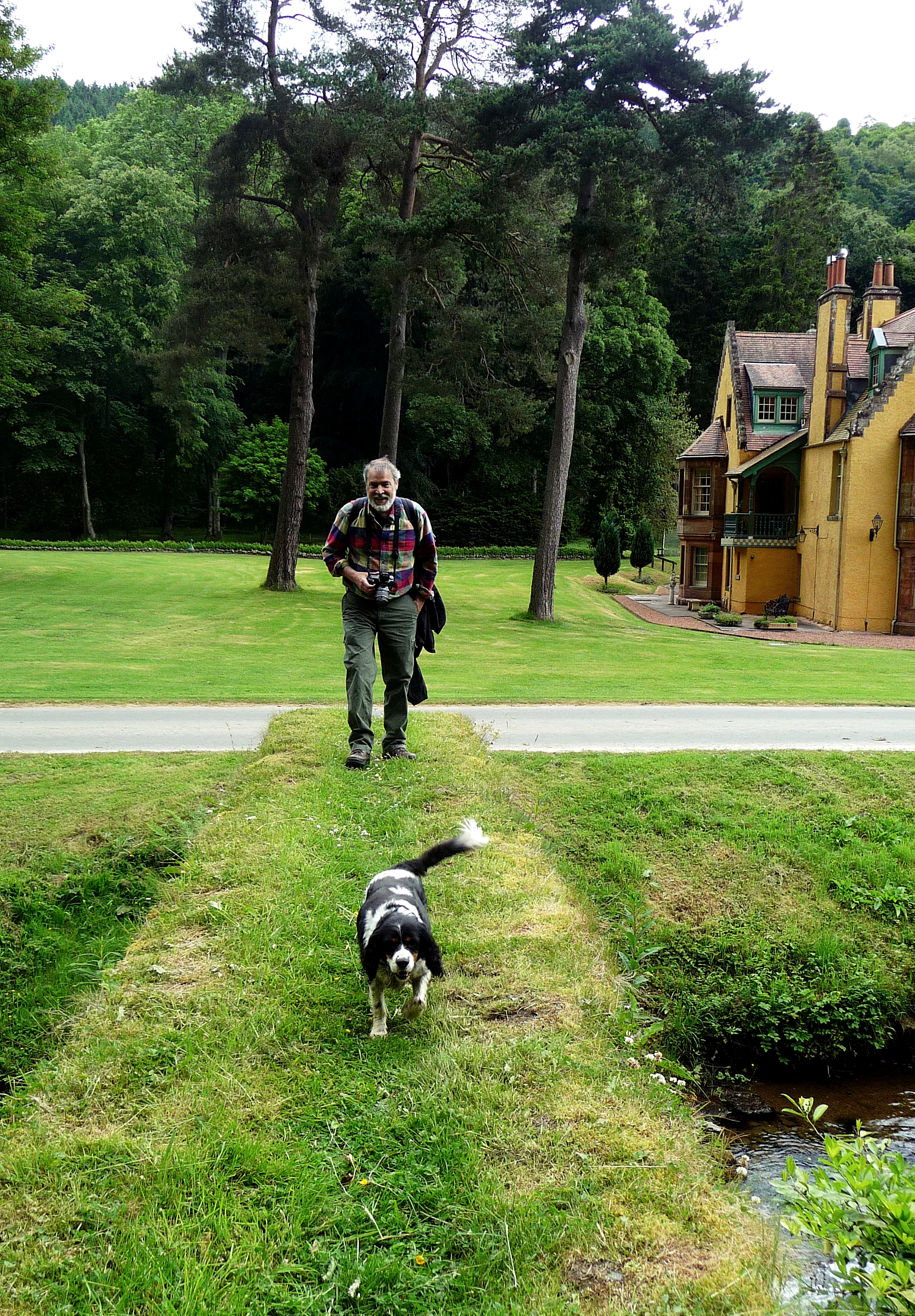
We drove through Leithen a while back, stopped near a river to explore and discovered Leithen House, which had beautiful natural grounds; huge ancient trees, a small river, pond and dense woodlands over a stone bridge.

No one seemd to be around except a small black & white dog who appointed himself as our guide, but eventually we spotted a gardener several hundred yards away, standing still and staring at us in a slightly hostile manner. I plucked up the courage to walk over and say hello and ask him where we were.

‘You’re not supposed to be here’ he answered tensely.

‘Oh? Why’s that?’ I asked, smiling

‘It’s private’ he hissed.

I said I didn’t know, but thanks and we strolled away. Only the black dog seemed to want us to stay so we ordered him ‘home’!, We’d seen no signs marking the place as private. (I’d definitely looked, as I have a mostly irrational fear of some aggressive owner’s rottweiler biting my hand off! ) Anyway, when I returned home I did a quick search online and discovered it was a luxury retreat hotel. I still couldn’t see what the gardener was so up-tight about mind you.

I’d love to say it was owned by a famous recluse or eccentric but the truth was quite ordinary. Nonetheless, the atmosphere inspired me!

Leithen House

Leithen House

My sister Catherine and friend Donald, dad in the background, trespassing at Leithen

My sister Catherine and friend Donald, dad in the background, trespassing at Leithen

Black&white dog and Cousin Kerr

Black&white dog and Cousin Kerr

Borders Country Day 9

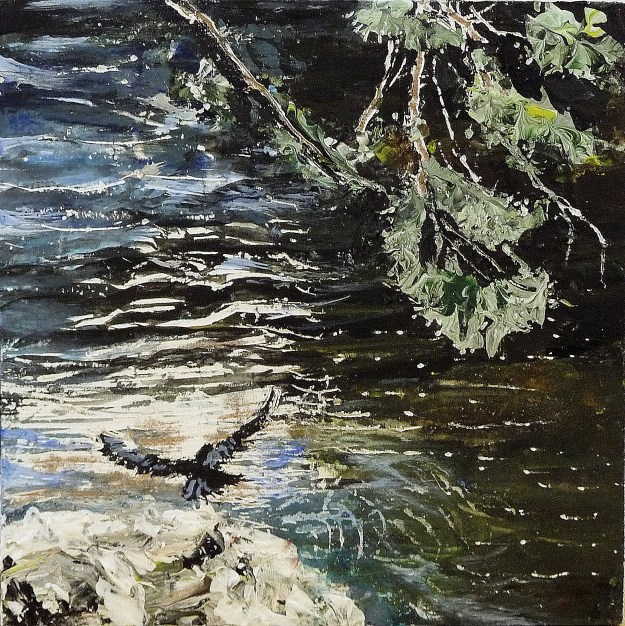
'Hawk. River Tweed'. Acrylic on 5x5" wood

‘Hawk. River Tweed’. Acrylic on 5×5″ wood

'Glentress'. Acrylic on 5x5" wood

‘A Rainy Day in Glentress’. Acrylic on 5×5″ wood

Today’s paintings – a hawk swooping down to the River Tweed, and mist through the trees in the Forest of Glentress.

I’m nearly at the end of George Fraser’s ‘The Steel Bonnets’ – a book about the history of the Borders Reivers. It’s been harrowing reading.

The first chapters cover the lifestyle of the Borders Reivers and the final chapters deal with the wars during Henry the VIII’s time when devasating wars wrecked the lives of people in the Borders and beyond.
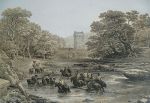
Engraving, showing Borders Reivers raid on Gilnockie Tower

Engraving, showing Borders Reivers raid on Gilnockie Tower

Accounts of the Reiver families have been difficult reading in themselves, never mind the later descriptions of  war. The Reiver’s life was one of constant feuding, raiding and violent conflict, across both sides of the Border. This was partly due to previous wars which wrecked the landscape and therefore the livelihood of Borders familes, but also it simply became a way of life, and despite authorities on both sides of the border appointing Wardens to try to calm the conflicts, the chaotic lifestyle became entrenched. (The Wardens themselves often became Reivers!)

It was lucrative too, and for those who’d perfected their Reiver skills it led to the accumulation of vast wealth; some of the titled landowners, whose estates line the Borders today, are their descendants.

The status of each Borders family or clan was diverse though, and within for example the Kerr family there would be everything from titled land owners in huge castles with an army of thousands, to people living in broken down hovels.

For the battle hardened Borders Reivers, violence and war were normal, they were described as ‘scared of nothing’ and their outstanding skills in warfare were utilised by Kings on both sides. Also the feuds between Borders families were manipulated to form allegiances. Scottish fought on the English side, sometimes changing tactics mid-battle if that seemed a better plan.
P1230602While reading ‘Steel Bonnets’ it was thinking about ordinary Borders people that I found harowing. Fraser describes a widower with her children burned in their peel tower, the starvation of countless thousands of poor people because of the wrecked landscape. They’d plough fields during the night to avoid attack, but after ten years of war it must have been a bitter, miserable struggle. Also he describes, very briefly, the group of monks who held out bravely in Kelso Abbey during attack by Henry VIII’s army, but didn’t survive.

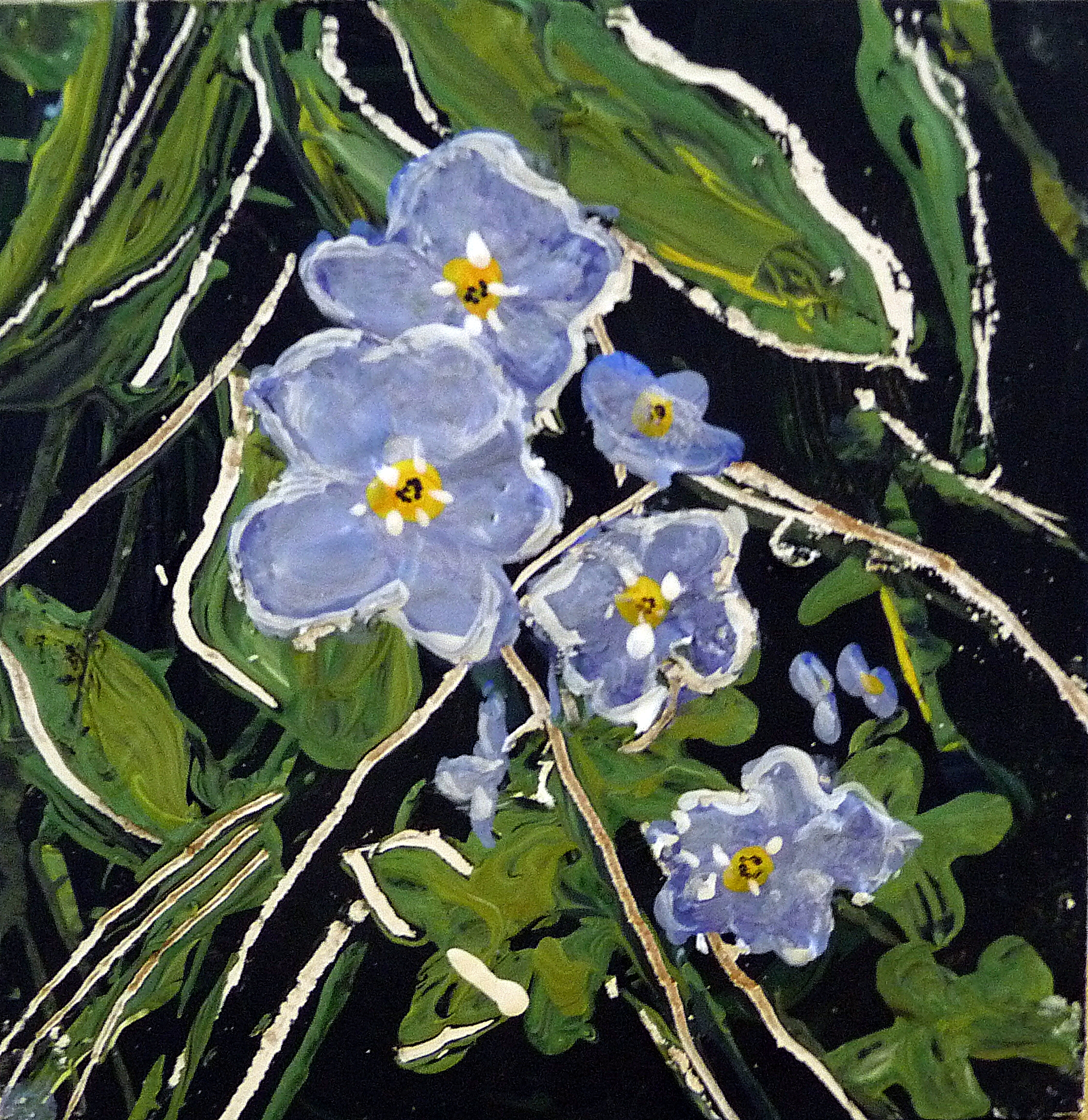
When I visited Kelso last weekend the ground was festooned with forget-me-nots, which seemed to me as symbolic as poppies; in rememberance of the ordinary people who never sought war and conflict.
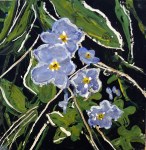
'Forget-me-nots. Kelso'. Acrylic on 5x5" wood

‘Forget-me-nots. Kelso’. Acrylic on 5×5″ wood

Woven throughout the stories and Borders ballads though, references to hills, rivers and ‘forestes greene’ bring to my mind the image of a rich, medieval tapestry, and suggests the presence of faith and love of familiar landscape amidst war and fear. One Borders ballad titled Erlington made me smile, amidst all the grimness! The last line of this ballad inspires the title of my upcoming exhibition The green woods free
Borders Country Day 8

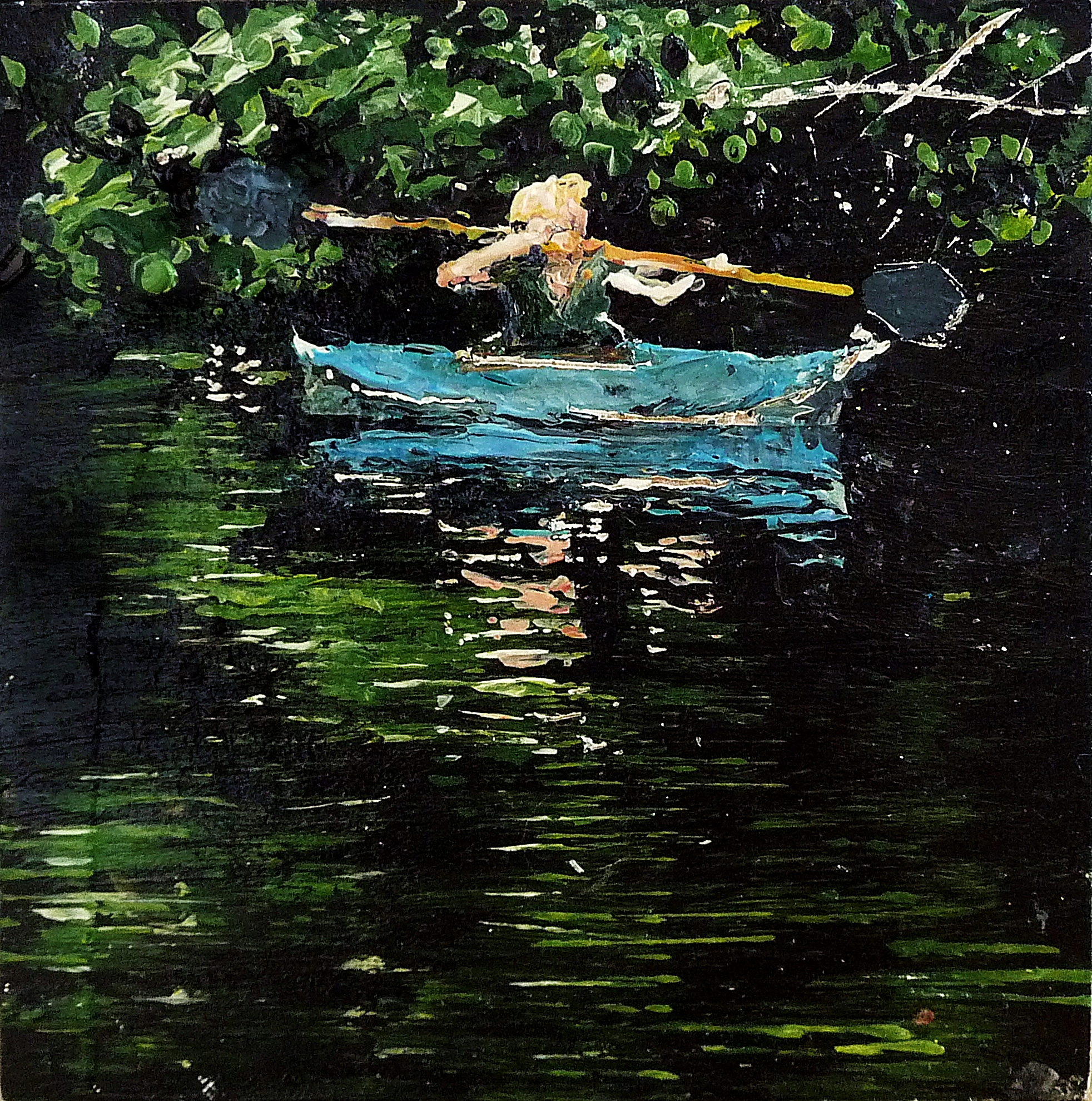
'Catherine in a Canoe, River Tweed'. Acrylic on 5x5" wood panel

‘Catherine in a Canoe, River Tweed’. Acrylic on 5×5″ wood panel

'Neidpath Castle on the River Tweed'. Mixed media on 10x10" wood panel

‘Neidpath Castle on the River Tweed’. Mixed media on 10×10″ wood panel

Today’s paintings – Neidpath Castle on the banks of the River Tweed near Peebles, and my sister canoeing on the River Tweed near Peebles.

I rarely paint people in landscapes unless there’s an inspirational reason but today I decided to paint my sister Catherine canoeing on the River Tweed. Firstly it’s a nice image and I love the reflections on the water, but also because I think it captures her personality.

A friend, Jamie Cossar (who I interviewed in this post The Healing Island, about Lindisfarne) was around last night for dinner and described Catherine as ‘floating calmly and regally, like a swan’. No doubt Catherine will have a giggle at that description, as well as finding it quite flattering!

So in this picture, here she is floating regally, but also paddling quite athletically – under the surface there’s a lot of thinking and activity going on. My sister Catherine’s a therapist, whose skills I and many others have benefited from over the years, so today’s painting hopefully captures something of her personality. You can read more about Catherine’s work on her website Here

Neidpath Castle (which sits on a bend of the River Tweed about a mile from Peebles) was built in the late 14th century (there was an earlier 12th century version). It has a long complicated history and enjoyed visits from various literary ‘giants’ such as Wordsworth and Sir Walter Scott. It’s said to be haunted…(of course!)

“The castle is said to be haunted by the ghost of Jean Douglas, referred to by Sir Walter Scott as “the Maid of Neidpath”, the youngest daughter of William Douglas, Earl of March. Forbidden to marry the son of the laird of Tushielaw, who was considered below her station, she dwined while her lover was sent away. When he returned she was so wasted that he did not recognise her, causing her to die of a broken heart. She is reputed to appear clad in a full-length brown dress with a large white collar. Sir Walter Scott wrote a poem about her”.(Wikipedia)