Category Archives: Uncategorized

Off to the Isle of Iona …

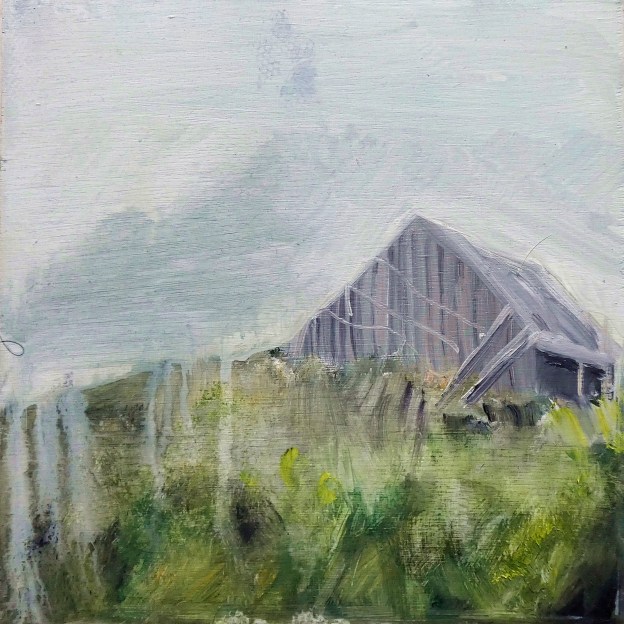
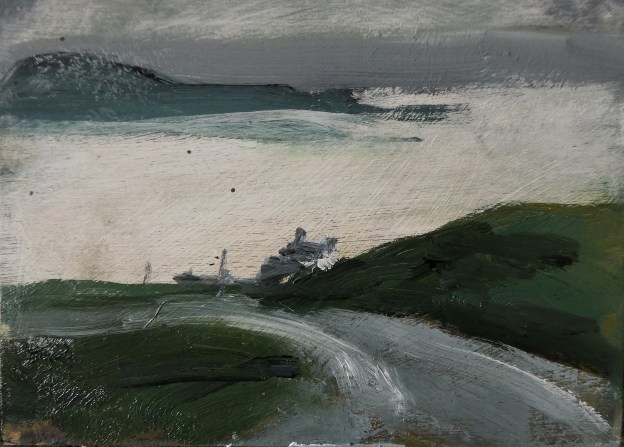
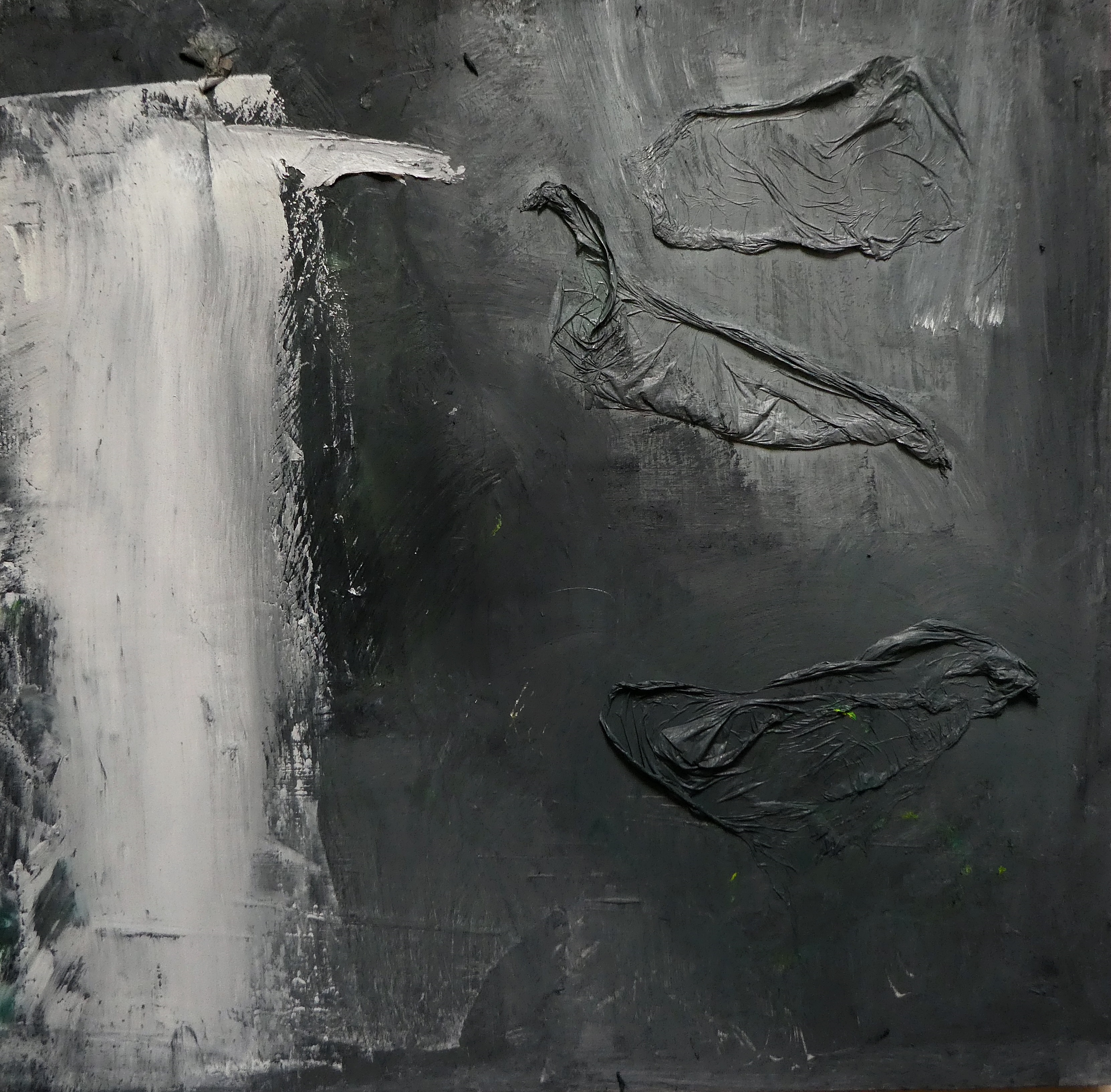
Above – painting at the North end of Iona, 2018

Place-names can tell you so much about the history of a place. If you find an old enough map of the Isle of Iona you can see that, tiny though the island is (three by one and a half miles) it has been inhabited by people for thousands of years.

Cnoc an Oran, for example – ‘hill of song’ in Scottish Gaelic, or Sìthean Mòr – ‘hill of the angels’ as it’s translated, though Sìthean also translates as ‘fairies’. Back in about 500AD when an exiled Irish prince, St. Columba (or Collum Cille as he was known) arrived here to set up a religious community, he would have encountered the ancient remains of previous dwellers going back to the iron and bronze ages. Iona has always been a an important spiritual place.

Known as ‘The Dove’ Collum Cille seems to have been anything but! (Maybe this was an early example of sarcasm). He banned women from the island, saying; wherever there are cows there are women and wherever there are women there’s trouble, or words to that effect. He was known as a powerful political negotiator across Scotland. ‘You wouldnae mess wi him’ as Scots might say!

He did set up a Christian settlement though, and one of his followers, named Adomnán, wrote of the miracles conducted by Collum Cille, which included facing down a sea monster (it’s since been speculated that it was in fact Nessie).

I first visited Iona in my early twenties seeking, I suppose, spiritual understanding. I did find it a deeply affecting place, which is why I’ve returned so many times since then. On that first trip, I visited the craggy south end of the island, where the rusting machinery remains of an 18th century marble quarry still exist.

The beautiful lucent white marble is streaked with deep grass-green serpentine and it made the perfect material for the alter that was created for the abbey in the early 1900’s when the abbey was restored. For hundreds of years, children of the island have sold little pebbles of the sea-washed marble to visitors for luck, they still do today.

On my first visit though, I decided to take a slightly larger piece, about 4×5 inches – a large chip from the marble quarry cuttings. It has travelled everywhere with me, you could say it’s been ‘my rock’! Though I think it’s time for me to return it to its home on Iona by way of a ‘thank you’ for everything the island has given me.

It sounds trite or contrived in the usual way of island sayings, when you read that ‘Iona always gives you what you need’, but I’ve found that to be true. There was the sense of spiritual discovery and wonderment in landscape in the first place- an inspiration for me to paint landscape – as well as the more difficult times when I’ve been struggling with life and visited the island to contemplate.

Contemplation sounds peaceful but those visits were turbulent in a variety of ways. For example the time I spent 21 days in a tent by myself, feeling that I needed a break from noise and people. In fact it made me deeply appreciate people since my main companions for those 21 days were spiders, a drove of slugs crawling over my tent, midges, a corncrake whose harsh mating call kept me awake half the night, and a team of baa-ing sheep who decided that my airing sleeping bag was a good place to urinate. (That’s a stench that never washes out, the sleeping bag was indeed a wash-out after that!)

Luckily the campsite owner had a stash of beautiful wool-lined sleeping bags and didn’t bat an eye when I told him of my predicament, lending me one of these for the rest of my stay.

There was also the time I stayed there in the wintry months, as part of an artist’s residency project. During that fortnight I shared a dwelling space with some very troubled people. Iona attracts pilgrims from across the world who desperately seek healing for emotional or physical wounds. It’s not easy to deal with that sometimes and I found that the atmosphere, combined with a few of the demons of my past, haunted me for months to come.

On the other hand, each day brought blessings: the endless beauty and colours of the landscape, the turbulent energy and colours of the tide changing at twilight, which inspired a series of paintings titled October Tide, then there were fellow creatives who arrived with songs, music and ideas, and new friendships …

Mary McCormick, a grounded and unassuming women in her 70’s from the American mid west, was someone who observed without judgement or drama. She loved to collect small pebbles from her daily walks, pour them into a little dish and invite us to admire them, sharing her photos of the day with residents around the kitchen table. If the conversation veered into turbulent waters, she’d succinctly say her piece with calming compassion and just leave it there, resonating with understated wisdom.

One day we walked to Sìthean Mor, ‘The Hill of Angels/Fairies’ and she said that she’d heard in a book that you had to listen here for nature, or God, or for whatever beliefs you had, to give you an important message. I stood for a while, watching a wash of slate grey cloud blowing across a dazzling blue sky – it looked like a painting in progress – and the phrase ‘You are meant to enjoy it’ came to mind.

Afterwards we dropped in to the Columba Hotel and I told Mary about the troubled thoughts that had been stirred up by time spent on the island this time and the company, or demands as I felt, of emotionally troubled people. I’d felt so upset I’d taken to hiding in my room in the evenings, worried that I’d affect others with my mood, that I was ‘losing it’. Mary immediately exclaimed ‘Oh, no Rose! ..’ jumping up from her place next to the log fire and coming over to hug me, ‘You’re the most grounded person here, you’ve been a friend during my time here’. My worries felt washed away. We’ve stayed friends since then of course, though Mary is now back in the US, writing, exploring grasslands of the Midwest and finding opportunities to be involved in her main occupation of landscape gardening.

During the residency I’d been reading the poems of Virgil, and on my return I began to explore Medieval philosophy, which led to a new series of paintings about the planets as understood in Medieval cosmology. It was an incredibly enriching time when I read Planet Narnia by the author Michael Ward, which explores the planetary influence in the works of C.S. Lewis.

I found that contemplating the influence of each planet changed me. Working through the ideas connected with Saturn for example – winter, introspection, hard lessons, death … (my dad had died just two years before) during the months of December and January 2018, led to a new understanding of how to live life – you’re meant to enjoy it.

Spring arrived at the same time that I was painting Jupiter, which alligns with the change from winter to spring – winter passed, guilt forgiven as C.S. Lewis writes in his Planets poem on the subject of Jupiter – and with it a new relationship.

Last year my partner Adam presented me with an engagement ring that he’d designed himself, made with a small piece of the Ionian marble (my rock, that I’d found on my first trip to Iona in the early 90s!) After celebrating, we discussed where we’d like to get married, but each idea was fraught with planning troubles – we wanted to get married in the countryside, but how would we bring all our relatives from different parts of Britain to the celebration?

In the end, it made most sense for just the two of us to go away to get married, what’s known these days as ‘an elopement wedding’. It was Adam who suggested the obvious – ‘how about Iona?’ I was struck by the fact that I was surprised (and delighted) by the idea. Back in my twenties I’d thought to myself ‘I’d like to get married here, if I ever get married’. Somehow that dream had been buried in the back of my mind until Adam took the idea out, gave it a dust and – there it was!

And so we’ll be in Iona this May (the green, fertile month of love, art and expression, as understood in Medieval cosmology). Inspiration for my next series of paintings. I’m going to take my Iona rock back to the south end of the island and leave it there as a thank you to Iona.

I hope someone else discovers it, and that it brings them enjoyment … C.S Lewis says it better than I can:


“Meditation in a Toolshed”
By C. S. Lewis.

I was standing today in the dark toolshed. The
sun was shining outside and through the crack at
the top of the door there came a sunbeam. From
where I stood that beam of light, with the specks
of dust floating in it, was the most striking thing in
the place. Everything else was almost pitch-black.
I was seeing the beam, not seeing things by it.
Then I moved, so that the beam fell on my
eyes. Instantly the whole previous picture
vanished. I saw no toolshed, and (above all) no
beam. Instead I saw, framed in the irregular cranny
at the top of the door, green leaves moving on the
branches of a tree outside and beyond that, 90 odd
million miles away, the sun. Looking along the
beam, and looking at the beam are very different
experiences.

And from ‘Surprised by Joy’, C.S.Lewis:

In other words, the enjoyment and the contemplation of our inner activities are incompatible. You cannot hope and also think about hoping at the same moment; for in hope we look to hope’s object and we interrupt this by (so to speak) turning round to look at the hope itself. (…) The surest way of spoiling a pleasure was to start examining your satisfaction. But if so, it followed that all introspection is in one respect misleading. In introspection, we try to look ‘inside ourselves’ and see what is going on. But nearly everything that was going on a moment before is stopped by the very act of our turning to look at it. Unfortunately, this does not mean that introspection finds nothing. On the contrary, it finds precisely what is left behind by the suspension of all our normal activities; and what is left behind is mainly mental images and physical sensations. The great error is to mistake this mere sediment for the activities themselves.

Beinn Odhar Bheag, Glenfinnan

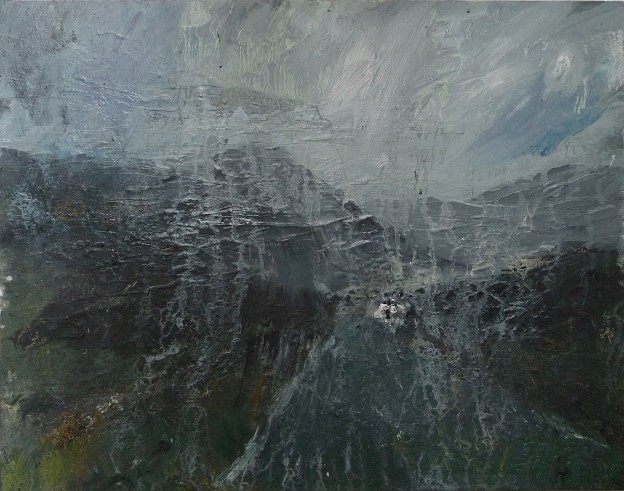
Above Beinn Odhar Bheag, Glenfinnan. Oil on 32×23″ wood. Rose Strang 2020

Back in my twenties (when money was even scarcer than it is today) one of my favourite things was to drive up to the west coast of Scotland with a friend or two and camp wild among the ancient oaks and white sands of Arisaig, Morar or Ardnamurchan.

Cooking over a tiny gas stove under heavy rain required ingenuity – an anorak served as a tarpaulin over the bushes above my head as I cooked spag bol from scratch, in the dark, with a torch strapped to my head. Numerous swigs from a bottle of red wine helped with the ever present midges, in as much as I was beyond caring after a while, though I’d awake the next day with a face so covered in midge bites it resembled a shiny pink football!

Something about camping wild can lead to the most immersive experiences though, I remember sitting at the foot of a freezing waterfall, dipping my head in the water to cool down the midge bites, until my face felt numb – a strangely pleasant sensation, relatively!

I’ve never much enjoyed constant city-life, and have from time to time lived in more rural locations (in Orkney, and on the Isle of Paros in Greece). So it’s a surprise even to me that it’s taken so long to move out of the city – next year I hope to move permanently to the countryside.

One of my favourite stops on the road to the isles was at Glenfinnan. Leaving the constant noise of Edinburgh we’d drive for a few hours to Fort William for supplies, then it’s just a half hour drive west to Glenfinnan. Beinn Odhar Bheag sits just south of the village of Glenfinnan, a place redolent with history and atmosphere. It was here that Charles Edward Stuart first gathered Highland clans from across Scotland for the fateful last war of independence which culminated at Culloden. And it’s the famous Glenfinnan Viaduct bridge here that featured in the Hogwart Express journeys in Harry Potter films.

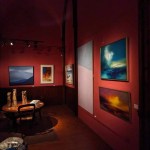
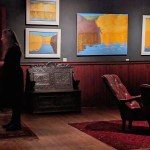
Harry Potter hadnt been written back then, and I only vaguely knew about the Jacobite connection back then. What I loved was to drop in to the Glenfinnan House Hotel for a cup of tea. No matter how scruffy and muddy our car, or boots, we always felt welcome there. As soon as you enter the hall you’re greeted with a Scottish Highland miasma of huge log fire, vast dark oil paintings depicting various moody mountains, wildlife or battle scenes, a mish-mash of antique furniture and dark wood panelling.

On a sunny day, you might carry your pot of tea into one of the sitting room areas, clad in fading green tartan comfy chairs, where floor to ceiling windows look out on one of the most stunning views in Scotland – across the silvery Loch Shiel to wild mountains beyond. More likely though, you’d sit warming your damp feet in a huge sofa next to the fireplace and find that your head would be almost reeling with … the silence. The sheer redolent and resounding silence after all the city noise!

I painted Beinn Odhar Bheag (pronounced ‘Ben ower beg’ meaning ‘the little dun coloured hill’ in Scottish Gaelic) a few years ago and didn’t think much of it at the time. Dusted off and looked at again, it’s better than I remembered! So I’ll be submitting it for a landscape painting award, and we’ll see what happens.

I’ve left the wood showing through and there’s very little paint used. I added a swathe of darker colour to the left to suggest the ever changing light on the mountains as the clouds pass over.

Adam and I were lucky enough to stay at the hotel for my birthday in November 2020. Though it was lockdown it still felt warm and friendly and we absolutely loved it.

I’m sorry to hear that the couple who managed and cooked for the hotel have moved on to new projects after twenty years. So it’s temporarily closed at the moment, presumably due to open again soon once they’ve appointed new managers, I hope. I wish them luck!

The Times – review of ‘The Living Mountain’ exhibition

(Above: Among Elementals. The Living Mountain Series. Oil on 60x42cm wood. Rose Strang 2020.)

“A stunning series of images – a symphony of subtle essences, distilled experiences, fleeting memory fragments and deep, heart-felt lingering impressions.” *****

Giles Sutherland, the Times, 21st February 2023

It was an absolute delight to read Giles Sutherland’s sensitive, insightful review (link below) in The Times today. Not simply the understanding of intention and inspiration behind the paintings, but because it so succinctly gets to the core of why Nan Shepherd’s beautiful book The Living Mountain inspires artists and creative thinkers everywhere, especially in our contemporary times.

Here’s a link to the article (if you can’t access the article the text is copied in full below):

Rose Strang Review – Symphony of Subtle Essences and Impressions

Visual Art: Giles Sutherland

Rose Strang

The Living Mountain – Dreaming a Response

Scottish Poetry Library

Edinburgh

Until 31 March

STAR RATING: ***** (FIVE)

Not that long ago, in the mid 80s, in response to a question from a brave, young, female north American student, my Scottish literature lecturer opined that the reason there were no women writers on the syllabus was there that there were ‘no Scottish women writers of substance’.

How shocking that such nonsense was then so deeply imbedded in academe. The hapless lecturer had clearly not heard of Nan Shepherd, born in 1893, a native of Deeside and contemporary of literary luminaries such as Neil Gunn, Lewis Grassic Gibbon, Marion Angus, Helen B. Cruickshank, and Agnes Mure Mackenzie.

Shepherd – whose literary ability was at least equal to that of her male peers – is currently undergoing a reappraisal and revival, supported by such talents as the writer Robert Macfarlane, and the artist Rose Strang. Strang’s paintings, which form the basis of this show, were commissioned to illustrate a new edition of Shepherd’s classic of nature writing, The Living Mountain, first published in 1977.

Following in Shepherd’s footsteps, Strang travelled to the Cairngorms, to places such as Càrn Bàn Mòr. Her journey provided inspiration for a series of nine oil paintings, inspired by the mountains’ genus loci and the fluid poeticism of Shepherd’s prose.

The result is a stunning series of images – a symphony of subtle essences, distilled experiences, fleeting memory fragments and deep, heart-felt lingering impressions.

Strang’s painting makes us ask deep questions about what painting is, how it functions and gives us answers to its ultimate purpose. Like Shepherd’s words, and indeed the Cairngorms themselves, these paintings work slowly, generatively taking hold of our senses and our imagination, striking deeply at our core or, if you like, our souls.

‘One cannot know the rivers till one has seen them in their sources but this journey…is not to be undertaken lightly. One walks among elementals and elementals are not governable…’ wrote Shepherd in the first chapter.

Strang’s ‘Among elementals’ deals with the idea of seeking the source of things, for like Gunn, Shepherd’s thinking was infused with the power of symbolism, so important in Eastern and Celtic culture. Here, as in the other paintings, there is a sense of wonder and the fragility of the human presence among the mountains’ deep geological time.

A wonderful film by Strang, with atmospheric music by Atzi Muramatsu, provides yet another accompaniment to Strang’s imagery and Shepherd’s words.

See this small but perfectly formed show if you can.

*The exhibition runs at the Heriot Gallery, Edinburgh, 17-23 April.

Video premiere: The Living Mountain

(Above, from left to right: Anna Fleming, Kerri Andrews, Erlend Clouston, Merryn Glover, Rose Strang, at The Scottish Poetry Library).

I’m very excited to share a new video (link below), created in response to my recent exhibition The Living Mountain. Dreaming a Response, which is currently showing at The Scottish Poetry Library in Edinburgh until the 31st March. If you don’t get a chance to see the paintings at the Scottish Poetry Library, the  exhibition continues at The Heriot Gallery, Dundas Street, Edinburgh from 17th to 23rd April 2023.
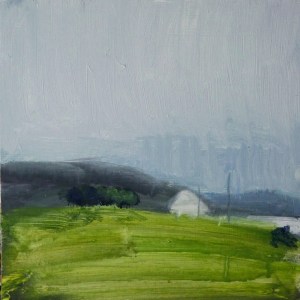
The video showed at the Scottish Poetry Library as part of a launch event of the exhibition and as part of an evening celebrating what would have been Nan Shepherd‘s 130th birthday (author of The Living Mountain)

It features really beautiful music by my friend (and collaborator on many projects since 2013) Atzi Muramatsu. I knew Atzi would respond to the themes with talent and sensitivity but I was deeply moved by his interpretation. Listening to it for the first time was a ‘hairs-standing-on-end’ thrill for me! I won’t go on too much, but do have a watch and listen. A heartfelt thank you to Atzi.

There was a wonderful buzz at the event, which completely sold out (Nan Shepherd being a popular subject these days). Much of the talk included speculation on why such a gifted author only published her non-fiction work The Living Mountain in her later years. I’m very grateful to Aly Barr and all at the Scottish Poetry Library for including me in the event. They were fantastic people to work with – humorous and calm throughout!

Three authors, Merryn Glover, Kerri Andrews and Anna Fleming, shared moving excerpts from their new books. Then, literary executor of Nan Shepherd’s estate (and lifelong friend of Nan) Erlend Clouston, gave a characteristically fascinating and humorous talk about Nan, followed by a general discussion and Q+A from the audience. There wasn’t enough time for all the many ideas and experiences to be shared.

Thankfully amongst all the excitement I remembered to buy all three books, all of which, from their unique perspectives, delve into the fascinating life and inspiration of Nan Shepherd:

PXL_20230217_190459910[16779]

The Hidden Fires, by Merryn Glover

Wanderers – A History of Women Walking, by Kerri Andrews

Time on Rock, by Anna Fleming

And here’s a link to Erlend Clouston talking about Nan as part of Simone Kenyon’s project called Into the Mountain – Erlend on Nan

The exhibition at the Scottish Poetry Library also includes a display of some of Nan’s letters and first drafts of poems. (My personal favourite was ‘Achiltibuie’ because it’s a jewel-like poem, capturing the incredible landscape of Achiltibuie – a place quite dear to my heart).

Thank you to everyone who attended the events at the Scottish Poetry Library. Thank you of course to my partner Adam Brewster who was there being supportive and creative throughout this project (which was two years in the making!) and for the stunning photos of the Cairngorms which feature in the video above. And again thanks to the Scottish Poetry Library for making the event so special and exciting. I think it’s wonderful how inspiration leads to many new inspirations, ever blossoming. It was just great to meet everyone there and share our love of The Living Mountain. Here’s to many more such events in future!

The Living Mountain. Dreaming a Response continues at the Scottish Poetry Library until 31st March, then goes on exhibition for one week at the Heriot Gallery, Dundas Street, Edinburgh from 17th to 23rd April.


Exhibition article

Just four days now to the exhibition launch of The Living Mountain. Dreaming a Response, at The Scottish Poetry Library in Edinburgh.

The panel discussion on the 17th February has now sold out, but the exhibition continues until the 31st March, before going on exhibition at The Heriot Gallery Dundas Street, Edinburgh. All details Here

The National have just published an article about the exhibition and talk, which you can view here – Nan Shepherd: Exhibition to mark 130th birthday of famed Scottish environmentalist

Happy 130th Birthday Nan Shepherd!

Author of The Living Mountain, Nan Shepherd, was born on the 11th February 1893. To celebrate her birthday, the Scottish Poetry Library, Edinburgh, has organised an exhibition and panel discussion, all details below …

The Living Mountain. Dreaming a Response

The Living Mountain. Dreaming a Response showcases new paintings by Rose Strang and goes on exhibition at the Scottish Poetry Library, and the Heriot Gallery, Edinburgh, in February then April 2023.

A response to one of Scotland’s best-loved classics of landscape literature, this series of paintings was commissioned by the Folio Society London for their 2021 publication of The Living Mountain by Nan Shepherd.

Robert MacFarlane, award-winning author of best-selling books The Lost Words and The Wild Places and one of the UK’s best-known devotees of The Living Mountain, writes in the introduction to this Folio publication of the book:

Strang’s paintings are intensely dynamic, seethingly alive with stroke, dab, scratch and drip. Each of Strang’s seven paintings takes a phrase from The Living Mountain and dreams a response to it.

16th February 3 to 5pm. Exhibition Preview (free). Scottish Poetry Library

7pm, 17th February: Panel discussion (ticketed, 310, see link below) Scottish Poetry Library  and audience Q+A with Erlend Clouston (Nan Shepherd’s literary executor, Rose Strang, Merryn Glover (author of A House Called Askival, currently writing a book inspired by Nan Shepherd) and Kerri Andrews (author of A History of Women Walking, currently editing a volume of Nan’s letters). Chaired by Anna Fleming (author of Time on Rock).

Book your ticket here … https://www.eventbrite.co.uk/e/happy-130th-birthday-nan-shepherd-tickets-514890560527?aff=ebdsoporgprofile

_MG_8258-HDR

The Scottish Poetry Library, Crichton Close, Royal Mile, Edinburgh.

The Living Mountain. Dreaming a Response

17th to 23rd April. The Heriot Gallery, Dundas Street, Edinburgh. The Living Mountain. Dreaming a Response (in collaboration with The Limetree Gallery, Bristol).*

Exhibition of the original paintings commissioned by the Folio Society for their 2021 publication of The Living Mountain by Nan Shepherd.

*The series of paintings will be for sale and exclusively available from the Heriot Gallery during the one-week exhibition.

(Please contact the Heriot Gallery with any enquiries about the exhibition. art@heriotgallery.com).

2021-09-13

The Heriot Gallery, 20A Dundas Street, Edinburgh

Happy 130th Birthday Nan Shepherd!

Author of The Living Mountain, Nan Shepherd, was born on the 11th February 1893. To celebrate her birthday, the Scottish Poetry Library, Edinburgh, has organised an exhibition and panel discussion, all details below …

The Living Mountain. Dreaming a Response

The Living Mountain. Dreaming a Response showcases new paintings by Rose Strang and goes on exhibition at the Scottish Poetry Library then the Heriot Gallery, Edinburgh, in 2023.
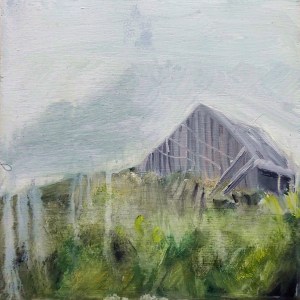
A response to one of Scotland’s best-loved classics of landscape literature, this series of paintings was commissioned by the Folio Society London for their 2021 publication of The Living Mountain by Nan Shepherd.

Robert MacFarlane, award-winning author of best-selling books The Lost Words and The Wild Places and one of the UK’s best-known devotees of The Living Mountain, writes in the introduction to this Folio publication of the book:

Strang’s paintings are intensely dynamic, seethingly alive with stroke, dab, scratch and drip. Each of Strang’s seven paintings takes a phrase from The Living Mountain and dreams a response to it.

16th February 3 to 5pm. Exhibition Preview (free). Scottish Poetry Library

7pm, 17th February: Panel discussion (ticketed, 310, see link below) Scottish Poetry Library  and audience Q+A with Erlend Clouson (Nan Shepherd’s literary executor, Rose Strang, Merryn Glover (author of A House Called Askival, currently writing a book inspired by Nan Shepherd) and Kerri Andrews (author of A History of Women Walking, currently editing a volume of Nan’s letters). Chaired by Anna Fleming (author of Time on Rock).

Book your ticket here … https://www.eventbrite.co.uk/e/happy-130th-birthday-nan-shepherd-tickets-514890560527?aff=ebdsoporgprofile

_MG_8258-HDR

The Scottish Poetry Library, Crichton Close, Royal Mile, Edinburgh.

The Living Mountain. Dreaming a Response

17th to 23rd April. The Heriot Gallery, Dundas Street, Edinburgh. The Living Mountain. Dreaming a Response (in collaboration with The Limetree Gallery, Bristol).*

Exhibition of the original paintings commissioned by the Folio Society for their 2021 publication of The Living Mountain by Nan Shepherd.

*The series of paintings will be for sale and exclusively available from the Heriot Gallery during the one-week exhibition.

(Please contact the Heriot Gallery with any enquiries about the exhibition. art@heriotgallery.com).

2021-09-13

The Heriot Gallery, 20A Dundas Street, Edinburgh

New Year in Balquhidder

Above, Balquhidder at twilight, photo by Adam

I’ll be posting more soon on two up-coming exhibitions for February and April this year, but in the meantime …

This year my partner Adam and I wanted a quiet new year so we booked ourselves into the Retreat Hut on Loch Voil near Balquhidder. We arrived just before dark, having driven along the four-mile rough track, and were greeted by the son of the owner who walked us to our hut, through what appeared to be an ancient stone circle. ‘Oooh, amazing’ I enthused, ‘how old is it?’. ‘Well the stones themselves are very old’ he laughed. ‘Ah, eccentric Victorians then?’. ‘Well, us in fact’ he replied!

They looked convincing though. ‘It’s on a leyline’ he assured us. Leylines are considered arbitrary by the sceptics – lines drawn between ancient sacred sites that just happen to line up (some people have lined up Tescos across the UK as evidence it’s all very random and part of our very human tendency to seek patterns!) Others say that stone circles are sited on areas of special energy evidenced by the fact that dousing rods start to spin as you walk through the centre. I haven’t tried this myself and have no idea what causes this, but electro magnetic energy is suggested, or ‘magnetic field anomolies’.

Our hut was freezing when we arrived, it being a December evening in a Highland valley, so I got a nice blaze going in the wood-burning stove and soon the place felt like a sauna, which in fact was its original purpose –  it was built by a German artist friend of the family.

Many people enjoy creating a steaming sauna in the hut, followed by a dip in the icy lake, I’m not one of them, so instead we heated up a stew of bacon, passata, potatoes, char-grilled peppers and smoky paprika I’d made up earlier (inspired by one of the nicest soups I’ve ever enjoyed in freezing weather on a trip to Berlin some years ago). There are few things more satisfying than a wood fire and warming dinner while you enjoy views of the snow outside!

The next day we wandered along the loch up a track to enjoy the views of the opposite side (we were on the south of the loch, always the more mysterious side since the north side gets the sunlight and tends to be more inhabited).

The village of Balquhhider is on the north shore of Loch Voil, famous as Rob Roy’s alleged burial place. There’s also the wonderful Monachyle Mor Hotel – an old farmhouse dating back to the 1700’s, now owned by chef Tom Lewis, who is a whirlwind of creativity as evidenced by the fantastic art collection, wonderfully eclectic decor and  tiny house building projects dotted around outside the hotel. We’ve gone there for lunch a few times and he’ll sometimes come over have a friendly chat while you eat.

Later that evening when it was dark, we watched from the other side of the loch as a steady stream of cars made their way along the valley to the Monachyle Mor Hotel for the new year firework display. It was one of the most beautiful I’ve ever experienced with the loch and snowy mountains lighting up in green, gold and pink and the krrrRRR-BOOOOMS!! echoing along the valley.

It all sounds idyllic, and for a few days it is, but very soon you start to miss the ease of city-living. A hut becomes rapidly cold unless you constantly feed the hungry stove (there was a big log-pile outside but we had to chop up logs for smaller pieces to get the stove started in the morning). The loo was a walk away over snow and mud, and of course it’s small so you must be super-organised if you don’t want to descend into muddy chaos. That’s the beauty of a simple stay in a small country cabin though, you feel more connected to nature, you benefit from the fresh air and it all restores the soul, but you go back home appreciating the luxuries you’re used to. Though sadly of course those come at a higher price these days, but I won’t get into the political mess of the UK just now!

Some of my ancestors lived around Balquhidder and nearby Loch Venachar – Andrew Strang married Catherine Fergusson from Balquhidder in 1750 and they lived in a farmhouse on Loch Venachar. Catherine Strang married Duncan Fergusson from Balquhidder in the early 1800s and they lived on his family farm near Balquhidder. I can’t imagine how hard their lives were. Lots of children, laundry without electricity, snowed-in every winter, no local shops or a drive into Callander for supplies, no freezers – they were considerably tougher than this generation. They too must have loved the beauty of this place though. Many of them would eventually settle further south for work, mining near Kirkaldy, then engineering in Edinburgh.

I discovered that the other side of the family, the Kerrs, were also country people who moved to Glasgow in the 1800s for work, and the Sutherlands, who’d lived in Orkney since who knows when since records are scarce pre 1600s. It seems a shame they had to leave rural life, but it’s an indication of how tough rural life was, especially in parts of Scotland affected by conditions post-Culloden and the Highland Clearances. One family moved back to the country – after my great great grandfather Robert Kerr died, his wife and children moved to Pertshire where they survived by making fishing tackle – beautiful artificial flies. It can’t have brought much money in though.

I feel grateful for my ancestors and the hard lives they lived, none were landed or well-off, as far as I know. I said a little prayer for them before we left Loch Voil on New Year’s Day.

Then, just as a reminder of what it means to be snowed in, we discovered our car was barely capable of driving up the four mile track on our way out. The owner of the hut came out to help and we were given an advanced driving lesson in snowy conditions. He went ahead of us all the way to create tyre tracks, which was another occassion for gratitude!

Several times we had to reverse back down a hill, taking care not to slide off down the steep valley sides into the trees, to create enough volition to get up the hill. It was pretty hairy and took more than an hour, but as with all the little hardships, it felt wonderful afterwards –  to be back on tarmac. A French family who’d followed behind us (they’d stayed in another little hut further up the loch) stopped their car when we reached the road and there were relieved new year handshakes all round! Then we celebrated with haddock and chips in a little hotel in Callander.

Wishing everyone a Happy New Year! May all your hardships be small, surmountable, or non-existent in 2023!

“The Living Mountain. Dreaming a Response”

Coming up early next year are two exhibitions featuring the Living Mountain paintings, commissioned by The Folio Society to illustrate their 2021 publication of The Living Mountain, by Nan Shepherd.

As well as paintings, a couple of videos are in the works and I’m very excited about these! I’ve commissioned Atzi Muramatsu (a friend and collaborator since 2013) to create a new piece of music to accompany the videos, which will be released in late January/early February 2023.
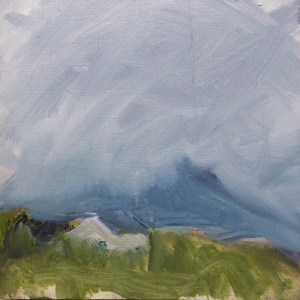
Painting has taken a bit more of a back seat while everything gets organised, but happily dates and venues are now confirmed and the series will be on show next year, firstly at The Scottish Poetry Library then at The Heriot Gallery, all details below…

17th February to 31st March. The Scottish Poetry Library. The Living Mountain. Dreaming a Response.
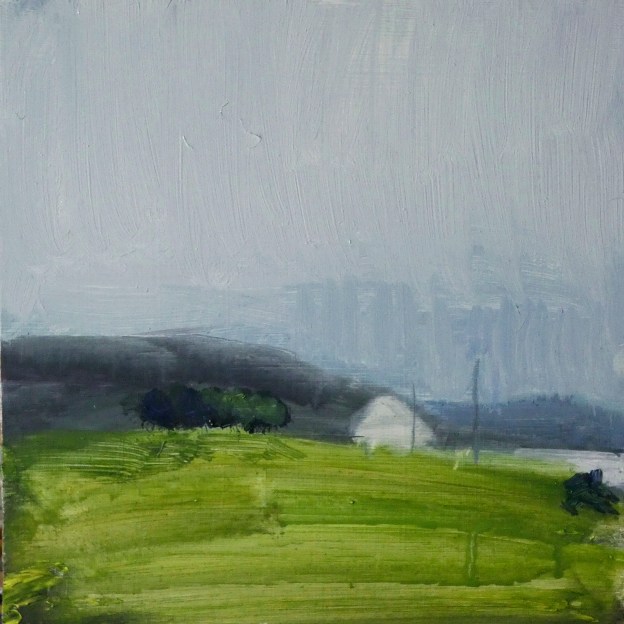
Exhibition of the original paintings included in the 2021 Folio Society publication of The Living Mountain by Nan Shepherd.

17th February 7pm. The Scottish Poetry Library. Panel discussion with Erlend Clouston (literary executor, the Nan Shepherd estate), Rose Strang Kerri Andrews (other guests tbc)

_MG_8258-HDR

The Scottish Poetry Library, Crichton Close (off the Royal Mile) Edinburgh.

17th to 23rd April. The Heriot Gallery, Dundas Street, Edinburgh. The Living Mountain. Dreaming a Response.*

Exhibition of the original paintings included in the 2021 Folio Society publication of The Living Mountain by Nan Shepherd.(in collaboration with The Limetree Gallery, Bristol).

*The series of paintings will be exclusively available from the Heriot Gallery during the one-week exhibition.

2021-09-13

The Heriot Gallery, 20A Dundas Street, Edinburgh

Romance in the Scottish Highlands! (new commission)

Above: Scottish Highlands – “…with rain on your eyelashes”. Oil on 48×48 inch canvas. Rose Strang 2022.

The Scottish Highlands could be described as northern rainforest with an average of 182 inches of rain falling each year! Dreich! You might say, but it’s all about perspective …

The commissioner of the painting above, is Jamie Johnston, who lives in Colorado where she runs a wonderful organic bee farm that’s been in the family since 1908 – The Beekeeper’s Honey Boutique.

Jamie decided to get married in Scotland back in 2016 – ‘It rained the whole time’ she said, ‘but I loved it!’  She got in touch with me because she’d ordered a copy of the Folio Society’s publication of The Living Mountain by Nan Shepherd. (I’d been commissioned to provide paintngs for the book). Jamie described her enjoyment of the paintings while reading the book, which led to her contacting  the Limetree Gallery who represent most of my work.

She particularly loved the rainy dark ones which I love painting – they reminded her of the rainy weather during her romantic holiday and wedding in the Scottish Highlands.

Jamie decided that what she’d really like was a large version for the walls of her new home. The remit was just to paint whatever I liked, as long as it captured something of the Scottish Highlands drenched in rain. As any artist knows, it’s such a pleasure to be given a free rein to experiment, so I immediately began to visualise how it might look and how I’d create the right feel and atmosphere.

Jamie had sent a few photos of her time in the Highlands, which were really lovely as photos, but she explained these were just to give a sense of the sort of thing that had caught her eye – she didn’t intend for me to copy them. I did use one of them as a starting point, for composition and because I liked the waterfall and cloudy skies. Once the basic composition was sketched in though, I just built up layers of paint, drips and splodges until it had what I thought was the right feel. I wanted to get the sense of the Highlands – that pelting rain can quickly turn to sunshine then back again in the course of a few minutes!

Also giving a true sense of how water forms the landscape in Scotland, cutting swathes through rock and landscape over time – and further back in time – the retreating glacial action that gave those hump-backed whale-like shapes to the mountains.

You never know if you’ve managed to capture what a person has in mind, so I was swithering a bit on whether to add more, or change the painting. In the end I decided to send the image to Jamie by email to see what she thought. Painting it was a pleasure, but how someone reacts is what makes the commission a success.

I opened the email with some trepidation, so you can imagine what a huge smile Jamie’s reply put on my face for the rest of the day! …

“ROSE!!!!

I am dying!!! WOW!!! It is soooo incredibly beautiful…even more so than I imagined possible!!! Like I literally cannot stop staring at it!!! Those clouds…the colors on the mountain…those colors of that mountain valley down below…SERIOUSLY…how do you do that?! That is incredible!!! The talent that you have contributed to this world literally blows me away!!! I’ve never used this many exclamation marks in my life but I am on such a high right now!!!

It is beautiful. I love it immensely. Thank you for sharing your talent with me. It makes me very happy knowing I get to hang this (the first picture we will hang in our new home) & I can have a coffee or glass of whiskey & just stare at it & get lost in my memories through your beautiful painting. THANK YOU!!! Love, love, love. You captured EVERYTHING I had hoped for & then some”.

This blew me away as a response – music to my ears indeed!! Jamie also gave me the go-ahead to title the painting and so I began to think of romantic poems by Scottish poets (I too find the rainy Highlands romantic!) my favourite was this little gem, by Edwin Morgan:

Kiss me with rain on your eyelashes,
come on, let us sway together,
under the trees, and to hell with thunder.

Edwin Morgan. 2004. (Poem commissioned by the Scottish Poetry Library, Edinburgh  for Valentine’s Day 2004).

Hence the title! Scottish Highlands – “…with rain on your eyelashes”. And here’s another photo to show scale ..

A HUGE thank you to Jamie for this really lovely commission – Jamie and partner can always expect a warm welcome here in Edinburgh should they return at some point. In the meantime, I too shall enjoy a wee whisky in front of it before it wings its way through the clouds to Colorado!