Category Archives: Uncategorized

Private View – Wells of Arthur’s Seat

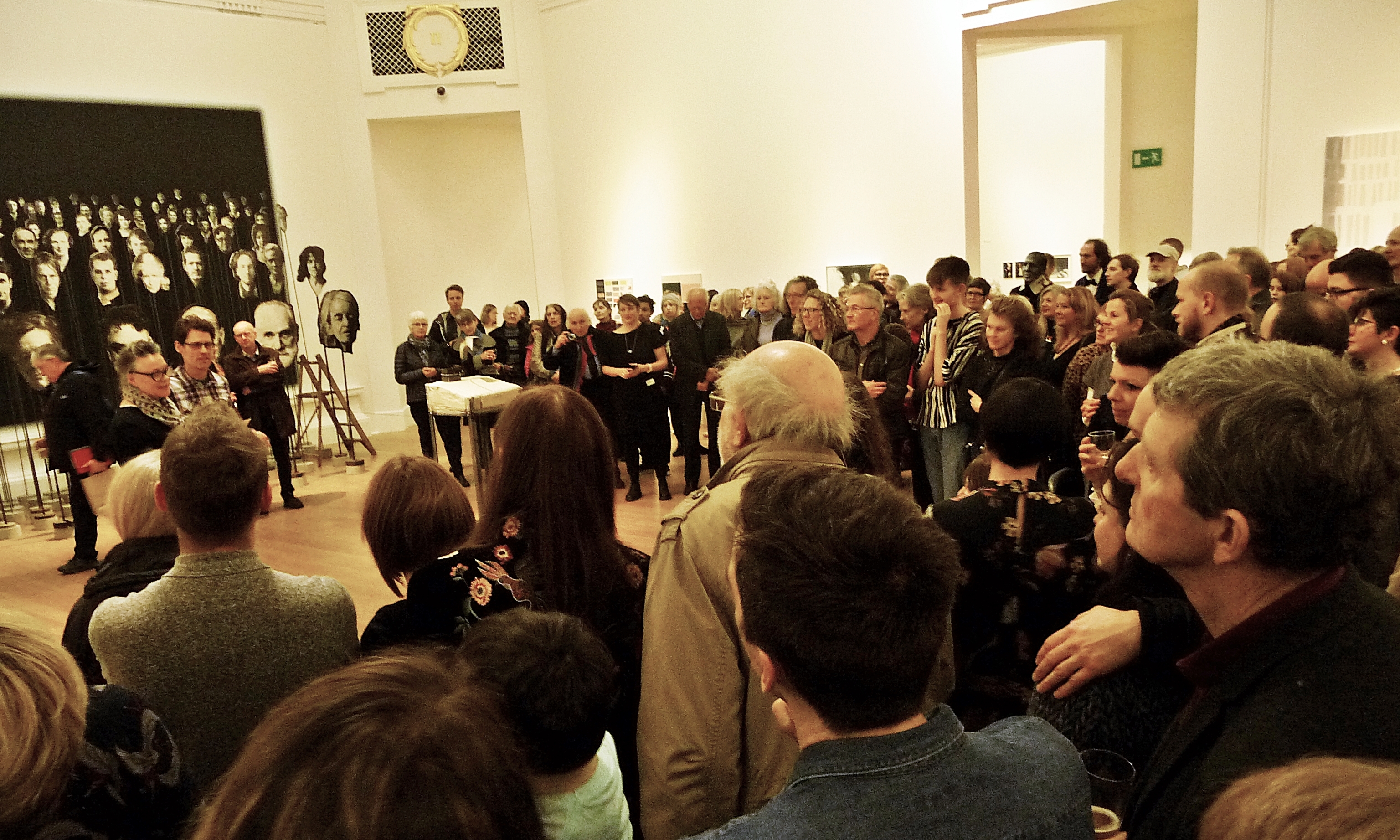
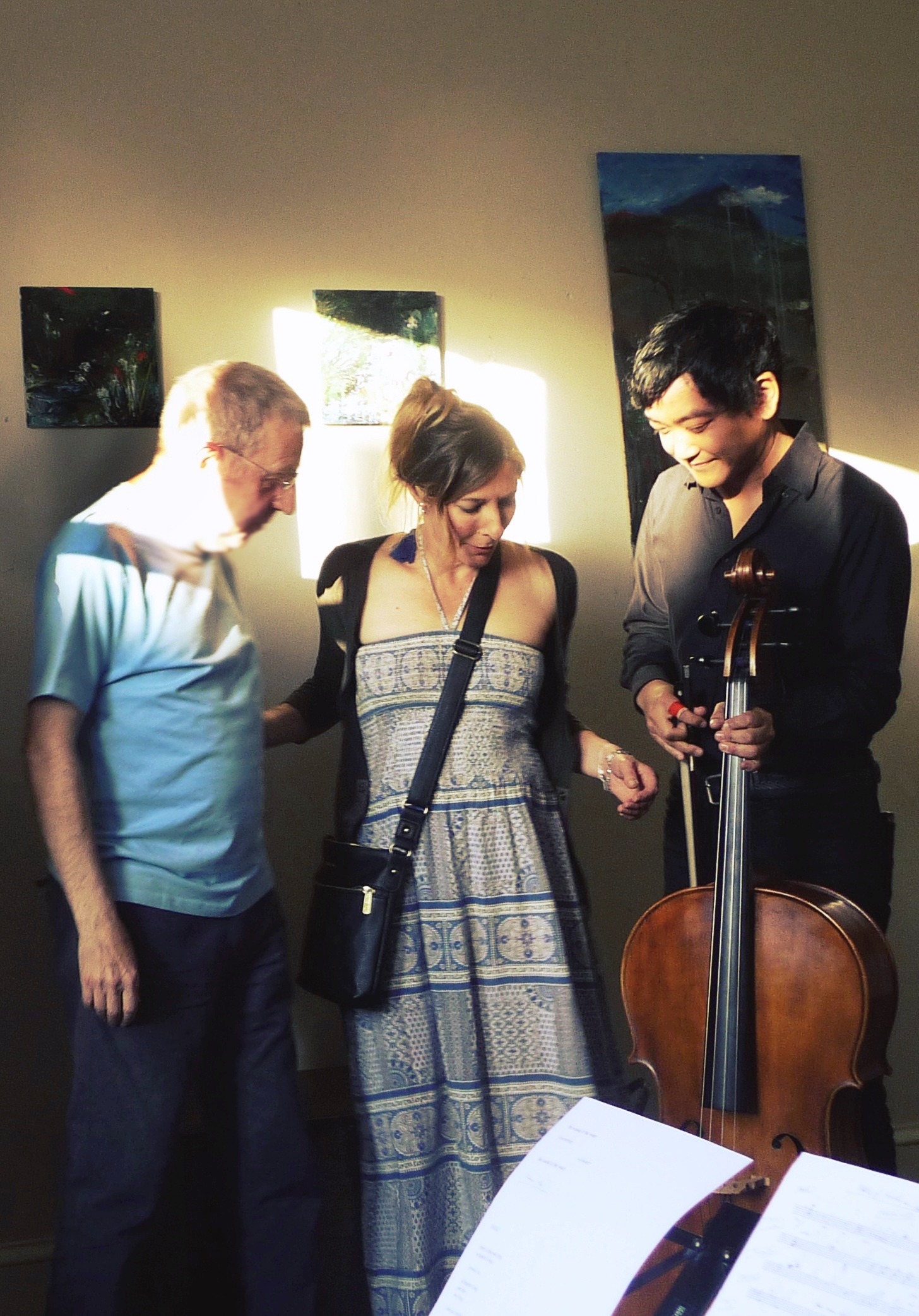
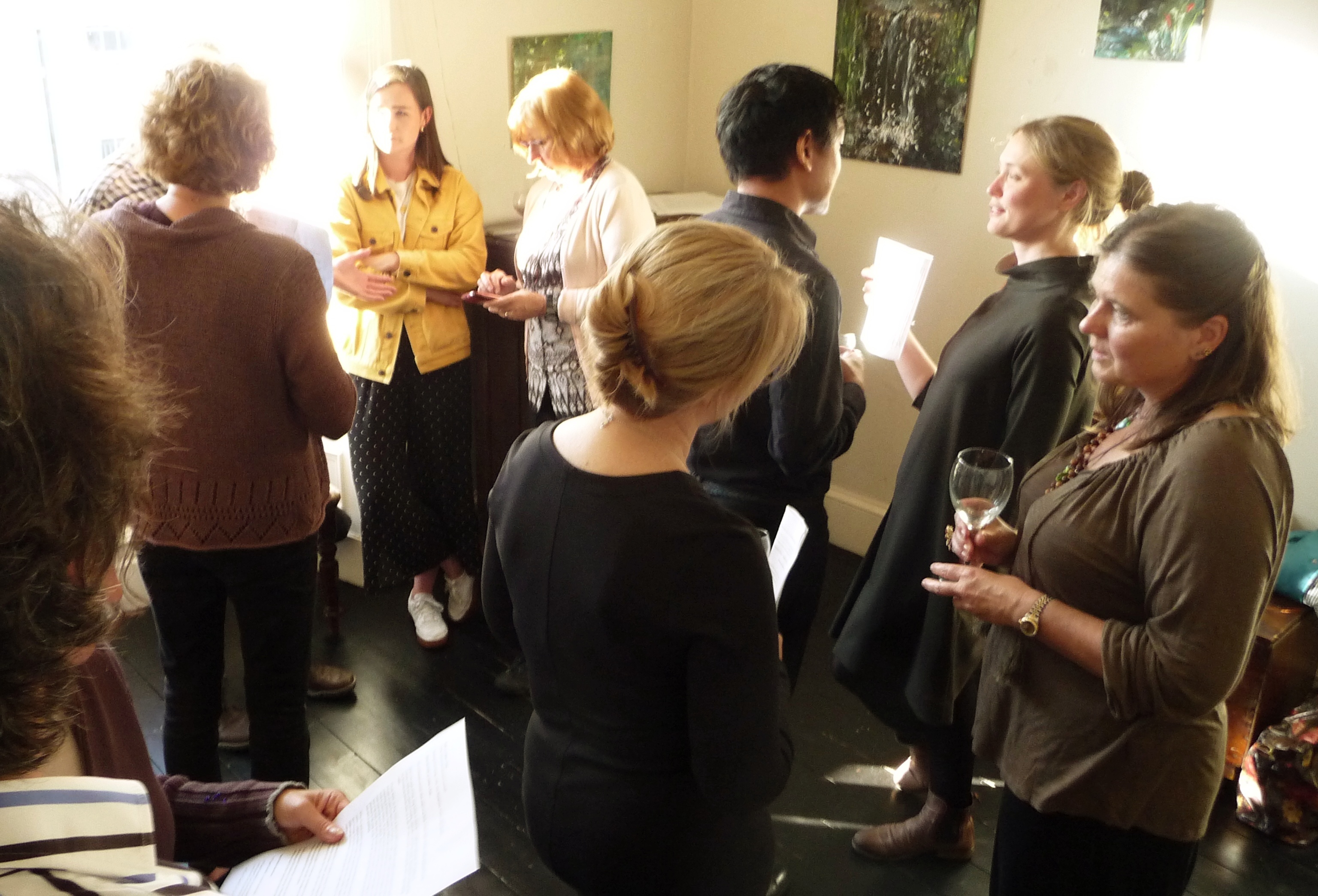
Saturday’s Private View of Wells of Arthur’s Seat was a wee oasis of healing, arts and magic!

All paintings in the series can be viewed Here . Background ideas of the project Here

I look forward to sharing the poems and music (I’m editing video tomorrow), which I hope will convey the atmosphere created on Saturday –  the sense of calm – of water, flora and fauna, and my delight at the way Atzi Muramatsu and Alan Spence interpreted this.

Photo – Liza Horan http://mediamoxie.com/

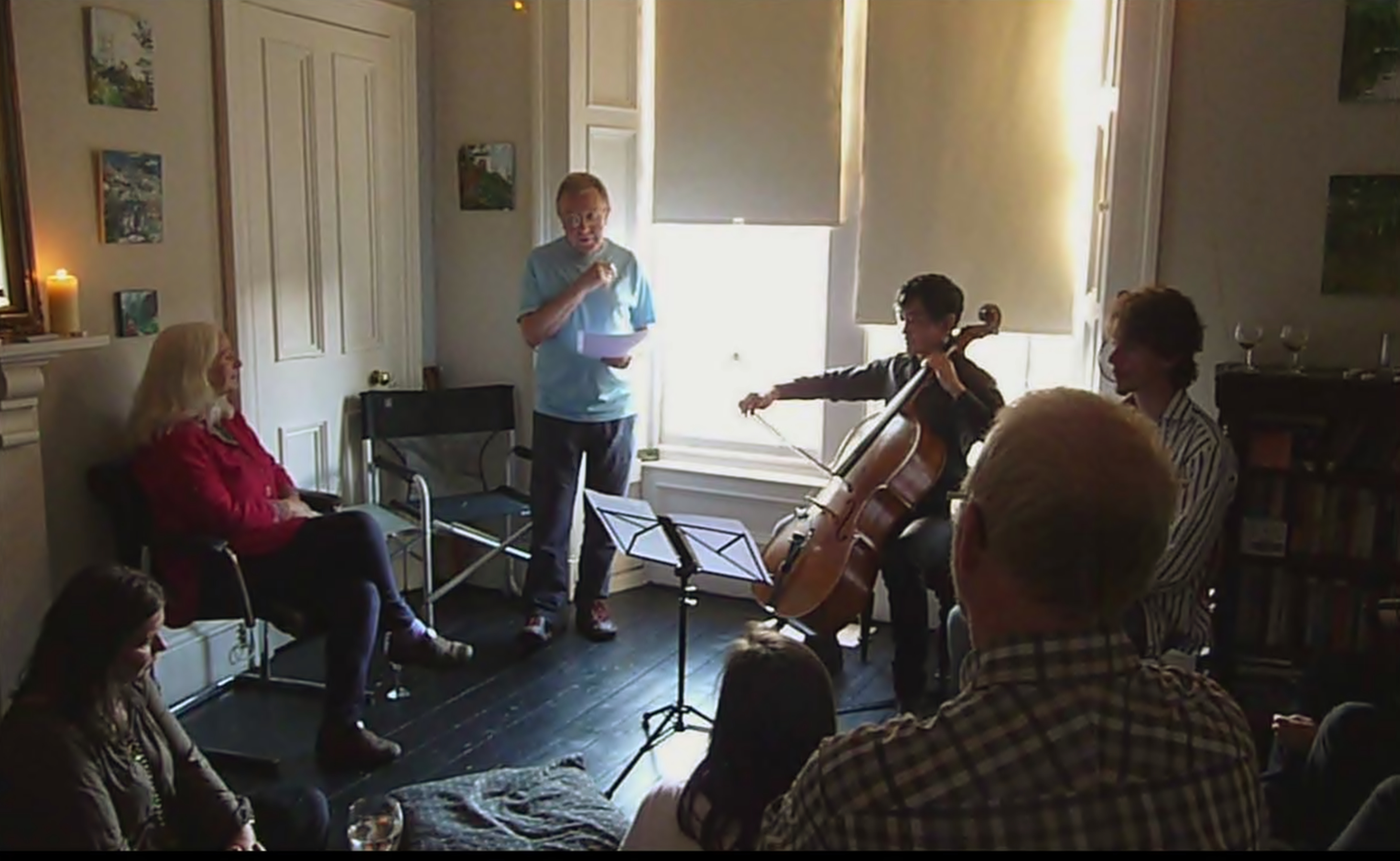
Photo – Donald Ferguson


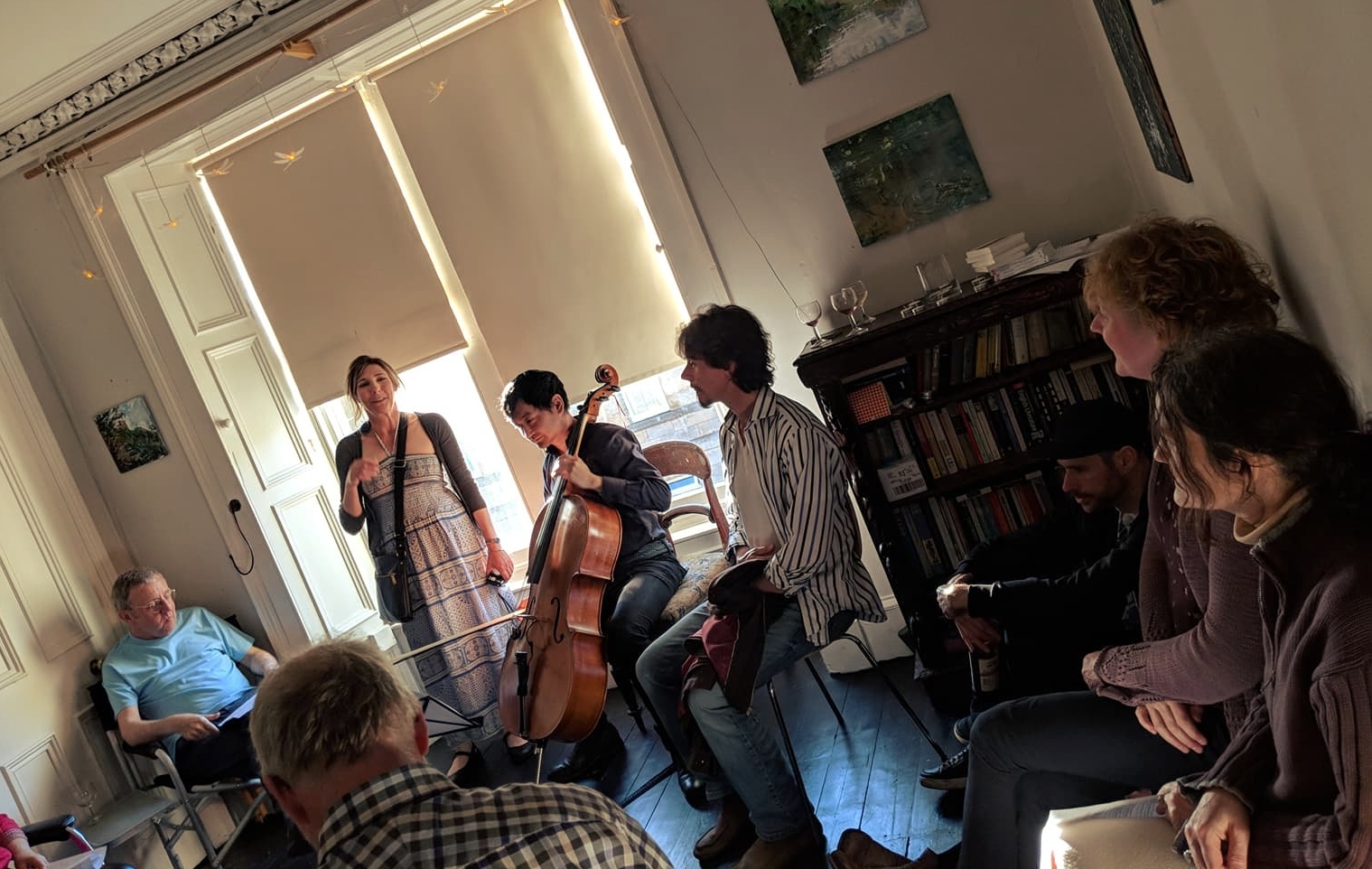
The highlight of the evening, for me, was Alan Spence reciting his poem Frog, with Atzi finding sounds on his cello that captured the very essence of water, or the spring of a frog’s legs as it plops into the water!

Alan introduced this frog poem last of all, describing how the Haiku poets (particularly Basho, and Japanese artists) often referenced the frog.

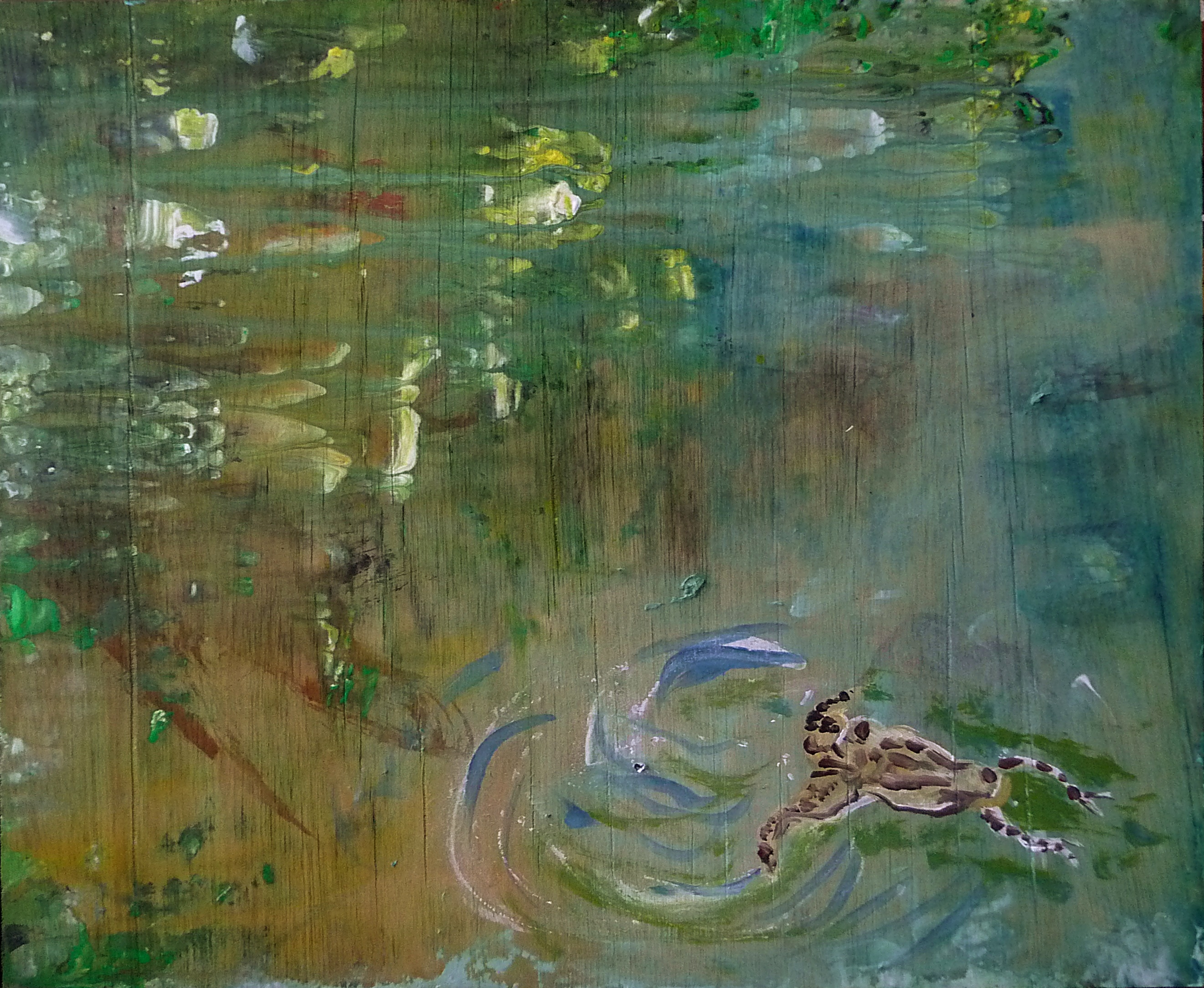
One of my paintings was titled ‘Swimming Frog, Hunter’s Bog’ – an appealing and amusing rhyme for a poet’s ear! As he explained – “Hunter’s Bog meets Basho’s frog – the last line of one of Basho’s poems is sometimes translated as the sound of the water” …

FROG

there’s this wee frog

in hunter’s bog –

furuike ya…

in hunter’s bog

just this

wee frog

kawazu tobikimu…

just this wee frog

mizu no oto

the sound

                    the water

the sound of the water

(Alan Spence June 2018)


That really made me smile! The pleasing simplicity and evocation of happiness in nature – especially after all my walks in Hunter’s Bog on Arthur’s Seat this past year.

In the next two weeks I’ll post a video featuring the music, poetry and paintings. (We will also be developing the project in September this year, to show to a bigger audience).

Lastly, my warm thanks to the following …

Atzi and Alan, for inspiration, and love of the arts. Donald, Sabine, mum and Catherine for helping make the event happen, and their support and enthusiasm. David Finnie, for buying my paintings and being such a welcome presence at these events, as are his wife Fiona and daughter Sarah, for such friendly and responsive presence.

Thanks to Scott Terris for bringing flowers, and Liza Horan (owner of Media Moxie) for these lovely words on Facebook –

As the windy rain transmuted to a vibrant sunset, Rose Strang shared a very special collaboration with Atzi on cello and Alan Spence on verses of haiku. The paintings sang of Arthur’s Seat and St. Anthony’s Well within, while the strings bounded high and sunk low, and the colorful haiku captured the rhythm of the place. Congrats and thanks for sharing your spirit and work.

Thanks to all for coming – you’re always welcome!

Also, someone anonymously left these flowers outside the door during the event. Thank you too! How fitting, when the healing rituals of Arthur’s Seat’s wells were sometimes completed with a gift of flowers …

This Saturday – exhibition launch

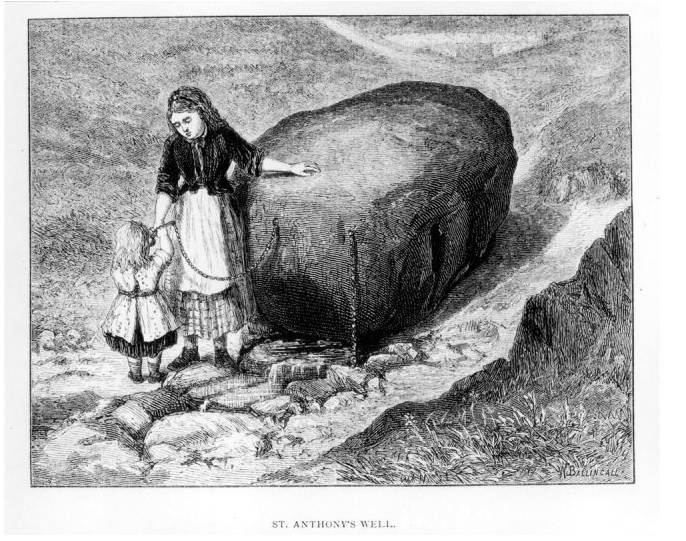
Just two days until the exhibition launch! Atzi and I poured a wee libation at St Anthony’s Well – and here’s an engraving from the 19th century showing a mother and child at the same well..


Dates/times of exhibition Here

All paintings for the series are viewable on this link, with sizes and prices etc (if you are interested in buying one paintings from the series, please contact me at rose.strang@gmail.com

About the Wells of Arthur’s Seat ..

Paintings; Rose Strang. Poetry Alan Spence. Cello; Atzi Muramatsu.

This collaborative project takes inspiration from Arthur’s Seat; its flora, fauna and local history …

Back in the mists of time, long before St Anthony’s Chapel was built in the 12th century, St Anthony’s Well was a place of worship, celebration and healing rituals. Descriptions collected from the Victorian era describe how, up to the 19th century, locals would visit the well to enact healing rituals.

‘Clootie Wells’ (or ‘Rag Wells’ as they’re called in England) were places believed to be sacred; this was part of a pan-European way of worship, or faith in nature. People believed that nature held everything in balance; disease or failed crops meant that nature was out of balance; they visited wells to restore balance. To invoke a sacred space they’d walk around the well, in silence, three times (sun-wise as it was called). They would soak the rag in well water, apply it to the afflicted area of the body, then leave the water-soaked rag nearby in the earth or hung on a tree, to be absorbed by the earth or sky. To end the ritual they’d leave tokens such as wild flowers, coins, or iron nails in gratitude.

When the more punitive approach of the Protestant Reformation reached its height in the 17th century, religious leaders created laws against these healing rituals, since they were believed to be un-Christian. To be discovered enacting a ritual which invoked ‘magical’ powers could lead to interrogation, sometimes torture and death (at its height during the witch trials of the 17th and 18th century).

Yet, locals still attended their wells right up to the mid 19th century. On the 1st of May they’d bathe their faces in the dew at dawn, livestock would be led through the streams for good luck, at dawn or sunset throughout the year, they’d come to the well to pray for healing of the sick or wounded.

Water was seen as a place of in-between, the threshold to another world. The religious term might be ‘a thin veil between heaven and earth’. Nowadays we might use the word liminal – a place of change or transformation between two places.

Thanks to dedicated conservation in recent years, the flora and fauna of Arthur’s Seat is flourishing again, much as it did hundreds of years ago. With paintings, poetry and music we celebrate the people who cared for their landscape in ancient times, and the beauty of Arthur’s Seat today.

Wells of Arthur’s Seat – 2 more

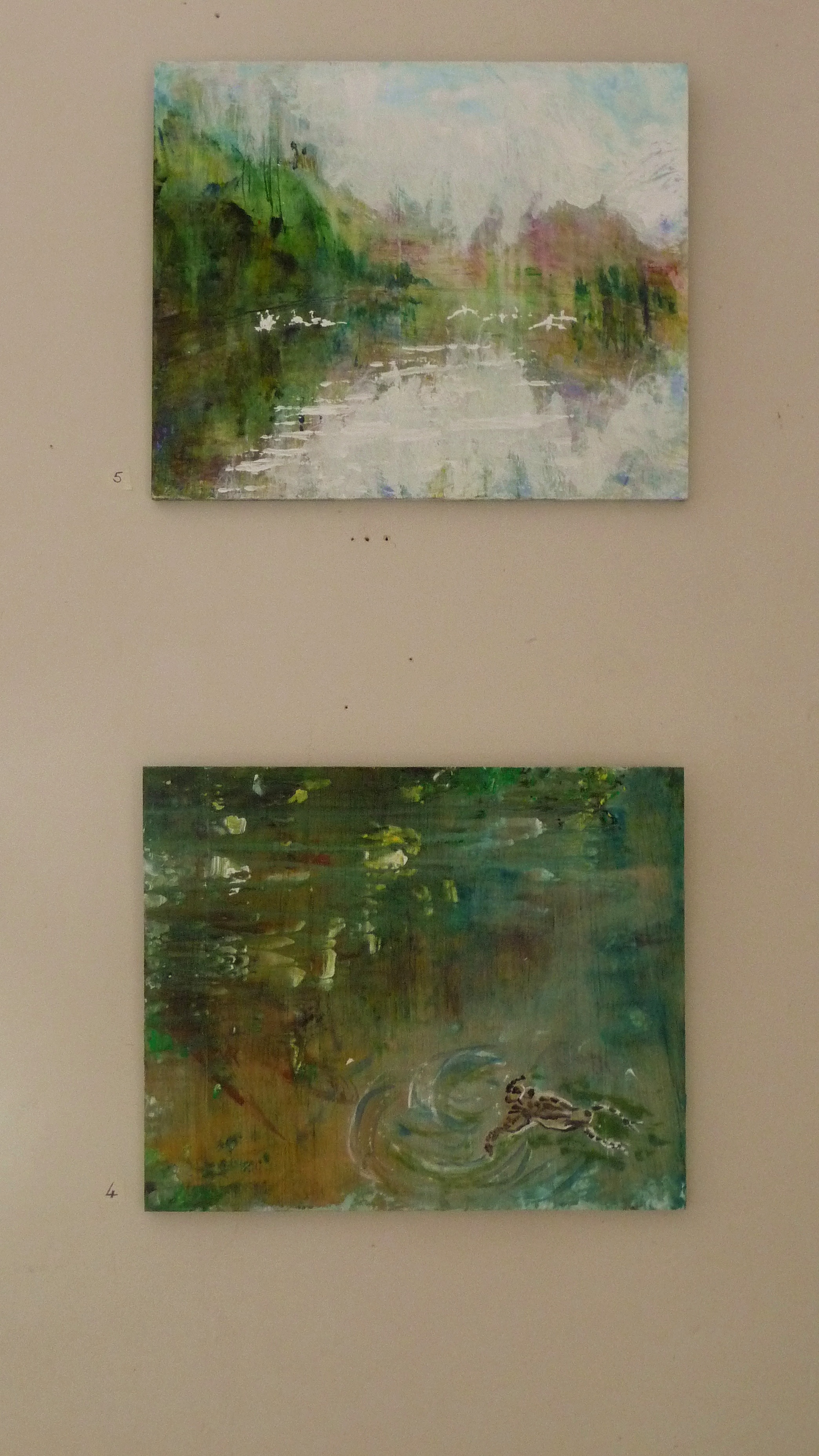
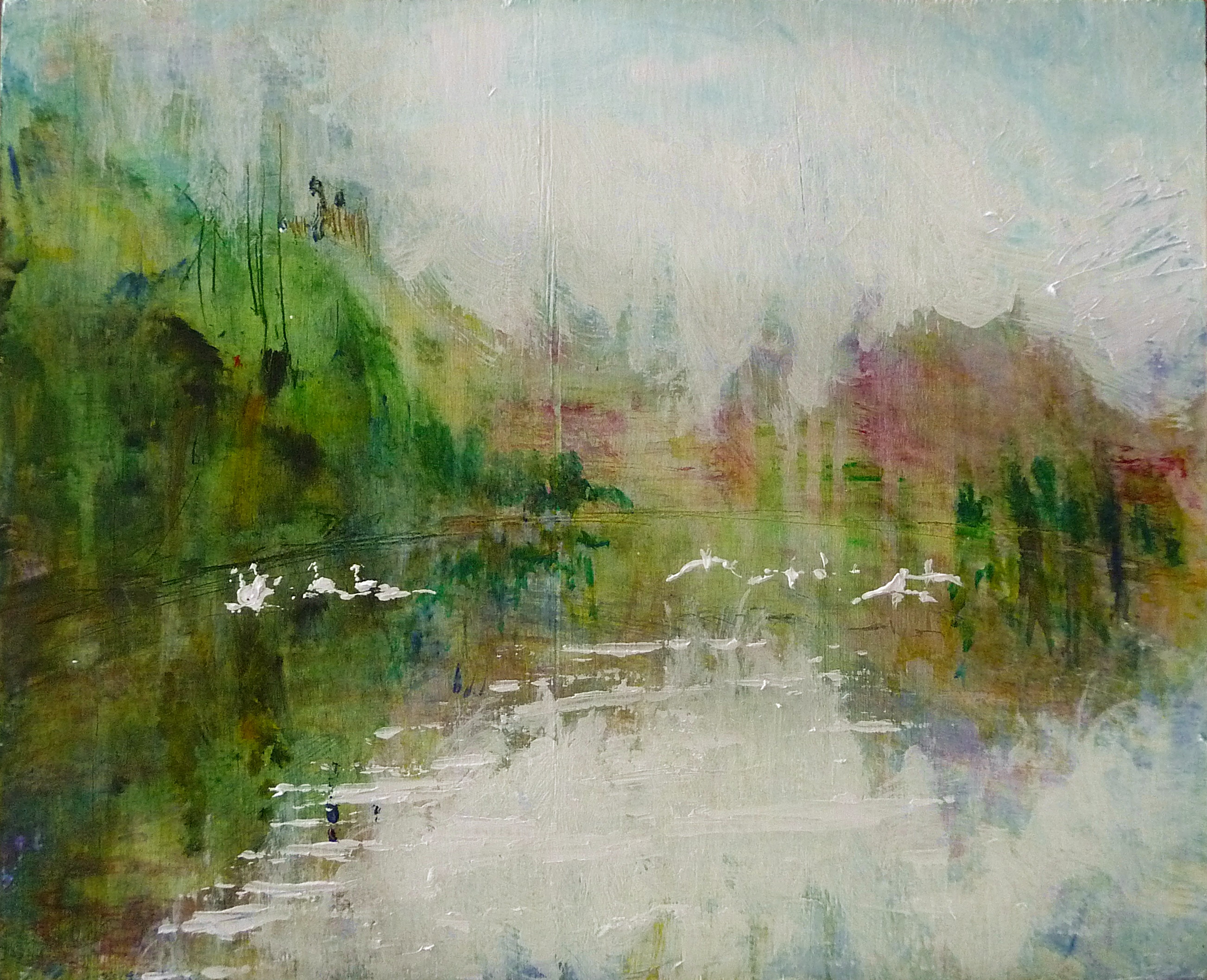
‘Wells of Arthur’s Seat, Swans on St Margaret’s Loch’. Mixed media on 16×13 inch wood panel. Rose Strang 2018. £250

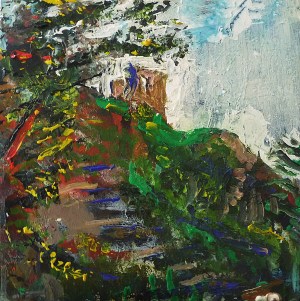
‘Wells of Arthur’s Seat, St Antony’s Chapel II’. Mixed media on 10×10 inch wood panel. Rose Strang 2018. £180

Two more paintings today, for the Wells of Arthur’s Seat exhibition, which launches this Saturday (all details Here).

I couldn’t resist painting this view of St Margaret’s Loch with swans, having spent the weekend sitting there with friends watching them take off then fly down across the water.

For this second painting of At Anthony’s Chapel I splodged primary colours directly onto the wood, the colours at sunset are so vivid it’s the only way to capture it.

Wells of Arthur’s Seat – complete series

If you have any queries about these paintings, or would like to buy one in advance of the exhibition, contact me at rose.strang@gmail.com. (If paintings are bought prior to exhibition a red-dot sticker to denote ‘sold’ is placed next to the painting, which will then be posted one day after the exhibition ends – 25th June).

Wells of Arthur’s Seat – exhibition/event and open studio days

We’re very much looking forward to the upcoming private view of the exhibition and performance event (details/link below). This is ‘invite only’, as spaces are limited, but you can email me to enquire about spaces at rose.strang@gmail.com

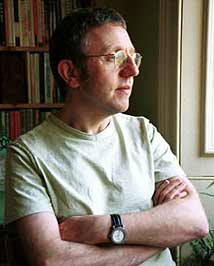
Alan Spence
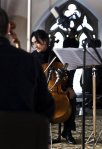
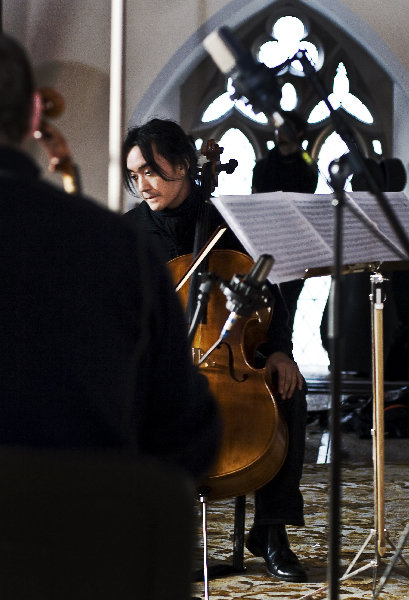
Atzi Muramatsu


I’m delighted and honoured to be collaborating with two very talented people on this project; the poet Alan Spence and cellist/composer Atzi Muramatsu. Their reading and performance will premiere at the Private View on the 16th June, but will be viewable on subsequent exhibition days on video (we hope to develop the project further and there may be subsequent live performances).

There are also Open Studio days, where the paintings can be viewed, and a video-showing of the poetry reading and performance of poet Alan Spence and cellist/composer Atzi Muramatsu from the private view event.

For all details on the upcoming exhibition and event, and open studio days, click Here

Alan Spence was named Edinburgh’s Makar in 2016 (Makar is the Scots word for learned poet). His work has, for many years, explored Japanese culture and spirituality including Zen traditions and Haiku poetry. In recognition of this Alan was recently awarded the Decoration of the Order of the Rising Sun by the Government of Japan). This is the first time I’ve collaborated with Alan, and I very much look forward to experiencing the poetry he’ll create for this project.

Atzi Muramatsu has been (amusingly) described as ‘the Scottish Central Belt’s most well-known celllist’, this is not least because he is an avid and dedicated collaborator, with artists, dancers, other musicians and writers across Scotland and beyond. He also writes film-scores and in 2016 was awarded a Scottish BAFTA for Best Composer New Talent. It’s absolutely a pleasure to continue our long-lasting collaboration.

*please note –  as we are not receiving public funding for this project, a performance and project fee is paid to Alan and Atzi from the profits of painting sales. We hope to develop the project further and there may be subsequent public funding, resulting in additional performances and developed professional video of the project.

Read on to find out more on the inspiration behind Wells of Arthur’s Seat …
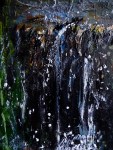
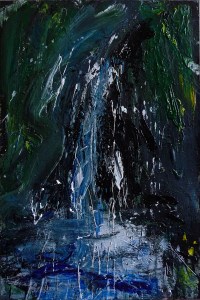
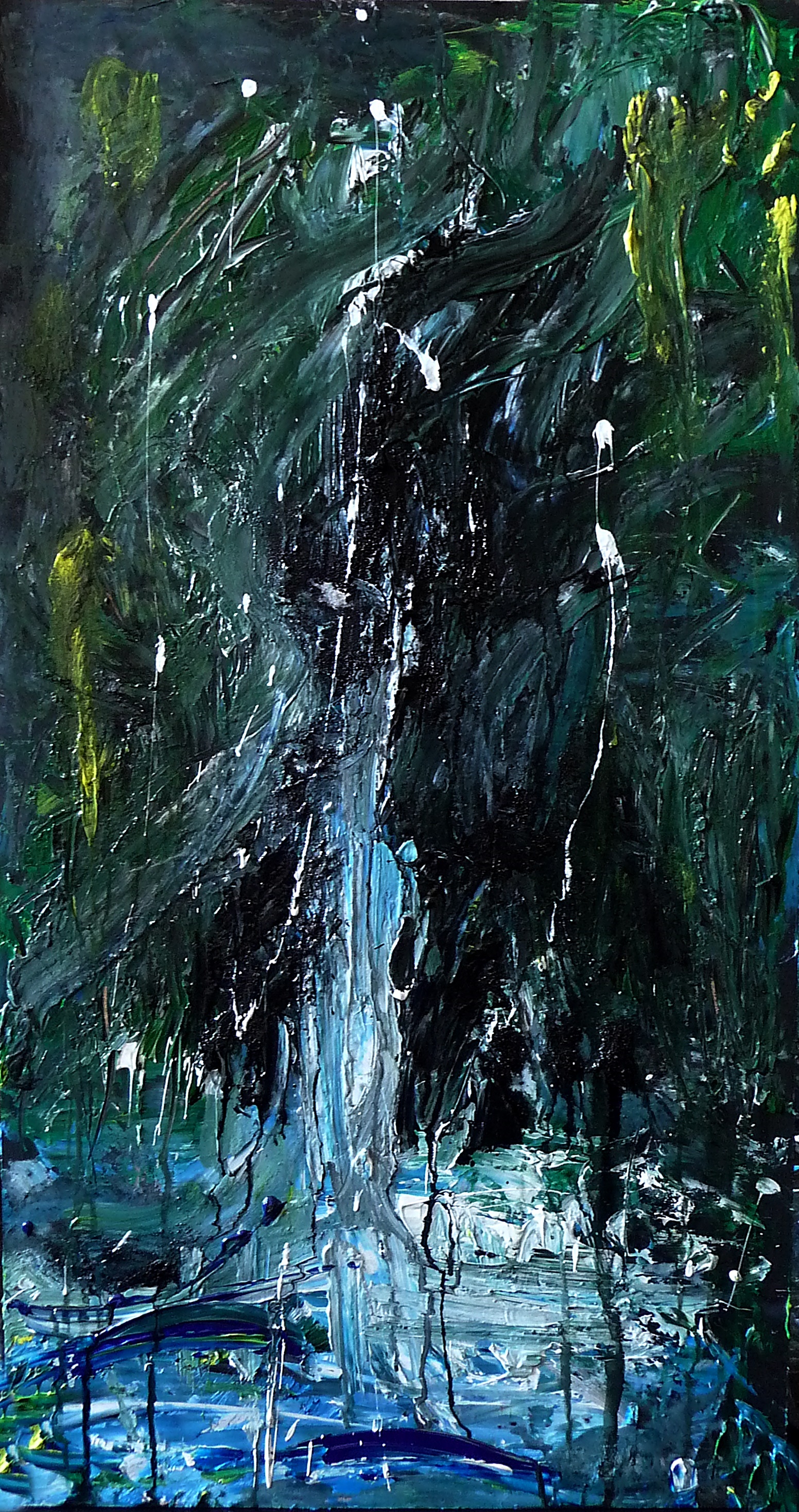
(detail) ‘Wells of Arthur’s Seat, Waterfall I’


This series is inspired by the landscape and local history of Arthur’s Seat – the hill in Edinburgh that sits to the south of the city.

The paintings focus on the flora and fauna of the hill in the vivid greens of early summer, but in particular, water. This is rainy Scotland, so water is constant – everywhere on Arthur’s Seat – in springs that tumble down the hill, lochs that form in the valleys, and in its wells.

Some of these wells have been named after saints – St David, St Margaret and St Anthony for example – so at some time in the past they were perceived as sacred.

It’s simple enough to trace their Christian origins, but probably very few of the hundreds of tourists and locals who visit the hill throughout the year will be aware of the purpose of the wells further back in time …

There are hints; in the worn stone basin and cup-chain attached to St Anthony’s Well, which ran dry in the 1980’s but used to seep through the cliffs below the summit, before emerging near the bottom of the hill and flowing towards St Margaret’s Loch.

Just above the loch, on a rocky promontory you can see the medieval ruins of St Anthony’s Chapel – it was built in the 12th century, but the well and its stone basin were there long before.

On the first of May, locals would drink the well-water, walk their livestock through the streams and celebrate the beginning of summer. The first of May continues to be celebrated to this day throughout Europe, but there were other, far more mysterious healing rituals that took place at St Anthony’s Well …

We know about these rituals because of written records from court cases that took place in the 17th and 18th centuries during the Protestant Reformation. For over a hundred years, people who were seen to ‘worship’ at wells might be prosecuted if their words and actions were seen as un-Christian. Yet, while these people may or may not have invoked the Christian god during their healing rituals, their actions showed reverence towards nature – a belief in its healing power and a complete faith that their prayers would be answered, if their well-being was part of nature’s plan.

This was a pan-European belief – that nature held everything in balance, that disease or sickness, or bad crops, represented an imbalance of nature. Therefore healing rituals involved actions believed to restore balance, first by walking sunwise three times around the well (to create a boundary, or safe space) second by dipping a cloth in the well, applying it to the afflicted part of the body, then leaving it near the well, third by offering a token of gratitude such as flowers or a piece of metal ( this is the origin of ‘Clootie’ or rag-wells throughout the British Isles). If successful, the prayer would be heard, the disease absorbed into the earth, water or sky and the token accepted.

Water was seen as a ‘place of in-between’; these days we might say a liminal space (a place of transition – occupying a position at both sides of a threshold) or if religious we might describe it as a place where there is a ‘thin veil between heaven and earth’.

It’s this last intriguing concept that so fascinated me, and inspired this series.  It made perfect sense therefore, to introduce these ideas about Arthur’s Seat to the poet Alan Spence, whose work is often created in response to nature and the changing seasons. For many years his work has explored the Japanese traditions of Zen meditation and Haiku poetry (in recognition of this he was recently awarded the Decoration of the Order of the Rising Sun by the Government of Japan).

He and his wife formerly ran the Sri Chinmoy meditation centre in Edinburgh, and now run a bookshop and meditation centre The Citadel just across the road from my studio in Abbeyhill. The summit of Arthur’s Seat sits directly ahead from the front door of their bookshop (and from the window at the back of my studio).

Alan was intrigued by the project, and was delighted too to collaborate with talented composer and cellist Atzi Muramatsu, a friend with whom I’ve collaborated since 2013 on most of my art projects. It was a given, of course, that I’d invite Atzi to collaborate, and of course his Japanese origins add to the aspects of Japanese culture explored in this project.

The creative fruits from this project  – poetry, music and paintings – will launch at the Private View on the 16th June 2018 (this is invite only as spaces are limited, so please email if you would like to attend). There are also Open Studio days (open to the public – all welcome!)  where the paintings will be on display, and a video showing Alan and Atzi’s performance from the 16th June.

All details of the Private View and Open Days Here

All paintings in the series viewable above (if you have any queries about these paintings, or would like to buy one in advance of the exhibition, contact me at rose.strang@gmail.com)

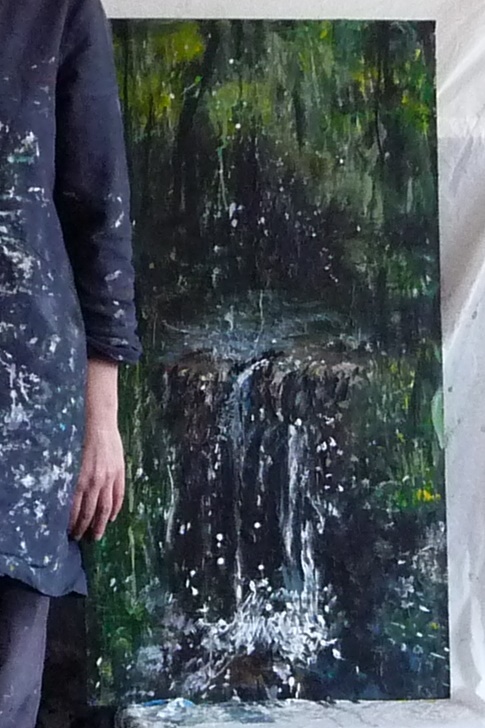
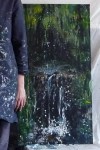
Note the sizes of the paintings, these are not always clear from images online, so to give an indication I’ve included the photo below ..
Wells of Arthur’s Seat – day 7

Today’s paintings for the Wells of Arthur’s Seat upcoming exhibition and event. All info Here

The two directly above are still in progress, nearly there!

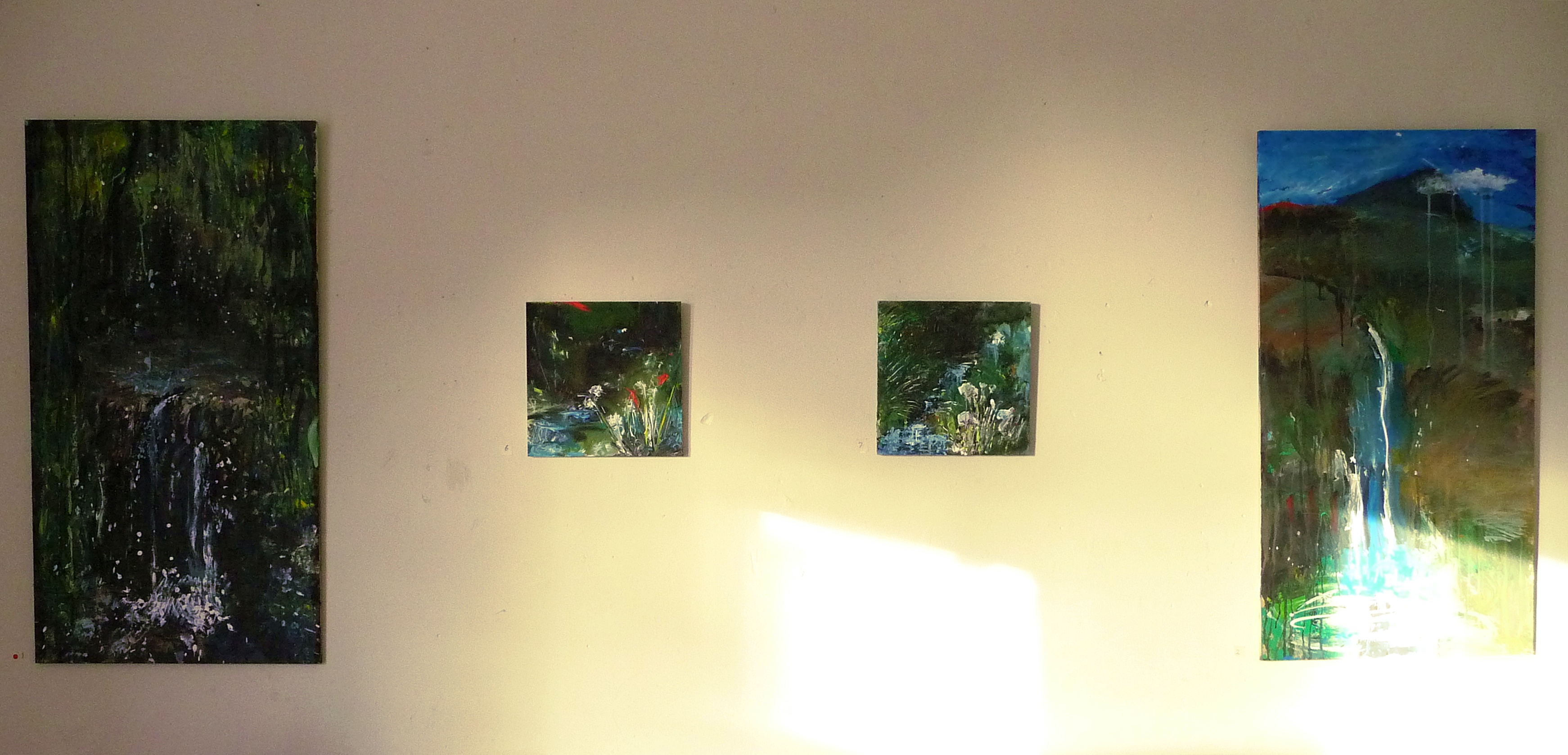
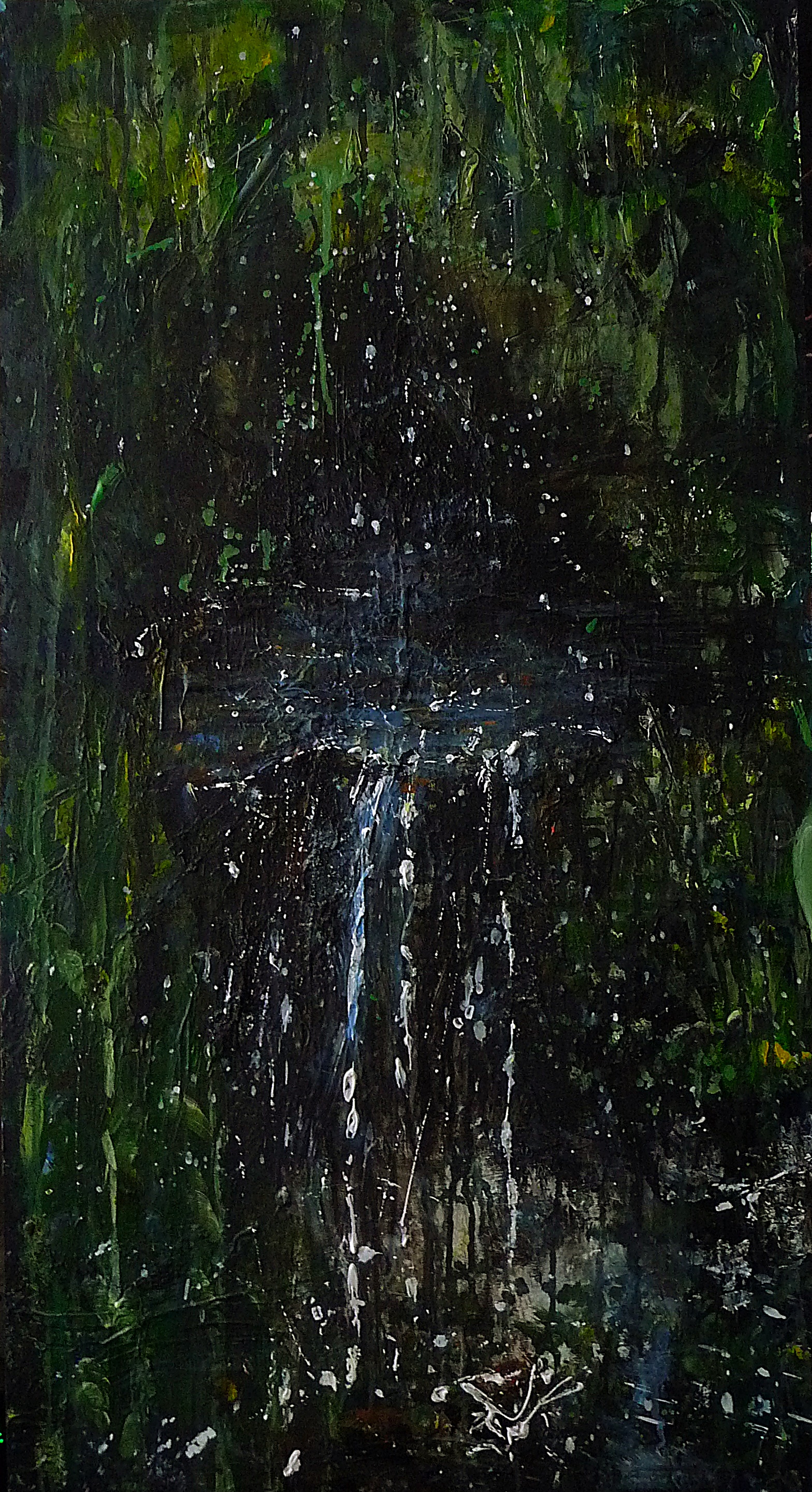
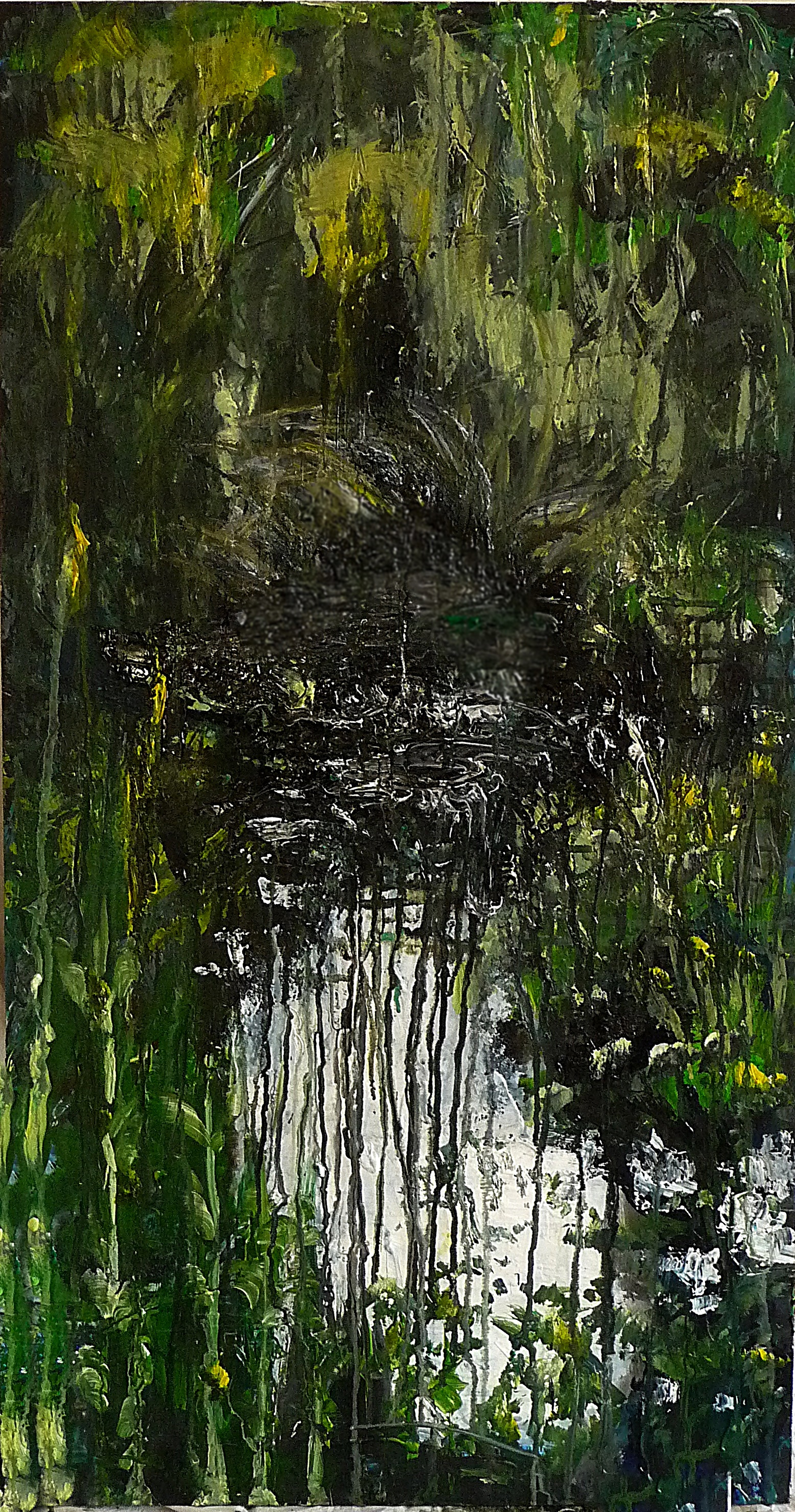
‘Wells of Arthur’s Seat, Waterfall I’ Mixed media on 35 x 18.5 inch wood panel. Rose Strang 2018

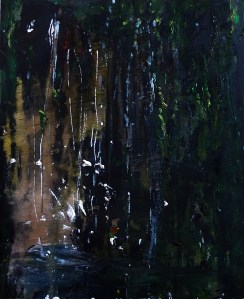
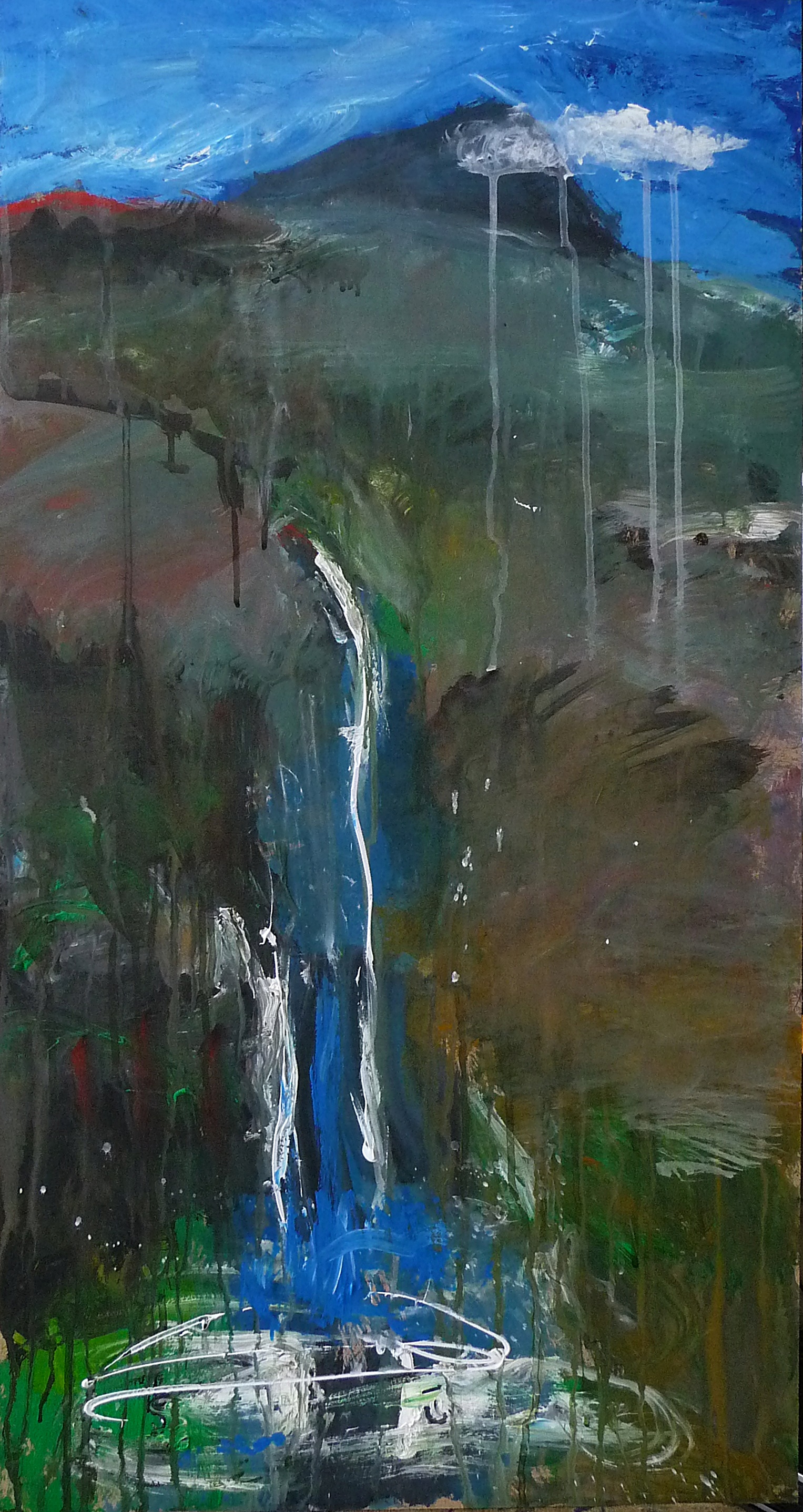
‘Wells of Arthur’s Seat, Stream and Hill I’ Mixed media on 35 x 18.5 inch wood panel. Rose Strang 2018

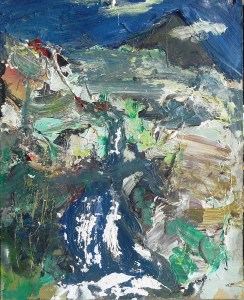
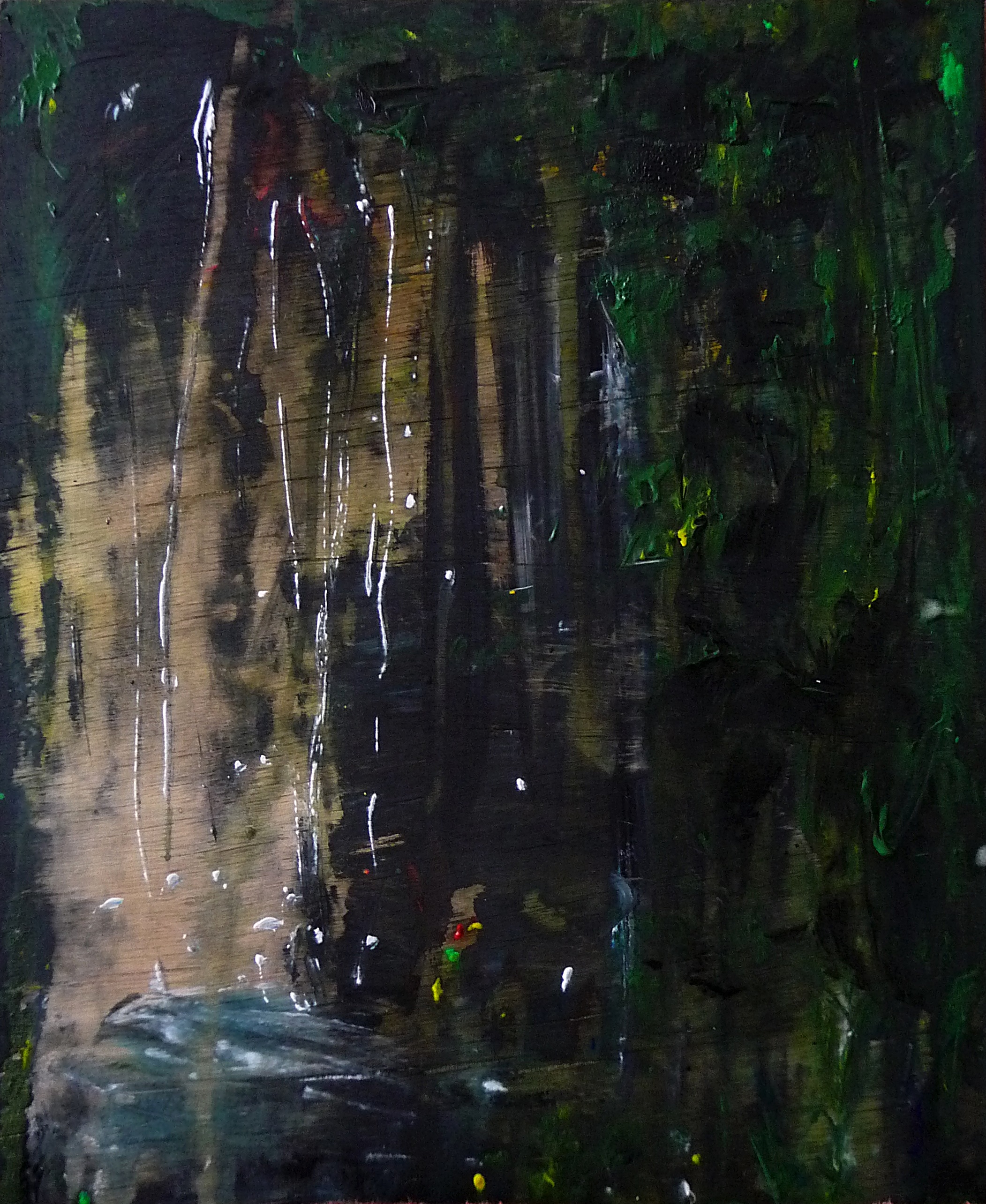
‘Wells of Arthur’s Seat, Waterfall II’ Mixed media on 16 x 13 inch wood panel. Rose Strang 2018

‘Wells of Arthur’s Seat, Swimming Toad in Hunter’s Bog’ Mixed media on 16 x 13 inch wood panel. Rose Strang 2018


Wells of Arthur’s Seat – day 6

In progress (Wells of Arthur’s Seat)

In progress (Wells of Arthur's Seat)

In progress (Wells of Arthur’s Seat)

In progress (Wells of Arthur’s Seat)


Today’s paintings in progress, the two long ones are much larger in size – at 35×18 inches (about one and a half by three feet). They just need a bit more work and should be finished tomorrow.

It’s been another beautiful day here – sun streaming in the window while I painted, and to get me in a green, leafy mood I drank mint and lemon verbena tea and spritzed myself with Cartier’s Baiser Vole – an effervescent scent based on the illusion of crisp green lilies unfolding on a spring day (the weird things you do to get into a creative mood!)  This series seems to be taking shape now, I’m enjoying these vibrant fresh colours.

Just 4 weeks to go until the exhibition launches … all info Here

Wells of Arthur’s Seat – day 5

In progress (Wells of Arthur’s Seat)


Today’s painting in progress for the Wells of Arthur’s Seat project.

Facebook event pages are now set up, so you can view all details and updates there …

Private View (the event is free, but please email for ticket as spaces are limited):  https://www.facebook.com/events/126297378235342/

Open Studio Events (these are open to the general public – all welcome) https://www.facebook.com/events/1811677219142064/

Also, I’m really looking forward to Thursday June 21st when we’ll have a midsummer’s eve celebration with cocktails at Abbeyhill Studio (green-themed and made with sweet herbs from Arthur’s Seat!) followed by a live outdoor performance on Arthur’s Seat by Dominic Waxing Lyrical and Riley Briggs (from the band Aberfeldy).  Lets hope it’s sunny! (bring warm clothes just in case)

Wells of Arthur’s Seat – day 4

in progress. Wells of Arthur’s Seat, 10×10″ wood

Today’s painting effort!

I’m a bit knackered after a long day yesterday so will work on these more tomorrow. I completely messed up the larger painting and can’t bring myself to post a picture of it! I’ve realised the surface of the larger painting isn’t working for me – it’s a piece of ‘found’ wood and it’s very porous despite a couple of layers of gesso – colours seemed to be eaten up by it and it’s also difficult to scratch through to the wood below which just gets churned up in an undefined way. So it’ll be another trip to the timber merchant tomorrow to look for scraps.

This smaller painting is a bit of a guddle at the moment but has potential, I think.

New painting – private commission

‘Wallace Mounument, Stirling’. Mixed media on 10×10″ wood panel. Rose Strang, May 2018

Today’s painting (above) is a private commission for a friend. It’s of the Wallace monument in Stirling.

Gus recently got in touch to ask if I’d paint the Wallace Monument for his mum, who grew up next to the Wallace Monument. His mum isn’t well just now and I was very touched and honoured to be asked.

I decided to paint a view with the Ochil hills in the background, with the sun coming out after a rain storm; I hope that’s how it looks!

Here’s a close-up of the tower, I’ve made it fairly impressionistic rather than detailed – the way it appears at a distance in sunlight ..


The tower in real life is quite beautiful – (images easily findable online) made of warm yellow sandstone which catches the light in the late afternoon and at sunset. It sits on the Abbey Craig; a quartz-dolerite intrusion that was harder-wearing than the surrounding  landscape, so took its current shape after the glaciers retreated about 14 thousand years ago.

The Abbey Craig was also the site of Wiliam Wallace’s HQ during the battle of Stirling Bridge in 1297, and the tower is a fitting tribute to this fairly monumental human being! He was apparently 6 foot 7 inches with a broad-boned warrior’s build. The sword he used in battle was at least five feet (though that would have been for an initial charge towards cavalry apparently).

The  tower was built in 1869 and is characteristically Victorian and ornate in style, though inspired by Medieval era buildings. The top represents a crown and, to my eye, if you see just the tip of this emerging from the surrounding foliage, it looks strangely similar to Hindu temples from thousands of years ago.

Pretty much everyone has seen Mel Gibson’s Braveheart, so most of you will have picked up the general gist of the story, and myths! If you read this blog you’ll know I’m always curious about the history of painting subjects, so if you’re interested, read on for  a brief outline about William Wallace …

Early depiction believed to be a likeness of Wallace


A few hundred years after William Wallace died, a writer called Blind Harry wrote a history of Wallace, much of which is deemed to be fantasy, but nonetheless the facts are there, as attested by official records of the time …

Following the untimely death of King Alexander III of Scotland, whose only heir was his three-year-old granddaughter, Scotland was in disarray and King Edward I of England was brought in to help arbitrate. You do have to wonder why anyone was surprised when he took full advantage of the situation, since he was renowned as a pretty unpleasant character to say the least – he decided to appoint himself Lord Paramount of Scotland.

Skirmishes broke out against the English occupation, and support for the cause grew as tactics of the occupation grew more brutal. The first proper battle, led by Wallace, defeated Edward’s army at Stirling Bridge.

After this victory Wallace was appointed guardian of Scotland, but the next battle was lost. He attempted to rally support from the French but  was later caught then tortured and killed for treason (pretty much exactly as depicted in Braveheart except that he was also dragged through the streets behind a horse for five miles before the execution). After this, Scotland appeared to be defeated, but covert plans were being made as Robert the Bruce succeeded Wallace as Guardian of Scotland, Robert the Bruce then went on to win against the English in the battle of Bannockburn in 1314 and after the 1300’s Scotland remained entirely independent up until the treaty of Union in 1707.

It would be nice to know more about the character of Wallace, but there’s only speculation and few hard facts. Suffice to say he was clearly a born leader – he wasn’t from nobility but was probably educated and trained as a warrior, he was also clever, as attested by battle strategies, and extremely determined. The decision to build a monument to Wallace came at a time of resurgence of interest in Scotland’s national identity, following the near decimation of Highland culture following the Highland clearances.

Thanks again to Gus Carmichael for commissioning this painting, it’s been a pleasure to paint and an honour to be asked!

Wells of Arthur’s Seat -day 3

Today’s painting for the Wells of Arthur’s Seat exhibition and project.

And some photos of the beautiful spring weather from today’s wander on Arthur’s Seat …


All paintings so far can be viewed on Artworks.