I N T R O
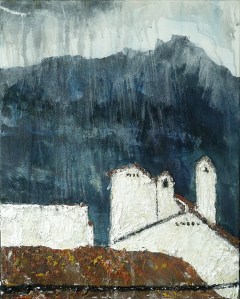
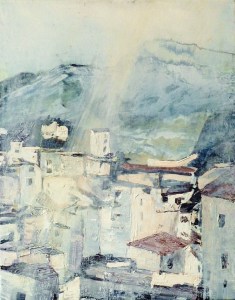
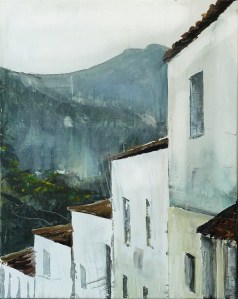
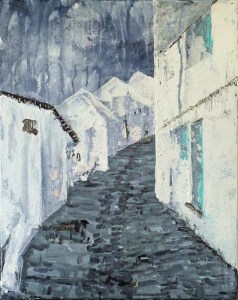
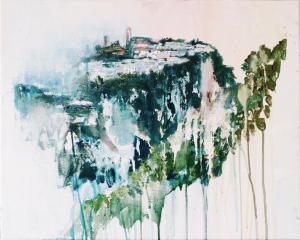
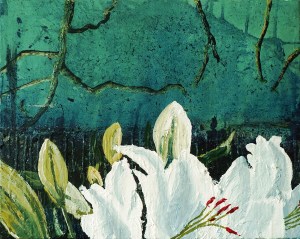
The Casares series (see paintings below) came from a visit in May 2016 to southern Spain. Casares is high on the edge of the Serranía de Ronda above Estepona. I had gone there a month after my father died in April, and looking at this series now, in retrospect (August 2026) I find it deeply affecting.
In the strange way that we sometimes experience grief, I set aside my emotions during that visit to Spain. I was amid so much beauty and peace there.
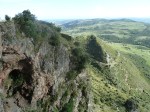
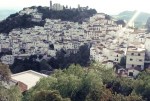
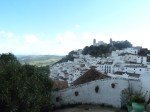
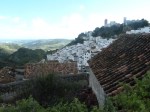
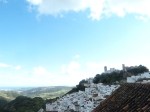
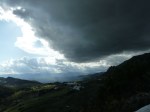
Casares is one of Andalusia’s pueblos blancos, its white stucco buildings perched, apparently precariously, on a rocky peak beneath the ruins of a Moorish castle, the pathways too steep and narrow for cars. I remember the rain coming in across the mountains, the deep chime of church bells and such birdsong, as though I was up in the sky with the birds, far from trouble.
Those weeks left little written trace, my usual record of blog posts having gone astray in that strange, altered time, and so the paintings themselves are what remains.I do remember my fascination with its history though, as always!
The village wears its long history openly. Legend gives its name, Casares, to Julius Caesar, said to have been cured at the sulphurous springs in the valley below, though it might derive from the Arabic word for fortress.
The castle crowning the peak of the village was raised in the Moorish period, when Casares stood as a frontier stronghold between the Nasrid kingdom of Granada and Christian Castile. It is also the birthplace of Blas Infante, the writer and musicologist remembered as the father of Andalusia, who gave the region its green and white flag and its anthem before he was killed at the outbreak of the Spanish Civil War in 1936.
It was during this visit I discovered the lines of the twelfth-century Andalusian Sufi Ibn Arabi, whose heart, he wrote, had made room for every faith and followed only the religion of love. The poem stayed with me, and resurfaced the following year in my Damascus Rose series.
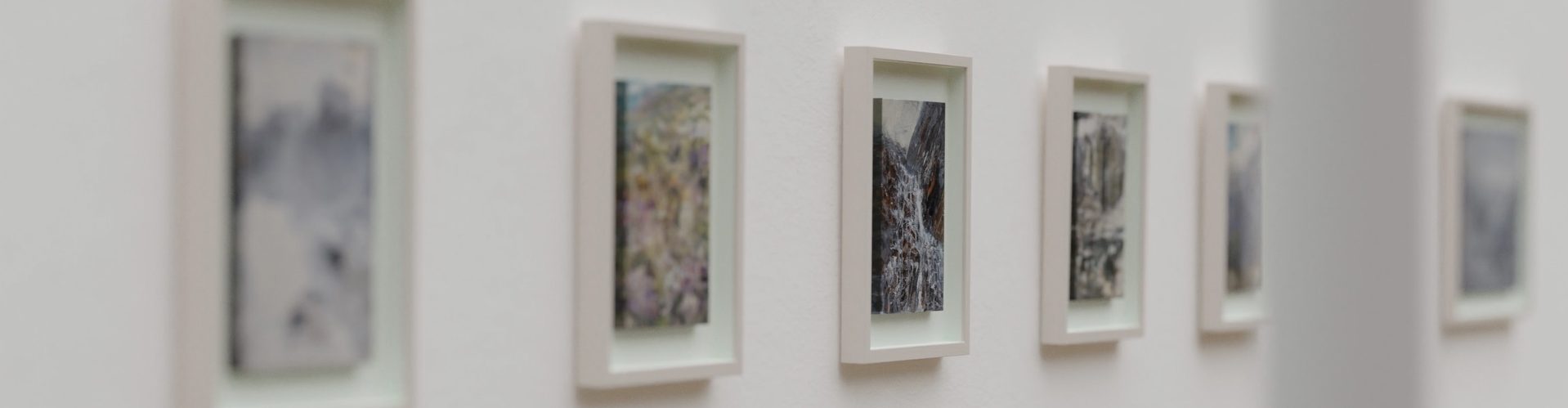
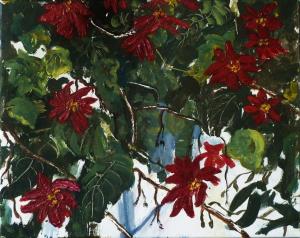
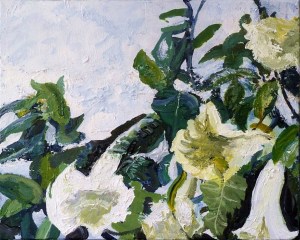
The paintings are worked in mixed media, and move between two registers. Some dissolve the village almost into sky, the white houses and their greenery running down the canvas in veils of rain. Others are more concrete: a steep cobbled street between white walls, rooftops beneath a dark mountain, or the close-up of lilies and red blossom against deep green.
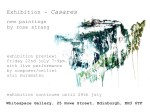
Looking at records and photos from my blog on this website, kept since 2013, I can see there’s a postcard advertising an exhibition at Whitespace Gallery, Edinburgh in July 2016. I cannot remember that exhibition, and at the risk of sounding amnesiac, I don’t think it happened. Grief does strange things to the mind. I fully intend to return to this beautiful village, to remember.
P A I N T I N G S

P L A C E